French style: the everyday pieces behind it
In this guide
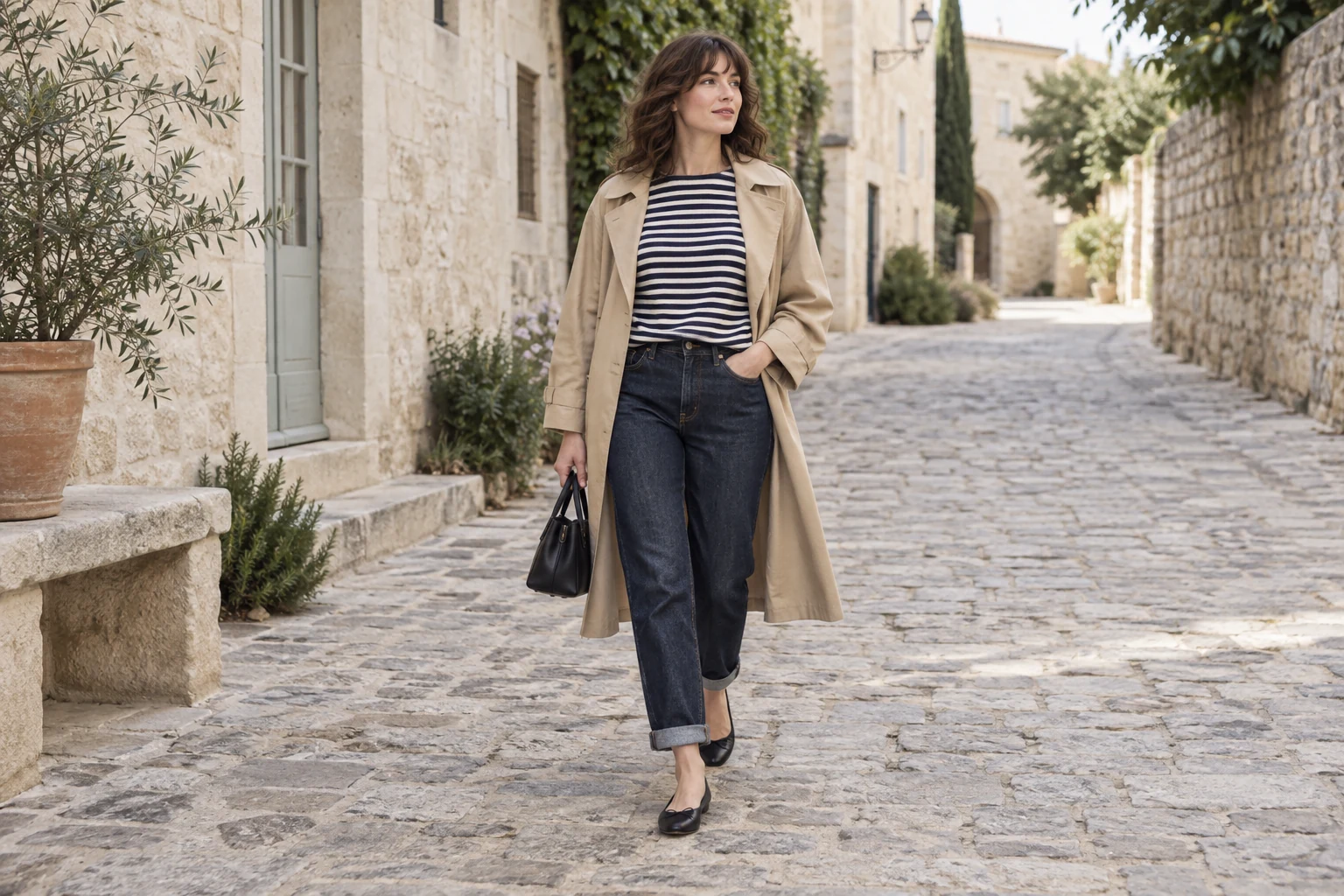
Few fashion photographs have been copied as often as this one: a woman on a Paris street in a striped top, straight jeans, flat shoes and a trench slung over her shoulders, looking as if she spent no time getting dressed. French style has become a whole genre of articles and shopping lists, and some of it is cliché. Underneath the myth, though, is a genuinely useful way of dressing that anyone can borrow.
This guide skips the fantasy and looks at the everyday pieces behind French style, where some of them came from, how the palette and fit work, outfits for women of any age, a short section for men, and how to start from the clothes you already own. It also explains the five piece French wardrobe idea you may have seen online.
What French style means
When people talk about French style they usually mean Parisian style, and a particular version of it: understated, well cut basics worn with confidence and a little carelessness. Clothes fit well and are in good condition, colors are quiet, logos are rare, and hair and makeup look natural. The person shows, not the outfit. France is a large country with many ways of dressing, so treat this as one well known urban style, not a national uniform.
The practical core is restraint and repetition. Instead of a big, changing wardrobe, the style rests on a small set of pieces that all work together and are worn often, refreshed with a few new things each season. That makes it close to minimalist style, but warmer and more personal, with room for a red lip, a vintage scarf or a pair of old jeans that fit perfectly.
The everyday pieces behind French style clothing
The most famous piece has a precise history. The striped marinière, or Breton top, became part of the French Navy uniform by a decree of 27 March 1858, which specified 21 white stripes, each twice the width of the navy ones, a pattern often said to make a sailor who fell overboard easier to spot. Coco Chanel brought a jersey version into women's fashion after the First World War, and artists and film stars kept it in view through the 1940s to the 1960s. A good one is a firm cotton knit with stripes that line up at the side seams.
Ballet flats have a similar story. Rose Repetto began making dance shoes in Paris in 1947, and in 1956 she made a street version of a ballet slipper, the Cendrillon, for Brigitte Bardot, which helped turn flat, soft shoes into everyday wear. Around these two icons sit the other classic French style clothing staples: a beige trench coat, straight or slightly flared jeans, a navy or black blazer, a fine cashmere or merino crewneck, a white or blue shirt, simple loafers, a silk square scarf and a small leather bag.
Palette, fabric and fit
The palette is simple: navy, black, white, cream, camel, gray and denim blue, with red as the classic accent, often only on the lips or in a scarf. Because so few colors are used, almost any top goes with any bottom, which is what makes a small wardrobe feel large. Prints are small and quiet, such as stripes, polka dots and small florals, and usually appear one at a time.
Fit and fabric matter more than trends. Jeans should fit the waist and seat without pulling, in a straight or slightly flared cut; our guide to how jeans should fit explains what to look for. Knits in natural fibers such as wool and cashmere age better than synthetic blends, and a blazer should fit the shoulders even if you wear it open. A half tuck, where only the front of the sweater or shirt goes into the waistband, is the signature gesture, and how to French tuck shows exactly how to do it.
French outfits for women to copy
Weekend: a Breton top, straight dark jeans with a small cuff at the ankle, ballet flats and a trench coat, with a canvas or small leather bag. Office: a white shirt, a navy blazer, cropped straight trousers and loafers, with small gold earrings. Evening: a black fine knit sweater tucked into a silk or satin midi skirt, low heels or flats, and a red lip. Each of these uses the same base pieces, only rearranged.
French style dresses tend to be simple: a navy or black wrap or shirt dress, a small floral midi dress with a cardigan in spring, or a slip dress with a crewneck knit layered over it in cooler weather. Finish them with flats, loafers or ankle boots rather than very high heels, and add a silk scarf knotted at the neck or tied to your bag; our guide to tying a scarf has several easy knots.
| Moment | Pieces | Finish |
|---|---|---|
| Weekend | Breton top, straight dark jeans with a small cuff, trench coat | Ballet flats, canvas or small leather bag |
| Office | White shirt, navy blazer, cropped straight trousers | Loafers and small gold earrings |
| Evening | Black fine knit tucked into a silk or satin midi skirt | Low heels or flats and a red lip |
| Spring dress | Small floral midi dress with a cardigan | Flats or loafers, scarf knotted at the neck |
| Cooler dress | Slip dress with a crewneck knit layered over it | Ankle boots |
French style over 50
Readers often ask how to dress like a French woman over 50, and the honest answer is that very little changes. The same basics work at any age, and the look depends on fit, quality and confidence rather than youth. If anything, a well cut coat, a good cashmere sweater and a pair of beautiful loafers look better with a few years of wear on them. There is no need to hide in dark colors or give up jeans.
What does help is choosing fabrics with some structure, such as crisp cotton, dense knit and wool, and tailoring that fits exactly where you are today, rather than where you were ten years ago. A tailor who can adjust sleeves, hems and waists is one of the best investments in a French style wardrobe. Add jewelry you love and wear it often, and let silver hair or laugh lines be part of the look.
French style for men
French style for men follows the same logic: a navy and neutral palette, excellent basics and quiet confidence. Try a Breton top under a navy chore jacket with straight jeans and suede desert boots, or a gray crewneck over a light blue oxford shirt with navy trousers and loafers. A wool overcoat in camel or navy covers winter, and a trench coat covers rain.
Leave out obvious logos and flashy watches, and keep grooming natural but tidy. Our guide to wearing loafers covers socks and trouser length, which matter in this style since hems are usually short enough to show the shoe.
How to wear it without the beret cliché
French style turns into a costume when every famous symbol appears at once: stripes, beret, red scarf and red lipstick together. Pick one reference and let the rest be simply good clothes. A Breton top works best with ordinary jeans and sneakers; a beret looks natural in winter with a plain coat, not with stripes and a baguette.
Start with what you already own. Most people have a pair of straight jeans, a white shirt, a dark knit and simple flat shoes. Wear them together for a week, notice what is missing, and fill the gap with one well made piece, often a trench, a blazer or a good striped top. Keep your knits looking new with our guide to washing cashmere, because pilled or shrunken sweaters undo the polish the style relies on.
Questions people ask
What is the five piece French wardrobe?
It is an idea popularized online rather than a French tradition. You keep a base of well fitted basics, such as jeans, plain tops and a good coat, and each season buy only about five new pieces that work with them. It is a useful spending habit and fits well with a capsule wardrobe.
What does French style mean?
In clothing it usually means a Parisian way of dressing built on simple, good quality basics, a restrained palette, exact fit and natural grooming. The clothes support the person rather than drawing attention to themselves.
Do French women wear sneakers?
Yes. Plain white leather or canvas sneakers are very common in Paris, worn with jeans, dresses and even blazers. They fit the style because they are simple, clean and comfortable for walking.
How do you say very chic in French?
Très chic. The word chic itself comes from French, and in everyday speech people also use élégant or bien habillé, meaning well dressed.
Sources and further reading
References used for this guide. Each opens the original page in a new tab.
Keep reading
Styles
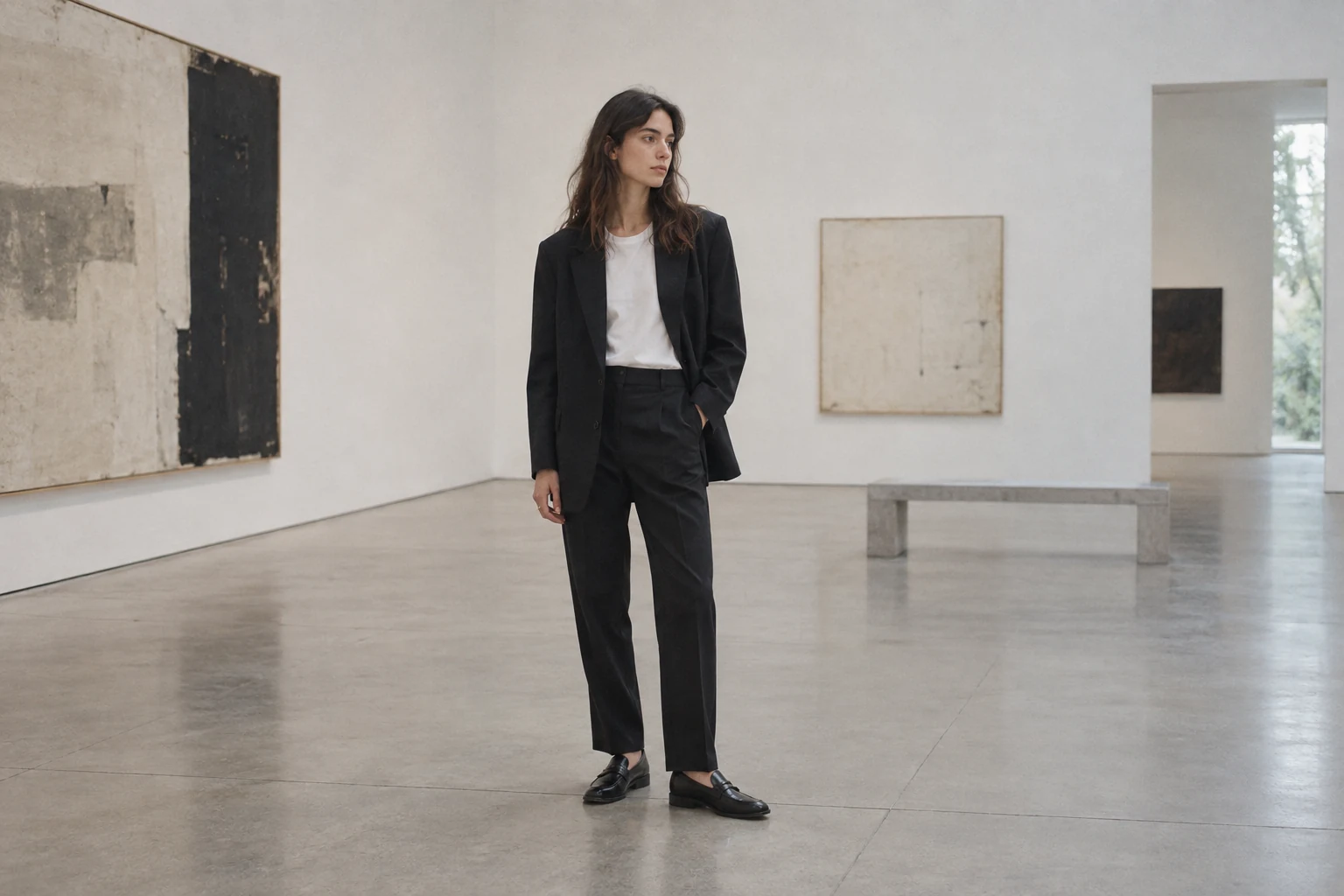
Minimalist style: fewer pieces, better outfits
What minimalist style really is, where it came from, the pieces, colors and fabrics it relies on, and minimalist outfits for men and women that never look plain.
Everyday style
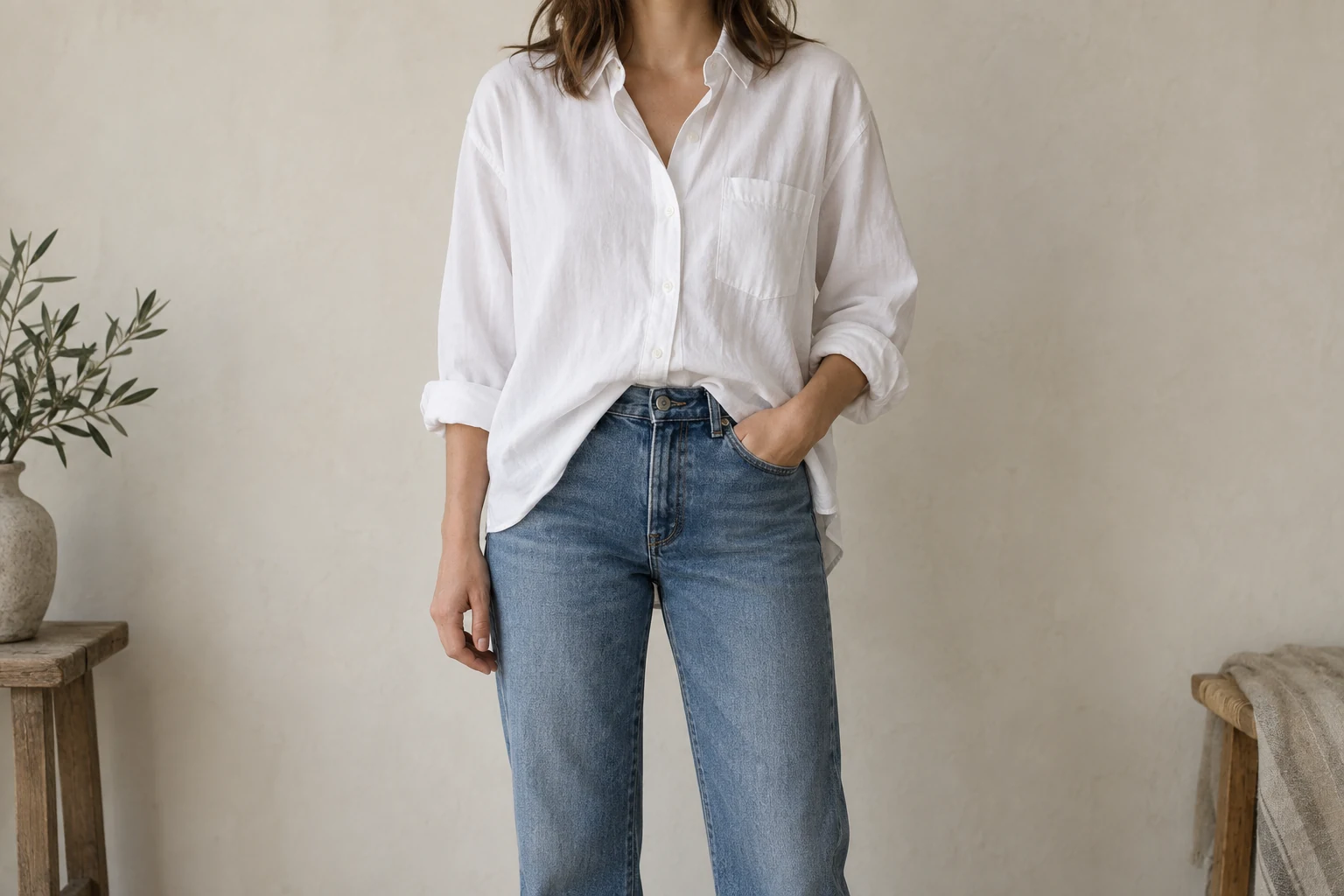
How to do a French tuck
What a French tuck is, how to do one in under a minute, which shirts, sweaters and waistlines it suits, and when a full tuck or no tuck works better.
Everyday style
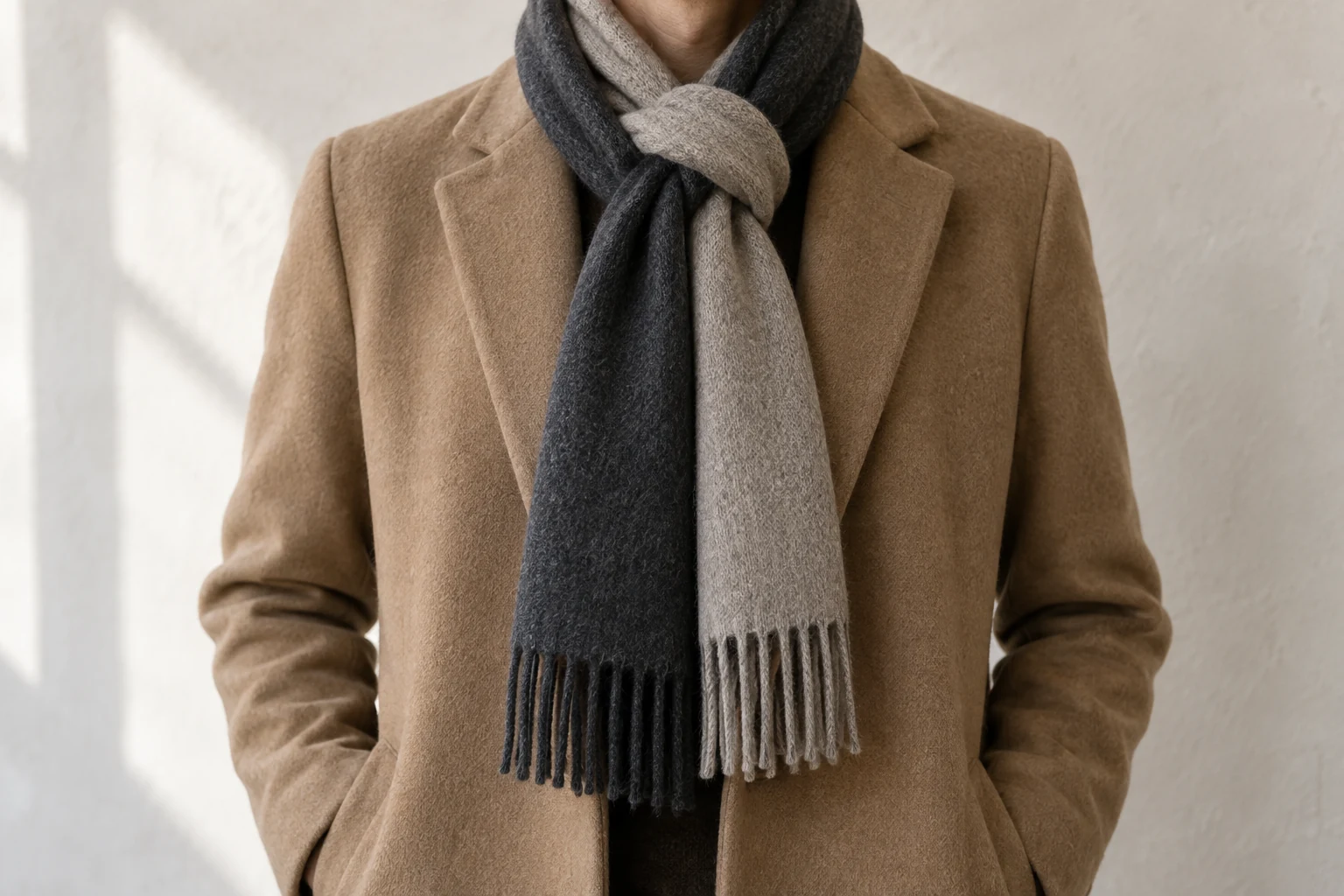
How to tie a scarf: easy ways for every coat
How to tie a scarf step by step: warm knots for a long winter scarf, neat ways to wear a silk square, head scarf styles and the knots men reach for most.
Styles
Scandinavian style: how to dress the Nordic way
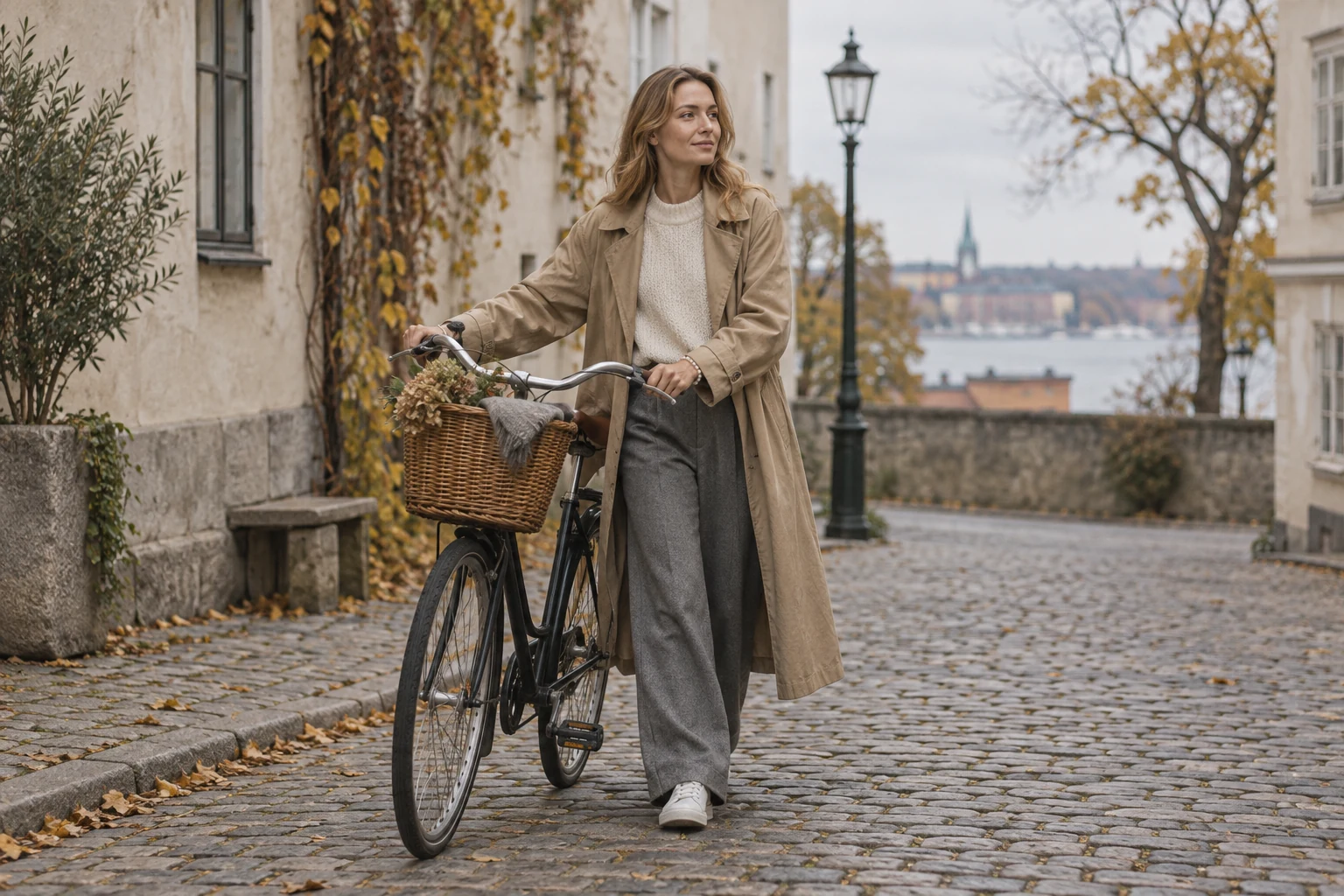
What Scandinavian style clothing looks like, why it works, the key pieces and palette, and Scandi outfits for men and women built for real weather and bike rides.
Styles
Old money style and quiet luxury, explained
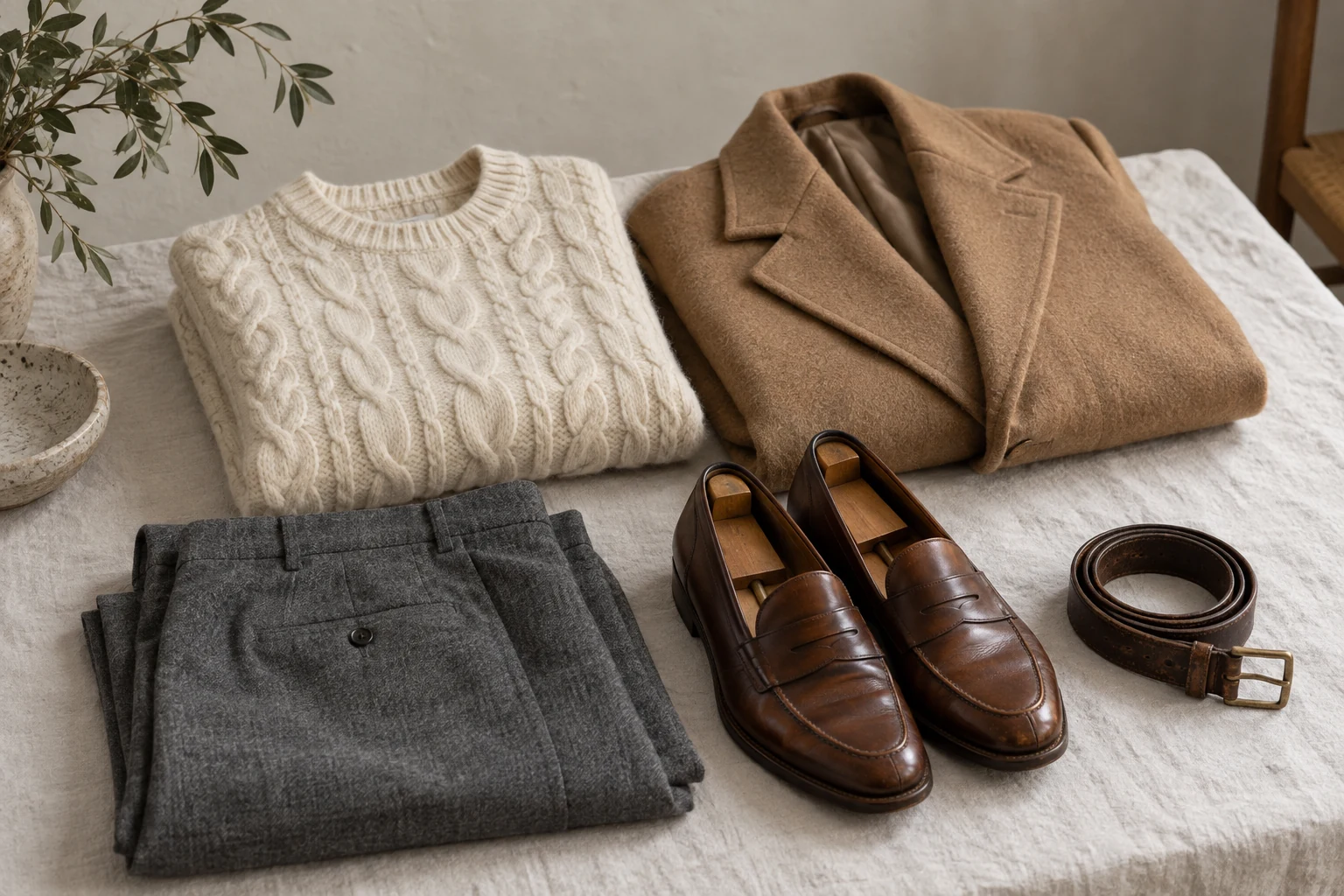
What old money style and quiet luxury actually mean, the pieces, colors and fabrics behind them, and outfits for men and women that work without a big budget.