Madras fabric: history, care and how to wear it
In this guide
Faded pinks, greens and yellows, checks that do not quite line up, cotton so light a hand shows through it: the label on a shirt like this says madras. It may also warn you to wash it alone, which is an unusual thing to read on a new shirt, and it turns out to be part of the fabric's story.
This guide explains what madras fabric is and how to recognize the real thing, where it came from and how it traveled from South India to the Caribbean and to American campuses, how it differs from other plaids, how to wear it without looking like a period costume, and how to wash it so the colors bleed only where they should.
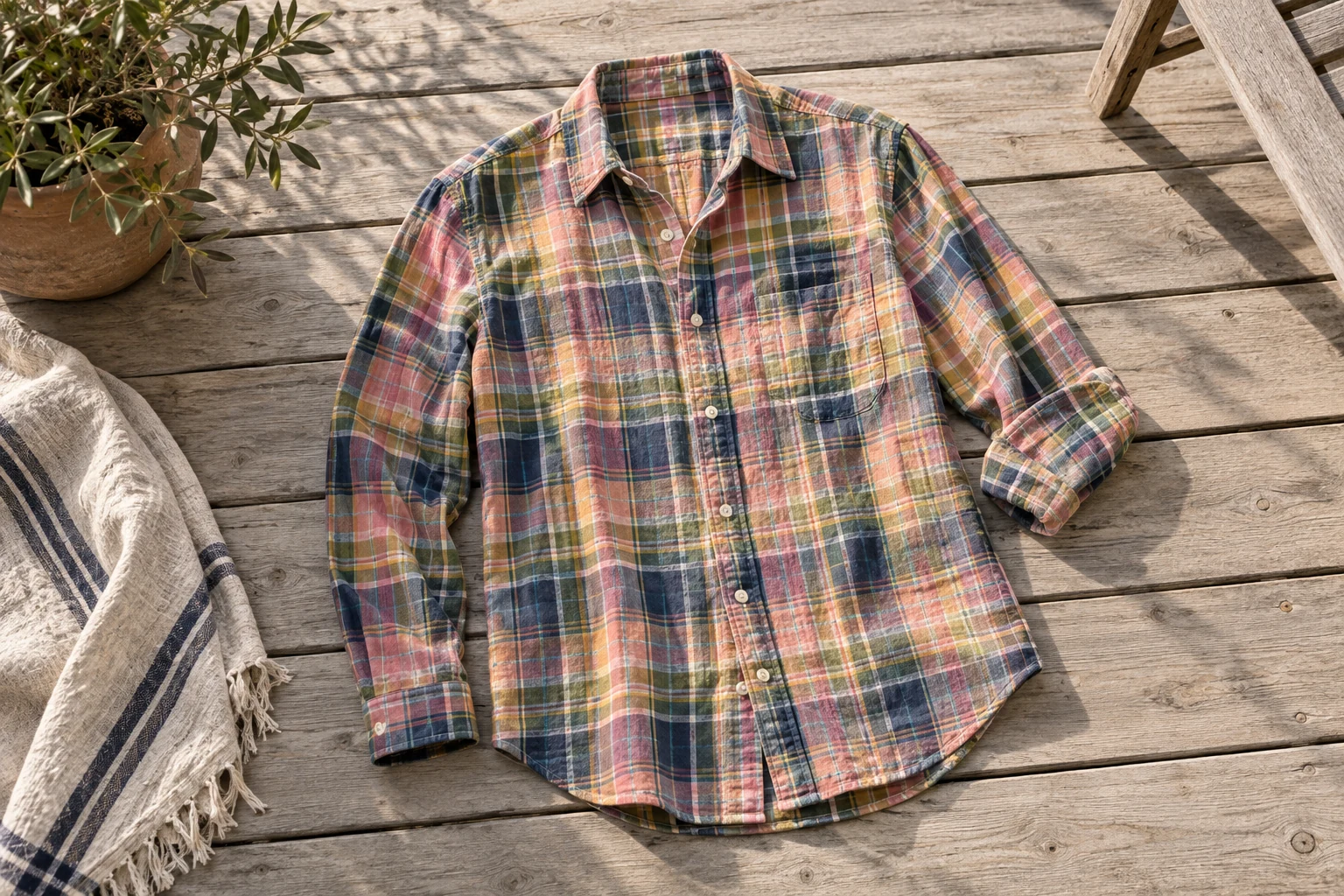
What madras fabric is
Madras is a lightweight cotton cloth woven in a plaid of brightly colored checks, traditionally by hand, and named after the port city of Madras in southeastern India, officially renamed Chennai in 1996. The yarn is spun from short staple cotton that can be carded but not combed, which leaves small thick spots called slubs. Those slubs, together with slightly irregular checks, give madras its soft, uneven texture, very different from the crisp regularity of a machine woven shirting check.
In authentic madras the colors are dyed into the yarn before weaving, so the pattern looks the same on both sides of the cloth, and small flaws are a sign of hand production rather than a defect. Traditional madras used dyes that were not colorfast, so the colors run and soften with every wash. Today much madras is woven on power looms with colorfast dyes, and some cheap versions simply print a madras style check on the surface of the fabric, leaving the back pale.
To judge a madras shirt, turn the fabric over. If the plaid is equally strong on the back, it is woven. Look for slubs and slight irregularities in the checks, a very light, airy hand, and bright colors that have a slightly muted or blended look where they cross.
From Chennai to the Caribbean and the Ivy League
Cotton checks from the Madras region were traded long before the British arrived. The Fashion and Race Database notes that the cloth was being traded to North Africa and the Middle East at least by the fifteenth century, and that the Kalabari people of southern Nigeria adopted it, calling it injiri or George after Fort St. George, the British trading post at Madras. For the Kalabari it remains an important cloth for dress and ceremony.
Through colonial trade, madras also became central to the dress of the Caribbean. It is part of the traditional or national dress of islands including St. Lucia, Dominica, Martinique and Guadeloupe, and in Martinique the way a madras headwrap was tied could signal information such as marital status. Madras reached North America early too: in 1718 Elihu Yale, a former governor of Madras, sent bolts of it among his gifts to the Collegiate School in Connecticut, which took his name as Yale.
In the United States, madras became a status symbol in the 1930s, when affluent Americans brought it home from Caribbean holidays. Its biggest moment came around 1958, when a textile importer bought madras for Brooks Brothers without passing on the instruction to wash it gently in cold water. Customers complained that their shirts ran. The advertising executive David Ogilvy turned the problem into a slogan, guaranteed to bleed, and bleeding madras became a mark of authenticity. Through the 1960s it was a campus staple of what is now called preppy style, and a character's blue madras shirt even appears in S. E. Hinton's The Outsiders.
Madras vs plaid and tartan
Madras is a plaid, so the question is really what kind of plaid. Most plaids you meet in flannel shirts or tartan skirts are woven from wool or heavy cotton, often in fairly regular setts and deeper colors. Madras is lighter, brighter and less regular: short staple cotton, a very open plain weave, vivid colors that soften over time, and checks that can vary slightly across the cloth.
Tartan is the Scottish system of named patterns, often associated with clans, regions or institutions, and usually woven in wool. Madras patterns are not registered or named that way, and the same maker may weave dozens of variations. If you want to untangle the vocabulary further, our guides to plaid versus tartan and gingham versus plaid cover the neighbors. Patchwork madras is simply several madras fabrics cut into squares and sewn together, a thrifty way of using remnants that became a style of its own.
| Cloth | Fiber and weight | Pattern and color |
|---|---|---|
| Madras | Light short staple cotton, very open plain weave | Bright, slightly irregular checks that soften over time |
| Typical flannel plaid | Wool or heavy cotton | Fairly regular setts in deeper colors |
| Tartan | Usually wool | Named Scottish patterns tied to clans, regions or institutions |
| Patchwork madras | Several madras cloths sewn together | Squares of different checks from remnants |
How to wear madras
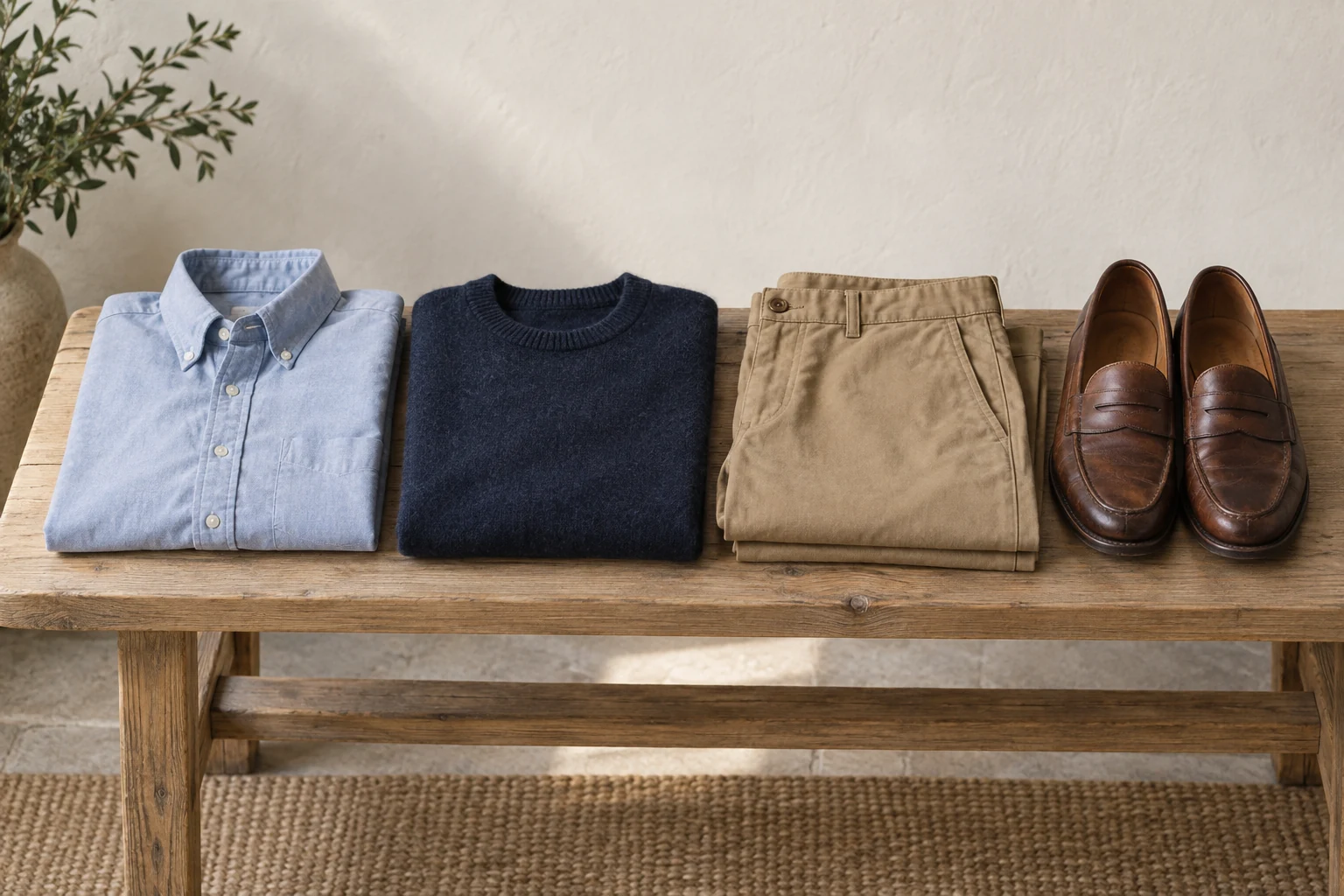
Madras is a hot weather cloth, at its best from about 75°F (24°C) upward, and it works best as the one patterned piece in an outfit. A madras shirt for men, short sleeved or long sleeved with the cuffs rolled, goes with khaki or navy chinos, white trousers, or plain shorts, and with loafers, boat shoes or canvas sneakers. Pick one color from the plaid, often the navy or the khaki, and repeat it in the solid pieces.
Madras shorts are the other classic, and they suit a plain white or navy polo or a white oxford shirt. A madras sport coat, usually unlined, is a bolder summer jacket for garden parties and resort evenings; wear it with a white shirt and plain trousers, and skip the tie or choose a solid knit. Avoid a madras shirt with madras shorts unless you are deliberately making a statement, since two different loud plaids fight.
For women, madras works as a shirt dress, a sleeveless shift, a button down shirt knotted at the waist, shorts or a skirt, and in accessories such as headbands and bags. Wear it with white, denim or a solid color picked from the check, and with flat sandals or espadrilles. For more ideas on hot days, our guide to what to wear in 80 degree weather gives full outfits.
How to wash madras, including bleeding madras
Read the label first, because modern madras varies. Colorfast machine made madras can often go in a normal cool cycle with similar colors. Traditional or vintage madras, and anything described as bleeding madras, should be washed in cold water, alone or with other madras, on a gentle cycle or by hand. The colors will run into one another slightly each time, which softens and blends the plaid. The blending is intended, but the same dye will also stain anything light in the load.
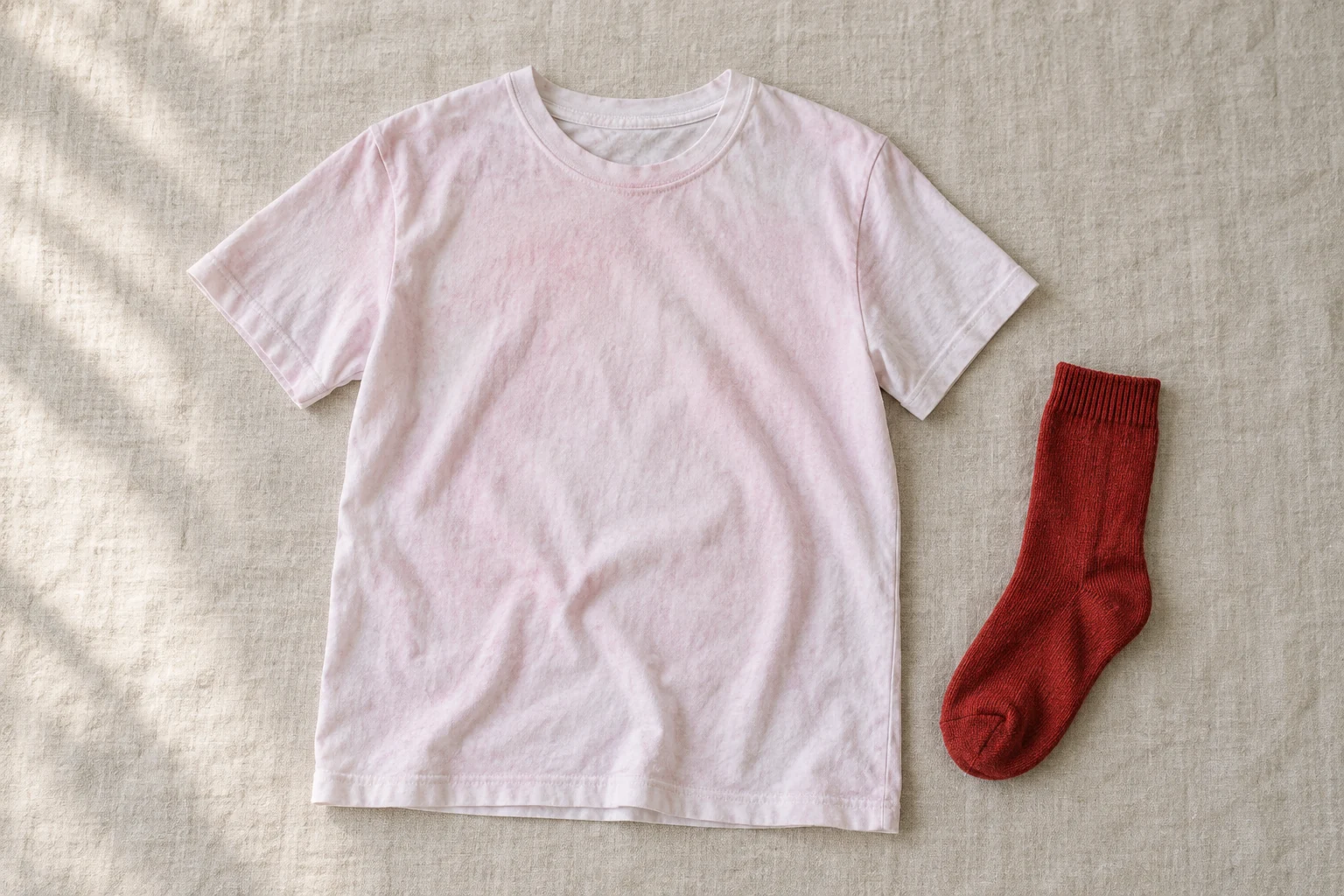
Hang madras to dry or tumble it on low, and iron while slightly damp with a medium hot iron if you want a crisp collar; the thin cotton wrinkles easily but presses quickly. If a madras shirt has already turned a white load pink, our guide on removing dye transfer explains how to rescue the other clothes, and separating laundry explains how to keep it from happening again.
Common mistakes
Washing new madras with whites
Even colorfast madras can release some dye in its first few washes. Wash it alone or with dark colors until the rinse water runs clear.
Using hot water to set the colors
Hot water speeds up dye loss in traditional madras rather than locking the color in. Cold water and a gentle cycle keep the bleeding slow and even.
Mixing two loud plaids
A madras shirt with patterned shorts or a tartan belt competes for attention. Keep the rest of the outfit solid, and let the madras be the only pattern.
Questions people ask
What kind of fabric is madras?
Madras is a lightweight cotton, traditionally handwoven in India from short staple yarn, with a bright plaid dyed into the yarn before weaving. Some modern madras is machine woven, and some is made in linen or cotton blends, but the classic cloth is thin, airy cotton.
Why was madras so popular in the 1960s?
It was already a status fabric from Caribbean holidays, and in the late 1950s advertising turned its tendency to bleed into a selling point. College students adopted it as part of the Ivy League and preppy wardrobe, and it spread to shirts, shorts, jackets and even ties.
Is madras still in style?
Madras returns every summer in classic American menswear and preppy collections, and vintage madras shirts from the 1960s are sought after. Worn as one piece with plain clothes, it reads as a warm weather classic rather than a throwback.
Is a madras shirt worth buying vintage?
Vintage madras shirts often have beautifully faded colors that new ones only reach after years of washing. Check the collar and cuffs for fraying, since the thin cotton wears at the edges, and wash the shirt alone the first time in case it still bleeds.
Sources and further reading
References used for this guide. Each opens the original page in a new tab.
Keep reading
Fabrics
Seersucker: the summer fabric explained
What seersucker is, how its puckered stripes are woven, why it keeps you cool, where it came from, and how to wear a seersucker suit, shirt or dress in summer.
Fabrics
Plaid vs tartan: what is the difference
Plaid vs tartan explained: what each word means in Scotland and North America, how a real tartan is built, who may wear one, and how to wear plaid well.
Fabrics
Gingham vs plaid: how to tell checks apart
Gingham vs plaid explained: how to tell the two checks apart in seconds, where tartan and flannel fit in, and how to wear gingham and plaid, even together.
Styles
Preppy style: what it is and how to wear it now
What preppy style means, where it came from, the core pieces for men and women, and how to wear modern preppy outfits without looking like a costume.
Stain removal
How to fix dye transfer: color run remover and other fixes
Red sock turned the load pink? How to fix dye transfer on white and colored clothes: rewashing, oxygen bleach soaks, color run remover, and what to do after drying.