How to get grease out of clothes
In this guide
Water runs straight off an oil stain, which is why a splash of salad dressing or a smear of bike chain grease can survive a rinse, a scrub and sometimes a full wash, still sitting in the fabric as a darker, translucent patch. Knowing how to get grease out of clothes comes down to one idea. Oil does not mix with water, so you need something that grabs the oil and lets water carry it away.
Dish soap, heavy duty laundry detergent and dedicated solvent cleaners all do that job at different strengths. The order you use them in, and what you avoid doing in the meantime, decides whether the spot disappears or turns into a permanent shadow that shows up again after every wash.
Why grease behaves differently from other stains
Water beads up on oil, which is why rinsing a greasy spot under the tap does almost nothing except spread it. Detergents work by surrounding oil droplets so water can lift them out of the fiber, and dish soap is designed to do exactly that with cooking fat. Heat also helps, because warm oil is thinner and releases more readily. Iowa State University Extension recommends pretreating oil based stains with a stain remover, liquid laundry detergent or dish soap, then washing in water as hot as the garment will tolerate.
Many food stains are mixtures, such as a tomato sauce with oil in it or coffee with cream. Cornell Cooperative Extension advises treating the greasy part of a combination stain first, then whatever color is left. If you jump straight to a color treatment, the oil can hold the pigment in place. Ballpoint ink is a similar mixture of oil and dye, and our guide to getting ink out of clothes covers it separately.
Before any of this, check the care label. Hot water is the most useful tool for grease, and it is also the one most likely to shrink or fade a garment that was not made for it. Our guide to reading laundry symbols explains the temperature dots.
How to get grease out of clothes when it is fresh
The steps below work for cooking oil, butter, salad dressing, lotion and most kitchen grease on washable fabrics such as cotton, linen, denim and polyester.
Blot and scrape, do not wipe
Press a paper towel onto the spot to soak up surface oil and lift off any solid bits with a dull knife. Wiping drags the oil across clean fabric and makes the stain larger.
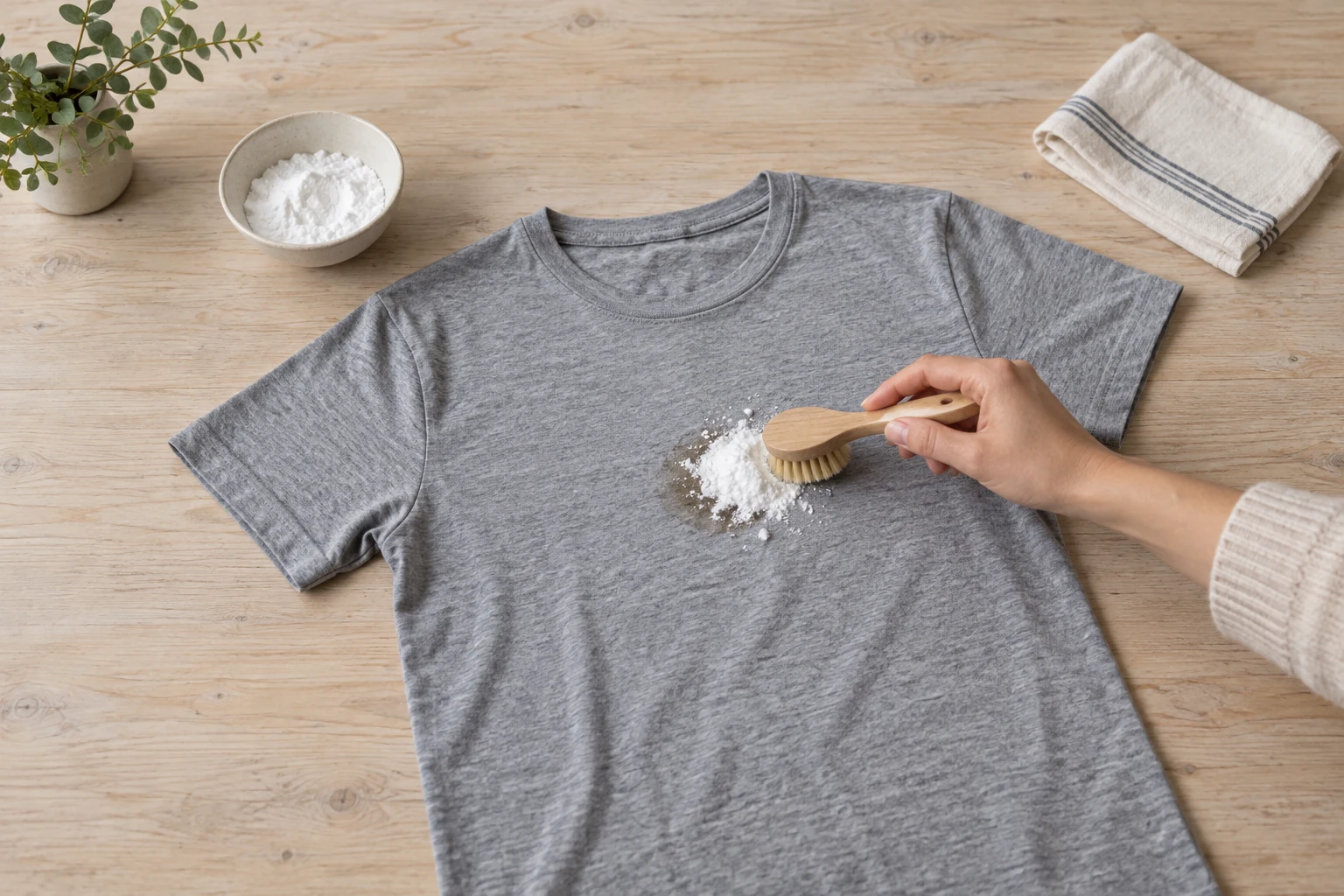
Cover with an absorbent powder
The University of Georgia Extension suggests talcum powder to absorb as much grease as possible; cornstarch does the same job. Leave it for at least 15 minutes, longer for a heavy spill, then brush it off. The powder should look darker and clumpy where it has drawn out oil.
Work in dish soap or heavy duty detergent
Rub a few drops of liquid dish soap or heavy duty liquid laundry detergent into the stain from both sides, using your fingertips. Let it sit for five to ten minutes so it can break up the oil.
Rinse with the warmest water the fabric allows
Rinse from the back of the fabric. You should see the dark, translucent patch shrink and lighten. If it has not changed, repeat the soap step before washing.
Wash hot where permitted
Wash in the hottest water on the care label with a heavy duty detergent, as the University of Georgia Extension recommends. Wash the item on its own or with similar colors.
Air dry and inspect
Oil spots are easy to miss on wet fabric, so let the garment air dry and check it in daylight. If a dark patch remains, treat it again. The dryer only comes after the stain is gone. Our guide to air drying clothes covers doing it without stretching or stiffening the fabric.
How to get car grease and black grease out of clothes
Grease from an engine, a bike chain or a door hinge is thicker than cooking oil and usually dark with grime. Scrape off as much as you can first, then blot. Dish soap can handle a small smear, but for a heavy stain the University of Georgia Extension recommends a commercial prewash cleaner containing petroleum distillates, applied until no more stain comes out, followed by a heavy duty detergent in hot water. Look for a laundry pretreatment labeled for grease and follow its directions exactly.
Solvent cleaners are flammable and have strong fumes. Use them in a ventilated room away from flames and pilot lights, wear gloves, and keep them away from children. Let the treated area air out before the garment goes in the washer. Never put anything that still smells of solvent into a dryer. Heavily soiled work clothes are best washed in a separate load so the grease does not redeposit on the rest of your laundry.
Black grease often leaves a gray ghost after the first wash. That is normal. Repeat the pretreatment and wash cycle two or three times before deciding the stain is permanent, and keep the garment out of the dryer between rounds.
Oil stains on clothes after washing and drying
Those dark spots that appear on a favorite T shirt after laundry day are usually oil that was never fully removed, then set by the dryer. You can still improve many of them. Work liquid dish soap into the dry fabric, let it sit for half an hour, then scrub gently with your fingertips and rinse with the hottest water the label allows. Wash again and air dry. Old stains often need three or four rounds, and each one should look a little lighter.
If a yellowish or brownish tint remains after the oil itself is gone, the American Cleaning Institute suggests a wash with chlorine bleach where the fabric allows it, or oxygen bleach for colors. Follow the dilution on the bottle and use only one bleach at a time. On white cotton, our guide on washing white clothes covers keeping them bright once the spot is out.
Denim needs a lighter hand, because repeated hot washes will fade it. Treat the spot rather than the whole garment and see our guide to washing jeans for how to protect the color.
Silk, wool and dry clean only pieces
Delicate fabrics rule out the two strongest tools, heat and vigorous rubbing. On silk, wool or anything labeled dry clean only, blot the oil and dust the spot with talc or cornstarch, leave it for an hour and brush it away gently. That alone can remove a surprising amount of a fresh spill. Do not add water or dish soap unless the label allows washing, because water can leave a ring on silk that is harder to fix than the oil. Our guides to washing silk and hand washing clothes explain what these fabrics tolerate.
After the powder, take the garment to a professional cleaner. Dry cleaning solvents dissolve oil very effectively, which is why grease is one of the stains cleaners handle best. Point it out, say what it was and mention anything you applied. Cornell Cooperative Extension notes that professional cleaners have skills and resources not available at home, and a greasy stain on a good jacket is exactly where they earn their fee.
| Situation | First move | Avoid |
|---|---|---|
| Fresh kitchen grease on washables | Blot, powder, dish soap, then the hottest wash the label allows | Rinsing with plain water first |
| Car, chain or black grease | Scrape, then a grease pretreatment and a hot heavy duty wash | Solvents near flame; the dryer while it smells |
| Oil spots found after drying | Dish soap on dry fabric for half an hour, then wash | Giving up after one round |
| Silk, wool or dry clean only | Blot, talc or cornstarch for an hour, then a cleaner | Water or dish soap unless the label allows |
Common mistakes
Rinsing with plain water first
Water on its own spreads oil and can drive it deeper. Absorb, then use soap or detergent before any serious rinsing.
Putting it in the dryer too soon
Iowa State University Extension warns not to machine dry anything with a stain remaining, because heat sets it. With oil, this is the single most common reason a stain becomes permanent.
Using solvent near heat or flame
Grease removers based on petroleum distillates are flammable. Ventilate the room, keep them away from open flames and let treated clothes air out before washing.
Questions people ask
Does dish soap get grease out of clothes?
Yes, it is one of the best home tools for cooking grease. Iowa State University Extension lists dish soap alongside liquid laundry detergent as a pretreatment for oil based stains, because it is made to surround fat so water can carry it away. Work a few drops in, let it sit, then wash as hot as the label allows.
Will vinegar remove grease from clothes?
Not on its own. Vinegar is a mild acid, and acids do not break up oil the way detergents do. Dish soap or heavy duty liquid detergent is the better choice, and vinegar must never be combined with chlorine bleach.
Does baking soda work on oil stains, and how long should it sit?
Baking soda can act as an absorbent powder on a fresh spill, much like cornstarch or talc. Leave it on for at least 15 minutes, or an hour or more for a heavy spill, until it looks clumpy and darker, then brush it off. It does not dissolve oil, so follow it with dish soap and a hot wash where the label allows.
How do I get grease out of clothes after drying?
Treat the dry stain with liquid dish soap for 30 minutes, rinse hot where permitted and wash again, repeating several times. For heavy set grease, a prewash cleaner labeled for grease can help. Keep it out of the dryer until the spot is completely gone.
What is the best grease stain remover for clothes?
For cooking oil, ordinary dish soap and a heavy duty liquid detergent handle most stains. For car or chain grease, a laundry pretreatment labeled for grease, used exactly as directed, is more effective. Whatever you use, test it on a hidden seam first.
Sources and further reading
References used for this guide. Each opens the original page in a new tab.
- American Cleaning Institute stain removal guide Opens in a new tab
- University of Georgia Extension, removing grease stains from textiles Opens in a new tab
- University of Georgia Extension, removing oil stains from textiles Opens in a new tab
- Iowa State University Extension AnswerLine, holiday stains by stain type Opens in a new tab
- Cornell Cooperative Extension, removing stains at home Opens in a new tab
Keep reading
Washing and ironing
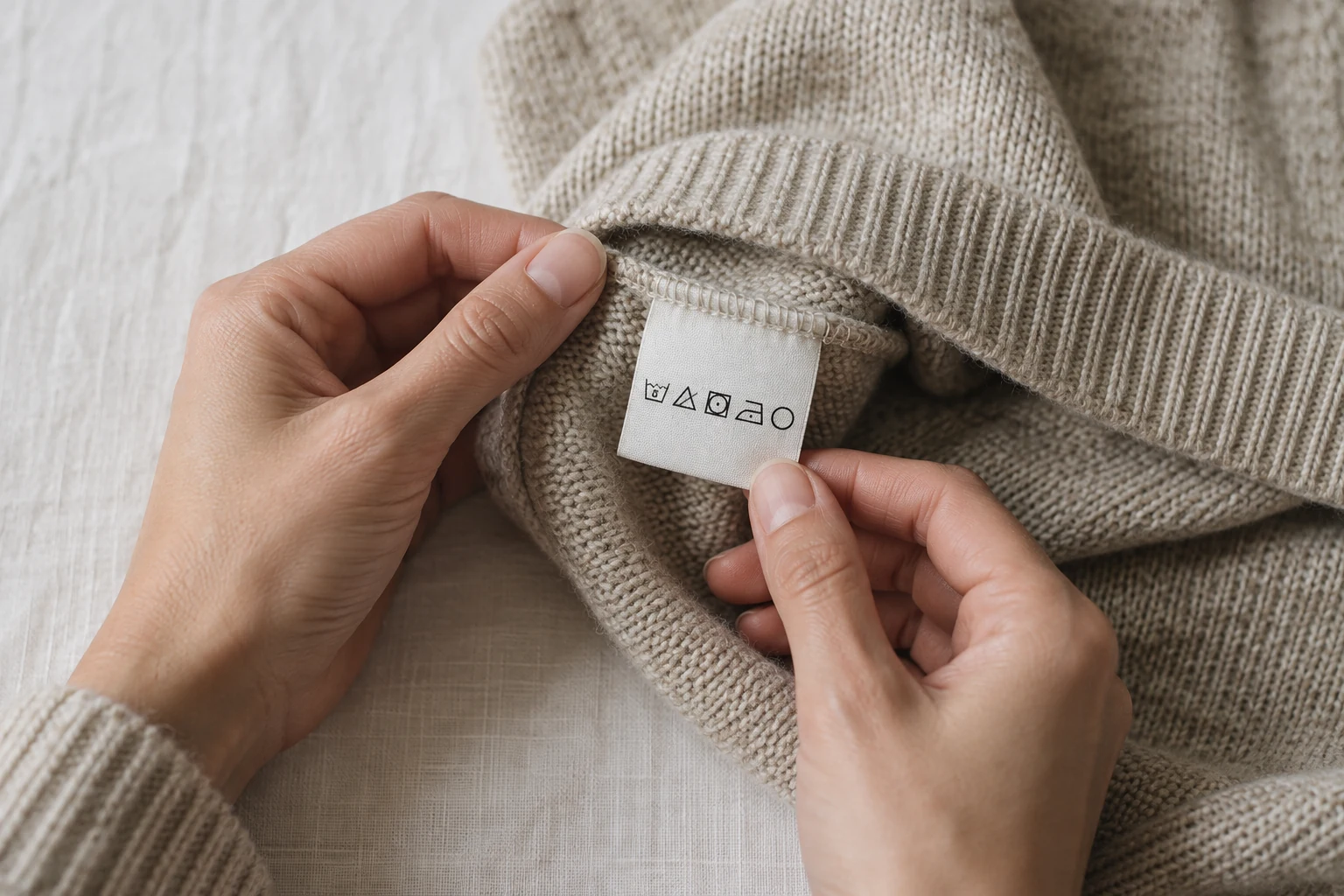
Laundry symbols explained: how to read a care label
What laundry symbols mean, in plain words: the wash tub, triangle, square, iron and circle, plus the dots, bars and crosses that change each instruction.
Stain removal
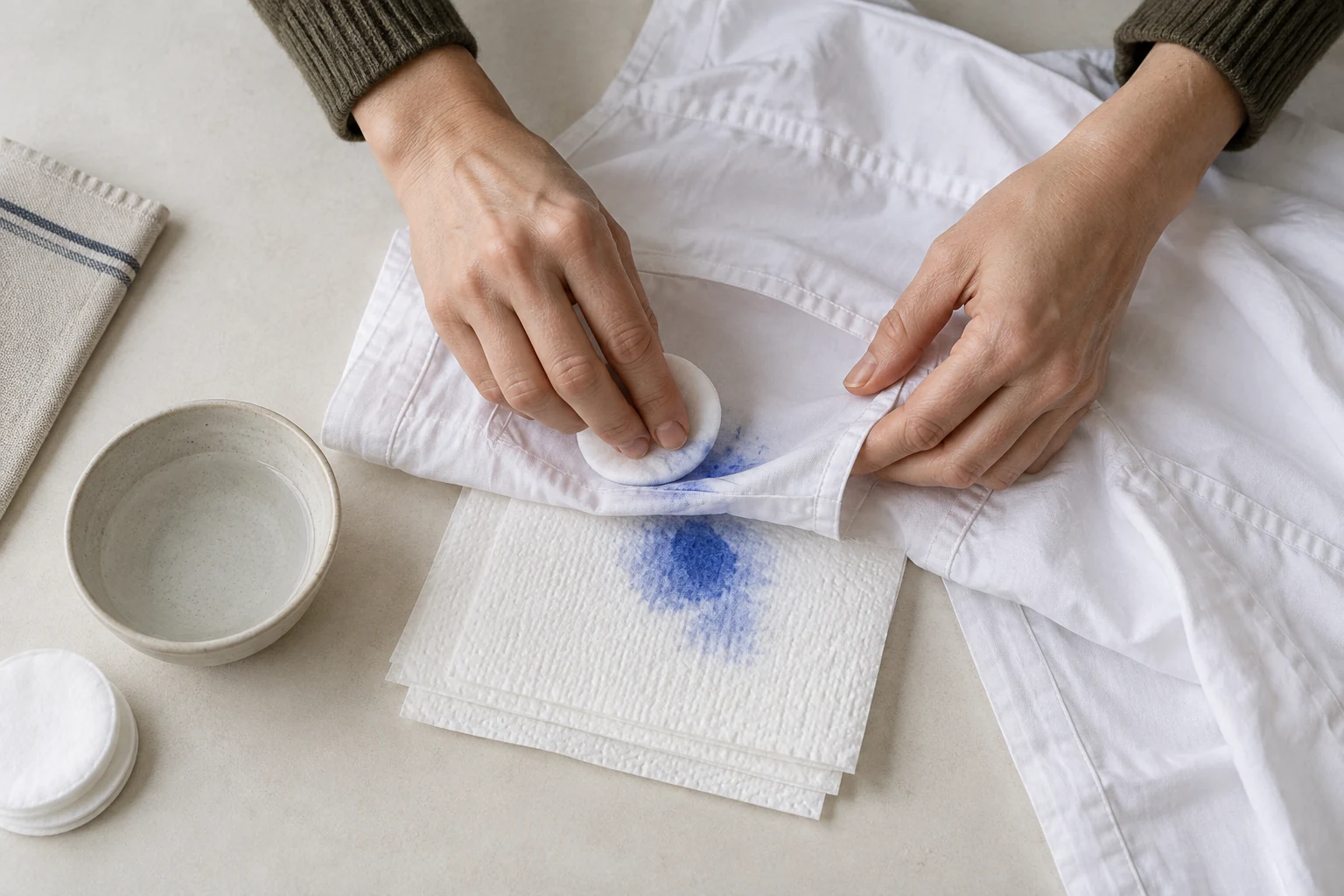
How to get ink out of clothes
Remove pen ink from clothes with rubbing alcohol and blotting, rescue dried or washed stains, and know which inks and fabrics need a professional cleaner.
Washing and ironing
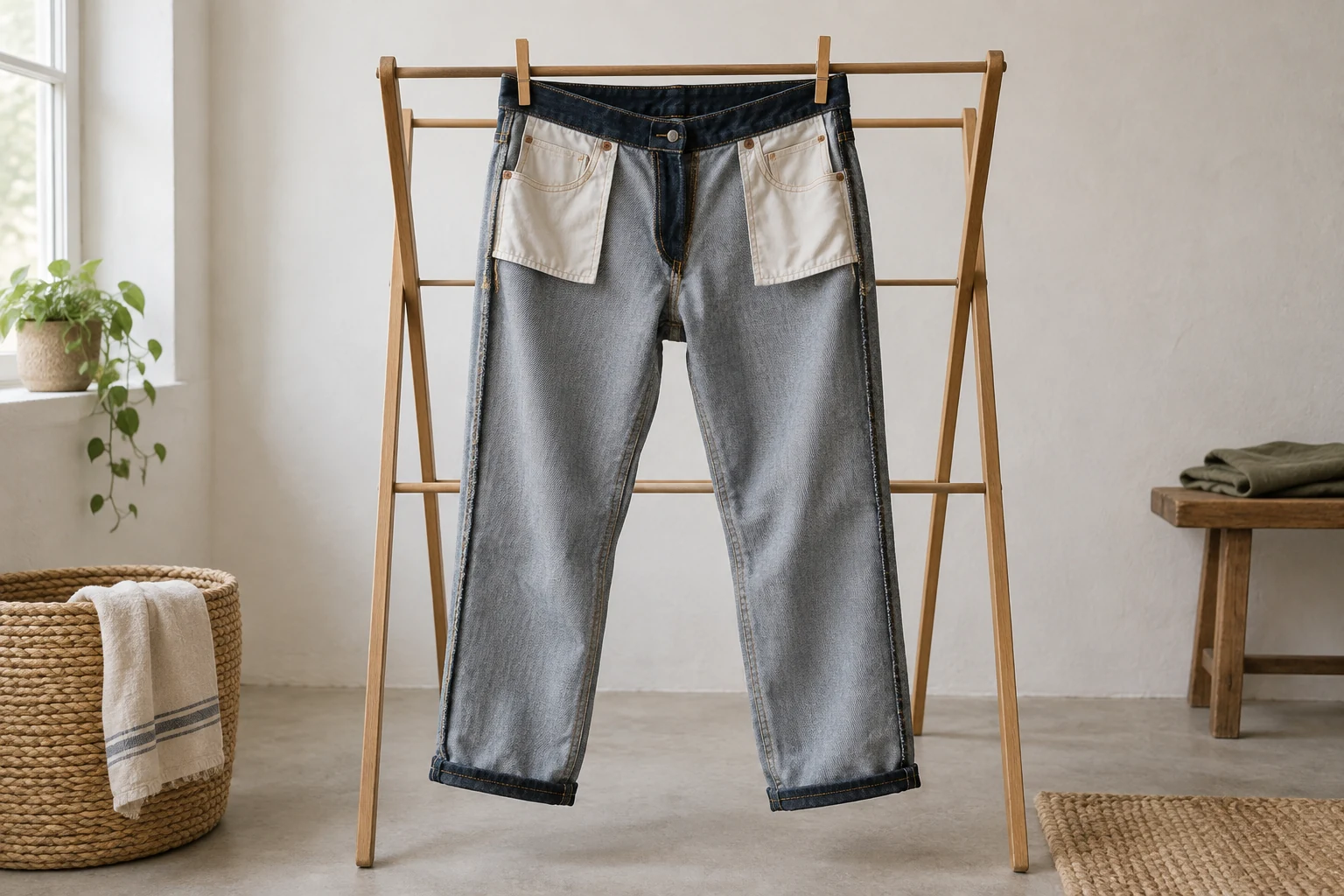
How to wash jeans and how often to do it
How to wash jeans so they keep their color and fit: how often to wash, inside out in cold water, air drying, raw denim and what to do if your jeans shrink.
Washing and ironing
How to hand wash clothes properly
How to hand wash clothes in a sink or basin: which detergent to use, water temperature by fabric, how long to soak, how to rinse and how to dry without stretching.

Stain removal
How to get red wine out of clothes
Get red wine out of clothes by blotting and flushing with cool water, then treating what is left with detergent and oxygen bleach, even once it has dried.