How to get sunscreen out of clothes, including orange stains
In this guide
Sunscreen stains usually come in two stages. First there is a greasy, slightly darker patch on the collar or the straps, where lotion met fabric. Then, sometimes, after a wash that should have fixed it, a rusty orange or yellow mark appears where there was nothing orange before. Learning how to get sunscreen out of clothes means treating both parts: the oil and, if it shows up, the color.
Most sunscreen stains are not permanent, even old ones, as long as they have not been baked in by a hot dryer. The steps below start with the gentlest treatment and move up. Check the care label first, test anything stronger than soap on a hidden seam, and keep delicate fabrics such as silk for a dry cleaner.
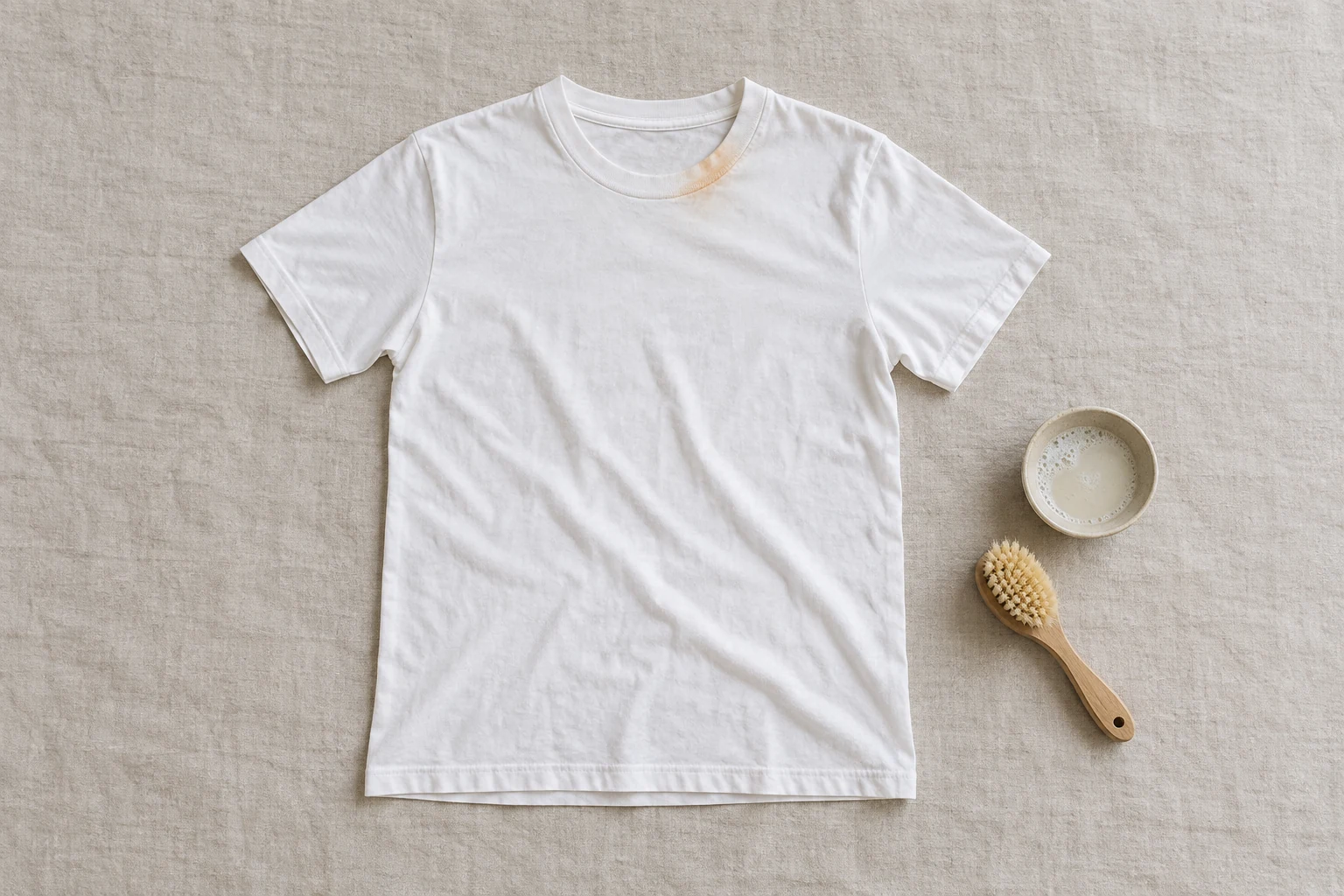
Why sunscreen stains, and why some turn orange
Sunscreen is an oily lotion, so the first stain behaves like any other grease stain: oil soaks into the fibers and holds on to dust and dirt. Tide describes sunscreen as a combination stain with an oily part and a rust colored part. Synthetic fabrics such as polyester swimwear and athletic tops tend to hold oily stains more stubbornly than cotton, which is why the straps of a workout top are often the worst.
The orange part comes from chemistry in the wash. Avobenzone, a common UVA filter in chemical sunscreens sold in the United States, can react with iron dissolved in tap water and form a reddish orange compound, as sunscreen makers and detergent makers have both acknowledged. So the color often appears only after washing, and why it is worse in homes with hard or iron rich water. Mineral sunscreens based on zinc oxide or titanium dioxide do not contain avobenzone; they can leave a white, chalky or greasy residue, but not the rusty mark.
How to get sunscreen out of clothes: fresh stains
If you notice the stain before the garment has been washed, you are in the best position. Try to remove as much of the oily sunscreen as possible before the fabric meets a lot of water, since less avobenzone left in the fibers means less chance of an orange reaction.
Scrape and blot
Lift any visible lotion with a spoon edge or a dull knife, then blot with a paper towel. Do not rub, which pushes oil deeper into the weave. On a thick smear, sprinkle cornstarch or baby powder, leave it for 15 to 30 minutes to absorb oil, then brush it off.
Work in dish soap
Rub a few drops of plain liquid dish soap into the spot with your fingers or a soft brush and let it sit about five minutes. Dish soap is designed to break up grease, so it is the right tool for the oily part.
CheckYou should see the dark, wet looking edge of the stain soften.
Rinse and add a stain remover
Rinse the soap out, then apply a prewash stain remover or an enzyme laundry detergent directly to the area and leave it for the time on the label, usually around 10 minutes. On whites and colorfast fabrics, a nonchlorine oxygen bleach product is also safe at this stage.
Wash warm and air dry
Wash in the warmest water the care label allows, as the American Cleaning Institute recommends. Then let the garment air dry and check it in daylight. Only put it in the dryer once the stain is completely gone, because dryer heat can set what is left.
Yellow or orange sunscreen stains on white clothes
When the mark is orange, rusty or yellowish and appeared after washing, treat it as an iron stain rather than a grease stain, much as you would rust on clothes. The most effective products are rust stain removers made for laundry, which usually contain oxalic acid or a similar ingredient that dissolves the iron compound. Follow the package directions exactly, wear gloves, test on a hidden seam, then rinse thoroughly and wash normally. When it works, the color usually fades quickly once the product reaches it.
Do not reach for chlorine bleach. The University of Georgia textile extension warns that chlorine bleach sets rust stains instead of removing them, and a sunscreen stain that has turned orange behaves like rust. Bleach can also yellow some synthetic fibers on its own. A gentler home method from the same extension, for sturdy white fabrics, is salt and lemon juice on the stain left to dry in the sun, then rinsed; repeat if needed. Never combine lemon juice, vinegar or a rust remover with chlorine bleach, since mixing acids with bleach releases harmful gas.
For older, set sunscreen stains that are gray or yellow but not orange, the University of Georgia suggests a two stage soak: first 15 minutes in a quart of warm water with half a teaspoon of dish soap and a tablespoon of white vinegar, rinsed; then 30 minutes in a quart of warm water with a tablespoon of an oxygen type bleach, followed by a stain remover and a normal wash. The vinegar helps a little with mineral residue, but on its own it rarely removes a sunscreen stain.
| Stain | What it is | First move |
|---|---|---|
| Fresh greasy spot | Oil from the lotion | Blot, dish soap, rinse, stain remover, warm wash |
| Orange mark after washing | Avobenzone reacting with iron in the water | A laundry rust remover; never chlorine bleach |
| Set gray or yellow stain | Old oily residue | Dish soap and vinegar soak, then an oxygen bleach soak |
| Chalky white mark on darks | Mineral sunscreen residue | Dish soap, rinse, stain remover, warm wash if allowed |
| Swimwear and athletic wear | Oil in nylon or polyester with spandex | Dish soap, then a cool or lukewarm wash and flat drying |
Colors, darks, swimwear and delicate fabrics
On colored and black clothes the orange stain is less visible, but mineral sunscreen can leave pale, chalky marks that look like deodorant. Treat them the same way as the oily stage: dish soap, rinse, stain remover and a warm wash if the label allows, and our guide to removing deodorant stains covers similar white residue. Test any oxygen bleach or rust remover on an inside seam of dark clothes first, since some dyes are not colorfast.
Swimsuits and athletic wear are usually a blend of nylon or polyester with spandex, which does not like hot water. Use the dish soap step, then wash in cool or lukewarm water and let the piece dry flat out of the sun. Silk, wool, rayon and anything labeled dry clean should go to a cleaner, with a note that the stain is sunscreen so they can choose a solvent. Our guide to reading care labels tells you what the symbols allow.
How to prevent sunscreen stains on clothes
The simplest prevention is time: apply sunscreen before you dress and let it absorb for 15 minutes or so, which is also what most labels recommend for protection. Spray sunscreen drifts onto clothes, so apply it before you put on a white shirt, not after. At the end of the day, rinse visible sunscreen from straps and collars with a little dish soap before the garment goes into the laundry basket.
If you live with hard or iron rich water and keep getting orange marks, switching to a mineral sunscreen for days in white clothes is the usual advice from stain experts, although it may leave a white cast on skin. Another option is to wear older or darker clothes on beach days and save light pieces for other outings. For packing ideas, our beach vacation packing guide covers what to bring.
Common mistakes
Drying before the stain is gone
Dryer heat sets oily and rust stains so firmly that they may never fully come out. Always air dry and inspect before any machine drying.
Using chlorine bleach on orange marks
Chlorine bleach can darken and set iron stains. Use a laundry rust remover or an oxygen bleach instead, and never mix bleach with acids.
Washing a sunscreen stained load without pretreating
Washing untreated sunscreen in iron rich water can trigger the orange reaction, and the oil can spread to other clothes in the load. Pretreat each spot with dish soap first.
Questions people ask
Are sunscreen stains permanent?
Usually not. Oily stains respond to dish soap and a warm wash, and orange stains usually lift with a fabric safe rust remover. Stains that have been through a hot dryer several times are much harder, but they are still worth one attempt before you give up.
Does sunscreen come out in the wash on its own?
Light, fresh smears often do, and the American Cleaning Institute notes that most sunscreens wash out fairly easily with pretreatment. Heavier stains and those on synthetics often survive a plain wash, and in iron rich water washing without pretreatment can create the orange mark.
Does Dawn dish soap remove sunscreen?
Liquid dish soap, Dawn or any other plain grease cutting brand, is one of the best first steps because sunscreen is mostly oil. It removes the greasy part but not the orange color, which needs a rust remover.
How do you get sunscreen out of clothes after drying?
Start again with dish soap and a stain remover, then soak in warm water with an oxygen bleach product if the fabric allows. If the mark is orange, use a laundry rust remover. Air dry and repeat if needed.
Sources and further reading
References used for this guide. Each opens the original page in a new tab.
- CBS News: Common ingredient in U.S. sunscreens can turn clothing orange Opens in a new tab
- Tide: how to remove sunscreen stains Opens in a new tab
- University of Georgia Extension: removing stains from cosmetics, makeup and sunscreen Opens in a new tab
- American Cleaning Institute: removing sunscreen Opens in a new tab
- University of Georgia Extension: removing iron and rust stains Opens in a new tab
Keep reading
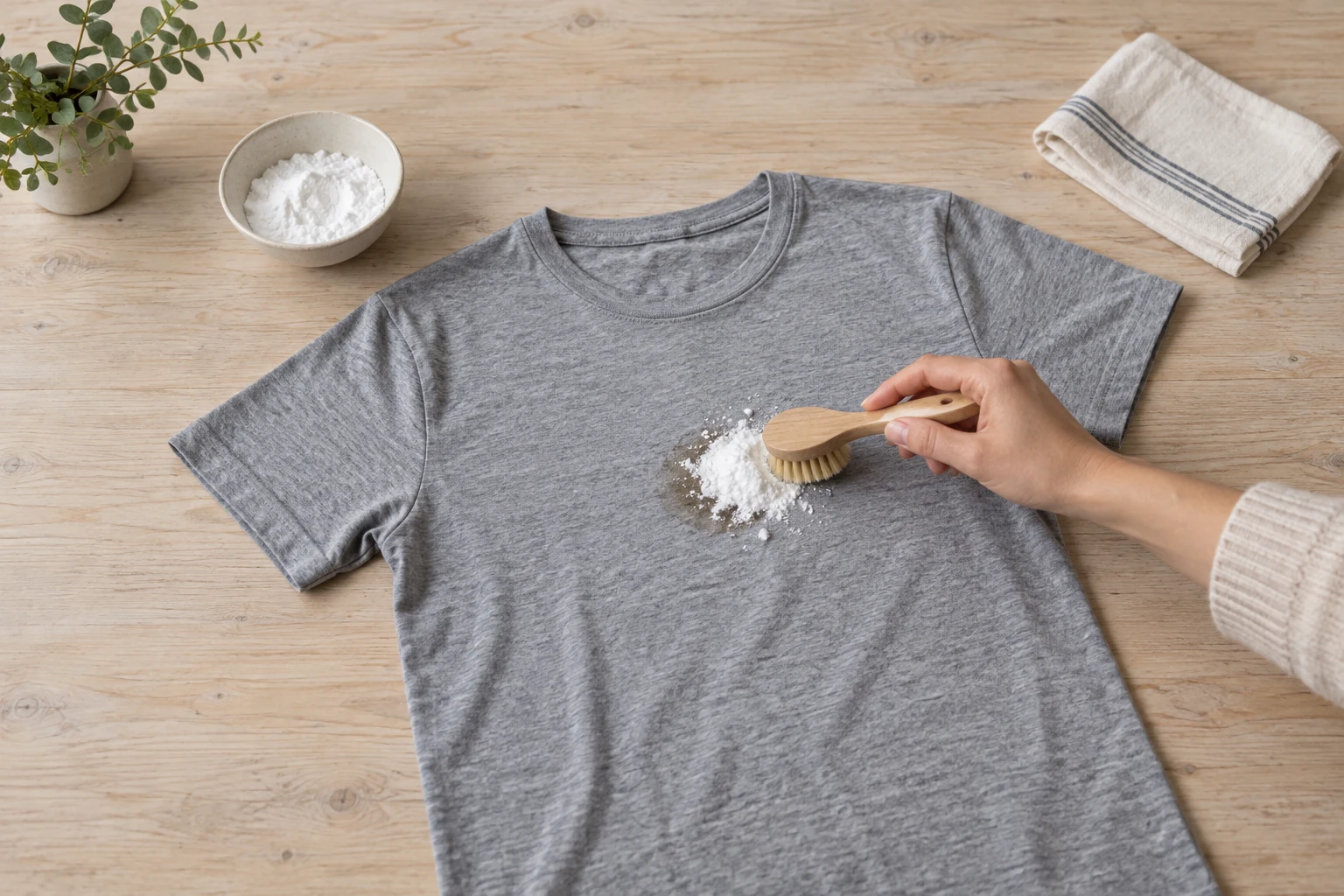
Stain removal
How to get grease out of clothes
Get grease out of clothes with an absorbent powder and dish soap, tackle black car grease, and rescue oil stains that survived the washer and dryer.
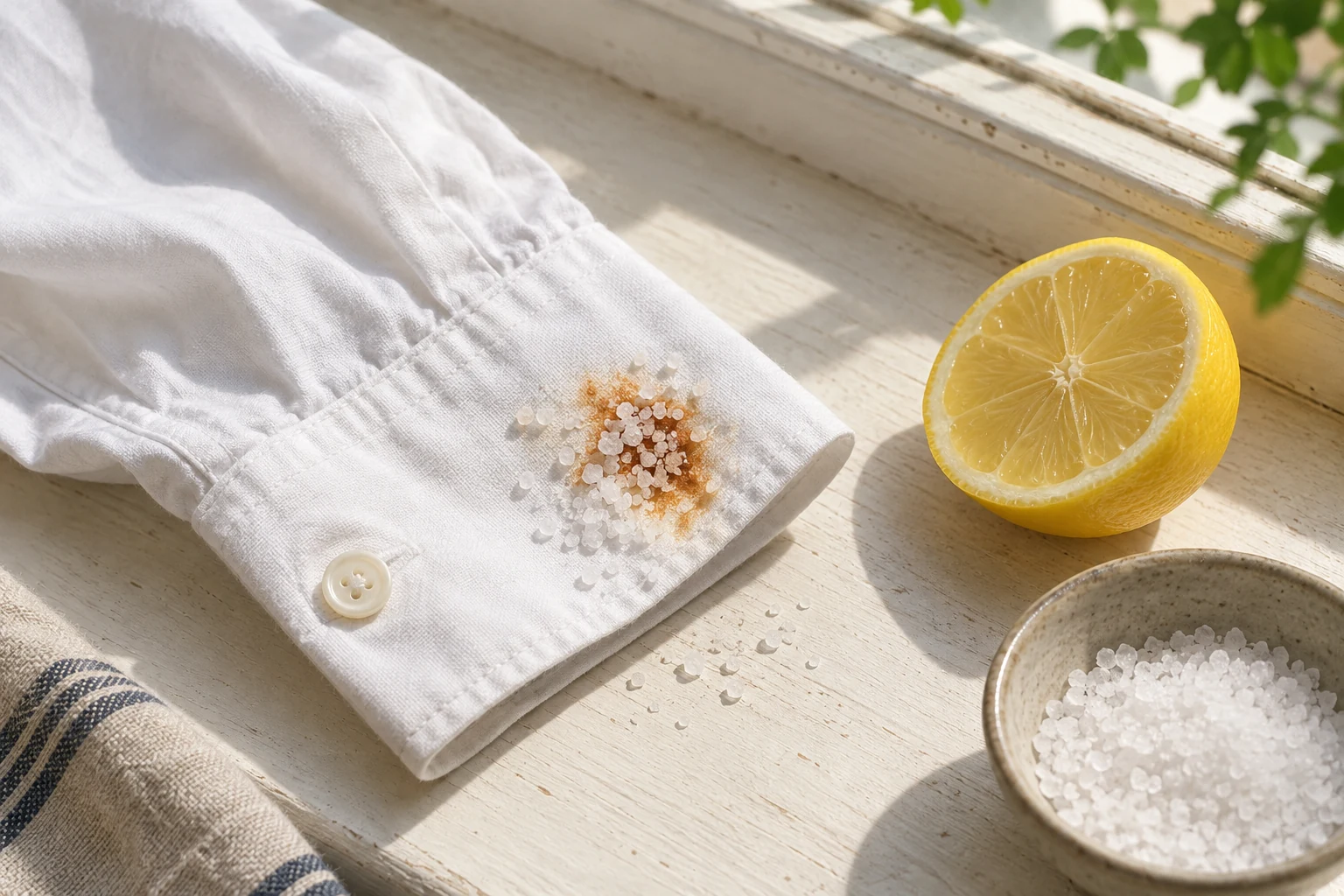
Stain removal
How to get rust out of clothes
Get rust out of clothes with lemon and salt, cream of tartar or a fabric rust remover, why chlorine bleach sets rust, and how to stop orange spots from water.
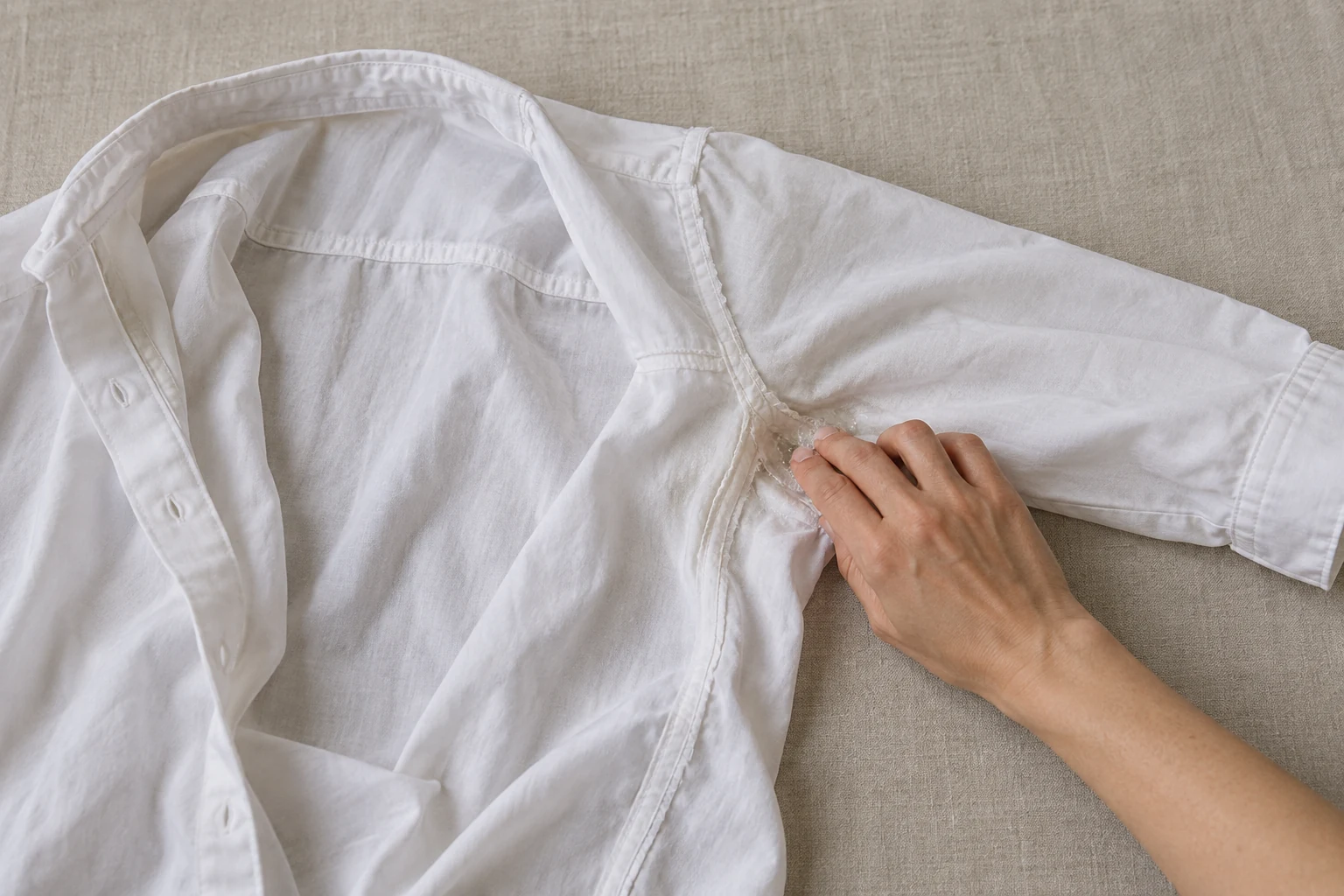
Stain removal
How to remove deodorant and sweat stains
Remove deodorant stains from black shirts, lift yellow sweat stains from white clothes, and prevent armpit stains from building up in the first place.
Washing and ironing
How to use oxygen bleach (sodium percarbonate) on clothes
What sodium percarbonate is, how oxygen bleach powder works, how to use it in the wash or as a soak on whites and colors, and the safety rules that matter.
Washing and ironing
How to wash white clothes and keep them white
How to wash white clothes: sort them, pick the right water temperature and detergent dose, use oxygen or chlorine bleach safely, and rescue whites that yellowed.