How to get ink out of clothes
In this guide
Scrubbing is the first thing most people do to an ink stain, and it is the one move that makes almost every ink stain worse. Ink is liquid color, and rubbing pushes it sideways into clean fibers and deeper into the weave. Whether it came from a pen without its cap in a shirt pocket or a ballpoint that went through the wash with your trousers, the mark needs to be lifted out, not worked in.
Most everyday pen ink is designed to dissolve in something, and once you know what that something is, knowing how to get ink out of clothes becomes a matter of patience rather than luck. Everything below is built around drawing the ink out of the fabric and into something absorbent, a little at a time.
Identify the ink and the fabric first
Ballpoint ink, the kind in most office pens, is a thick, oily paste of dye that water barely touches. It responds well to rubbing alcohol, which is why alcohol is the standard first step in the American Cleaning Institute and university extension guides. Gel and rollerball pens use a thinner, water based ink, some of it made with pigment particles rather than dye. These often loosen with cold water and detergent, then alcohol if needed. Felt tip markers behave more like a dye stain, and Iowa State University Extension treats them with detergent and a soak in color safe oxygen bleach.
Permanent marker and India ink sit at the far end. The University of Georgia Extension describes permanent inks as almost impossible to remove, and the American Cleaning Institute warns that some ballpoint, felt tip and liquid inks cannot be removed at all. That is worth knowing before you spend an evening on a stain that was never going to move.
Then read the care label. Cotton, linen, polyester and most blends tolerate alcohol well. Acetate and triacetate, common in linings and some dressy blouses, are damaged by acetone, so nail polish remover is out. The Georgia guide also cautions that alcohol should be diluted on acrylic. Silk, wool and anything marked dry clean only belong in the last section of this guide. If a symbol puzzles you, our guide to reading laundry symbols will help.
| Ink | First move | Outlook |
|---|---|---|
| Ballpoint | Rubbing alcohol, dabbed and blotted | Usually responds well |
| Gel and rollerball | Cold water and detergent, then alcohol | Often loosens with water |
| Felt tip marker | Detergent, then a color safe oxygen bleach soak | Behaves like a dye stain |
| Permanent marker and India ink | Try, but expect little | Almost impossible to remove |
Skip acetone on acetate and triacetate, and dilute alcohol on acrylic.
How to get ink out of clothes with rubbing alcohol
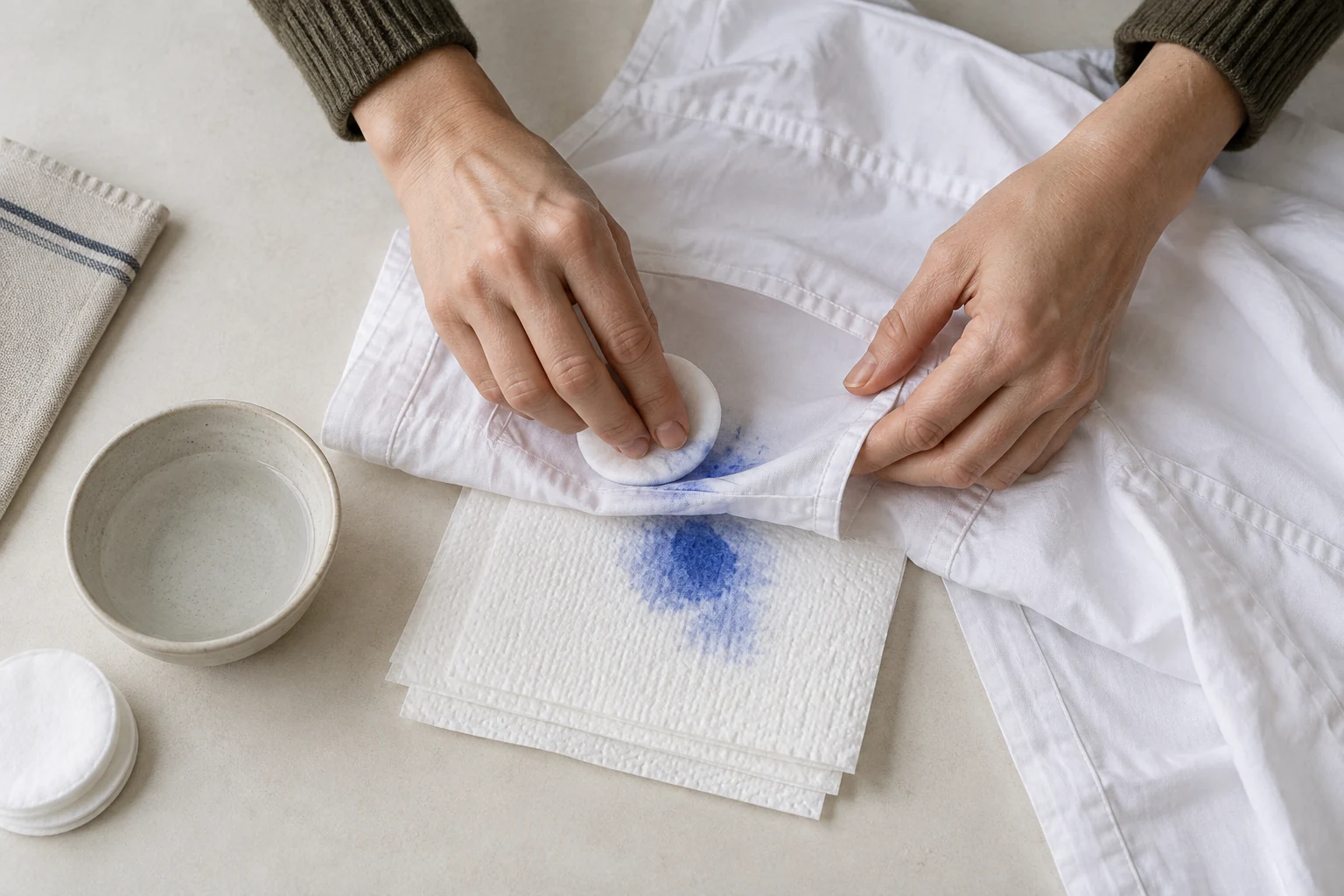
You need ordinary rubbing alcohol from the medicine cabinet, cotton pads or a clean white cloth, and a stack of paper towels. Work on a hard surface you do not mind marking, because ink will come through. Rubbing alcohol is flammable, so open a window, keep it away from candles, gas burners and cigarettes, and rinse it out of the fabric before the garment goes anywhere near a dryer.
Test on a hidden spot
Dab a little alcohol on an inside seam or hem allowance, wait a minute and press with a white cloth. If color comes off on the cloth, alcohol will strip the dye as well as the ink. Stop and see a cleaner instead.
Set up an absorbent pad
Lay the stain face down on a thick fold of paper towel. The ink will travel out of the fabric into the towel rather than spreading into the rest of the garment.
Apply alcohol to the back of the stain
Dab alcohol onto the back of the ink with a cotton pad, pressing firmly rather than rubbing. You should see the ink appear on the towel underneath. Cornell Cooperative Extension describes the same method: change the pad as it picks up the stain and press hard each time.
Move to a clean patch and repeat
Shift the fabric to fresh towel every time the towel shows a print of the stain, and keep going until no more ink transfers. This can take ten minutes or more for a big ballpoint mark. The American Cleaning Institute offers an alternative: stretch the fabric over a jar and drip alcohol through the stain so the ink drops into the jar.
Rinse, pretreat and wash
Rinse the area with water, rub in a little liquid laundry detergent and let it sit for a few minutes. Then wash as the care label allows.
Inspect before drying
Look at the spot while the garment is still wet. If a shadow remains, repeat the alcohol and detergent steps. Dryer heat makes remaining ink much harder to shift, so air dry until you are satisfied.
How to remove pen ink from clothes after drying or washing
Ink that has simply dried on the fabric is still worth treating with the alcohol method, because alcohol dissolves dried ballpoint ink just as it does fresh. Expect more rounds and more towels. If alcohol stalls, Cornell Cooperative Extension lists lukewarm glycerin, sold in drugstores, for ballpoint stains: work it into the ink, blot, keep the spot moist with it while the ink keeps releasing, then rinse and apply a mild detergent solution before washing.
A stain that went through a full wash and a hot dryer is a harder case, but not always a lost one. Treat it exactly as above and check the result before drying again. If the ink has faded to a gray outline and will not move, the dye has probably bonded to the fiber, and more solvent will only weaken the fabric around it.
When a pen leaks in the machine, it rarely marks just one piece. Separate every item with spots, treat each one before it sees the dryer, and look inside the drum and around the door seal for ink before the next load goes in; our guide to cleaning a washing machine shows where residue hides. Anything left there can transfer to clean laundry.
White shirts and colored clothes
White cotton gives you the most options. Once the alcohol has removed as much ink as it will, a wash with chlorine bleach where the label permits it can clear the last faint trace. Cornell and the American Cleaning Institute both keep bleach as the final step, after solvents have done the heavy lifting, never the first. Our guide to washing white clothes explains how to use bleach without yellowing the fabric.
Colored clothes are more delicate here, because the same solvents that dissolve ink can loosen the garment's own dye. The University of Georgia Extension notes that alcohol can remove fabric dye, which is why the hidden seam test matters more on a navy shirt than on a white one. On colors, skip chlorine bleach entirely and stop if you see the fabric around the stain start to look lighter or blotchy.
Silk, wool, leather and dry clean only pieces
Silk and wool are easily damaged by the aggressive steps in most ink methods: ammonia damages both, according to the Georgia guide, and Cornell rules out chlorine bleach on silk, wool and spandex. On these fabrics the most you should do is blot away any wet ink with a dry white cloth. Resist the urge to experiment, because a solvent ring on silk is often more visible than the original dot of ink. See our guide on washing silk for what the fabric does tolerate.
Take dry clean only garments, tailored jackets, silk ties and leather to a professional cleaner, and do it before the ink has time to set. Tell them what kind of pen it was and whether you tried anything. A cleaner has solvents and spotting tools that are not sold for home use. Leather in particular needs its own approach, covered in our guide to cleaning a leather jacket.
Common mistakes
Rubbing the stain
Rubbing spreads ink into a wider, paler stain that is harder to lift. Press and blot, always onto something absorbent, and move to clean towel often.
Reaching for nail polish remover
Acetone dissolves acetate and triacetate fabrics outright and can strip dyes. Unless you know the fiber is safe and have tested it, stay with rubbing alcohol.
Drying to see if it worked
Heat bonds remaining ink to the fiber. Judge the result while the fabric is wet and in daylight, then air dry if you are unsure.
Combining cleaning products
Some ink methods use ammonia and some use chlorine bleach. Never let them meet: the Washington State Department of Health warns that bleach and ammonia produce toxic chloramine gases. Rinse thoroughly between any two products.
Questions people ask
Does hand sanitizer remove ink from clothes?
It can help in a pinch because many sanitizers are mostly alcohol, which is the active ingredient in the standard method. They also contain gels and fragrance that can leave residue, so plain rubbing alcohol is the better choice at home. Test either one on a hidden spot first.
Does hairspray get ink out?
The old tip worked because hairspray used to contain a lot of alcohol. Formulas vary widely today and many add resins that can leave a sticky film on the fabric. Rubbing alcohol does the same job more predictably.
How do I get printer ink or toner out of clothes?
Inkjet ink is a liquid, so blot it and treat it like pen ink, starting with cold water and detergent. Laser toner is a dry powder that melts under heat, so shake or vacuum off the loose particles before any water touches it. University of Illinois Extension then suggests a laundry pretreatment, heavy duty liquid detergent and a cold wash, with color safe bleach for any shadow. Keep the garment away from hot water and the dryer until it is clean.
Can vinegar remove ink from clothes?
Vinegar is not part of the ink methods in the American Cleaning Institute or university extension guides, which rely on rubbing alcohol for ballpoint and detergent for water based inks. It is unlikely to dissolve oily ballpoint ink and adds nothing the standard method lacks. If you try it anyway, rinse it out completely before any bleach step, because vinegar and chlorine bleach release chlorine gas.
Can you get pen ink out of clothes after drying?
Often, yes, especially with ballpoint ink on cotton or polyester. Use the alcohol and blotting method, expect several rounds, and follow with detergent before washing. Ink that has been through a hot dryer may leave a faint outline that will not fully disappear.
Is a dedicated ink stain remover better than alcohol?
Commercial ink removers can work well, and some are designed for inks that alcohol struggles with. Follow the maker's instructions exactly, test on a hidden seam, and rinse thoroughly before trying anything else on the same spot.
Sources and further reading
References used for this guide. Each opens the original page in a new tab.
- American Cleaning Institute stain removal guide Opens in a new tab
- University of Georgia Extension, removing ink stains from textiles Opens in a new tab
- Cornell Cooperative Extension, removing stains at home Opens in a new tab
- Iowa State University Extension AnswerLine, holiday stains by stain type Opens in a new tab
- Washington State Department of Health, dangers of mixing bleach with cleaners Opens in a new tab
- University of Illinois Extension Stain Solutions, toner Opens in a new tab
Keep reading
Washing and ironing
Laundry symbols explained: how to read a care label
What laundry symbols mean, in plain words: the wash tub, triangle, square, iron and circle, plus the dots, bars and crosses that change each instruction.
Washing and ironing
How to wash white clothes and keep them white
How to wash white clothes: sort them, pick the right water temperature and detergent dose, use oxygen or chlorine bleach safely, and rescue whites that yellowed.
Stain removal
How to get grease out of clothes
Get grease out of clothes with an absorbent powder and dish soap, tackle black car grease, and rescue oil stains that survived the washer and dryer.
Washing and ironing
How to wash silk at home
How to wash silk safely: when the label says a cleaner is the better choice, how to test for color bleeding, and how to hand wash, dry and iron silk at home.
Stain removal
How to get blood out of clothes
Get blood out of clothes with cold water and an enzyme soak, rescue dried stains on sheets and jeans, and learn which mistakes set blood for good.