How to clean leather shoes at home
In this guide
Leather shoes rarely need anything dramatic. Most of the time they have a film of street dust, a splash from a puddle or a white tide line of winter salt, and all of it comes off with a brush, a damp cloth and a little patience. Knowing how to clean leather shoes properly is less about special products than about using very little water, keeping heat away and putting back the moisture that cleaning takes out.
This guide is for smooth leather: dress shoes, loafers, leather boots and leather sneakers. Suede and nubuck have a napped surface that water marks easily and need a different method, and polishing for shine is a separate job that comes after cleaning. Both have their own guides, linked below.
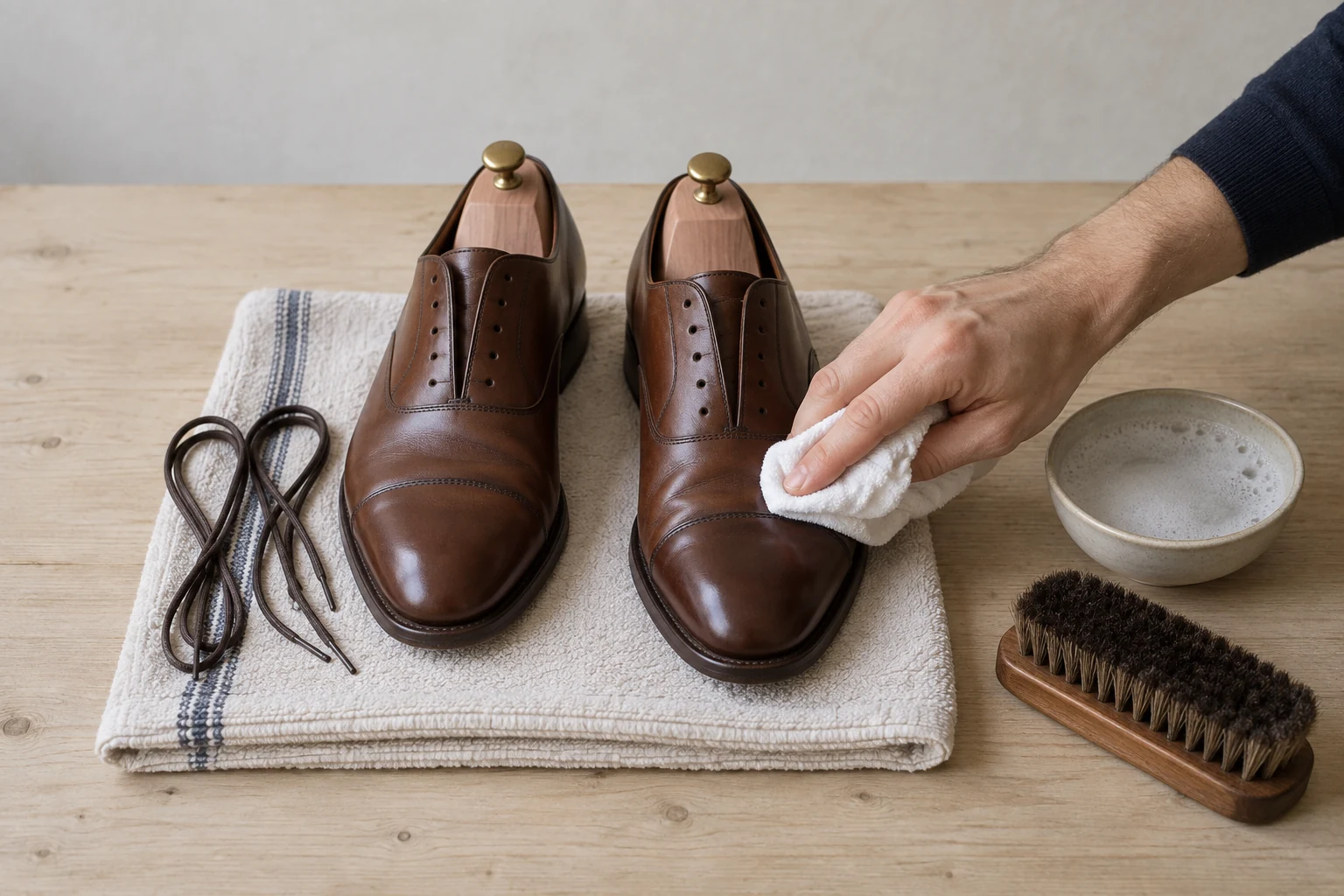
What you need, and what to leave out
A horsehair brush or any soft shoe brush, two or three soft cotton cloths (old T shirts work), a bowl of lukewarm water, a mild soap or a purpose made leather cleaner or saddle soap, and a leather conditioner or cream polish in a matching or neutral shade. Shoe trees, ideally cedar, or crumpled plain paper keep the shape while the shoes dry. For salt stains, add white vinegar. Nothing more is needed for cleaning leather shoes with household products.
Leave out anything harsh. Strong degreasers, household sprays, alcohol based wipes and bleach strip the finish and the oils that keep leather flexible, and repeated use leads to dullness and cracking at the flex point across the toe. Petroleum products such as WD 40 and petroleum jelly are sometimes suggested online as quick fixes; they are not made for leather, can darken it unevenly and may leave a residue that later polish will not grip, so a proper conditioner is the safer choice. Never put leather shoes in the washing machine; Clarks is explicit that leather footwear should not go in.
How to clean leather shoes step by step
Work at a table with a towel or newspaper down. Test any cleaner on the inside of the heel counter or tongue first, especially on pale, aniline or vintage leather that can darken when wet.
Remove the laces and insert trees
Laces hide dirt in the eyelets and get stained by cleaner. Take them out and wash them separately. Shoe trees or paper give the upper a firm surface to clean against and keep creases from deepening.
Brush off dust and dry dirt
Brush briskly all over, paying attention to the welt, the seam where the upper meets the sole, where grit collects. Dry dirt lifts off; if you wet it first, it turns to mud and grinds into the grain.
Wipe with a barely damp soapy cloth
Mix a few drops of mild soap into lukewarm water, dip a cloth, and wring it until it is only damp. Wipe the uppers in small circles, turning the cloth to a clean area as it darkens. If you use saddle soap or a leather cleaner, work a little lather on the cloth and follow the maker's directions. The leather should look evenly damp, never soaked.
Rinse off the soap
Wipe the whole shoe again with a second cloth dampened in plain water. Soap left in the grain dries to a dull film and keeps drawing moisture out of the leather.
Dry slowly at room temperature
Leave the shoes with trees or paper inside, in a ventilated spot away from radiators, hair dryers and direct sun, as Clarks advises. Allow several hours, or overnight for boots. They should feel dry and cool to the touch, with no dark damp patches, before the next step.
Condition or cream
Rub a small amount of leather conditioner or cream polish into the leather with a cloth, in circles, then let it absorb for 10 to 15 minutes and buff with a brush. This replaces the oils cleaning removed. For a shine on top, continue with our guide to polishing shoes.
Salt stains, scuffs and other marks
Winter salt leaves a white, wavy line and, left on, dries and cracks the leather. Clarks suggests a mix of two parts water to one part white vinegar; the shoe blog Shoegazing uses a similar vinegar solution. Dampen a cloth, wipe from the top of the shoe down toward the sole in one direction, turn the cloth often so you are not spreading salt around, and repeat until no white shows as the leather dries. Finish with a cloth dampened in plain water, let the shoes dry, and condition. Shoegazing notes the important point: get all the salt out before any cream or wax goes on, or you seal it in.
Light scuffs on the toe often disappear with cream polish in a matching shade, since the color fills the scratched grain. Deeper gouges on colored leather need a cobbler's color touch up. Fresh oil or grease marks can sometimes be drawn out by covering them with talc or cornstarch overnight and brushing it away; older oil marks on light leather are best left to a professional. Water spots from rain usually vanish if you dampen the whole panel evenly with a cloth and let it dry, so there is no edge left to show.
| Mark | First move | Keep in mind |
|---|---|---|
| Winter salt | Wipe top down with two parts water to one part white vinegar | Remove all salt before any cream or wax |
| Light scuffs | Cream polish in a matching shade | Deep gouges on colored leather need a cobbler |
| Fresh oil or grease | Cover with talc or cornstarch overnight, then brush | Old oil marks on light leather go to a professional |
| Rain spots | Dampen the whole panel evenly and let it dry | An even panel leaves no edge to show |
How to clean leather shoes inside
The inside of a shoe collects sweat, and that is where smells begin. Pull out removable insoles and clean them separately with a damp soapy cloth. Wipe the leather lining with a cloth barely dampened in water and a drop of mild soap, then with plain water, and leave the shoes open to dry fully before refitting the insoles. For odor, a light dusting of baking soda left overnight and shaken out absorbs a surprising amount. Cedar shoe trees are the long term fix, because they draw out moisture after each wear and keep the shape.
The single habit that keeps shoes cleanest inside is rest. Leather linings need about a day to dry out after being worn, so rotating between two pairs rather than wearing one pair daily helps both. Our guide to storing shoes covers trees, bags and boxes, and getting smells out explains the chemistry of odor if a pair needs more than baking soda.
How to clean leather shoes with mold
Shoes stored in a damp closet or basement can grow a white or green fuzz. Take them outside before you touch them, and wear a mask if you are sensitive to mold. Brush the growth off outdoors with a soft brush you can wash or throw away, then wipe the leather with a cloth dampened in a mix of equal parts rubbing alcohol and water, as the University of Florida extension suggests for mildewed leather; test it on a hidden spot first, since alcohol can lift color from some finishes. If marks remain, follow with a quick wipe of saddle soap lather. Wipe again with plain water, dry the shoes in fresh air away from direct heat, and condition them, since alcohol is drying.
Clean the inside the same way, and deal with the storage problem too, or the mold will return. Moving the shoes to a drier, ventilated spot matters more than any product. Our guide to removing mold from clothes explains how to treat anything else stored nearby. If mold has stained the lining deeply or keeps coming back, a cobbler can clean and treat the shoes professionally.
When smooth leather rules do not apply
Suede and nubuck mark with water and need a suede brush, an eraser and a spray protector instead; our guide to cleaning suede shoes walks through it. White leather sneakers take a little more soap and often a magic eraser on the rubber soles, which is covered in our guide to cleaning white sneakers. Patent leather has a plastic coating and only needs a damp cloth and a soft buff, no conditioner. Exotic skins and waxed or oiled work boot leathers usually have their own maker recommended products, so check the brand's care page before using a general conditioner on them.
Common mistakes
Soaking the leather
Too much water swells the leather and then dries it stiff. A cloth wrung until barely damp is all the water a clean needs.
Drying next to a heater
Direct heat shrinks and cracks leather and can loosen glued soles. Dry slowly at room temperature with trees or paper inside.
Polishing over dirt or salt
Wax and cream seal whatever is on the surface. Clean and dry first, then condition and polish.
Skipping conditioner after cleaning
Every clean removes some natural oil. Without conditioner, the flex crease across the toe dries out and eventually cracks.
Questions people ask
Can you wash leather shoes with soap and water?
Yes, as long as the soap is mild and the water stays on a cloth rather than in a basin. Wipe with a barely damp soapy cloth, rinse with a plain damp cloth, dry slowly, and condition afterward. Never submerge leather shoes or put them in the washing machine.
Can you use Dawn dish soap to clean leather shoes?
A drop or two in a bowl of water is gentle enough for an occasional clean of finished leather, and many people use it that way. Dish soap is designed to strip grease, though, so used often or undiluted it also strips the oils leather needs. Rinse carefully and condition afterward, or use a saddle soap or leather cleaner made for the job.
How do you clean leather shoes without polish?
Brush them, wipe with a damp cloth and mild soap, rinse, and let them dry. Then use a neutral leather conditioner or leather balm instead of polish; it restores softness and a gentle sheen without adding color. Buffing with a horsehair brush afterward brings up a soft glow.
How often should I clean leather shoes?
Brush them after every few wears and whenever they are dusty or muddy. A full clean and condition every month or two suits shoes worn weekly, and more often in winter when salt is around. Clean them before storing them for a season.
Sources and further reading
References used for this guide. Each opens the original page in a new tab.
Keep reading
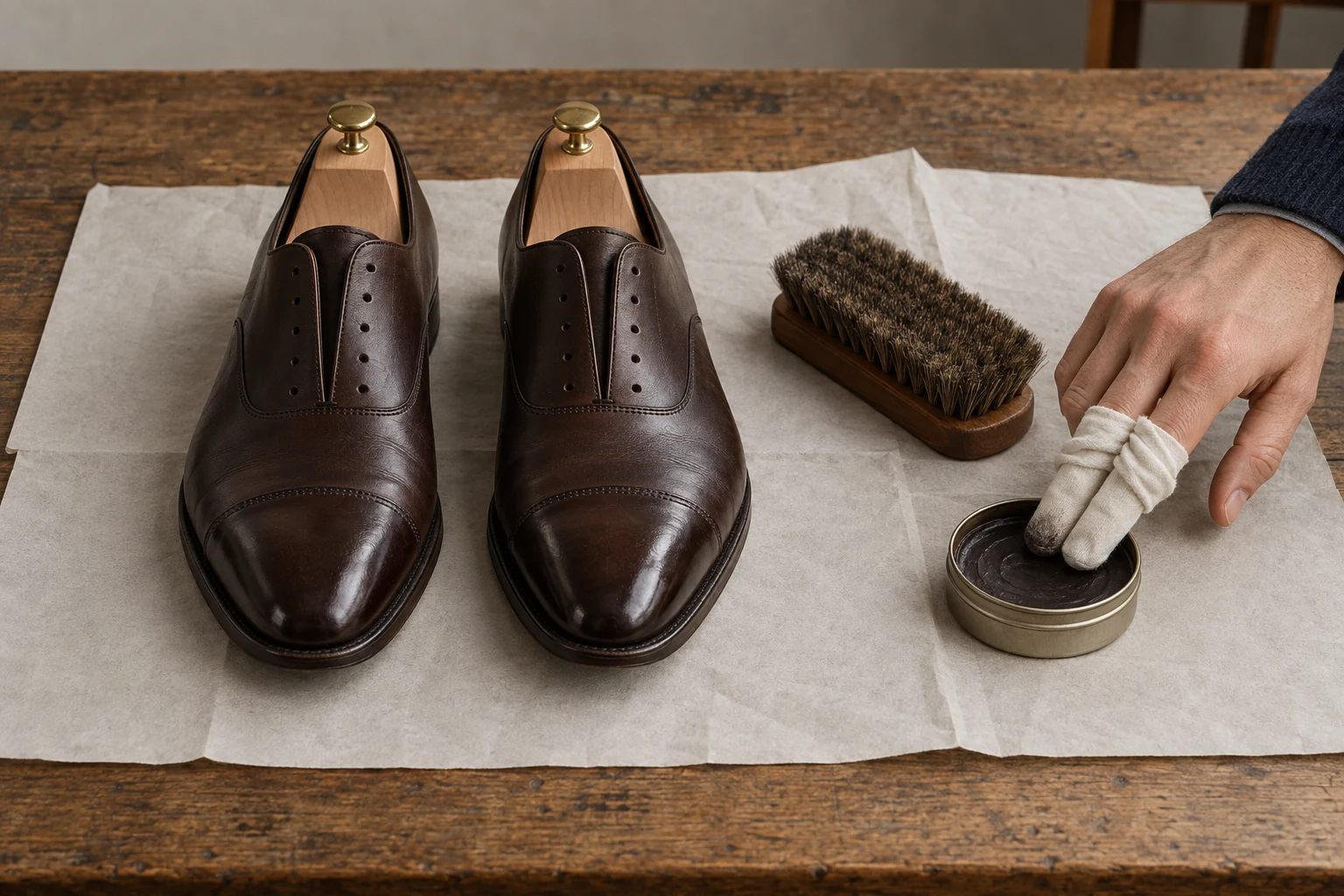
Shoes and jewelry
How to polish shoes at home, step by step
How to polish leather shoes at home: clean and condition first, use cream for color and wax for shine, buff properly, and keep the shape with shoe trees.
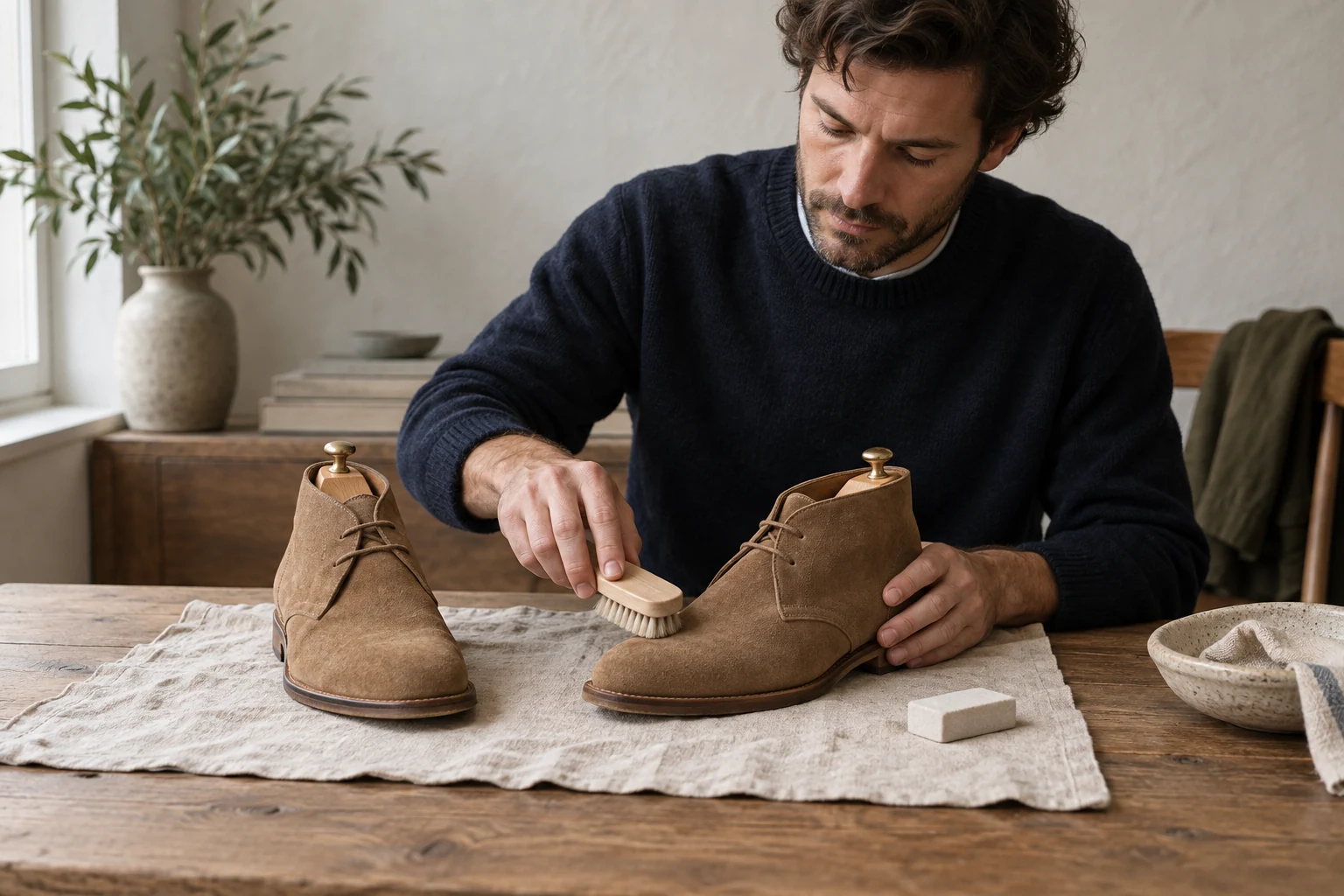
Shoes and jewelry
How to clean suede shoes without flattening the nap
Clean suede shoes at home with a brush, a suede eraser and a little patience, and learn how to handle water stains, oil marks and salt lines without soaking them.
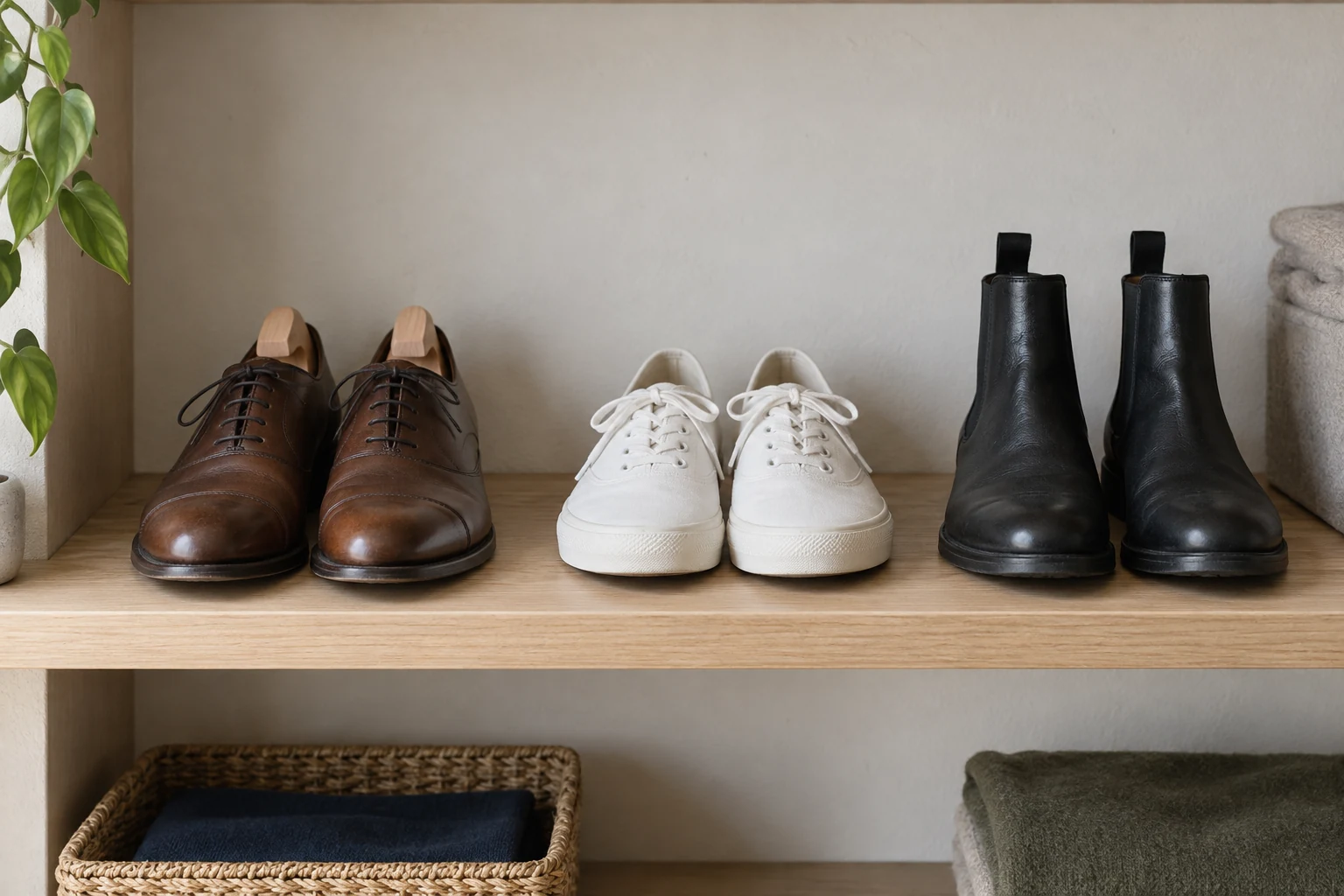
Closet and packing
How to store shoes so they last
How to store shoes at home: shoe trees for leather, where daily pairs go, closet and under bed storage, boxes versus bins, and how to put shoes away for a season.
Shoes and jewelry
How to clean white sneakers by material
How to clean white sneakers at home: a gentle method for leather, canvas and mesh, what to do about soles, laces and yellowing, and why the washer is a last resort.
Shoes and jewelry
How to clean a leather jacket at home
How to clean a leather jacket safely: routine wiping, gentle spot cleaning, when and how to use leather conditioner, what never to do, and when to call a specialist.