How to dye clothes at home
In this guide
The most disheartening home dye result is not a blotch but a jacket that comes out exactly the shade it went in, because the fabric never took the dye at all. Done well, dyeing gives a faded black T shirt, a stained white linen shirt or a thrifted cotton dress in almost the right color a second life for the price of a bottle of dye. How to dye clothes successfully depends mostly on preparation: the right dye for the fiber, enough water, and patient stirring.
This guide explains which fabrics you can dye, how to choose a dye, a step by step method for bucket or sink dyeing, what changes in a washing machine or on the stove, how to get a true black, and how to wash newly dyed clothes.
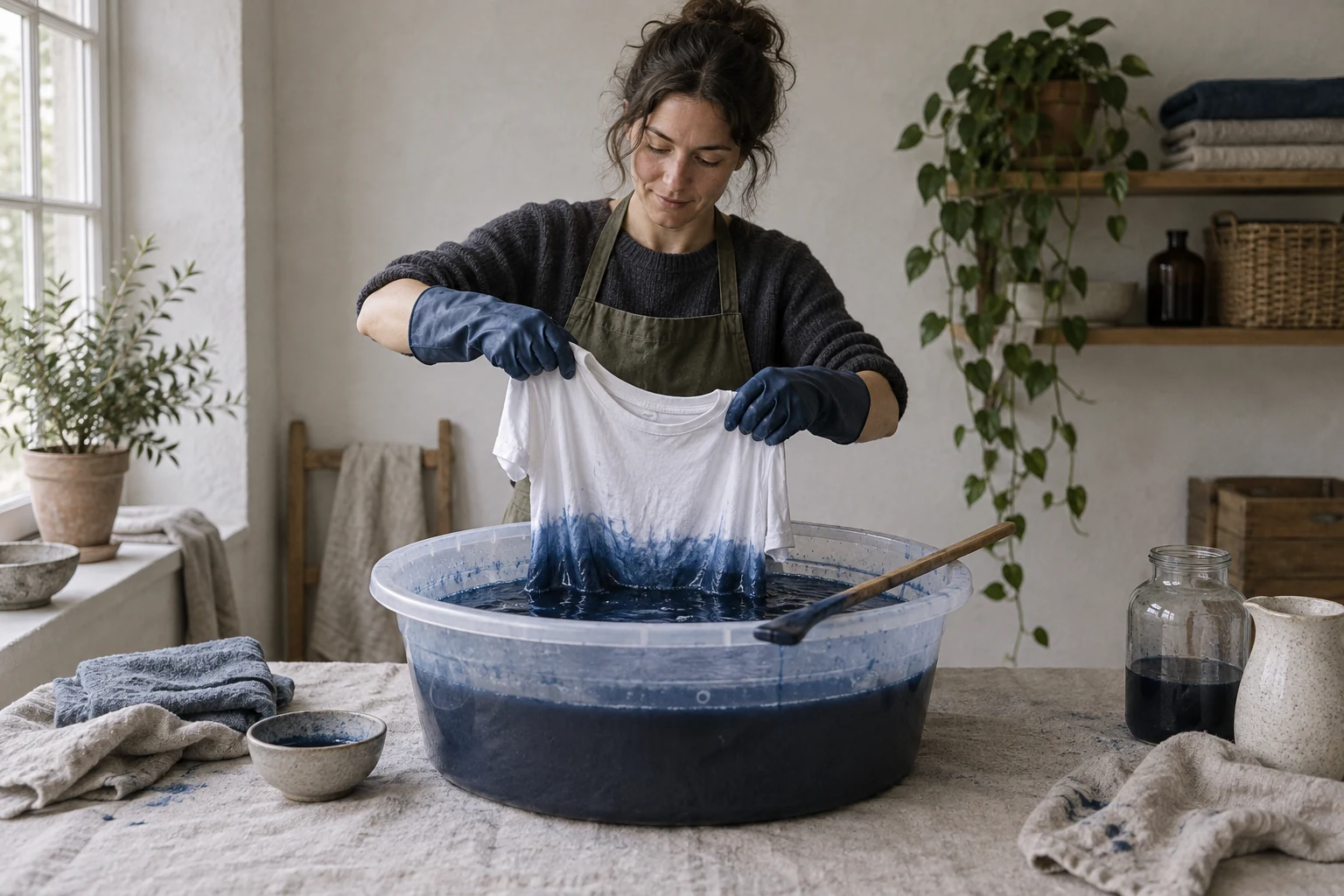
Check the fabric before you buy dye
Look at the care label for the fiber content. Natural and semi natural fibers dye well at home: cotton, linen, hemp, rayon, viscose and modal on the plant side, and silk and wool on the animal side. Nylon also takes dye easily, often faster and darker than anything else. Polyester, acrylic and acetate resist ordinary dyes. Rit's guidance is that anything with more than about 35% synthetic content needs a dye made for synthetics, and those need water close to boiling, around 200°F (93°C), held on a stove, so they cannot be done in a sink or a washing machine.
Two further details matter. Most garments are sewn with polyester thread, so seams and topstitching often stay their original color, which can look deliberate on jeans and odd on a dress. And dye is transparent: it mixes with the existing color rather than covering it. White and off white fabric gives you the color on the bottle; a yellow shirt dyed blue turns green; and you can only go darker, not lighter, unless you strip the color first with a color remover. Faded or bleach damaged areas take dye differently too, so a sun bleached patch may still show.
| Fiber | How it takes dye | Dye to use |
|---|---|---|
| Cotton, linen, rayon, viscose, modal | Dyes well at home | All purpose with salt, or fiber reactive with soda ash for lasting color |
| Silk and wool | Dyes well at home | All purpose with vinegar, or acid dye with heat |
| Nylon | Takes dye easily, often faster and darker | All purpose with vinegar, or acid dye |
| Polyester, acrylic, acetate | Resists ordinary dyes | A synthetics dye near boiling on the stove |
| More than about 35% synthetic | Ordinary dye barely takes | A synthetics dye on the stove, not a sink or washer |
Dye is transparent, so it mixes with the existing color and can only go darker.
Choose the right dye
All purpose dyes, the kind sold in supermarkets and craft stores, are the easiest for beginners. They mix several dye types so they work on many fibers, with salt added for cotton and linen and vinegar for silk, wool and nylon. Their drawback is fastness: on cotton they tend to bleed and fade over repeated washing, which a dye fixative after dyeing helps reduce.
For permanent color on cotton, linen and rayon, fiber reactive dyes (often sold as Procion MX types) are the better choice. They bond chemically with plant fibers in warm water with soda ash as the fixer, need no heating, and hold their color through countless washes. Acid dyes, used with vinegar and heat, give the most lasting color on wool, silk and nylon. Disperse dyes are the only kind that truly color polyester. Natural dyes from onion skins, avocado pits or turmeric can be lovely, but they generally need a mordant to fix them and give softer, less predictable results; treat them as a craft project rather than a quick fix.
How to dye clothes at home, step by step
This sink or bucket method uses all purpose dye and suits one or two garments. Work in a well ventilated space, cover nearby surfaces, and wear rubber gloves. Use a plastic tub, a bucket or a stainless steel sink, and never use pots, spoons or containers that will go back to food use. If your dye is a powder, wear a dust mask while measuring it.
Weigh and prewash the garment
Weigh the dry garment on a kitchen scale; as a rule of thumb, one bottle of liquid dye or two packets of powder colors about 2 pounds (0.9 kg) of fabric, and you double it for very deep shades. Wash the garment in warm soapy water without fabric softener to remove finishes that block dye, and treat any stains first, because dye will not hide them.
Prepare the dyebath
Fill the tub with enough hot water for the garment to move freely, about 3 gallons per pound of fabric (roughly 25 liters per kg), at around 140°F (60°C). Add 1 cup of salt for cotton, linen or rayon, or 1 cup of white vinegar for silk, wool or nylon, plus a teaspoon of dish detergent to help the dye spread evenly. Stir in the dissolved dye.
Test the color
Dip a paper towel or a scrap of the same fabric into the bath. Add dye if it is too light or water if it is too dark. Remember that wet fabric always looks darker than it will when dry.
Add the wet garment and stir
Wet the garment and squeeze it out, then submerge it. Dry fabric absorbs unevenly and leaves blotches. Stir slowly and constantly, especially for the first 10 minutes, opening folds and moving the fabric around so every part meets the same dye.
Leave it in the bath
Keep it in the dyebath for 10 minutes to an hour, stirring often. Around 30 to 60 minutes gives the color shown on the package; polyester blends need at least 30 minutes, and nylon darkens quickly. Take it out when it is a shade or two darker than your goal.
Rinse, fix and wash
Apply a dye fixative now if you are using one. Then rinse in cool water, gradually getting cooler, until the water runs almost clear. Wash the garment on its own in warm water with a mild detergent for its first wash, and dry as the care label says.
Dyeing in a washing machine or on the stove
A washing machine is convenient for large or several items, because it keeps the fabric moving evenly. Follow the dye maker's instructions for your machine type, since front loaders use much less water and some need the dye added through the detergent drawer. Rit states that its dyes will not permanently stain the metal parts of a washer, but it recommends cleaning up straight away: wipe the lid and seals, then run a hot cycle on the largest load setting with detergent, a couple of cups of chlorine bleach and a few old towels. If you used vinegar in the dyebath, run a plain rinse cycle first so no acid meets the bleach. Our guide to cleaning a washing machine covers routine maintenance.
The stove method keeps the dyebath hot throughout, which helps deep colors take with all purpose dyes and is the only way to dye polyester with a synthetics dye. Use a large stainless steel or enamel pot kept only for dyeing, keep the water at a low simmer, stir constantly, and never leave the pot unattended. Anything that does not fit in the pot cannot be done this way.
How to dye clothes black
Black is the most requested color and the hardest to get right. It often comes out charcoal, navy or purple black, because black dye is a blend of several colors and fibers take them up at different rates. Use double the usual amount of dye, keep the water as hot as the fabric allows, leave it in for the full hour with frequent stirring, and add a dye fixative afterward. A fiber reactive black on cotton gives a deeper and more lasting result than an all purpose dye.
For faded black jeans and T shirts, a dedicated black dye kit or a fiber reactive black restores the color well. Remember the polyester thread, which will stay its faded color, and any polyester in stretch denim, which will take less dye than the cotton. Our guide to washing jeans helps keep the refreshed color from fading again.
Washing newly dyed clothes, and fixing mistakes
Even well fixed dye can release some color at first, so wash newly dyed pieces alone or with similar dark colors for the first few washes, in cool water. Our guide to separating laundry explains why, and if another garment does pick up color, see removing dye transfer.
If the result is blotchy, you can usually redye it darker with more stirring and more water. If the color is wrong, a color remover can strip much of an all purpose dye from natural fibers, after which you can start again, though it may not work on every fabric and will not work on synthetics. Uneven spots from bleach or sun damage are the hardest to fix, and sometimes the practical answer is a deeper color or a deliberate technique such as tie dye or ombré.
Common mistakes
Too little water
A crowded dyebath cannot reach every fold, and the result is patchy. Use about 3 gallons per pound of fabric and a container large enough to stir freely.
Putting in dry fabric
Dry fibers soak up dye at different rates. Always wet the garment and wring it out before it goes into the bath.
Ignoring the fiber content
Ordinary dye barely touches polyester or acrylic. Check the label first, and use a synthetics dye on the stove if the fabric is mostly synthetic.
Using kitchen pots
Dye equipment should never go back to food use. Keep a separate bucket, pot and spoons for dyeing.
Questions people ask
Can you permanently dye clothes?
Yes. Fiber reactive dyes on cotton, linen and rayon, and acid dyes on wool, silk and nylon, bond with the fiber and hold their color for the life of the garment. All purpose dyes are less permanent on cotton and tend to fade and bleed over time, though a dye fixative helps.
Do you need to boil water to dye clothes?
Not for most fabrics. All purpose dye works in hot tap water around 140°F (60°C), and fiber reactive dyes work in warm water. Only polyester and other synthetics need near boiling water, which is why they must be dyed in a pot on the stove.
Can I soak fabric in dye overnight?
With all purpose dye, the maker recommends up to about an hour with stirring; most of the color takes in that time, and leaving fabric unstirred in a cooling bath can make it uneven. Some low water and fiber reactive techniques do use long batching times, but follow that dye's own instructions.
What is the easiest way to dye clothes?
A liquid all purpose dye in a large bucket or a top loading washing machine is the simplest method for a beginner. Start with a white cotton T shirt, plenty of hot water and constant stirring for the first 10 minutes.
Sources and further reading
References used for this guide. Each opens the original page in a new tab.
- How to dye natural fabrics, Rit Dye Opens in a new tab
- How to dye synthetic fabrics, Rit Dye Opens in a new tab
- Fiber reactive dye: general information, Dharma Trading Co. Opens in a new tab
- Will Rit stain my washing machine, Rit Dye Opens in a new tab
- How long to leave fabric in the dyebath, Rit Dye Opens in a new tab
Keep reading
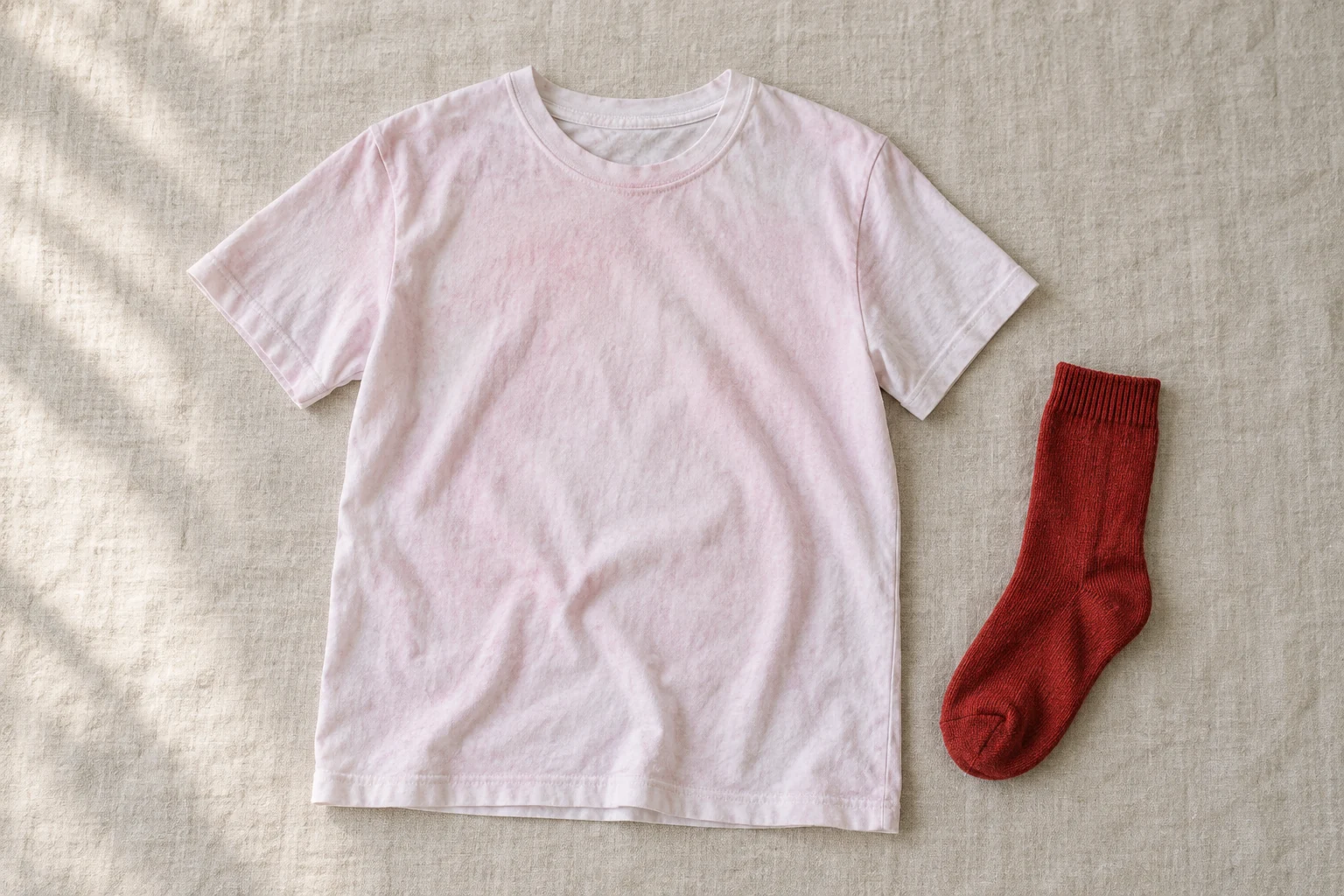
Stain removal
How to fix dye transfer: color run remover and other fixes
Red sock turned the load pink? How to fix dye transfer on white and colored clothes: rewashing, oxygen bleach soaks, color run remover, and what to do after drying.
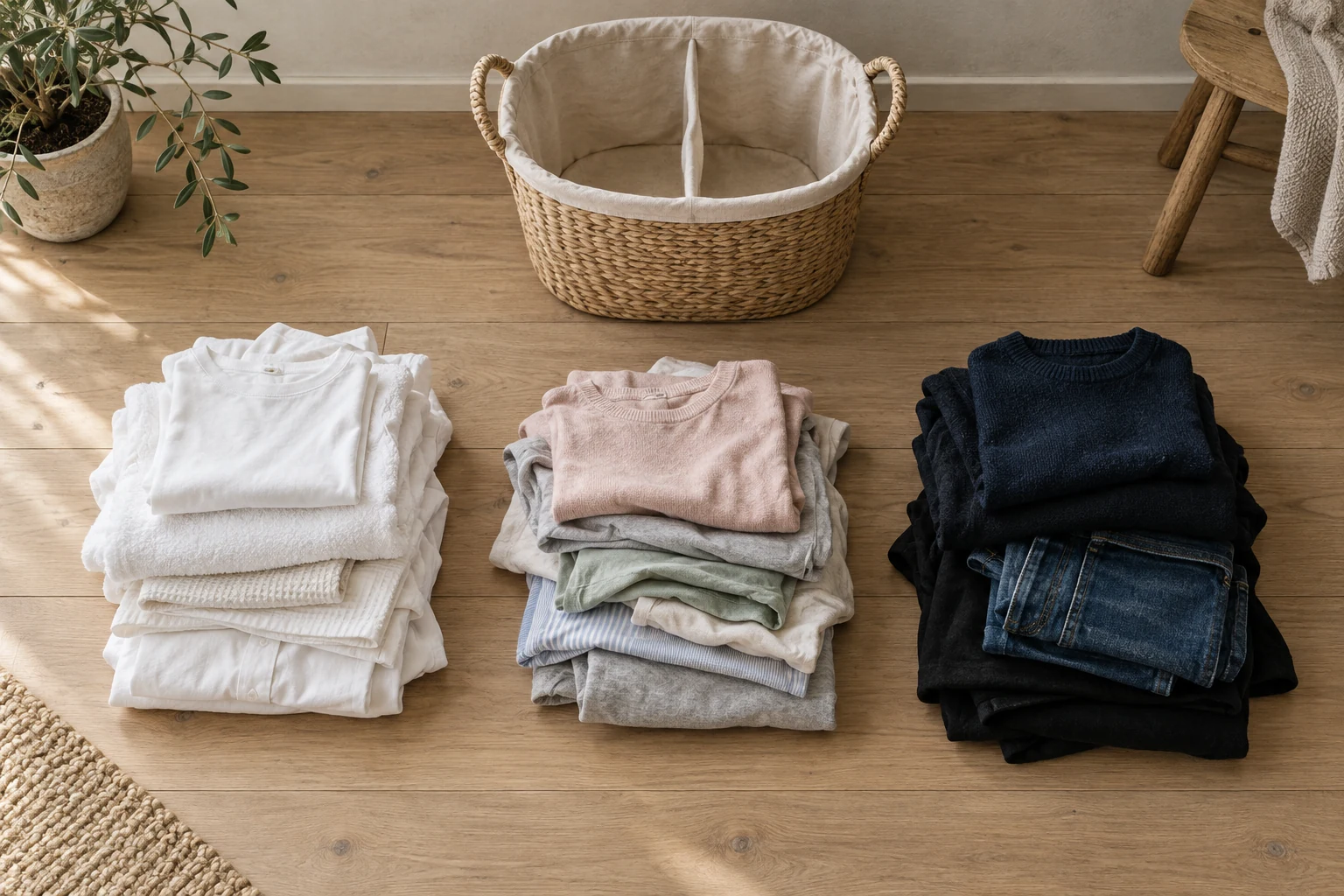
Washing and ironing
How to separate laundry by color, fabric and soil
How to separate laundry into whites, lights, darks and delicates, which colors can be washed together, what temperature to use and when sorting really matters.
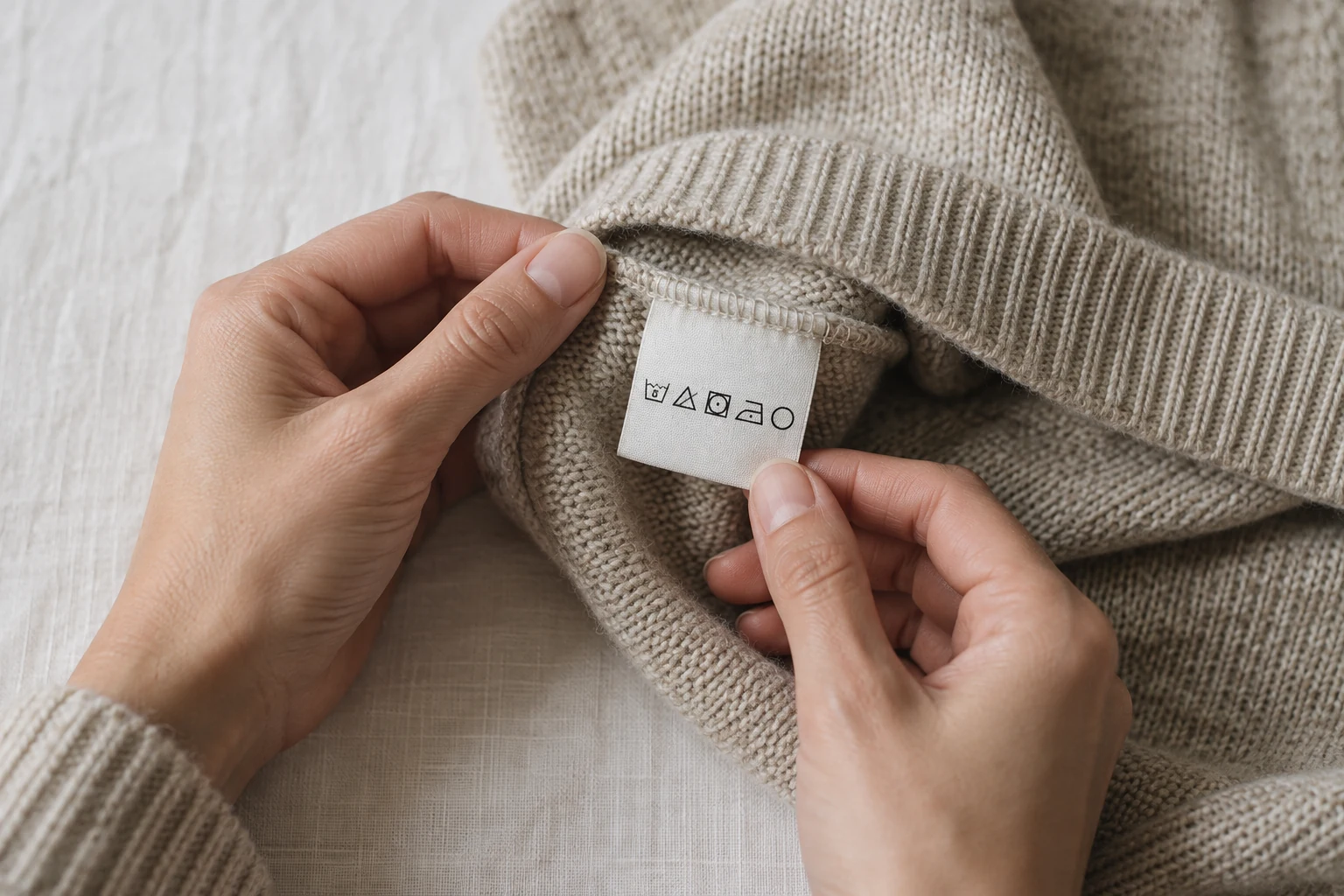
Washing and ironing
Laundry symbols explained: how to read a care label
What laundry symbols mean, in plain words: the wash tub, triangle, square, iron and circle, plus the dots, bars and crosses that change each instruction.
Washing and ironing
How to wash jeans and how often to do it
How to wash jeans so they keep their color and fit: how often to wash, inside out in cold water, air drying, raw denim and what to do if your jeans shrink.
Everyday style
How to distress jeans at home
How to distress jeans by hand: sanded fades, white thread rips at the knee and a frayed hem, with where to place wear and how to keep holes from growing.