How to iron pants with a crease
In this guide
The trousers came back from the wash looking tired: the front line has gone soft, there is a sitting crease behind each knee, and the pocket bags have left rumpled outlines at the hips. Tomorrow is the interview, or the wedding, or simply a day when you want to look put together. A good press fixes all of it in about ten minutes once you know the order.
Learning how to iron pants is mostly about two habits. First, you press rather than iron, lifting and lowering the iron instead of pushing it around, because sliding stretches the fabric along the crease. Second, you let the fabric cool before you move it, because the crease sets as the fibers cool, not while they are hot. Everything else in this guide builds on those two ideas.
Check the label and set the iron
The dots on the iron symbol tell you the ceiling. Under the GINETEX care labeling system, one dot means a soleplate of at most about 248°F (120°C) and no steam, typical for acrylic and nylon. Two dots allow about 320°F (160°C), the setting for wool, silk, polyester and viscose. Three dots allow about 410°F (210°C) for cotton and linen. GINETEX is clear that you set the heat by the label, not by guessing the fiber, because blends and finishes change the answer. If a symbol is unfamiliar, our guide to reading care labels explains each one.
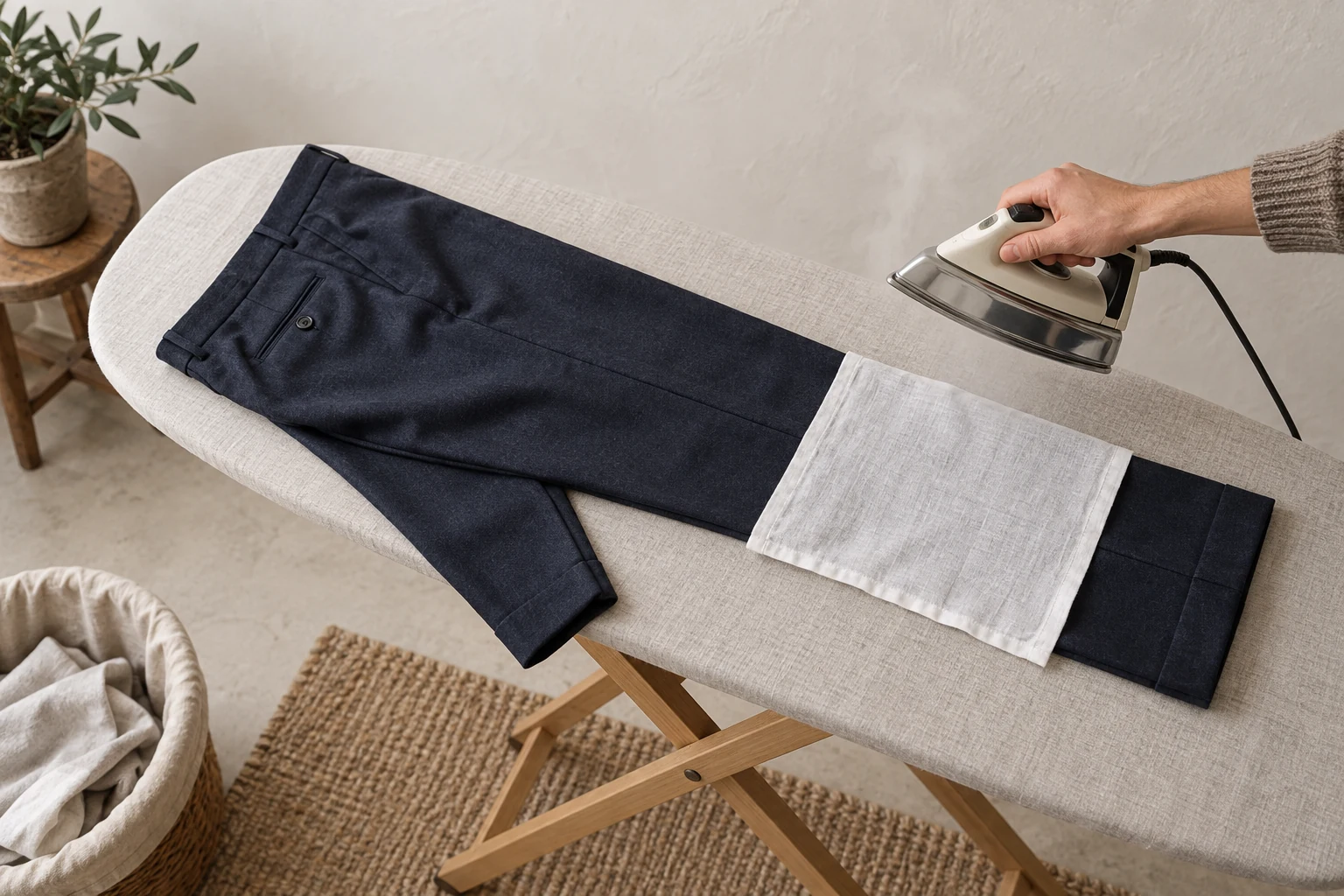
Before you start, test the heat on a hidden spot such as the pocket bag or the inside of the waistband. Have a press cloth ready: a clean, plain cotton handkerchief or a piece of old white sheet works. Dampen it for wool and for dark fabrics, which turn shiny when a hot soleplate flattens their surface. Wash the pants first if they are dirty, since heat can fix a stain in place. If you do scorch something, our guide on removing scorch marks covers what can and cannot be rescued.
| Symbol | Maximum soleplate heat | Typical fabrics |
|---|---|---|
| One dot | About 248°F (120°C), no steam | Acrylic and nylon |
| Two dots | About 320°F (160°C) | Wool, silk, polyester and viscose |
| Three dots | About 410°F (210°C) | Cotton and linen |
Set the heat by the label rather than the fiber, since blends and finishes change the answer.
How to iron pants with a crease, step by step
This order comes from home sewing practice, and it works because you finish the bulky top before you touch the legs, so nothing you have already pressed gets crushed again. Use a padded ironing board and give yourself room at the narrow end.
Press the pockets from the inside
Turn the pants inside out, pull the pocket bags out flat and press them. Flat pockets will not leave lumpy outlines on the front when you press over them later. Turn the pants right side out again.
Work the waistband around the board
Slide the waist over the narrow end of the board and press the waistband and the upper section down to the crotch, rotating as you go. Use light pressure here. Pressing hard over zippers, pocket bags and seams can leave a shiny imprint of them on the outside, and on some fabrics that mark is permanent. If there are pleats, set them where they were stitched and steam them lightly into place.
Line up the seams and find the crease
Lay the pants along the board, legs together, and fold each leg so the inseam sits exactly on top of the outseam. When the seams match, the old crease appears on its own at the front and back edges. Flip the upper leg back out of the way so you are working on one leg at a time.
Press the crease under a damp cloth
Lay the press cloth over the fold and press: set the iron down for a few seconds, lift it, move a few inches along, and set it down again. Keep the weight of the iron on the fold itself, not on the side seams, so they do not print through.
CheckYou should see a clean, flat edge with no second line beside it.
Let it cool, then do the other leg
Leave the leg on the board until it is cool to the touch before you move it. This is what sets the line. Then swap legs and repeat. On heavy wool, some tailors hold a wooden clapper on the crease while it cools to make the line sharper.
Hang the pants straight away
Hang them by the cuffs from a clip hanger or fold them over a bar along the crease. Leaving them over a chair undoes half the work.
Where the crease should go
Always follow the crease the maker pressed. A trouser crease runs down the center of each leg, front and back, and on pleated pants the front crease usually rises to meet the inner pleat at the waist. The back crease often stops around the seat. A sewing guide from the Home Sewing Association notes that some people press flat front pants firmly only in the lower leg, so the legs hang straight without a hard line all the way up. Both are accepted; what matters is consistency.
A second crease, the classic ironing mistake, happens when the seams were not lined up and the new fold lands beside the old one. Fix it quickly: dampen the wrong line with a spray bottle or a wet press cloth, press it flat with steam, let it dry, then fold again with the seams matched. Wool usually forgives this. Some cotton and polyester fabrics keep a faint ghost of the old line, so it pays to check the seams before the first press.
Jeans, chinos, wool and polyester pants
Wool trousers take the classic press best. Use the two dot setting, plenty of steam, a damp cloth every time, and never slide the iron. Wool is also naturally crease resistant, so a trouser that is only slightly rumpled may just need a hanger and a steamy bathroom. Cotton chinos can be ironed hotter and are easiest while still slightly damp from the wash. Whether you crease chinos is a matter of taste: a crease reads dressier, a flat leg more casual.
When people ask how to iron jeans, the usual answer is inside out, on the cotton setting, with the fabric slightly damp. Pressing from the inside protects the color and avoids shine on the outer face. Most people do not put a crease in jeans at all. Our guide on washing jeans explains why many denim wearers skip ironing entirely.
Can polyester pants be ironed? Yes, carefully, at low to moderate heat and under a press cloth, because polyester can melt or turn glossy at cotton temperatures. In return, polyester holds a heat set crease well once it cools. For linen, go hot and damp and accept that linen will soften again after an hour of wear. If you would rather not have a crease at all, iron each leg flat with the seams side by side rather than stacked, or slip a rolled towel inside the leg so no fold forms.
Can you iron pants with a steamer?
A steamer is excellent at one job for pants: relaxing wrinkles. Hang the pants from clips at the hem so the legs fall straight, pull the fabric gently taut with one hand and move the nozzle slowly down each leg. Sitting creases behind the knee and folds from a drawer will soften and drop out. What a steamer cannot do is create a sharp front line, because a crease needs pressure as well as heat and moisture.
A practical routine is to steam between wears and press only when the crease has gone. Woolmark also suggests hanging wool pants in a steamy bathroom to refresh them, which is gentler still. Our guides to using a garment steamer and getting wrinkles out without an iron cover the details for travel and busy mornings.
Keep the crease between wears
Pressed pants stay sharp much longer if they rest properly. Hang them the same day, either upside down by the cuffs, which lets their own weight pull out light wrinkles, or folded over a trouser bar with the creases lined up. Give wool a day off between wears so it can recover, and brush it before hanging to lift dust from the weave. Our guide on hanging clothes compares hanger types.
If you would rather never press the line again, sewists have two permanent options: stitching very close to the fold, which shows as a fine seam, or fusing the crease from inside with fusible thread. Both change the garment for good, so they suit work pants you wear constantly more than good suit trousers. And if the pants still look wrong after pressing, the issue may be length or fit rather than wrinkles; see how long dress pants should be.
Common mistakes
Sliding the iron along the leg
Pushing the iron back and forth stretches the fabric at the fold and can twist the leg so the crease wanders. Lift, lower, move and lift again, especially on wool.
Pressing wool or dark fabric with no cloth
Direct heat flattens the surface fibers and leaves a shine that is very hard to reverse. A damp cotton cloth between the iron and the fabric prevents it.
Moving the pants while they are warm
Warm fabric is still soft and will take any fold you give it. Let each leg cool on the board, then hang the pants at once.
Questions people ask
Should I iron out the crease in my pants?
Only if the pants were not designed with one or you prefer the look without it. Dress trousers and suit pants are made to be worn creased, and removing the line tends to look unfinished. Jeans, casual chinos and many fashion trousers look right with no crease at all.
How do I get creases out of pants without an iron?
Hang the pants by the hem in the bathroom while the shower runs hot, then smooth the legs with your hands and let them dry in drier air. A few minutes in a warm dryer with a damp towel also works for cotton, if the label allows tumble drying. A handheld steamer is the most reliable option.
What fabrics cannot be ironed?
Anything whose label shows the crossed out iron, plus most coated fabrics, vinyl, faux leather and garments with glued trims. Some synthetics tolerate only the one dot setting without steam. When in doubt, test inside the waistband.
Do you iron pants inside out?
Press the pockets and waistband area from the inside, and iron jeans and dark cotton fully inside out to protect the color. For the crease itself you work on the outside, but always through a press cloth on wool and dark fabric.
Sources and further reading
References used for this guide. Each opens the original page in a new tab.
Keep reading
Washing and ironing
How to iron a shirt in the right order
How to iron a shirt the way shirtmakers do: set the heat for the fabric, start slightly damp, then work collar, cuffs, sleeves, yoke, back and front in order.
Washing and ironing
How to steam clothes with a garment steamer
How to steam clothes properly: set up a garment steamer, work each fabric, know what should never be steamed, and get wrinkles out with no steamer at all.
Washing and ironing
How to get wrinkles out without an iron
Five ways to get wrinkles out without an iron: a clothes steamer, shower steam, the dryer, a spray bottle and smart hanging, matched to the fabric you have.
Stain removal
How to remove scorch marks from clothes
How to remove scorch marks from clothes: which iron burns can be fixed, hydrogen peroxide and bleach methods for cotton, what to do about polyester, and prevention.
Washing and ironing
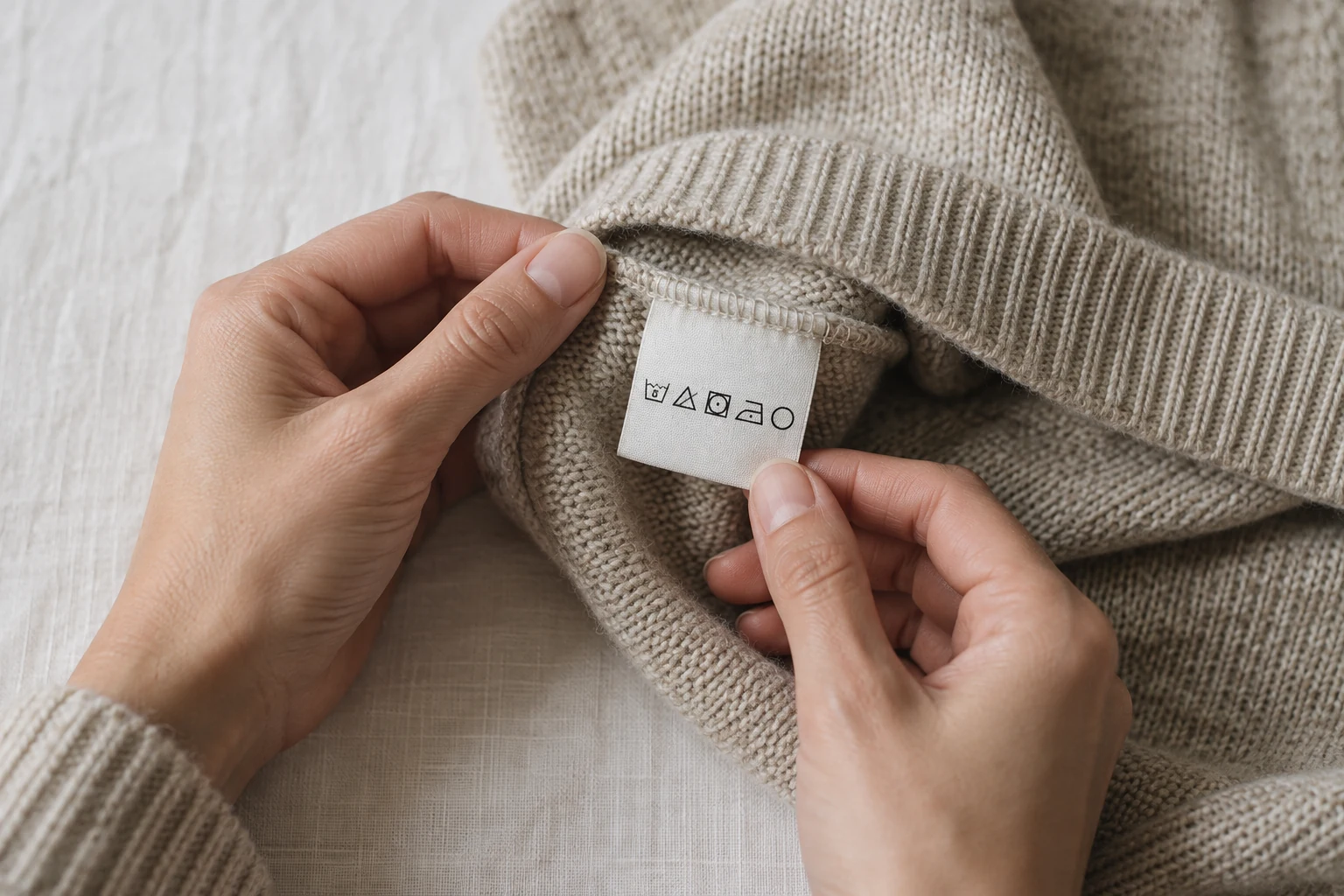
Laundry symbols explained: how to read a care label
What laundry symbols mean, in plain words: the wash tub, triangle, square, iron and circle, plus the dots, bars and crosses that change each instruction.