How a suit should fit: shoulders, sleeves and length
In this guide
A three way mirror and a salesperson who says it looks great are not much of a test. How should a suit fit, exactly? The answer is practical: a handful of checks you can make yourself in two minutes, in a particular order, because some problems are cheap to fix and some are not fixable at all.
Work from the top down. The shoulders decide whether the jacket is the right size; the collar and back tell you whether it suits your posture; the button, length and sleeves are where a tailor earns their fee. Wear a dress shirt that fits, the shoes you plan to wear with the suit, and carry what you usually carry in your pockets.
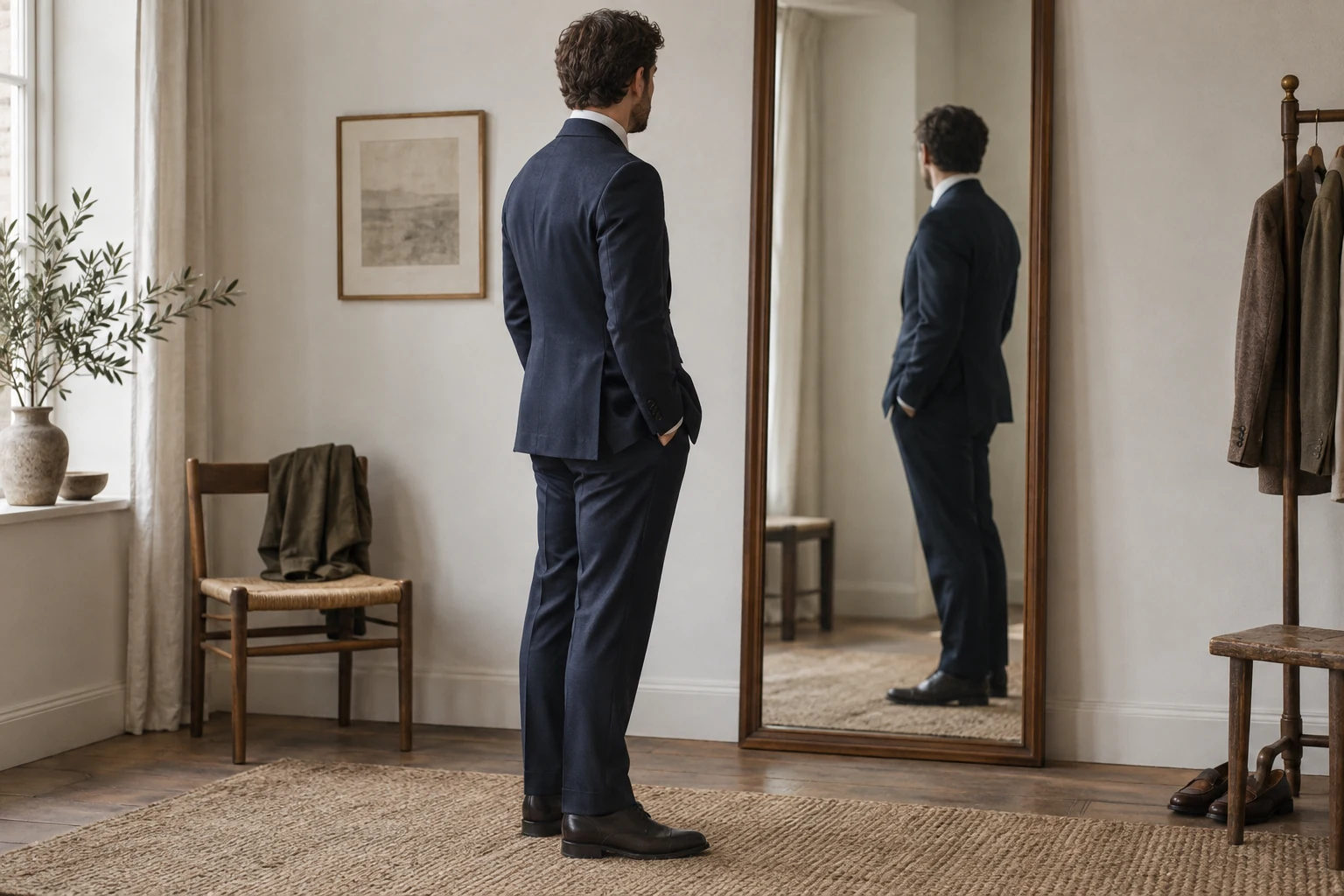
How should a suit fit in the shoulders?
Start here, because the shoulders are the one part of a jacket that tailors generally advise against changing. The shoulder seam should end where your own shoulder ends, with the sleeve falling straight from it. Suitsupply describes this as the shoulder resting along your natural shoulder with no overhang, and uses it to choose the base size before anything else.
Look for two failure signs. If the shoulders are too wide, the padding extends past your arm and you see a dent or divot in the top of the sleeve, just below the shoulder point. If they are too narrow, the sleeve head pulls and you see a ridge or dimple where the padding stops before your shoulder does, often with tension lines running toward the collar. Stand relaxed with your arms at your sides; lifting your arms or squaring your shoulders for the mirror hides both problems.
Reshaping shoulders means taking apart the armhole, the sleeve and the padding. Tailoring guides from Gentleman's Gazette and He Spoke Style both put it in the category of major surgery with no guarantee of success. If the shoulders are wrong, try another size or another cut, not a tailor.
Collar and back: the quiet signs of a good fit
Turn sideways and look at the back of your neck. The jacket collar should rest against your shirt collar all the way around, with a sliver of shirt collar visible above it; tailors commonly aim for about half an inch. A gap between the two, where the jacket collar stands away from your neck, is called collar gap. It is often a sign that the jacket does not match your posture, and while a skilled tailor can sometimes improve it, the fix is costly and uncertain. Treat it as a reason to try a different size or maker.
Now look at the back of the jacket in the mirror. It should fall smoothly from the collar to the hem. Horizontal folds across the upper back mean it is too tight across the shoulder blades, while loose vertical ripples mean there is extra fabric that can often be taken in at the center back seam. Vents should hang closed when you stand still; if they spread open, the jacket is too tight around the hips.
Jacket length: cover your seat
Look at yourself from the side. Suitsupply's guidance is that the hem should just cover your seat, no more and no less. Another old check is to stand with your arms relaxed and curl your fingers: the hem should sit roughly where your fingers curl under. Treat that as a rough guide rather than a rule, because it measures your arms as much as the jacket.
Length is the second thing a tailor cannot really give you. A jacket can be shortened, but the pockets and buttons stay where they are, so He Spoke Style suggests that anything beyond about an inch starts to throw off the proportions. A jacket that is too short cannot be lengthened at all. If the length is wrong by more than a little, look for a short or long version of the same size, which many makers offer.
How long should suit jacket sleeves be?
With your arms hanging naturally, the jacket sleeve should end around the point where your wrist meets your hand, and about a quarter to half an inch of shirt cuff should show below it. Suitsupply suggests half an inch. That little band of white frames your hands and makes the whole outfit look deliberate. The shirt needs to fit for this to work, so check your dress shirt sleeve length first.
Sleeves are the most common and most worthwhile alteration. Shortening is simple on most ready to wear jackets. Lengthening depends on how much fabric is folded inside, often one to two inches, and you can see the old fold line if the cloth has been let out too far. Working buttonholes at the cuff, the kind that actually unbutton, make any length change difficult, so on a new jacket have the sleeves set before the tailor cuts those holes.
How should suit pants fit?
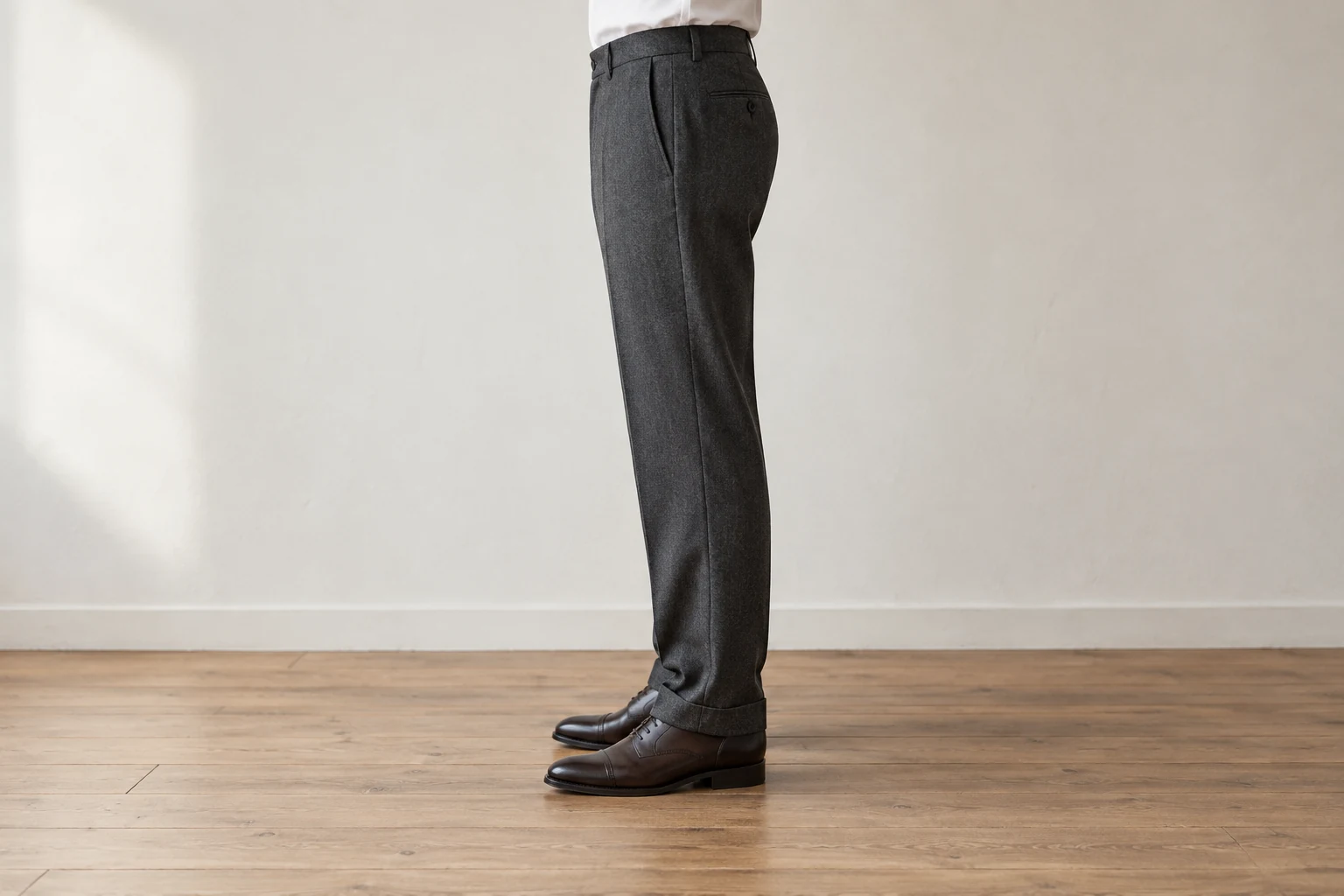
Suit trousers should sit at your natural waist or just below it and stay there without a belt pulling them in. The seat should drape smoothly: horizontal wrinkles under the seat mean it is too tight, and loose fabric sagging below it means too much room. Front pockets should lie flat rather than flaring open. The leg should fall straight from the seat to the shoe, without clinging to your thigh when you stand.
Most trouser problems are easy to fix. Hems, tapering the leg below the knee and adjusting the waist through the rear seam are routine, and Gentleman's Gazette puts the usual waist allowance at about 2 to 3 inches. The rise, the distance from crotch to waistband, is the difficult one, so choose a pair where that part feels right. For the length itself, our guide to how long dress pants should be walks through each kind of break and what to tell the tailor.
What a tailor can and cannot fix
Here is the whole list in one place, so you can decide at the rack. Easy and worth doing: sleeve length, sleeve width, taking in the jacket waist, trouser hems, trouser waist and tapering the leg. Possible with limits: shortening the jacket by up to about an inch, lengthening sleeves by the fabric that is available, letting out a waist by a small amount. Rarely worth it: shoulders, collar gap, jacket length beyond an inch, and changing a three button jacket into a two button one.
The practical rule that follows is simple. Buy the jacket that fits your shoulders and is close to the right length, even if everything else needs work, and let the tailor handle the rest. If you are buying online, measuring yourself and comparing against a jacket that already fits you will save a return. And for an interview or a wedding, leave a week or two for alterations; small shops can be busy in spring.
| Alteration | Verdict |
|---|---|
| Sleeve length and width | Easy and worth doing |
| Jacket waist taken in | Easy, usually by about a size |
| Trouser hem, waist and tapering | Easy and routine |
| Shortening the jacket | Possible up to about an inch |
| Lengthening sleeves or letting out the waist | Limited by the fabric folded inside |
| Shoulders, collar gap, trouser rise | Rarely worth it; choose another size or cut |
Buy for the shoulders and length, then let the tailor handle the rest.
Common mistakes
Choosing the size by the chest measurement alone
A jacket that fits your chest but hangs off your shoulders will always look borrowed. Let the shoulders decide the size, then adjust the waist.
Getting fitted in sneakers and a T shirt
Trouser length depends on the shoe, and sleeve length depends on the shirt. Bring the dress shirt and shoes you will wear with the suit so the tailor pins the right lengths.
Sizing down to look slim
A jacket that pulls at the button or lifts at the lapels looks tight rather than tailored. If you see X shaped creases when fastened, go up a size and take in the waist instead.
Questions people ask
What is a classic fit suit?
A classic fit suit is cut with more room through the chest, waist and trouser legs than a slim fit, and usually with a slightly longer jacket. It is not old fashioned; it simply suits broader or heavier frames better and is more comfortable to sit in. The same fit checks apply to either cut.
Should a suit jacket be tight or loose?
Neither. When fastened, it should close without strain and allow a flat hand inside the chest. You should be able to reach forward and raise your arms without the whole jacket lifting from your shoulders.
Can a tailor make a suit jacket bigger?
Only a little. There is usually some seam allowance at the sides and back for letting out the waist, and some fabric in the sleeves, but shoulders and jacket length cannot be enlarged. If the jacket is tight across the shoulders, it is the wrong size.
Do the same rules apply to women's suits?
Largely, yes. The shoulder seam should meet your shoulder, the jacket should close without pulling across the bust, and sleeves should end at the wrist. Women's jackets vary more in length and cut, from cropped to longline, so judge length by the intended style rather than by covering the seat. Suit trousers follow the same rules, adjusted for the heel you plan to wear, as our guide to women's pants length explains.
Sources and further reading
References used for this guide. Each opens the original page in a new tab.
Keep reading
Suits and tailoring
How long should dress pants be? Choosing your break
How long should dress pants be? Learn the no break, slight break and full break, how shoes and leg width change the answer, and exactly what to tell your tailor.
Suits and tailoring
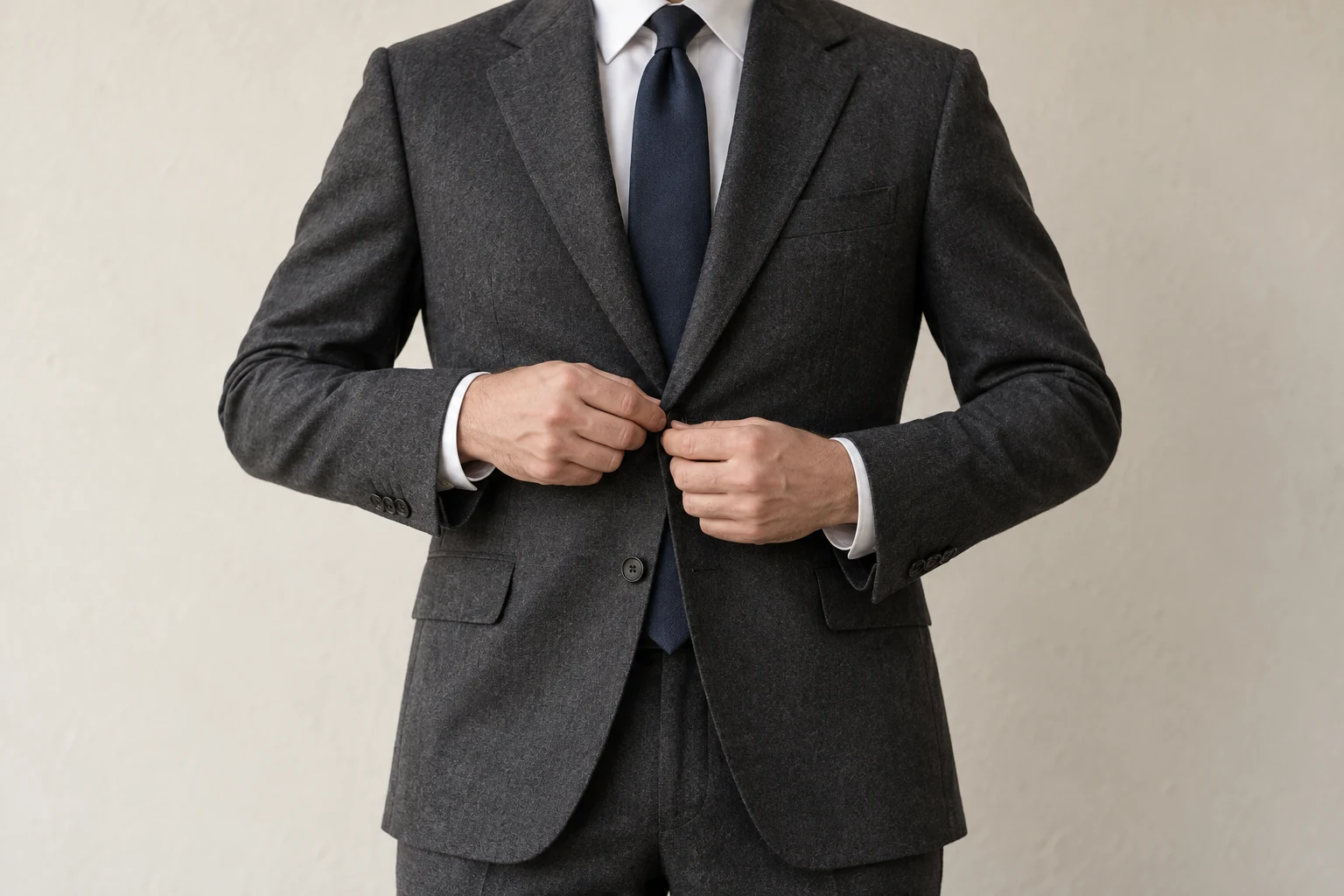
Suit button rules: which buttons to fasten
Suit jacket button rules for two button, three button and double breasted jackets: which button to fasten, why the bottom stays open, and what to do when you sit.
Suits and tailoring
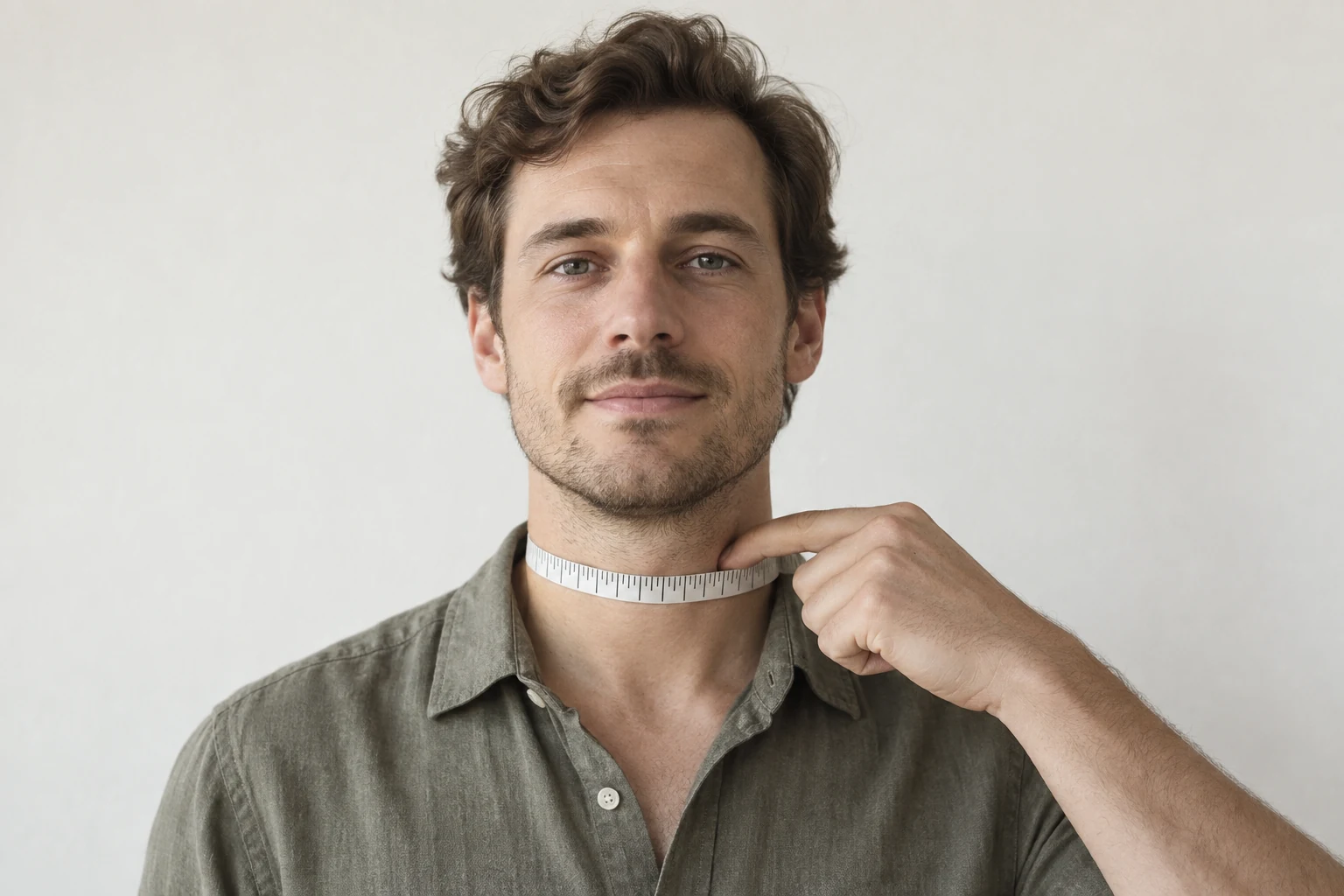
How to find your dress shirt size: neck and sleeve
Read any dress shirt size chart with confidence: how to measure your neck and sleeve, what 15.5 34/35 means, how to check a collar, and slim vs classic fit.
Sizing
How to measure your waist and hips for clothes
Where your waist really is, how to measure your waist and hips accurately, how pants and jeans sizing differs, and how to read a size chart before you order.
Suits and tailoring
Suit vs tuxedo: how to tell them apart and which to wear
Suit vs tuxedo explained: the satin lapels, trouser stripe and bow tie that set a tuxedo apart, and which one a wedding, prom or black tie invitation asks for.