How to layer clothes for warmth and style
In this guide
It is 38°F (3°C) at the bus stop, 72°F (22°C) in the lecture hall, and you have dinner plans after. One thick sweater would leave you freezing outside and sweating inside. Layering solves both problems, and done well, it is also the easiest way to make simple clothes look styled, the stacked collars and peeking hems you see in every good winter photo.
This guide explains how to layer clothes for warmth, using the three layer system outdoor experts rely on, and for style, with the rules that stop layers from looking bulky. It gives layering outfits for men and women, a temperature guide for winter, and ideas for summer and travel, when layers matter for different reasons.
Why layering works
Several thin layers keep you warmer than one thick one for two reasons. Each layer traps a little air, and still air is an excellent insulator, so several pockets of it add up. More important, layers let you adjust. As your activity and the temperature change, you add or remove a layer to match what your body needs, instead of choosing between too hot and too cold. That flexibility is the whole point of the system that hikers, skiers and mountain guides use.
The same idea works in daily life. A commute, a heated classroom, a windy walk and a warm restaurant can all happen in one day. Dressing in layers you can open, remove or add means one outfit handles all of them, and as a bonus the combinations of textures and lengths give an outfit depth that a single piece cannot.
The three layer rule for winter
The classic system for cold weather has three jobs, each done by a different layer. Think of it as a checklist rather than a uniform; in the city, one piece can sometimes do two jobs.
Base layer: manage moisture
The layer against your skin should move sweat away and dry quickly, so it fits close to the body without squeezing. Merino wool and synthetic base layers do this well. Avoid cotton for active days, because it absorbs sweat and holds it against your skin, which leaves you damp and cold. For everyday wear, a thin merino tee, a fine knit turtleneck or a long sleeve thermal all work.
CheckYou should barely notice it once dressed.
Middle layer: trap warmth
The middle layer insulates. Fleece, a wool or cashmere sweater, a cardigan, a flannel overshirt, a quilted liner or a down vest all trap warm air. Choose its thickness by the temperature and by how active you will be; a light layer for a brisk walk, a thick one for standing still in the cold.
CheckIt should sit comfortably over the base layer without pulling at the shoulders.
Outer layer: block wind and rain
The outer layer protects the other two. A waterproof shell handles rain and snow, a softshell or windproof jacket handles dry wind, and a wool coat or a puffer adds insulation of its own for city winters. It needs room for the layers beneath, so check that you can cross your arms and raise them without the coat pulling tight.
How to layer clothes without looking bulky
The main rule is to go from thin to thick and from fitted to loose as you move outward. A fine base layer under a medium knit under a roomy coat looks smooth; a chunky sweater under a slim jacket looks stuffed. Each layer should be slightly larger than the one beneath it, especially at the shoulders and sleeves, and fabric weight should rise as you go out. Thin merino, cashmere and fine cotton are the best inner layers precisely because they add warmth without volume; our guide to merino wool explains why it is so light for its warmth.
Pay attention to what shows at the edges. Collars, cuffs and hems are where layering looks deliberate, so let them show on purpose: a shirt collar over a crewneck, a white tee hem just below a sweater, a cuff folded back over a knit sleeve. Keep one or two layers visible at a time rather than five. Colors help too. Staying in one color family, or letting the layers get darker as they go out, makes several pieces read as one outfit.
Layering ideas that look good
Some layering combinations are almost always flattering. A crisp shirt under a crewneck sweater or a knit vest, with the collar out and the hem showing a little, is smart for class or the office. A hoodie under a wool coat or a denim jacket mixes sporty and tailored in a way that looks young and current. A long sleeve tee under a short sleeve tee is the easiest 90s layer, while a turtleneck under a slip dress or a pinafore turns a summer piece into a winter outfit.
For a more editorial look, try unexpected lengths: a longer shirt or tank peeking below a cropped sweater, a long cardigan over a short dress, or a vest over a coat. A thin turtleneck under a T shirt, popular in Korean and Japanese street style, keeps the neck warm and adds a second color at the collar. If you like vests, our guide to styling a sweater vest has more ideas, and types of sweaters explains which knits layer best.
How to layer clothes for cold weather, by temperature
Around 50°F (10°C), two layers are usually enough: a T shirt or shirt under a light sweater, or a knit under a denim or light wool jacket. Around 40°F (4°C), use all three, such as a long sleeve base, a sweater and a wool coat or light puffer, plus a scarf. At freezing, 32°F (0°C), add a thermal base layer, a warm middle layer and an insulated coat, with a hat, gloves and warm socks. Below about 20°F (minus 7°C), especially with wind, choose a thermal top and leggings under your clothes, a fleece or thick wool middle layer, and a long insulated or down coat with a hood.
How to layer clothes for skiing follows the outdoor system strictly: a synthetic or merino base layer top and bottom, a fleece or light insulated middle layer, and waterproof ski jacket and pants on top, with no cotton anywhere next to the skin. For daily winter outfits, our guides to what to wear in 30 degree weather and winter outfits go further.
| Temperature | Layers | Example |
|---|---|---|
| Around 50°F (10°C) | Two | Shirt under a light sweater, or a knit under a denim jacket |
| Around 40°F (4°C) | Three | Long sleeve base, sweater, wool coat, scarf |
| Around 32°F (0°C) | Three, warmer | Thermal base, thick knit, insulated coat, hat and gloves |
| Below 20°F (minus 7°C) | Three plus thermals | Thermal top and leggings, fleece, long down coat with hood |
| Skiing | Full outdoor system | Merino or synthetic base, fleece, waterproof shell and pants |
Layering outfits for men and women
For men, a reliable winter formula is a white tee, an open flannel or oxford shirt, a navy crewneck sweater and a wool topcoat, with dark jeans and boots. For a sportier look, layer a gray hoodie under a canvas work jacket or a quilted liner, with cargo pants and sneakers. How to layer clothes for guys comes down to the same rule as always: thin under thick, and let the shirt collar or the hood show so the layers read as intentional.
For women, try a fine turtleneck under a sleeveless knit dress with tights, boots and a long coat, or a striped long sleeve tee under a cropped cardigan with wide trousers. A button down shirt under a sweater with the collar and cuffs out, over a pleated skirt and knee socks, has a preppy mood. For a softer look, layer a slip skirt over leggings or thermal tights and add an oversized knit and a scarf. Everyone can use the same tricks, so borrow freely.
Layering in summer and for travel
How to layer clothes for summer is less about warmth and more about sun, air conditioning and style. A loose linen shirt worn open over a tank or tee shades your shoulders and comes off easily, and a thin cotton cardigan tied over the shoulders is there when the office or the train gets cold. Choose breathable fabrics like linen, cotton and fine merino for every layer, so nothing traps heat when you are outside.
For travel, layering is how you pack light. A base of tees and a shirt, one warm knit or fleece, and one outer jacket that handles wind and rain can cover a week of changing weather. Wear the bulkiest layer on the plane or train, keep the others rolled in your bag, and you will have an answer for every forecast.
Common mistakes
Thick layers under thin ones
A chunky sweater under a slim jacket looks stuffed and restricts movement. Put the thin, fitted layers inside and the roomy ones outside.
Cotton against the skin on active days
Cotton soaks up sweat and stays wet, which chills you once you stop moving. Use merino or a synthetic base layer for hikes, skiing and long cold walks.
A coat with no room
If your coat only fits over a T shirt, you cannot layer under it. Try coats on over a sweater and check you can raise your arms.
Questions people ask
What is the 3 layer rule for winter?
It is the base, middle and outer layer system: a base layer that moves sweat away from your skin, a middle layer that traps warmth, and an outer layer that blocks wind and rain. Adding or removing the middle layer is the easiest way to adjust through the day.
What is the 3 3 3 rule for clothes?
It is a small capsule idea rather than a layering rule: three tops, three bottoms and three pairs of shoes that all work together, giving up to 27 combinations. Layering pieces such as a cardigan or overshirt stretch it even further.
How many layers should I wear in winter?
Usually two above about 50°F (10°C), three around freezing and three with thermal pieces in deep cold or wind. Adjust for how active you will be, since walking fast warms you more than standing still.
How do you layer clothes for an aesthetic look?
Choose one color family, vary textures, and let one or two layers show at the collar, hem or cuff. A shirt under a sweater, a turtleneck under a tee or a hoodie under a coat all look styled without much effort.
Sources and further reading
References used for this guide. Each opens the original page in a new tab.
Keep reading
Weather
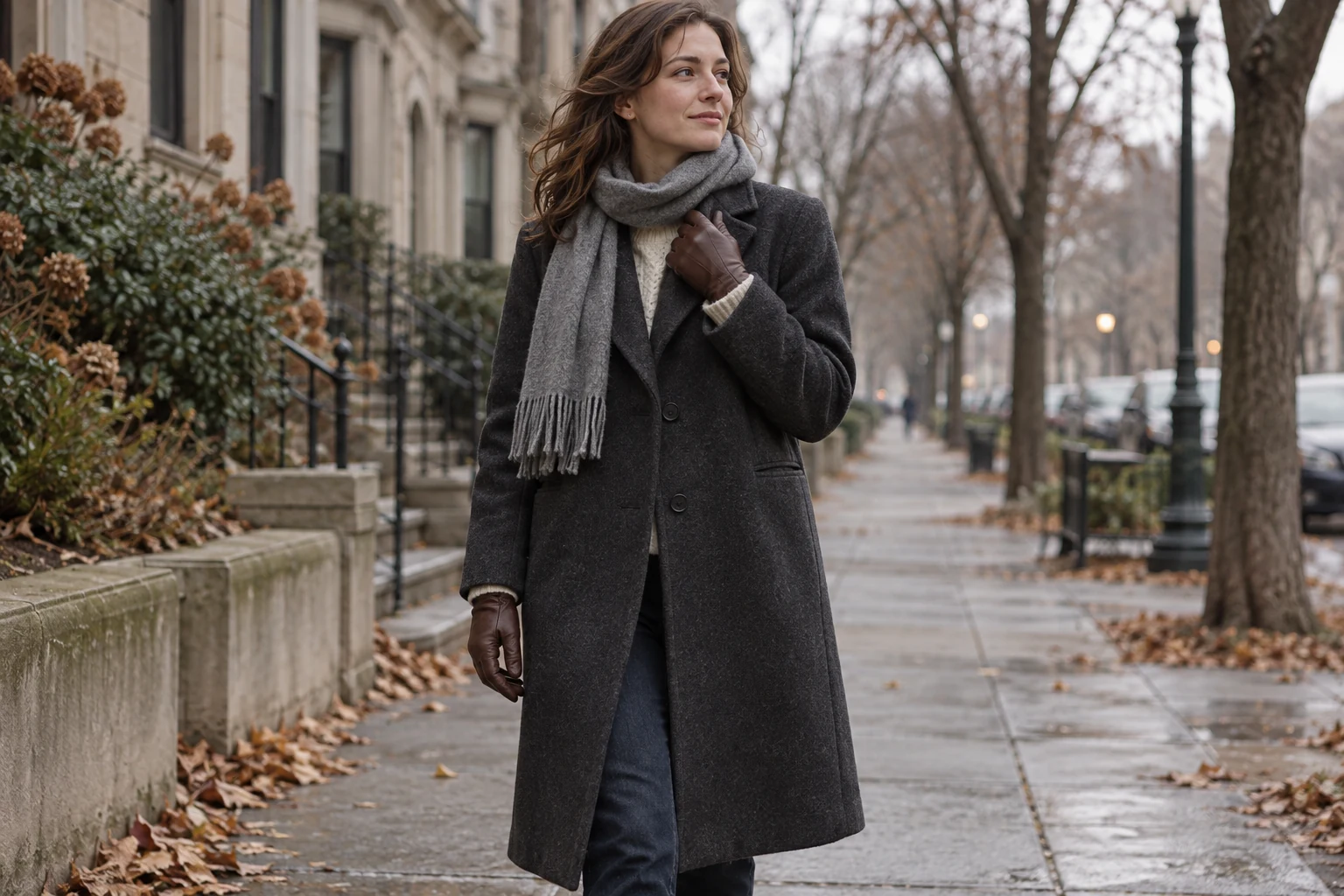
Winter outfits: warm, current looks for every plan
Winter outfits for class, work, weekends, dates and winter weddings, built on the three layer rule, with temperature bands in °F and °C and looks for women and men.
Weather
What to wear in 40 degree weather
At 40°F the wind and the rain matter as much as the number. How to layer, what to wear on your neck, hands and feet, and outfits for every hour outside.
Fabrics
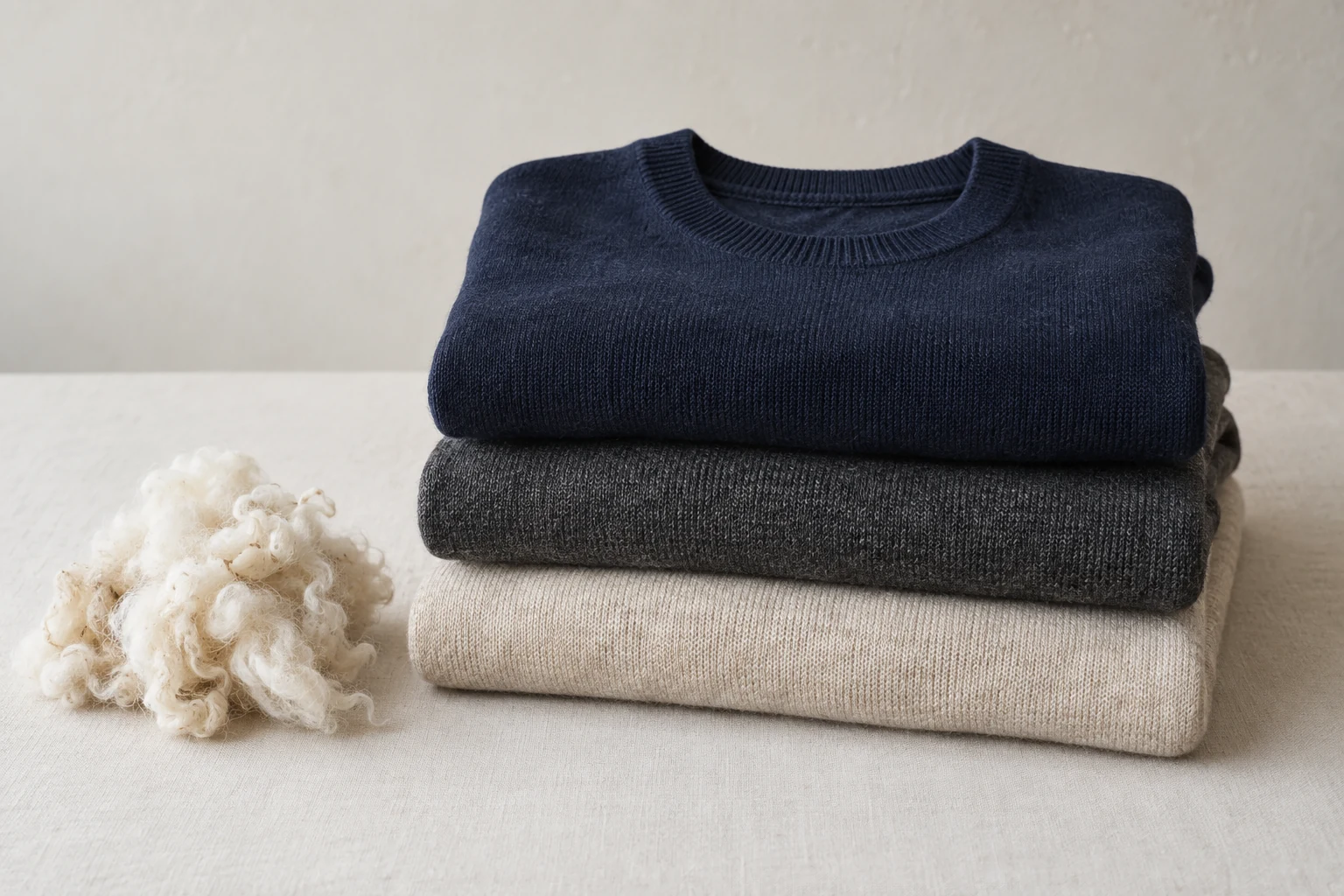
Merino wool: what it is and why it works
What merino wool is, why it feels softer than ordinary wool, where it beats cotton and synthetics, its real drawbacks, and how to wear and wash merino clothing.
Everyday style
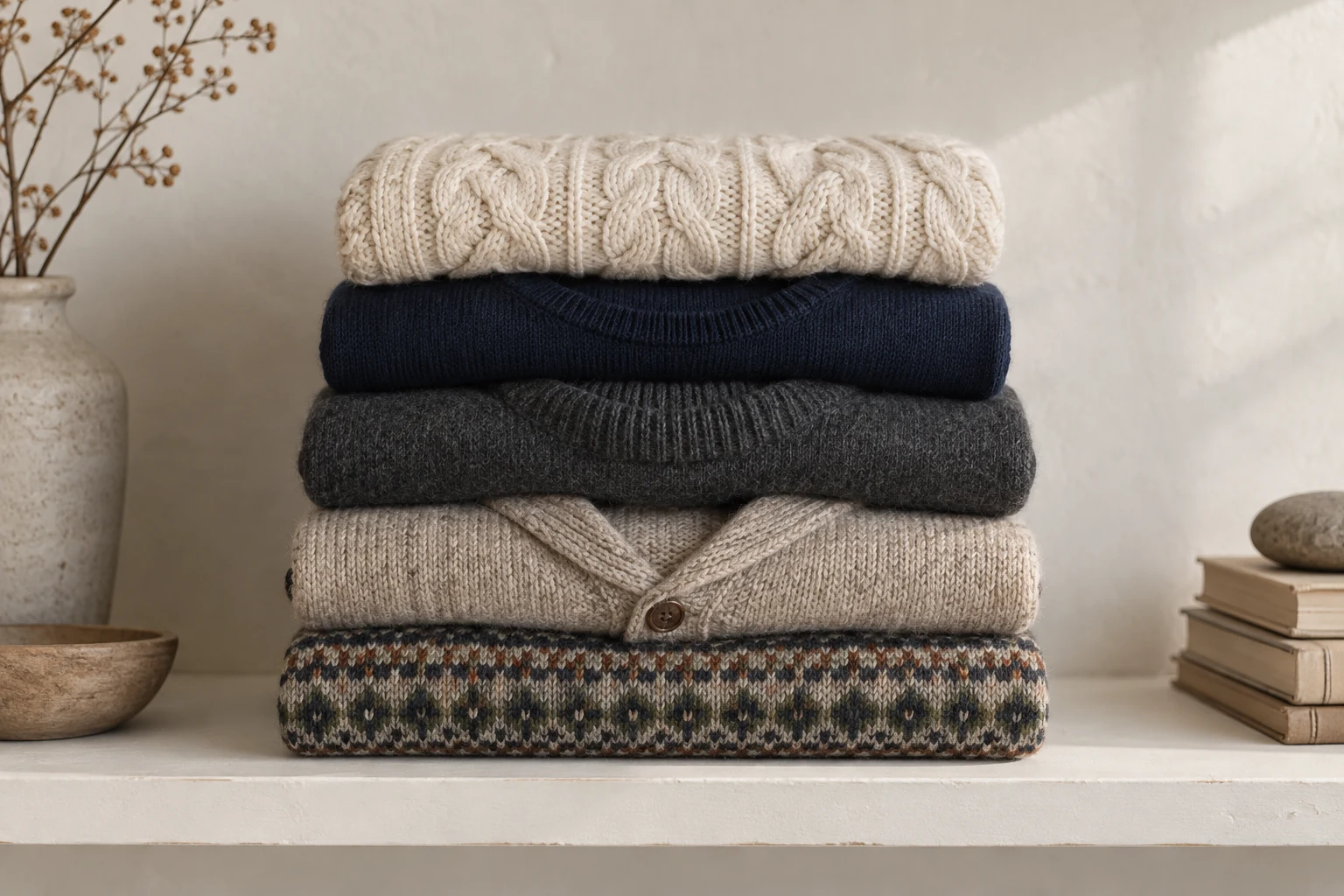
Types of sweaters and how to wear them
A clear guide to the types of sweaters: pullovers, cardigans and zips, necklines from crew to turtleneck, classic knits like Aran and Fair Isle, and fibers.
Everyday style
How to style a cardigan without looking frumpy
How to style a cardigan so it looks sharp: fit, what to wear under it, cropped, long and chunky cardigans, and outfits for women and men from class to the office.