How a blazer should fit, for men and women
In this guide
Blazers are unusually hard to judge on a hanger or in a quick try on. A jacket that looks sharp while you stand still can pinch across the back when you reach for a door, and one that feels comfortable can look a size too big in photos. So the question of how a blazer should fit is really a short list of checks, each done in a mirror and in motion, most of them the same whether the jacket was cut for a man or a woman.
The order below matters. Start with the parts that cannot be changed, because if they are wrong nothing else matters. Wear the kind of shirt or top you would normally wear underneath, and bring your phone to take a photo from the side and back, where most fit problems hide.
Shoulders come first
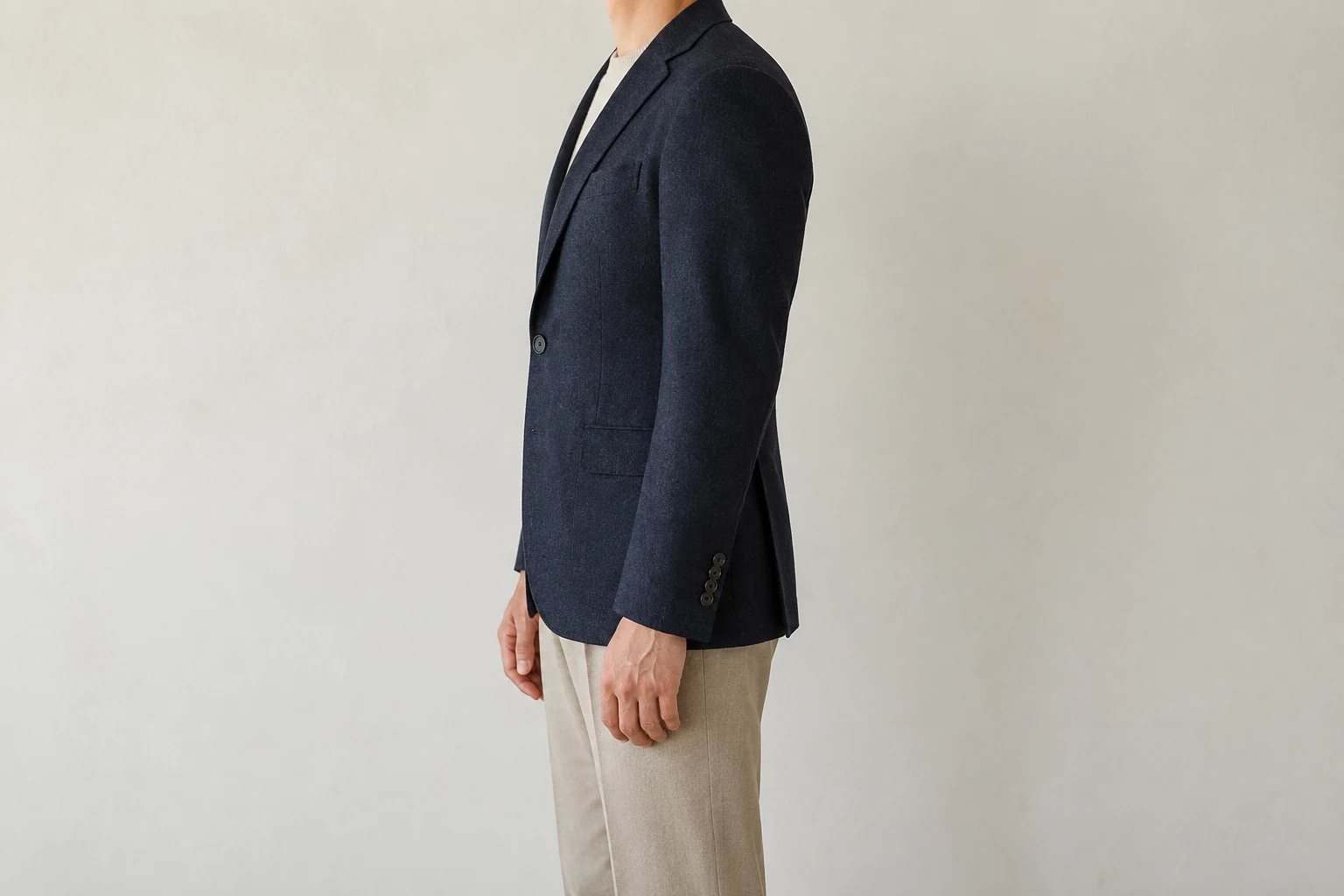
Look at where the sleeve meets the body of the jacket. The shoulder seam should end where your own shoulder ends, at the outer edge of the bone, and the sleeve should fall straight down from it. If the shoulder extends beyond yours, you will see a dent or a drop in the sleeve just below the seam, and the jacket will look borrowed. If it is too narrow, the sleeve head pulls and you may see a divot where your arm pushes against it, along with tension across the upper back.
Tailors and makers agree that shoulders are essentially unalterable on a ready made blazer. Rebuilding them means taking apart the sleeves, the lining and often the padding, and the result is rarely clean. If the shoulders are wrong, change sizes or styles rather than planning a fix. One exception is deliberate: oversized and dropped shoulder blazers, common in women's fashion, are designed to extend past the shoulder. Those should look intentionally broad and soft, with the sleeve seam resting on the upper arm rather than collapsing there.
How blazer sleeves should fit
Let your arms hang naturally. The sleeve should end around the wrist bone, where the hand begins. If you wear a shirt with cuffs, a quarter to half an inch of cuff should show past the jacket sleeve. That small band of shirt frames the hand and keeps the jacket edge from rubbing on your wrist. If the sleeve covers your knuckles, it is too long; if it stops above the wrist bone and the whole shirt cuff shows, it is too short.
Sleeves are among the easiest alterations and one of the most common. Shortening is simple on most blazers. Lengthening depends on how much spare fabric is folded inside the sleeve, and on jackets with working buttonholes at the cuff it may be impossible without moving the buttons. The sleeve width matters too: it should narrow gently from shoulder to wrist without clinging to the bicep when you bend your arm. The same principles apply to the fit of the shirt underneath; the two work as a pair.
How long should a blazer be
For a classic men's blazer, the hem should cover the seat of your trousers, or most of it. A traditional check is to let your arms hang with fingers curled: the bottom edge should fall roughly level with your knuckles. Current fashion runs a little shorter, which can look fine on slim tailoring but tends to make taller men look disproportionate. A blazer that ends mid thigh reads as a coat.
Women's blazers come in a wider range of intended lengths. A classic hip length blazer ends around the hip bone and works with most trousers and skirts. A cropped blazer stops above the hip or at the waist, which pairs well with high waisted trousers, full skirts and dresses. A longline or oversized blazer falls below the hip or to mid thigh and suits slimmer pants, straight jeans and slip dresses. Choose the length for what you will wear it with, since changing a blazer's length significantly throws off pocket placement and proportion.
How a blazer should fit men and women
Men's blazers are cut straight through the body with some shaping at the waist. The fit should follow your torso without pulling at the button, and the vents at the back (a single center vent or two side vents) should hang closed when you stand. If they spread open, the jacket is tight across the seat or hips. For a man with a broader chest and slim waist, the size that fits the shoulders often has extra room at the waist, which a tailor can take in easily.
Women's blazers are usually shaped more at the waist and cut to accommodate the bust. A well fitted one closes over the bust without the front pulling and without gaping between buttons, and it curves gently in at the natural waist. If you need to size up for the bust, you may get extra room at the shoulders; in that case, prioritize the shoulders and ask a tailor about letting out the side seams if there is enough allowance. Many women wear blazers open, which is fine, but the jacket should still be able to close comfortably, since that is the best sign it fits the torso. For outfit ideas, our guide to business casual for women shows how blazers work day to day, and men can find the equivalent in business casual for men.
What a tailor can and cannot fix
The easy list includes shortening sleeves, taking in or letting out the waist within the seam allowance, and small adjustments to the hem. Moving a button slightly to change where the jacket closes is also straightforward. Collar gaps can sometimes be corrected by an experienced tailor, depending on the construction.
The hard list is short but decisive: shoulders that are too wide or narrow, a chest that is too tight, a blazer that is much too long or much too short, and sleeves that need lengthening beyond the fabric available. If a jacket needs one of those, keep looking. When a blazer is part of a suit, the same fit rules apply to the whole outfit, and our guide to how a suit should fit covers the trousers as well.
| Area | Good fit | Sign of a problem | Can a tailor fix it |
|---|---|---|---|
| Shoulders | Seam ends at the shoulder bone, sleeve hangs straight | A dent below the seam, or a divot at the sleeve head | Rarely; change sizes |
| Chest | Fronts meet; a flat hand slides under the lapel | An X of creases from the button | Not if it is too tight |
| Collar | Lies against the shirt collar or neck | A gap or roll at the back of the neck | Sometimes |
| Sleeves | End at the wrist bone with a little cuff showing | Covering the knuckles, or the whole cuff showing | Shortening yes; lengthening depends on spare fabric |
| Waist and vents | Follows the torso, vents hang closed | Vents spread open over the seat | Within the seam allowance |
| Length | Covers the seat on a classic men's cut | Ending mid thigh, where it reads as a coat | Only small hem changes |
Common mistakes
Sizing up to be comfortable
A blazer that is too big in the shoulders looks sloppy and cannot be fixed. If a jacket feels tight, check whether the problem is the chest or just the waist, which can be let out.
Checking only the front
Most fit problems show from the side and back: a collar gap, pulling across the shoulder blades, vents spreading. Use a second mirror or a photo.
Wearing the wrong layer to the fitting
A blazer fitted over a thin T shirt may be tight over a sweater. Try it on over what you will actually wear underneath.
Questions people ask
Is it better for a blazer to be too big or too small?
Slightly too big in the waist or sleeves is easier to fix than too small, since a tailor can take in but can only let out a small amount. But the shoulders must fit, and a blazer too big in the shoulders will always look off.
Should a blazer feel a little snug?
It should feel close and structured, not tight. You should be able to button it, hug yourself and reach forward without strain. A little firmness around the waist when buttoned is normal; pulling at the button or across the back is not.
Where should a blazer hit on a woman?
It depends on the cut. A classic blazer ends around the hip bone, a cropped one at or above the waist, and a longline one below the hip. Match the length to the trousers or skirt you plan to wear with it.
How do I tell if a blazer fits properly?
Check the shoulder seam, button the jacket and look for an X shaped pull, let your arms hang to check sleeve length, and look at the collar and vents from behind. If shoulders and chest are right, the rest can usually be adjusted.
Sources and further reading
References used for this guide. Each opens the original page in a new tab.
Keep reading
Suits and tailoring
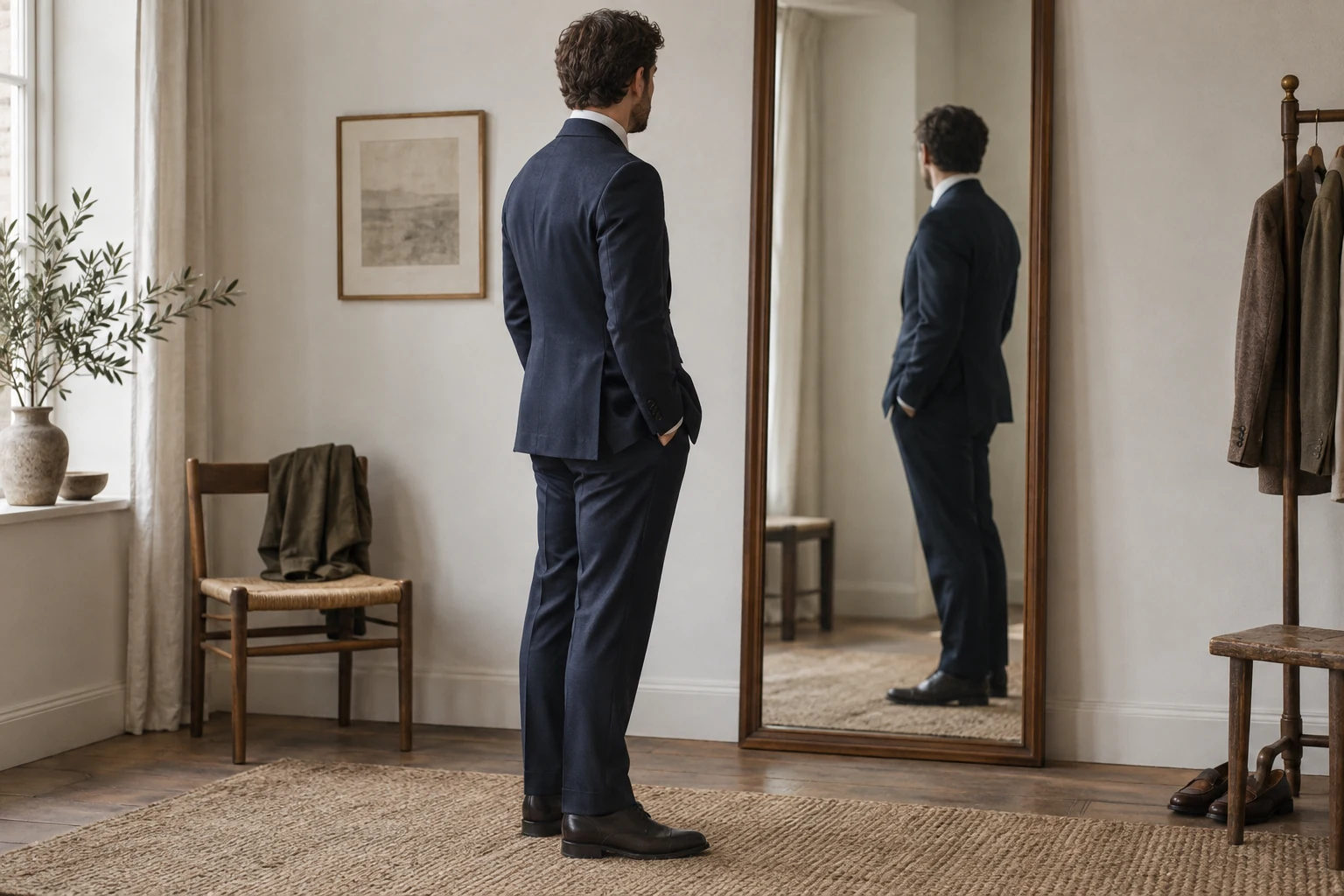
How a suit should fit: shoulders, sleeves and length
How should a suit fit? Check the shoulders, collar, button, jacket length, sleeves and trousers in the mirror, and learn which problems a tailor can and cannot fix.
Suits and tailoring
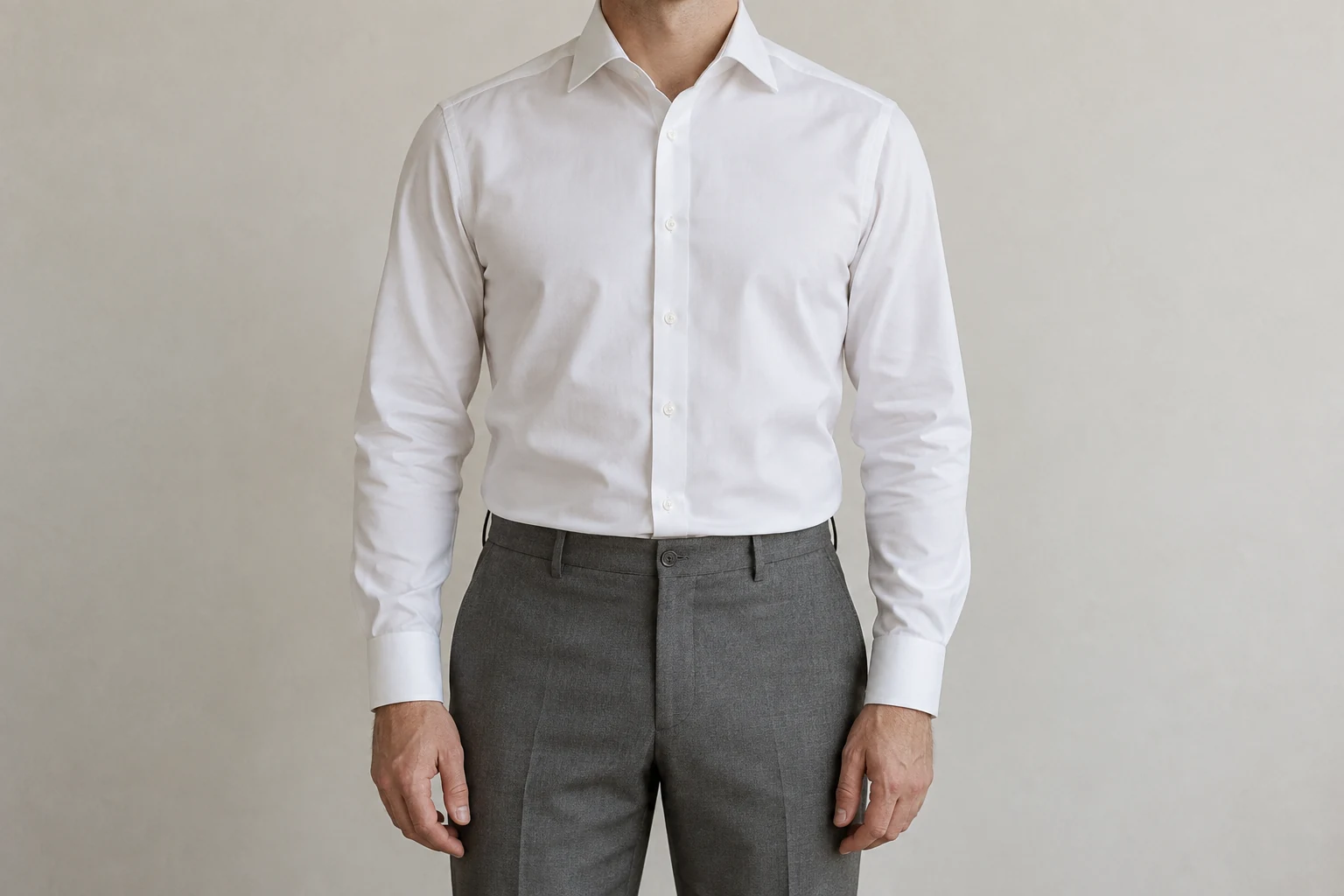
How a dress shirt should fit: collar to cuff
How a dress shirt should fit at the collar, shoulders, chest, waist, sleeves and hem, what slim and classic fit mean, and which problems a tailor can fix.
Suits and tailoring
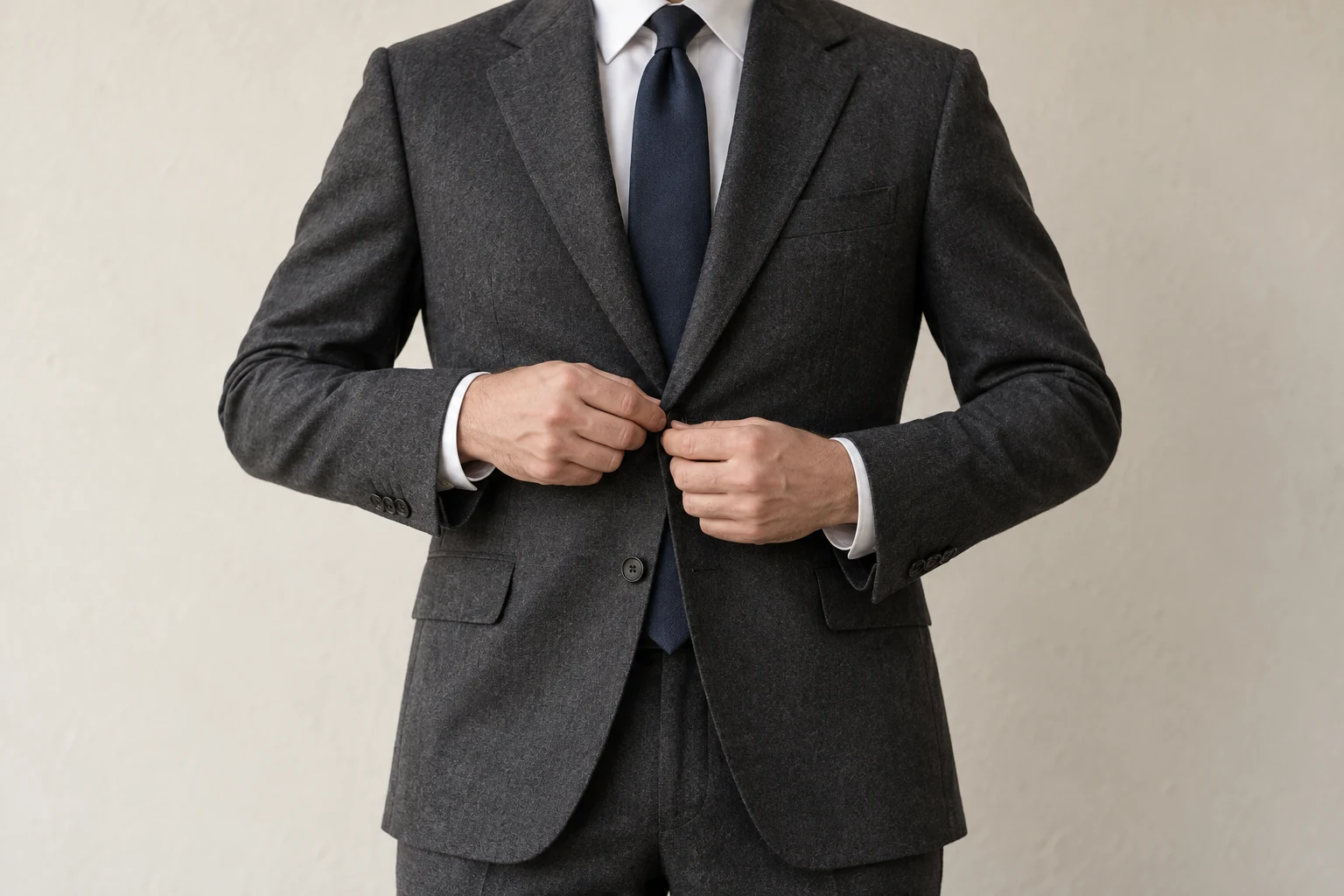
Suit button rules: which buttons to fasten
Suit jacket button rules for two button, three button and double breasted jackets: which button to fasten, why the bottom stays open, and what to do when you sit.
Sizing
Men's jacket size chart: suits, blazers and coats
A men's jacket size chart in inches and cm: what 40R means, short, regular and long lengths, letter sizes, EU conversions, drop, and how to measure your chest.
Everyday style
Types of jackets and when to wear them
A clear guide to the main types of jackets for men and women, from blazers and bombers to parkas and trench coats, with the fabric and weather each one suits.