Polyester vs cotton: which fabric to choose
In this guide
Two T shirts hang side by side, the same color and roughly the same price. One is 100% cotton, the other 100% polyester, and a third option is a 50/50 blend. You are not sure which will be more comfortable in July, which will still look decent after a year, and whether the stories about polyester being bad for you are true. Polyester vs cotton is one of the oldest questions in clothing, and the honest answer is that each is better at different jobs.
The useful comparison is on the things you actually notice: how each fiber feels, how it handles heat and sweat, how it smells after a workout and how long it lasts. Skin, the environment and telling them apart when the label has been cut out come after that.
What cotton and polyester are made of
Cotton is a natural fiber that grows around the seeds of the cotton plant. It is almost pure cellulose, the structural material of plants, and it is picked, cleaned, spun and woven or knitted. Because it is a natural staple fiber, the quality varies with the plant variety and the length of the fibers: longer staple cotton, such as Pima or Egyptian, makes smoother and stronger yarn.
Polyester is a synthetic fiber. The Federal Trade Commission defines it as a manufactured fiber made from a long chain synthetic polymer, and in clothing that polymer is almost always polyethylene terephthalate, or PET, the same family of plastic used for drink bottles. How is polyester made? Chemicals derived from petroleum are reacted into PET, melted and extruded through fine holes into filaments, which are then textured or cut and spun. Recycled polyester uses the same polymer recovered from bottles or textile waste.
Comfort, heat and sweat
Cotton absorbs water readily and lets air pass through its fibers, which is why a cotton shirt feels soft and comfortable on an ordinary warm day. The downside appears when you sweat heavily: cotton holds that moisture, gets heavy and dries slowly. Polyester barely absorbs water at all. Plain polyester can feel clammy in still, humid heat because sweat sits between the fabric and your skin, but polyester made for sport is knitted to spread moisture across the surface so it evaporates fast, which is why running shirts and gym gear are nearly always synthetic.
For polyester vs cotton in summer, cotton and linen are the more comfortable choice for daily life, errands and the office, while polyester performance fabric wins for running, cycling and hiking. In winter the logic flips in an interesting way. Wet cotton loses its insulation and chills you, which is why outdoor guides warn against cotton layers in cold rain, while polyester fleece stays warm when damp and dries quickly. Our guides to dressing for 90 degree heat and what to wear in the rain put this into practice.
Why polyester smells more after exercise
If your gym shirts smell even after washing, the fiber is part of the reason. Researchers at Ghent University collected shirts from people after a spinning class and found that polyester shirts smelled noticeably stronger and less pleasant than cotton ones. The bacteria that turn sweat into odor, micrococci in particular, grew more readily on the polyester. Oily body soils also cling to polyester, which is a plastic and attracts oil, so smells can survive a cool wash.
This does not make polyester a bad choice for sport. It means polyester gear needs prompt washing rather than a day in a gym bag, and occasional deeper treatment. Our guides to washing workout clothes and getting smells out of clothes cover the practical fixes.
| Quality | Cotton | Polyester |
|---|---|---|
| Feel | Soft, dry and matte | Smooth and uniform, slight sheen |
| Everyday heat | Breathes and absorbs sweat | Plain polyester can feel clammy |
| Heavy sweat and sport | Gets heavy and dries slowly | Performance knits wick and dry fast |
| Odor after exercise | Smells less | Holds odor and oily soils |
| Wrinkles and shape | Wrinkles, can shrink in heat | Barely wrinkles, keeps its shape |
| Heat care | Can be ironed hot | Can melt or glaze under a hot iron |
Durability, wrinkles and care
Polyester is the tougher fiber. It is strong, resists abrasion, keeps its shape, holds color and barely wrinkles, which is why it is used in uniforms, travel clothes and anything that must come out of a suitcase looking presentable. It dries fast on a hanger. Its weaknesses are heat and oil: it can melt or glaze under a hot iron, it holds on to grease stains, and it builds static in dry weather. Short fibers of polyester, especially in blends, can also pill.
Cotton wrinkles easily, can shrink in hot water or a hot dryer, and fades over many washes. In return it tolerates hot washing when the label allows, can be ironed at high heat, softens with age and is easy to mend and alter. For daily pieces you want to feel good in for years, cotton ages gracefully; for pieces that must look crisp without an iron, polyester or a blend is more practical. Oil stains on polyester respond best to a degreasing detergent, as our guide to removing grease explains.
Is polyester good for skin?
Most people wear polyester without any problem. It is smooth and does not irritate most skin. That said, because it does not absorb moisture, it can trap sweat against the skin in heat, and people prone to heat rash, eczema or irritation often find cotton, linen or lyocell more comfortable next to the body. If a synthetic garment leaves your skin itchy, try a cotton layer underneath or a cotton version of the piece.
There are many alarming claims online about polyester and health. The clear, documented differences are practical ones: polyester holds odor, can feel hot and clammy and is less forgiving for sensitive skin. Beyond that, treat dramatic claims with caution and choose the fiber that keeps you comfortable.
Is polyester bad for the environment?
Neither fiber is free of impact. Polyester is made from fossil fuels, does not biodegrade in any useful timeframe and sheds tiny plastic fibers in the wash that can reach rivers and oceans. Recycled polyester reduces the need for new petroleum, although it still sheds microfibers. Cotton is biodegradable, but conventional cotton farming uses a lot of land and, in many regions, a lot of water and agricultural chemicals.
The most effective thing you can do with either fiber is to wear clothes for longer and wash them less aggressively. Cool washes, full loads and air drying reduce shedding and wear on both. When a synthetic piece is truly finished, textile recycling or donation keeps it out of landfill longer than the bin does.
How to tell polyester from cotton
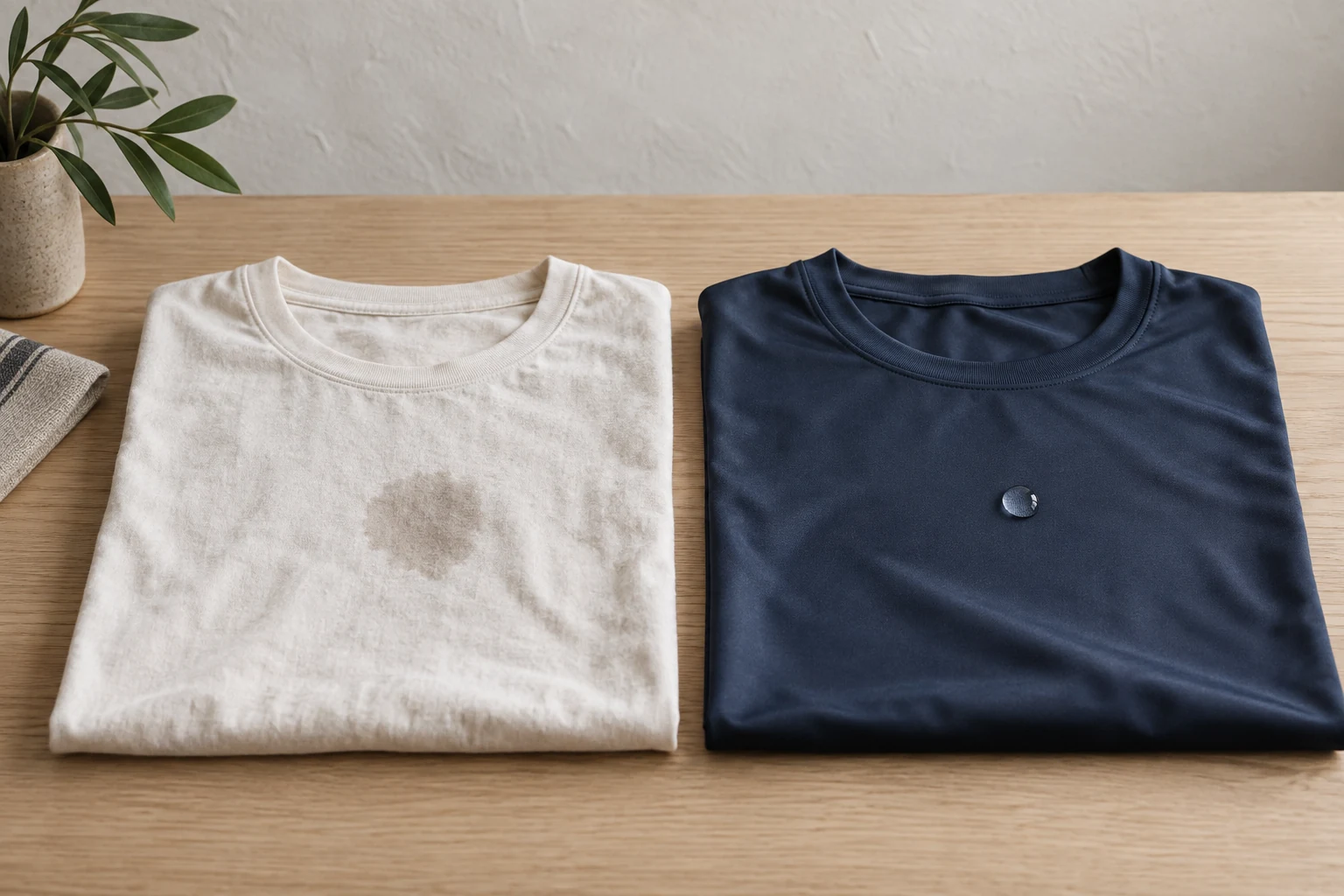
The label is the reliable answer, but you can make a good guess without it. Polyester fabric texture is usually smoother and more uniform, sometimes with a slight sheen, and it often feels slightly cool and slick at first, then warm. Cotton feels drier and more matte. Crumple a corner in your fist for a few seconds: cotton holds the wrinkle, polyester springs back. Put a drop of water on the fabric: on cotton it soaks in quickly, on untreated polyester it tends to bead or spread slowly.
Is polyester fabric stretchy? Plain woven polyester has little stretch, although knitted polyester jersey has some give and many stretchy fabrics combine polyester with spandex. Blends are extremely common: a 50/50 or 60/40 cotton and polyester T shirt is softer than pure polyester, shrinks and wrinkles less than pure cotton, and dries faster. The trade off is that blends pill more readily. For pillows, a cotton pillowcase over a polyester fill is a common and comfortable combination, since the part touching your face stays breathable.
Questions people ask
Which is better, cotton or polyester?
Neither is better overall. Cotton is more comfortable for everyday wear, sleep and sensitive skin, while polyester is better for hard exercise, rain, travel and anything that must resist wrinkles and wear. Many people keep both and choose by activity.
Can 100% polyester feel like cotton?
Some modern polyester is brushed or textured to feel soft and matte, and it can come surprisingly close in the hand. It still behaves like polyester, though: it will not absorb sweat the same way and it will hold odor more.
Is a 50% cotton and 50% polyester blend good?
For T shirts, sweatshirts and work shirts it is a practical compromise. You get some of cotton's softness with less shrinking, fewer wrinkles and faster drying, at the cost of more pilling and a little less breathability.
Should I choose polyester or cotton for a pillowcase?
Cotton is usually more comfortable because it absorbs moisture and stays cooler against the face. Polyester and microfiber cases are durable and cheap and resist wrinkles, but some people find them warm. Silk and lyocell are other smooth options.
Sources and further reading
References used for this guide. Each opens the original page in a new tab.
- FTC Textile Rules, 16 CFR 303.7: generic fiber definitions including polyester Opens in a new tab
- Wikipedia: Polyester, production, properties and environmental concerns Opens in a new tab
- Wikipedia: Cotton, fiber structure and properties Opens in a new tab
- ScienceDaily: Polyester clothes stink after exercise, cotton not so much (Ghent University study) Opens in a new tab
Keep reading
Fabrics
What is rayon? The fabric made from wood
What is rayon made of, is it natural or synthetic, and is it any good? How it is made, how it wears, how it compares with cotton and polyester, and how to wash it.
Fabrics
What is linen, and why does it wrinkle?
What linen is made of, how flax becomes fabric, why linen wrinkles, how it compares with cotton, and how to wear and care for linen clothes and sheets.
Washing and ironing
How to wash workout clothes and remove odor
How to wash workout clothes so the smell actually leaves: what to do right after training, water temperature, detergent, soaking, drying and when to deep clean.
Washing and ironing
How to get smell out of clothes
How to get smell out of clothes, whether it is sweat, a musty washer smell or smoke: airing, better washing, careful use of baking soda and vinegar, and prevention.
Fabrics
What is modal fabric, and is it better than cotton?
What modal fabric is made of, why it feels so soft, how it compares with cotton, whether it is plastic or toxic, and how to wash modal so it stays smooth.