How to stretch shoes that feel too tight
In this guide
They felt fine in the store. An hour into wearing them, the new shoes are pressing on the side of your little toe, or the boots you bought for a trip are tight across the top of your foot. Before you give up on them, it helps to know how to stretch shoes and, just as important, how much stretching is realistic. Leather gives a little with the right approach, and a small amount in the right place is often all you need.
What stretching cannot do is turn a shoe that is too short into one that fits. The methods below are ordered from gentlest to most involved, with the risks of each, so you can stop as soon as the shoe feels right.
First, check whether the shoe can stretch
Material decides most of it. Leather stretches best because its fibers relax with warmth, moisture and steady pressure and then hold the new shape. Suede stretches too, though moisture and heat can change its texture. Canvas and other fabrics give a little. Synthetic uppers, patent leather and rubber barely move, and forcing them can split seams or crack the finish. A stiff toe cap, a heavy lining or a firm heel counter will also resist, so a leather shoe may stretch across the widest part of the foot but hardly at all at the toe.
Width and length behave differently. A podiatry practice in Michigan puts realistic gains at up to about one width, and a quarter to a half size in length at most. So if the problem is pressure across the ball of the foot or on one toe joint, stretching is worth trying. If your toes touch the front of the shoe when you stand, the shoe is too short, and no stretcher will fix that comfortably. Return or exchange it if you can, and check the size with our shoe size conversion chart before buying the next pair, along with our guide to how shoes should fit in the store.
Break them in with wear and thick socks
The gentlest method is simply wearing the shoes, in short sessions, while the leather warms and molds to your foot. Red Wing's advice for breaking in its boots is to start with a few hours indoors and build up gradually rather than going straight to a full day, to wear padded socks to cut friction, and to give the boots a full day off after a few days of wear so the leather can dry out. The same approach suits dress shoes and ankle boots.
To add a little extra stretch, wear a pair of thick socks, or two thin pairs, around the house for an hour or two at a time. The added bulk pushes out on the leather exactly where your foot presses. Flex your feet, walk and climb stairs so the shoe bends where it will bend in use. This takes several evenings, but it carries almost no risk, and it tells you whether the tightness is easing before you try anything more forceful. If you are learning how to break in boots, this is the method to start with.
How to use a two way shoe stretcher
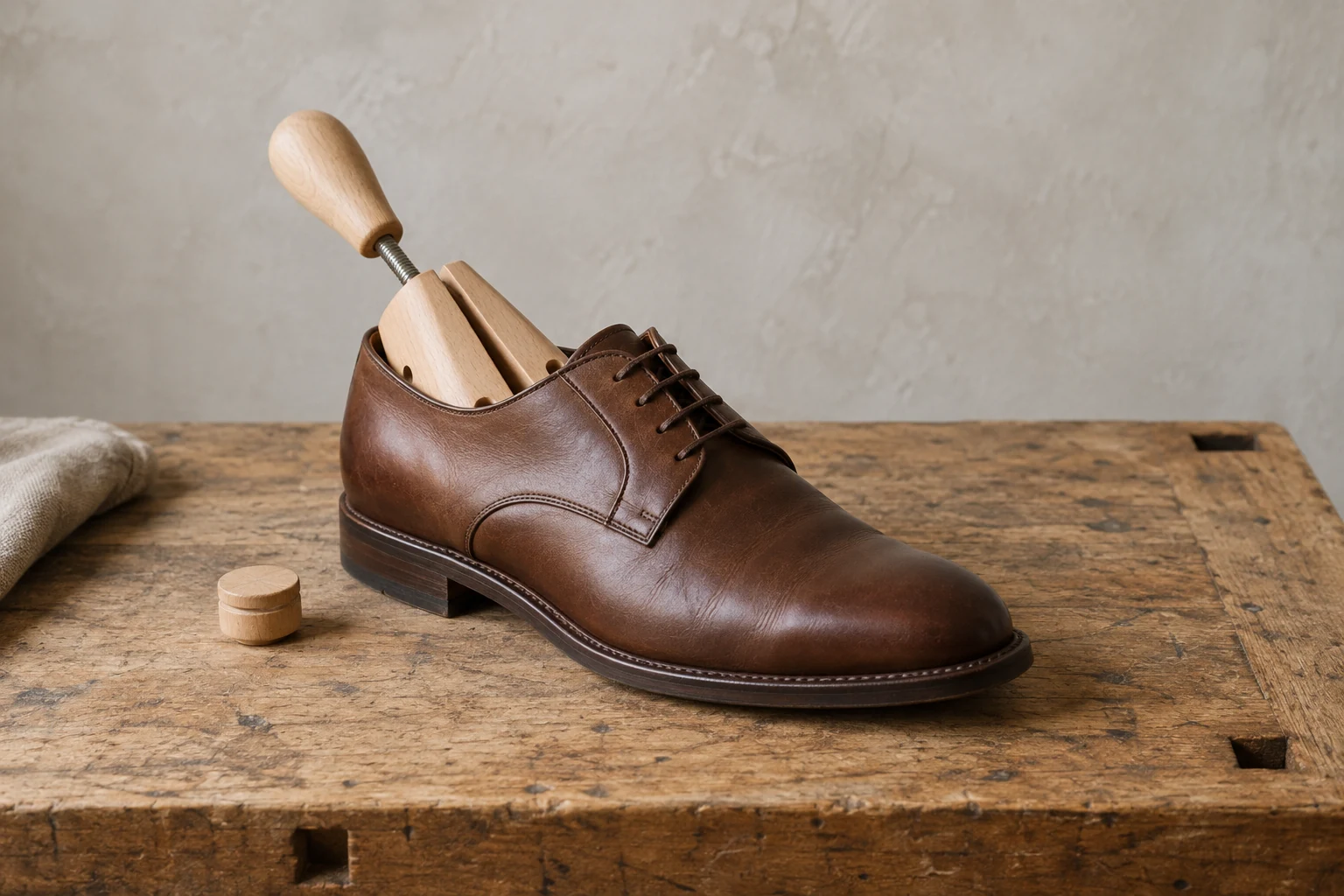
A two way shoe stretcher is a foot shaped form, usually wood or plastic, with one screw that widens it and another that lengthens it. Most come with small plugs you can fit into holes in the form to push out a single spot, such as over a bunion or a corn. They are inexpensive, work slowly and let you stop at exactly the right point.
Lightly apply stretch spray
If you have a shoe stretch spray, mist it on the inside of the tight area, and the outside if the product allows, testing first on a hidden spot to make sure it does not mark the leather. FootFitter describes these sprays as relaxing the fibers so they stretch more evenly.
Fit the plugs and insert the stretcher
Push a plug into the hole under any pressure point, then slide the stretcher into the shoe until the toe section reaches the front. Make sure it sits at the widest part of the foot, not halfway back.
Turn until snug, then a little more
Turn the width handle until the leather is taut, then give it one or two more turns. You should see the leather tighten over the form without creasing or whitening. Cranking it hard risks splitting seams.
Leave it and repeat
Leave the stretcher in for at least 6 to 8 hours, then turn it a little further and leave it again. FootFitter suggests a total of about two days. Try the shoes on between rounds and stop as soon as they are comfortable, since leather tends to settle back slightly.
Boot stretchers for the calf, instep and vamp
Boots bring problems a shoe stretcher cannot reach. A tall boot that will not zip over your calf needs a boot stretcher for the calf, a long form that expands inside the shaft. Pressure across the top of the foot in a pull on or cowboy boot calls for an instep or vamp stretcher, which pushes upward rather than outward. These are more specialized tools, and a cobbler will usually have them, so ask what a single professional stretch costs before buying one. For lace up boots, gap lacing over the sore spot, described in our guide on how to lace shoes, sometimes solves instep pressure without stretching at all.
Heat, ice and other quick methods, with their risks
If you want to know how to stretch shoes immediately, the honest answer is that none of the fast methods is truly instant, and each trades speed for risk. The hair dryer method uses heat to soften the leather: put on thick socks and the shoes, warm the tight area for 20 to 30 seconds at a time while flexing your foot, and keep walking until the shoes cool. Heat dries leather and can soften adhesives, so keep the dryer moving, never aim it at the sole seam, and condition the leather afterward, as you would when polishing and conditioning shoes.
The ice method relies on water expanding as it freezes. You fill a sealed freezer bag partly with water, push it into the toe, and put the shoe in the freezer overnight. The podiatrist guide warns against overfilling, since a burst bag soaks the shoe. Water is bad for leather and worse for suede, so this suits canvas or synthetic shoes more than good leather ones. Double bag it, and let the shoe return to room temperature before removing the ice.
| Method | Best for | Risk |
|---|---|---|
| Wear with thick socks | Mild tightness in leather shoes and boots | Almost none, just slow |
| Two way stretcher | Width and single pressure points | Split seams if cranked too fast |
| Boot stretcher | Calf, instep or vamp | Specialized; a cobbler may be cheaper |
| Hair dryer | Softening a tight leather spot | Dries leather and softens adhesives |
| Ice in a bag | Canvas or synthetic shoes | Water damage if the bag bursts |
| Cobbler | Expensive shoes, boots, precise spots | Lowest, ask for a quote |
When to go to a cobbler, or a podiatrist
A cobbler with a professional stretching machine is the most reliable option, especially for expensive shoes, a single sore spot, or boots. They can stretch one area precisely, use leather relaxers suited to the material, and tell you honestly when a shoe will not stretch enough to be worth it. Ask for a quote first; for a good pair it is usually a better bet than replacing them.
See a podiatrist rather than stretching if tight shoes cause numbness, tingling, or pain that stays after you take them off. The podiatry guide specifically advises people with diabetes to check with a podiatrist before home foot care, because reduced sensation can hide a pressure injury until it becomes serious. Foot shape can also change over time, so a shoe size that fit for years may no longer be right.
Common mistakes
Stretching a shoe that is too short
Length barely changes, and toes that hit the end of a shoe will rub and bruise no matter how wide it becomes. Exchange for the right size instead.
Cranking the stretcher all at once
Forcing the handle in one go can split seams or crack the finish. Small turns over a day or two give the leather time to relax.
Soaking leather to stretch it
Wearing soaked shoes until they dry is an old trick, but it stretches them unevenly and can leave the leather stiff and water marked. Use a stretch spray on the tight area instead.
Overheating with a hair dryer
Long blasts of heat dry and crack leather and can loosen the sole. Use short bursts, keep the dryer moving, and condition afterward.
Questions people ask
Can you stretch shoes a size bigger?
Not in length. On leather, expect up to about one width, and a quarter to a half size in length at best, which feels like more room across the ball of the foot rather than a bigger shoe. Synthetic and patent shoes give much less, and the lining and stiffness of the toe limit the result further.
Do tight shoes eventually stretch on their own?
Leather shoes that are slightly snug across the width usually ease with a few weeks of regular wear, as the upper warms and molds to your foot. Synthetic shoes and anything that is too short will not. If a pair still pinches after several short wears with thick socks, move on to a stretcher or a cobbler rather than waiting for blisters to toughen you up.
Does shoe stretch spray work on its own?
Spray helps leather relax, but it needs pressure to do anything useful. Use it with a shoe stretcher or while wearing the shoes with thick socks, and test it on a hidden spot first.
What liquid can you use to stretch shoes?
A shoe stretch spray made for leather is the safest choice. Many people mix rubbing alcohol with an equal amount of water as a homemade version; it helps the fibers relax and evaporates quickly, but it can dry leather and shift some dyes, so test it inside the heel and condition the shoes afterward. Plain water soaked into leather is riskier, since it can leave stains and stiffness as it dries.
Can you stretch suede shoes?
Yes, suede usually stretches easily, but moisture and heat can flatten or darken the nap. Stick to a stretcher with minimal spray, then brush the surface as in our guide to cleaning suede shoes.
How long does it take to break in boots?
It depends on the leather and construction. Heavy work boots can take weeks of regular wear before they feel fully molded, while softer fashion boots settle in a few days. Short sessions and good socks make the process far more comfortable.
Sources and further reading
References used for this guide. Each opens the original page in a new tab.
Keep reading
Sizing
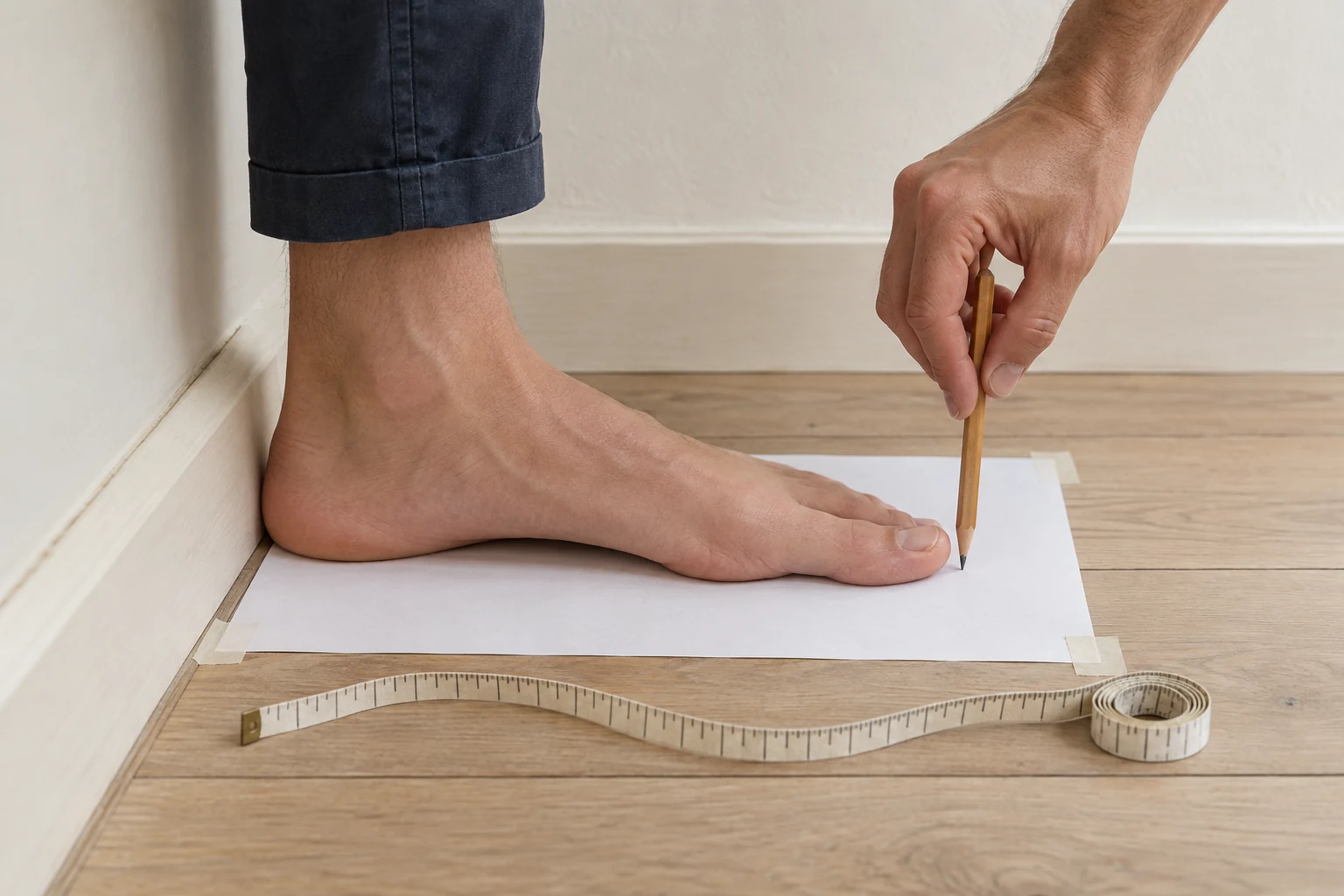
Shoe size conversion: US, UK and EU for men and women
Convert shoe sizes between US men's and women's, UK and EU, see why conversion charts disagree, and measure your foot so you can pick the right size in any brand.
Shoes and jewelry
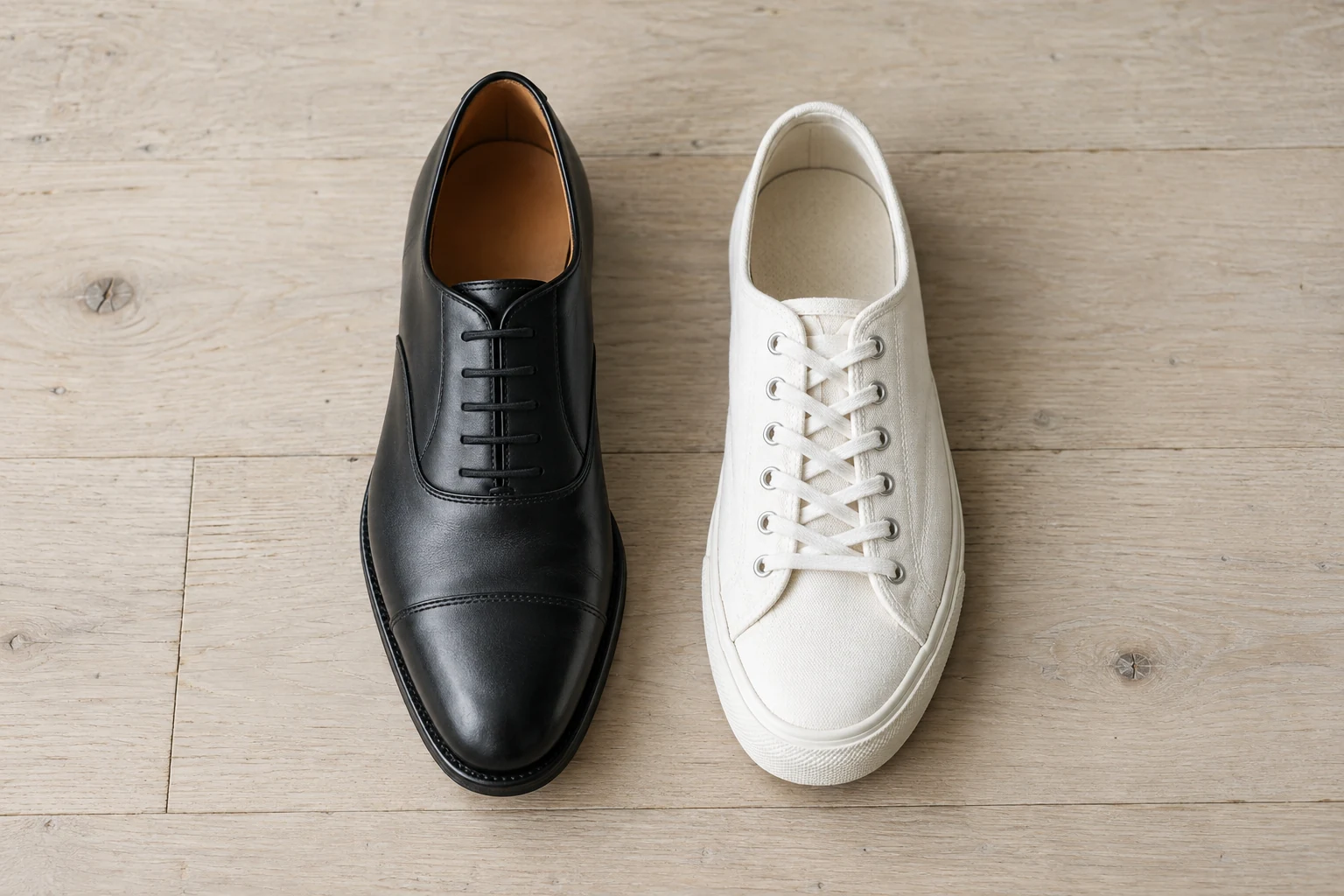
How to lace shoes: straight bar, criss cross and more
How to lace shoes for the job: criss cross for sneakers, straight bar lacing for dress shoes, a heel lock against slipping, and a bow knot that stays tied.
Shoes and jewelry
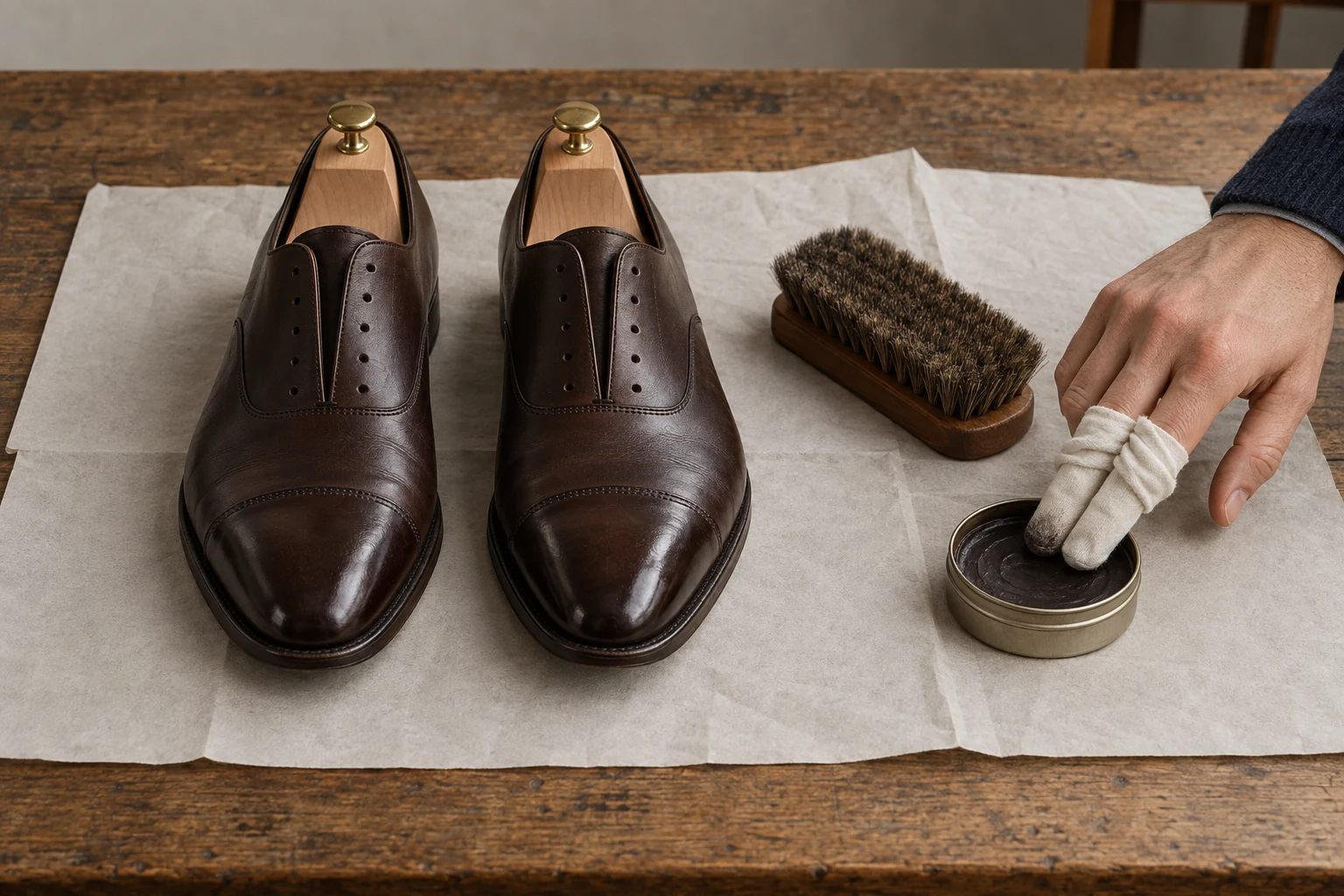
How to polish shoes at home, step by step
How to polish leather shoes at home: clean and condition first, use cream for color and wax for shine, buff properly, and keep the shape with shoe trees.
Shoes and jewelry
How to clean suede shoes without flattening the nap
Clean suede shoes at home with a brush, a suede eraser and a little patience, and learn how to handle water stains, oil marks and salt lines without soaking them.
Everyday style
How to wear ankle boots with jeans
How to wear ankle boots with jeans of any cut: when to tuck skinny jeans in, cuff straight legs, or let wide and bootcut hems cover the boot.