How to sell clothes online
In this guide
A good jacket you have not worn in two years is still a good jacket, and someone out there is searching for it in your size right now. Learning how to sell clothes online is mostly about making that search easy for them: showing the piece honestly, giving the measurements that a size label cannot, and pricing it at what similar things actually sell for. None of it needs special equipment beyond a phone, a window and a tape measure.
This guide walks through the choices in order: where to sell, what is worth listing, how to prepare, photograph and describe each piece, how to set a price, and how to ship and get paid safely. It stays neutral about specific platforms, because fees, rules and payout terms change often; check each one's current seller page before you start.
Where to sell used clothes online
There are three broad ways to sell, and they trade effort for money. Peer to peer marketplaces and sell clothes apps let you list each item yourself, set your own price, talk to buyers and ship the order. You keep the largest share, but you do all the work. Some advertise that listing is free and take a cut or charge a fee when an item sells; others charge the buyer instead. Read the fee page, including payment processing and shipping, before choosing, since the words free and no fees can refer to only part of the cost.
Consignment and managed resale services work the other way round. You send in a bag or box, and the service inspects, photographs, prices and lists the pieces, then pays you a share of what sells. It is far less work and far less money, and many services decline a large part of what they receive; find out in advance what happens to rejected items, whether they are returned for a fee, donated or recycled. Luxury consignment adds authentication for designer pieces. Finally, local marketplaces and neighborhood groups let you sell to someone nearby who collects in person, which avoids shipping altogether.
If you want money the same day, an online listing will not give it to you. Shops that buy used clothing over the counter are the quick option: you bring clean, in season pieces, a buyer picks what the shop can resell and offers cash or store credit on the spot, usually a modest share of the eventual shelf price. Such shops are the realistic answer to where you can sell used clothes for cash in person, and it pairs well with online selling for the pieces the shop turns down.
| Option | Your work | What you get |
|---|---|---|
| Peer to peer marketplace or app | List, price, answer buyers and ship each item | The largest share, minus fees |
| Consignment or managed resale | Send in a bag or box | A smaller share of what sells; many pieces declined |
| Local marketplace or neighborhood group | List and meet the buyer | No shipping, often cash in person |
| Shop that buys over the counter | Bring clean, in season pieces | Cash or credit the same day, a modest share |
Decide what is worth listing
Each listing takes ten to twenty minutes once you include photos, measurements and a description, so be selective. The pieces that tend to repay the effort are well made outerwear, leather shoes and boots in good condition, denim and knitwear from makers people search for by name, occasion wear worn once or twice, and genuine vintage. Fast fashion basics, heavily worn pieces and anything with stains, pilling or stretched necklines rarely sell for enough to cover your time, and those are better off going to a charity or textile recycling through our guide on where to donate clothes.
To see what is in demand right now, search a marketplace for the item and filter for sold listings. If similar pieces sold recently at a price that repays your time, list it. If there are hundreds of identical unsold listings, the market is saturated. Children's clothes need one extra check. The Consumer Product Safety Commission's resellers guide says federal safety law applies to individuals as well as stores, that selling a recalled product is illegal, and that hood and neck drawstrings must be removed from children's upper outerwear in sizes 2T to 12. Check recalls at cpsc.gov before you list.
Prepare and photograph each piece
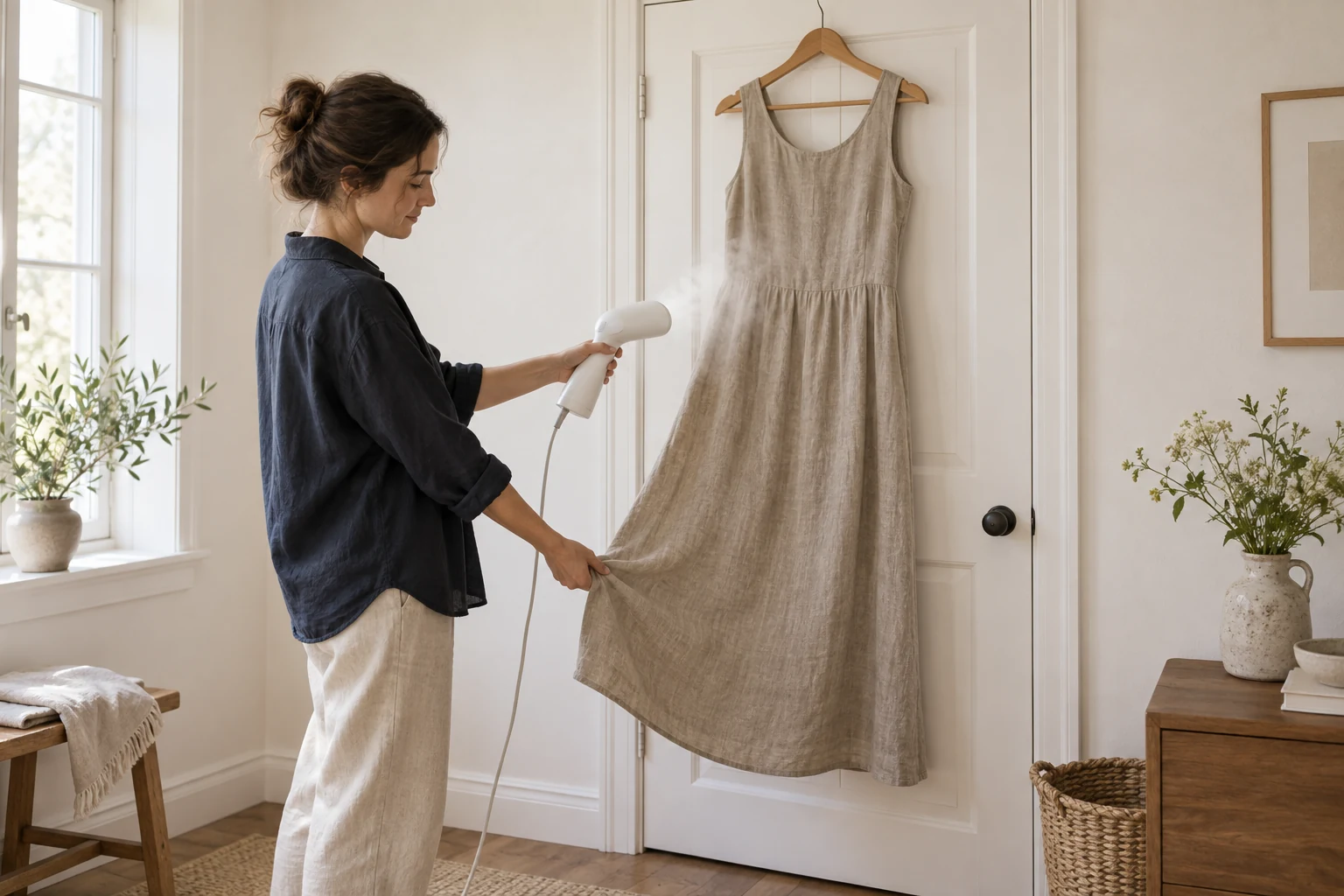
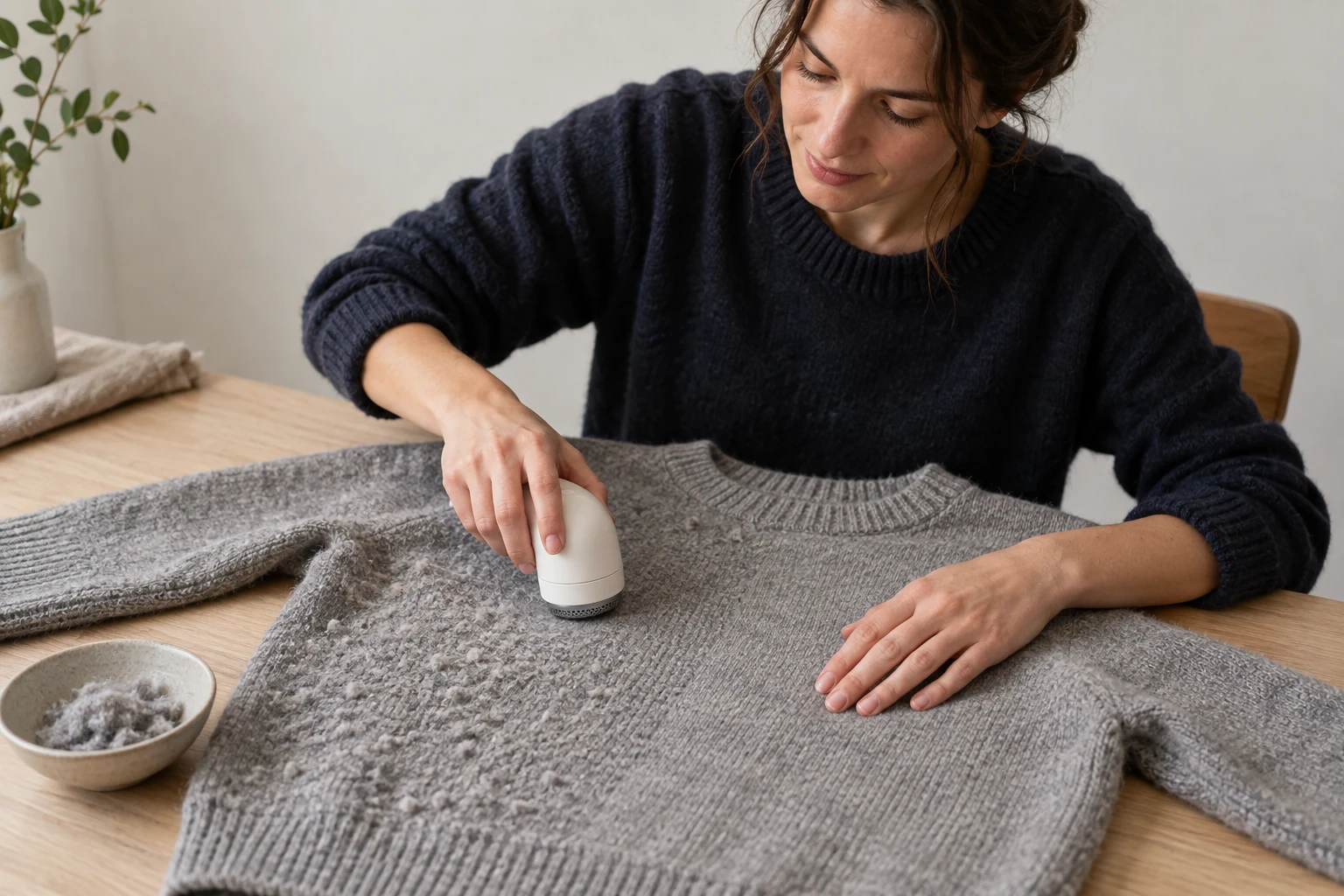
Wash or clean each piece according to its label, since buyers can tell from a photo and certainly when they open the parcel. Remove lint and pet hair, shave off pilling with our guide to removing pilling, sew on loose buttons, and steam out creases; steaming clothes is faster than ironing for most listings. A garment that hangs smooth looks cared for, and buyers pay for that.
Use daylight and a plain background
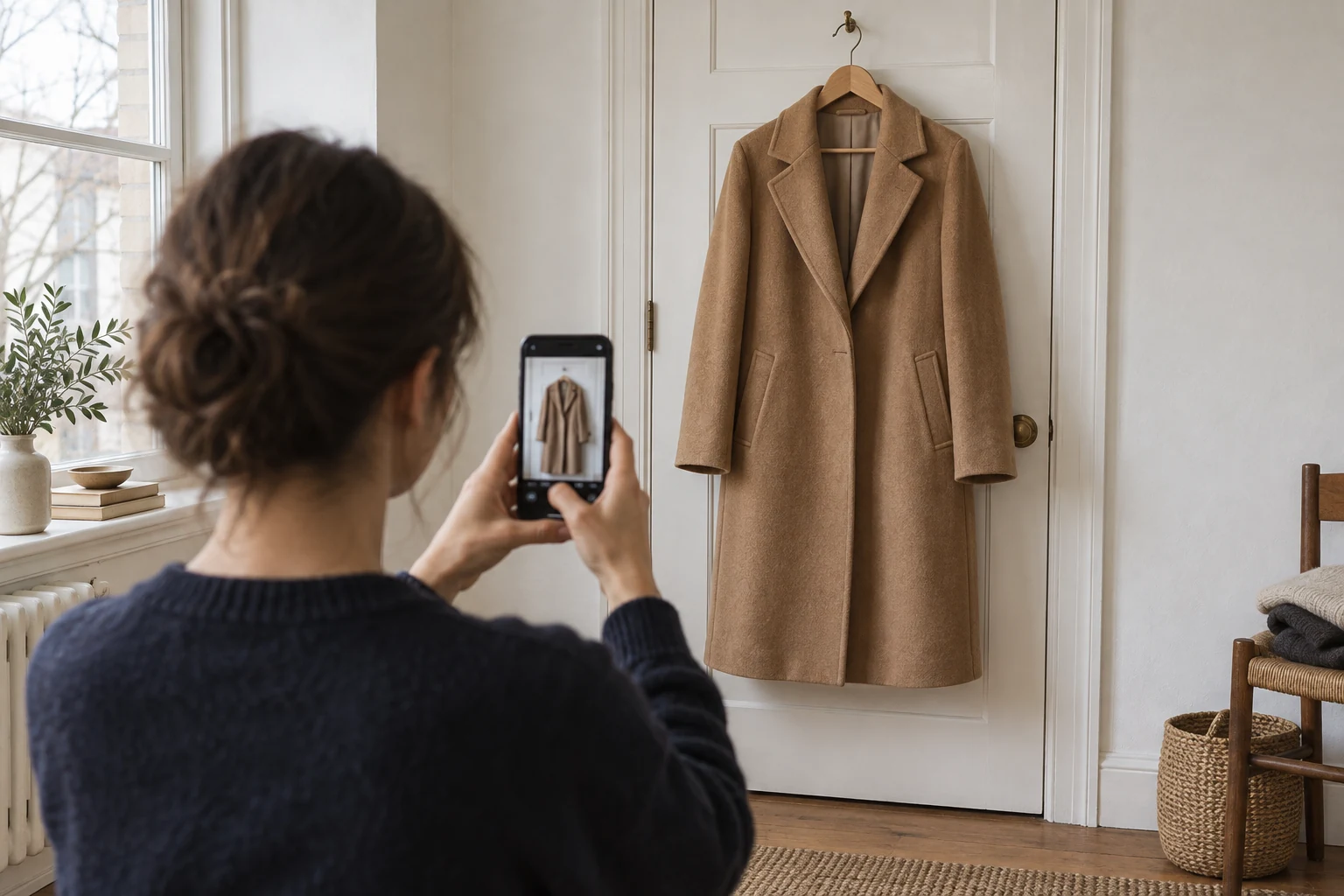
Shoot near a window during the day, with the light coming from the side, against a plain wall, a door or a clean floor. Turn off overhead lights, which tint colors. Colors should look in the photo the way they look in your hand.
Show the whole piece first
The first photo is the one buyers see in search results. Show the full garment, front on, on a hanger, laid flat or worn. Make it square and centered, with nothing else in the frame.
Add the back, details and labels
Photograph the back, the fabric up close, the brand label, the size tag and the fiber content and care label. Buyers use these to judge quality and authenticity, and the fiber content answers the question you would otherwise be asked.
Photograph every flaw
Show any mark, pull, fading or repair in a clear close up, and mention it in the text. Disclosed flaws rarely stop a sale at a fair price, while undisclosed ones lead to returns and bad reviews.
Describe and measure so the buyer can say yes
Sizes vary so much between makers and decades that measurements sell more clothes than any adjective. Lay the garment flat and measure across the chest from armpit to armpit, the length from the top of the shoulder to the hem, sleeve length, and for trousers the waist across the top, the rise, the inseam and the leg opening. Our guide on measuring yourself for clothes explains the points on the body that these flat measurements correspond to, and a buyer can compare them with a piece they already own.
Write the title as a buyer would type it into a search: brand, item, key detail, color, size. For example, navy wool double breasted overcoat, men's medium. In the description, list material, measurements, condition in plain terms (new with tags, excellent, good with a small mark on the cuff), how it fits, and whether it comes from a smoke free home if that is true. Keep it factual. Answer questions promptly and politely, since a quick reply is often the difference between a sale and a buyer who moves on.
Price from what actually sold
Asking prices tell you what sellers hope for; sold prices tell you what buyers pay. Filter for sold or completed listings of the same item in similar condition and price in that range. Then subtract what the sale will cost you: the platform's fee, payment processing, and shipping if you are covering it. If the number left over is not worth the effort, bundle the piece with others, offer it to a consignment service or donate it.
Leave a little room if the platform lets buyers make offers, because many will. If nothing happens after a couple of weeks, look again at the photos and title before cutting the price, since a clearer first photo or a searchable title often matters more than a small reduction. Seasonal timing counts too: coats and boots sell in fall and early winter, linen and sandals in spring.
Ship quickly and get paid safely
Ship within the time you promised, ideally within a day or two. Fold the piece neatly, put it in a clean plastic bag if it could meet rain, and use a padded mailer or a box for shoes and structured items. Weigh the parcel before you list so the shipping price is right, and always use tracking. Our guides on folding clothes and storing shoes help pieces arrive in the shape they were photographed in.
Keep every conversation and payment inside the platform, where seller protections apply. The Federal Trade Commission warns sellers about buyers who send fake payment notices through mobile payment apps, who send a check for more than the price and ask for the difference back, or who ask for a verification code. Never accept an overpayment, never send an item before the payment has truly arrived, and never share a code. For in person sales, the FTC notes that many sites suggest meeting a local buyer and accepting cash.
Common mistakes
Pricing from other people's asking prices
Unsold listings show hope, not value. Filter for sold items, and your pieces will sell sooner at a fair price.
Hiding flaws
A buyer who finds an undisclosed stain can usually return the item, and you lose the shipping both ways. Photograph and describe every flaw.
Listing without measurements
A size label alone invites questions and returns, because sizing varies between makers. Add chest, length and waist measurements to every listing.
Questions people ask
Can you really make money selling clothes online?
Yes, but for most people it is a way to recover part of what they spent rather than an income. Good outerwear, shoes, occasion wear and pieces from sought after makers can sell well; basics rarely do. Count your time along with the fees before deciding which pieces to list.
What is the easiest way to sell clothes online?
Consignment or managed resale is easiest because the service does the photos, listing and shipping to buyers. You earn less per piece and may have some items declined. Listing yourself on a marketplace takes more effort but usually pays more.
Can I sell clothes online and get paid instantly?
Not usually. Online sales pay after the item sells, and many platforms hold funds until the buyer receives it. For money the same day, take clean, in season pieces to a shop that buys used clothing over the counter, accepting a lower price for the speed.
Do I have to pay tax when I sell used clothes online?
In the United States, the IRS says payments for personal items such as clothing sold at a gain must be reported on your return. Payment platforms and online marketplaces send Form 1099 K once a seller's payments pass the threshold, which the IRS currently lists as more than $20,000 across more than 200 transactions. Most used clothing sells for less than it cost, but keep records of what you paid and received, and check the IRS guidance or a tax professional for your situation.
Sources and further reading
References used for this guide. Each opens the original page in a new tab.
Keep reading
Closet and packing
Where to donate clothes, and what they accept
Where to donate clothes so they get worn: thrift stores, shelters, work wear programs, donation bins and textile recycling, what each accepts and what to check.
Closet and packing
How to declutter your clothes and decide what to keep
How to declutter clothes one category at a time, with honest questions for deciding what to keep, what to repair, and where the rest should go.
Sizing
How to measure your waist and hips for clothes
Where your waist really is, how to measure your waist and hips accurately, how pants and jeans sizing differs, and how to read a size chart before you order.
Washing and ironing
How to steam clothes with a garment steamer
How to steam clothes properly: set up a garment steamer, work each fabric, know what should never be steamed, and get wrinkles out with no steamer at all.
Washing and ironing
How to remove pilling from a sweater, and lint too
How to remove pilling from a sweater with a fabric shaver or sweater comb, clear lint with a roller, and wash and wear knits so the pills come back more slowly.