Types of jeans: fits and cuts explained
In this guide
Forty pairs on one denim page, filters for slim, straight, relaxed, tapered, bootcut, barrel and wide, and every brand using the words slightly differently. Underneath the noise, nearly all types of jeans are built from two choices: where the waist sits on your body, and what shape the leg takes from hip to hem. Once you can read those, the names stop being mysterious.
Rise comes first below, then the leg shapes from narrowest to widest, then the named cuts such as mom and boyfriend jeans, each with what to wear it with. For the finer points of length and fit through the seat, see our guide on how jeans should fit.
Rise: where the waist sits
The rise is the distance from the crotch seam to the top of the waistband, and it decides where the jeans sit. Low rise jeans sit well below the navel, on the hip bones; they were the look of the late 1990s and early 2000s and have come back with the Y2K revival. Mid rise jeans sit a little below the navel and are the default for most men's jeans and many women's. High rise jeans sit at or above the navel, at the natural waist, and are standard in most current women's cuts.
Rise changes the whole outfit, not just comfort. A high rise lengthens the leg and makes tucked in tops and cropped sweaters look deliberate. A mid rise is the most neutral and works with untucked shirts and T shirts. A low rise shortens the leg line and needs a longer top unless you want the waistband to show. Brands measure rise differently, so compare the rise measurement on product pages rather than trusting the label alone.
Narrow leg jeans: skinny, slim, tapered and straight
Skinny jeans are close to the body from waist to ankle, and nearly always contain stretch. They dominated the 2000s and 2010s and are now less central to trend led wardrobes, but they remain useful under tall boots and with long sweaters or oversized jackets, where a narrow leg balances the volume on top. Slim jeans are a notch looser: close through the thigh and narrow at the ankle without gripping the calf.
Tapered jeans have room in the seat and thigh and then narrow from the knee to the ankle. That makes them comfortable for people with muscular thighs, which is why many brands sell an athletic taper. Straight leg jeans keep the same width from the knee to the hem, and the classic five pocket straight jean has been made in some form since the late 1800s. If you only own one pair, a mid or high rise straight leg in dark or mid blue is the most versatile of all the types of jeans: it works with sneakers, boots and loafers, with T shirts and with blazers.
Relaxed, baggy and barrel jeans
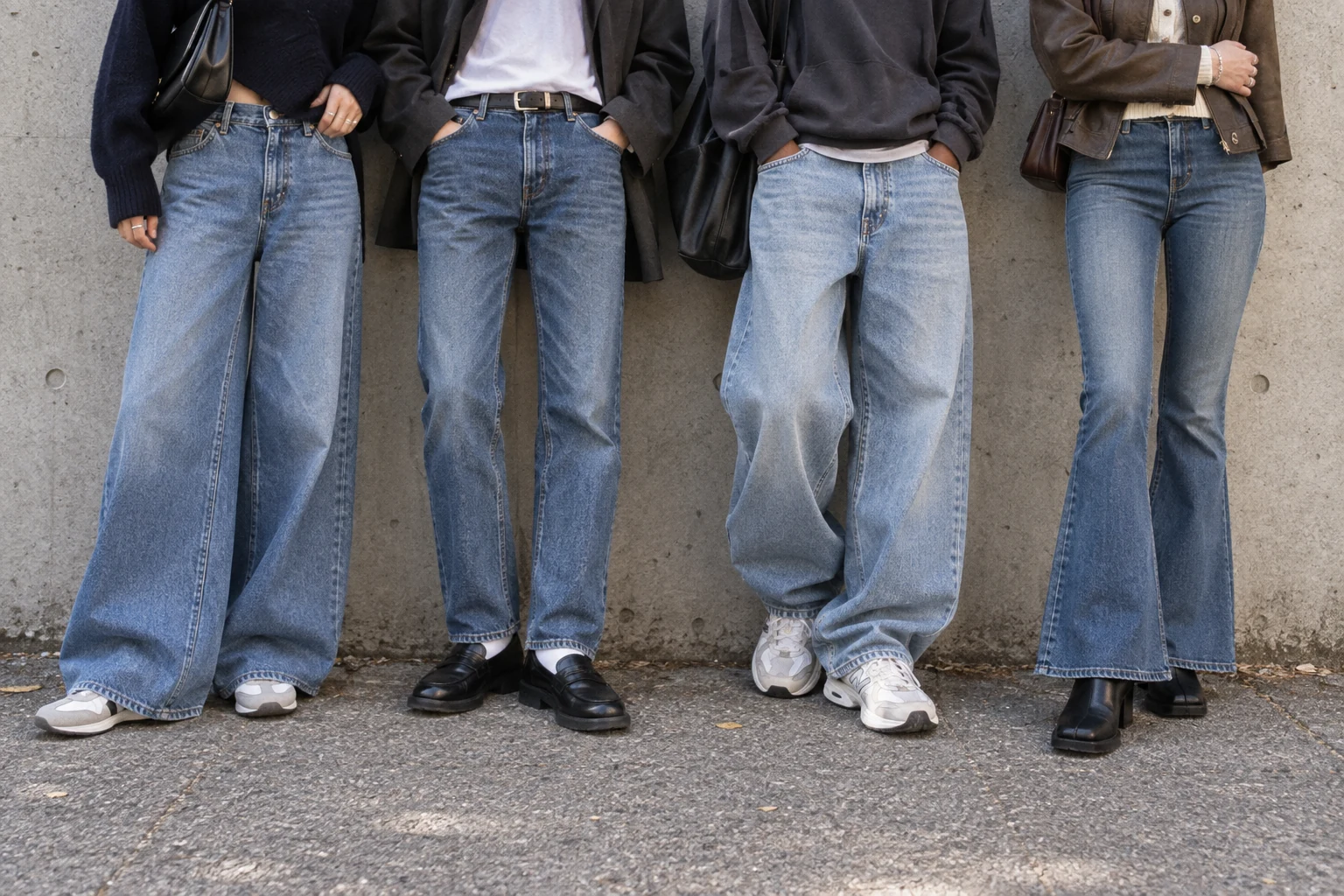
Relaxed jeans are a straight fit with more room everywhere, from the seat to the hem. Loose and baggy jeans go further, with a wide thigh and a wide opening, and they often sit low or pool at the hem on purpose. Baggy jeans were central to 1990s skate and hip hop style and to 90s fashion generally, and they have been one of the most popular fits of recent years, especially with younger buyers. Barrel jeans, sometimes called horseshoe jeans, curve outward through the thigh and knee and then narrow slightly at the ankle, giving a rounded outline.
Wide cuts need balance. Men in baggy jeans usually look best with a boxy T shirt, a hoodie or a work jacket and substantial shoes, such as chunky sneakers, skate shoes or boots; a thin shoe disappears under the hem. Women often pair baggy or barrel jeans with a fitted top, a bodysuit or a short cardigan so the outfit has one close fitting half. Length still matters: a little break at the shoe is fine, but jeans that drag under your heel will fray and look careless.
Bootcut, flare and wide leg jeans
These three are often confused, and the difference is where the leg widens. Bootcut jeans are fairly slim through the thigh, narrowest at the knee, then open slightly at the hem, just enough to fit over a boot. They were the dominant women's cut from the late 1990s through the 2000s, and in men's denim they remain the traditional Western jean worn with cowboy boots. Flare jeans are closer through the thigh and widen more dramatically from the knee; the most extreme version, flaring from the calf, is the 1970s bell bottom.
Wide leg jeans are wide from the hip all the way down, with a straight or slightly flared line and no narrowing at the knee. They usually come high rise, and they look sharpest with the top tucked in or cropped at the waist. Bootcut and flare jeans need the right hem length for the shoe you will wear most: with heels or heeled boots the hem should nearly touch the floor; with flats, choose a shorter length. Our guide to shoes for wide leg jeans goes through the options in detail.
| Cut | How it fits | Pair it with |
|---|---|---|
| Skinny | Close from waist to ankle, nearly always stretch | Tall boots, long sweaters, oversized jackets |
| Slim | Close through the thigh, narrow ankle | Most tops and shoes |
| Tapered | Room in seat and thigh, narrows from the knee | Good for muscular thighs |
| Straight | Same width from knee to hem | Sneakers, boots, loafers, tees or blazers |
| Baggy | Wide thigh and wide opening | Boxy tops and substantial shoes |
| Barrel | Curves out through thigh and knee, narrows at the ankle | A fitted top or short cardigan |
| Bootcut | Slim thigh, narrowest at the knee, opens slightly | Boots, including Western boots |
| Flare and wide leg | Flare widens from the knee; wide leg from the hip | Hem nearly to the floor with heels |
Mom jeans, boyfriend jeans and other named cuts
Mom jeans are high waisted, roomy through the hip and thigh, and taper to an ankle length hem. The name became famous as a joke about unfashionable jeans in a 2003 Saturday Night Live sketch, but the shape came back in the 2010s and is now a standard women's cut. They look best with the top tucked in to show the high waist, and with sneakers, loafers or ankle boots that leave a little ankle showing.
Boyfriend jeans for women borrow the look of men's jeans: a lower, looser rise, a relaxed straight leg, often a worn wash, usually rolled at the hem. They are meant to look casual and a little slouchy, so pair them with something more polished, such as a crisp shirt, a blazer or pointed flats, to keep them from looking sloppy. Girlfriend jeans are a slimmer version of the same idea. Carpenter jeans add a hammer loop and utility pockets to a loose straight leg, and cropped or ankle jeans are any cut shortened to end above the ankle bone. Our guide on how to cuff jeans covers the roll that suits each of these.
Types of jeans for men
Men's jeans follow the same shapes, but the range is usually narrower and named by fit number or fit name. Most men's lines offer skinny, slim, slim straight, straight, athletic taper, relaxed and loose or baggy, plus a bootcut. The practical way to choose is by thigh and seat: if slim jeans pull across your thighs, go to an athletic taper or straight rather than sizing up the waist.
For a first pair, a straight or slim straight in dark indigo is the most useful, because it goes from a T shirt and sneakers to an Oxford shirt, blazer and leather boots. A relaxed or loose pair in a lighter wash covers weekends and streetwear. If you wear Western boots or work boots most days, a bootcut sits over them without bunching. Our guide to wearing ankle boots with jeans shows how each leg shape meets a boot.
Washes and fabric: the other half of the choice
Two pairs in the same cut can look completely different because of the denim itself. Dark rinse indigo looks the most polished and is the one to wear in smart casual settings. Mid and light washes look relaxed, and distressed or ripped jeans are firmly casual. Black and gray jeans behave like dark trousers. Rigid, 100 percent cotton denim holds its shape and softens with wear, while stretch denim, usually with a little elastane, is more comfortable from day one but can bag at the knees over time.
Care changes how long each wash keeps its color. Wash dark jeans inside out in cold water and less often, and air dry them to limit fading and shrinkage; our guide on how to wash jeans explains why. For what the fabric itself is and why it fades the way it does, see what denim is.
Questions people ask
What are the main types of jeans?
By leg shape, the main types are skinny, slim, tapered, straight, relaxed, baggy, bootcut, flare and wide leg. Named cuts such as mom, boyfriend, barrel and carpenter jeans combine one of those shapes with a particular rise and roominess. Each also comes in low, mid or high rise.
What jeans are most popular right now?
In recent seasons, looser fits have led: straight leg, baggy, barrel and wide leg jeans, often in high rise for women and relaxed rise for men, and they are especially popular with younger buyers. Skinny jeans are less fashionable than they were in the 2010s, but they are not wrong, and they still work under tall boots. A good straight leg is the safest choice because it sits in the middle of every trend cycle.
What is the difference between bootcut and flare jeans?
Bootcut jeans open only slightly from the knee, just enough to sit over a boot. Flare jeans widen more, often starting closer to the knee and ending in a noticeably wide hem. If you want a subtle line that works with ankle boots and sneakers, choose bootcut; if you want a clear 1970s outline with heels or platforms, choose flare.
Are mom jeans and boyfriend jeans the same?
No. Mom jeans are high rise, fuller in the hip and taper to the ankle, so they look deliberate and a little vintage. Boyfriend jeans sit lower, are looser and straighter in the leg, and are usually cuffed and worn in, so they look borrowed and casual.
Which type of jeans should I buy first?
A mid or high rise straight leg in dark indigo, in a length that just reaches the top of your shoes. It works for the widest range of outfits and occasions and makes a good reference pair, so you can compare later purchases against a fit you already know. Measure your inseam first with our guide to measuring inseam.
Sources and further reading
References used for this guide. Each opens the original page in a new tab.
Keep reading

Sizing
How should jeans fit? Waist, seat, thigh and length
How should jeans fit at the waist, seat, thigh and ankle? Clear checks for men and women, how rigid and stretch denim change, and where the hem should land.
Everyday style
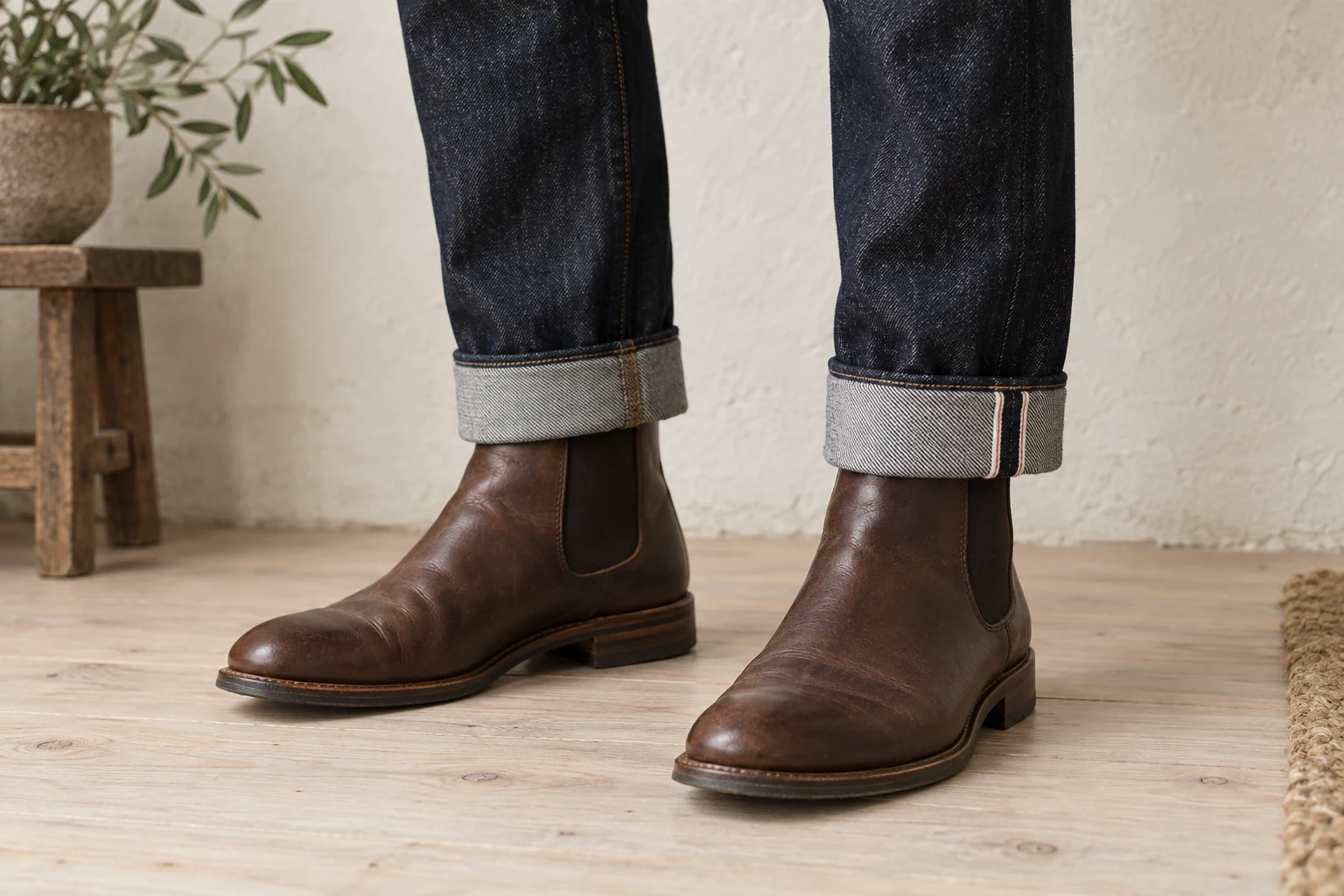
How to cuff jeans: single, double and pinroll
How to cuff jeans neatly: single, double, pinroll and Japanese cuffs, which jeans and shoes each one suits, and when to hem instead of rolling.
Everyday style
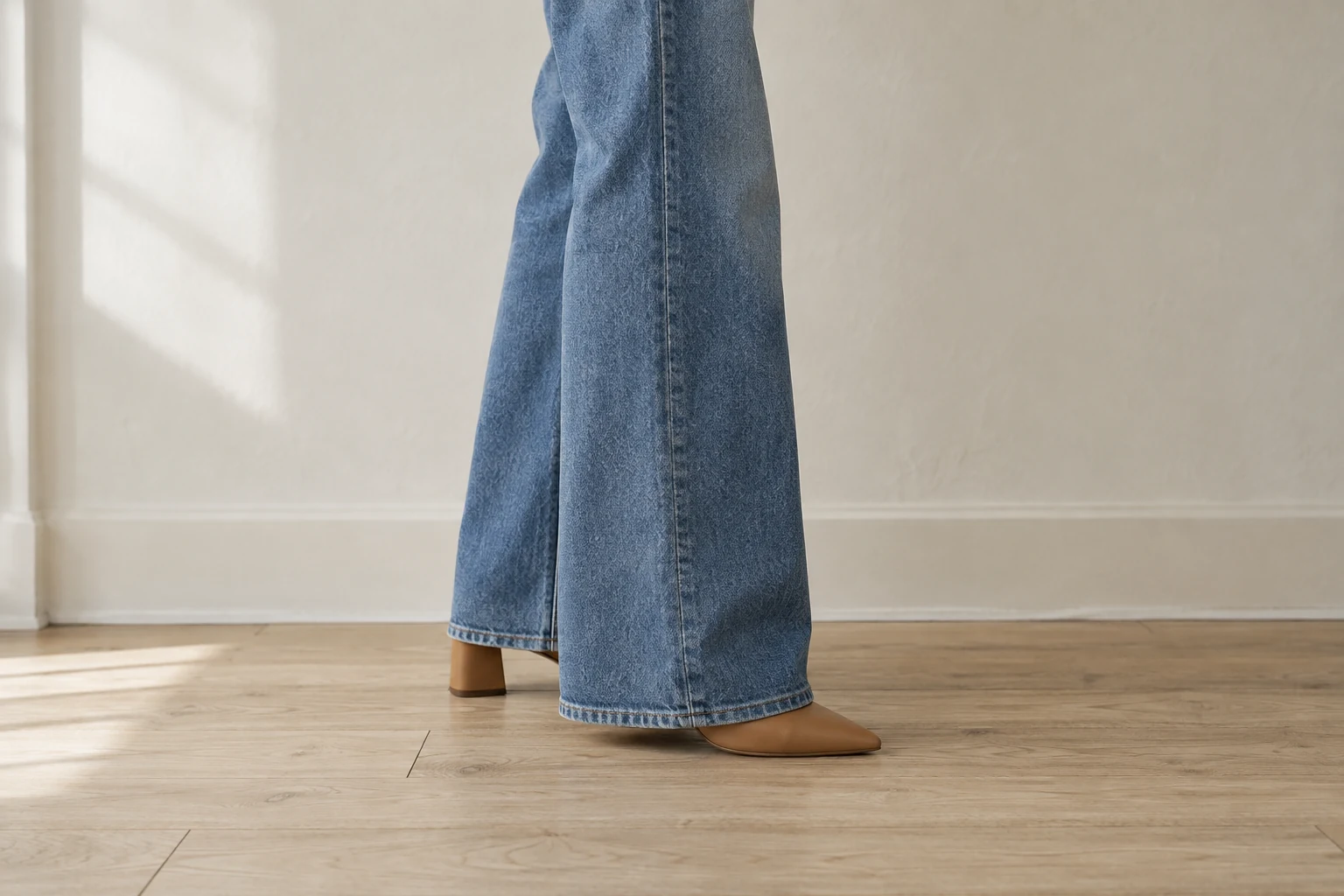
What shoes to wear with wide leg jeans
What shoes to wear with wide leg jeans, matched to the hem: heels, flats, sneakers, loafers and boots, plus what works in winter and summer and what to avoid.
Washing and ironing
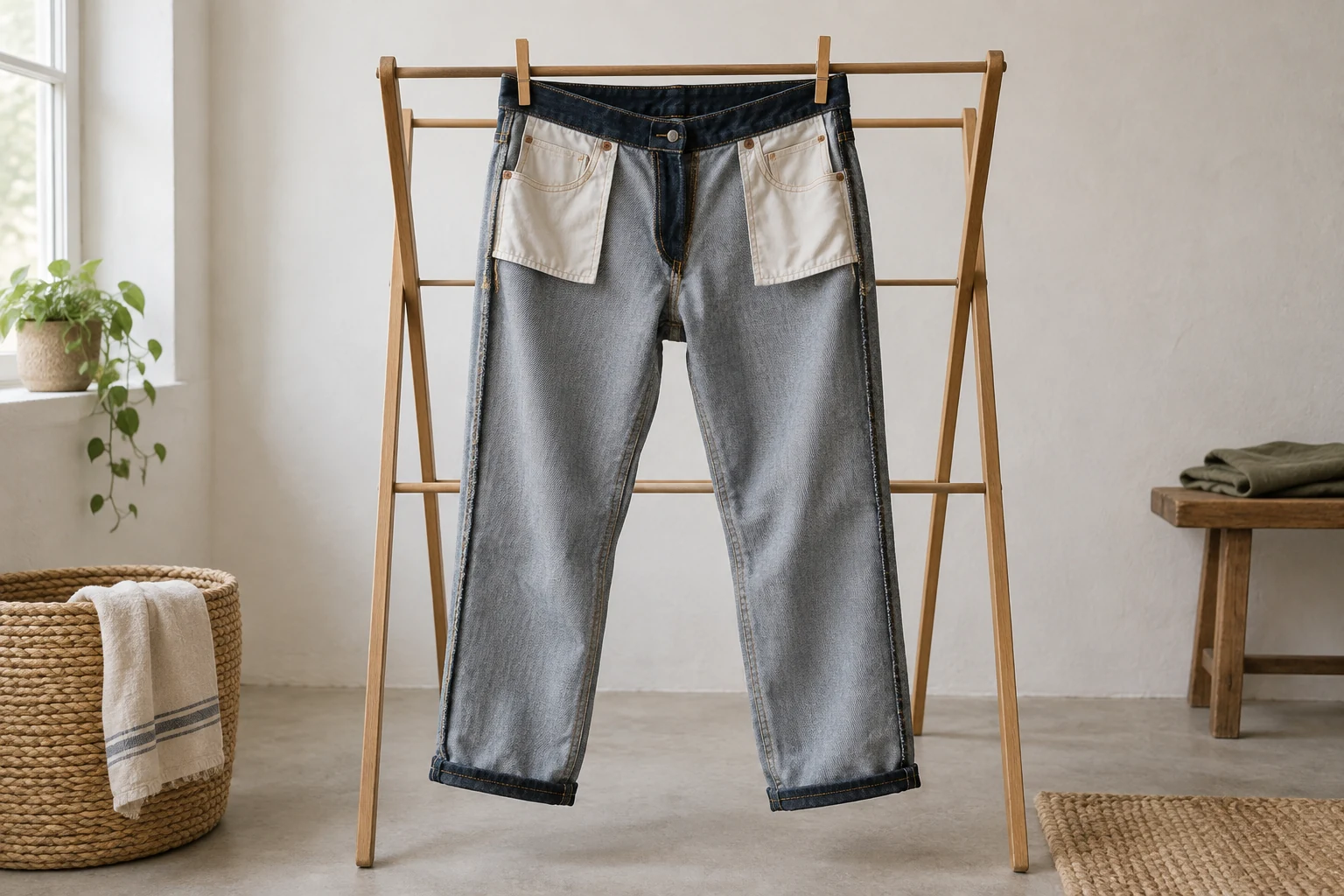
How to wash jeans and how often to do it
How to wash jeans so they keep their color and fit: how often to wash, inside out in cold water, air drying, raw denim and what to do if your jeans shrink.
Fabrics
What is denim? Raw, selvedge and stretch explained
What denim is made of, why it is blue, how it differs from jeans, and what raw, selvedge, sanforized and stretch denim mean when you shop for jeans or a jacket.