Chambray: what it is and how it differs from denim
In this guide
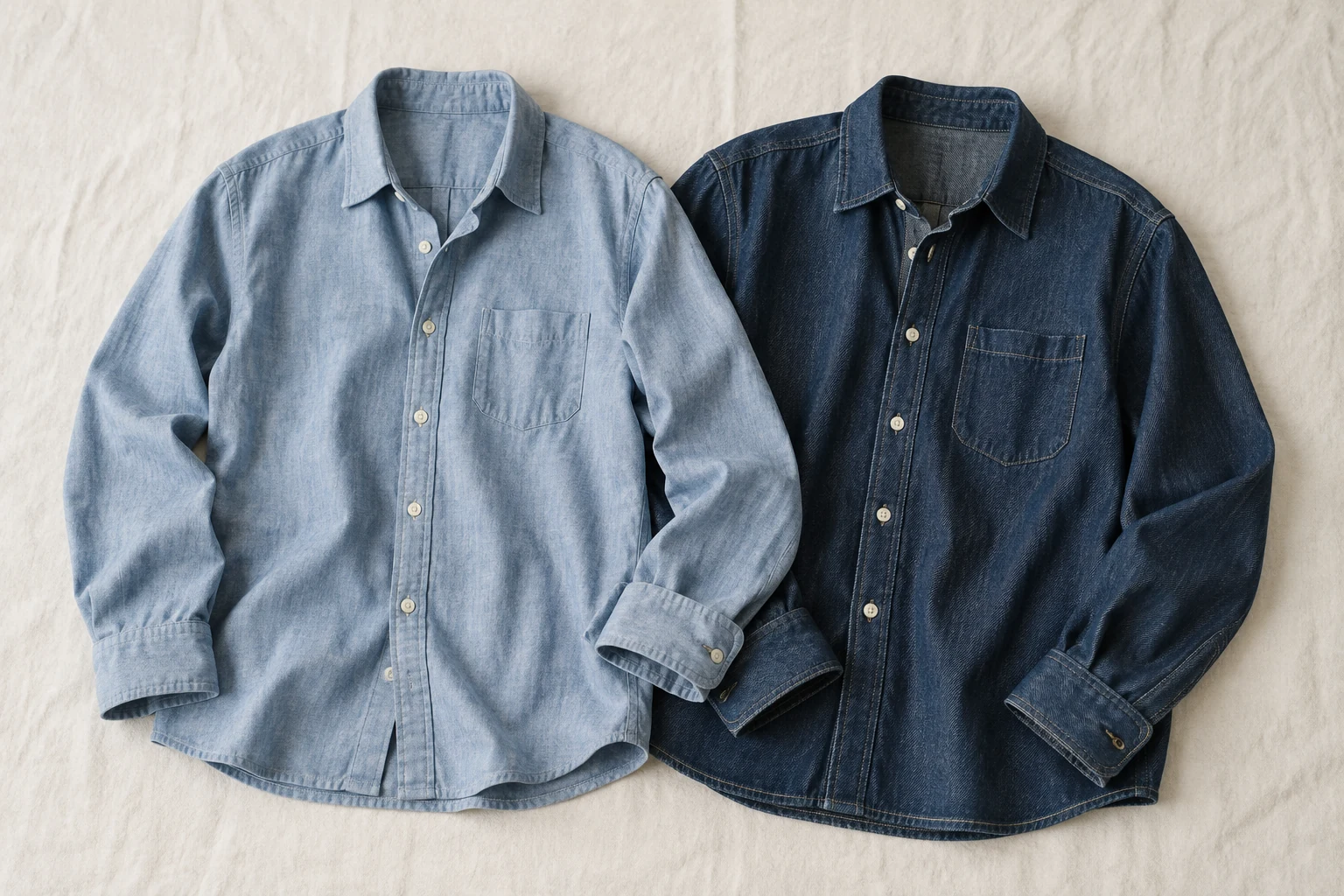
Is chambray just a fancy word for a denim shirt? It is not, and once you have both in your hands the difference is obvious: the chambray shirt is lighter, softer and flatter, and it is the one you will actually want to wear on a warm afternoon. Chambray is one of the most useful fabrics in a casual wardrobe, and its name also turns up in paint charts and dress listings as a shade of pale blue.
This guide covers what chambray fabric is and where it came from, how to tell chambray vs denim at a glance, what chambray color means, and how to wear and wash a chambray shirt or dress.
What chambray fabric is
Chambray is a plain weave fabric, the simplest structure there is: each crosswise thread goes over one lengthwise thread and under the next. What makes it chambray is the color arrangement. The warp, the threads running the length of the cloth, is dyed, and the weft, running across, is white. Because every square of the grid shows a bit of each, the fabric reads as a soft, slightly mottled color rather than a solid one.
Most chambray today is cotton, often with a higher thread count than denim, which makes it fine, smooth and breathable. The name traces to Cambrai, a textile town in northern France that also gave its name to cambric, a fine plain weave once made there in linen. In the United States, chambray took over as the name for the colored warp version in the nineteenth century, and in the early twentieth century chambray work shirts worn with denim trousers became the standard outfit of manual labor, part of the story behind the phrase blue collar.
Chambray vs denim: how to tell them apart
Both fabrics usually pair an indigo or blue warp with a white weft, which is why they look related. The difference is the weave. Denim is a twill: its threads float over two or more others and step over one each row, which makes diagonal lines and a heavy, dense cloth that is mostly blue on the face and mostly white on the back. Chambray is a plain weave, so it has no diagonal, looks the same on both sides and is much lighter.
To check a garment, look closely at the surface under good light. Diagonal ridges mean denim or another twill; a fine, even crosshatch means chambray. Then turn the fabric over. A denim shirt will be clearly paler inside; a chambray shirt will look almost identical on both faces. Weight is the last clue: chambray drapes and moves like a shirt, while denim, even light denim, has more body and stiffness. Our guides to what denim is and twill weaves explain the structure in more detail.
| Feature | Chambray | Denim |
|---|---|---|
| Weave | Plain weave, fine even crosshatch | Twill with diagonal ridges |
| Reverse side | Almost identical to the face | Clearly paler, mostly white |
| Weight | Light, drapes like a shirt | Heavier, more body and stiffness |
| Best for | Warm weather shirts, dresses, pants | Jeans, jackets, sturdy shirts |
What color is chambray?
Chambray is traditionally light blue, and as a color name chambray or chambray blue describes that soft, slightly faded, grayish mid blue you get when indigo threads cross white ones. It is neither a true gray nor a strong blue, which is why it sits so easily next to other colors. Paint makers and fashion brands use the name loosely, so a chambray colored dress may be anything from pale sky blue to a dusty blue gray.
As a fabric, chambray comes in many colors. Any dyed warp with a white weft gives the effect, so you will find pink, gray, black, olive and red chambray, all with the same soft, heathered surface. The closest colors to classic chambray blue are faded denim blue, powder blue and blue gray; in outfits, it behaves almost like a neutral.
How to wear a chambray shirt
A chambray shirt is a casual shirt with a neat side. For men, it works with khaki or olive chinos, gray trousers, white jeans and dark denim, as long as the jeans are clearly darker than the shirt so the outfit does not look like a single faded block. Under a navy or gray unstructured blazer it sits comfortably in a relaxed smart casual setting, and with a knit or wool tie it can even go to a casual office. Roll the sleeves, leave the top button open and let the soft fabric do the work.
For women, a chambray shirt is a layering piece as much as a shirt: open over a white T shirt or a slip dress, tied at the waist over a skirt, or tucked into wide trousers. Chambray shirts women wear are often slightly oversized, which suits the relaxed fabric. Because chambray blue behaves like a neutral, it pairs well with white, cream, tan, rust, olive and blush, and with prints such as florals or stripes.
Chambray dresses, pants and summer wear
Chambray is a natural warm weather fabric. Its plain weave and light weight let air through, and cotton chambray stays comfortable in both dry heat and humidity. A chambray dress, typically a shirt dress or a simple smock, is easy to dress up with leather sandals and a woven bag, or down with white sneakers. Chambray pants and shorts are lighter than chinos and pair well with linen shirts and knit polos.
Is chambray the same as linen? No, though they overlap. Linen is a fiber, from the flax plant; chambray is a construction. Most chambray is cotton, but linen chambray and cotton and linen blends exist, and they combine linen's coolness and crumpled texture with chambray's two tone look. If you want the coolest option for real heat, read our guide to linen. For cold weather, chambray works as a layer under a sweater or overshirt.
Caring for chambray
Cotton chambray is easy to wash at home. Wash it in cold water with similar colors, particularly for the first few washes, when an indigo warp can shed a little dye. Cold water also helps it keep its color longer and releases odors well. Tumble dry on low or hang it to dry, and take it out of the dryer while still slightly damp to limit creasing.
Chambray wrinkles readily, like most light plain weave cottons. A relaxed look suits it, but if you want it crisp, iron it while it is still damp on a hot setting suitable for cotton, or steam it on a hanger. Our guide to ironing a shirt covers the order, and our guide to care label symbols helps with blends that need lower heat.
Questions people ask
Is chambray blue or gray?
Classic chambray is blue, but a soft, slightly grayish blue, because the white weft threads lighten the dyed warp. Next to a true gray it looks clearly blue; next to bright blue it looks muted. Gray chambray, with a gray warp, also exists.
Is chambray good for summer or winter?
Chambray is best for spring and summer, because it is light and breathable. In cooler weather it works as a layer under a sweater, a quilted vest or a jacket. Heavier brushed chambrays and flannel chambray exist for winter, but they are less common.
How do you pronounce chambray?
In American English it is usually pronounced SHAM bray, with the stress on the first syllable. The French origin sometimes leads people to say sham BRAY, which is also understood.
Is a chambray shirt the same as a denim shirt?
No. A denim shirt is made from light twill, with a diagonal texture and a paler inside. A chambray shirt is a plain weave, lighter and flatter, and looks almost the same on both sides. They can look similar from a distance, but chambray is cooler and softer.
Sources and further reading
References used for this guide. Each opens the original page in a new tab.
Keep reading
Fabrics
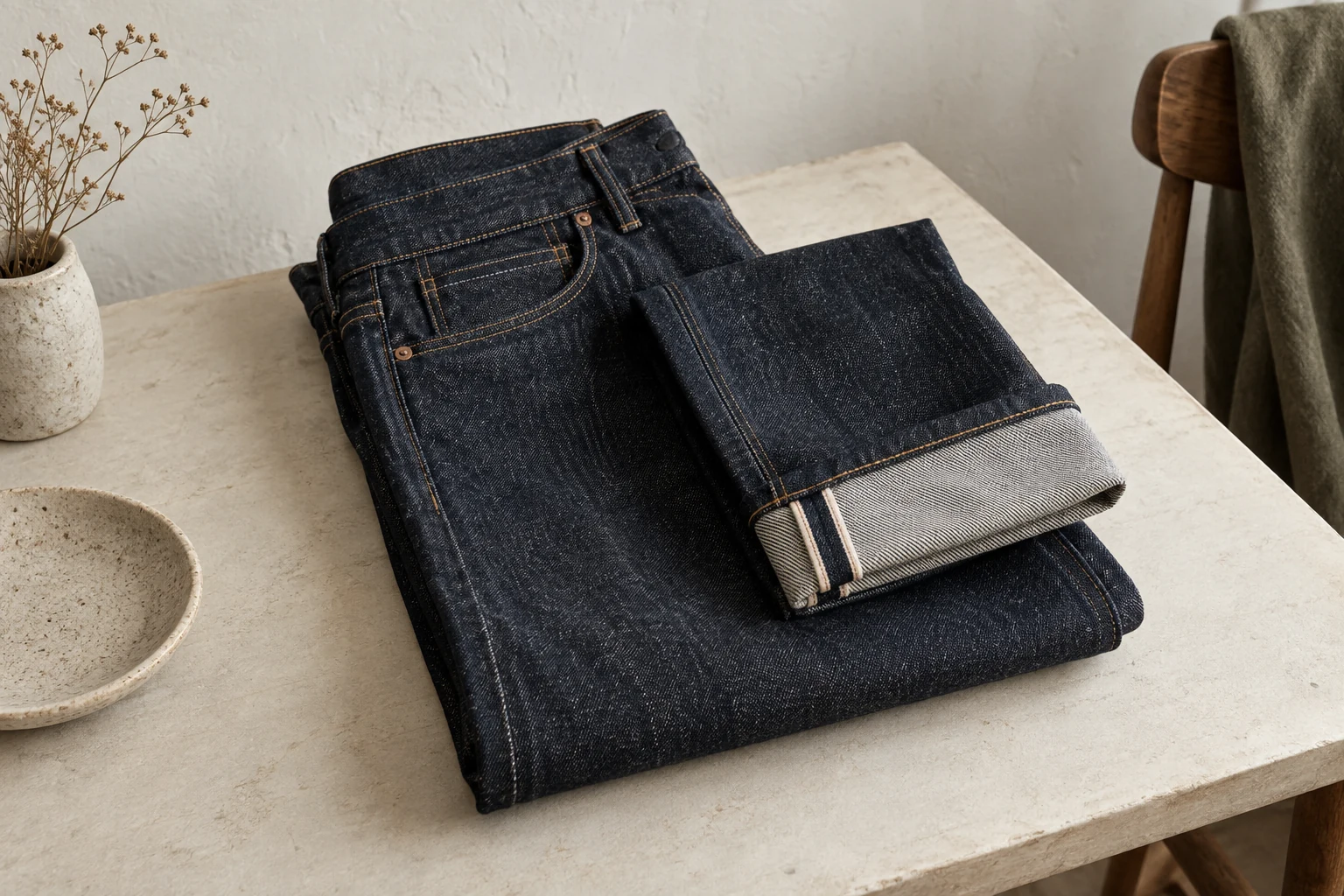
What is denim? Raw, selvedge and stretch explained
What denim is made of, why it is blue, how it differs from jeans, and what raw, selvedge, sanforized and stretch denim mean when you shop for jeans or a jacket.
Fabrics
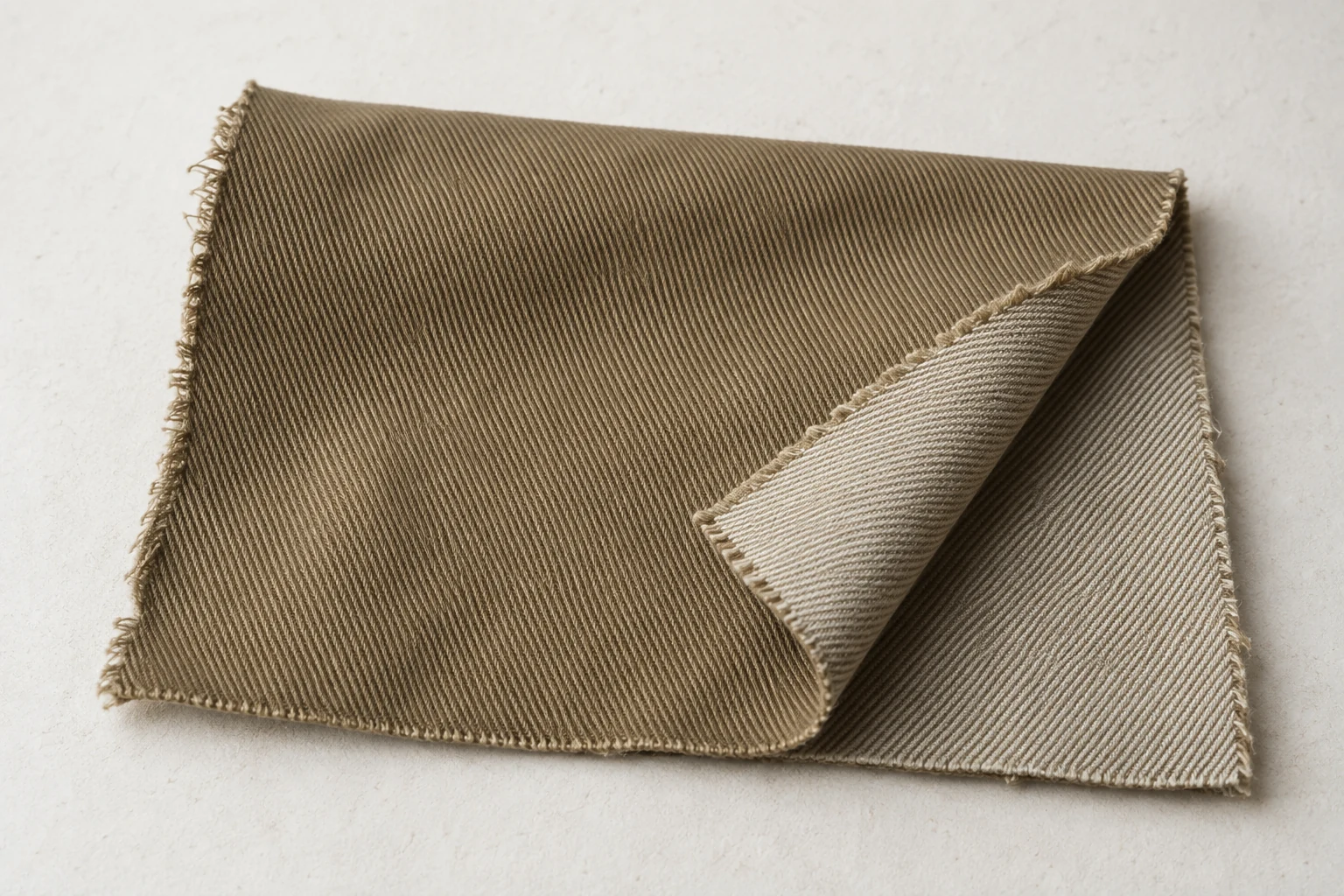
What is twill fabric, and what is it good for
What is twill? The weave behind jeans, chinos and gabardine: how to spot the diagonal, what twill is made of, where it works, and how it compares to cotton.
Fabrics
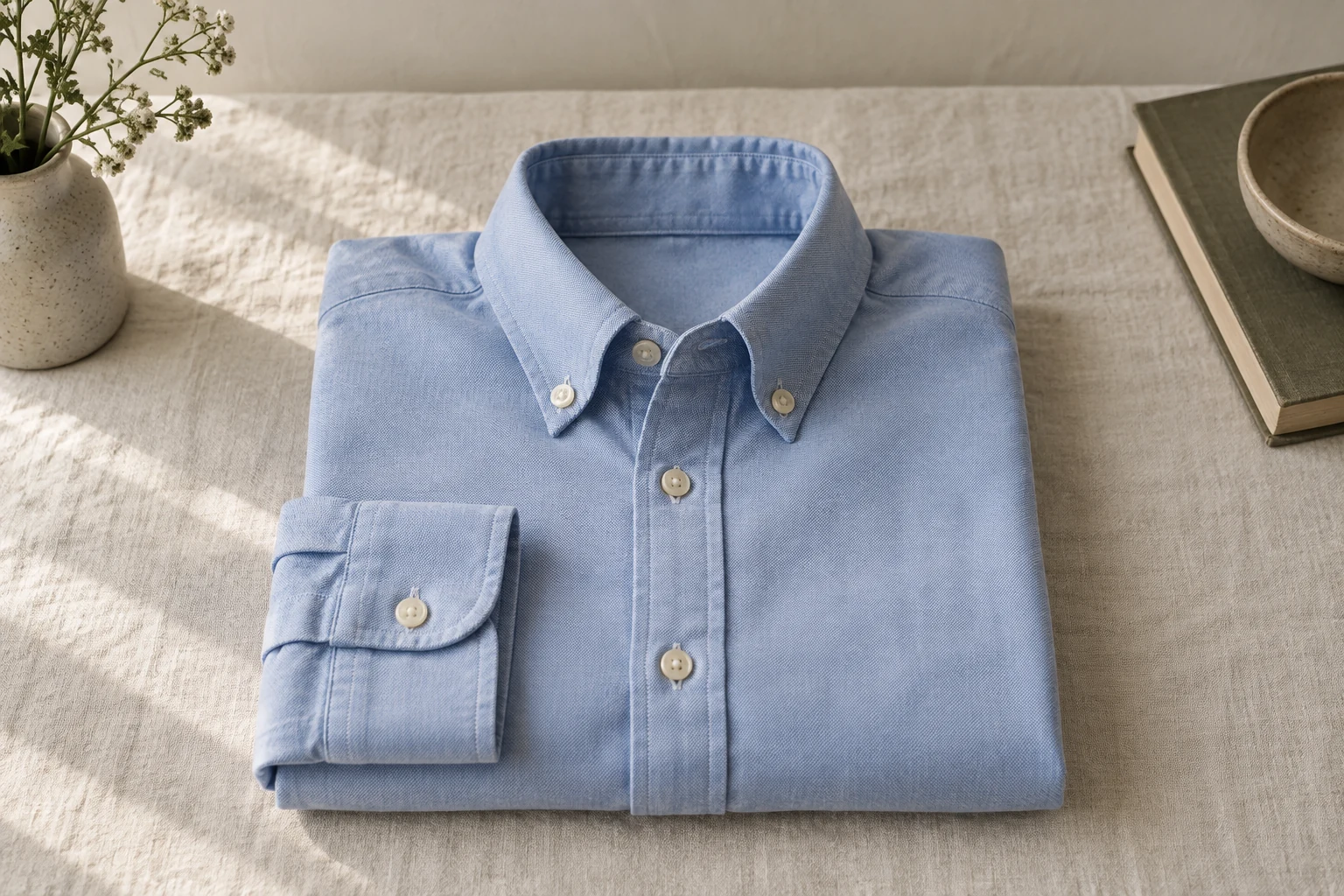
Oxford cloth: why the oxford shirt works everywhere
What an oxford cloth shirt is: the basketweave, oxford vs pinpoint and royal oxford, how it compares to a dress shirt, how to wear it and how to care for it.
Fabrics
What is linen, and why does it wrinkle?
What linen is made of, how flax becomes fabric, why linen wrinkles, how it compares with cotton, and how to wear and care for linen clothes and sheets.
Weather
What to wear in 80 degree weather
At 80°F summer clothes take over, but work, humidity and cold air conditioning still shape the outfit. Fabrics, fits, shoes and outfits for men and women.