What to wear in 30 degree weather
In this guide
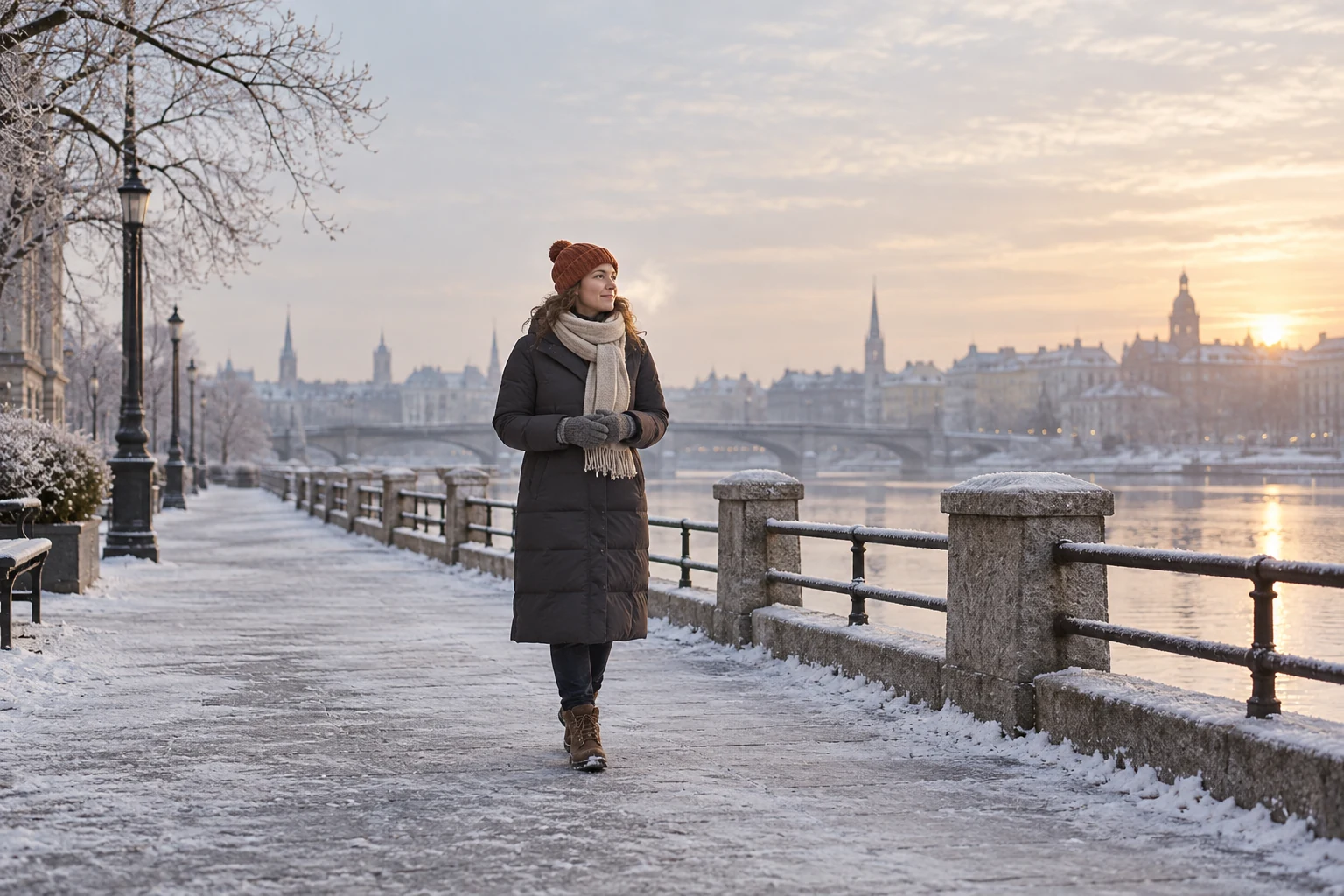
Frost on the windshield, puddles by the curb gone hard overnight: 30°F might be the first reading below freezing this season, or simply another gray January morning. Either way, the coat that felt fine at 40 degrees suddenly seems thin. Knowing what to wear in 30 degree weather is less about owning expensive gear and more about closing every gap: the neck, the hands, the ears, the ankles and the soles of your shoes.
This guide covers what changes once the air drops below freezing, how to build warmer layers without looking like you are heading up a mountain, which accessories matter most, and how to choose shoes for ice and slush. It ends with outfits for a commute, a long stretch outside, an evening out and a run. If the day warms into the upper 30s and 40s by afternoon, our guide to dressing for 40 degree weather covers the lighter end of the same wardrobe.
What changes when it drops below freezing
Thirty degrees is only a few degrees colder than 40 on paper, but it crosses a line that matters for clothing. Water freezes, so wet sidewalks, bridges and parking lots turn slick, especially early in the morning. Exposed skin also starts to feel real discomfort within minutes when the wind is up. The National Weather Service wind chill formula puts 30°F at about 25°F with a 5 mph breeze, about 21°F at 10 mph, and about 15°F at 30 mph, so a breezy day at 30 feels closer to the low 20s on your face and hands.
Sun helps. The weather service notes that bright sunshine can make wind chill feel 10 to 18°F warmer, which is why a still, sunny noon at 30°F can feel almost pleasant while the same temperature at dusk feels bitter. Many 30 degree days also start colder, often in the low 20s at dawn, so dress for the coldest hour you will actually spend outside, not for the afternoon high printed on the forecast.
Wet cold deserves more respect than dry cold. The CDC points out that hypothermia can develop even above 40°F when someone is wet from rain or sweat, and at 30 degrees a damp base layer pulls heat out of you quickly. For that reason fabric choice matters more now than at any warmer temperature.
Layers for 30 degree weather
The three layer approach still works: something close to the skin that stays dry, something in the middle that traps warm air, and a coat that stops wind. What changes at 30°F is how much each layer has to do. For short walks between a heated home, a car and an office, a sweater under a well insulated coat is usually enough. For an hour or more outdoors, add a thin thermal top, and consider thermal leggings or long underwear under trousers or jeans.
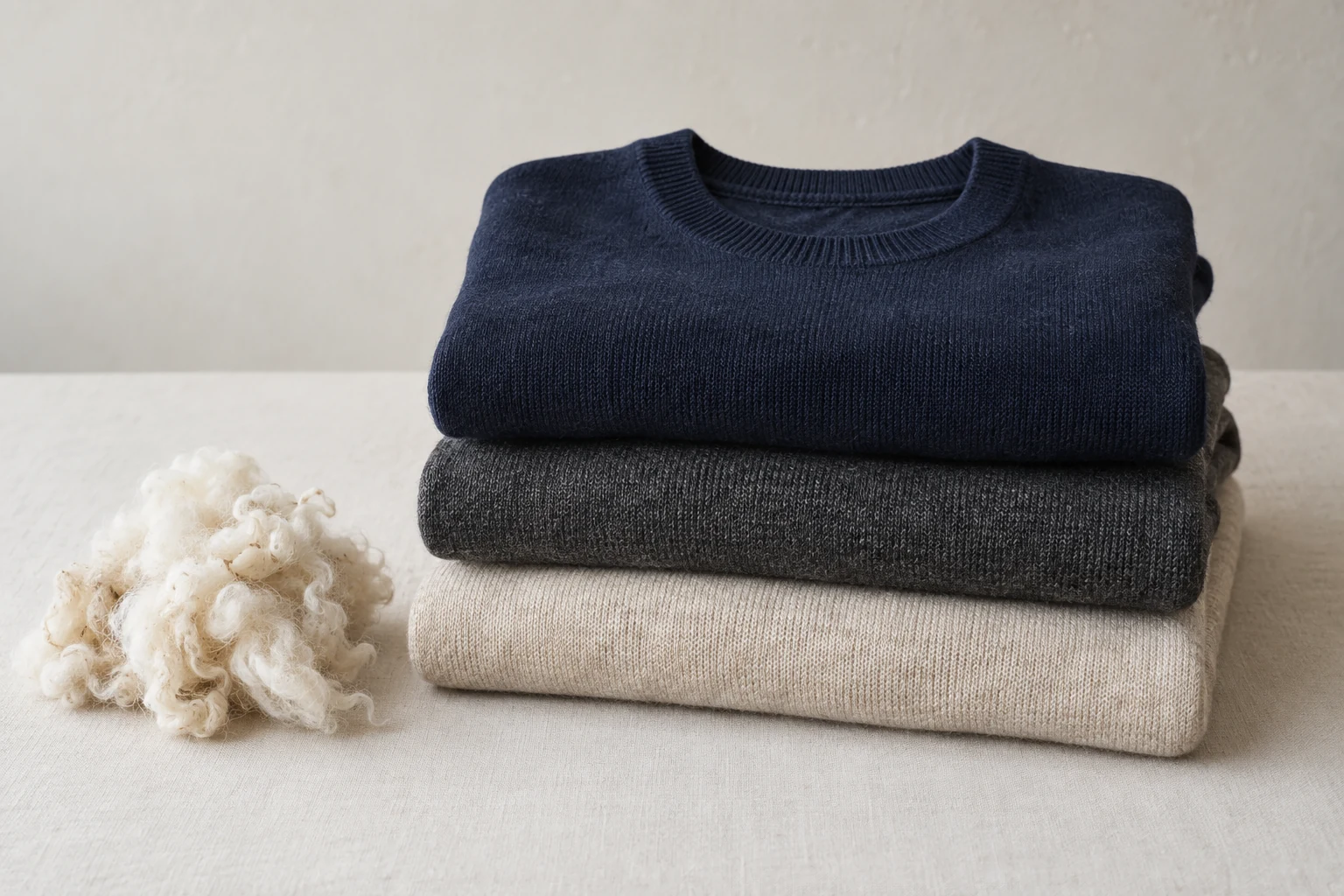
Wool and synthetics are the right materials for the inner layers because they keep insulating when damp; cotton holds sweat against the skin and then chills you. A fine merino base layer is thin enough to disappear under a shirt or blouse, which makes it practical for office days. For the middle, a lambswool or merino sweater, a thick cardigan or a fleece all trap warmth well, and several thinner pieces usually beat one bulky knit because you can remove one indoors.
The coat is the biggest decision. A down or synthetic insulated coat gives the most warmth for its weight and suits long waits, games and walks. A heavy wool overcoat is warm enough for most town days at 30 when you keep moving, especially over a sweater, and it looks right with tailoring. Length matters as much as fill: a coat that reaches mid thigh or the knee keeps your hips and thighs noticeably warmer than a waist length jacket. If you rely on down, our guide on washing a down jacket will keep it lofty.
Hat, gloves and scarf are the real warmth
The CDC lists the parts of the body most likely to be hurt by cold: the nose, ears, cheeks, chin, fingers and toes. At 30°F they are also the parts that make you feel cold long before your torso does. A knit hat that covers your ears, a scarf that closes the collar of your coat and gloves or mittens will add more comfort than a thicker sweater, and they come off in seconds once you are indoors.
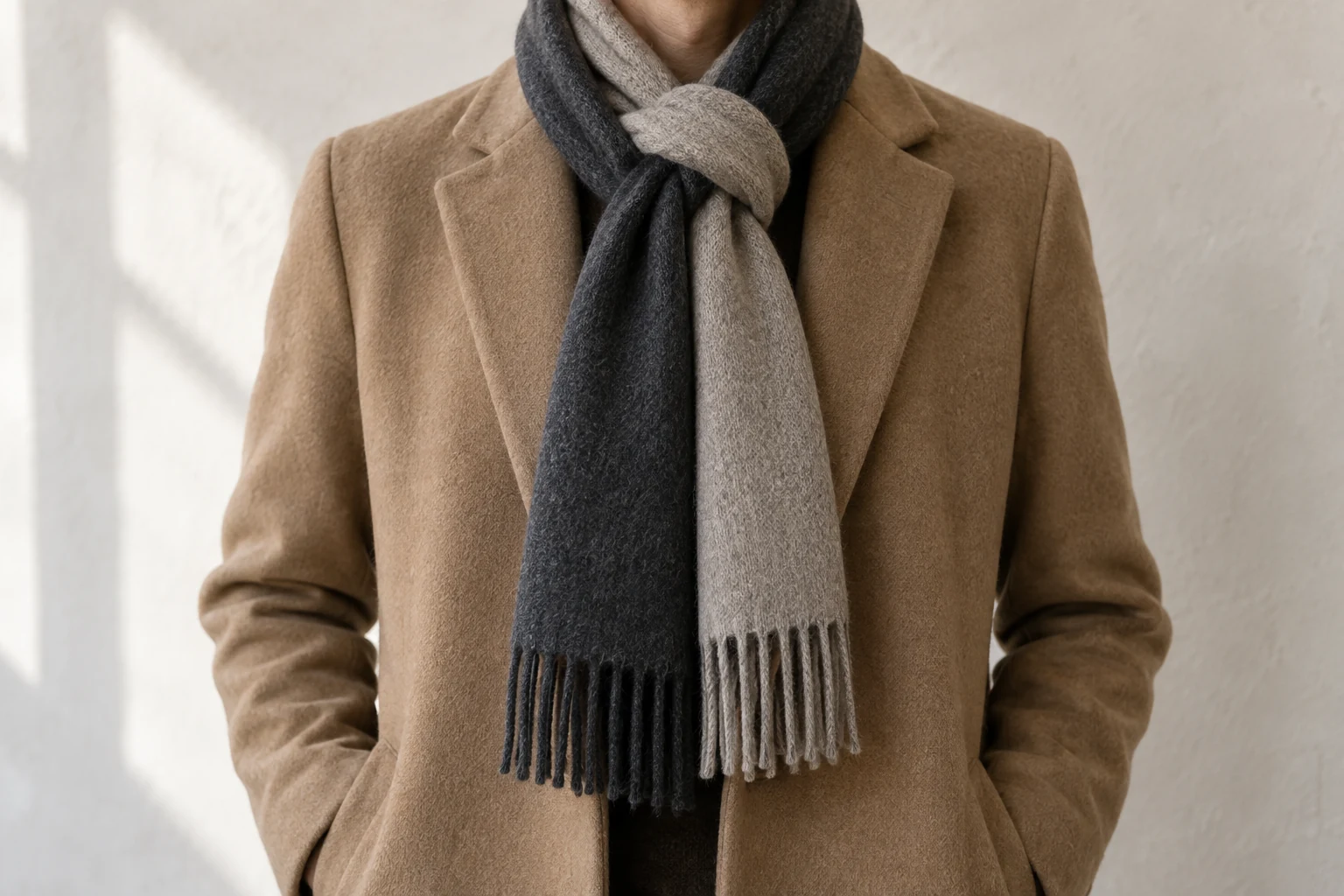
Mittens are warmer than gloves because your fingers share warmth inside one space, and the weather service recommends them for extreme cold. At 30 degrees lined leather or knit gloves are enough for most people, but if your hands go numb easily, or you will be standing still at a bus stop or a game, choose mittens or gloves with a wool lining. A scarf in wool or cashmere, looped once and tucked into the coat, keeps wind off the throat and can be lifted over the nose and mouth in a gust. Our guide to tying a scarf shows knots that stay put.
A hat is not optional at this temperature. Cold ears are one of the quickest ways to feel miserable, and a hood alone lets wind in at the sides. A close knit beanie, a lined cap with ear flaps or a wool hat that fits under a hood all work.
Boots and socks for ice and slush
Shoes are where many people get 30 degree weather wrong. Smooth leather dress soles and worn sneakers slide on frozen sidewalks, and canvas or mesh uppers let slush straight through to your socks. The better choice is a boot with a rubber lug sole and a water resistant upper: lined leather boots, winter boots, or rubber soled Chelsea boots for town.
Wool or wool blend socks keep feet warm even when they get a little damp, and they should not be so thick that they squeeze the foot inside the boot, since tight footwear reduces circulation and makes toes colder. If you want to wear dress shoes or heels at work, commute in boots and change at your desk. Road salt leaves white marks on leather and suede, so wipe boots with a damp cloth when you get home, and treat suede before the season with a protector; our guide on cleaning suede shoes explains how to lift salt stains.
Outfits for 30 degree weather, men and women
For a commute and an office day, men can wear flannel or wool trousers, a button down shirt with a merino crew neck over it, and a dark wool overcoat or a slim insulated coat, finished with a scarf, leather gloves, a knit hat and lug sole leather boots. Women can wear wool trousers or a midi skirt with fleece lined or thick opaque tights, a fine knit or blouse under a cardigan, and a long wool or down coat with knee high or ankle boots. In both cases the sweater is what lets you take off the coat and still look finished at your desk.
For hours outside, at a holiday market, a game or a walk in the park, dress in more insulation and less tailoring. Men can wear jeans or cords over thermal leggings, a flannel shirt and a fleece or thick sweater, and a hooded down or insulated parka, with winter boots. Women can wear the same formula, or fleece lined leggings with a long puffer that covers the thighs, a turtleneck and a chunky knit, plus a hat and mittens. Jeans alone are fine for short walks at 30°F, but denim cuts little wind and gets cold once it is damp, so add a layer underneath if you will be out for long.
For an evening out, when most of the cold comes while waiting for a ride or a table, men can wear dark wool trousers, a fine turtleneck under a sport coat and a long overcoat with a scarf. Women can wear a knit dress with opaque tights and heeled boots, or wide leg wool trousers with a cashmere sweater, under a long coat. Bring gloves even if the walk is short.
| Situation | Layers | Finish with |
|---|---|---|
| Commute and office | Wool trousers or a skirt with thick tights, shirt or blouse, merino sweater | Wool overcoat or slim insulated coat, lug sole boots |
| Hours outside | Jeans or cords over thermal leggings, flannel, fleece or thick sweater | Hooded down parka, winter boots, hat and mittens |
| Evening out | Fine turtleneck under a sport coat, or a knit dress with opaque tights | Long coat, scarf, gloves |
What to wear running in 30 degree weather
Running creates a lot of heat, and a rule of thumb widely shared among runners is to dress as if it were 15 to 20°F warmer than the thermometer says. At 30°F that usually means running tights, a long sleeve synthetic or merino base layer, a light wind jacket or a thin insulated vest, gloves and a headband or thin hat. You should feel a little cold for the first ten minutes; if you feel comfortable standing at the door, you will overheat by the second mile.
Wind and ice change the picture. On a windy day, add a jacket with a windproof front and cover your ears. On icy mornings, choose routes that have been cleared, shorten your stride, and consider traction devices that slip over your shoes. Sweat is the main risk afterward, because a damp top cools fast once you stop, so change out of wet layers soon after you finish rather than stretching outside in them.
Common mistakes
Wearing sneakers on icy mornings
Worn rubber and mesh give little grip and no protection from slush. A boot with a deep rubber lug sole keeps you upright and your socks dry, and you can change shoes once you arrive.
Skipping the hat and gloves
At 30°F bare hands and ears get uncomfortable within minutes, and cold fingers make every task harder. Keep a hat and gloves in your coat pockets through the whole season so they are never left at home.
Dressing for a warm office instead of the walk
A heavy sweater you cannot remove leaves you sweating on the train, and damp layers chill you the moment you step back outside. Put most of the warmth in the coat and accessories, which come off easily.
Questions people ask
Are jeans enough for 30 degree weather?
For short walks between warm places, yes, especially with a long coat. For an hour or more outside, or on a windy day, denim alone gets cold, so wear thermal leggings or long underwear underneath, or choose lined jeans or wool trousers. Wet denim dries slowly and chills quickly, so avoid it in snow or sleet.
Do I need a winter coat at 30 degrees?
Yes. At 30°F most people want an insulated coat or a heavy wool coat over a sweater. A light jacket may work for a very short walk on a calm, sunny day, but it leaves no margin for wind, shade or a delayed train.
What should I wear in 35 or 25 degree weather?
At 35°F the same outfit works with a little room to spare, and gloves become optional on calm days. At 25°F and below, add a thermal base layer for any real time outside, switch to mittens if your hands run cold, and cover your face with a scarf in wind. For snow, our guide to what to wear in the snow covers waterproof layers and boots.
Is 30 degrees Celsius warm or cold?
Thirty degrees Celsius is hot, about 86°F, and needs completely different clothes from 30°F. For that kind of day, see our guides to 80 degree weather and 90 degree weather.
Sources and further reading
References used for this guide. Each opens the original page in a new tab.
- National Weather Service: Wind chill chart and formula Opens in a new tab
- National Weather Service: Staying safe during extreme cold Opens in a new tab
- CDC: Preventing hypothermia and protective clothing for winter Opens in a new tab
- National Weather Service: Preparing for cold weather Opens in a new tab
Keep reading
Weather
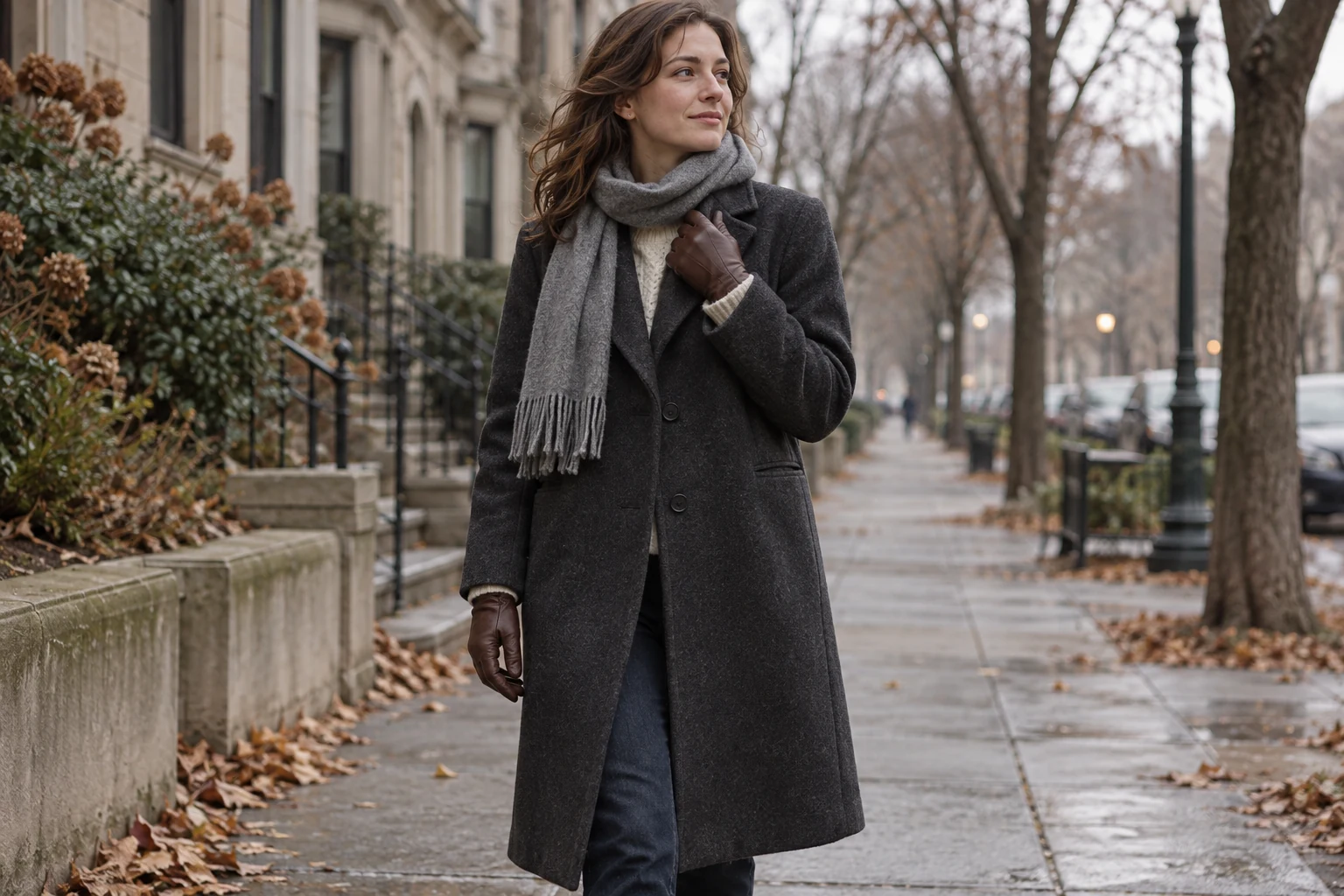
What to wear in 40 degree weather
At 40°F the wind and the rain matter as much as the number. How to layer, what to wear on your neck, hands and feet, and outfits for every hour outside.
Weather
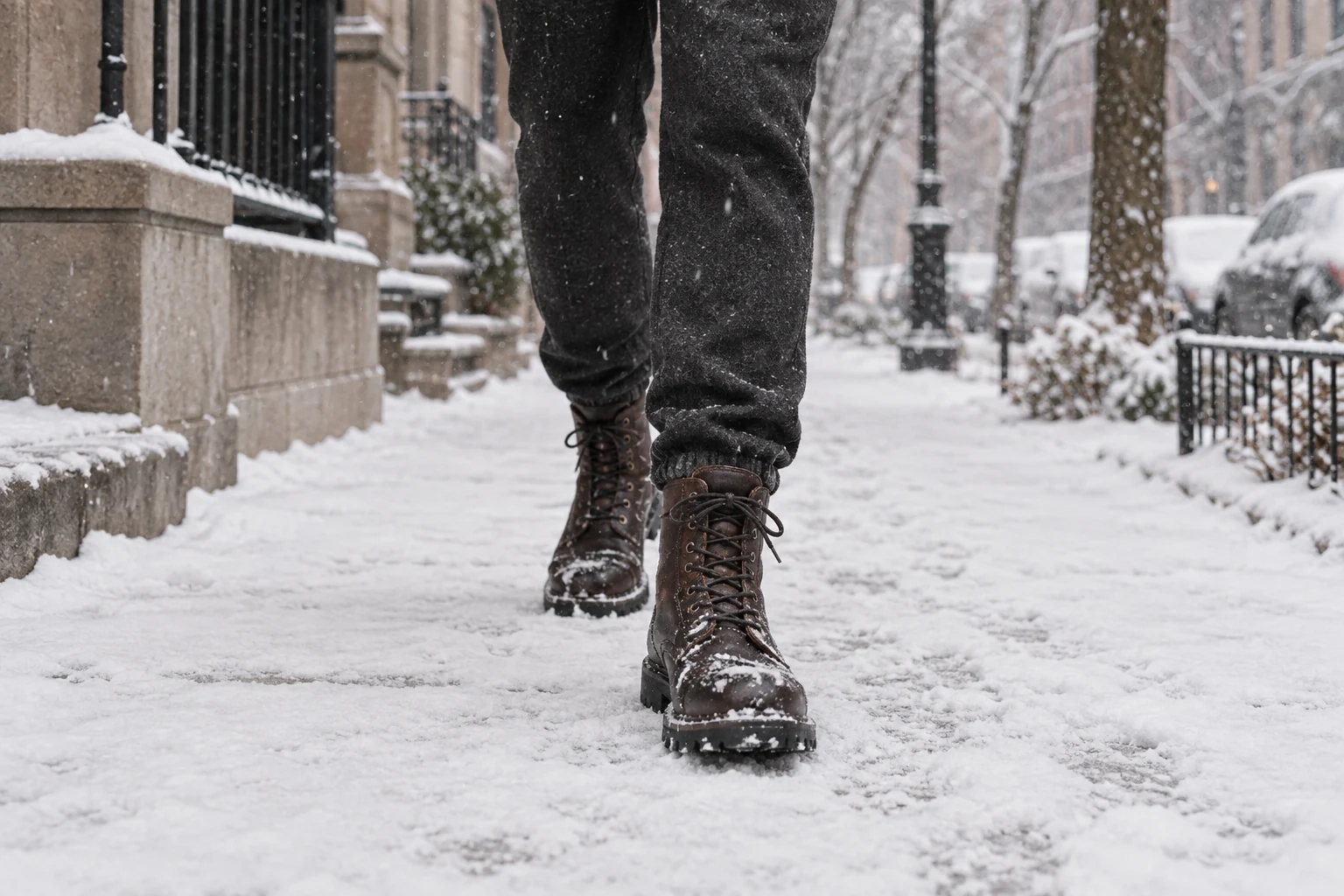
What to wear in the snow, from city streets to slopes
What to wear in the snow for a city commute, a day of sledding or a first ski trip: warm layers that stay dry, the right boots, and what to do without snow pants.
Washing and ironing
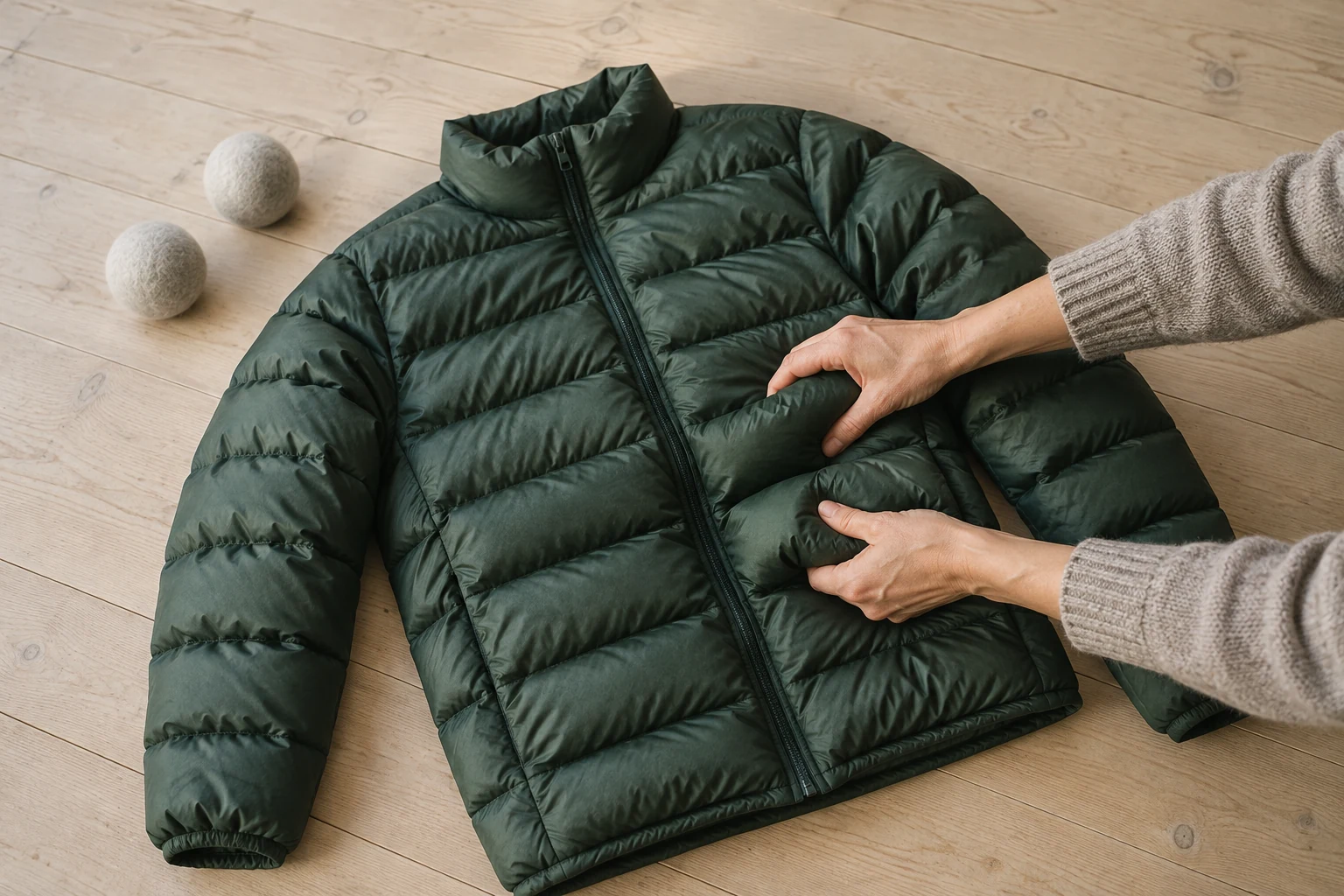
How to wash a down jacket without ruining the fill
Wash a down jacket at home with a down specific wash, a front loader, low heat and dryer balls. What to check first, how long drying takes and how to fix clumps.
Everyday style
How to tie a scarf: easy ways for every coat
How to tie a scarf step by step: warm knots for a long winter scarf, neat ways to wear a silk square, head scarf styles and the knots men reach for most.
Fabrics
Merino wool: what it is and why it works
What merino wool is, why it feels softer than ordinary wool, where it beats cotton and synthetics, its real drawbacks, and how to wear and wash merino clothing.