Where to donate clothes, and what they accept
In this guide
The bag has been in the trunk of your car for three weeks. You cleared out the closet, you feel good about it, and now you want the clothes to go somewhere they will actually be worn rather than straight into a landfill by another route. Knowing where to donate clothes starts with the clothes themselves: which ones someone would happily wear, which are only good for fiber, and which organizations near you need which kind.
This guide sorts the options by what you are giving, not by brand. National charities, local nonprofits and recycling programs all vary city by city, so the most useful thing you can do is match each pile to the right door and check that door's rules before you drive over.
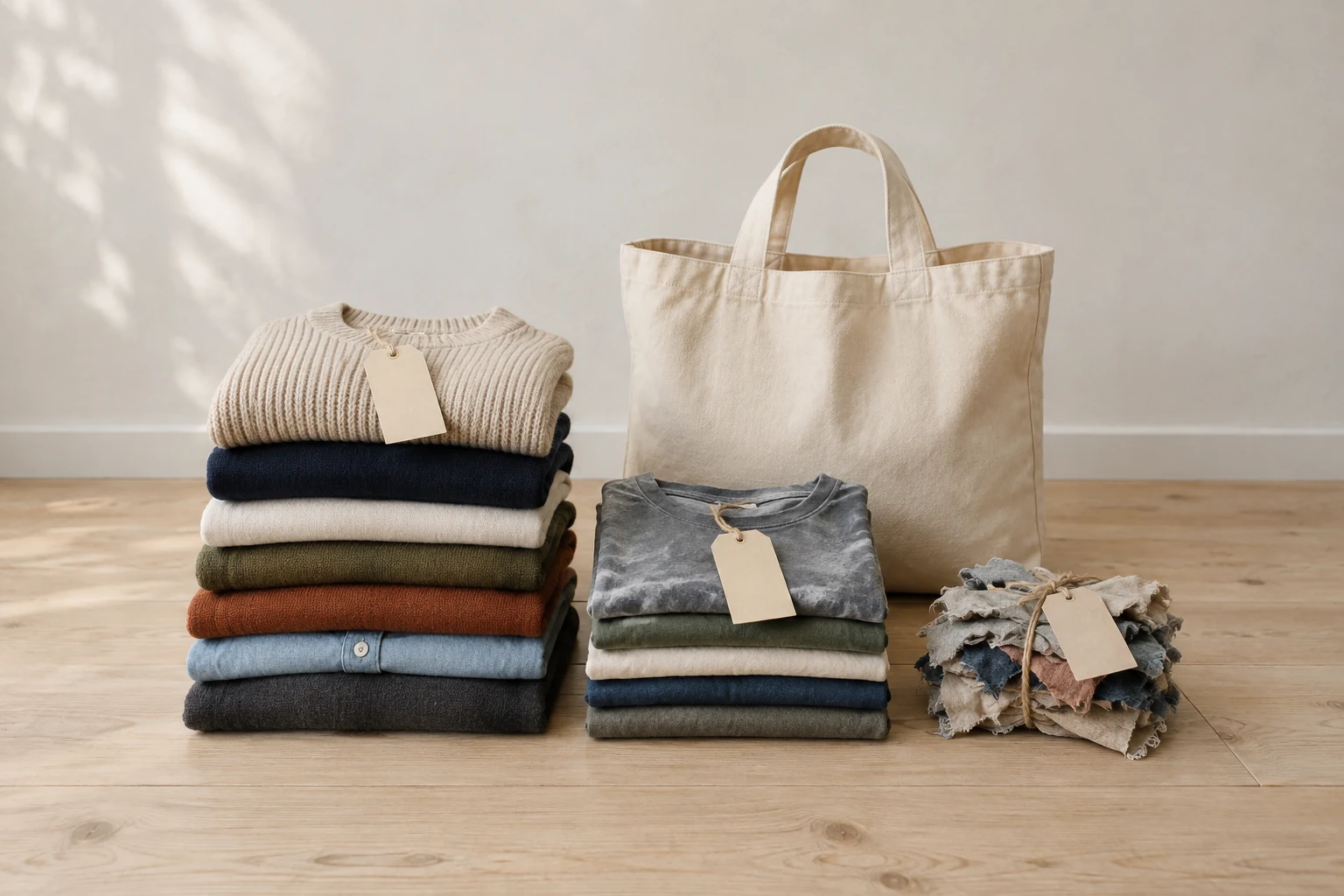
Sort by condition before you choose where to go
Make three piles. The first is clothes you would give a friend: clean, intact, with working zips and all buttons. The second is wearable but tired, such as faded T shirts, jeans with a thin knee, or a sweater that has pilled. The third is damaged beyond wearing, stained, torn, stretched out or smelling of mildew. Each pile has a different best destination, and mixing them makes more work for the people receiving your bag.
Charities that sell or give away clothing need the first pile. The second pile is still useful for some programs and for fiber recycling, and some of it can be rescued at home in ten minutes with our guides to removing pilling or sewing on a button. The third pile should go to textile recycling, not a thrift store. Wash everything first; donating clean, dry clothes is a basic courtesy and protects everything else in the bag. If you have not yet decided what to let go of, our guide to decluttering your clothes comes before this one.
| What you have | Best destination |
|---|---|
| Clean, intact, would give a friend | Charity thrift store, shelter or a program's wish list |
| Wearable but tired | Some programs or fiber recycling, or a quick fix at home first |
| Stained, torn, stretched or mildewed | Textile recycling, not a thrift store |
| Suits, blazers, dress shirts, leather shoes | Job interview clothing programs |
| Warm coats, boots, gloves, hats | Shelters and fall coat drives |
| Used underwear and socks | Usually refused by shelters; give new ones instead |
Charity thrift stores
For most people, the easiest answer to where to donate clothes is a thrift store run by a nonprofit. Large national charities operate staffed drop off points across the country, and many cities also have local thrift shops that fund a hospital, a hospice, an animal shelter or a housing program. The staffed drop off matters: someone takes the bag, can tell you on the spot what they cannot accept, and can give you a receipt. The clothes are sold, and the money funds the organization's programs, so the most useful gifts are pieces that will sell: current, clean and in season.
Before you go, check the organization's website or call. Accepted items, hours and rules differ from store to store even within the same charity, especially for shoes, bedding, children's items and anything with a stain or tear. Some charities offer free donation pickup for larger loads in certain areas, often scheduled online; if you are asking who will pick up donations in your area for free, the charities' own pickup schedulers and your city's waste or recycling department are the places to look.
Shelters and programs that need specific clothes
To put clothes directly on someone who needs them, look to shelters, crisis centers, refugee resettlement agencies, school clothing closets and community fridges or mutual aid groups that collect clothing. These places give clothes away rather than selling them, so they need particular things at particular times: warm coats, boots, gloves and hats before winter, children's sizes at the start of the school year, and practical everyday clothes in larger and smaller sizes year round. Many post a current wish list, and following it is the single best way to make a donation count.
Programs that prepare people for job interviews accept professional clothing such as suits, blazers, dress shirts, skirts and leather shoes in good condition; our guide to what to wear to a job interview gives a sense of what such programs hand out. In fall, watch for seasonal coat drives run by schools, places of worship and local news outlets. Be aware that many shelters do not accept used underwear or socks for hygiene reasons and ask for new ones instead, and that some cannot store bulky donations, so ask before dropping off a car full.
Donation drop boxes: read the label first
Metal bins in parking lots are convenient, but they are not all charities. Some are run directly by a nonprofit, some by a for profit company that pays a charity for the use of its name, and some are for profit resellers or textile recyclers with no charity involved. None of these is illegal in itself, but you should know which one you are feeding. Connecticut's consumer protection department, for example, requires bins there to state in large letters whether they serve a charitable purpose, name the charity and the share it receives, and give the owner's contact details, and it has warned about look alike bins that imitate charities.
Before using a clothing donation drop box, read every panel. Look for the name of the organization, a phone number or website, and a statement of whether donations benefit charity. Look the organization up if the name is unfamiliar. Do not leave bags beside a full bin, where rain ruins them and they become litter, and remember that an unattended bin gives you no receipt if you care about a tax deduction.
Textile recycling for worn out clothes
Clothes too damaged to wear still have value as fiber for insulation, wiping cloths and new yarn. The EPA estimates that only about 13 percent of clothing and footwear in American household waste was recycled in 2018, which means most of it went to landfill or incineration. Many cities now run textile drop off points or clothes recycling bins, and some list a textile recycling center in their recycling guides; New York City, for instance, lists programs that accept ripped and damaged clothing alongside wearable items. Search your city or county name with textile recycling to find the local program.
Some clothing retailers also run take back programs for used garments of any brand, sometimes in exchange for a store voucher. Terms change, so check the current details in the store or on its site before you bring a bag. Whichever route you choose, keep textiles dry and separate from other recycling unless the program says otherwise, because wet or mildewed fabric often cannot be processed.
How to make a donation most useful
The uncomfortable part of donating clothes is that far more clothing is given away than local shoppers can use. Green America describes how unsold pieces typically move on from the shop floor to discount outlets and bulk sales, and finally to textile recyclers that cut them into rags, shred them for fiber or ship them overseas. The EPA's waste figures do not even count clothing that is reused, so nobody has a precise national picture. Giving well is not about giving more. It is about giving pieces that someone will choose: good condition, clean, in season and in the category the organization asked for.
A few habits help. Bag clothes by type or size and label the bag. Keep pairs of shoes together with a rubber band. Donate coats in early fall and swimwear in spring, when they are wanted. For children's clothes, check that jackets and hoodies in small sizes do not have drawstrings at the hood or neck; federal safety guidance tells resellers, charities included, to remove them from children's upper outerwear in sizes 2T to 12, and it is illegal to sell recalled products. If the pieces you hold are valuable, consider selling them online and donating the proceeds or the rest.
Receipts and tax deductions
If you itemize deductions in the United States, donated clothing can be deductible at its fair market value, which for used clothing is generally what similar pieces sell for in thrift shops, not what you paid. IRS Publication 526 says clothing and household items must be in good used condition or better to be deductible, with a narrow exception for single items claimed at more than $500 with a qualified appraisal. Ask for a receipt at a staffed drop off, list what you gave, and keep the record with your tax papers. Rules differ for larger totals and change over time, so check the current publication or a tax professional before claiming. In Canada, the rules for gifts in kind are set by the Canada Revenue Agency and differ from the American ones.
Common mistakes
Donating dirty or damp clothes
Staff have to throw them away, and damp fabric can spoil everything else in the bag. Wash and dry everything, and give stained or torn pieces to textile recycling instead.
Leaving bags outside a closed store or full bin
Rain, sun and scavenging ruin them overnight, and many charities pay to haul away what is left. Come back during opening hours or find another drop off.
Assuming every bin is a charity
Read the bin's signage and look up the operator before you drop off. If the label does not say who runs it and who benefits, choose somewhere that does.
Questions people ask
Where should I donate clothes to be most beneficial?
Where they fill a stated need. A shelter or program with a current wish list will put the right items on people directly, and a charity thrift store turns good, sellable pieces into program funding. The least useful donation is a mixed bag of worn out clothes left anywhere that will take it.
What items do shelters usually not accept?
Commonly used underwear and socks, which many shelters will only accept new, along with stained, torn or damp clothing and items they have no room to store. Policies vary, so check each shelter's list or call first.
Can I donate clothes that are stained or ripped?
Not to a thrift store or shelter, in most cases. Take them to a textile recycling drop off, where fabric is sorted for fiber and rags, or check whether a charity near you accepts them specifically for recycling.
Where can I sell used clothes for cash instead?
Resale and consignment shops buy some used clothing on the spot for cash or store credit, usually a small share of what they will charge, and they are selective about brands, season and condition. Selling online takes more work but usually returns more for good pieces. Our guide to selling clothes online compares the options.
Sources and further reading
References used for this guide. Each opens the original page in a new tab.
- Internal Revenue Service, Publication 526: Charitable Contributions Opens in a new tab
- US Environmental Protection Agency, Textiles: material specific data Opens in a new tab
- Connecticut Department of Consumer Protection, Not all charity donation bins are for a good cause Opens in a new tab
- New York City Council Member Gale Brewer, how to donate clothing Opens in a new tab
- US Consumer Product Safety Commission, Resellers guide to selling safer products Opens in a new tab
- Green America, what really happens to unwanted clothes Opens in a new tab
Keep reading
Closet and packing
How to declutter your clothes and decide what to keep
How to declutter clothes one category at a time, with honest questions for deciding what to keep, what to repair, and where the rest should go.

Closet and packing
How to sell clothes online
How to sell clothes online step by step: choose where to sell, pick pieces that sell, photograph and measure them, price from sold listings, ship and avoid scams.
Closet and packing
How to organize your closet so you can see everything
How to organize your closet by what you wear most: what to hang and fold, zones and shelves, small closet ideas and a simple seasonal rotation.
Washing and ironing
How to remove pilling from a sweater, and lint too
How to remove pilling from a sweater with a fabric shaver or sweater comb, clear lint with a roller, and wash and wear knits so the pills come back more slowly.
Closet and packing
How to build a capsule wardrobe from what you own
Build a capsule wardrobe from your real week and the clothes you already reach for, with examples for women and men and a simple way to test it.