What to wear to court
In this guide
A hearing notice, a subpoena or a jury summons usually tells you the time, the address and the courtroom, and nothing about clothes. Or it says dress appropriately, which is not much help at seven in the morning. Knowing what to wear to court matters less for fashion than for calm: when your clothes are right, you stop thinking about them and can listen, answer questions and deal with what you actually came for.
Courts are formal places, and many post their own rules. The California courts' self help guide sums up the general expectation well: dress as if for a job interview. This guide explains what that means in practice for women and men, how it shifts depending on whether you are a defendant, a witness, a juror or an observer, and the items that can get you turned away at the door.
Is there a dress code for court?
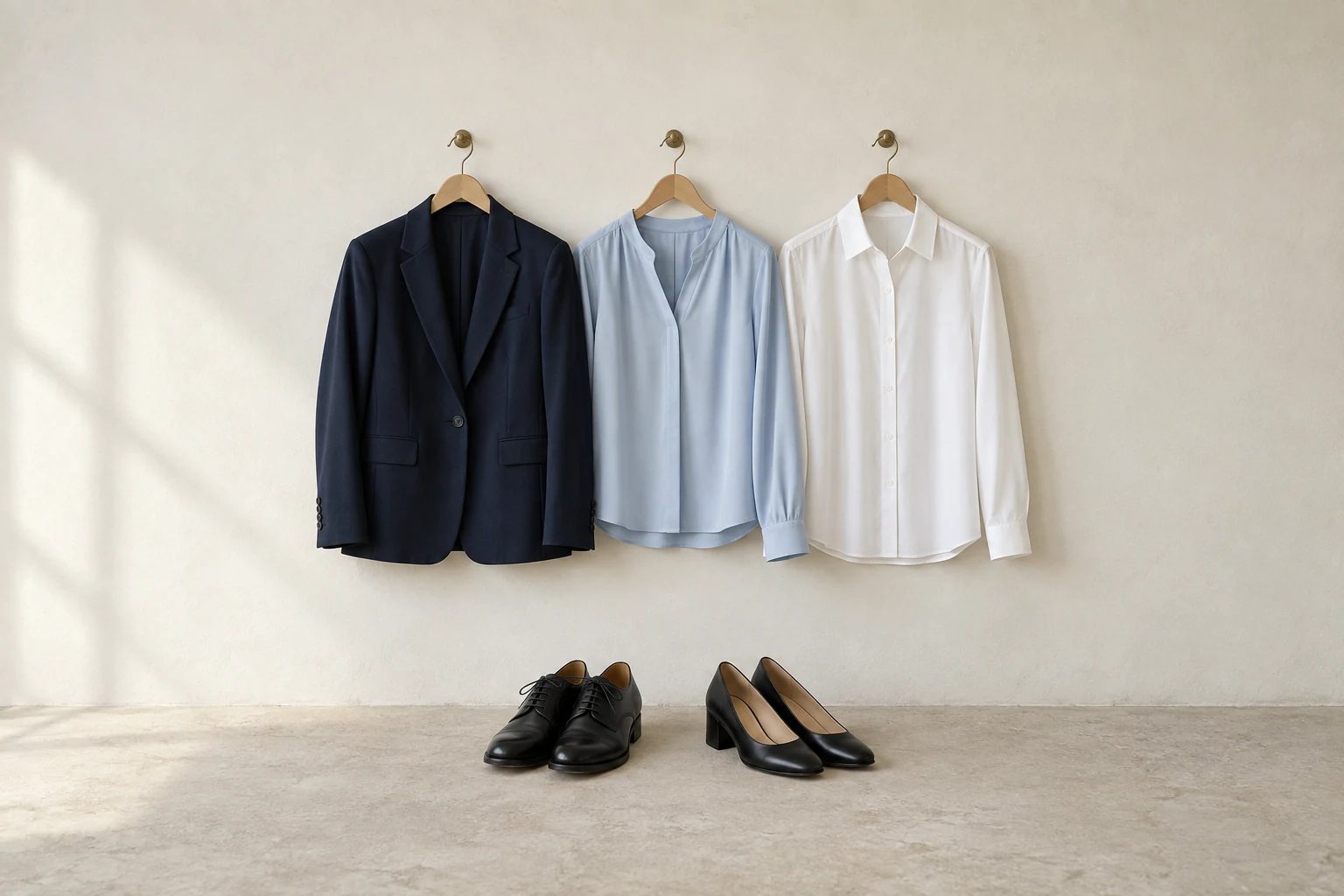
Yes, though it varies. There is no single national dress code, and each court or even each judge can set rules. Some federal courts publish detailed notices. The United States Bankruptcy Court for the Western District of Texas, for example, asks lawyers and witnesses for professional attire, a suit or jacket and tie for men and a suit, jacket or conservative dress for women, while asking individual parties to dress presentably and appropriately to their means. Many county and municipal courts post a list of banned items at the entrance or on their website. Check the court's site before you go, or ask your lawyer or the clerk.
Across those rules, the common standard is business attire or neat business casual: clean, pressed, modest and quiet. The court is not judging your wardrobe, but judges, juries and court staff do form impressions, and clothes that look careful signal that you take the proceedings seriously. If your attire is distracting, many courts reserve the right to ask you to leave and return properly dressed, which can mean a rescheduled hearing.
What to wear to court as a woman
The safest choices are a pantsuit or skirt suit, a simple dress with a jacket or cardigan, or tailored trousers or a knee length skirt with a blouse or a fine sweater. Dresses and skirts should reach the knee or just below when you sit, since you may sit for a long time and may stand to speak. Choose necklines that stay modest when you lean forward, and sleeves or a light jacket over anything sleeveless; several courts ban sleeveless tops without a jacket outright.
Shoes should be closed, comfortable and quiet: low heels, loafers or flats. You may stand in a security line, walk long corridors and stand when the judge enters. Keep jewelry small and makeup natural, and carry a plain bag. If you do not own a suit, a dark pair of trousers, a plain blouse and a cardigan are entirely appropriate. Our guide to business casual for women shows how to put that together from everyday pieces.
What not to wear to court as a woman: very short skirts, plunging necklines, crop tops, strapless or halter tops, sheer fabrics, leggings worn as trousers, flip flops and anything with slogans or images. Party dresses, sequins and very high heels also look out of place, even when they are expensive.
What to wear to court as a man
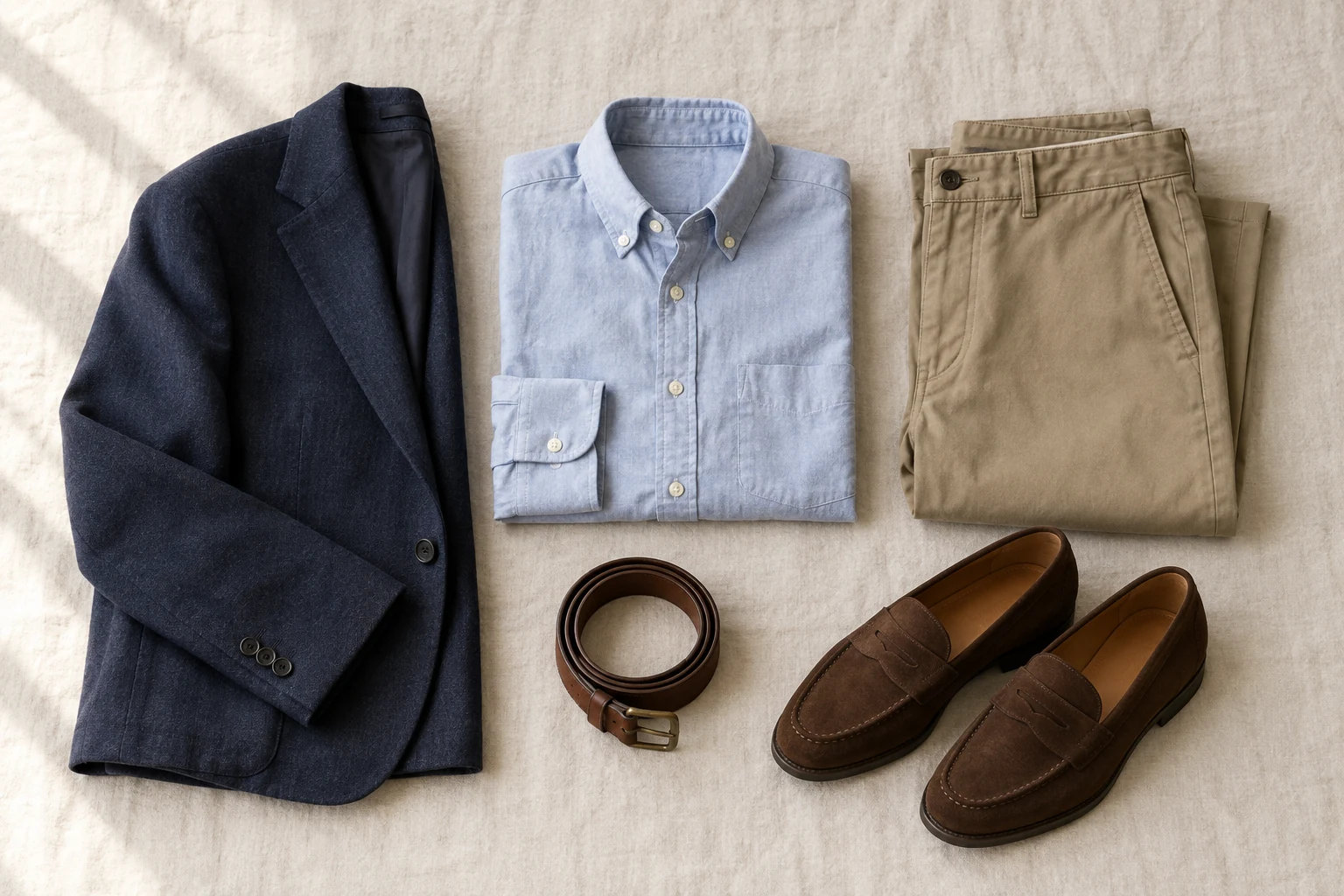
A dark suit in navy, charcoal or gray with a white or light blue dress shirt, a plain tie and leather shoes is the clearest choice, especially if you are a party or a witness. It does not need to be expensive, only clean and reasonably well fitted. If you do not own a suit, dark trousers or chinos with a collared shirt, a plain sweater or a blazer, and dark shoes are fine in most courts. A tie adds formality and is never wrong. Our guides to how a suit should fit and tying a tie help if it has been a while.
Tuck the shirt in, wear a belt, and choose dark socks. Shave or tidy your beard, and remove any hat before entering the courtroom; religious head coverings are generally permitted, and many courts make an exception for medical reasons too. Avoid athletic wear, jerseys, T shirts with graphics, shorts, sagging trousers, work boots caked in mud and anything torn.
Defendant, witness, juror or observer
What to wear to court as a defendant: dress at the top of the range, a suit or the closest you have to one, because you will be seen by the judge and possibly a jury, and your clothing forms part of the first impression. If you have a lawyer, ask them. They know the local court and the judge, and some will advise on specifics such as covering tattoos or leaving a uniform at home. In a criminal jury trial, a defendant who is in custody is generally entitled to appear in ordinary clothes rather than jail clothing; your lawyer can arrange this.
What to wear to court as a witness: business attire, as the Texas bankruptcy court rules and many others ask. You want the jury and judge to focus on your words, so quiet, neat clothing helps. Victims and family members giving statements often choose the same kind of clothes. In family court, for custody, divorce or protective order hearings, aim for the same interview standard: a dress with a cardigan, trousers with a blouse, or a shirt and trousers with a jacket. Warm, approachable and neat is the goal, not formal display.
What to wear to court as an observer or guest, and for jury duty: neat business casual is usually enough, meaning clean trousers, a collared shirt, blouse or sweater, and closed shoes. Jeans are where courts differ most. One federal magistrate judge in New Mexico states in a posted notice that jeans are acceptable for spectators and witnesses, while the Eastern District of Texas bars jeans and other denim for jurors and witnesses and expects men in the gallery to wear a coat. Check your court's rules before choosing denim. Courtrooms also tend to run cool, and the Southern District of West Virginia suggests bringing a sweater or light jacket.
| Role | Aim for |
|---|---|
| Defendant | The top of the range, a suit or the closest you have; ask your lawyer |
| Witness | Business attire, quiet and neat so attention stays on your words |
| Family court party | Interview standard: dress with cardigan, trousers with blouse, or shirt and jacket |
| Juror or observer | Neat business casual; check the court's rules before wearing jeans |
The best colors and details for court
Muted, solid colors are the safest: navy, charcoal, gray, black, brown, beige and soft blue, with white or pale shirts and blouses. Navy and gray often read as calm and approachable, while head to toe black can feel severe, though it is perfectly acceptable. Save bright red, neon, loud prints and big logos for another day. The best color to wear to court for women follows the same logic as for men; a soft blue or cream blouse under a navy or gray jacket is hard to get wrong.
Plan for security screening. Belts, large buckles, heavy jewelry and many metal accessories trigger metal detectors and slow you down, so keep them minimal. Leave pocket knives, scissors and anything that could be seen as a weapon at home. Sunglasses come off indoors, and phones must usually be silenced or switched off. If your hearing is by video, dress exactly as you would in person; several courts say so in writing, and the camera shows more than you expect.
Get ready the night before
Lay out everything the evening before, including socks, belt and a jacket for the cold courtroom. Try it on, sit down in it and check that nothing gapes or rides up. Iron or steam the shirt; our guide to ironing a shirt walks through it in about ten minutes. Put your documents, identification and any court letters in the bag you are taking so nothing is left behind in the rush.
Plan to arrive early. Security lines can be long, courthouses can be confusing, and the California courts warn that if you are late the judge may proceed without you. Arriving with time to spare also gives you a moment to find the restroom, check your appearance and sit down calmly before your case is called. The same preparation habits help with any high stakes appointment, and our guide to dressing for a job interview has more ideas.
Common mistakes
Wearing jeans without checking
Some courts accept clean jeans for observers; others, including the Eastern District of Texas, ban denim for jurors and witnesses. If you are a party or a witness, choose trousers or chinos instead.
Dressing for a party
Sequins, very short hemlines and deep necklines distract and can look like you are not taking the day seriously. Choose office clothes instead.
Forgetting the security line
Heavy belts, chains and multiple rings all have to come off at screening. Keep accessories simple so you get through quickly.
Questions people ask
Is it okay to wear jeans to court?
It depends on the court and your role. Some courts accept clean jeans from spectators and even witnesses, while others ban denim for jurors and witnesses, and parties look more serious in trousers anyway. When in doubt, choose chinos or dress trousers.
Can I wear a hat or head covering in court?
Hats are generally not allowed inside the courtroom. Religious head coverings are generally permitted, and many courts also make exceptions for medical reasons. Remove caps and sunglasses before entering.
What if I cannot afford new clothes for court?
You do not need them. Courts ask for clean, neat and modest clothing, and some rules explicitly say parties should dress appropriately to their means. Your best trousers, a plain shirt or blouse and a sweater are enough. Some legal aid groups and community organizations also lend or donate interview clothes.
Should I cover tattoos in court?
There is no general rule requiring it, but many lawyers advise covering large or potentially offensive tattoos when you are a party or a witness, simply to keep attention on the case. Long sleeves or a jacket usually do the job. Ask your lawyer if you have one.
How early should I arrive at court?
Plan to arrive at least 30 minutes early, more in a large courthouse. That allows time for parking, security screening and finding the courtroom. If you are delayed, call the court clerk right away.
Sources and further reading
References used for this guide. Each opens the original page in a new tab.
- United States Bankruptcy Court, Western District of Texas: Courtroom attire Opens in a new tab
- California Courts Self Help Guide: Tips for your day in court Opens in a new tab
- United States District Court, Southern District of West Virginia: Dress code and courtroom etiquette Opens in a new tab
- Liberty County, Georgia: Dress code, courtroom etiquette and basic rules of court conduct Opens in a new tab
- United States District Court, Eastern District of Texas: Appropriate courtroom attire Opens in a new tab
- United States District Court, District of New Mexico: Dress code notice for witnesses, jurors and spectators Opens in a new tab
Keep reading
Dress codes
What to wear to a job interview
What to wear to a job interview: how to read the company, dress one step above daily wear, outfits for men and women, video interviews and what to avoid.
Dress codes
Business professional attire for men and women
Business professional attire means a matched suit or its equivalent. What to wear for men and women, how it differs from business casual, and what to avoid.
Dress codes
Business casual for women: what to wear to work
What business casual means for women at work: trousers, skirts, dresses, knitwear and shoes, with outfit formulas, what to avoid and how to read your office.
Dress codes
Business casual for men: what to wear to work
What business casual means for men at work, with outfit formulas, the right shoes, when jeans are allowed and how to read your own office's version of the code.
Suits and tailoring
How a suit should fit: shoulders, sleeves and length
How should a suit fit? Check the shoulders, collar, button, jacket length, sleeves and trousers in the mirror, and learn which problems a tailor can and cannot fix.