How to wear cufflinks with a French cuff shirt
In this guide
The shirt came out of its packaging with sleeves far too long and no buttons at the cuffs, and there is a small box of cufflinks on the dresser, maybe a gift, maybe for a wedding this weekend. If you have never done this before, the extra length and the four holes are confusing. They are simpler than they look: the long cuff folds back on itself, and the cufflink takes the place of the button.
This guide explains which shirts take cufflinks, how to fold and fasten the cuff, the two ways to wear it, the main types of cufflinks and how they close, and when they are the right choice, including the matching studs worn with a tuxedo.
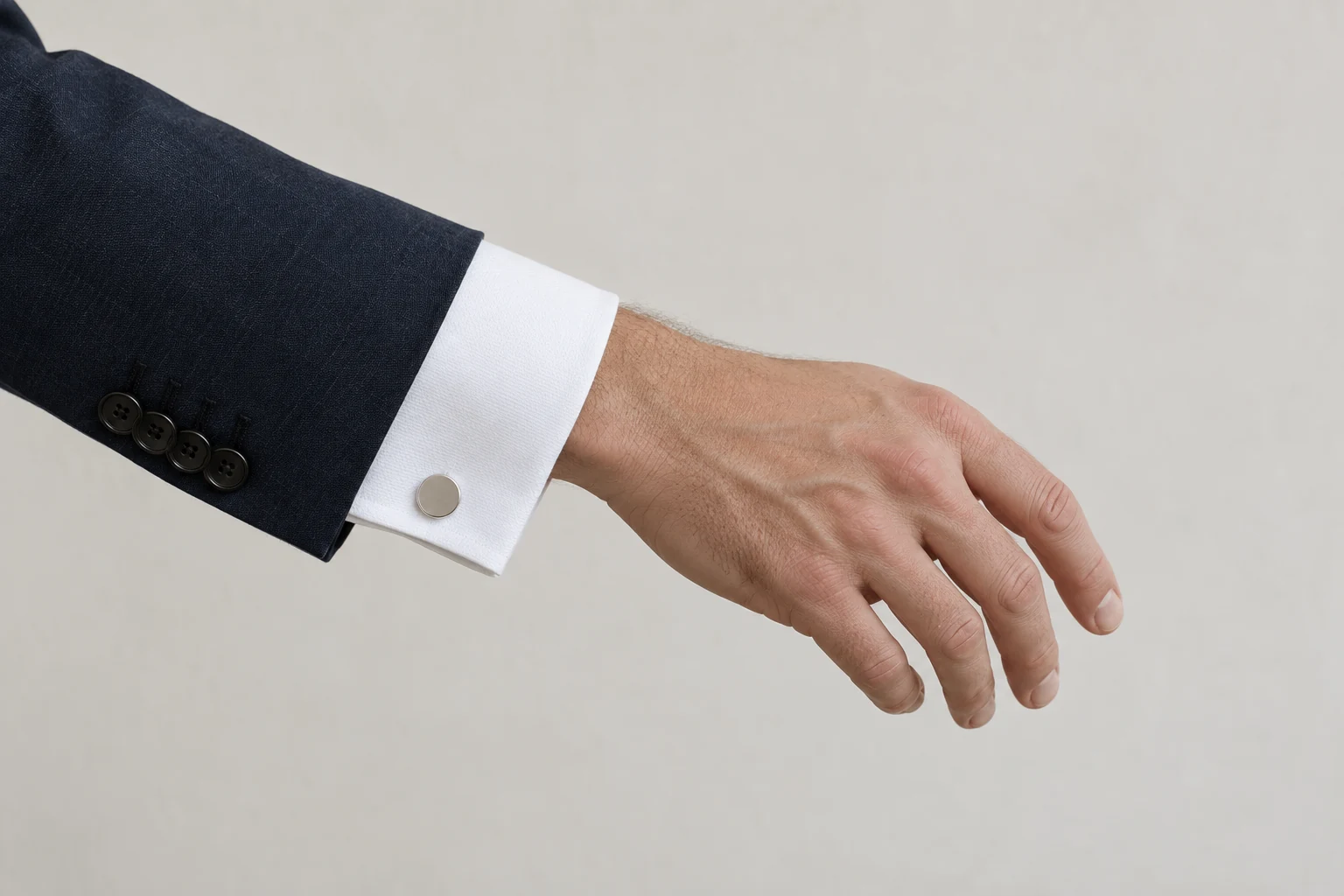
Which shirts take cufflinks
Cufflinks are made for the French cuff, also called the double cuff. It is roughly twice as long as an ordinary cuff and has no buttons. You fold it back over itself, so it is doubled, and each side then has two layers with holes that line up, four holes in all. The cufflink passes through all four and holds the cuff closed. Because the fold is part of the design, a French cuff looks unfinished and floppy until the link is in.
A convertible cuff is a single layer cuff that can be worn either way. It has a normal button, plus a buttonhole on each side, so you can button it on an ordinary day or leave the button undone and fasten it with a cufflink through the two single holes. If your shirt has one hole on each side of the cuff and a button beside one of them, that is what you have. An ordinary buttoned cuff, with a single buttonhole and a button sewn where the second hole would be, is not made for cufflinks; forcing one through leaves the cuff twisted. For a shirt that fits well at the collar and wrist, see our guide to finding your dress shirt size.
Kissing cuff or barrel style
A French cuff can be closed in two ways. In the kissing style, the two edges of the cuff meet with their inner faces pressed together, so both folded edges point outward from your wrist, side by side, like a pair of lips. This is the traditional and more formal way to wear it, and it is how most people wear French cuffs today, from a business suit to black tie.
In the barrel style, one side of the cuff overlaps the other, the way a buttoned cuff does, and the link passes through both. The result is slimmer and lies closer to the wrist, which some people prefer under a sweater or a close fitting jacket sleeve. Both are correct. If you are unsure, choose kissing: it is what a French cuff was designed to do, and it shows the cufflink best.
How to put on cufflinks, step by step
Put the shirt on first, and fasten the cuffs before your jacket. The second cuff is the awkward one, because you are working with your less skilled hand; take your time with it, or ask someone to help.
Fold the cuff back
Fold the long cuff back over itself, usually along a pressed crease, so it is doubled and the outer holes line up with the inner ones.
CheckEach side of the open cuff now has two layers, with the holes on top of each other.
Bring the edges together
Pinch the two sides of the cuff together so their inner faces touch, in the kissing style.
CheckThe two folded edges point away from your wrist side by side, and all four holes line up in a single tunnel.
Prepare the cufflink
If it has a swiveling back, turn the bar so it lines up with the post.
CheckThe back is straight, in line with the post, and small enough to pass through the holes.
Push it through from the outside
Hold the decorative face on the side of the cuff that faces away from your body when your arm hangs down, and push the post through all four holes.
CheckThe face sits flat on the outer side of the cuff, and the back pokes out on the side against your body.
Close the back
Turn the bar across the post so it cannot slip back through, or work the second end of a chain link through the holes.
CheckThe cuff is closed around your wrist and the link does not pull out when you tug gently.
Types of cufflinks and how they close
Most modern cufflinks for men have a decorative face on a short post, with a swiveling back that turns to lock. A bullet back has a small cylinder that swivels, and a whale back has a flatter, curved bar; both are quick to fasten with one hand. Chain links join two decorative faces with a short chain and are the traditional form. They are fiddlier to put on, since you work one end through all four holes, but they sit more loosely and look good on both sides of the cuff.
Silk knots are small balls of knotted cord, credited to the Parisian shirtmaker Charvet in the early twentieth century. They are the most relaxed option, inexpensive, and a good way to wear French cuffs without looking dressed up. At the other end, fixed back cufflinks have a rigid back that does not move; they are secure but the hardest to thread. Whichever you choose, a plain metal or a small, subtle design works almost everywhere, and novelty shapes are best kept for occasions where a joke is welcome.
| Type | How it closes | Worth knowing |
|---|---|---|
| Bullet back | A small cylinder swivels to lock | Quick to fasten with one hand |
| Whale back | A flat, curved bar swivels to lock | Quick to fasten with one hand |
| Chain link | Two faces joined by a short chain | Fiddlier, sits loosely, looks good on both sides |
| Silk knot | Knotted cord balls pushed through the holes | The most relaxed and inexpensive option |
| Fixed back | A rigid back that does not move | Secure but the hardest to thread |
When to wear cufflinks, and with what
Traditionally French cuffs belong with a suit and tie or with evening wear, and a suit with cufflinks is still the natural home for them: business meetings, weddings, interviews in formal industries, and black tie. Gentleman's Gazette notes they have become more flexible and can be worn in smart casual outfits and even without a jacket, though without a jacket they still read as a deliberate, dressy choice. When you wear a jacket, let about a quarter to half an inch (6 to 12 mm) of shirt cuff show beyond the sleeve, so the link is just visible when you move.
Coordinate the metals. Silver cufflinks look best with a steel or silver watch, a silver belt buckle and a silver tie clip; gold with gold. The rule is about harmony rather than strict matching, so a two tone watch can go either way. Keep the size in proportion to the cuff and the occasion: small and plain for work, something with more character for an evening or a wedding. Silver tarnishes over time, and our guide to cleaning silver jewelry covers bringing it back.
Tuxedo studs and cufflinks together
A tuxedo shirt often has holes down the front instead of ordinary buttons, and those take shirt studs, small decorative fasteners that do the work of buttons. Modern tuxedo shirts usually use three or four, depending on the length of the placket. Tradition says the studs and cufflinks should match, which is why they are often sold as a set; onyx or another black stone is the classic choice for black tie, and mother of pearl for white tie. Some tuxedo shirts have a covered placket that hides ordinary buttons, and those need no studs at all.
Studs are much easier to fit before you put the shirt on. Pass each one through the paired holes of the shirt front, face outward, and close its back from the inside, working from the top down. Then put the shirt on, fasten the cuffs as described above, and check that the studs sit in a straight line. Our black tie guide covers the rest of the dress code.
Common mistakes
Wearing the face on the inside
If the decorative face ends up against your wrist, the plain back is what people see. Push the link through from the side of the cuff that faces away from your body when your arm hangs down.
Forcing cufflinks into an ordinary buttoned cuff
A buttoned cuff has a buttonhole on one side and a button on the other, so there is no second hole for the link. Forcing one through twists the cuff. Wear cufflinks with French or convertible cuffs only.
Sleeves that hide the links
If your jacket sleeves are too long, or the shirt sleeves too short, nobody sees the cuff at all. Aim for a quarter to half an inch of shirt cuff showing below the jacket sleeve.
Mixing metals at random
Gold cufflinks with a silver watch, a steel tie bar and a brass belt buckle look unplanned. Choose one metal for the day and keep the others close to it.
Questions people ask
Can you wear cufflinks without a jacket?
You can, and it is more common than it used to be, but a French cuff shirt without a jacket looks noticeably dressy. Understated links or silk knots help it look relaxed. For interviews and formal events, wear the jacket.
How do I use cufflinks with a buttoned shirt?
Only if the cuff is convertible, meaning it has a buttonhole on each side as well as a button. Leave the button undone, line up the two holes and push the link through. An ordinary buttoned cuff with one hole is not designed for cufflinks.
Do cufflinks have to match my watch?
They should be in the same family of metal, silver with silver or steel, gold with gold, so the outfit looks put together. They do not need to be the same brand or design. A two tone watch gives you freedom to wear either.
Are cufflinks too formal for a job interview?
In a formal industry such as law or finance, simple cufflinks with a suit are entirely appropriate. In a casual workplace, an ordinary buttoned cuff may fit the room better. If in doubt, choose small, plain links that nobody will remember, and see our guide to what to wear to a job interview for the rest.
Do cufflinks go on the shirt or the suit jacket?
On the shirt. They fasten the shirt cuffs, and the jacket sleeve sits over them with a little shirt cuff showing below it. Suit jacket sleeves have their own buttons, which are sewn on or work through buttonholes, and they never take cufflinks.
Do men still wear cufflinks?
Yes, though mostly for occasions rather than every day. They remain standard with black tie and common at weddings and in formal offices, while most business casual workplaces have moved to buttoned cuffs. Silk knots and simple metal links are the easiest way to wear French cuffs without looking dressed for a gala.
Sources and further reading
References used for this guide. Each opens the original page in a new tab.
Keep reading
Dress codes
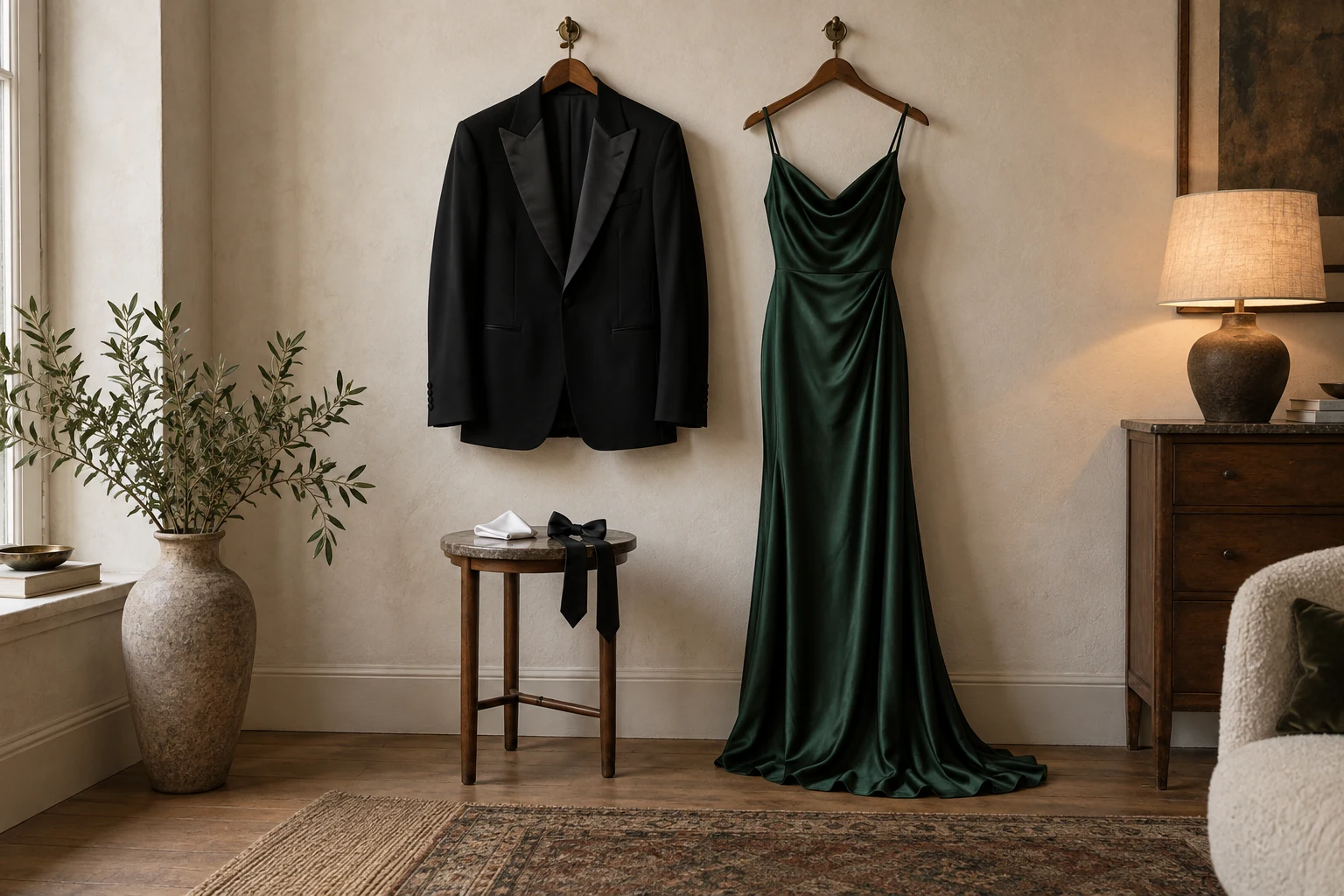
Black tie attire: what to wear, for men and women
Black tie attire explained: the tuxedo in detail, the shirt, bow tie and shoes, plus gowns and elegant alternatives for women and black tie weddings.

Ties and knots
Tie clip placement: where to put a tie bar
Tie clip placement made simple: which shirt buttons it sits between, how wide it should be, how to clip it to the shirt, and when to leave it off.
Suits and tailoring
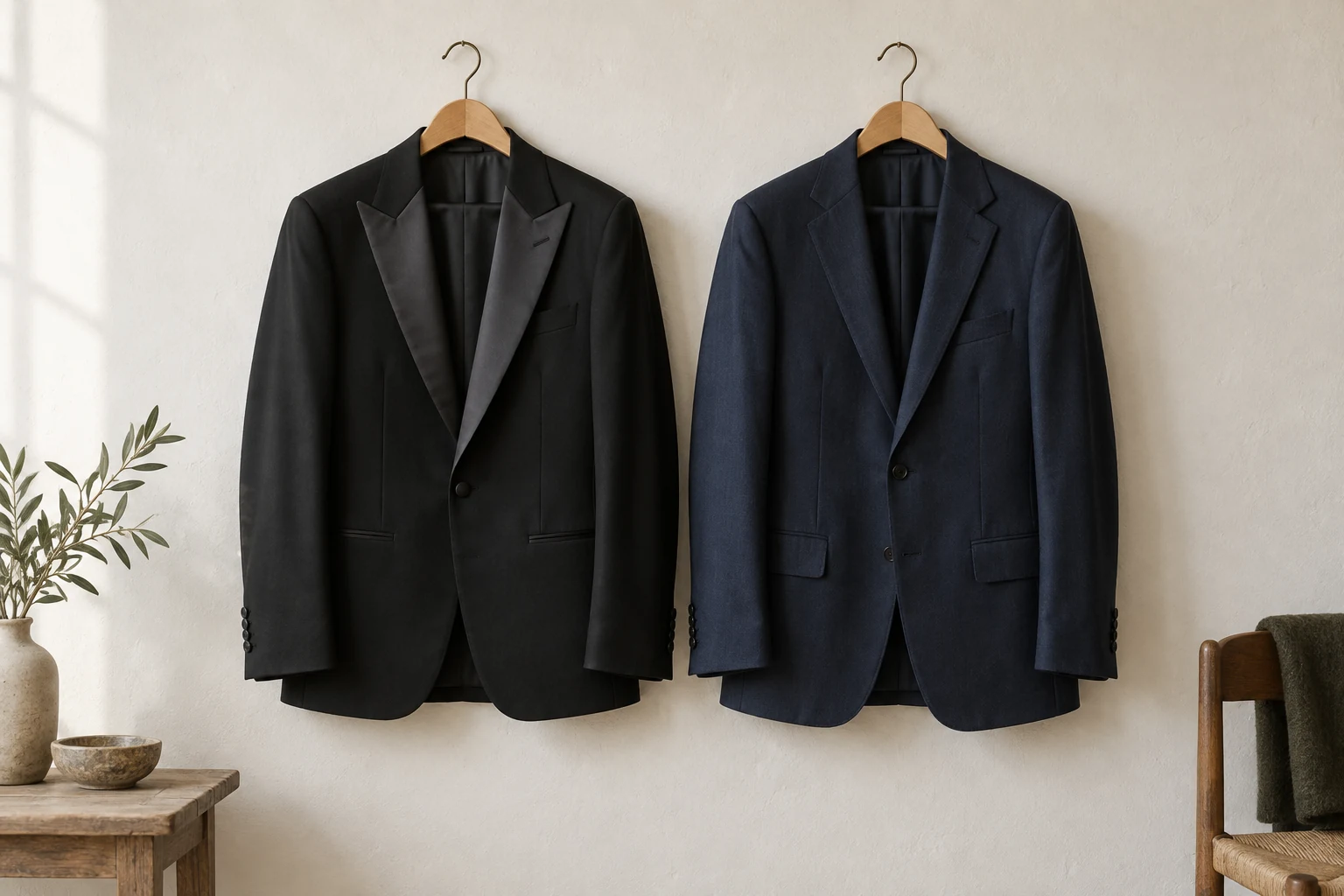
Suit vs tuxedo: how to tell them apart and which to wear
Suit vs tuxedo explained: the satin lapels, trouser stripe and bow tie that set a tuxedo apart, and which one a wedding, prom or black tie invitation asks for.
Suits and tailoring
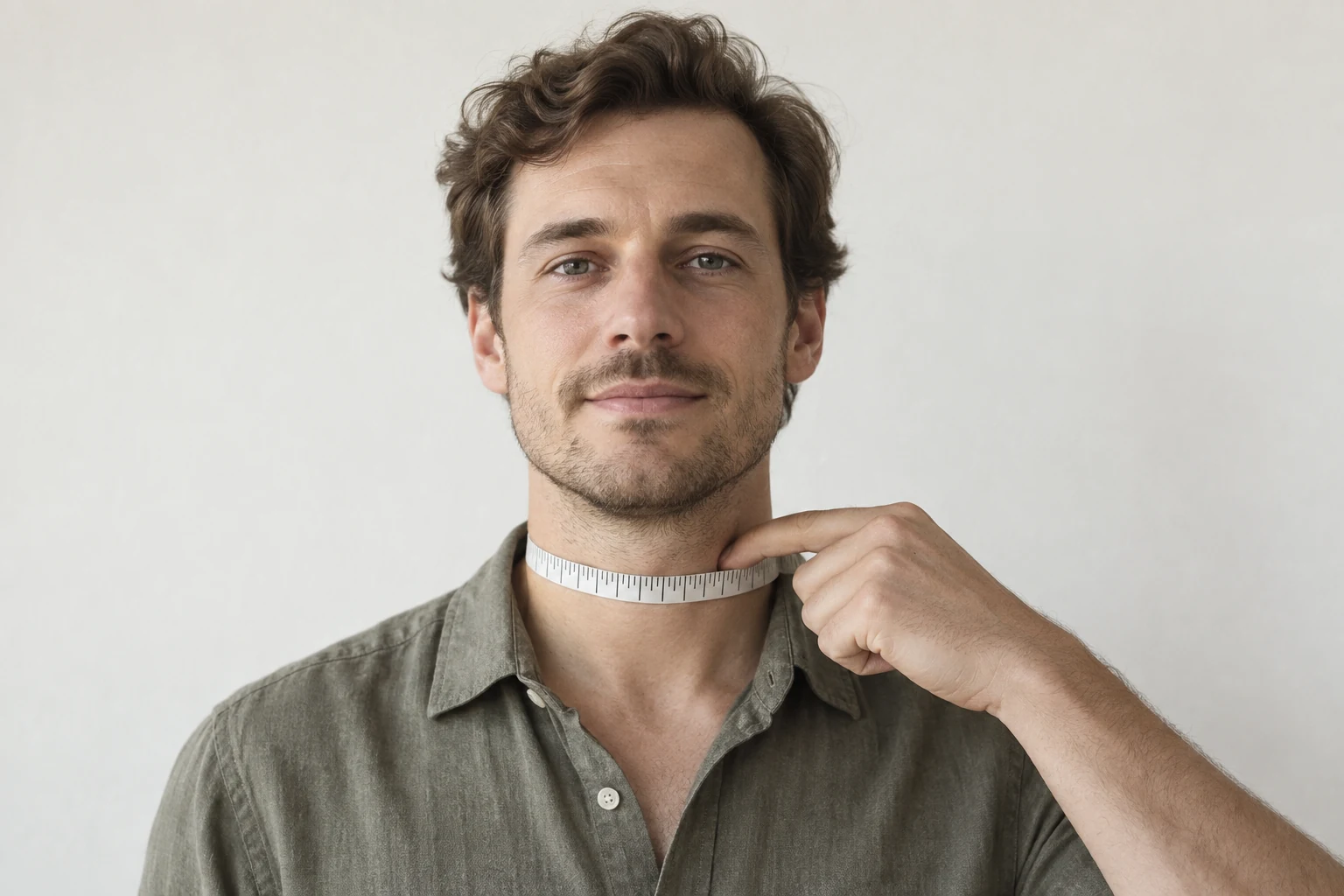
How to find your dress shirt size: neck and sleeve
Read any dress shirt size chart with confidence: how to measure your neck and sleeve, what 15.5 34/35 means, how to check a collar, and slim vs classic fit.
Shoes and jewelry
How to clean silver jewelry at home, gently
How to clean silver jewelry at home, gentlest method first, with care for pearls, stones and plated pieces, a short gold section, and simple ways to prevent tarnish.