Goth fashion: history, substyles and key pieces
In this guide
Wearing black every day does not make an outfit goth, although a closet half full of it is a common starting point. Most people come to goth fashion through music, bands like The Cure or Siouxsie and the Banshees, or through a pull toward velvet, lace and silver, and then wonder how to wear it well and whether it has rules beyond the color.
It does have a history and a shape, and knowing both makes the difference between a style that feels like yours and a costume. This guide covers where goth came from, the main substyles, the pieces that build a wardrobe, outfits for men and women, and how to start with clothes you already own. The goth scene has always welcomed people of any age, gender and body, and there is no single right way to be one.

Where goth fashion came from
Goth began as a music scene before it was a look. In late 1970s and early 1980s Britain, post punk bands such as Siouxsie and the Banshees, Bauhaus and The Cure made darker, more atmospheric music, and their fans dressed to match. The Batcave, a London club that ran from 1982 to 1985, became the scene's best known meeting place and a showcase for its style.
Early goths borrowed heavily from punk (fishnets, safety pins, dog collars, ripped tights and heavy boots) but shifted the mood from anger toward melancholy and romance. They added touches from horror films, Victorian mourning dress and gothic literature. The name itself came via the music press and the literary gothic tradition of Poe and Mary Shelley, not directly from the medieval Goths. Black was the anchor, worn head to toe, and it still is.
What goth style looks like
The writer Ted Polhemus summed up the early look as black velvet, lace, fishnet and leather with touches of deep red or purple, and that description still works. Because almost everything is black, texture does the job that color does in other styles. A good goth outfit puts matte against shine and sheer against solid: a velvet jacket over a mesh top, lace next to leather, a crushed velvet skirt with patent boots.
Beyond the clothes, three things signal goth. First, silver jewelry, often with crosses, ankhs, bats, moons or skulls. Second, boots: Dr. Martens, pointed winklepickers, creepers or tall buckled boots. Third, hair and makeup: dyed black hair, often teased up in the trad style, pale skin, dark eyeliner and dark lips. None of these are required, and many goths wear little or no makeup, but together they are what people recognize.
The main goth substyles
Trad goth is the 1980s original: big teased hair, heavy eye makeup, ripped fishnets, band shirts, pointed boots, lots of silver and layered black. Deathrock is its punkier cousin, with a DIY, horror film edge, cut up tops, studs and a fondness for the macabre. Romantic and Victorian goth take the literary side, with corsets, lace blouses, long skirts, frock coats, cravats, velvet and cameo brooches.
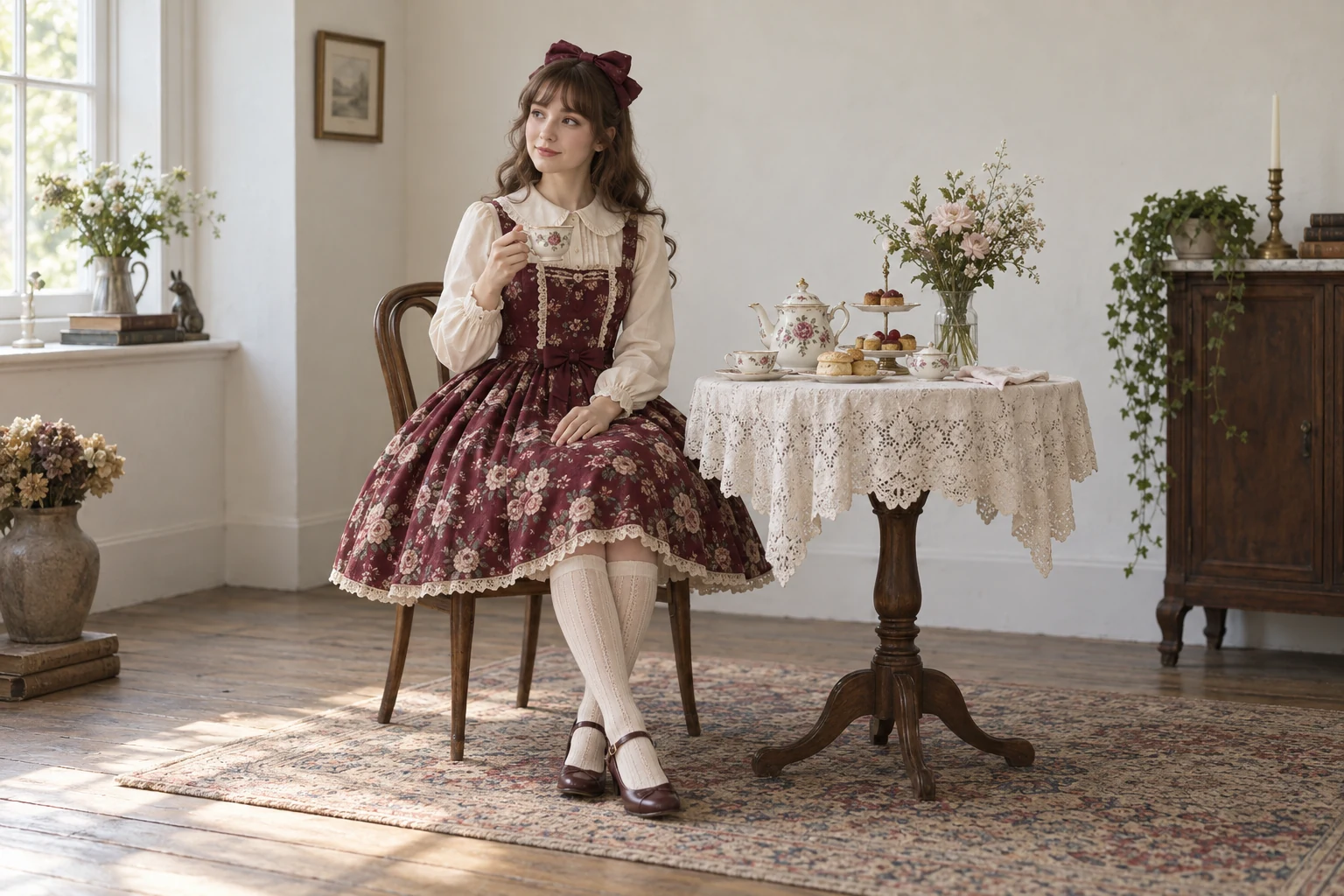
Cybergoth, which grew out of the industrial and rave scenes in the 1990s, trades velvet for PVC, neon synthetic dreadlocks, platform boots and goggles. Gothic Lolita is a Japanese street fashion with a doll like silhouette and its own etiquette; our guide to Lolita fashion explains it properly. Casual goth, sometimes called nu goth or modern goth, is the everyday version: black jeans, band shirts, oversized knits, a long coat and boots. Pastel goth mixes goth motifs with soft pinks, lilacs and mint.
| Substyle | Key pieces | Mood |
|---|---|---|
| Trad goth | Teased hair, ripped fishnets, band shirts, pointed boots, lots of silver | The 1980s original |
| Deathrock | Cut up tops, studs, DIY pieces | Punkier, with a horror film edge |
| Romantic or Victorian | Corsets, lace blouses, long skirts, frock coats, velvet | Literary and ornate |
| Cybergoth | PVC, neon synthetic dreadlocks, platform boots, goggles | Industrial and rave |
| Casual goth | Black jeans, band shirts, oversized knits, long coat, boots | Everyday and wearable |
| Pastel goth | Goth motifs in soft pink, lilac and mint | Playful |
Goth fashion for women
A classic goth outfit for women starts with a black skirt or dress, from a short velvet slip dress to a long flowing maxi, worn with fishnet or opaque tights and heavy boots. On top, a lace or mesh blouse, a corset or a fitted band shirt, then a velvet blazer, leather jacket or long black coat. Silver rings, a choker and a cross or crescent pendant complete it.
For casual goth outfits, the same idea works in simpler pieces: black skinny or straight jeans, an oversized black knit or band shirt, a long cardigan or duster coat, and platform boots or Dr. Martens. A single statement piece, such as a velvet skirt, a lace collar or a corset belt worn over a shirt, is often enough to make the rest read as goth.
Goth fashion for men
Goth has always been one of the few scenes where men wear lace, velvet, eyeliner and long hair without comment, and male goths have a wide range to draw on. A trad look is black skinny jeans, a band shirt or ripped mesh top, a leather jacket, pointed boots and silver jewelry. A Victorian or romantic look is a fitted black shirt with a high collar or ruffles, a waistcoat, a long frock coat and tall boots; our guide to wearing a waistcoat helps with the fit.
For everyday wear, many men settle on black jeans or trousers, a black button up or knit, a long wool coat, heavy boots and a couple of silver rings. It looks sharp at work and still clearly belongs to the style. Kilts, utility skirts and trench coats are also common in the scene and fit any version.
How to start with clothes you already own
Pull every black piece you own and look at what is missing. Most people already have black jeans or trousers, a black T shirt and some dark outerwear. What they lack is texture and a good pair of boots, so those are the best first purchases. Thrift and vintage shops are full of velvet blazers, lace blouses, long coats and old band shirts, and secondhand fits the scene's DIY roots far better than a costume shop.
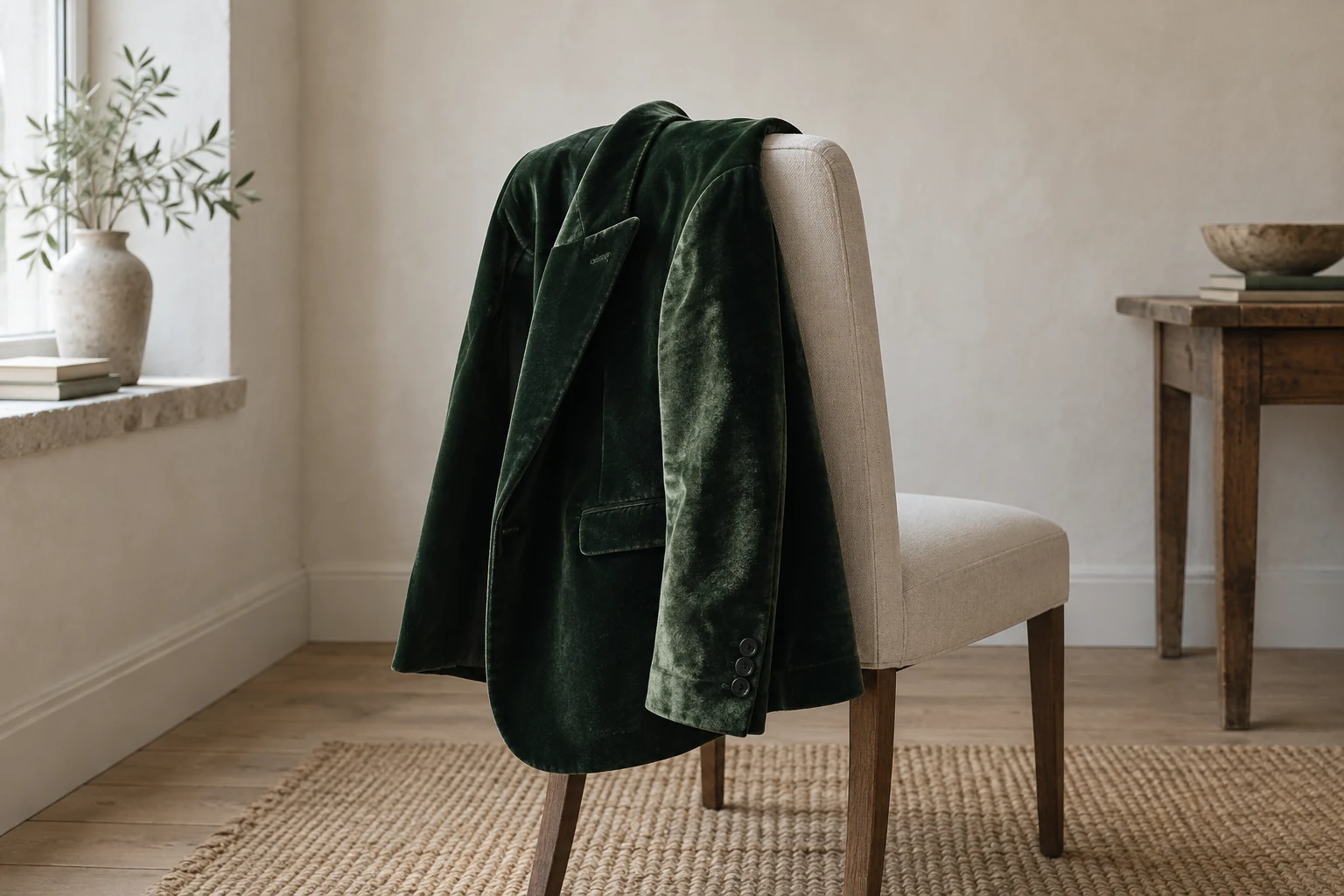
Mix fabrics deliberately: one soft piece (velvet, lace, chiffon), one tough piece (leather, denim, studs) and one sheer or open piece (mesh, fishnet, lace). Add jewelry and let it build over time. Our guide to layering necklaces works just as well with silver pendants, and what velvet is helps you choose a piece that will last.
Keeping a black wardrobe black
A goth wardrobe fades to charcoal faster than you expect. Wash black clothes inside out in cold water with a detergent made for dark colors, skip unnecessary washes, and dry them on a line or rack out of direct sun, because heat and sunlight both dull dye. Mixing faded and fresh black in one outfit is the most common reason a look seems off, so wear the brightest blacks together.
Velvet crushes and lace snags, so hang them and wash them by hand or on a gentle cycle in a mesh bag. Leather needs its own care; our guide to cleaning a leather jacket covers it. Silver tarnishes, and cleaning silver jewelry will bring rings and pendants back.
Questions people ask
What is the difference between goth and punk?
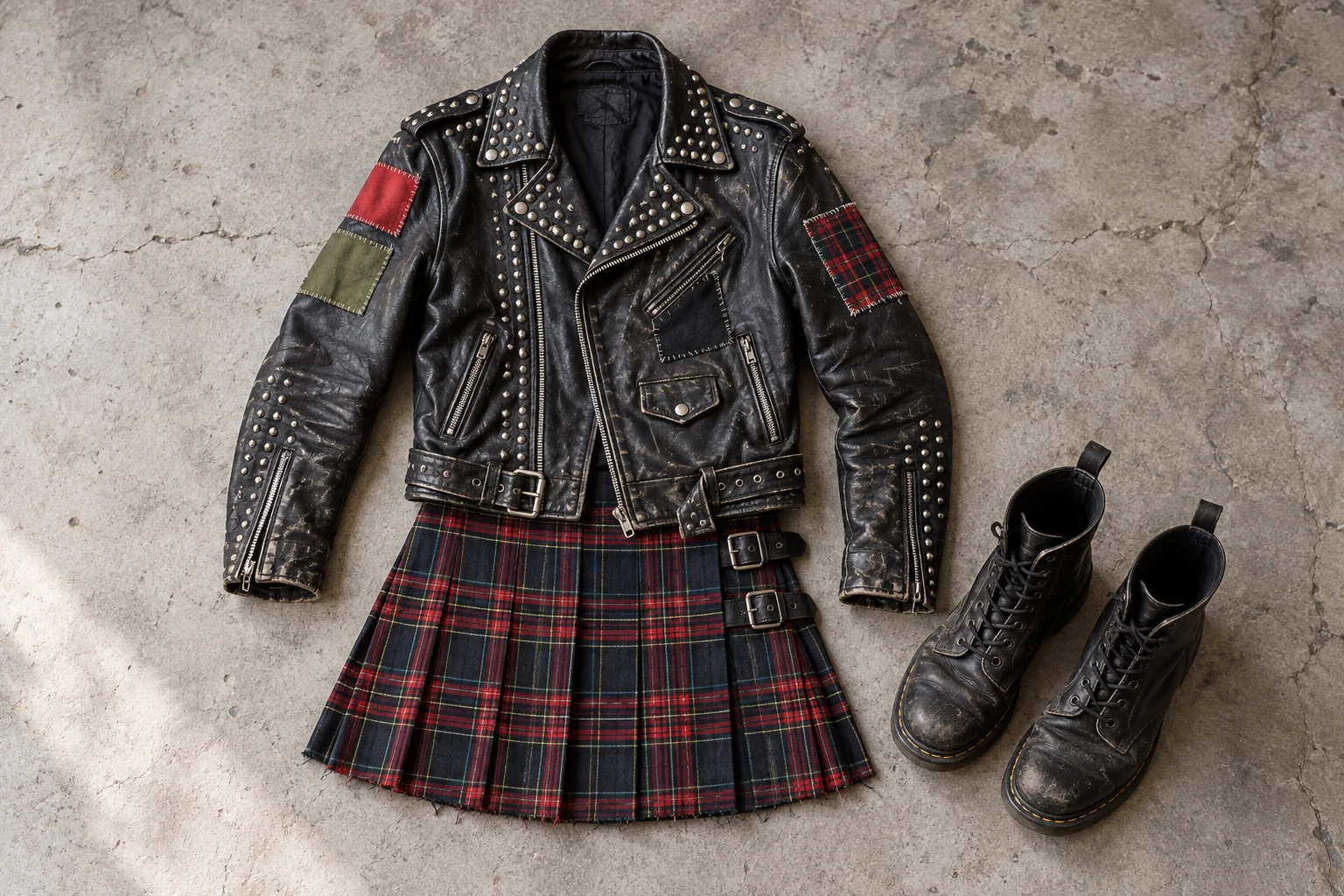
Both came from the same late 1970s British scene, and goth borrowed many punk pieces. Punk is louder and more confrontational, with tartan, studs, spikes and bright hair, while goth is darker and more romantic, built on black velvet, lace and a melancholy mood. Our guide to punk fashion covers the other side.
Why is it called goth?
The name came from the music press describing the dark, theatrical sound of post punk bands, and it links to the gothic literature tradition of horror and romance rather than to the ancient Goths. Fans adopted it, and it stuck to the clothes as well as the music.
Do you have to wear makeup to be goth?
No. Pale skin, dark eyeliner and dark lipstick are part of the classic look for many goths of every gender, but plenty of people in the scene wear none. Clothes, jewelry and music taste carry the style just as well.
Can goth fashion work at an office?
Yes, in a quieter form sometimes called corporate goth: black tailored trousers or a black skirt, a high collar blouse or fine black knit, a structured blazer, polished boots and a single silver piece. It follows most business casual rules while staying recognizably goth.
Sources and further reading
References used for this guide. Each opens the original page in a new tab.
Keep reading
Styles
Punk fashion: where it came from and how to wear it
What punk fashion is, how it started in 1970s New York and London, the pieces and substyles that define it, and how to build punk outfits for men and women today.

Styles
Grunge style: how to wear it without a costume
Where grunge style came from, the core clothes for men and women, and how to wear 90s grunge fashion today so it looks lived in, not like a costume.
Styles
Lolita fashion: substyles, silhouette and etiquette
A respectful guide to Lolita fashion: its Japanese origins, what the name does and does not mean, the silhouette, the main substyles and community etiquette.

Styles
Dark academia fashion: pieces, palette and outfits
What the dark academia aesthetic is, where it came from, the clothes and colors that define it, and dark academia outfits for men and women you can wear today.
Fabrics
What is velvet, and how to care for it
What velvet is and how its dense pile is woven, silk vs cotton vs polyester velvet, velvet vs velveteen and velour, how to wear it and how to care for it.