What to wear in Hawaii, from beach to summit
In this guide
Swimsuits, shorts, sandals: a suitcase for Hawaii seems to pack itself. Then you notice the sunrise tour on the itinerary starts at 10,000 feet, a dinner reservation says resort casual, and a friend who lives there mentions that nobody wears the loud shirt you just bought. Hawaii rewards a little more thought than a typical beach trip.
Knowing what to wear in Hawaii comes down to three things. The coastal climate is warm and steady all year, so most of your clothes are summer clothes. The islands have mountains and wet windward coasts, so a few pieces need to handle cold and rain. And Hawaii has its own relaxed but real dress culture, from aloha attire at dinner to covering up once you leave the sand.
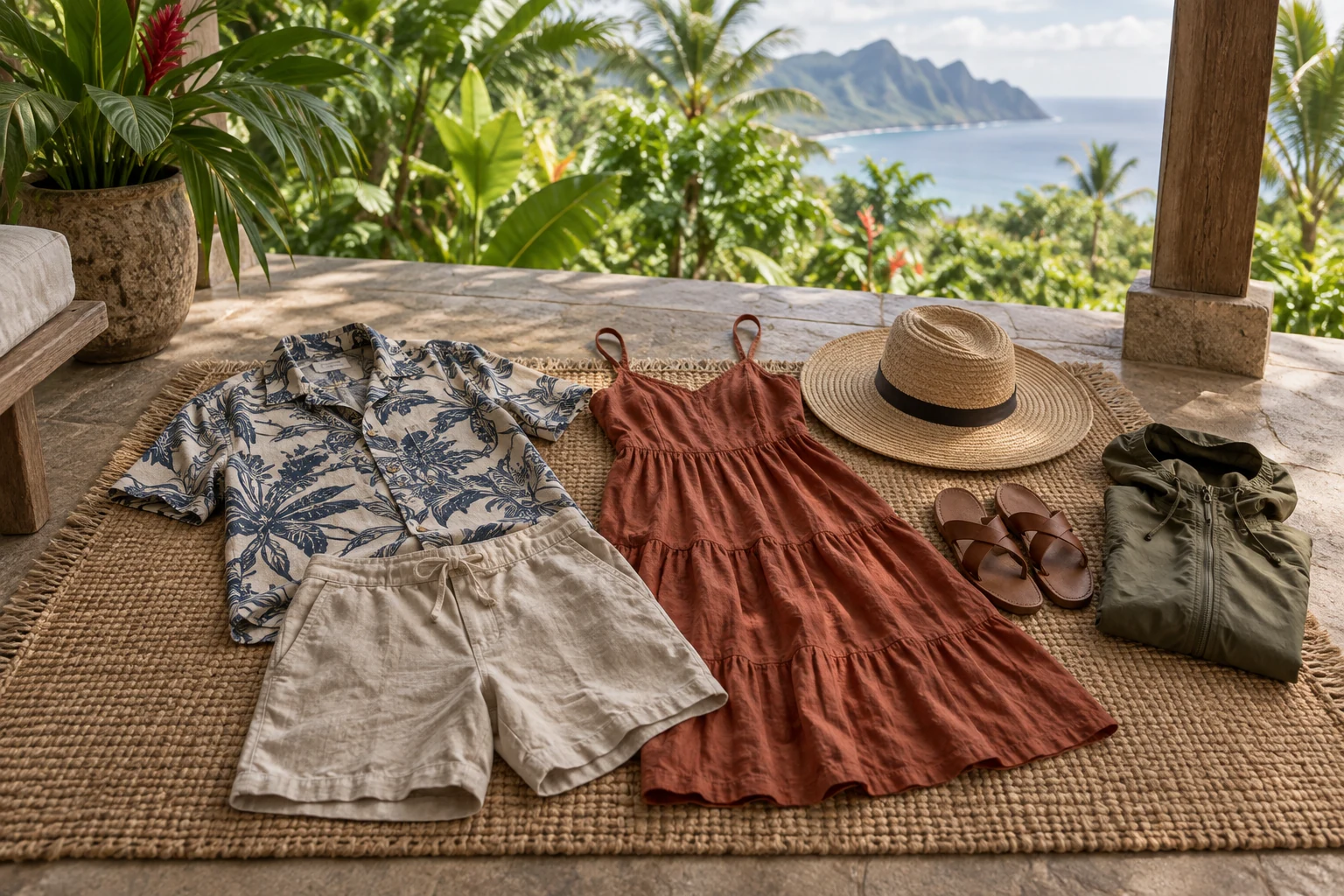
What to wear in Hawaii by season
Hawaii's official tourism site describes two seasons. From May through October, summer, average daytime temperatures are around 85°F (29°C). From November through April, winter, they average around 78°F (26°C). Nights are about 10°F cooler. That means the same wardrobe works in September, October, December or March: summer clothes by day and one light layer for evenings, with the winter months calling for that layer a little more often.
Rain depends more on where you are than when. The wettest months are November to March, but showers are usually local and brief. Northeast facing windward coasts, such as Hilo or the road to Hana, catch most of the rain from the trade winds, while leeward coasts like Kona, Waikiki and Kaanapali stay drier. A packable rain jacket earns its space on any island. For a detailed temperature guide, see our advice on what to wear in 80 degree weather.
| Where and when | Conditions | Pack |
|---|---|---|
| Coast, May to October | Around 85°F (29°C) by day | Summer clothes, one light evening layer |
| Coast, November to April | Around 78°F (26°C) by day, wettest months | The evening layer more often |
| Nights anywhere | About 10°F cooler than the day | A light sweater |
| Windward coasts like Hilo | Frequent brief showers | A packable rain jacket, quick dry clothes |
| Haleakalā summit | Below freezing to about 50 to 65°F (10 to 18°C), windy | Long pants, fleece, windproof jacket, hat, gloves |
Everyday clothes for the beach and town
Build days around light, breathable fabrics: linen and cotton shirts, T shirts, loose shorts, sundresses and skirts, and a lightweight pair of pants. Humidity makes anything heavy or clingy uncomfortable. Our guide to linen explains why it is the classic warm weather fabric, and it looks fine a little creased, which matters when you are living out of a suitcase.
Pack two swimsuits so one can dry, a cover up or a shirt to throw over them, a hat and good sunglasses. Sun protective clothing matters here more than on most mainland beaches: the Skin Cancer Foundation notes that a white T shirt offers only a UPF of about 7, dropping to about 3 when wet, so a rash guard or a UPF shirt is the better choice for long snorkels. Footwear can stay simple: sandals or flip flops for the beach, water shoes for rocky entries, and a pair of sneakers or trail shoes for walking and hiking.
How to dress in Hawaii and not look like a tourist
The aloha shirt is a genuine local garment, not a costume. It emerged in Honolulu in the early 1930s, cut from brightly printed fabrics that drew on Japanese kimono prints, and in 1966 the islands began Aloha Friday, a tradition of wearing the shirts to work that later inspired mainland casual Fridays. Residents have long favored subtler versions, including reverse print shirts with the pattern printed inside so the outside looks muted. A well cut aloha shirt in a quieter print reads local; a neon parrot print with matching shorts reads fresh off the plane.
A few habits matter more than any single garment. Cover up when you leave the beach: walking into a shop, restaurant or grocery store in only swimwear is widely considered disrespectful. Take your shoes off when you enter someone's home, a strong custom in the islands. Keep beachwear to the beach and skip anything that treats Hawaiian culture as a costume, such as plastic grass skirts or coconut bras. For women, a simple sundress or a skirt with a linen top and sandals is what you will see locally; for men, shorts or chinos with a plain T shirt or an aloha shirt and sandals.
Dinners, luaus and aloha attire
Aloha attire is Hawaii's version of smart casual, and it covers nearly every dinner and many weddings in the islands. For men it means an aloha shirt, often tucked into light trousers or worn untucked with chinos, and leather sandals or loafers. For women it means a flowing dress, a muumuu or a skirt with a pretty top, and dressy sandals. Jackets are rarely expected, even at upscale restaurants. If an invitation for a wedding on the sand arrives, our guide to beach wedding attire covers the details.
A luau is outdoors, often on grass or sand, and usually in the evening. Wear what you would to a nice casual dinner: a sundress or an aloha shirt, flat sandals rather than heels that sink, and a light layer for when the breeze picks up after sunset. If you are given a lei, accept it graciously and wear it draped over your shoulders; taking it off in front of the giver is considered impolite by many.
Volcano summits, hikes and cooler places
Elevation changes everything. Temperatures drop about 3.5°F for every 1,000 feet you climb, and the summit of Haleakalā on Maui, at 10,023 feet, can be about 30°F colder than the resorts below. The National Park Service says summit temperatures range from below freezing to highs of about 50 to 65°F (10 to 18°C) year round, and wind and cloud make it feel colder still. For a sunrise visit, bring long pants, closed shoes, a warm fleece or sweater, a windproof jacket, a hat and even gloves. Many visitors borrow the hotel blanket; better to pack real layers.
The same logic applies, less dramatically, to upcountry towns and to high elevation parks on the Big Island. For rainforest hikes on windward sides, wear quick drying clothes and shoes with grip, since trails turn to slick mud after rain; our guide on what to wear in the rain has more ideas. Jeans are comfortable at elevation and on cool evenings, but they are heavy, slow to dry and hot at sea level, so one pair is plenty.
What to pack for a week, and the sunscreen rules
For a week, a sensible base is three or four pairs of shorts or skirts, one pair of light pants, five to seven tops, two dresses or aloha shirts for evenings, two swimsuits with a cover up, a light sweater, a rain jacket, sandals, walking shoes and something slightly dressy for dinner. Add real warm layers only if a summit is on the plan. Our guide on packing for a beach vacation has a fuller list.
Sunscreen is regulated in Hawaii. A state law restricts the sale of sunscreens containing oxybenzone and octinoxate, and since October 1, 2022, Maui County has banned the sale, distribution and use of non mineral sunscreens without a prescription. Only mineral products with non nanotized zinc oxide or titanium dioxide are allowed there, and the rule applies to visitors too. The simplest approach for any island is a broad spectrum mineral sunscreen of SPF 30 or higher, reapplied every two hours and after swimming as the American Academy of Dermatology advises, plus clothing that does part of the job.
Questions people ask
Is it okay to wear jeans in Hawaii?
Yes, and locals do, especially in the evening, upcountry and at higher elevations. At sea level on a sunny afternoon they are hot and slow to dry after rain, so most visitors are happier in linen pants, chinos or shorts. One pair of jeans for cool nights and summit trips is enough.
What is frowned upon in Hawaii?
Wearing only swimwear away from the beach, keeping shoes on in someone's home, and dressing up as a caricature of Hawaiian culture are the common clothing faux pas. Beyond clothes, respecting closed trails, sacred sites and wildlife matters just as much.
What do ladies wear in Hawaii?
Sundresses, skirts, shorts with loose tops, linen pants and swimsuits with a cover up for the day, and a flowing dress or muumuu for dinner. Flat or low sandals are standard everywhere. Add a light cardigan for air conditioned restaurants and evenings.
What should I not pack for Hawaii?
Heavy coats and many pairs of heels, unless you are visiting a summit or attending a formal event. Leave non mineral sunscreen at home if you are visiting Maui, since it is banned there. And check agricultural rules before bringing fresh fruit, plants or soil into the state.
Sources and further reading
References used for this guide. Each opens the original page in a new tab.
- Hawaii Tourism Authority (Go Hawaii): Hawaii weather Opens in a new tab
- National Park Service: Haleakalā weather Opens in a new tab
- Aloha shirt history, Wikipedia Opens in a new tab
- Skin Cancer Foundation: sun protective clothing Opens in a new tab
- County of Maui: mineral only sunscreen Opens in a new tab
- American Academy of Dermatology: how to apply sunscreen Opens in a new tab
Keep reading
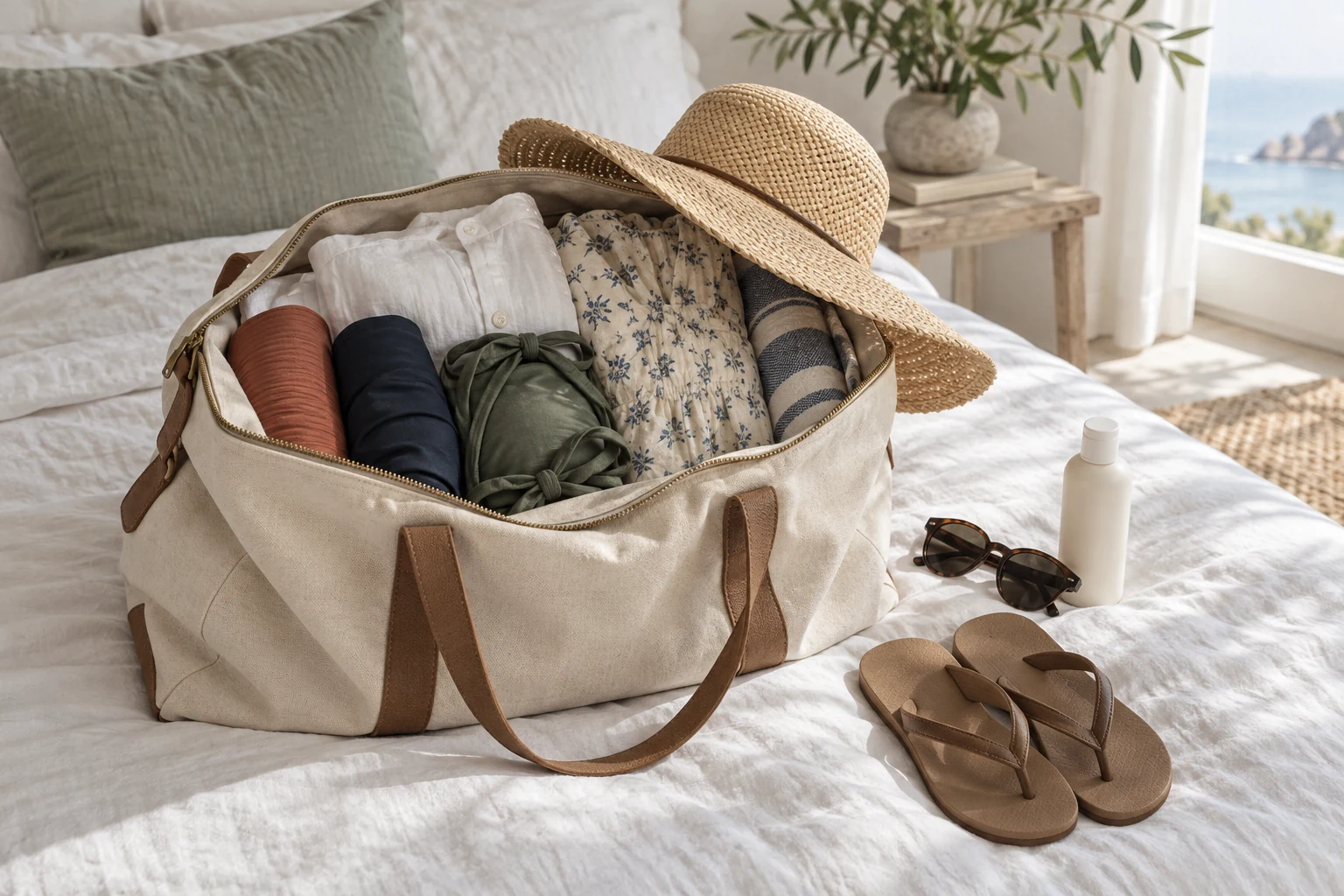
Closet and packing
What to pack for a beach vacation
What to pack for a beach vacation: the clothes, shoes and sun protection you need, a 7 day list for women and men, and what to leave at home to travel light.
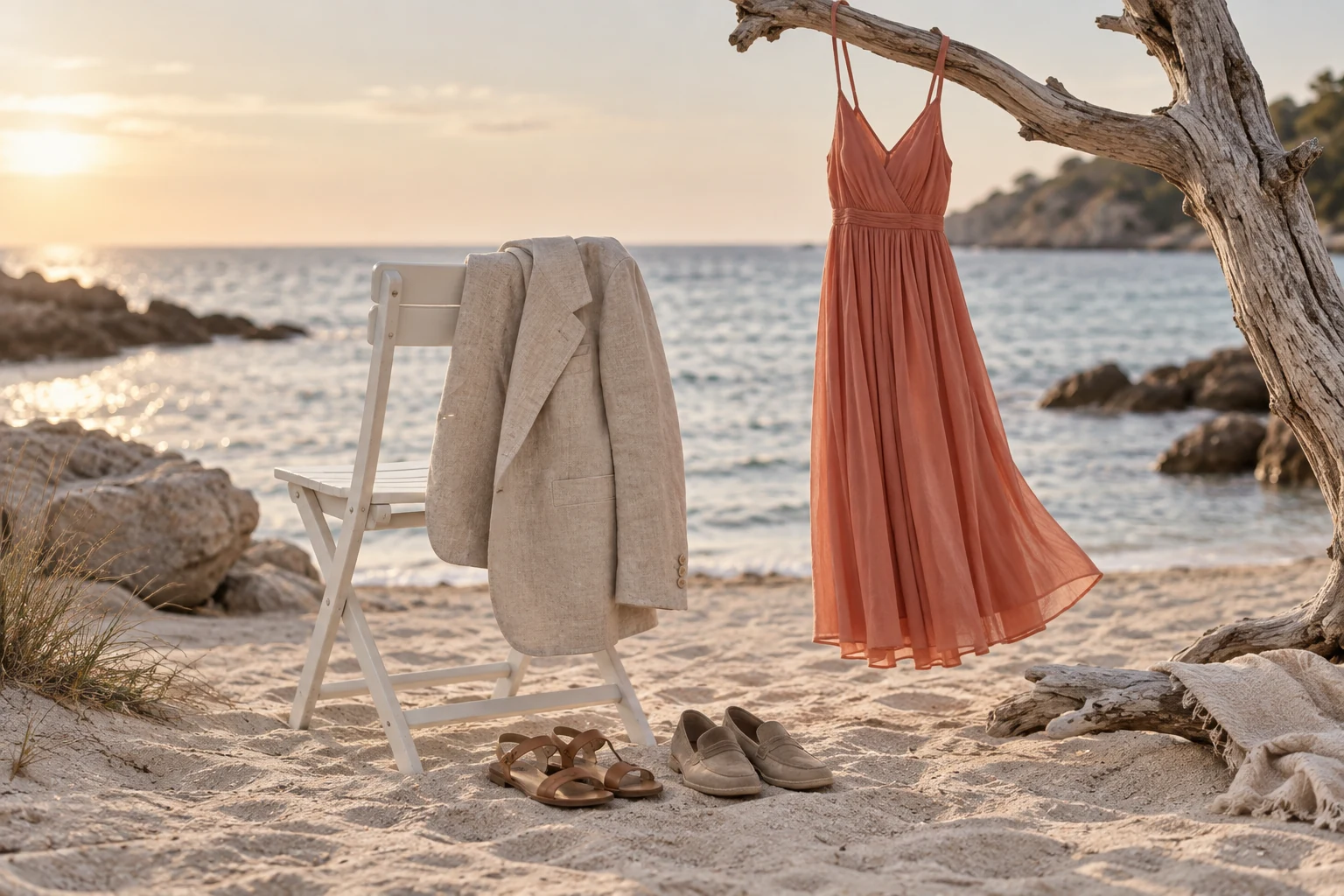
Dress codes
Beach wedding attire: what guests should wear
Beach wedding attire for guests: light fabrics, shoes that work on sand, and how to read the dress code, with outfits for men and women from casual to beach formal.
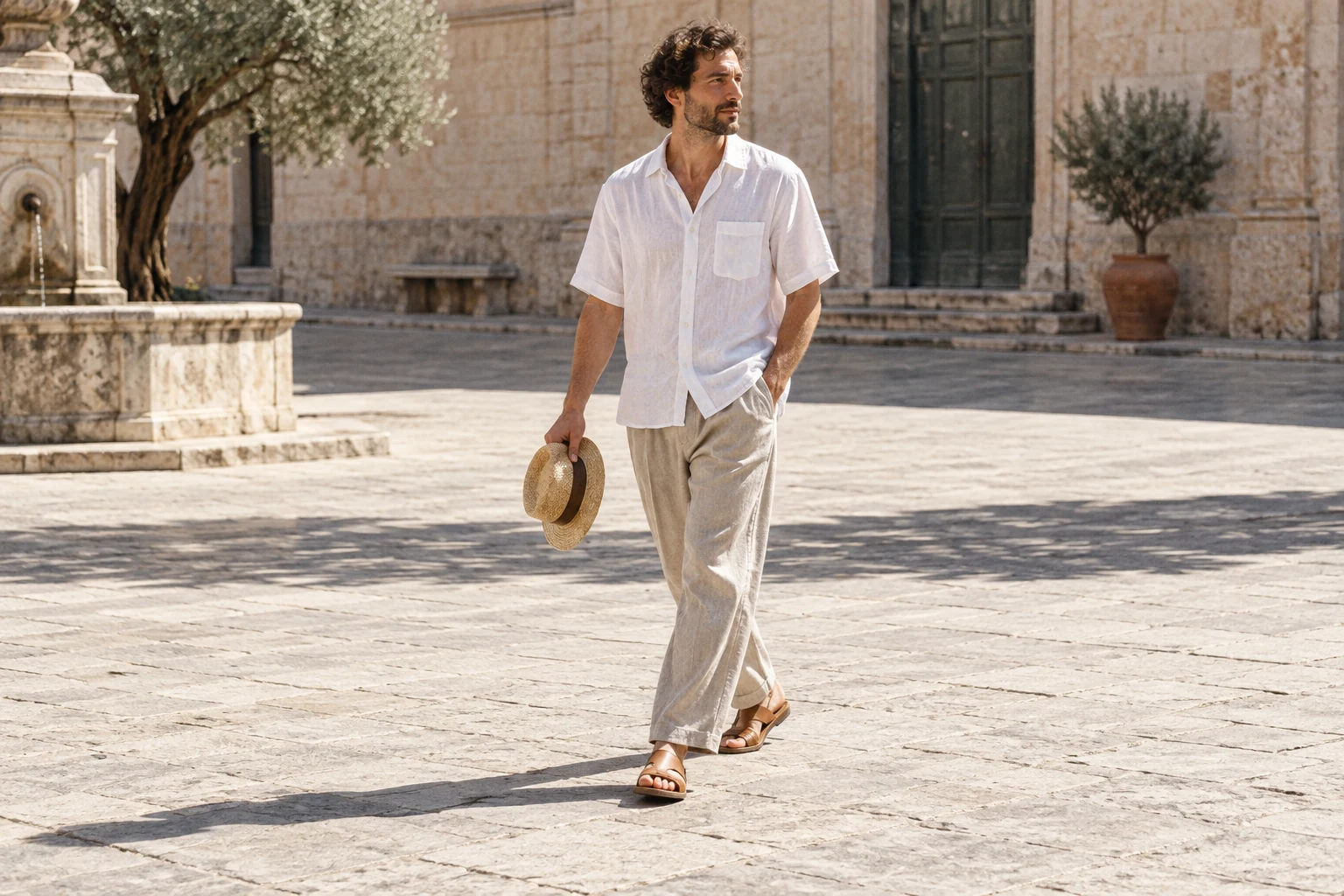
Weather
What to wear in 80 degree weather
At 80°F summer clothes take over, but work, humidity and cold air conditioning still shape the outfit. Fabrics, fits, shoes and outfits for men and women.
Fabrics
What is linen, and why does it wrinkle?
What linen is made of, how flax becomes fabric, why linen wrinkles, how it compares with cotton, and how to wear and care for linen clothes and sheets.
Dress codes
What to wear on a cruise, day and night
What to wear on a cruise for sea days, shore excursions, dinner and formal nights, with dining room rules, layers for cool evenings and how much to pack.