Winter outfits: warm, current looks for every plan
In this guide
Winter is the season when getting dressed turns into a negotiation. You want the long coat and the good boots from your saved photos, but you also need to wait for a bus at 25°F (minus 4°C), sit in an overheated lecture hall and walk into a restaurant without looking like you are about to go skiing. Good winter outfits handle all of that at once.
This guide starts with the layering logic that keeps you warm, then gives complete outfits for women and men by situation: class, work, weekends, dates and nights out, winter weddings, and snow days. It finishes with what makes a winter look feel current in photos rather than simply bundled up.
The three layer rule behind every winter outfit
The three layer rule is simple. A base layer sits against the skin and should keep it dry: merino, silk or a synthetic thermal rather than cotton, which holds sweat and loses its warmth when damp. A middle layer traps warm air: a wool sweater, a fleece, a cardigan or a light down vest. An outer layer blocks wind and wet: a wool coat for dry cold, a puffer or a parka for serious cold, a coat with a water resistant shell for sleet. The National Weather Service recommends several loose, warm layers in extreme cold, plus a warm hat and mittens, which keep fingers warmer than gloves.
Loose matters because trapped air is what insulates, so a sweater squeezed under a tight coat is colder than the same sweater with room around it. Dryness matters even more. The CDC warns that hypothermia can happen above 40°F (4°C) when clothing is wet from rain, snow or sweat, which is why you should open your coat on a warm train and change out of damp socks. Our guide to merino wool explains why it is the easiest base layer to live in, and how to layer clothes shows how to keep layers slim enough to look good.
Winter outfits for class and campus
Campus days mean walking between cold air and hot rooms, so the trick is an outer layer that comes off easily and an inside outfit that looks finished on its own. For women, try a cropped cream cable knit over a long sleeve thermal, wide dark jeans, chunky lace up boots and a long padded coat, with a big wool scarf and a knit beanie. For men, a gray hoodie under a quilted liner jacket, straight dark jeans and waterproof sneakers or boots, then a long parka or duffle coat on the coldest days.
If you want something a little more styled, the Tokyo and Seoul campus look travels well: a collared shirt under a knit vest, a charcoal wool overcoat, loose pleated trousers and chunky loafers with thick socks. Choose a bag that fits over the coat's shoulders, and keep a thin knit hat in a pocket rather than a bulky one you will carry all day. Our guide to wearing a beanie covers the shapes that do not flatten your hair.
Winter outfits for work
For a business casual office, women's winter outfits can lean on knit dresses and wool trousers. A ribbed midi knit dress in chocolate or charcoal with opaque tights and knee high leather boots, under a camel wool coat, is warm and polished. Or pair a fine turtleneck with high waisted gray wool trousers and loafers, with thin socks under the trousers for the walk. For men, a merino crewneck over an oxford shirt, flannel or heavy cotton trousers, leather boots and a navy or charcoal overcoat cover most offices.
Keep a pair of indoor shoes at your desk if you commute through snow or slush, since salt ruins leather and wet shoes make a long day miserable. A scarf in a color that ties the coat to the outfit underneath, such as a burgundy scarf with a burgundy sweater, makes the whole look seem planned. For stricter offices, the same coats work over a suit; see business casual for men and business casual for women for the indoor rules.
Weekend and date night winter outfits
Weekend outfits can be the coziest and the most photographed. For women, a long gray wool coat over a matching gray knit set, a crossbody bag and white sneakers is easy and very current, as is an oversized flannel shirt worn as a jacket over a hoodie with straight jeans and shearling boots. For men, a fleece under a cropped workwear jacket with relaxed cargo pants and chunky boots, or a heavyweight knit with a corduroy overshirt and dark jeans.
For a date or a night out, think texture and one bit of shine. A satin slip skirt with a chunky knit, sheer black tights and heeled ankle boots under a long coat is warm enough for a short walk and looks great indoors. A black turtleneck with dark wool trousers, a leather jacket over it and a long scarf does the same for men. If the evening involves a long wait outside, wear thermal leggings or a thin base layer under the trousers; nobody sees them, and our guide to date night outfits has more ideas for the indoor part.
Winter wedding guest outfits
Winter wedding guest outfits start with the invitation, which the Emily Post Institute calls your best guide to how formal the day is, and with the venue, since a church or a family home may ask for covered shoulders or other modest details. Within the dress code, winter lets you use richer fabrics: velvet, satin, crepe and wool. A midi dress in deep green or burgundy velvet with sheer tights and closed heels, or a satin slip dress with a fitted fine knit cardigan over it, both photograph beautifully. A tailored pantsuit in a jewel tone is warm and just as formal.
For men, winter is the season for a dark suit in wool flannel, navy, charcoal or deep brown, with a dress shirt, a wool or silk tie and leather dress shoes. Black tie still means a tuxedo whatever the weather. Plan the arrival as part of the outfit: a long wool coat over the whole look, a big scarf or wrap, and boots for the walk with dress shoes in a bag if the paths are snowy. Avoid white or ivory unless the couple asks for it, and see what to wear to a wedding for each dress code in detail.
Outfits for snow and deep cold
Below about 20°F (minus 7°C), or in snow, function leads. A thermal base top and leggings under your clothes, a fleece or thick wool sweater, a long insulated parka that covers your hips, waterproof boots with good grip and wool socks. Cover your face and ears with a scarf or a knit balaclava, and wear mittens or insulated gloves. The CDC's winter list includes a hat, a scarf or knit mask over the face and mouth, a water resistant coat and boots, and several loose layers.
You can still make it look good. A long cream or black puffer over wide trousers tucked into snow boots looks deliberate, a chunky knit balaclava under a beanie is very current, and a bright scarf lifts an all black outfit in gray light. Our guide to what to wear in the snow goes further into boots, gloves and gear for long days outside.
| Temperature | Base and middle | Outer layer and extras |
|---|---|---|
| 40s°F (4 to 9°C) | Knit or sweatshirt, no base layer needed | Wool coat or light puffer, scarf |
| 30s°F (minus 1 to 4°C) | Thin merino or thermal, warm knit | Wool overcoat or puffer, hat, gloves |
| 20s°F (minus 7 to minus 2°C) | Thermal top and leggings, thick knit or fleece | Insulated parka, mittens, scarf over the face |
| Below 20°F (minus 7°C) | Full thermal base, fleece and wool | Long parka, balaclava, waterproof insulated boots |
| Wet snow or sleet | Merino base, no cotton against the skin | Water resistant shell or coat, waterproof boots |
Wind makes any temperature feel colder, so move one row down on windy days.
What makes a winter look feel current
What separates a styled winter outfit from a bundled one is usually proportion. Pair a long coat with something wide at the bottom, or a short puffer with something long and slim, rather than a medium coat over medium trousers. Mixing textures helps too: brushed wool with shiny leather, a chunky knit with satin, suede boots with a smooth coat. Wearing one color from head to toe, all gray, all cream, all chocolate, makes even basic pieces look expensive.
Winter light is flat and blue, so outfit photos look better near a window in the morning or outdoors in the hour before sunset. Show the coat open once so the layers underneath read, and take one close photo of the textures together. Most of all, keep your favorite winter pieces in rotation rather than saving them; a coat that fits your life will be in more photos than the one you are afraid to wear in the snow.
Common mistakes
A cotton base layer for a long day outside
Cotton soaks up sweat and snow and stays wet, which pulls heat away from your body. Use merino, silk or a synthetic thermal next to the skin, and keep cotton for short trips between warm places.
Layers that are too tight
Warmth comes from trapped air, so a thick sweater squeezed into a fitted coat is colder and looks lumpy. Size the coat to fit over your warmest layer.
Dress shoes on snowy streets
Salt and slush stain leather and thin soles slip. Walk in boots and change into your good shoes when you arrive.
Questions people ask
What is the 3 layer rule for winter?
It means dressing in a base layer that keeps skin dry, a middle layer that insulates and an outer layer that blocks wind and wet. You can add or remove the middle layer as the temperature changes, which is why it works from a cool morning to a freezing evening.
What is the 333 rule for clothes?
It is an informal capsule exercise with several versions online; the common one is choosing three tops, three bottoms and three pairs of shoes and mixing them for a set time. For winter it works well with one coat on top, since the coat is what people see most.
How do I look stylish in winter without being cold?
Put the warmth where it does not show: thermal leggings under trousers, a thin merino layer under a shirt, wool socks inside boots. Then let the visible layers carry the style, a well fitted long coat, a good scarf and one interesting texture.
Can I wear a dress in winter?
Yes. Knit, wool and velvet dresses are made for it, with opaque or fleece lined tights and knee high boots, and a long coat that covers most of the hem. A thin thermal under a knit dress adds warmth without bulk.
Sources and further reading
References used for this guide. Each opens the original page in a new tab.
Keep reading
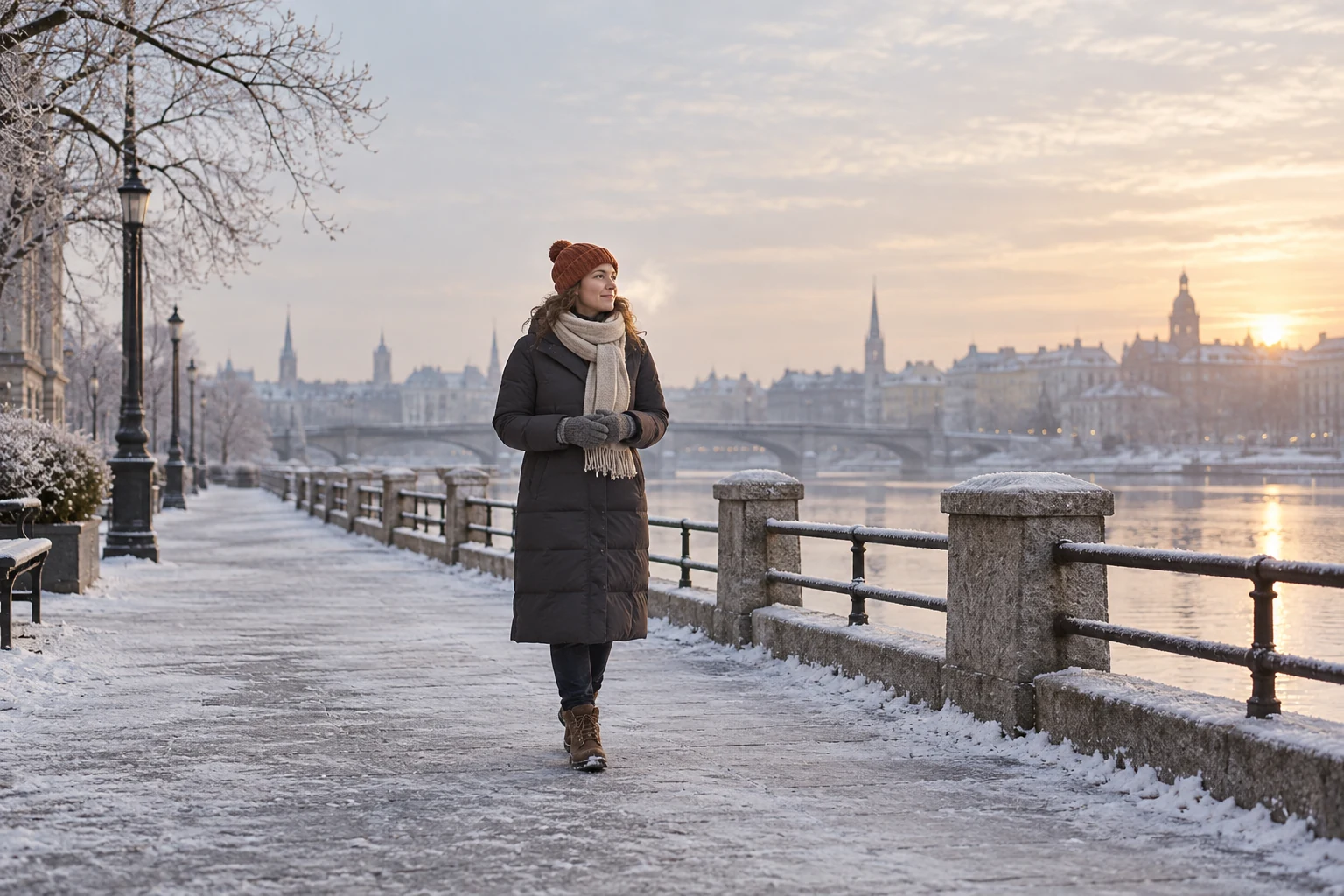
Weather
What to wear in 30 degree weather
Below freezing, the details decide your comfort: insulation, a hat and gloves, and boots that grip ice. Layers and outfits for 30°F, from commute to run.
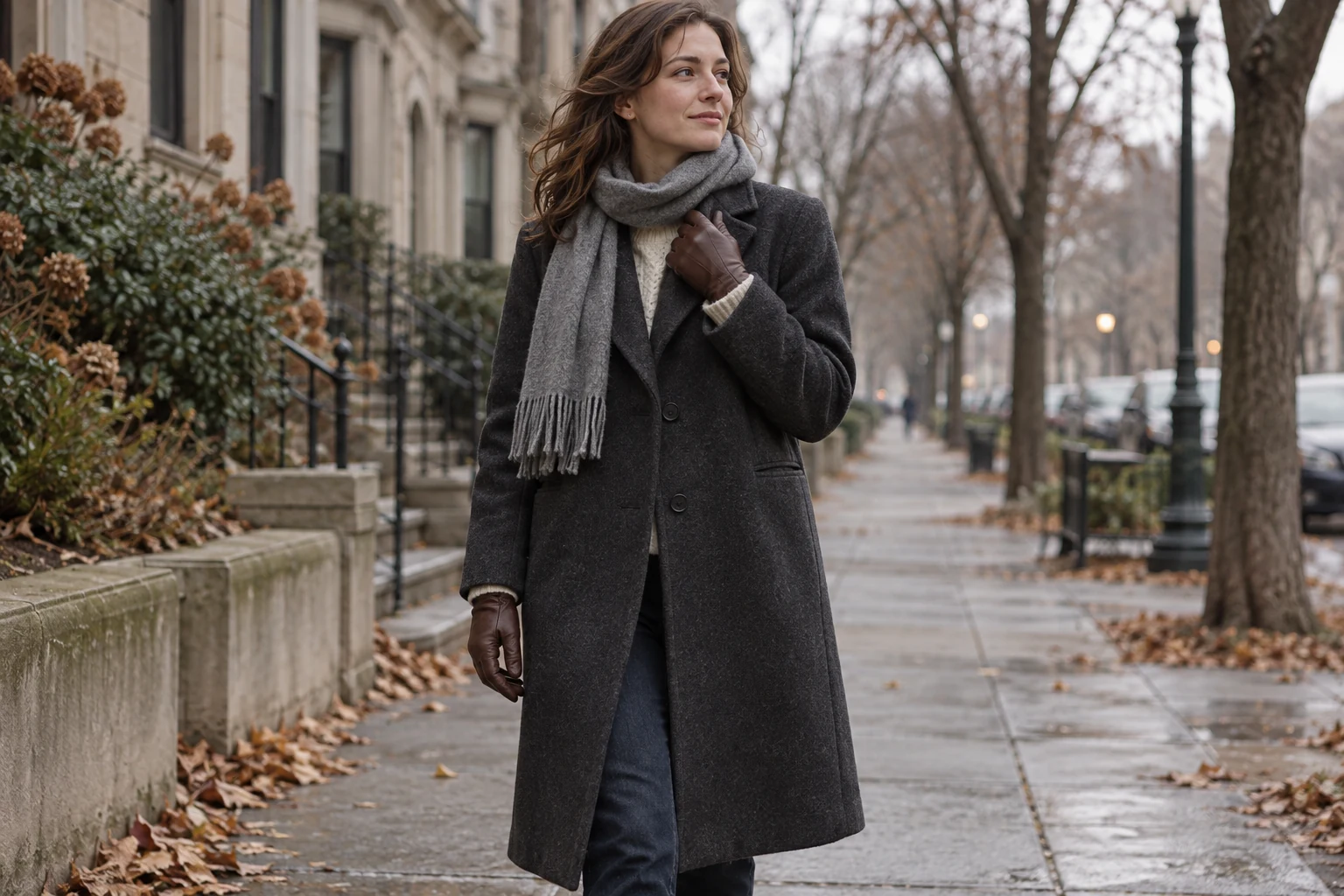
Weather
What to wear in 40 degree weather
At 40°F the wind and the rain matter as much as the number. How to layer, what to wear on your neck, hands and feet, and outfits for every hour outside.
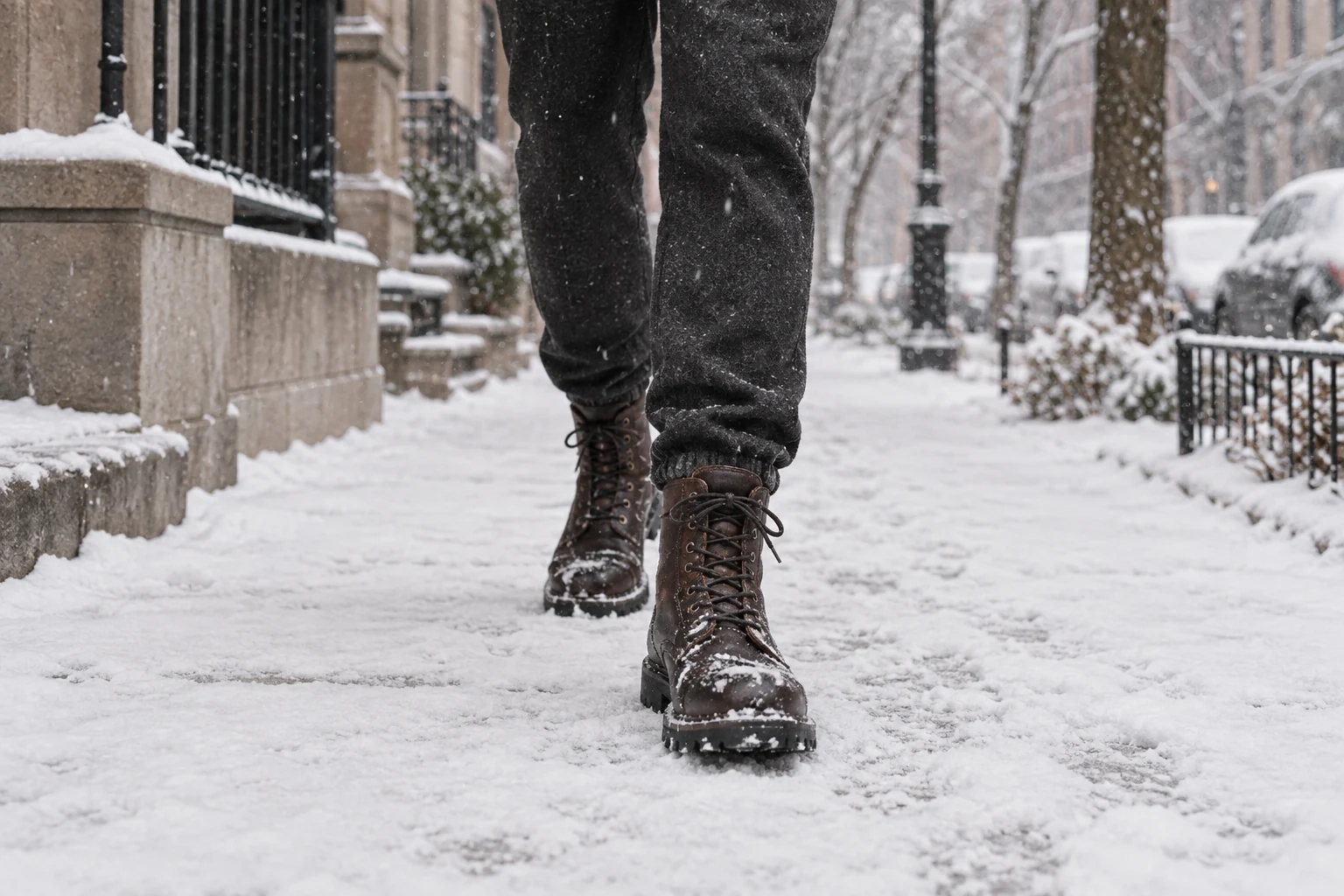
Weather
What to wear in the snow, from city streets to slopes
What to wear in the snow for a city commute, a day of sledding or a first ski trip: warm layers that stay dry, the right boots, and what to do without snow pants.
Everyday style
How to layer clothes for warmth and style
How to layer clothes for cold weather and for style: the three layer rule, the right fabrics, layering without bulk, outfits for men and women, and summer layers.
Weather
Fall outfits for women and men, from class to weddings
Fall outfits for women and men by temperature and occasion: class, work, weekends, dates, fall wedding guest looks and family photos, built from layers you own.