How to wash a bra by hand or in the machine
In this guide
You finally found a bra that fits, and it cost more than you like to admit. The last one lasted a few months before the band went slack, a wire started poking through, and the cups came out of the laundry with a dent. Most of that damage happens in the wash and the dryer, not while you wear it. Learning how to wash a bra properly is the simplest way to make a good one last.
The enemies are the same three every time: heat, which breaks down the elastic that does most of the supporting; twisting and tangling, which bend wires and crush molded cups; and hooks catching on other fabric. Hand washing avoids all three, and a careful machine wash avoids most of them. If you are not sure your bras fit in the first place, our guide to measuring your bra size is a good place to start.
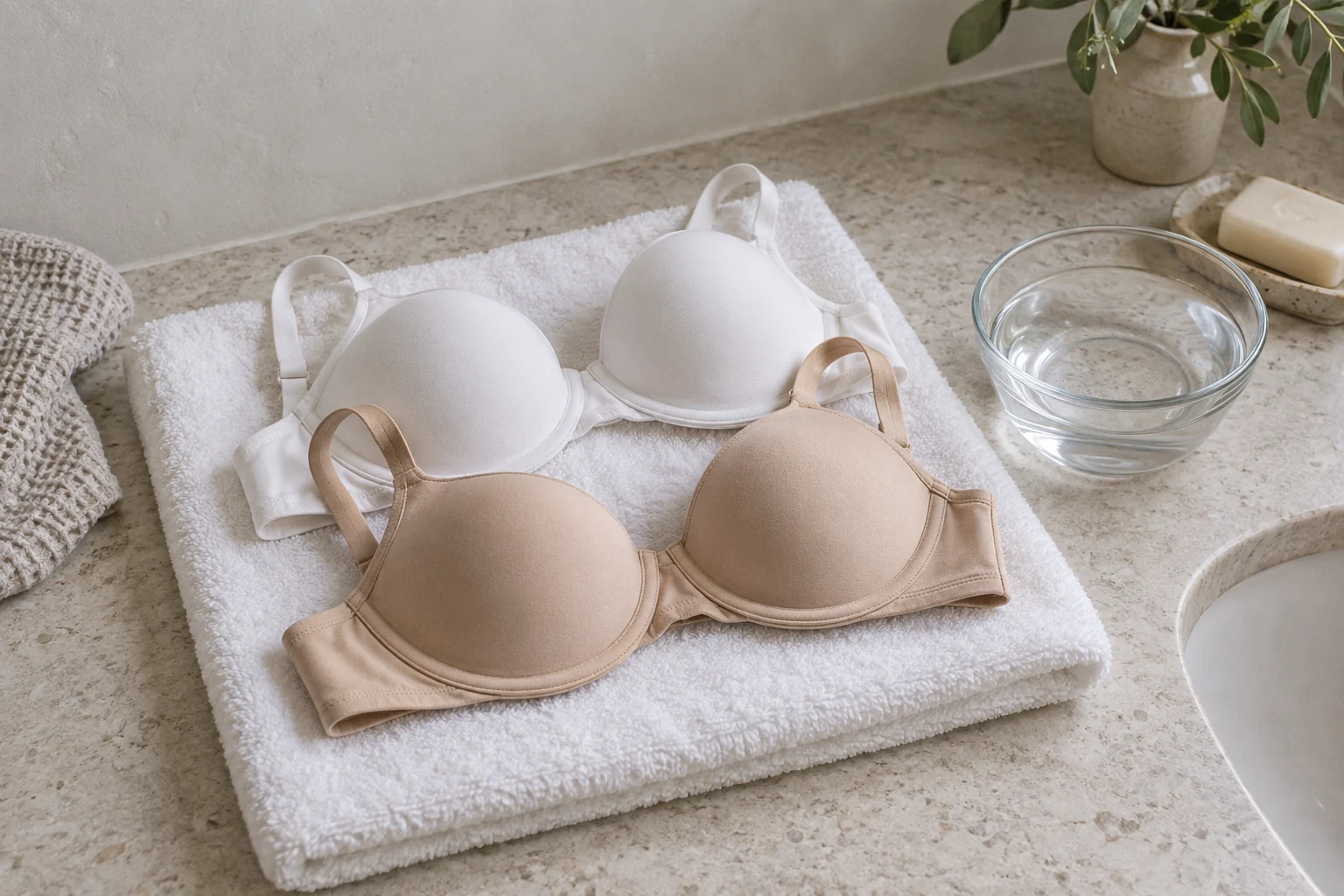
How often to wash a bra
Advice varies more than you might expect. Wacoal, a lingerie maker, recommends washing a bra after every wear because it holds body oil, sweat and skin cells against the fabric. Glamorise cites the American Cleaning Institute's more relaxed guidance of every two to three wears. In practice, the right answer depends on the day: a bra worn for a few cool hours at a desk can be worn again, while one worn through a hot commute, a workout or a long day should be washed.
What wears bras out fastest is wearing the same one every day. Elastic needs time to recover its stretch, so rotate at least two or three everyday bras and give each a day off between wears. Wearing the same bra for three days in a row is not unhygienic in itself if you have not been sweating, but it tires the band quickly. Sports bras are the exception to all of this: wash them after every workout, and see our guide to washing workout clothes for sweaty synthetics.
How to wash a bra by hand
Hand washing takes about twenty minutes, most of it soaking, and is the method most lingerie makers recommend, especially for lace, silk, molded cups and anything expensive. You can wash several bras at once in a clean sink or basin.
Fill a basin with lukewarm water
Use water that feels comfortably warm on your wrist, not hot. Hot water weakens elastic and can distort molded cups. Stir in a small amount of mild detergent, about a teaspoon for a sink, until it dissolves.
Soak for 10 to 15 minutes
Submerge the bras and press them gently under the water. Primadonna suggests ten to fifteen minutes, or longer for a very worn bra. Soaking loosens oil and sweat without any rubbing.
Swish and work the band
Move the bras through the water and gently press suds through the band and under the cups, where most sweat collects. Avoid scrubbing lace or twisting the cups.
Rinse until clear
Drain the basin and rinse in clean lukewarm water, repeating until no suds appear. Detergent left in the fabric can irritate skin and makes elastic stiff.
Press the water out
Press the bras between your palms or roll them in a towel and press on the roll. Never wring, which bends wires and stretches the band.
How to wash a bra in the washing machine
Machine washing is fine for many cotton, microfiber and T shirt bras, as long as you protect them from the drum and from other clothes. Check the care label first; if it shows a hand wash symbol, the maker is telling you the machine is too rough for that piece.
Fasten the hooks
Hook the band closed, ideally on the last set of hooks, so the hooks cannot catch on other fabric or on the other bras in the bag.
Use a mesh lingerie bag
Place each bra, or two at most, in a zipped mesh bag. Primadonna suggests folding one cup into the other and tucking the straps inside. The bag keeps straps from tangling and wires from escaping.
Choose a delicate cycle and cool water
Use the delicate or hand wash cycle at 86°F (30°C) or cooler, with a low spin and a mild detergent. Wash with light clothes of similar color, not with jeans, towels or anything with zippers.
Reshape straight away
Take the bras out as soon as the cycle ends, press any dents out of the cups with your fingers, and lay them out to dry.
Padded, underwire, lace and sports bras
Padded and molded cup bras keep their shape best when hand washed, because a machine can fold a cup and set a permanent crease. If you do machine wash one, give it its own bag so nothing presses on the cups. To wash padded bras by hand, follow the steps above, and when you press the water out, press the cups between two layers of towel rather than squeezing them. Before drying, push each cup back into its rounded shape from the inside.
The best way to wash bras with underwire is by hand, or in a bag on the gentlest cycle, because a wire that bends or works through its channel usually ends the bra's life. Lace and silk lingerie should always be hand washed in cool water; our guide to washing silk covers silk pieces. Sports bras can usually go in the machine in a bag on a regular cool cycle, and since they are made of synthetics that trap odor, skip fabric softener, which leaves a coating that holds smells in.
| Bra | Best method | Watch for |
|---|---|---|
| Cotton, microfiber, T shirt | Machine, mesh bag, delicate at 86°F (30°C) or cooler | Hooks fastened; wash with light clothes, no zippers |
| Padded and molded | Hand wash; own bag if machine washed | Press cups between towels, reshape from inside |
| Underwire | Hand wash, or bag on the gentlest cycle | Bent or escaping wires end the bra |
| Lace and silk | Always by hand in cool water | No twisting or scrubbing |
| Sports bras | Machine in a bag on a regular cool cycle | Skip fabric softener, which holds odor |
Dry bras without heat
Never put a bra in the dryer. Both Wacoal and Glamorise are firm on this: heat breaks down the elastic, can warp wires and molded cups, and shortens the life of the bra more than anything else you do. Lay bras flat on a dry towel with the cups shaped, or hang them from the center gore or the band on a drying rack or line. Do not hang a wet bra by its straps, because the weight of the water stretches them.
Keep drying bras away from radiators and strong direct sun, which can fade colors and yellow white fabric. Most bras dry overnight indoors; padded cups take longest, so turn them once. Our guide to air drying clothes has tips for drying faster in a small space. Store dry molded bras with one cup nested into the other, never folded in half.
Detergent and stains
What is the best thing to wash bras in? A mild liquid detergent, either one sold for delicates or a small amount of your regular gentle detergent. Primadonna recommends a gentle, alcohol free detergent intended for hand washing. Avoid chlorine bleach, which weakens elastic and spandex and can yellow it, and skip fabric softener on bras made for wicking. If the bra is wool or silk, use a detergent that says it is suitable for those fibers.
Makeup and deodorant on the band or straps respond to a drop of mild detergent rubbed in with your fingertips before the soak. Yellowing where sweat and antiperspirant collect is harder; our guide to removing deodorant and sweat stains covers safe options, and on white bras a soak in oxygen bleach dissolved according to its label often helps if the care label allows bleach. Test anything on the inside of the band first.
Common mistakes
Tumble drying
Dryer heat is the fastest way to ruin elastic and molded cups. Always air dry, even if the rest of the load goes in the dryer.
Washing with the hooks open
Open hooks snag lace, sweaters and other bras, and can pull threads from the band. Fasten them every time.
Wringing out water
Twisting bends wires and stretches the band and straps. Press water out with your hands or a towel.
Using hot water
Hot water weakens spandex and can distort molded cups. Lukewarm by hand, or 86°F (30°C) or cooler in the machine, is enough.
Questions people ask
Can I wash my bras in the washing machine?
Yes, many bras can go in the machine if you fasten the hooks, use a mesh bag and choose a delicate cycle at 86°F (30°C) or cooler. Hand washing is still gentler and is better for lace, silk, underwire and molded cups. Check the care label for a hand wash symbol.
Can I use Dawn dish soap to wash my bras?
A drop of dish soap can help lift an oily makeup mark before washing, but it is not ideal for the whole wash. Dish soap is made for dishes, suds heavily and is harder to rinse out, and some makers warn it is harsh on elastic. A mild laundry detergent is the better everyday choice.
Can you wash bras in a pillowcase?
Yes, if you have no mesh bag. Put the bras inside a clean pillowcase, fasten their hooks, and tie a loose knot in the open end or close it with a hair tie. It protects them almost as well as a lingerie bag, though water flows through it a little less freely.
How long does a bra last?
It depends on how many bras you rotate and how they are washed, which is why gentle care matters. Signs that a bra has worn out include a band that rides up even on the tightest hooks, straps that no longer stay adjusted, and cups that have lost their shape. At that point it is time to check your size and replace it.
Sources and further reading
References used for this guide. Each opens the original page in a new tab.
Keep reading
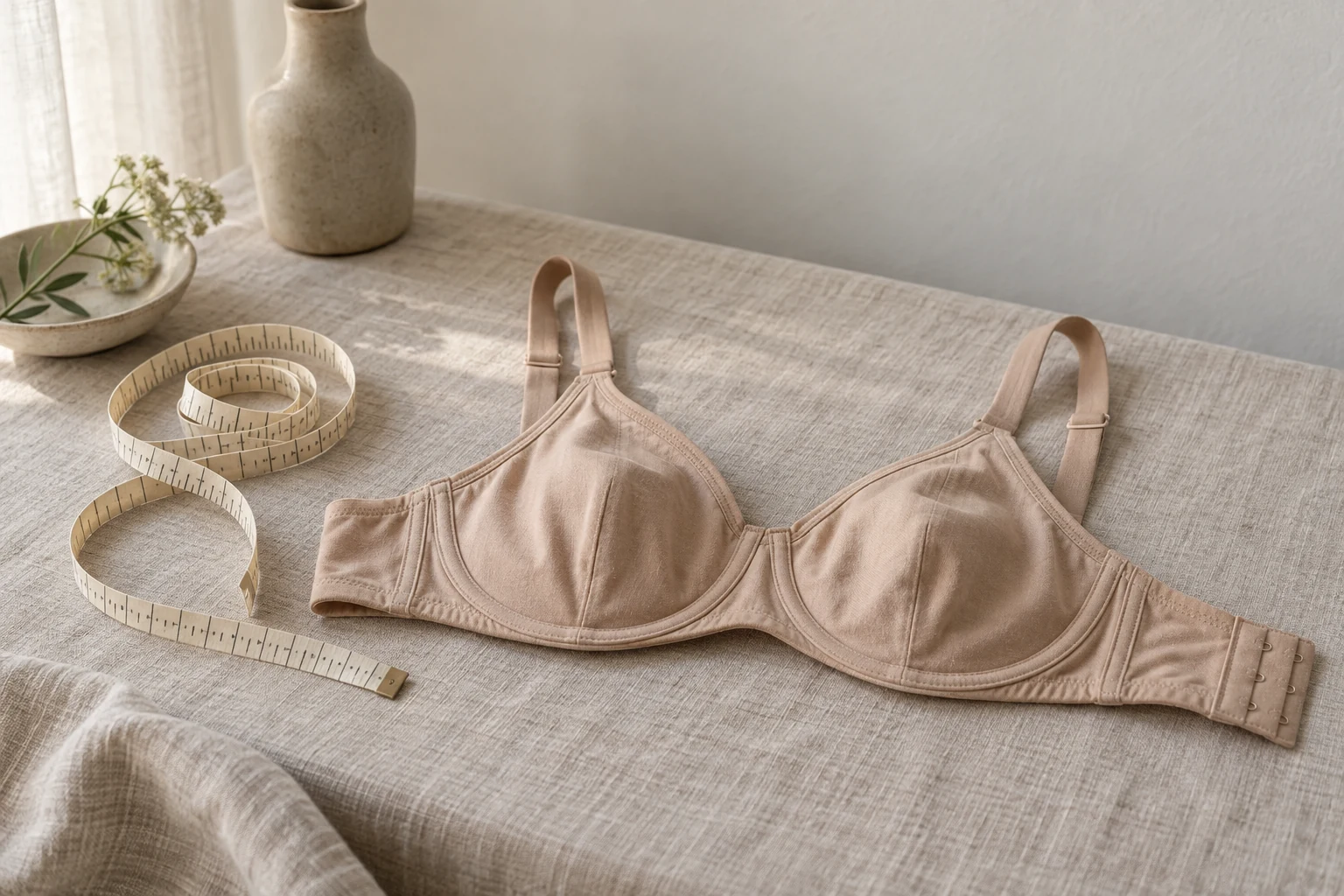
Sizing
How to measure bra size at home
Measure your band and bust with a soft tape, turn the numbers into a starting bra size, then use fit checks and sister sizes to find the one that really fits.
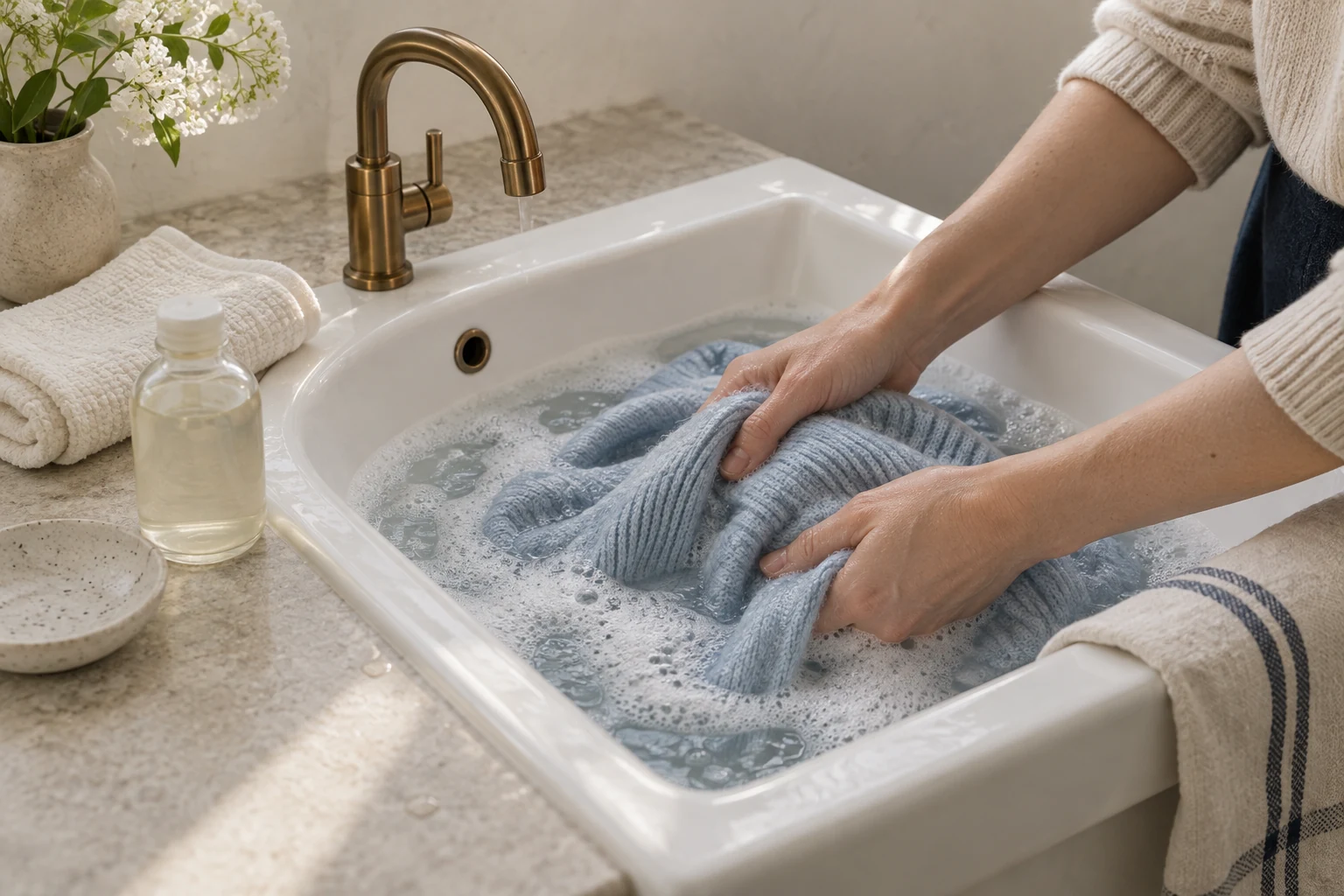
Washing and ironing
How to hand wash clothes properly
How to hand wash clothes in a sink or basin: which detergent to use, water temperature by fabric, how long to soak, how to rinse and how to dry without stretching.
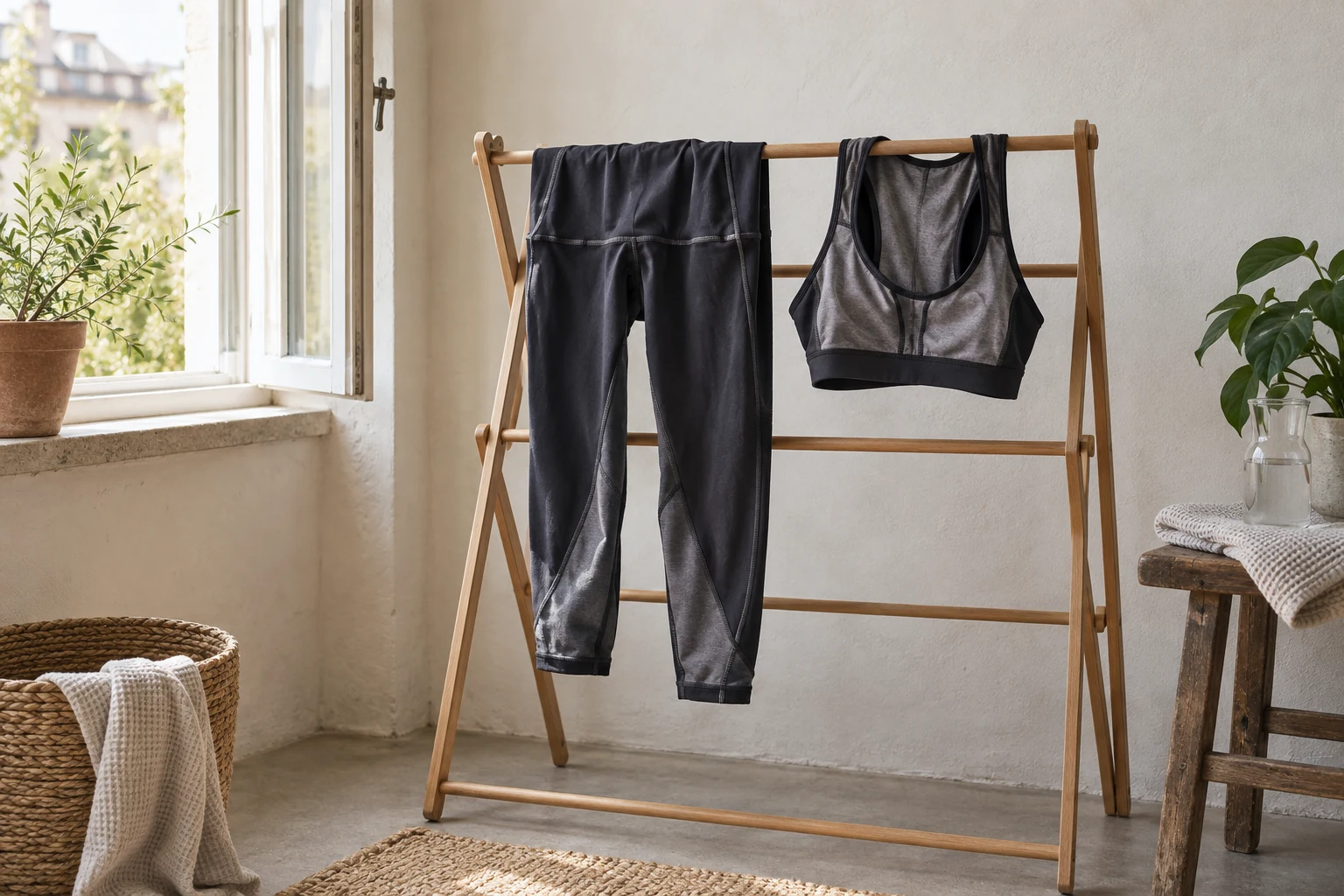
Washing and ironing
How to wash workout clothes and remove odor
How to wash workout clothes so the smell actually leaves: what to do right after training, water temperature, detergent, soaking, drying and when to deep clean.
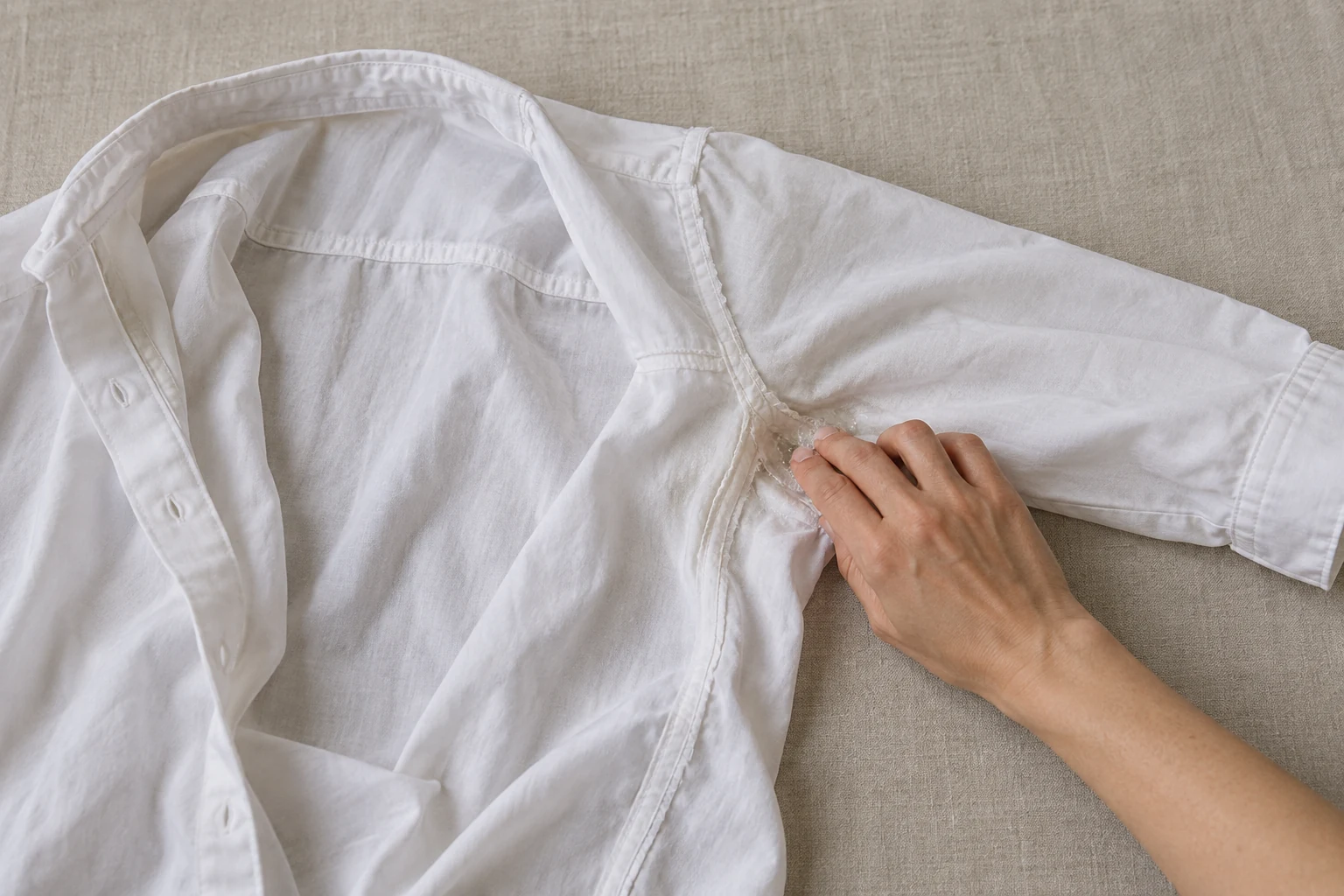
Stain removal
How to remove deodorant and sweat stains
Remove deodorant stains from black shirts, lift yellow sweat stains from white clothes, and prevent armpit stains from building up in the first place.
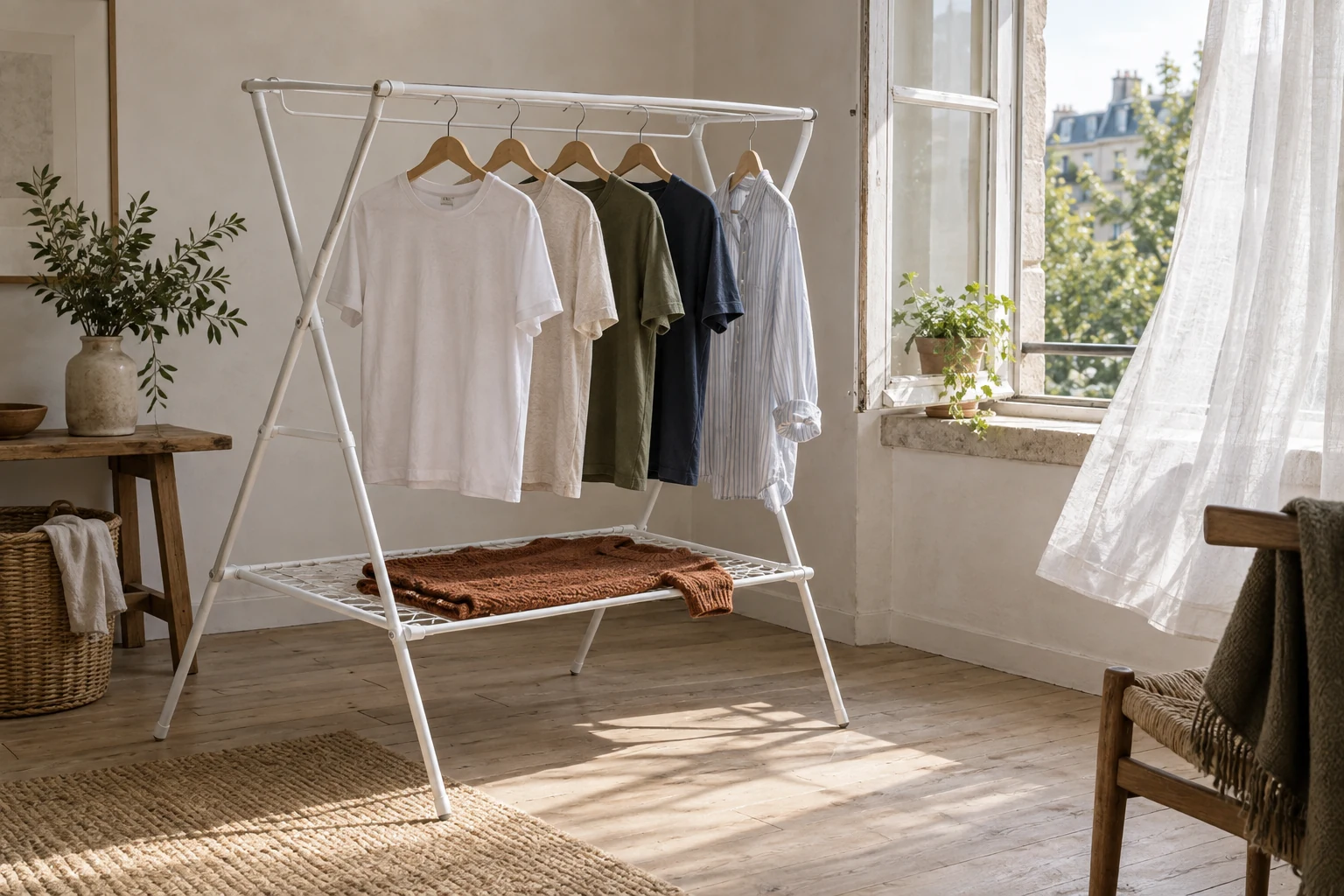
Washing and ironing
How to air dry clothes indoors and out
How to air dry clothes indoors or outside: spin well, hang each piece the right way, keep air moving, avoid stiffness and musty smells, and dry clothes faster.