How to fix dye transfer: color run remover and other fixes
In this guide
One new red sock is usually enough. Every white T shirt in the load comes out faintly pink, or a pale blue shirt shows gray blotches where it wrapped around new jeans. Dye transfer happens when a garment releases loose dye into the wash water and other fabrics absorb it. It feels like a disaster, but it is one of the more fixable laundry accidents, as long as you move before the dryer does the damage. A color run remover is the strongest tool, and often you will not need it.
The order matters. Start with the gentlest treatment that can work, check the result while the clothes are still wet, and only move to stronger chemistry if the tint stays. Whites can take more of that chemistry than colored clothes can, and even a stain that has been through the dryer is often worth one more attempt.
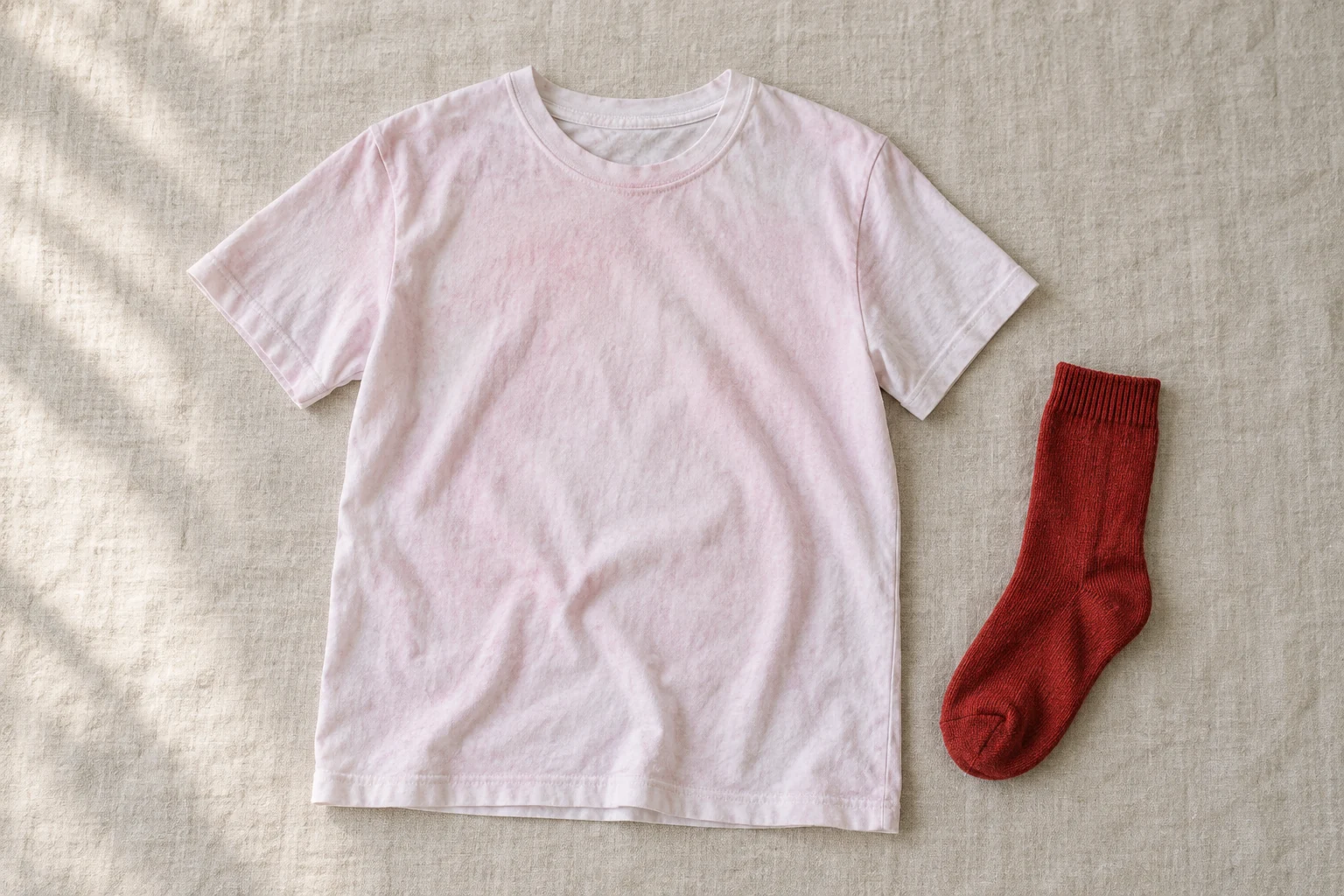
First, keep the clothes wet and out of the dryer
Take the affected clothes out as soon as you notice, pull out the garment that bled and set it aside. Do not put anything in the dryer. Heat helps transferred dye bond to fibers, and a pink tint that would have washed out while wet can become much harder to shift after one hot drying cycle. If you cannot treat the load immediately, leave the clothes damp in a basin rather than letting them dry on a rack.
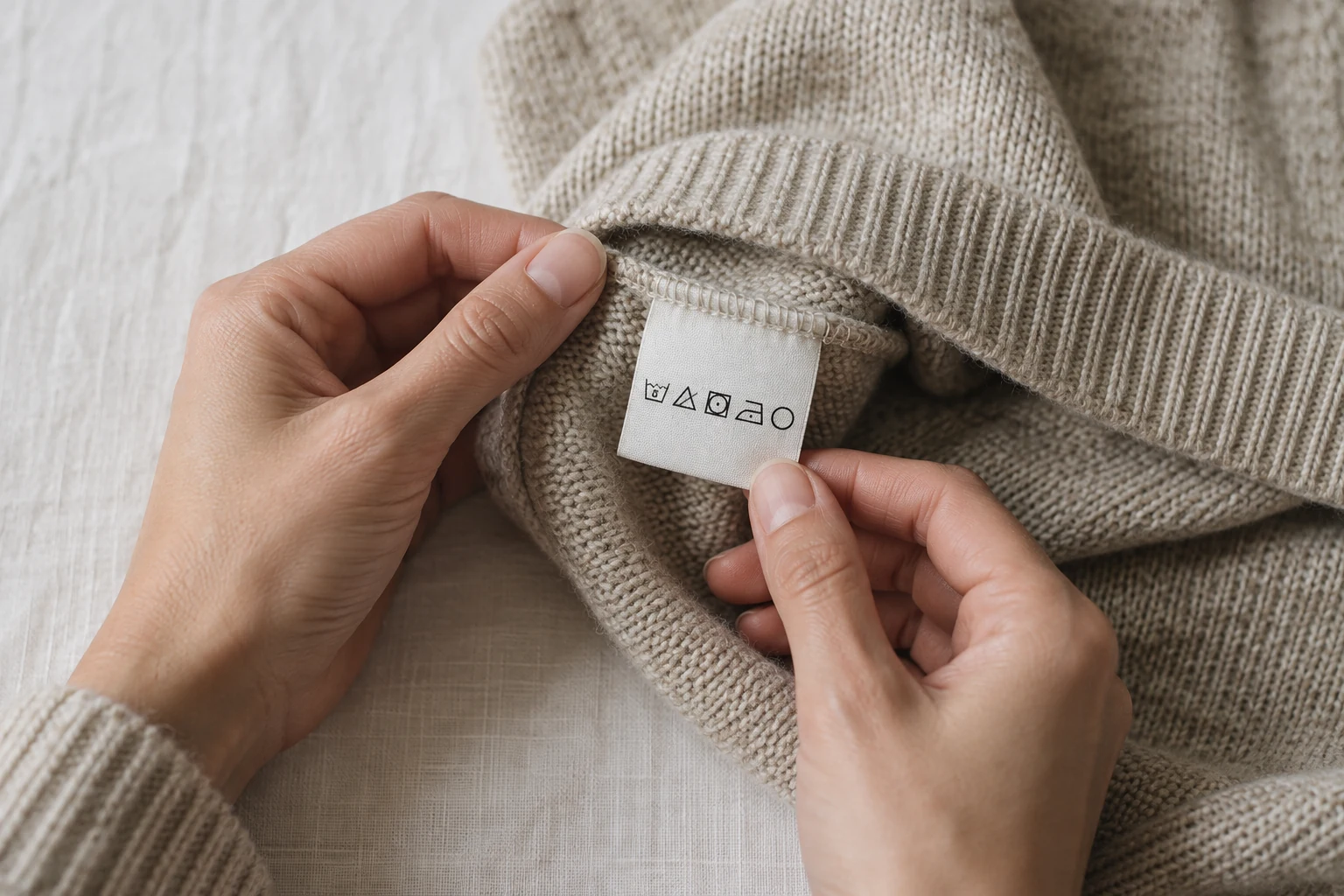
Then read the care labels, because they decide what you are allowed to use. The two questions are whether the fabric can take bleach at all (the triangle symbol) and what water temperature it tolerates. Our guide to laundry symbols explains both. Wool, silk, leather trim and anything labeled dry clean only belong with a professional cleaner; tell them what happened and what bled, because that changes how they treat it.
Rewash, then soak in oxygen bleach
Loose dye that has only just settled on fabric often lifts with a second wash. Run the stained items again, without the garment that bled, in cool or lukewarm water with a full dose of a good detergent. Check them while wet. Light transfer on sturdy cotton frequently disappears at this stage.
If a tint remains, the next step is an oxygen bleach soak. Oxygen bleach powders are sodium percarbonate, which releases hydrogen peroxide in water and lifts many dyes without stripping colorfast fabrics the way chlorine bleach would. Dissolve the powder in warm water at the strength on the package, submerge the clothes fully and leave them for at least a few hours; overnight is common for stubborn pink or blue. Then wash as usual. Test a hidden seam on colored clothes first, and keep oxygen bleach away from wool, silk and leather. Our guide to oxygen bleach has the details.
Detergent makers describe a similar approach with their own bleach alternative products: a short soak in warm water, straight into the wash without rinsing, then the warmest temperature the care label allows. Whichever product you use, look at the clothes before drying. If the transfer is lighter but still visible, a second soak is reasonable before you escalate.
When to use a color run remover
A color run remover is a laundry product made specifically for dye transfer. Rather than oxidizing stains the way bleach does, most of these products use a reducing agent that breaks down dye so it can be rinsed away. So they can work on transfer that oxygen bleach could not move, and also why they need care: the product cannot tell the unwanted dye from the garment's own color. On whites that is not a problem. On colored clothes it can fade or change the original color if the dye is not stable.
Before using one on colored clothes, follow the maker's colorfastness test: apply a little dissolved product to a hidden area such as an inside seam, wait the time given on the package (one widely sold remover says five minutes), rinse and compare. If the garment's own color changes, stop. Read the list of excluded fabrics too. One major brand, for example, warns against using its remover on garments that bled onto themselves and lists silk, denim, khaki, synthetics, leather and anything not colorfast among its exclusions.
Directions vary by brand, but the usual pattern is to dissolve the product fully in hot water, then either soak the item briefly by hand or run it through a full machine cycle without detergent, and rinse well. Use hot water only if the fabric tolerates it. Wear gloves, ventilate the room, do not combine the remover with bleach or other stain products, and rinse thoroughly before trying anything else.
| Fix | White clothes | Colored clothes |
|---|---|---|
| Rewash in cool water with detergent | Yes, first | Yes, first |
| Oxygen bleach soak | Yes | Yes, after a hidden seam test |
| Color run remover | Safe on most whites that allow it | Only after the maker's colorfastness test |
| Chlorine bleach | Last resort, white cotton and linen only | Never |
Wool, silk, leather trim and dry clean only pieces go to a professional cleaner.
White clothes versus colored clothes
White clothes give you the most options. After rewashing and an oxygen bleach soak, a color run remover is safe on most white cottons and blends that allow it. Chlorine bleach is the final option for white cotton and linen whose labels permit it. Dilute it as the bottle directs, never apply it neat, and never mix it with vinegar, ammonia or other cleaners. Our guide on washing white clothes covers keeping whites bright afterward.
Colored clothes call for patience: stay with rewashing and oxygen bleach as long as they are making progress. Only use a color run remover after a hidden spot test, and avoid chlorine bleach entirely, since it removes the garment's own dye along with the transfer. Red dye transfer on colored clothes is the most common case and often the most persistent, because red dyes on cotton tend to bleed readily. Several oxygen bleach soaks, with a wash in between, frequently get there in the end.
The hardest case is a garment that bled onto itself, such as a navy and white striped shirt with blue in the white stripes or a printed dress with a halo around the pattern. Any product strong enough to lift the halo can also fade the print. Repeated cool washes with detergent, sometimes with a color catcher sheet in the drum, can gradually pull loose dye out; beyond that, a professional cleaner is the safer bet.
How to remove color transfer from clothes after drying
If the clothes have already been through the dryer, the dye is more firmly attached, but it is still worth trying. Go straight to a long oxygen bleach soak, overnight rather than a few hours, and repeat it once or twice if each soak lightens the tint. On whites, a color run remover is the next step and often succeeds where soaking stalls. Colored clothes that do not respond after a couple of rounds may have to be accepted as they are.
Be honest with yourself about value. A cheap undershirt is not worth several rounds of chemistry, while a favorite linen shirt or a child's school uniform may be. If you do give up on a slightly tinted garment, it is not lost: it can become a sleepwear piece, a layer under a sweater, or it can go to a donation or textile recycling point.
Prevent the next color run
Most dye transfer comes from a new, deeply colored garment washed with lighter things: red and black cotton, dark denim and some hand dyed or batik pieces are the usual culprits. Wash new dark or bright clothes on their own, or with similar colors, for the first few washes. A simple test is to dab a damp white cloth on an inside seam; if color comes off, the garment will bleed. Our guide on sorting laundry covers the rest.
Cool water, not overloading the drum and taking clothes out promptly after the cycle all reduce the risk. Color catcher sheets, which absorb loose dye in the wash water, are a reasonable insurance policy for mixed loads, though they do not make it safe to wash a new red towel with white shirts.
Common mistakes
Drying the load to see if it fades
Heat helps the dye bond. Always treat and check the clothes while wet, and only dry them once the tint is gone.
Using chlorine bleach on colored clothes
Chlorine bleach removes the garment's own color along with the transfer and can leave pale blotches. Keep it for white cotton and linen whose labels allow it.
Skipping the spot test
A color run remover can strip unstable dyes. Test an inside seam on every colored garment, even items from the same brand.
Stacking products without rinsing
Moving from bleach to a color remover or vinegar without rinsing can create harmful fumes or damage fibers. Rinse thoroughly between treatments.
Questions people ask
Does color run remover really work?
On fresh transfer onto white or colorfast fabric, it usually works well, and it often shifts tints that oxygen bleach cannot. It is less reliable on dye that has been heat set in the dryer, and it can fade clothes whose own dye is unstable. That is why the spot test matters.
Does vinegar remove dye transfer from clothes?
Vinegar is often suggested, but there is little good evidence that it removes dye that has already transferred, and it is not a reliable way to stop bleeding either. A vinegar soak will not hurt most colorfast clothes, but an oxygen bleach soak is a much better use of your time. Never mix vinegar with chlorine bleach.
Will an oxygen bleach like OxiClean remove color run?
Often, though not always. OxiClean itself says its standard powder is not designed for dye transfer, yet a long soak in warm water frequently lightens fresh transfer on whites and colorfast colors, and university stain guides list it as a first step. Several rounds may be needed for red or dark dye, and a color run remover is the next tool if soaking stalls. Check the label first, since oxygen bleach is not suitable for wool, silk or leather.
Can you reverse color run on a dry clean only garment?
Do not try at home. Take it to a professional cleaner quickly, tell them the fiber, what bled onto it and whether it was washed or dried, and let them decide on treatment. The sooner they see it, the better the odds.
Sources and further reading
References used for this guide. Each opens the original page in a new tab.
Keep reading
Washing and ironing
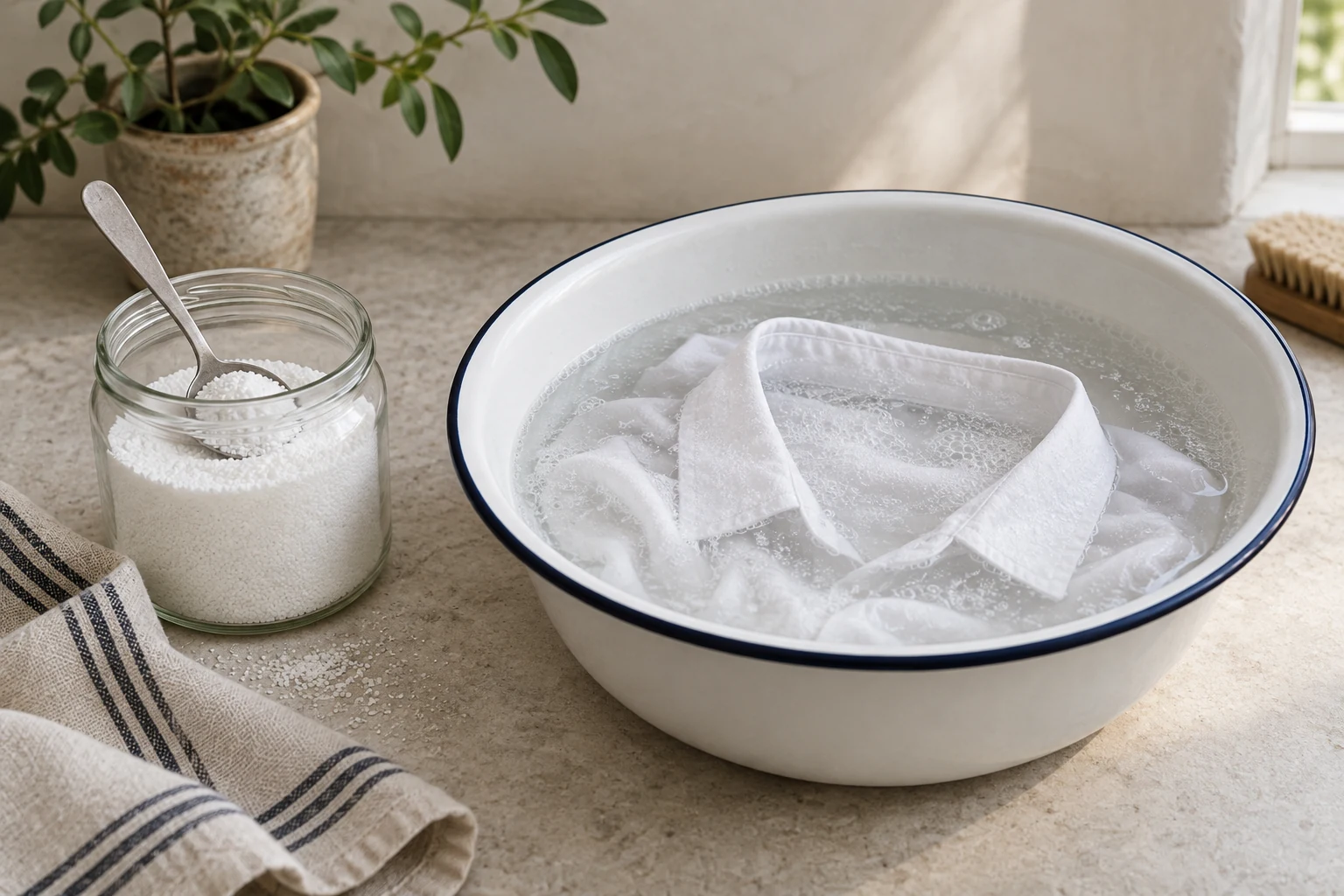
How to use oxygen bleach (sodium percarbonate) on clothes
What sodium percarbonate is, how oxygen bleach powder works, how to use it in the wash or as a soak on whites and colors, and the safety rules that matter.
Washing and ironing
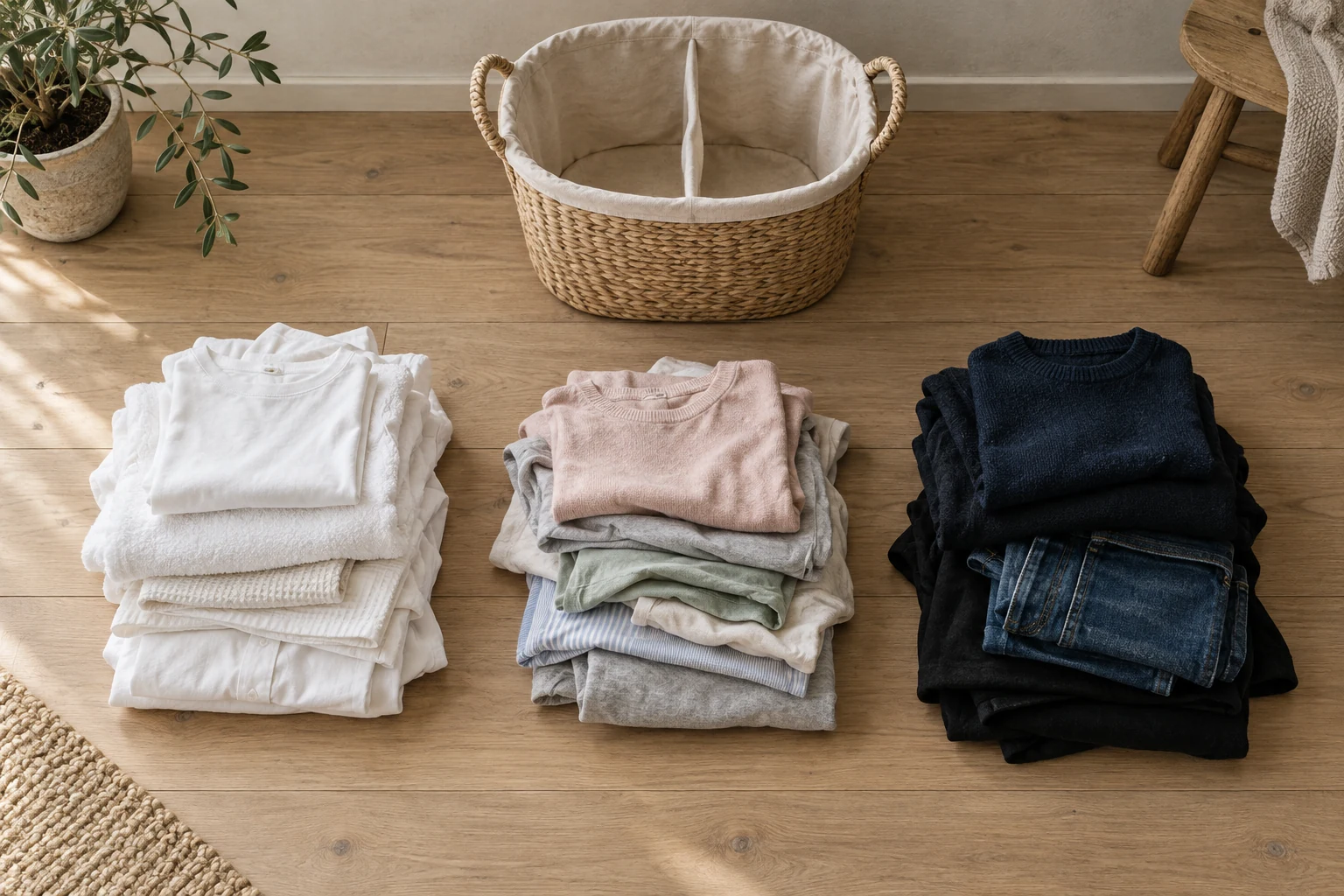
How to separate laundry by color, fabric and soil
How to separate laundry into whites, lights, darks and delicates, which colors can be washed together, what temperature to use and when sorting really matters.
Washing and ironing
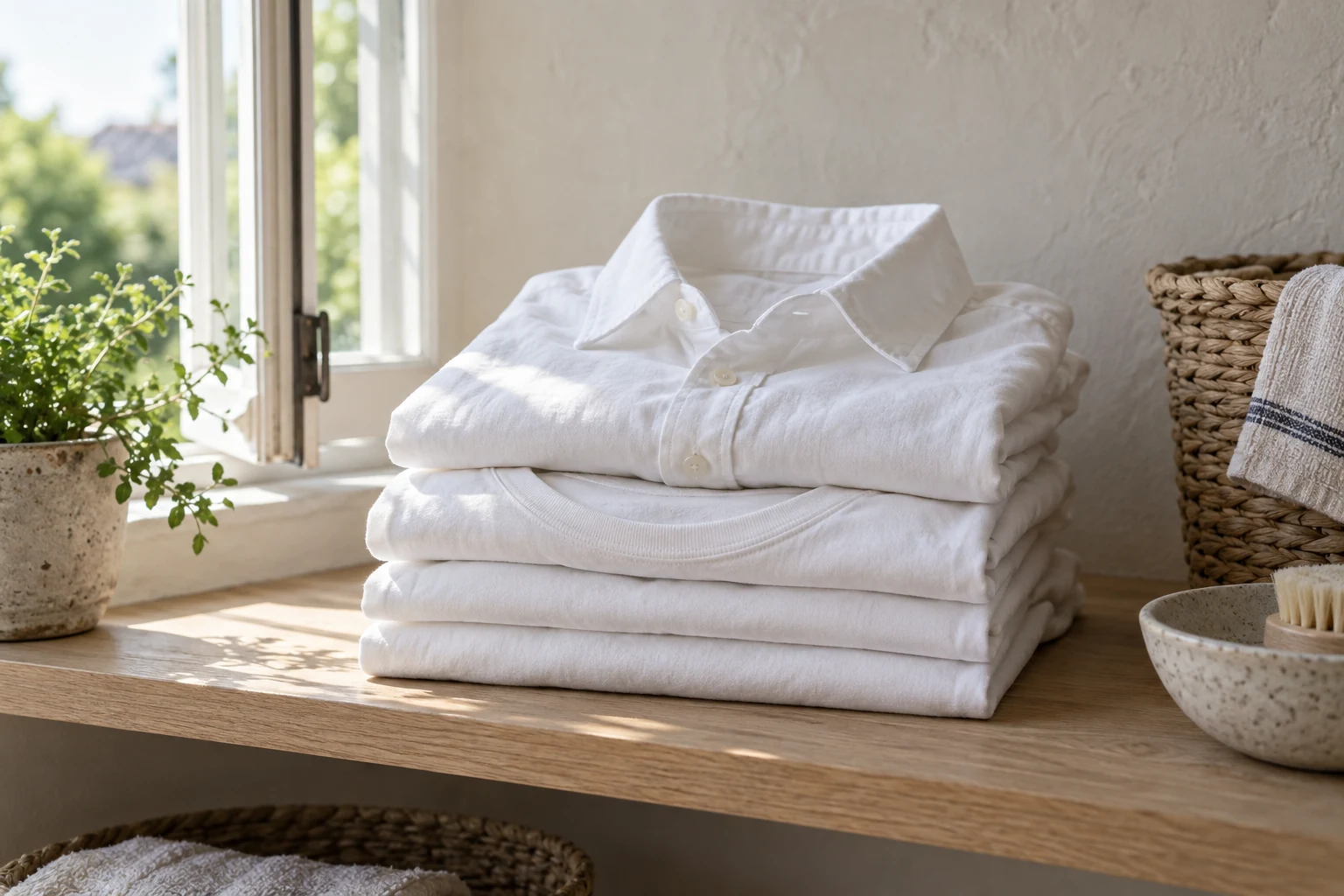
How to wash white clothes and keep them white
How to wash white clothes: sort them, pick the right water temperature and detergent dose, use oxygen or chlorine bleach safely, and rescue whites that yellowed.
Washing and ironing
Laundry symbols explained: how to read a care label
What laundry symbols mean, in plain words: the wash tub, triangle, square, iron and circle, plus the dots, bars and crosses that change each instruction.

Washing and ironing
How to do laundry: a complete beginner's guide
How to do laundry from start to finish: reading labels, sorting, choosing the cycle and water temperature, measuring detergent, loading the washer and drying.