Cocktail attire for men: what to wear
In this guide
The navy suit you wear to the office may be all you need. When an invitation says cocktail attire, most men start by asking whether that work suit is enough or whether the event calls for something new, and the answer is usually reassuring: cocktail attire for men is built around a suit you may already own. The details that make it right for the evening, the color, the fabric, the tie, the shoes, are what this guide is about, along with how to read the invitation, the time of day and the venue so the same suit looks deliberate rather than borrowed from the office.
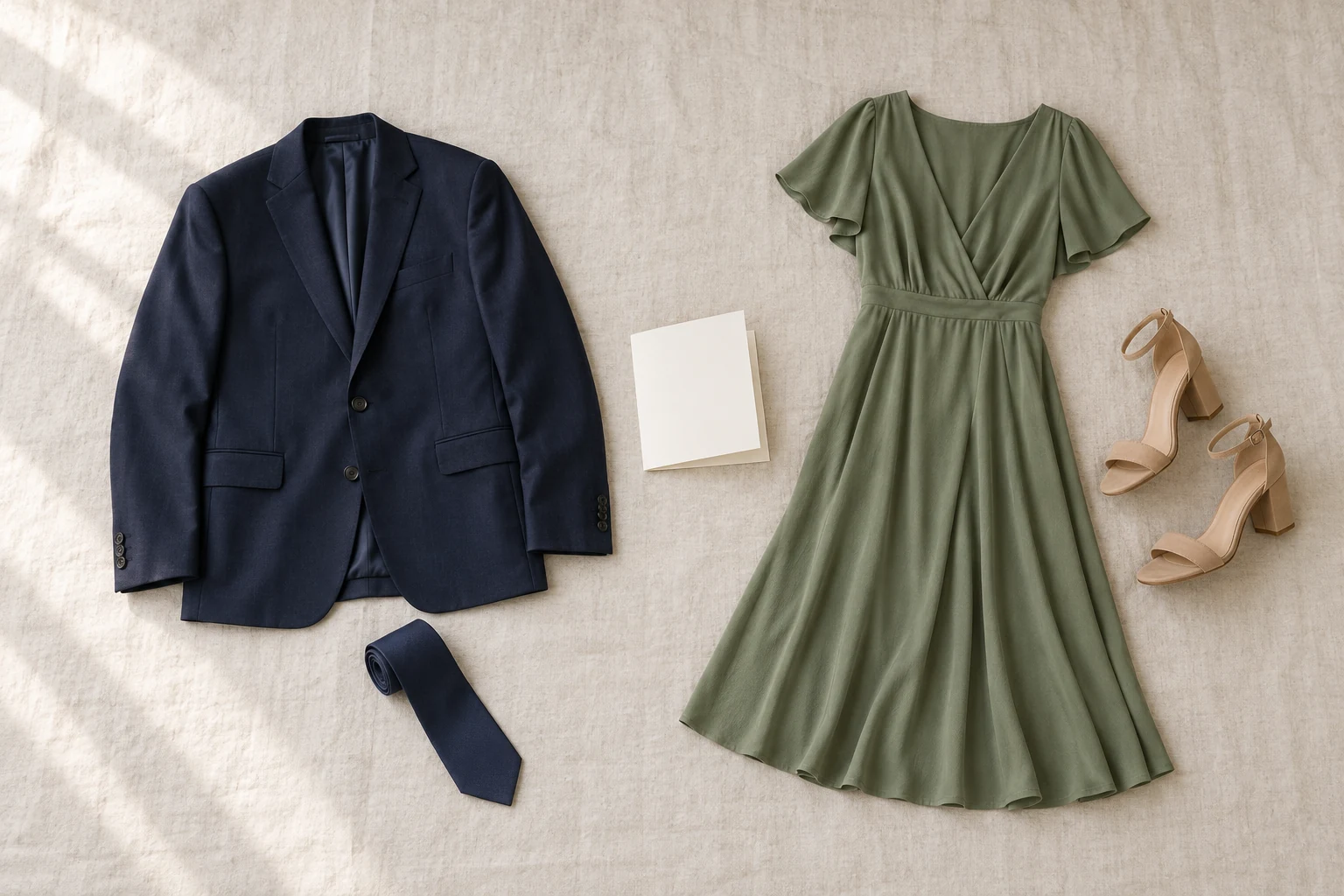
On the usual ladder of dress codes (casual, smart casual, business casual, dressy casual, cocktail or semi formal, black tie optional, black tie, white tie), cocktail sits in the middle: one step above dressy casual and one step below black tie optional. You are expected to look dressed up for a celebration, not ready for a board meeting and not in a tuxedo. If you are dressing alongside a partner, our guide to cocktail attire for women covers the same event from the other side of the closet.
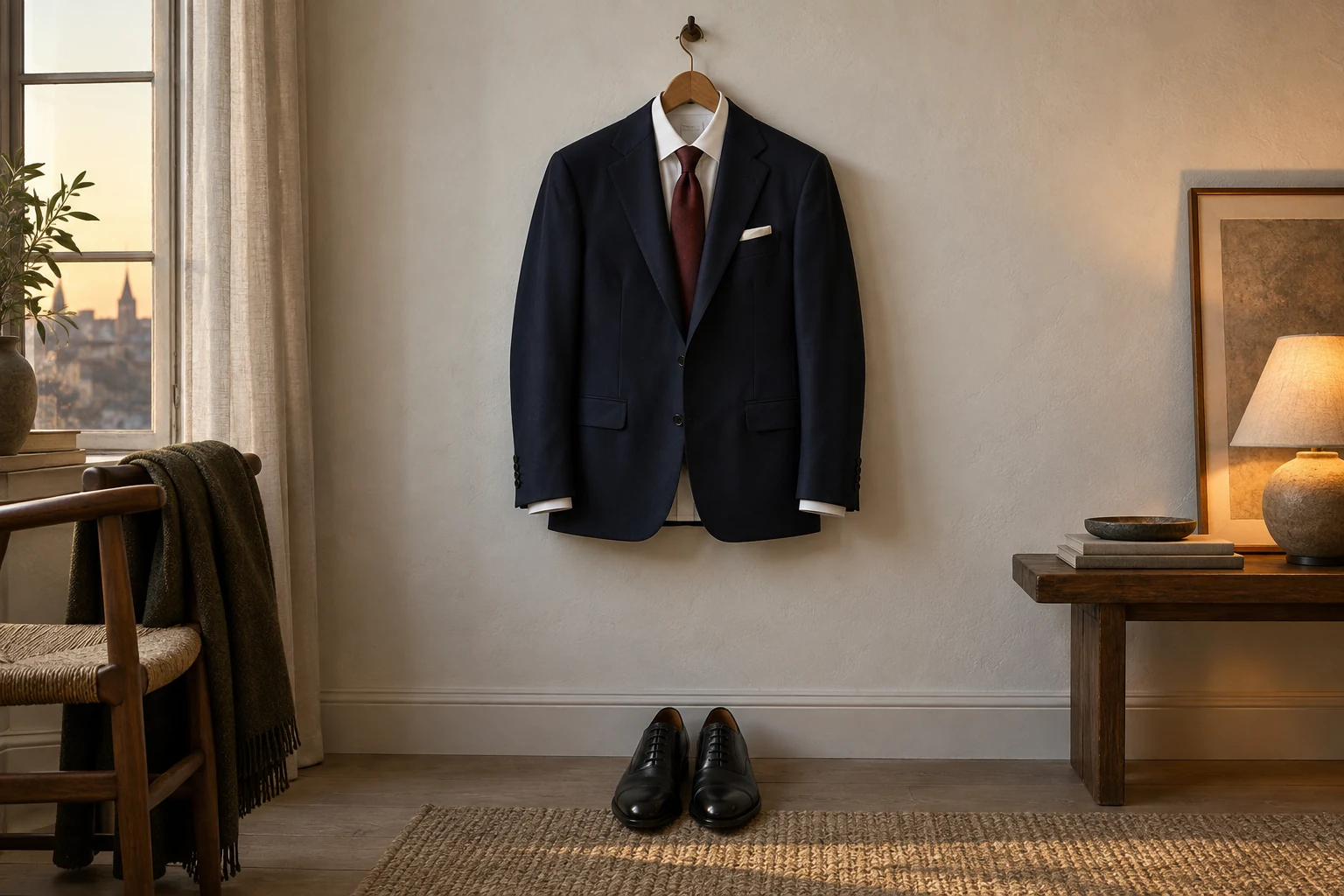
What cocktail attire means for men
The Emily Post Institute's attire guide has no separate cocktail entry. Cocktail dresses appear under its semi formal level, where men are asked for a dark suit, a dress shirt, a tie and leather dress shoes. Wedding planning guides such as Zola note that the two terms are often used interchangeably, while some place cocktail a small step above semi formal. Either way the outfit is the same: a matching suit that fits well, a pressed dress shirt, a tie, and polished leather shoes. The difference between a good and a mediocre cocktail outfit lies in fabric, color and fit rather than in any extra garment.
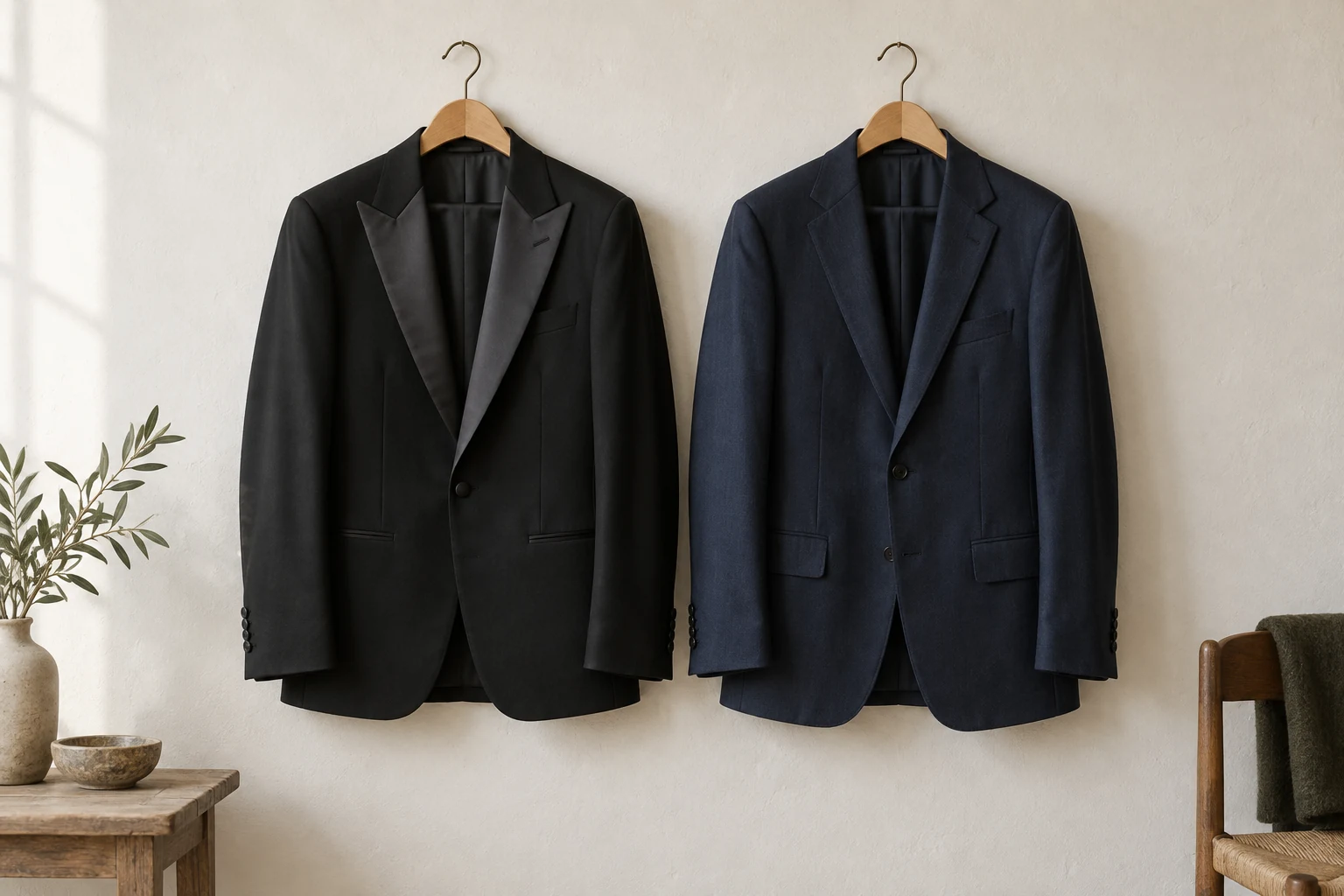
What cocktail attire does not ask for is a tuxedo. A dinner suit with satin lapels belongs to black tie, and wearing one to a cocktail event can make you look like part of the wedding party or the staff. If you are unsure where the line falls, our guide to the difference between a suit and a tuxedo explains the details that separate them. At the other end, a blazer with chinos, an open collar polo or jeans falls below the code unless the host has explicitly said the event is relaxed.
Read the invitation, the hour and the venue
Start with the time. The Emily Post Institute's advice is to lean more formal for events that begin after 6 pm, which in cocktail terms means a darker suit, a tie and black or dark brown shoes. A lunchtime or afternoon event gives you room for lighter grays, tan, light blue and softer ties. Then look at the venue. A hotel ballroom or a downtown restaurant calls for the classic dark suit; a vineyard, a garden or a beach in daylight suits a lighter color and a more open fabric.
Read the wording closely, since hosts often add a word that shifts the code. Casual cocktail usually means a tie is optional and a blazer with dress trousers may be enough. Festive cocktail invites a bit of color or pattern, such as a velvet jacket at a winter party or a bolder tie. Cocktail chic suggests the host cares about style and expects something a little more fashion aware than a business suit. If you are still unsure, check the event website or ask the host directly; a short question now is easier than guessing on the night.
| Invitation or setting | Suit | Tie and shoes |
|---|---|---|
| Cocktail, after 6 pm | Navy, charcoal or midnight navy | Tie, black or dark brown shoes |
| Cocktail, daytime or garden | Light gray, tan or light blue | Softer tie, brown shoes or suede loafers |
| Casual cocktail | Suit, or blazer with dress trousers | Tie optional, polished leather shoes |
| Festive cocktail | Dark suit or a velvet jacket in winter | Bolder tie or pocket square |
| Cocktail chic | Well cut dark suit | Tie, or a fine merino turtleneck |
Choose the suit
Navy and charcoal are the two most useful cocktail suits, and Zola's guide recommends them as the base. Navy looks festive in the evening with a white shirt and a rich tie, and it lightens easily for daytime with brown shoes. Charcoal is slightly more formal and suits winter. A black suit is acceptable at an evening event, but it can look severe and it sits close to the tuxedo; many men find midnight navy more flattering in low light. For daytime and summer events, mid gray, light gray, tan and light blue suits all work.
Fabric follows the season. Worsted wool in a medium weight works most of the year; tropical wool, linen blends and cotton suit hot outdoor events, though pure linen creases heavily and reads more relaxed. Flannel and heavier twills suit winter evenings. Fit matters more than price: shoulders that end where yours do, a jacket that closes without pulling, sleeves that let a little shirt cuff show and trousers hemmed cleanly. Our guide on how a suit should fit covers each point, and a tailor can fix most of them if you leave enough time before the event.
Shirt, tie and the tie optional question
A crisp white shirt is the most formal and the most versatile, and light blue works for daytime events. Choose a point or spread collar that sits neatly under the jacket lapels, and have the shirt pressed. For the tie, a silk tie in a deep solid, a small pattern or a subtle stripe looks right almost everywhere; a bow tie is equally correct and slightly more festive. A pocket square in linen or silk that does not match the tie exactly finishes the jacket.
Should you wear a tie at all? Zola's advice is to wear one, since you can always take it off if the room turns out to be relaxed, and it is the safer default when the invitation simply says cocktail attire. If the invitation says casual cocktail or the host tells you ties are optional, an open collar is fine. Make it look intentional: a shirt with a collar stiff enough to stand under the lapels, only the top button undone, and the jacket kept on at least through the ceremony or the first part of the evening. At a cocktail chic or fashion aware party, a fine merino turtleneck or a knitted polo under a dark suit is a modern alternative to the shirt and tie; it reads as dressed, but keep it for evenings where the host has signaled some freedom rather than a traditional wedding.
Shoes, belt and small details
Leather dress shoes complete the outfit. Black oxfords are the most formal choice and suit charcoal or navy in the evening. Dark brown oxfords, derbies and polished loafers suit navy, gray and lighter suits, especially in daylight, and suede loafers are fine at summer and outdoor events. Zola's guide trades sneakers for dress shoes and makes an exception only for pristine fashion pairs, which still look out of place at most weddings. Match your belt to your shoes, or skip the belt with trousers that have side adjusters or braces.
Socks should be dark and long enough that no skin shows when you sit, usually in the color of your trousers; a subtle pattern is fine at a festive event. Keep the watch simple and any other jewelry modest. If you are unsure how the belt, shoes and socks should relate, the principles in matching belt, shoes and socks apply directly here. Before you leave, polish the shoes; scuffed toes show under restaurant and reception lighting more than you would expect.
Cocktail attire for a wedding
Cocktail attire appears on a great many wedding invitations, and the suit guidance above applies directly. A few wedding specific points help. A religious ceremony may call for a more conservative tie and a jacket kept on throughout. An outdoor ceremony on grass or sand favors loafers or derbies over thin leather soles that slip. In hot weather, follow the lead of the couple or the host before removing your jacket at the reception. And unless you are part of the wedding party, avoid dressing in a way that could be mistaken for it, such as a matching tie in the wedding colors.
Know the neighboring codes too. Semi formal on a wedding invitation usually means the same outfit, sometimes with more tolerance for lighter suits in daytime; our guide to semi formal attire compares the two. If the invitation says black tie optional, a tuxedo is welcome and a dark suit with a tie is the accepted alternative, which is explained in our guide to black tie optional. For the whole picture of guest etiquette, from the ceremony to the reception, see what to wear to a wedding.
Common mistakes
Wearing a tuxedo to a cocktail event
A tuxedo signals black tie. At a cocktail event it looks overdressed and can be mistaken for staff or the wedding party. Wear your darkest, best fitting suit instead.
Bringing a tired work suit
A suit with shiny seat and elbows, loose threads or a creased jacket looks worse at night under warm light than it does in the office. Have it pressed or dry cleaned, and replace buttons or hems that have come loose.
Reading tie optional as dress down
Tie optional removes the tie, not the rest of the outfit. Keep the suit, the pressed shirt and the leather shoes, and make sure the collar stands neatly on its own.
Questions people ask
Can men wear a blazer and trousers to cocktail attire?
At a relaxed or daytime event, a well tailored blazer with dress trousers in a different color is often accepted, and some wedding guides list it as an option. For an evening event or when the invitation says cocktail without qualification, a matching suit is the safer choice. If you choose separates, keep the shirt, tie and shoes as dressy as you would with a suit.
Can I wear a black suit to a cocktail party?
Yes, particularly in the evening. A black suit is dressy and correct, though it can look stark in daylight and sits close to a tuxedo. Navy or charcoal are more versatile if you are buying one suit for many events.
What is not acceptable for cocktail attire?
Jeans, chinos worn without a jacket, polo shirts on their own, sneakers, sandals and anything athletic all fall below the code, even in expensive versions. A tuxedo falls above it. Dark denim is acceptable only when the host explicitly invites it, which some informal cocktail parties do; take them at their word only when they say so.
What is casual cocktail attire for men?
Casual cocktail usually means a suit or a blazer with dress trousers, a pressed shirt with the tie optional, and leather shoes or loafers. It is a signal that you can drop the tie and choose lighter colors, not that you can drop the jacket. For looser codes, see our guide to dressy casual.
Sources and further reading
References used for this guide. Each opens the original page in a new tab.
- Emily Post Institute: Attire guide from casual to white tie Opens in a new tab
- Zola: Cocktail attire for men, a dress code guide Opens in a new tab
- Zola: Cocktail wedding attire guide Opens in a new tab
- Zola: Wedding guest attire for every dress code Opens in a new tab
- Emily Post Institute: Wedding guest attire Opens in a new tab
Keep reading
Dress codes
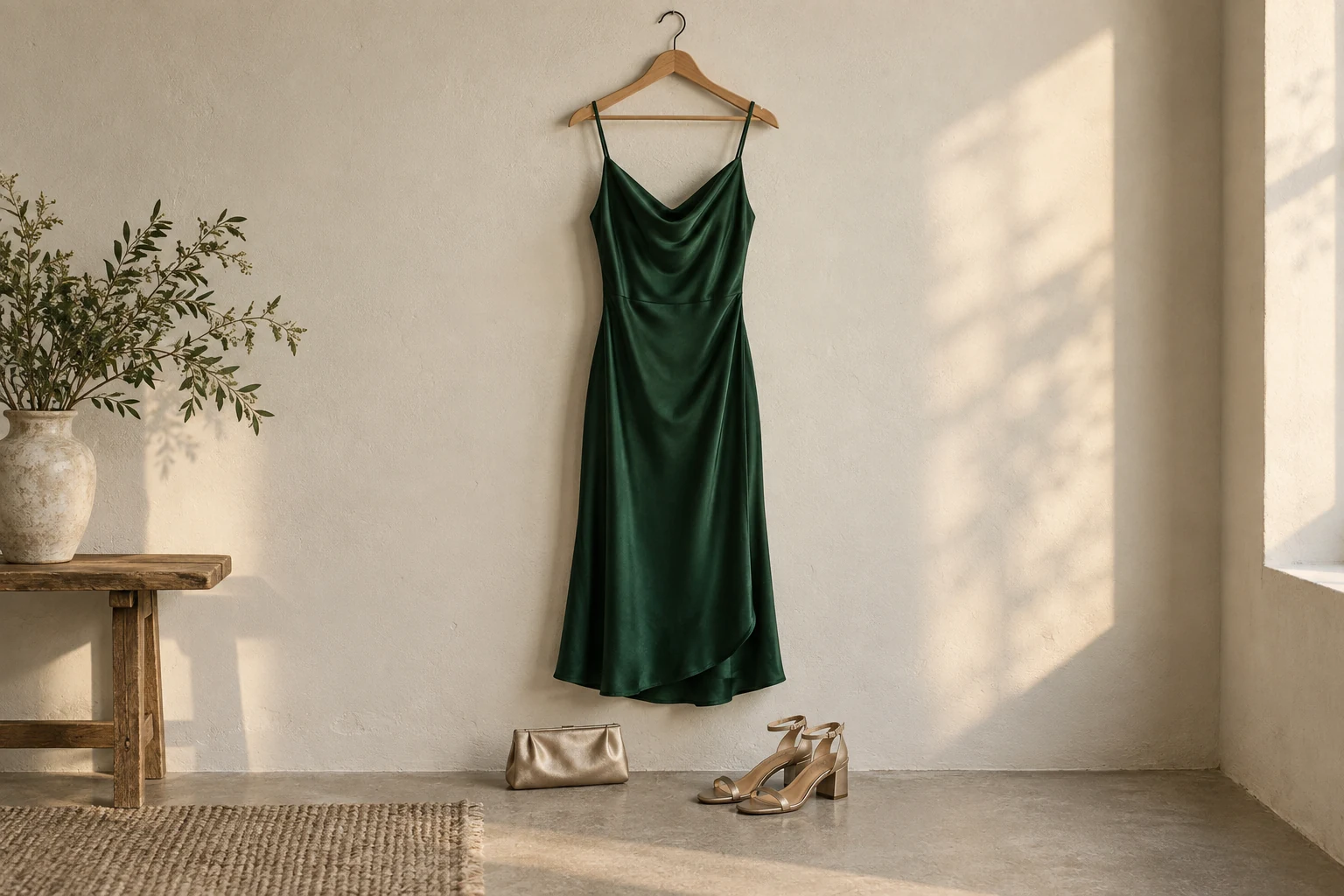
Cocktail attire for women: what to wear
What cocktail attire means for women: dress lengths, fabrics, jumpsuits and tailored sets, shoes and bags, and how the invitation, venue and season change it.
Dress codes
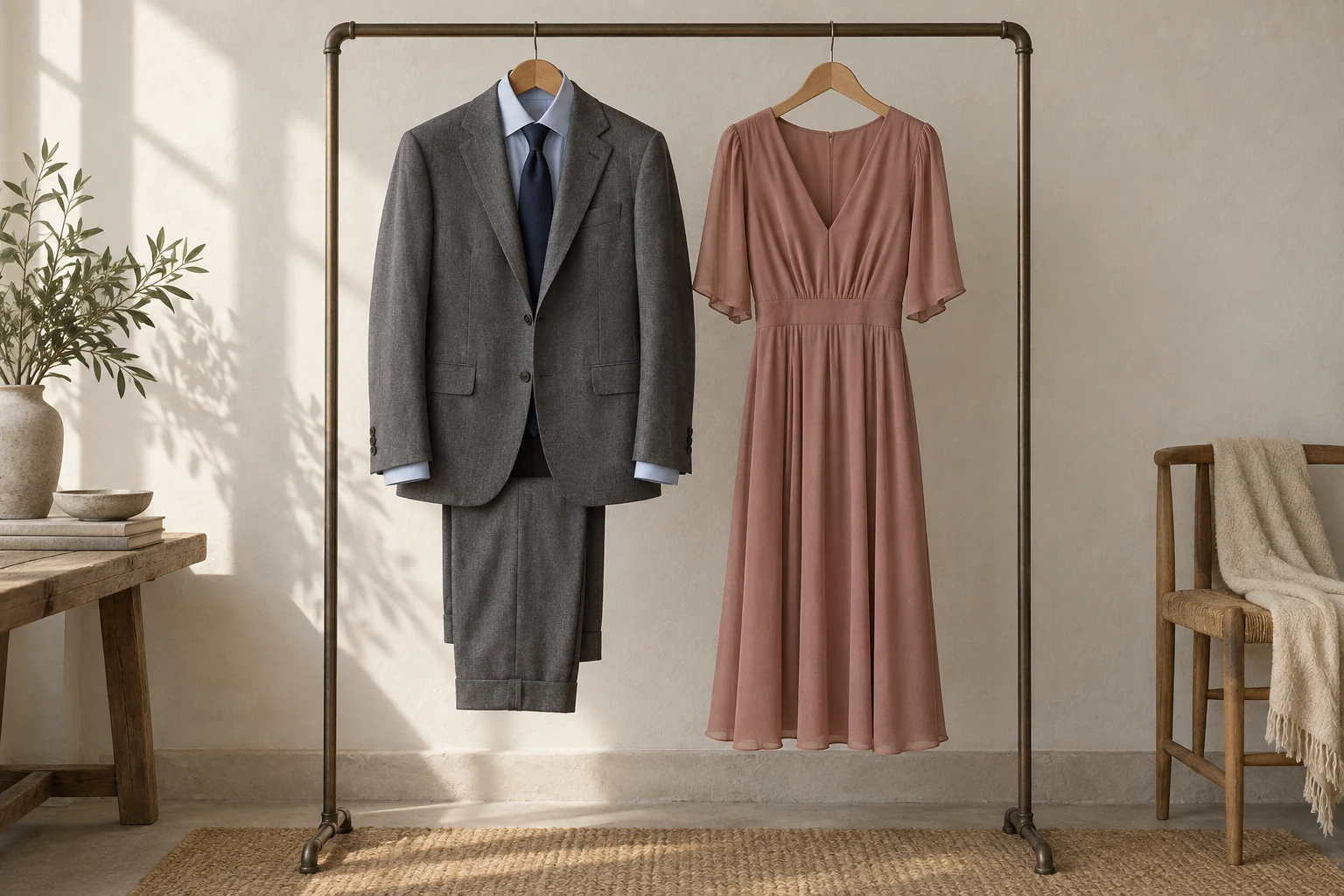
Semi formal attire for men and women
What semi formal attire means for men and women, how daytime and evening change it, and what to wear to a semi formal wedding, party or dance, with outfit ideas.
Dress codes
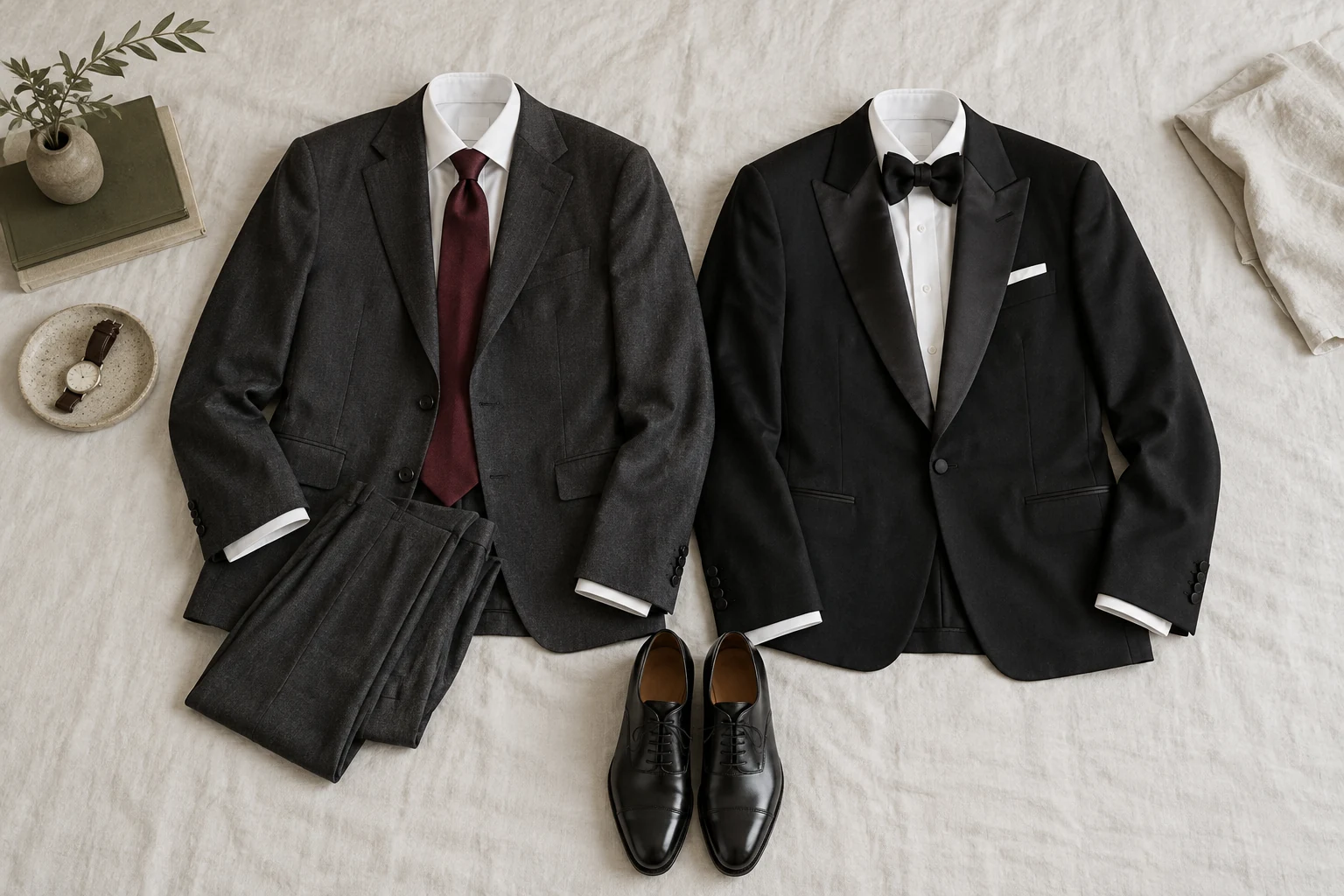
Black tie optional: what it means and what to wear
What black tie optional means for men and women: tuxedo or dark suit, gown or elegant cocktail dress, plus how to choose, dress for the season and avoid mistakes.
Suits and tailoring
Suit vs tuxedo: how to tell them apart and which to wear
Suit vs tuxedo explained: the satin lapels, trouser stripe and bow tie that set a tuxedo apart, and which one a wedding, prom or black tie invitation asks for.
Dress codes
Wedding guest attire: every dress code decoded
Wedding guest attire explained from black tie to casual, with what men and women can wear for each dress code, plus color, venue and religious considerations.