Types of sweaters and how to wear them
In this guide
Sweater labels pile up words: crew neck, quarter zip, shawl collar, cable, fisherman, Fair Isle, merino, lambswool, cashmere. Each is real, but together they make it hard to tell what you actually need. The types of sweaters become clear once you see that every sweater combines a few independent choices: how it opens, its neckline, how it is knitted and what it is made of.
This guide walks through those choices one at a time, with how to wear each type for men and women, which sweaters count as formal, and how to care for them. For the record, sweater and pullover are the usual North American words; in Britain the same garment is a jumper, and in parts of the Commonwealth a jersey.
Pullovers, cardigans, zips and vests
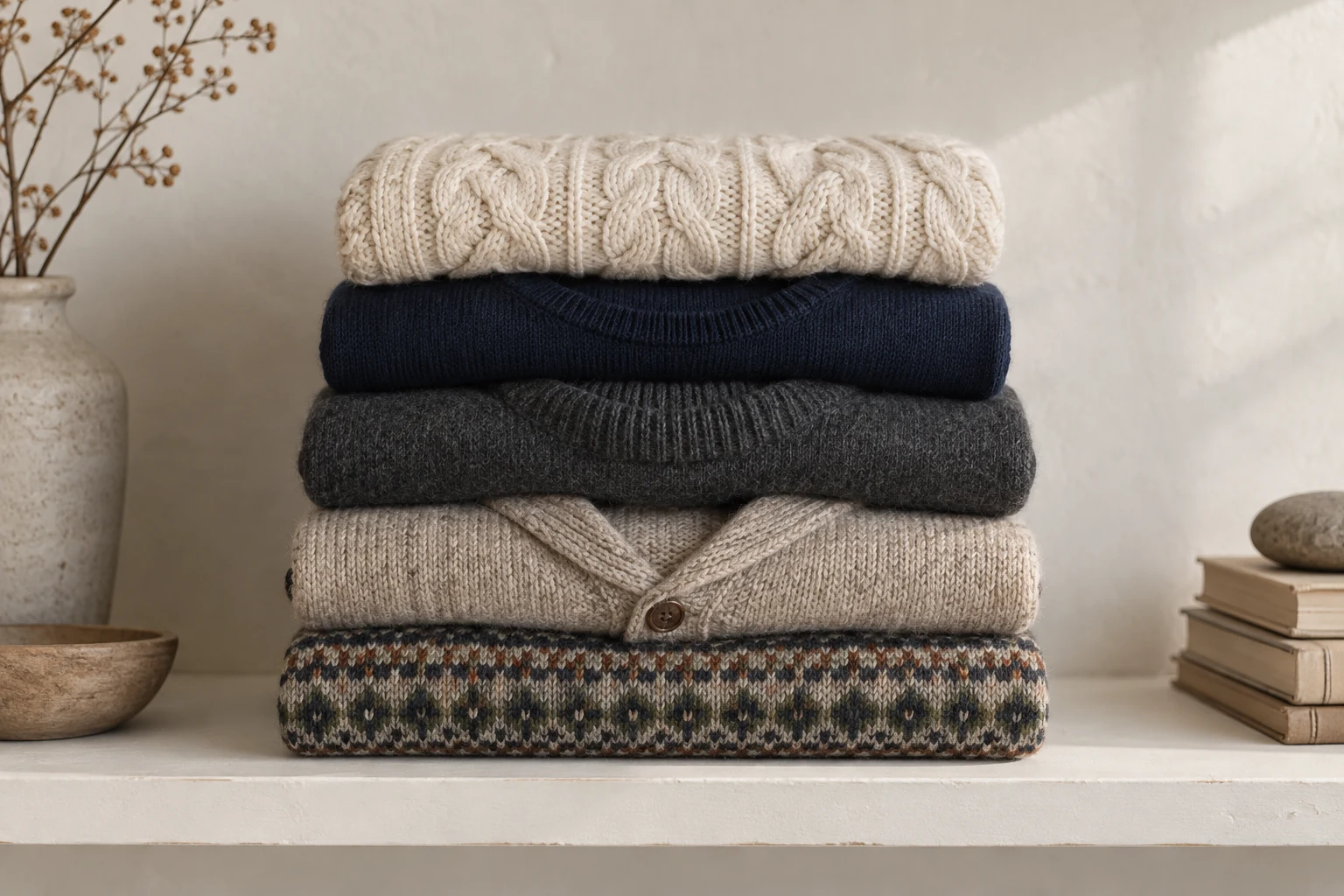
A pullover has no opening and goes on over the head. It is the default sweater: warm, simple, and easy to layer over a shirt or under a coat. A cardigan opens down the front with buttons or a zip, which makes it more adjustable through the day and more like a soft jacket. Men's cardigans work in place of a blazer with chinos and an oxford shirt, or over a T shirt with jeans; women's range from fine, fitted cardigans worn buttoned as a top to long, loose ones worn open like a coat. A twinset, a short sleeve or sleeveless knit top with a matching cardigan, is a classic women's version that has come back in finer, simpler forms.
A quarter zip or half zip pullover has a short zip at the neck, originally sportswear and now a staple of casual office and weekend dressing; it looks best over a collared shirt or a plain T shirt, and less good over a tie. Full zip sweaters sit between a cardigan and a light jacket. A sweater vest, sleeveless and often V necked, adds warmth and texture over a shirt without bulk at the arms, and suits preppy and vintage looks for men and women alike.
Sweater necklines: crew, V, turtleneck and more
The crew neck, a round neckline sitting close to the base of the neck, is the most versatile and casual of the classic shapes. Worn over a T shirt or with a shirt collar showing, it works with nearly everything. The V neck is slightly dressier and frames a shirt and tie or a necklace; it pairs naturally with tailoring. The turtleneck, also called a roll neck or polo neck in Britain, has a tall folded collar; it is warm and looks sharp under a blazer or coat. A mock neck is a shorter, unfolded version, easier for people who find a full turtleneck confining.
A shawl collar has a wide, rolled collar that continues down into a V or a cardigan front; chunky shawl collar cardigans are cozy outerwear on their own. Boat necks run wide and shallow from shoulder to shoulder, a flattering choice in fine women's knits. Cowl necks drape in soft folds and are mostly seen in women's sweaters. Collared or polo sweaters have a knitted shirt collar and sometimes a few buttons, a neat halfway point between a sweater and a polo shirt. Our guide to types of necklines covers how each shape sits on the body.
| Neckline | Character | Wear it with |
|---|---|---|
| Crew neck | Most versatile and casual | A T shirt or a shirt collar showing |
| V neck | Slightly dressier | A shirt and tie, a necklace, tailoring |
| Turtleneck | Warm and sharp | Under a blazer or coat |
| Mock neck | Shorter, less confining | Anywhere a turtleneck feels too much |
| Shawl collar | Wide rolled collar, cozy | Chunky cardigans worn as outerwear |
| Boat neck | Wide and shallow | Fine women's knits |
Knits and patterns: cable, Aran, Fair Isle and more
Gauge is the number of stitches per inch. Fine gauge sweaters are thin, smooth and close to the body, ideal under jackets and for business casual outfits. Chunky, low gauge knits are thick and textured and act almost as outerwear. Ribbed knits, with vertical lines of alternating stitches, stretch and cling a little more. Cable knits have twisted columns of stitches that add texture and warmth.
Several traditional sweaters have their own names. The Aran sweater, from the islands off the west coast of Ireland, is a cream colored cable and texture knit that dates from the late nineteenth and early twentieth century, despite legends of ancient family patterns. The gansey or guernsey is an older, tightly knitted fisherman's sweater from the Channel Islands and British coast, usually navy. Fair Isle sweaters, from the Shetland Islands, use bands of small patterns in several colors, knitted with two colors per row, and became fashionable after the Prince of Wales wore them in the early 1920s. Nordic or Icelandic sweaters have yoke patterns around the shoulders. Argyle, a pattern of diamonds, is associated with golf and preppy dress. Any of these makes one strong statement, so wear it with plain pieces.
Types of sweater material
Wool is the classic sweater fiber: warm even when a little damp, breathable and naturally odor resistant. Lambswool is soft and slightly fuzzy and a good value everyday choice. Merino is finer and smoother, so it itches less and makes the best thin sweaters for layering. Shetland wool is rougher and hardy, with a rustic, brushed look. Cashmere is the softest and warmest for its weight, but it is delicate and pills more. Alpaca and mohair are light, warm and often hairy, giving a halo effect.
Cotton sweaters are comfortable in spring and fall and in warm climates but stretch, dry slowly and are less warm when wet. Acrylic and polyester sweaters are inexpensive and easy to wash, but they breathe less, can feel clammy, and pill quickly; blends with a little nylon add durability to wool. When comparing two sweaters that look alike, the fiber content and the density of the knit usually explain the difference in price and lifespan better than the brand.
How to wear each type, and which sweaters are formal
For men, a fine gauge merino crew neck or V neck under a navy blazer, over an oxford shirt, is the most useful sweater combination for offices and dinners. A turtleneck under a sport coat looks polished without a tie. A cable knit or shawl collar cardigan over a flannel shirt with jeans and boots is a weekend classic, and a quarter zip over a T shirt or button down suits casual Fridays. For women, a fine knit tucked into tailored trousers or a midi skirt looks sharp at work; a chunky Aran or ribbed sweater with jeans or leather trousers suits weekends; a long cardigan over a slip dress bridges seasons. Proportion matters: pair a big sweater with slimmer trousers or a fluid skirt, and a fitted knit with wider legs.
There is no special name for a formal sweater, but the dressiest sweaters are fine gauge and smooth, in dark or neutral colors: merino or cashmere crew necks, V necks, turtlenecks and thin cardigans. They belong under a blazer in a business casual office or at a smart dinner. Chunky knits, bright patterns and zips read as casual. At truly formal events such as black tie, sweaters are not part of the dress code, although a thin black turtleneck with a dinner jacket is a fashion variation some people wear to creative parties.
How to care for sweaters
Store sweaters folded, never on hangers, which stretch the shoulders; our guides to folding a sweater and storing knitwear explain how. Rest a wool sweater for a day between wears so the fibers recover, air it rather than washing after every wear, and wash only when it is actually dirty, by hand or on a wool cycle, then dry flat away from heat.
Pilling is normal on almost every knit, especially cashmere and blends, and a fabric shaver removes it; see removing pilling. Before storing sweaters for summer, wash them, because food traces and body oils attract clothes moths, and keep them in breathable, closed containers.
Questions people ask
How many types of sweaters are there?
There is no fixed number, because types overlap: a cable knit crew neck cardigan combines three categories. The main groupings are by opening (pullover, cardigan, zip, vest), neckline, knit or pattern, and fiber. Lists of forty or more types are mostly combinations of these.
What are other names for sweaters?
Pullover and jumper are the most common. Jumper is standard in British English, and jersey is used in Britain, Ireland and parts of the Commonwealth. Specific types have their own names, such as cardigan, gansey, Aran, turtleneck or polo neck.
What is the difference between a sweater and a cardigan?
A cardigan is a type of sweater that opens down the front with buttons or a zip. A sweater in everyday speech usually means a pullover, which goes on over the head. Both come in every fiber and knit.
Which sweater types suit a capsule wardrobe?
A fine merino crew neck in a neutral, a V neck or cardigan for layering, and one heavier textured knit for cold weekends cover most needs. Add a turtleneck if you wear jackets often. Our guide to building a capsule wardrobe shows how they fit with the rest.
Sources and further reading
References used for this guide. Each opens the original page in a new tab.
Keep reading
Closet and packing
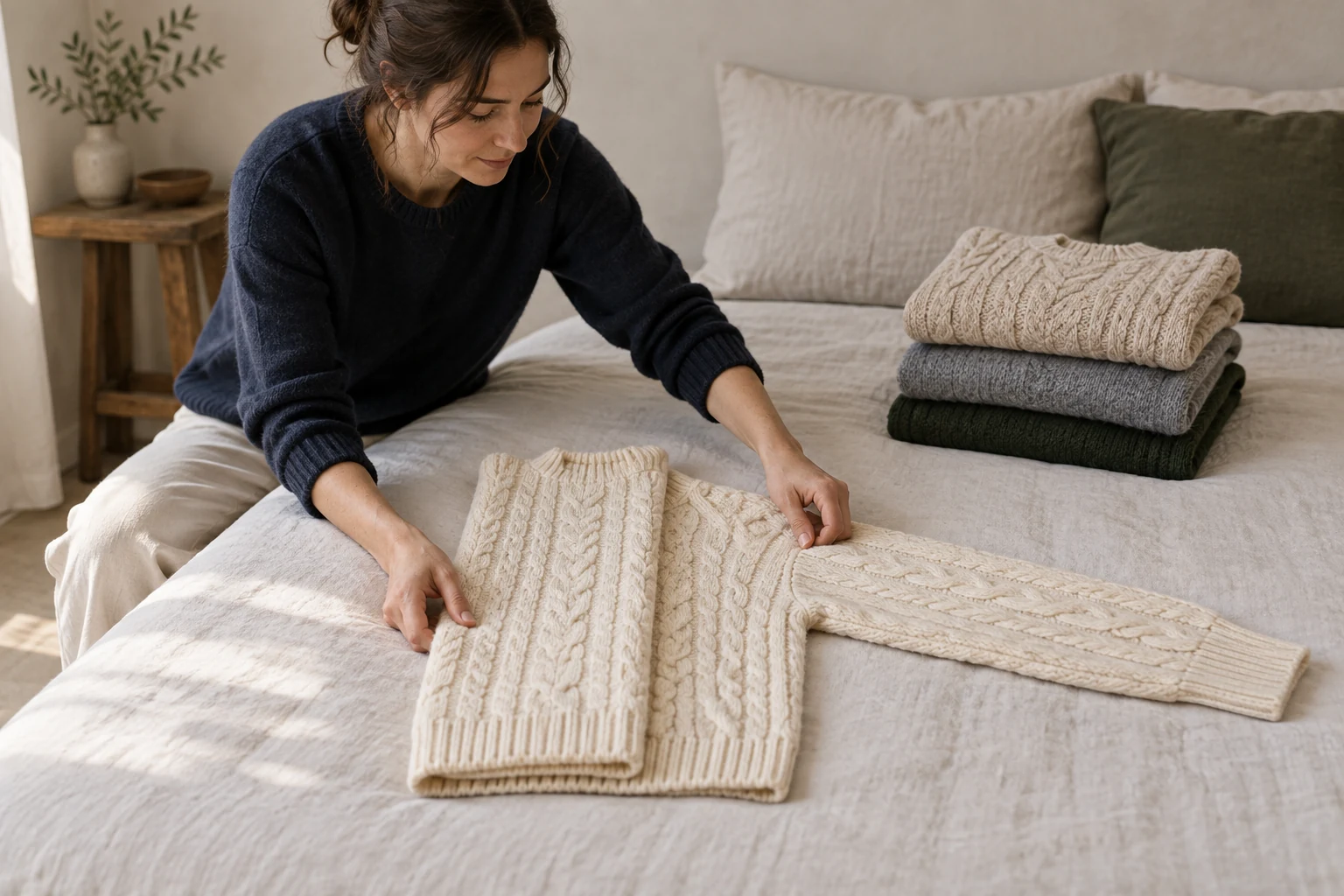
How to fold a sweater so it keeps its shape
How to fold a sweater for a shelf or drawer, fold it over a hanger without stretched shoulders, pack it for travel, and store knitwear between seasons.
Closet and packing
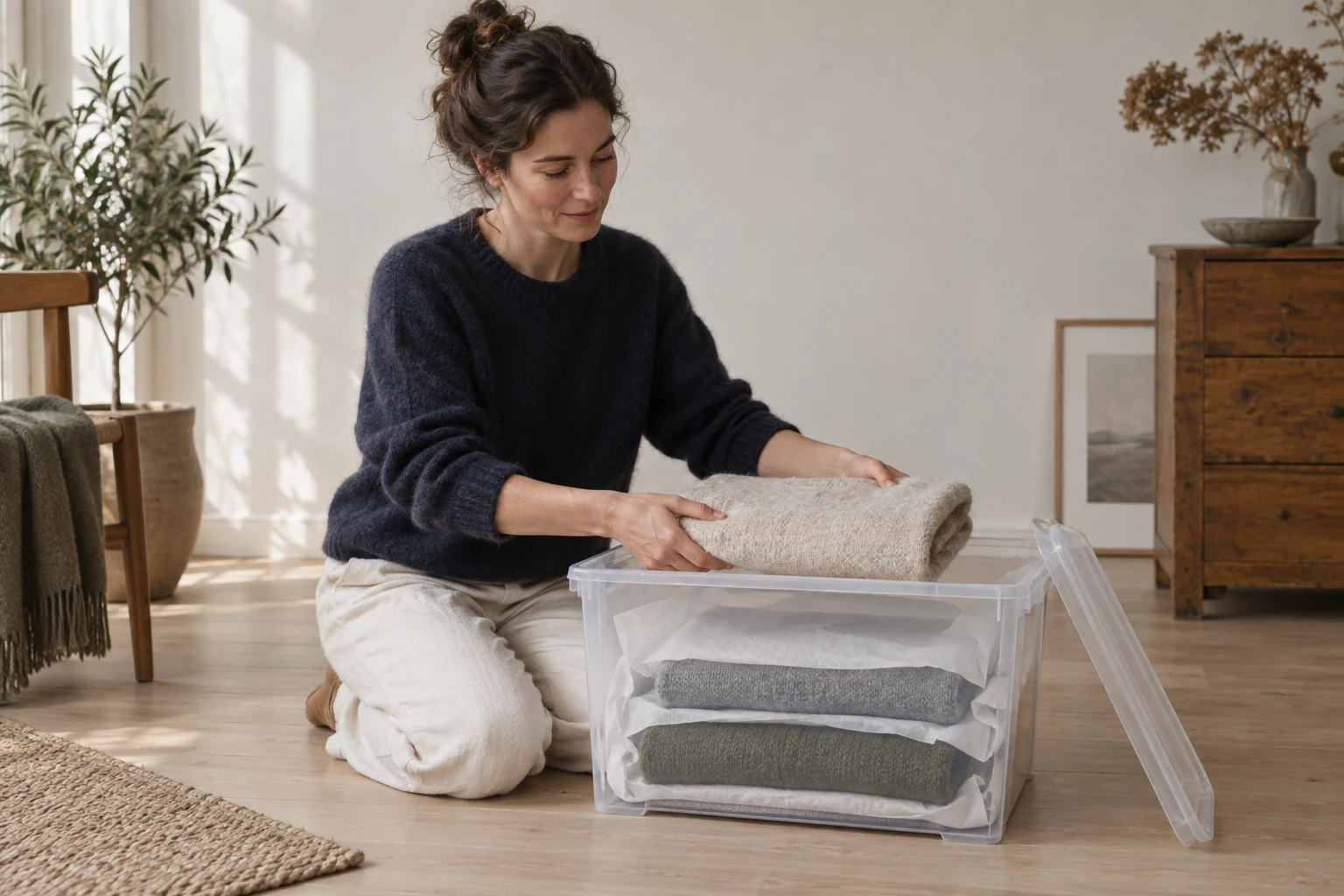
How to store sweaters: folding, seasons and moths
How to store sweaters day to day and between seasons: fold instead of hang, clean before packing, choose bins or bags with care, and keep clothes moths out.
Fabrics
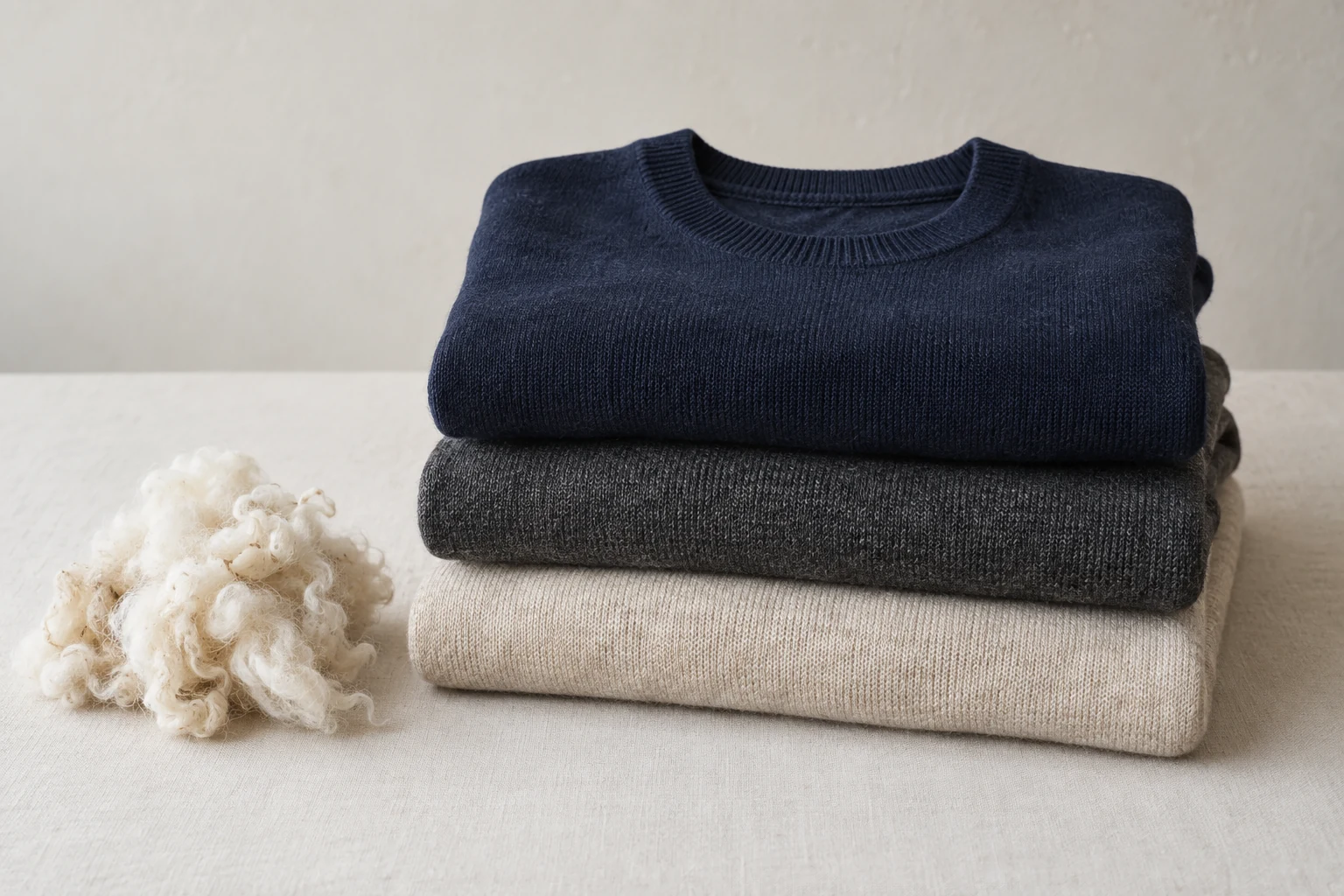
Merino wool: what it is and why it works
What merino wool is, why it feels softer than ordinary wool, where it beats cotton and synthetics, its real drawbacks, and how to wear and wash merino clothing.
Fabrics
What is cashmere, and is it worth it
What is cashmere: the goat undercoat it comes from, why it costs more than wool, how to judge a cashmere sweater in the store, and how to keep it soft for years.
Everyday style
Types of necklines and how they frame you
A clear guide to the types of necklines on dresses, tops and sweaters, from jewel and scoop to halter, Queen Anne and apron, with jewelry and bra tips for each.