How to measure your waist and hips for clothes
In this guide
A size chart asks for waist and hips, and the first problem appears before the tape is even around you: your jeans sit well below the place the chart calls your waist. The second appears when the tape slides and gives you a different number each time. Learning how to measure your waist and hips properly takes about five minutes, and it answers most of the size questions you will face when shopping online.
Everything depends on which waist a chart means. Dress and top charts usually mean your natural waist. Pants charts often mean where a waistband sits. Health guidance uses yet another spot. Once you know the difference, the numbers stop contradicting each other.
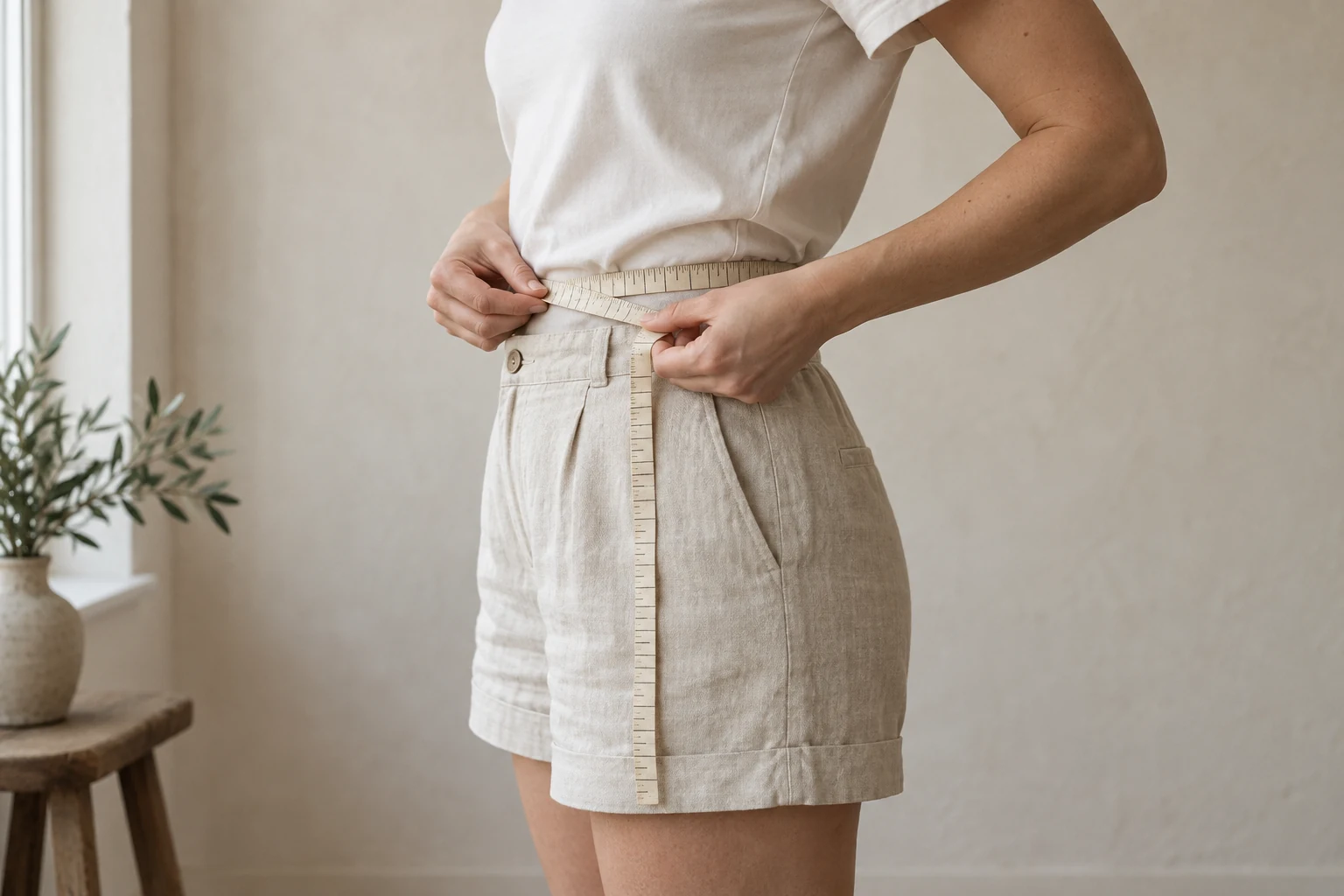
What you need before you measure
Use a soft tape measure that does not stretch. Old cloth tapes can lengthen with use, so if yours is years old, check it against a metal ruler or yardstick. Measure over light underwear or the base layer you expect to wear under the clothes, not over jeans or a sweater, because even a thin layer adds to the reading. The New Mexico State University extension guide to fitting suggests having a helper take the measurements while you stand in your normal posture, and recording each number as you go.
Stand with your feet together and your weight even, arms relaxed at your sides. The tape should be snug against the body but not pressing into it. Write every measurement down with its unit, inches or centimeters, and the date. Bodies change with seasons and years, and a dated note tells you when it is time to measure again.
Where is your waist?
Your natural waist is the narrowest part of your torso, between the bottom of your ribs and the top of your hip bones. On many people it sits an inch or two above the belly button. On others, especially those with a straighter torso, there is no obvious narrowing, and the natural waist is simply the point where the body creases when you bend to one side. This is true for men and women alike. The anatomy is the same; what differs is where clothes are designed to sit.
An easy way to find it is to tie a length of string or narrow elastic loosely around your middle and bend from side to side a few times. The string settles into the natural waist on its own. The New Mexico State University guide likewise recommends tying a cord around the waistline and leaving it in place while you take your other measurements, which gives you a fixed reference for the hip and length measurements too.
How to measure your waist step by step
This is the natural waist measurement that most dress, top and jacket size charts ask for. It is also a good baseline number to keep even if you mostly shop for pants.
Mark the spot
Find your natural waist with the bend test or a string marker. If you are measuring without a helper, stand side on to a mirror so you can see the back of the tape as well as the front.
Wrap the tape level
Pass the tape around your waist and bring the zero end to meet the rest at the front. Check in the mirror that it runs parallel to the floor all the way around. A tape that dips at the back is a common reason for a reading that comes out too large.
Breathe out normally, then read
Take a normal breath and let it out, without holding it in or pushing your stomach out. Read the tape where the zero end meets it. The tape should lie flat against the skin without making a dent.
Repeat once
Release the tape, then measure again. If the two readings differ by more than about half an inch (1 cm), check the tape position and measure a third time. Record the number that repeats.
How to measure your waist for pants and jeans
Pants rarely sit at the natural waist. Most jeans and casual pants for men sit lower, somewhere between the navel and the top of the hip bones, and women's pants vary from high rise at or near the natural waist to low rise well below it. So for pants, measure around your body at the height where you want the waistband to sit, with the same level tape and relaxed breathing. If you usually wear mid rise jeans, that is a different number from your natural waist, and it is the one that matters.
The most reliable figure of all often comes from a pair you already own. Levi's suggests laying jeans flat, measuring straight across the top of the waistband, and doubling it to get the waist. Its sizes are written waist by length in inches, so a 32x32 means a 32 inch waist and a 32 inch inseam. Measure a pair that fits you well rather than trusting the number on its label, because the label and the actual waistband do not always match between brands or even between styles from one brand. For the leg, our guide to measuring your inseam covers the length half of that label, and our guide to how jeans should fit shows what a good fit looks like at the waist, seat and thigh once the pair arrives.
How to measure your hips
Hip measurement is taken around the fullest part of the hips and seat, not at the hip bones. Stand with your feet together, since standing wide makes the reading larger, and slide the tape up and down a little to find the widest point. The New Mexico State University guide notes that the full hip is usually about 6 to 10 inches (15 to 25 cm) below the waist, depending on height and build, and advises looking from the front and side to see whether you are widest at hip level or lower, at the thigh. If you are not sure, measure both and use the larger number, because a skirt or pair of pants has to pass over the widest part.
Keep the tape level; it tends to ride up at the back over the seat. Record the distance from your waist marker down to where you took the hip measurement as well. Many patterns and some brands ask for it, and it explains why two skirts with the same hip size can fit differently: one may be shaped for a full hip that sits higher or lower than yours.
Chest, bust and the other numbers you may need
For tops and jackets, measure the chest or full bust around the fullest part, passing the tape across the shoulder blades and keeping it level, with your arms relaxed at your sides. Our guide to measuring your chest explains where shirt and jacket charts expect the tape to sit. Bust measurement for bras works differently, with a separate band measurement and its own conventions, so follow our guide on how to measure bra size rather than using a dress chart for that. Shirts add neck and sleeve length. Charles Tyrwhitt, for example, measures sleeve from the center back just below the collar, over the peak of the shoulder and down to the wrist, as most dress shirt makers do, while many jacket and casual charts start at the shoulder seam, so check the diagram before you compare. Our guide to finding your dress shirt size walks through those two numbers.
Health guidance measures the waist in a different place again. The National Heart, Lung, and Blood Institute tells people to place the tape just above the hip bones and measure after breathing out. That spot is right for tracking health risk, but it is lower than the natural waist used in most clothing charts, so do not mix the two numbers when shopping.
Read the size chart before you compare
Before matching your numbers to a chart, check what the chart describes. Some charts list body measurements, meaning the body a size is designed for. Others list garment measurements, taken on the finished piece, often laid flat so that a chest or waist figure is only half the circumference. A body waist of 30 inches and a flat garment waist of 15 inches can describe the same fit. Some pants measurements size charts list both, which is the most useful arrangement. For numbered women's sizes, our women's dress size chart shows how US sizes line up with bust, waist and hip measurements.
Garment measurements are almost always larger than body measurements for woven clothes, because of ease, the extra room that lets you breathe, sit and move. The New Mexico State University guide points out that ease varies from style to style and from one brand to another, which is why your usual size will not always fit. If your waist falls in one size and your hips in another, look at the style. A dress that is fitted at the waist and full in the skirt should be chosen by the waist. Straight pants or a pencil skirt should be chosen by the hips, then taken in at the waist by a tailor if needed. When the piece arrives, a quick fitting check in motion tells you what the numbers could not.
| Measurement | Where the tape sits | Used for |
|---|---|---|
| Natural waist | Narrowest part of the torso, above the belly button | Dresses, tops, jackets |
| Pants waist | Where you want the waistband to sit | Pants and jeans |
| Hips | Fullest part of hips and seat, feet together | Skirts, pants, dresses |
| Chest or full bust | Fullest part, level across the shoulder blades | Tops and jackets |
| Health waist | Just above the hip bones, after breathing out | Health tracking, not shopping |
Common mistakes
Pulling the tape tight
A tape that digs in gives a smaller number than your body and a size that feels tight when you sit. It should lie flat and slide slightly without leaving a mark.
Measuring over clothes
Jeans, belts and sweaters can add an inch or more. Measure over light underwear or the layer you will actually wear under the garment.
Using the pants label as a measurement
A size 32 label is a size, not a promise of 32 inches. Measure the waistband of a pair that fits, flat and doubled, and compare that with the garment chart.
Holding your breath
Sucking in or bracing changes the reading by a surprising amount. Breathe out normally and read the tape at that relaxed moment.
Questions people ask
Where is your waist on a man?
Anatomically in the same place as on anyone: the narrowest part of the torso between the ribs and hip bones, often a little above the navel. Most men's pants, though, are sized for where the waistband sits, which is usually lower, near the navel or just above the hip bones. Measure there for pants and at the natural waist for shirts or jackets that ask for it.
Where is the waist on a woman?
The natural waist is the narrowest point of the torso, usually an inch or two above the belly button, and it is what most dress and top charts mean by waist. High rise pants are cut to sit near it, while mid and low rise pants sit lower. If your figure has little narrowing, bend to one side and use the crease.
How can I know my waist size without a measuring tape?
Wrap a piece of string, ribbon or a phone charging cable around your waist, pinch where it meets, then lay it along a ruler, yardstick or metal tape measure. You can also measure a pair of well fitting pants flat across the waistband with a ruler and double it. Both methods are good enough for choosing a size, though a proper tape is easier to keep level.
Is my jean size the same as my waist measurement?
Often not exactly. Jeans are labeled in inches, but where they sit on the body, the cut and the amount of stretch all vary, so a pair labeled 32 may measure more or less across the waistband. Use your measured body number to narrow the choice, then compare the product's own garment measurements if the brand publishes them.
Is your waist at your belly button?
Not usually, at least for clothing. The natural waist that dress and top charts use sits an inch or two above the belly button on most people, while many men's jeans and mid rise pants sit at or just below it. Health guidance uses a third spot, just above the hip bones. Treat the belly button as a landmark and measure at the height the chart or the garment actually means.
Is a 34 waist actually 34 inches?
Not reliably. The number on men's pants is a size, and some brands cut the waistband an inch or more larger than the label, a habit often called vanity sizing, while others run true or even small. Stretch denim adds another variable, since it gives with wear. Measuring a pair that fits flat across the waistband and doubling the number is the only way to know what a given brand's 34 means for you.
Sources and further reading
References used for this guide. Each opens the original page in a new tab.
- New Mexico State University Cooperative Extension, Check Your Pattern for Proper Fit (Guide C-220) Opens in a new tab
- National Heart, Lung, and Blood Institute, assessing your weight and waist circumference Opens in a new tab
- Levi's guide to measuring yourself and your jeans Opens in a new tab
- Charles Tyrwhitt guide to measuring for a shirt Opens in a new tab
Keep reading
Sizing
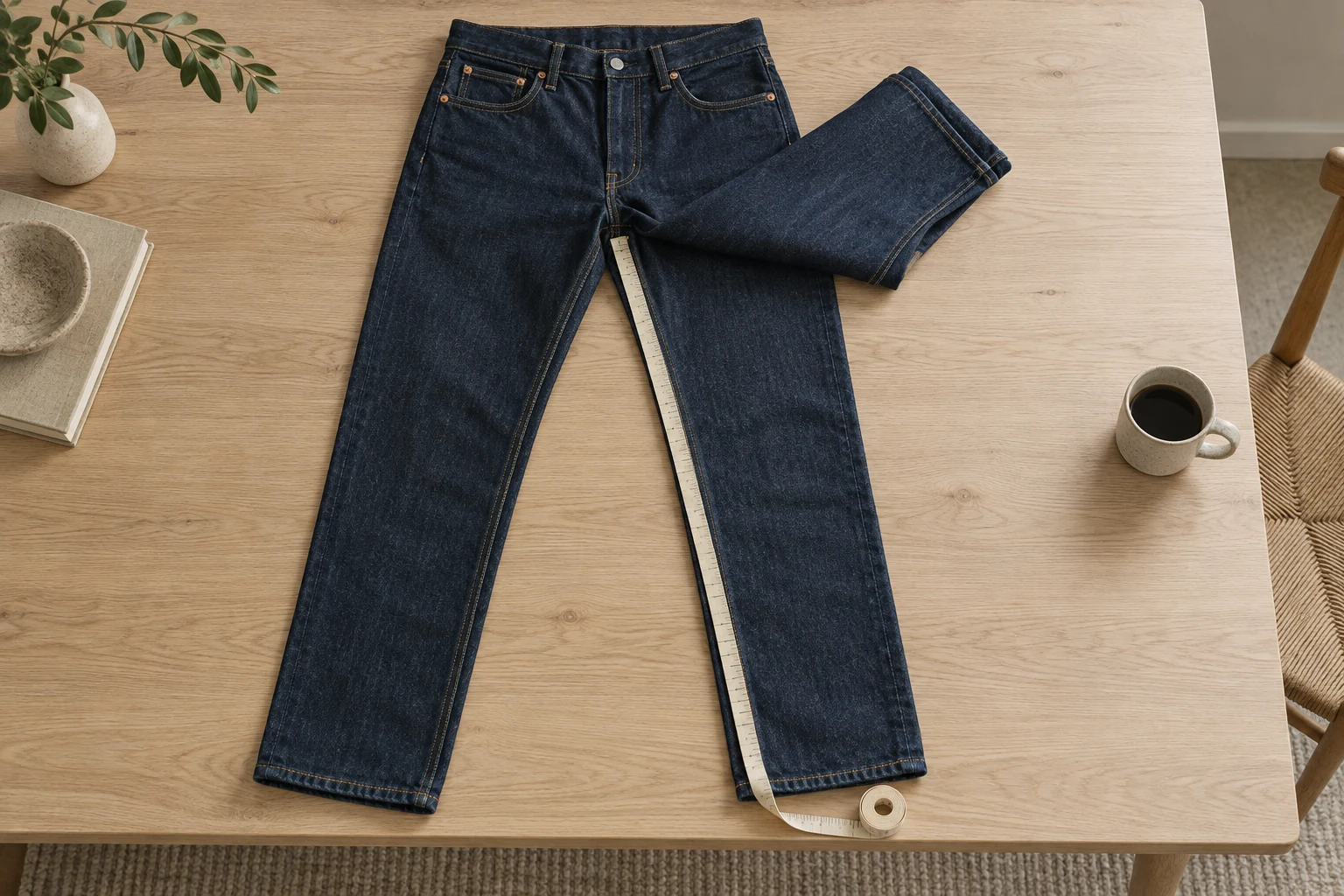
How to measure inseam for pants, jeans and shorts
Measure your inseam from pants that fit or on your body, see how inseam differs from outseam, and choose the right length for jeans, dress pants, shorts and bikes.
Suits and tailoring
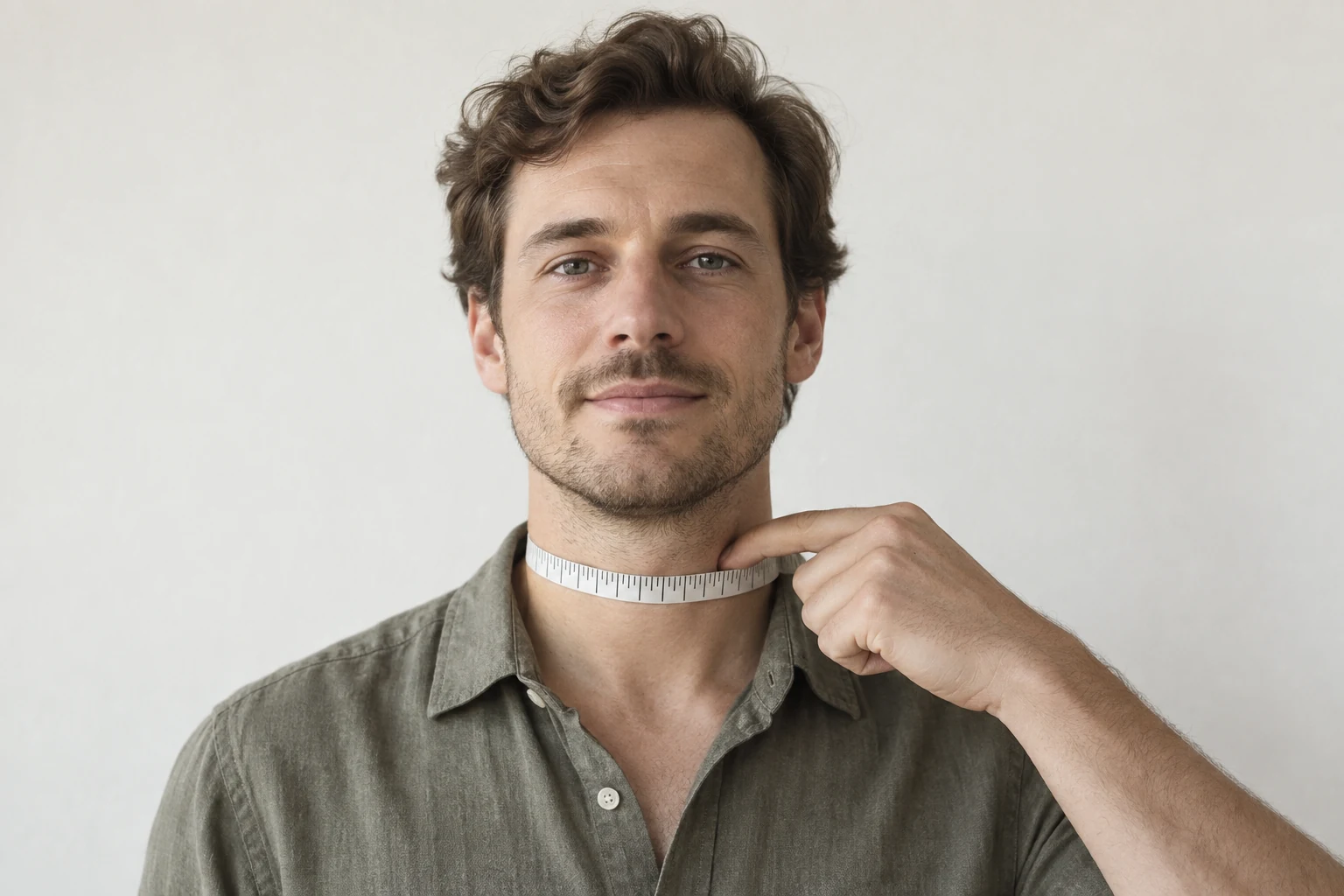
How to find your dress shirt size: neck and sleeve
Read any dress shirt size chart with confidence: how to measure your neck and sleeve, what 15.5 34/35 means, how to check a collar, and slim vs classic fit.
Sizing
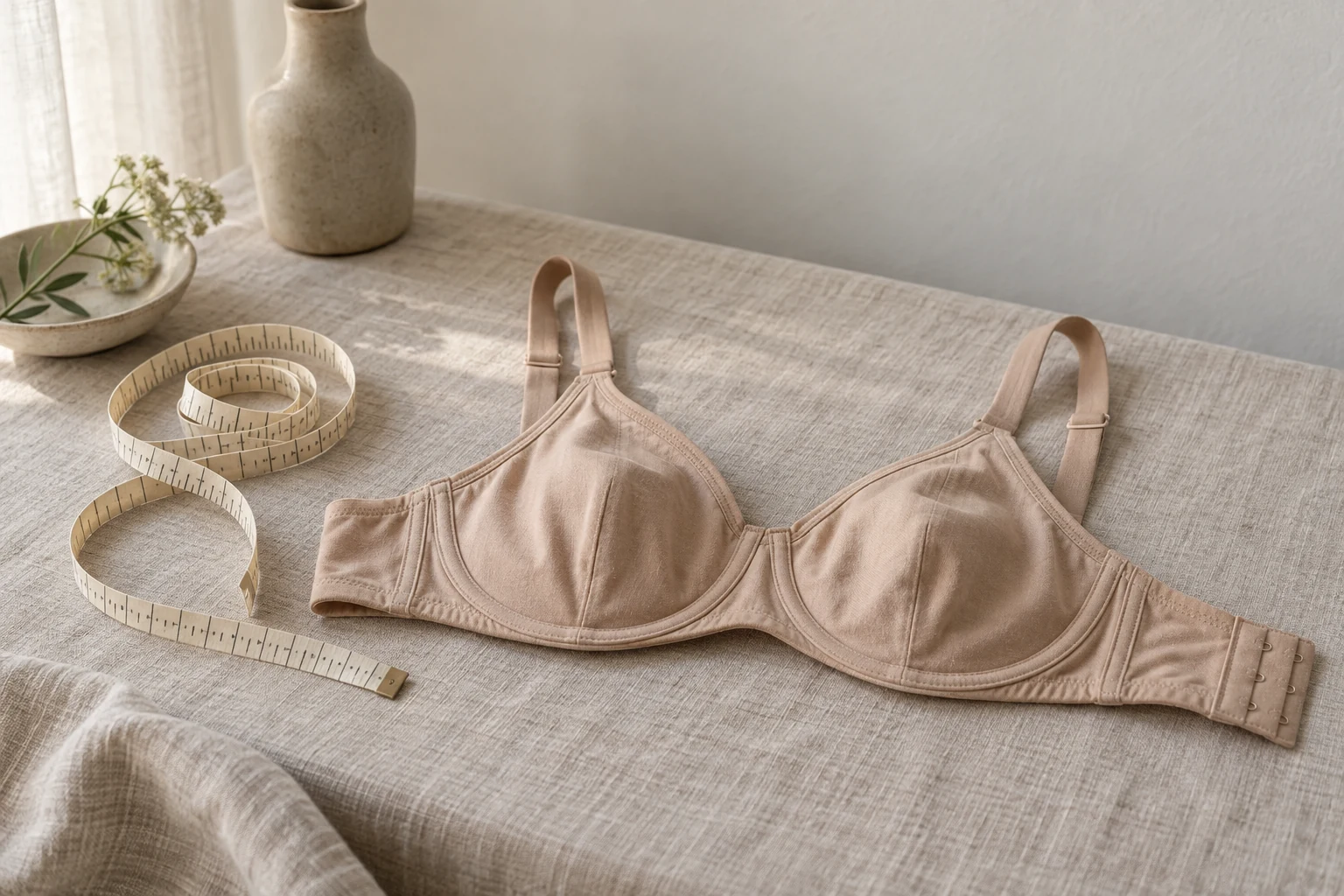
How to measure bra size at home
Measure your band and bust with a soft tape, turn the numbers into a starting bra size, then use fit checks and sister sizes to find the one that really fits.
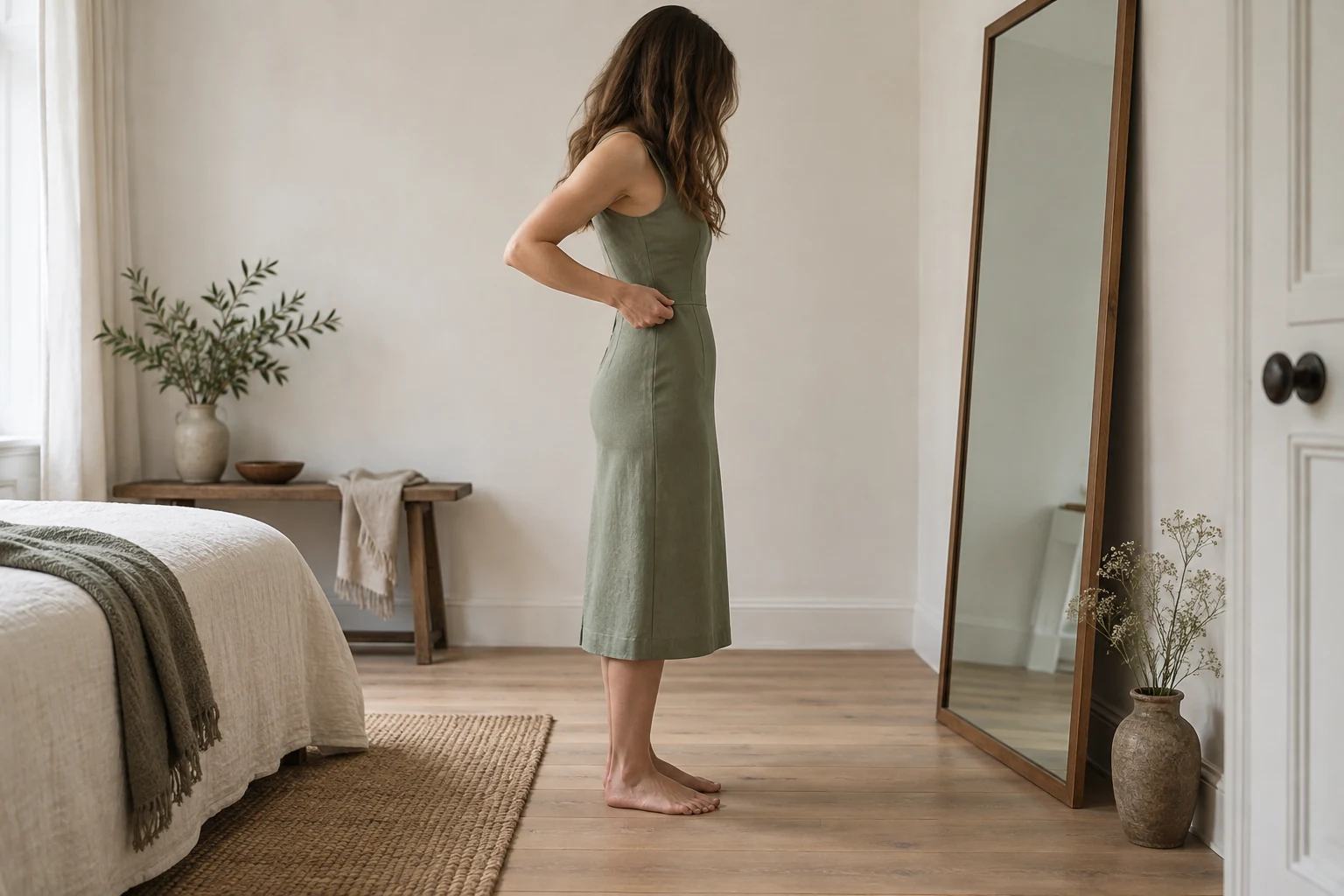
Everyday style
How to check dress fit, from shoulders to hem
How to check dress fit in a fitting room or at home: what to look for at the shoulders, bust, waist, hips and hem, how to read wrinkles, and what a tailor can fix.

Everyday style
How to dress for your body type without the rules
How to dress for your body type using fit, proportion and balance as tools, not rules. What shape labels and Kibbe can tell you, and where they stop helping.