How to steam clothes with a garment steamer
In this guide
Twenty minutes before you leave, the dress you meant to wear turns out to have spent the spring folded in a drawer. Or the shirt that came out of the suitcase has a crease across the chest that no amount of shaking will move. This is exactly the job a steamer is built for: no board, no pressing, just heat and moisture on a hanging garment.
Learning how to steam clothes takes one or two tries. Steam softens the fibers so they can relax, and gravity plus a little tension from your free hand pulls them straight while they cool. Once you see that, most of the technique follows. The rest is knowing which fabrics love steam, which need care, and which should never see it.
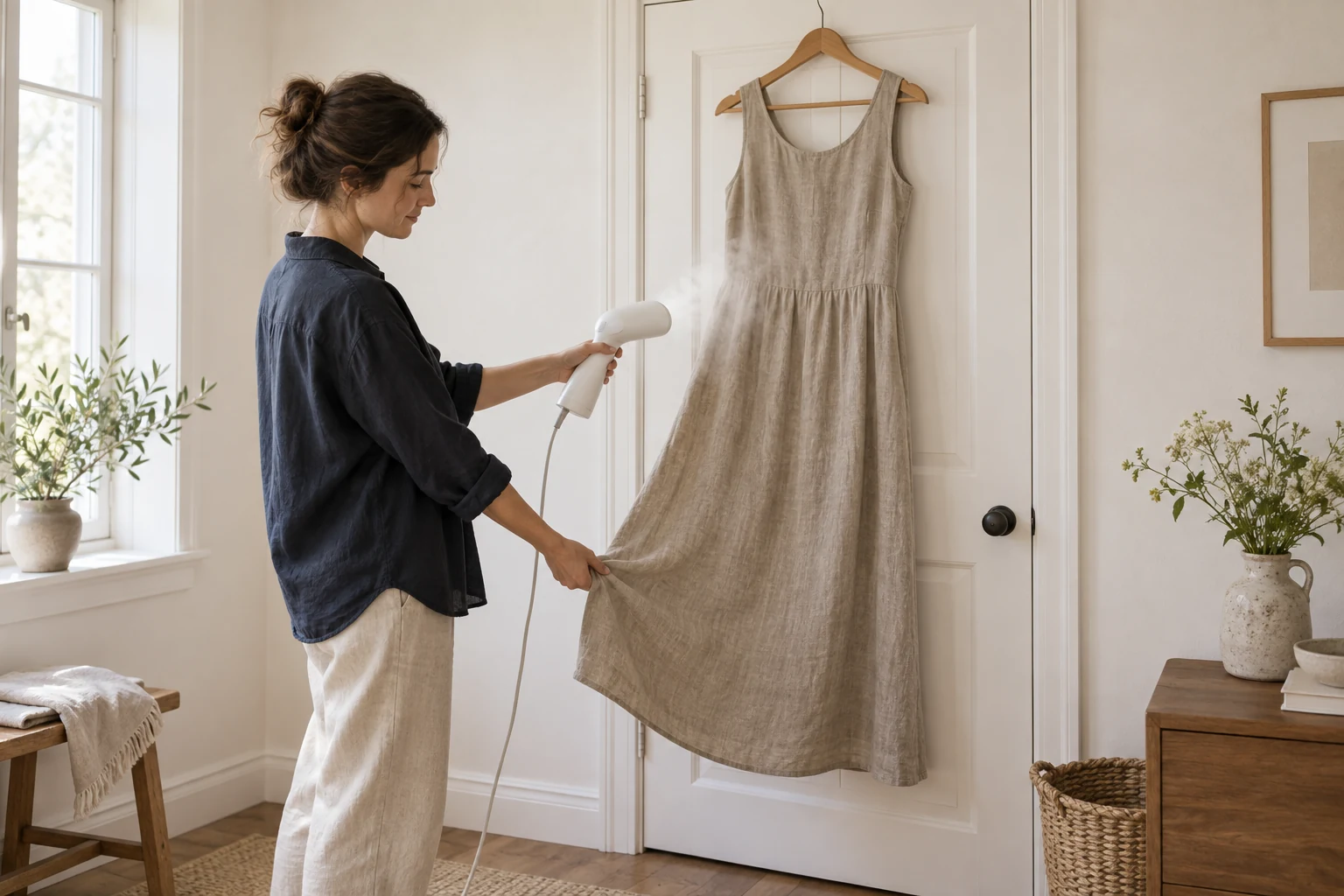
How to steam clothes, step by step
Every garment steamer, whether a handheld model or a standing one with a pole, works the same way. Read your own manual once, because makers disagree on details such as water type and stroke direction, and your steamer was designed around its own instructions.
Fill the tank while it is unplugged
Unplug the steamer before you fill or empty it, and fill with cold water, never hot. Use the water your manual names: Rowenta recommends distilled water to limit mineral buildup, while Conair's standing steamer is filled from the cold tap. Do not add fragrance or anything else unless the maker says you can.
Heat it and test it away from you
Switch it on and wait for the ready light or a steady plume, often about a minute. Then give a short test burst pointed away from your body and the garment. The first steam can carry spits of hot water, and you want those on the floor, not on a silk blouse.
Hang the garment where you can reach all of it
Use a sturdy hanger on a door hook, shower rod or the steamer's own pole, at a height where the hem hangs freely. Button the top button of a shirt so it hangs straight. Crowded hanging space means steam and condensation land on the neighbors.
Pull the fabric taut and stroke slowly
Hold the hem or side seam with your free hand, gently pulling it straight, and move the nozzle in long, slow strokes about 1 to 2 inches (2.5 to 5 cm) from the cloth. Rowenta suggests downward strokes; Conair starts at the bottom and works up so steam rises through the garment. Either works. What matters is steady movement and tension, and you should see the wrinkle soften and drop away as the nozzle passes.
Smooth, then let it dry
Smooth the steamed area with your palm, keeping your hand clear of the steam itself. Leave the garment on the hanger for a few minutes until it feels dry and cool. Damp fibers wrinkle again as soon as you sit down in them.
Shirts, dresses, trousers and knits
Shirts are easiest from the inside out at the collar, placket and cuffs, where the fabric is doubled and interfaced. Steam the collar from the underside so the visible side stays smooth, then the front panels, back and sleeves. Pull each sleeve straight from the cuff as you go. A steamer will make a cotton shirt look neat, but it will not give you the sharp collar and crisp front of a pressed shirt. For that, see our guide on ironing a shirt.
Dresses are where a steamer really earns its space. Work from the inside for lined dresses, because steaming the lining relaxes the outer layer without wetting it, and it keeps shiny fabrics from spotting. For full skirts, turn the dress on the hanger and steam in sections, holding the hem out with your hand. Tulle and chiffon respond to steam from a greater distance, so start farther back and move closer only if you need to.
Trousers hang best from clips at the hem or waist so the legs fall straight. Steam will remove sitting creases behind the knee, but it will not set a sharp front crease; that still needs an iron and a press cloth. Knits such as sweaters and jersey dresses relax beautifully in steam, but they stretch when wet, so steam them lightly, keep the nozzle moving and avoid pulling hard on the fabric. Woolmark also suggests brushing wool trousers and hanging them in a steamy bathroom to refresh them between cleanings, which is gentler than any direct method.
What clothes should not be steamed
Start with the care label. An iron symbol with a cross through it means no ironing, and GINETEX, the international care labeling body, also uses a low temperature iron symbol that warns steam may cause irreversible damage. Take either as a no for your steamer as well. If a symbol is unfamiliar, our guide to reading care labels explains each one.
Leather and suede can stiffen, stain or warp with steam, and coated fabrics such as waxed cotton, vinyl and faux leather can lose their finish. Garments with glued beads, sequins or rhinestones are a risk too, because heat can soften the glue. Silk and velvet can be steamed, but Conair's manual is explicit that the nozzle should not touch them: contact marks the pile of velvet and can leave water spots on silk. Rayon and viscose can spot or pucker as well, so test inside a seam and keep your distance. Our guide on caring for silk covers the rest.
Is steaming better than ironing?
Neither is better in general; they do different jobs. A clothes steamer is faster for dresses, blouses, knits, loose trousers and anything with texture or detail you do not want flattened. It is also kinder to delicate fabrics, because nothing heavy presses on them. Rowenta itself, a company that sells both, recommends steamers for light fabrics and delicates and irons for heavy outerwear, pleats, dress shirts and table linens.
An iron is still the tool for crisp results: a pressed collar, trouser creases, sharp pleats and linen that should look deliberate rather than relaxed. Many steam irons have a vertical steam button that lets you steam a hanging garment in a pinch. Use it only if your manual describes it, hold the iron upright and away from the fabric and from your hand, and never use the soleplate on the garment while it is on the hanger.
| Job | Better tool |
|---|---|
| Dresses, blouses and loose trousers | Steamer |
| Knits and jersey | Steamer, lightly and moving |
| Silk and velvet | Steamer, with the nozzle never touching |
| Dress shirt collar and front | Iron |
| Trouser creases and sharp pleats | Iron, with a press cloth for creases |
| Heavy outerwear and table linens | Iron |
| Leather, suede, coated fabrics, glued sequins | Neither; skip the steam |
How to steam clothes without a steamer
The shower is the classic substitute. Hang the garment in the bathroom, out of the spray, run the shower hot with the door closed for 10 to 15 minutes, then smooth the fabric with your hands and leave it to dry in drier air. This works well on wool, knits and soft fabrics with light creases, and it is the method Woolmark suggests for wool trousers. It does little for deep folds in crisp cotton.
Skip improvised tricks such as holding clothes over a boiling kettle or pot. The steam is concentrated, the risk of scalding your hand is real, and drips of hot water can mark the fabric. Our guide on getting wrinkles out without an iron covers the dryer, damp towel and other safer options, and packing well in the first place, as in our guide to packing a suitcase, saves a lot of steaming later.
Keep the steamer working well
Gurgling and spitting usually mean condensation has collected in the hose. Conair's instructions are to keep the hose upright so the water drains back into the base, and to hold the nozzle so the steam jets face away from you. Empty the tank after use rather than leaving water standing, and let the unit cool before you put it away; Conair suggests at least 30 minutes for its standing model.
Over time, minerals from tap water slow the steam. Descale only as your manual describes. Conair, for example, runs a solution of one third white vinegar to two thirds water through its steamer, then fresh water, while some makers forbid vinegar entirely. Using the wrong method can void a warranty or damage seals, so check before you pour anything but water into the tank.
Common mistakes
Steaming clothes while you are wearing them
Steam burns skin, scalp and eyes quickly, and Conair's manual warns about exactly this. Always take the garment off and hang it first, even for a small crease.
Holding the nozzle in one spot
Parking the steam over one patch soaks the fabric and can leave a water mark or a stretched area, especially on silk, rayon and knits. Keep the nozzle moving and make several light passes instead of one long blast.
Getting dressed straight away
Warm, damp fabric creases the moment you sit down. Give the piece a few minutes on the hanger until it is cool and dry to the touch.
Questions people ask
When you steam clothes, do you touch the fabric?
Usually no. Hold the nozzle 1 to 2 inches away on most fabrics, and never touch silk or velvet. Sturdy fabrics like wool and heavy cotton can take light contact, which some people find helps with stubborn creases, but keep it moving.
Does steaming clean clothes?
Steaming can freshen a garment and soften light odors, which is why it works well between wears of wool trousers or a jacket. It does not remove sweat, oils or stains, so it is not a replacement for washing. See our guide to getting smells out of clothes if a garment still smells after airing.
How long does it take to steam a shirt?
Once the steamer is hot, a cotton shirt typically takes a few minutes, and a lined dress or a full skirt takes longer. Heavier fabrics need several passes, and speed comes with practice.
Is it bad to steam clothes every day?
For most fabrics, regular steaming is gentler than regular ironing because nothing presses or scorches the fibers. The risks come from too much moisture in one place and from steaming fabrics the label says to keep away from steam. Let each piece dry fully before it goes back in the closet.
Sources and further reading
References used for this guide. Each opens the original page in a new tab.
Keep reading
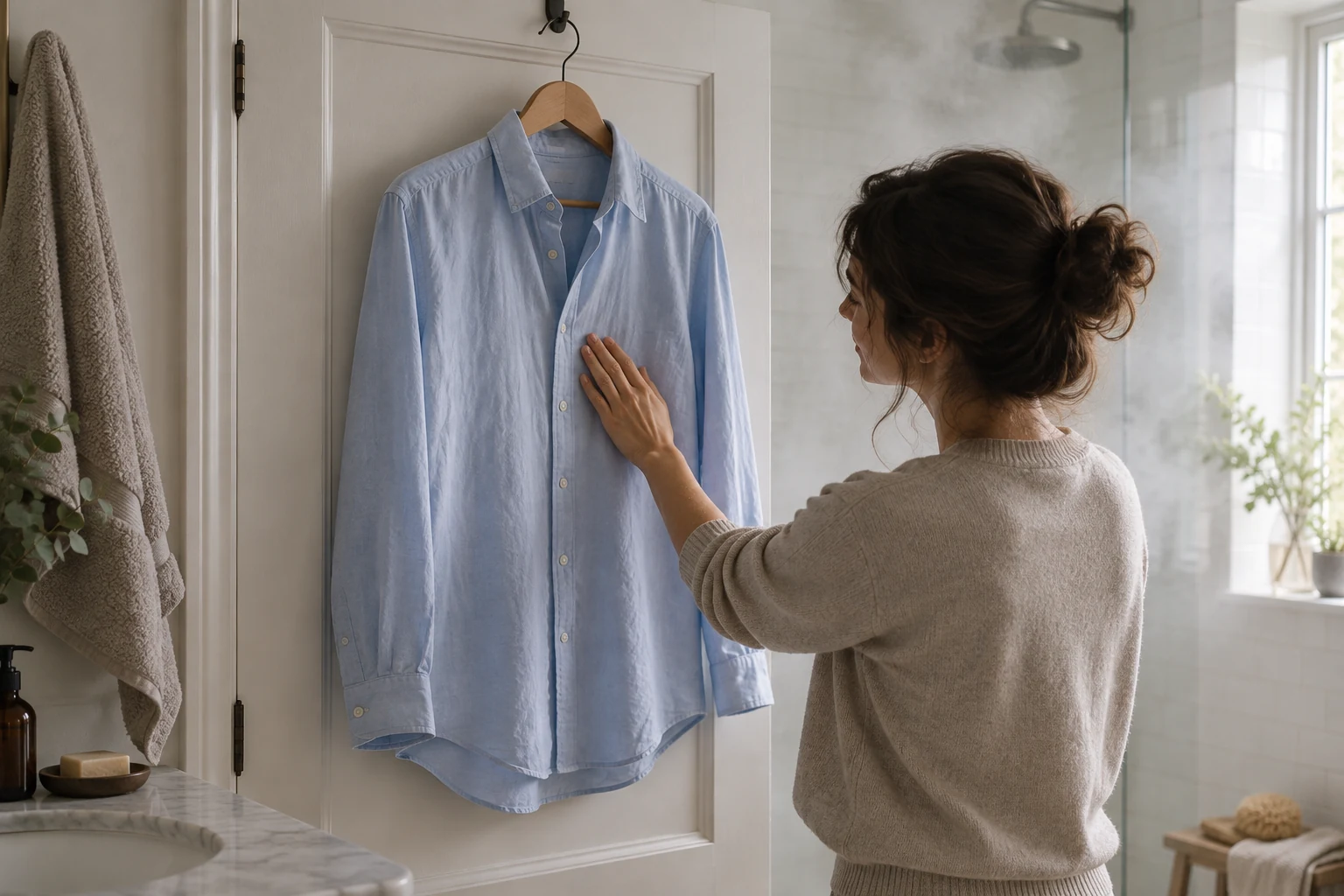
Washing and ironing
How to get wrinkles out without an iron
Five ways to get wrinkles out without an iron: a clothes steamer, shower steam, the dryer, a spray bottle and smart hanging, matched to the fabric you have.
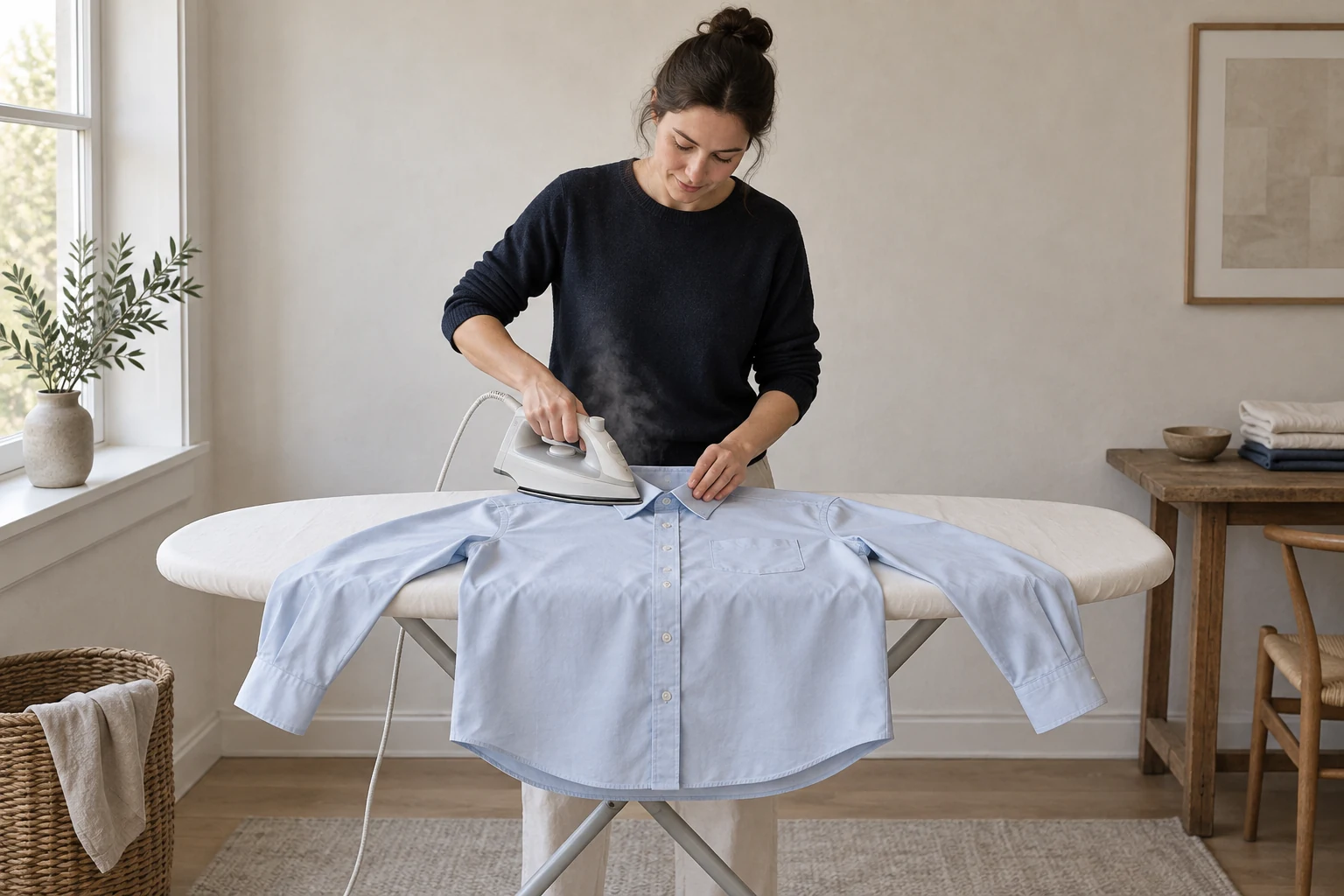
Washing and ironing
How to iron a shirt in the right order
How to iron a shirt the way shirtmakers do: set the heat for the fabric, start slightly damp, then work collar, cuffs, sleeves, yoke, back and front in order.
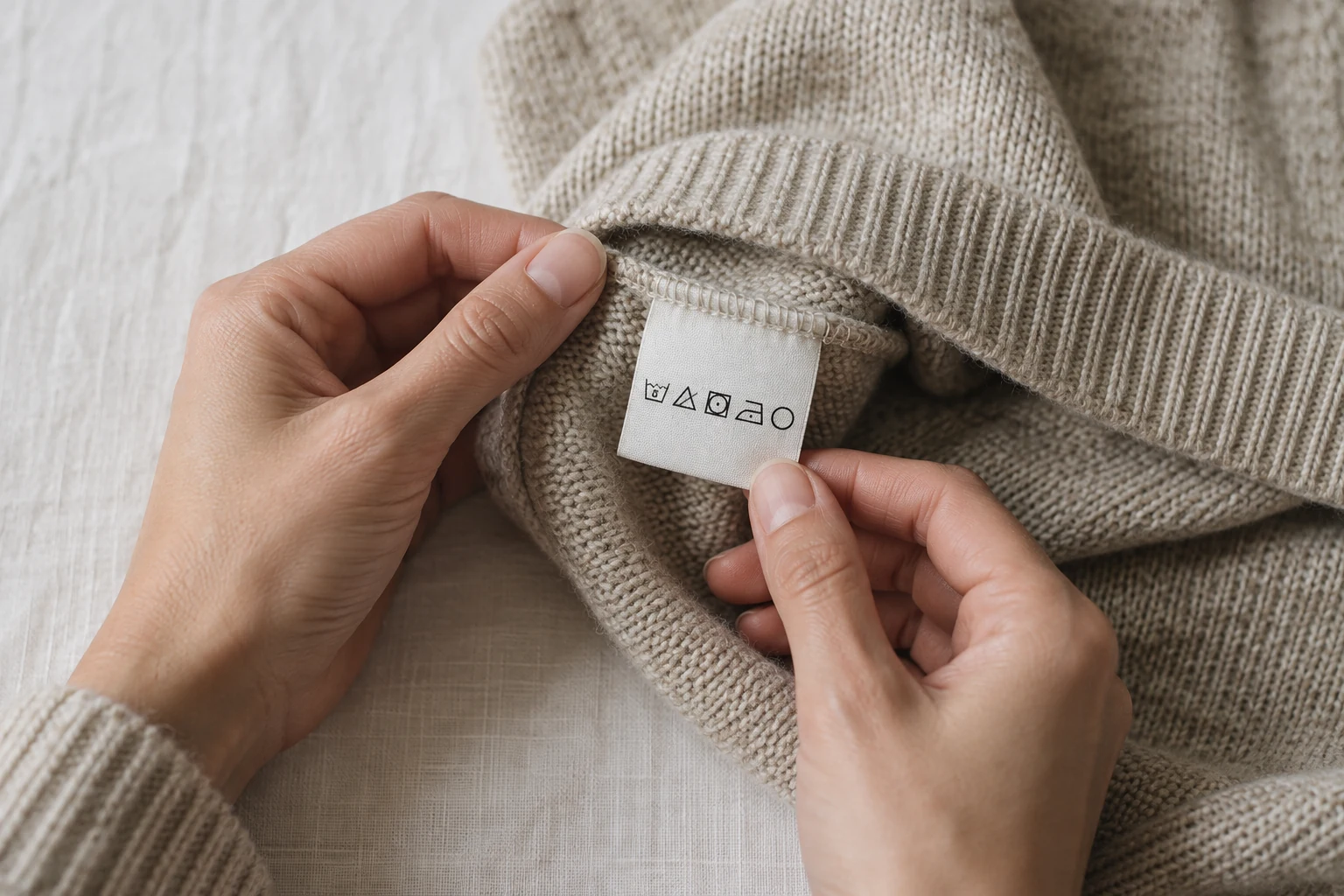
Washing and ironing
Laundry symbols explained: how to read a care label
What laundry symbols mean, in plain words: the wash tub, triangle, square, iron and circle, plus the dots, bars and crosses that change each instruction.
Washing and ironing
How to wash silk at home
How to wash silk safely: when the label says a cleaner is the better choice, how to test for color bleeding, and how to hand wash, dry and iron silk at home.
Closet and packing
How to hang clothes: which hanger for what
How to hang clothes so they keep their shape: what to hang and what to fold, which hanger suits each garment, small closet fixes and how to hang clothes to dry.