How to get grass stains out of clothes
In this guide
A slide into second base, a picnic on a damp lawn, a child who came home with knees the color of a putting green. Grass stains look alarming because the green is so bright, but they are among the more forgiving stains if you know how to get grass stains out before they meet the dryer. Treat them as what they are: a mix of plant pigment, plant proteins, a little wax and usually some soil, pressed deep into the fabric by weight and friction.
That mix explains the method. An enzyme product loosens the plant material, time in cool water lets it work, a normal wash carries it away, and a mild solvent or safe bleach deals with any green that is left. Heat is what makes the stain permanent, so the dryer waits until the fabric looks clean while wet.
Why grass stains cling, and whether they wash out
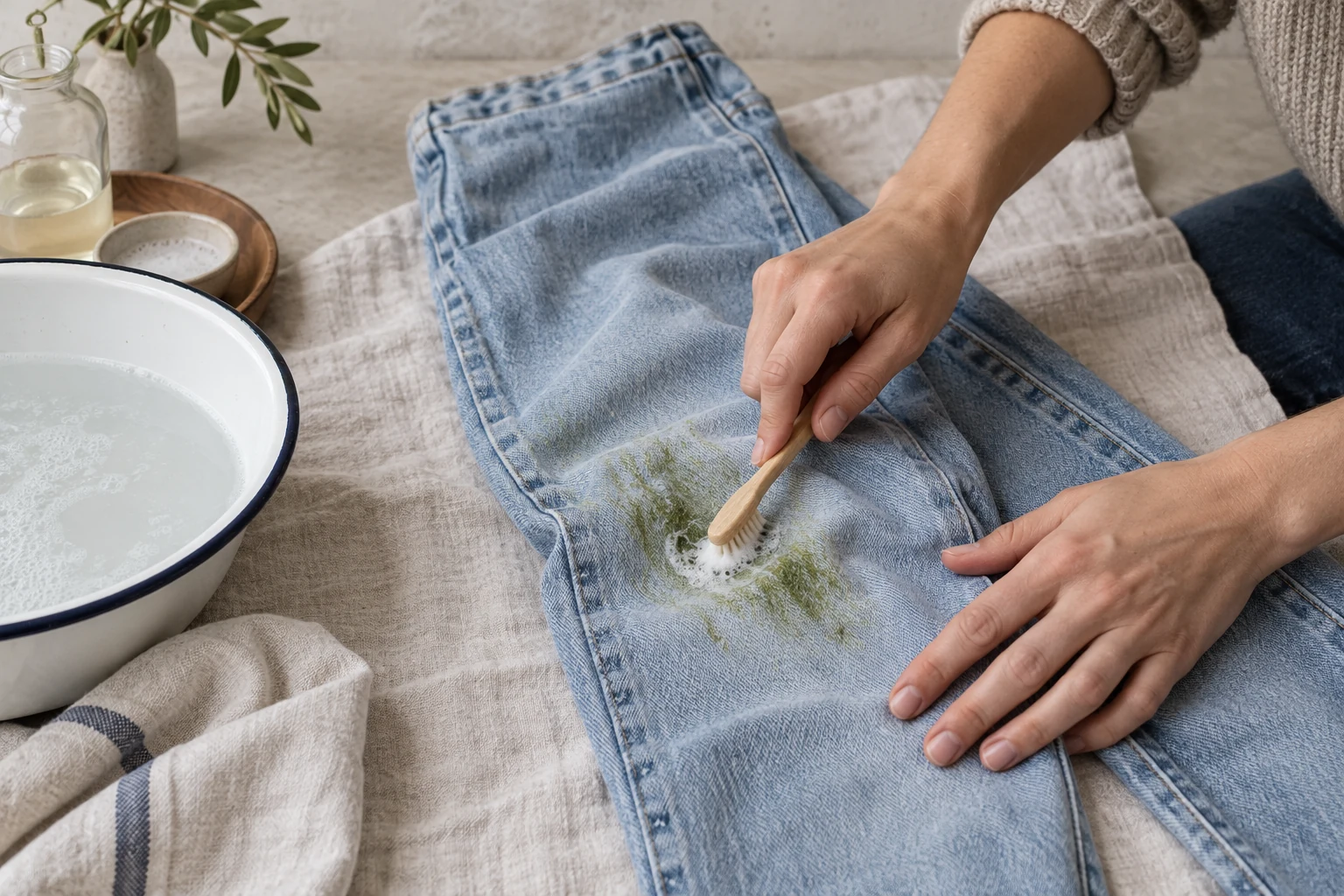
Grass is not a simple dye. The University of Georgia textiles extension describes it as a tannin type stain that is genuinely difficult to remove, and the green comes with sap, waxy plant surface and often mud. When you kneel or slide, that mixture is ground into the gaps between the yarns rather than sitting on top. A quick rinse under the tap takes off the surface and leaves the color in the fibers, which is why a stain that looked fainter when wet often dries back to green.
So do grass stains wash out? Most do, on washable cotton, denim and polyester, provided they are pretreated and kept away from high heat until they are gone. A regular wash on its own often fades the stain without removing it. Stains become much harder once they have been through a hot dryer or ironed, because heat fixes the pigment and the protein in the fibers. Even then, repeated enzyme soaks can lighten them considerably, so give a dried stain a second and third attempt before you give up on the garment.
How to get grass stains out of washable clothes
Start by reading the care label. Our guide to reading laundry symbols explains what the tub and triangle symbols allow. The steps below suit cotton, denim, linen and most sports synthetics. Test anything you apply on an inside seam first and wait a few minutes to check the color stays put.
Brush off loose soil and blades
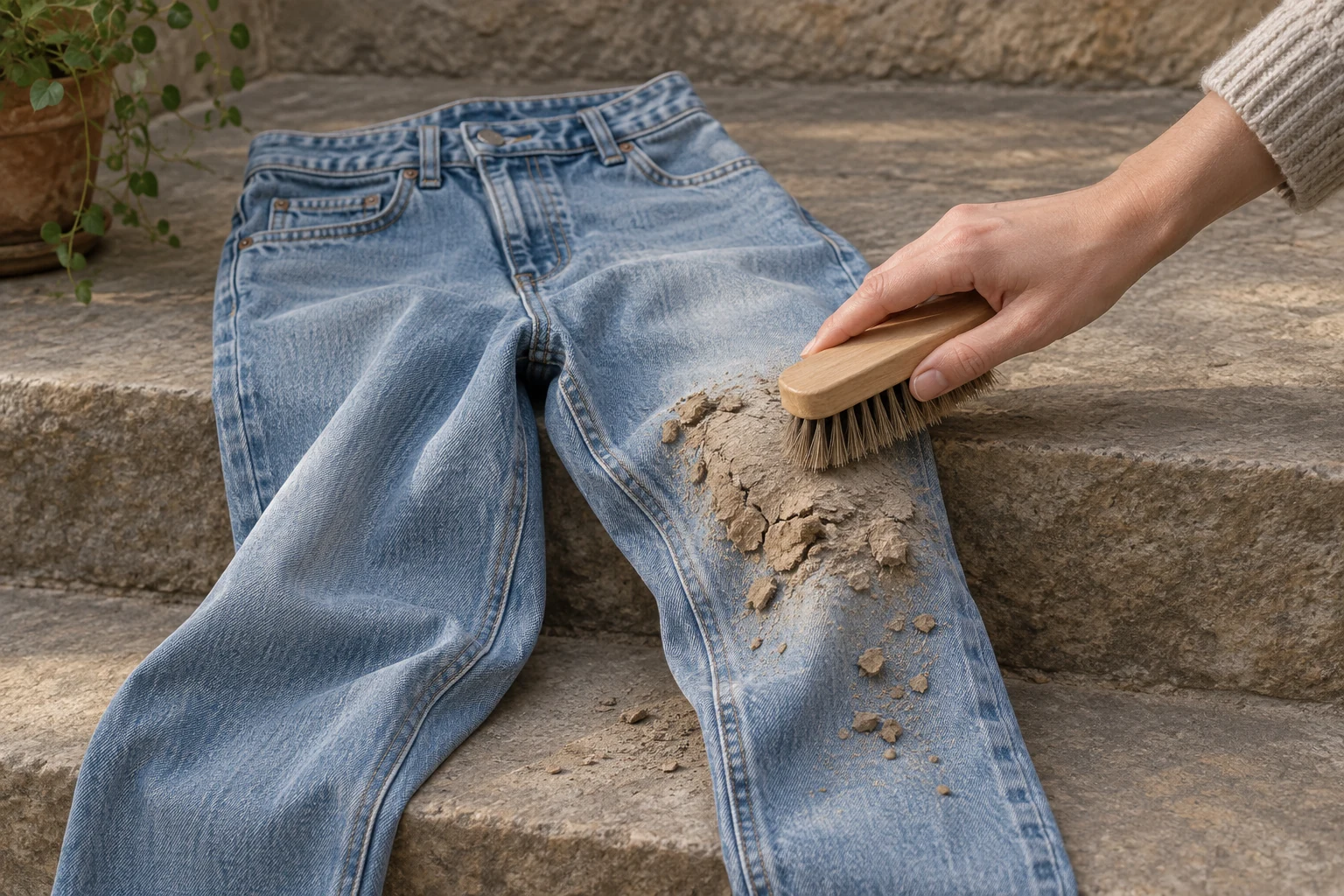
Let any mud dry and flick it away with a dull knife edge or a dry brush. Wet mud rubbed into the stain spreads it; dry soil lifts off. If the patch is mostly mud, our guide to getting mud out of clothes covers that first stage in more detail.
Pretreat both sides with an enzyme product
Work a liquid laundry detergent that lists enzymes, or an enzyme stain remover, into the stain from the front and the back. Rub it in gently with your fingertips or a soft toothbrush, moving up and down rather than scrubbing in circles, which can roughen the surface of cotton. The American Cleaning Institute recommends exactly this enzyme pretreatment for grass.
Soak in cool water
Submerge the garment in cool or lukewarm water with a little more of the same detergent for at least 30 minutes. Fresh stains often need no more; older ones benefit from several hours or overnight. Cool water keeps the protein in the stain from setting while the enzymes work.
CheckYou should see the green soften and turn more yellow or brown.
Wash as the label allows
Wash normally, in the warmest water the care label permits, with the usual amount of detergent. Mississippi State University Extension advises the hottest water that is safe for the fabric for persistent grass stains, once the pretreatment has done its work.
Check before drying
Look at the stain in good light while the garment is still wet. If any green or brown shadow remains, do not put it in the dryer. Go on to the stubborn stain steps below and let the piece air dry in the meantime.
Stubborn and dried grass stains
For green that survives one wash, both the Georgia and Mississippi State extension guides suggest sponging the stain with rubbing alcohol. Dilute it first, about one part alcohol to two parts water, and dab it on with a white cloth while a folded towel sits under the fabric to catch what lifts. Work from the outside edge toward the center so the ring does not spread, then rinse and rewash. Alcohol damages acetate, triacetate, modacrylic and acrylic fibers, so skip this step on those, which often turn up in linings, dressy blouses and some knitwear.
Bleach is the next tool. Oxygen bleach is safe on most colored washables: dissolve it in warm water, soak the garment for a few hours, then wash, as described in our guide to using oxygen bleach. On white cotton that the label marks as bleach safe, the American Cleaning Institute allows chlorine bleach in the wash instead. Georgia's guide also mentions a few drops of hydrogen peroxide on the spot, which is useful on whites and should be tested on anything colored. Never combine chlorine bleach with ammonia, vinegar or other cleaners, since the mixtures release harmful gases.
Dried grass stains, including ones that have already been through the dryer, follow the same order with more patience. Soak overnight in enzyme detergent, wash, then move to alcohol and oxygen bleach, repeating the cycle two or three times. Each round usually takes a little more color out. If a heat set stain has not moved after that, it is likely permanent on that garment, and a professional cleaner is the last reasonable option.
Grass stains on jeans, white pants and sports uniforms
To get grass stains out of jeans, treat the knee from the inside as well as the outside, because denim is thick enough that the stain sits in the back of the weave too. Avoid chlorine bleach entirely on blue denim; it will leave a pale patch that is worse than the green. Enzyme soaks and oxygen bleach are gentler, although dark indigo can still lighten a little, so test inside the waistband first. Our guide to washing jeans covers the inside out, cool wash routine that keeps the rest of the color even.
White baseball and soccer pants take the most punishment, and they are usually polyester or a cotton blend that tolerates a long soak well. Pretreat as soon as the game ends, even if the full wash has to wait, and soak overnight in enzyme detergent before washing. Keep whites apart from colored kit so dye transfer does not add a new problem; our guide to washing white clothes explains how to keep them bright. For grass on white canvas or leather shoes, the fabric rules differ, and our guide to cleaning white sneakers is the better starting point.
Silk, wool and dry clean only pieces
Enzyme products that break down protein can also attack protein fibers, so they are not a safe choice on silk or wool. For a grass mark on a wool skirt or a silk dress, blot gently with cool water and a drop of mild detergent, rinse by dabbing with clean water, and stop there. For anything labeled dry clean only, the Georgia guide lists solvents that are best left to professionals. Take the garment in soon, point to the stain and say it is grass, since cleaners choose their spotting agents by stain type, and the Drycleaning and Laundry Institute stresses that stains treated early come out more reliably.
| Fabric | First move | Avoid |
|---|---|---|
| Cotton, linen, sports synthetics | Enzyme pretreat, cool soak, then wash | The dryer until the stain is gone |
| Blue jeans | Treat the knee inside and out with enzymes | Chlorine bleach, which leaves a pale patch |
| White cotton marked bleach safe | Enzyme soak, then chlorine bleach in the wash | Mixing bleach with ammonia or vinegar |
| Acetate, triacetate, acrylic | Enzyme pretreat and oxygen bleach | Rubbing alcohol, which damages these fibers |
| Silk and wool | Blot with cool water and a drop of mild detergent | Enzyme products, which attack protein fibers |
| Dry clean only | Take it in soon and say it is grass | Home solvents |
Common mistakes
Drying before the stain is gone
The dryer's heat is what turns a removable grass stain into a permanent one. Check every treated spot while wet and air dry anything doubtful.
Starting with hot water
Hot water before pretreatment can set the protein in the stain. Soak cool first and save warm water for the wash that follows.
Scrubbing hard with a stiff brush
Aggressive scrubbing pushes the green deeper and roughens cotton and denim so the spot looks fuzzy and pale. Work the product in gently and let time do the heavy lifting.
Using chlorine bleach on colors
It removes the grass and the dye together. Keep chlorine bleach for white cotton marked bleach safe and use oxygen bleach elsewhere.
Questions people ask
Does Dawn dish soap get out grass stains?
Dish soap can help with the waxy, greasy part of a grass stain, and a drop worked in with cool water is a reasonable first aid when nothing else is at hand. It does not contain the enzymes that break down plant material, so on its own it tends to fade the stain rather than remove it. Follow it with an enzyme detergent soak and a normal wash.
Does vinegar or baking soda remove grass stains?
White vinegar can help rinse away detergent residue after pretreating, and some guides use it between rounds. Neither vinegar nor baking soda is as effective as an enzyme product on grass. Our guide to using vinegar in laundry explains where it helps and why it must never be mixed with chlorine bleach.
How long should I soak a grass stain?
At least 30 minutes for a fresh stain, and several hours or overnight for older or dried ones. Longer soaks in cool water with enzyme detergent are safe for sturdy cottons and synthetics. Check the water is not pulling dye from a colored garment.
Can grass stains be permanent?
They can become permanent after a hot dryer or an iron has fixed them, and on delicate fibers where strong treatments are not safe. Even heat set stains often fade with repeated enzyme soaks and oxygen bleach, so try two or three rounds before deciding.
Sources and further reading
References used for this guide. Each opens the original page in a new tab.
- University of Georgia Extension, textiles: remove stains from grass and flowers Opens in a new tab
- American Cleaning Institute, stain removal guide Opens in a new tab
- Mississippi State University Extension, how to remove pesky stains Opens in a new tab
- Drycleaning and Laundry Institute, removing grass stains at home Opens in a new tab
Keep reading
Stain removal
How to get mud out of clothes
How to get mud out of clothes: why you let it dry first, how to pretreat and wash, what to do about red clay, and how to rescue a mud stain that set.
Washing and ironing
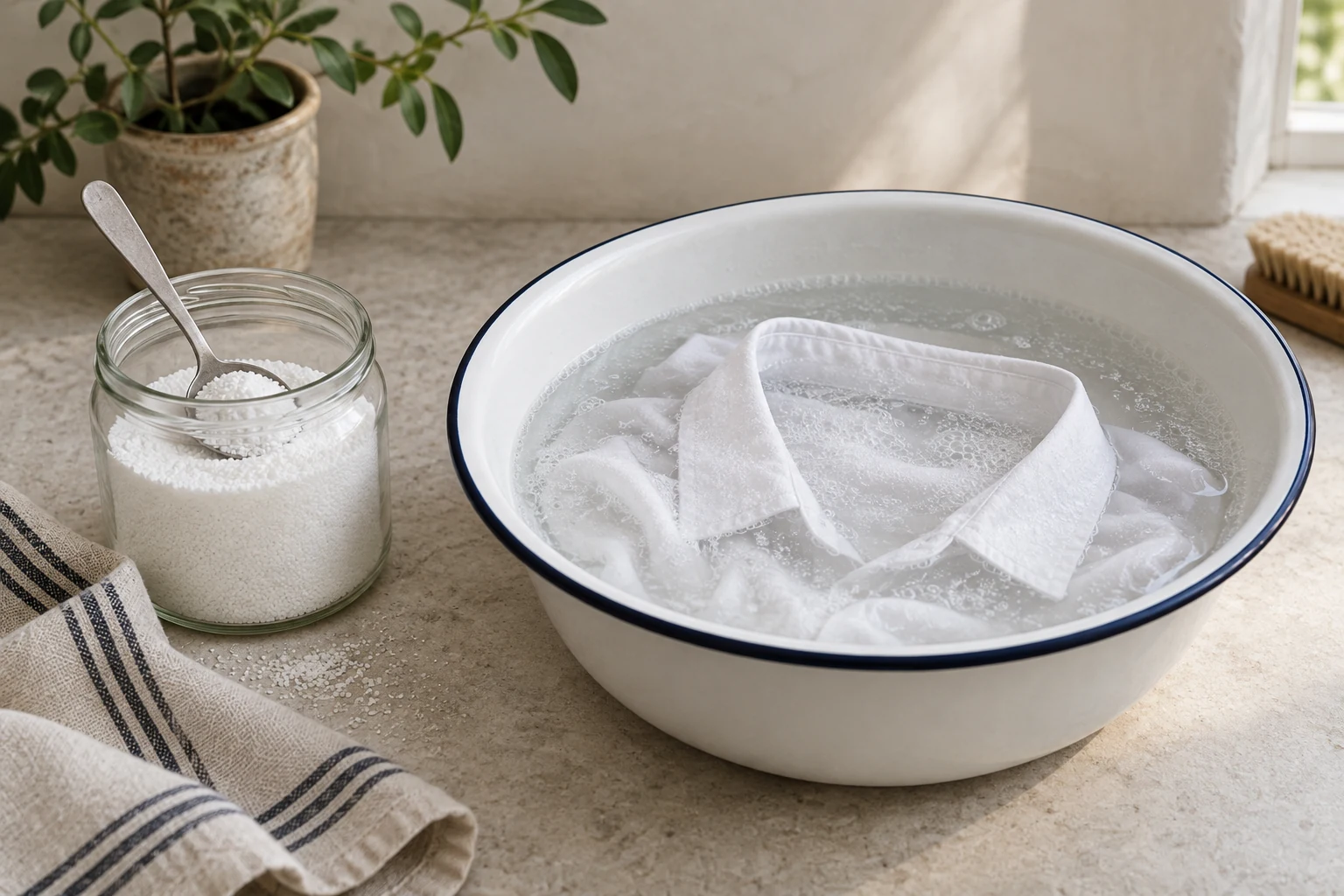
How to use oxygen bleach (sodium percarbonate) on clothes
What sodium percarbonate is, how oxygen bleach powder works, how to use it in the wash or as a soak on whites and colors, and the safety rules that matter.
Washing and ironing
How to wash white clothes and keep them white
How to wash white clothes: sort them, pick the right water temperature and detergent dose, use oxygen or chlorine bleach safely, and rescue whites that yellowed.
Stain removal
How to get blood out of clothes
Get blood out of clothes with cold water and an enzyme soak, rescue dried stains on sheets and jeans, and learn which mistakes set blood for good.

Washing and ironing
Laundry symbols explained: how to read a care label
What laundry symbols mean, in plain words: the wash tub, triangle, square, iron and circle, plus the dots, bars and crosses that change each instruction.