Plaid vs tartan: what is the difference
In this guide
In a kilt shop in Edinburgh the pattern is tartan; in an American department store the same cloth hangs under a sign that says plaid. Buy a plaid skirt in front of a Scottish friend and you may be gently corrected. The plaid vs tartan confusion is real, and it is mostly a matter of which side of the Atlantic you are standing on. The two words describe overlapping things, but they are not the same thing, and knowing the difference helps you shop, talk to people who care about it and wear the pattern with some understanding of where it comes from.
This guide covers what each word actually means, how a true tartan is constructed, why clan tartans exist, and the practical side: who is allowed to wear a tartan, and how to wear plaid without it looking like a costume.
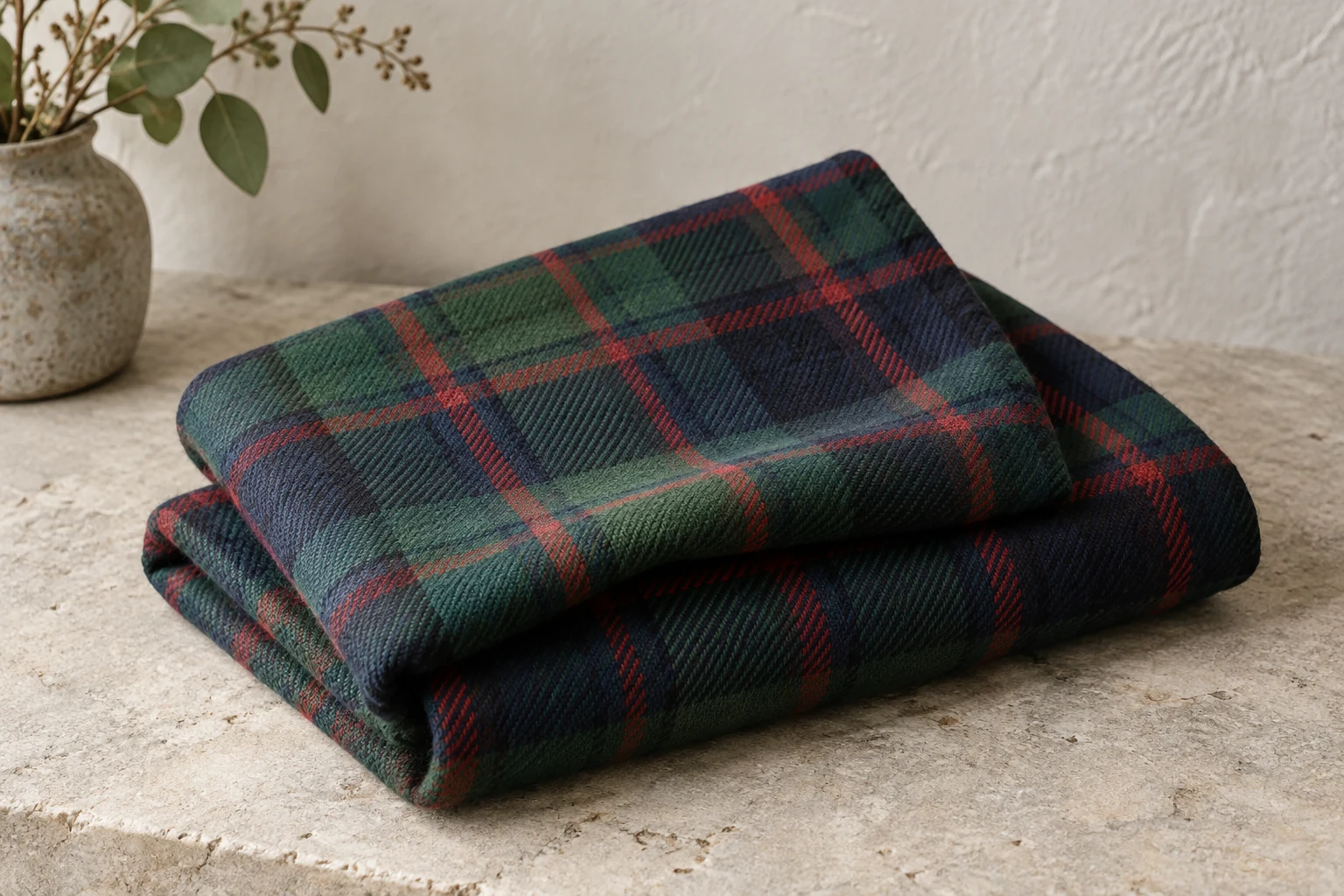
Plaid vs tartan: the short difference
Tartan is a pattern of colored stripes that run both vertically and horizontally, crossing to form a repeating checked design. The official Scottish definition, written into the law that created the Scottish Register of Tartans in 2008, describes it as a design capable of being woven, made of two or more alternating colored stripes that combine in both directions into a repeated check. What makes a tartan specific is its threadcount: the exact order of colors and the number of threads in each stripe, which lets any weaver reproduce it.
Plaid is older as a word for a garment than for a pattern. It entered English in the early 1500s from Scottish sources, related to the Gaelic word for a blanket or mantle, and it described a large rectangle of wool that Highlanders wrapped around themselves. The meaning of plaid as a crossed stripe pattern came much later, and in the United States and Canada it has become the general term. That is why an American store sells plaid shirts, plaid skirts and plaid fabric while a Scottish weaver sells tartan.
| Word | What it means | Example |
|---|---|---|
| Tartan | A named pattern with an exact threadcount any weaver can reproduce | Royal Stewart, Black Watch |
| Plaid in North America | Any pattern of crossing colored stripes | Plaid shirts, skirts and fabric |
| Plaid in Scotland | A large piece of tartan cloth worn over the shoulder | The original Highland garment |
| Flannel | A brushed fabric of wool or cotton, not a pattern | Gray wool flannel trousers |
| Gingham and buffalo check | Simpler checks with even squares and fewer colors | Simpler cousins of plaid |
How a tartan is built
A traditional tartan is woven in a two over two twill, in which each thread passes over two and under two, shifting one step each row. The same color sequence, called the sett, is used in the warp and the weft, so the pattern is symmetrical and square. Where two stripes of the same color cross you get a solid block; where different colors cross you get a blended tone, because the diagonal twill mixes them in the eye. A tartan with four yarn colors can therefore show many more visible shades.
Most plaids in shops are built on the same principle, but they are not bound by it. A plaid shirt may use different sequences in each direction, a plain weave instead of twill, or a print instead of dyed yarns. That is fine for fashion, but it is the reason Scottish makers draw a line between a tartan, which is a defined and often registered sett, and a plaid, which is any pattern that looks like one. Other checks, like gingham and buffalo check, are simpler cousins with even squares and fewer colors.
Clan tartans and a short history
Checked woolen cloth was worn in the Scottish Highlands for centuries, often with local colors that reflected available dyes. After the Jacobite rising of 1745, the British government's Dress Act of 1746 banned men and boys in the Highlands from wearing Highland dress, including tartan, outside the army. The ban lasted until 1782, when it was repealed. So if you have heard that tartan is illegal in Scotland, that has not been true for well over two centuries.
The close link between particular tartans and particular clans is younger than many people assume. Historians generally date it to the nineteenth century, helped along by publications of clan tartans and by King George IV's much publicized visit to Edinburgh in 1822, when Highland dress was staged as national costume. Today there are clan and family tartans, district tartans, corporate and military tartans and tartans made for events, and thousands are recorded in the official register. Royal Stewart and the dark green and navy Black Watch are among the most widely recognized.
Who can wear a tartan, and is plaid okay in Scotland
There is no law about which tartan you may wear. The Scottish Register of Tartans says plainly that there are only traditions, and that people usually choose one connected to their surname, clan or ancestral district, or simply one they like. If you have no family connection, general tartans that are not tied to a clan, and district tartans for places you have a link with, are a thoughtful choice. Some people prefer to avoid wearing the tartan of a clan they have no tie to at formal Scottish events, and that is a courtesy, not a rule.
Wearing a plaid shirt or tartan scarf in Scotland is completely ordinary. Nobody will mind the word plaid either, though you may hear tartan used for the pattern. If you are renting or buying Highland dress for a wedding, ask the couple whether they would like guests in a particular tartan; some families appreciate it, most will be happy with anything well fitted and appropriate.
Plaid vs flannel
Flannel is a fabric, not a pattern. It is a soft woven cloth of wool or cotton, brushed so the surface raises a fine nap that traps warm air. Many flannel shirts happen to be plaid, especially in North America, which is how the two words became interchangeable in casual speech. But a solid gray wool flannel trouser is still flannel, and a crisp cotton poplin shirt in a tartan pattern is plaid without being flannel.
When you shop, read the words separately. Plaid or tartan tells you the pattern. Flannel, twill, poplin or wool tells you how the cloth will feel, how warm it will be and how to wash it. Our guide to twill fabric explains why most tartan cloth has that faint diagonal texture. For washing, cotton flannel and wool tartan need very different handling; wool follows the gentle rules in our guide to washing wool.
How to wear plaid and tartan today
Treat plaid as your one pattern and build around its colors. With a plaid shirt, repeat one of its colors in a solid layer: a navy sweater, olive chinos, brown boots. With a tartan skirt, choose a fine knit in one of its darker shades, plain tights and loafers or ankle boots; the combination sits comfortably in preppy and dark academia wardrobes. A tartan scarf against a solid camel or navy coat is the easiest way to wear the pattern at all.
The costume risk comes from stacking. A tartan kilt, tartan tie, tartan vest and tartan socks looks like a uniform unless you are at an actual Scottish formal event where Highland dress is expected. For everyday dress, one plaid piece is enough, maybe two if they differ in scale and share a color. Red and black plaids feel rugged and seasonal; gray, navy and green plaids read quieter and are the easier choice for work.
Questions people ask
What do Brits call plaid?
In Britain and especially in Scotland, the pattern is usually called tartan, or simply a check. Plaid in Scotland traditionally means the large piece of tartan cloth worn over the shoulder with Highland dress. Most British people will still understand the American usage.
Are tartans still illegal in Scotland?
No. The Dress Act of 1746 banned Highland dress, including tartan, for men and boys outside the army, but it was repealed in 1782. Anyone can wear any tartan in Scotland today.
How do you pronounce plaid?
In American and most British English, plaid rhymes with bad, as if it were spelled plad. Some Scottish speakers do say it to rhyme with played, especially for the traditional garment, but plad is the safe choice elsewhere. Tartan is stressed on the first syllable, TAR tan.
Is Burberry's check a tartan?
The famous camel, black, white and red pattern is constructed like a tartan, with crossing stripes of several colors, and many people describe it that way. The company itself refers to it as a check. In American usage it is simply a plaid.
How can I tell if my plaid is a real tartan?
Check whether the pattern repeats identically in both directions and whether the maker gives it a name, such as a clan or district. Registered tartans can be searched by name in the Scottish Register of Tartans. An unnamed plaid on a fast fashion shirt is almost certainly an invented pattern rather than a registered sett.
Sources and further reading
References used for this guide. Each opens the original page in a new tab.
- Guidance on tartans and who may wear them, Scottish Register of Tartans Opens in a new tab
- Tartan, construction, history and terminology (Wikipedia) Opens in a new tab
- Plaid, word origin and history, Online Etymology Dictionary Opens in a new tab
- Flannel, the fabric and its link to plaid (Wikipedia) Opens in a new tab
Keep reading
Fabrics
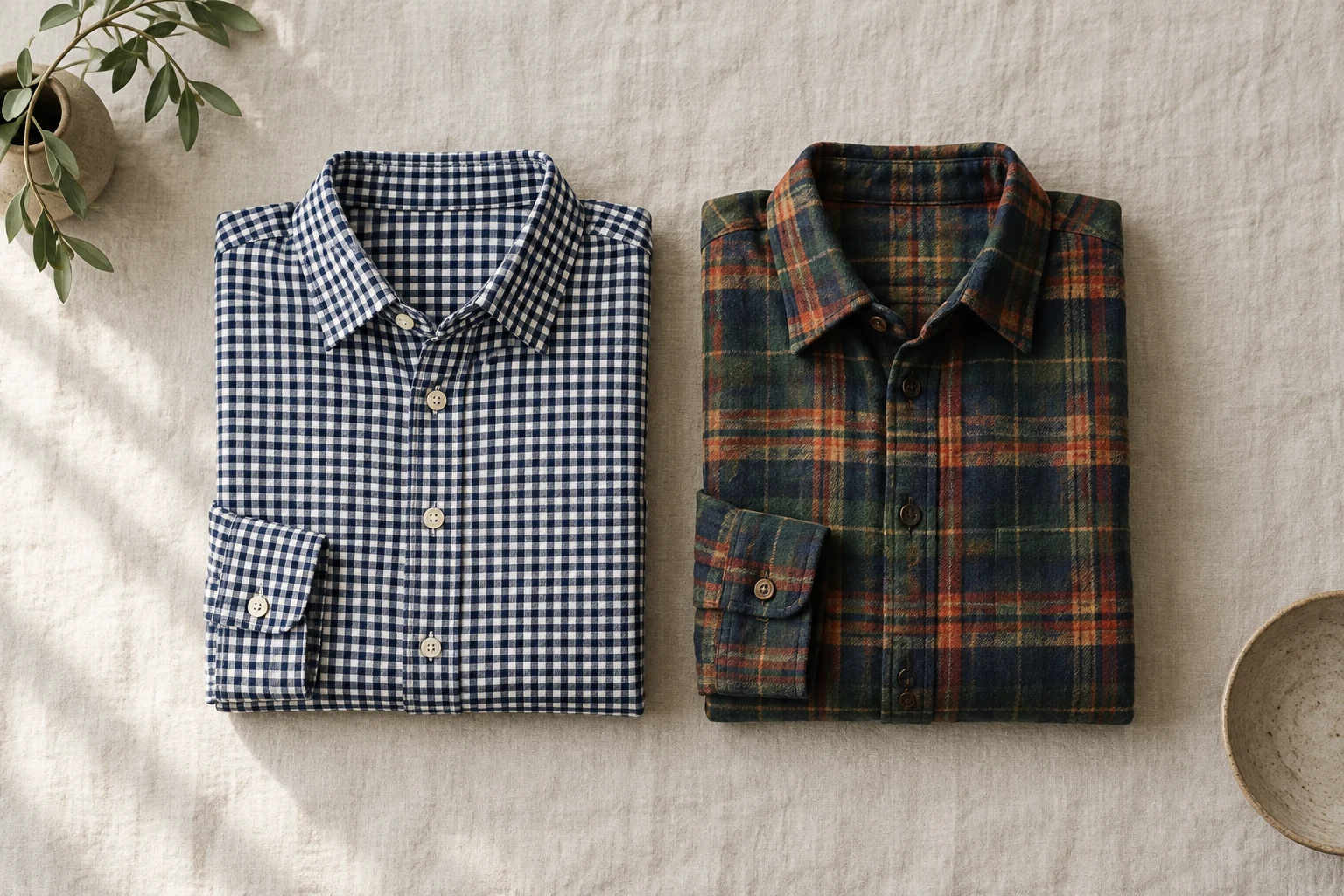
Gingham vs plaid: how to tell checks apart
Gingham vs plaid explained: how to tell the two checks apart in seconds, where tartan and flannel fit in, and how to wear gingham and plaid, even together.
Fabrics
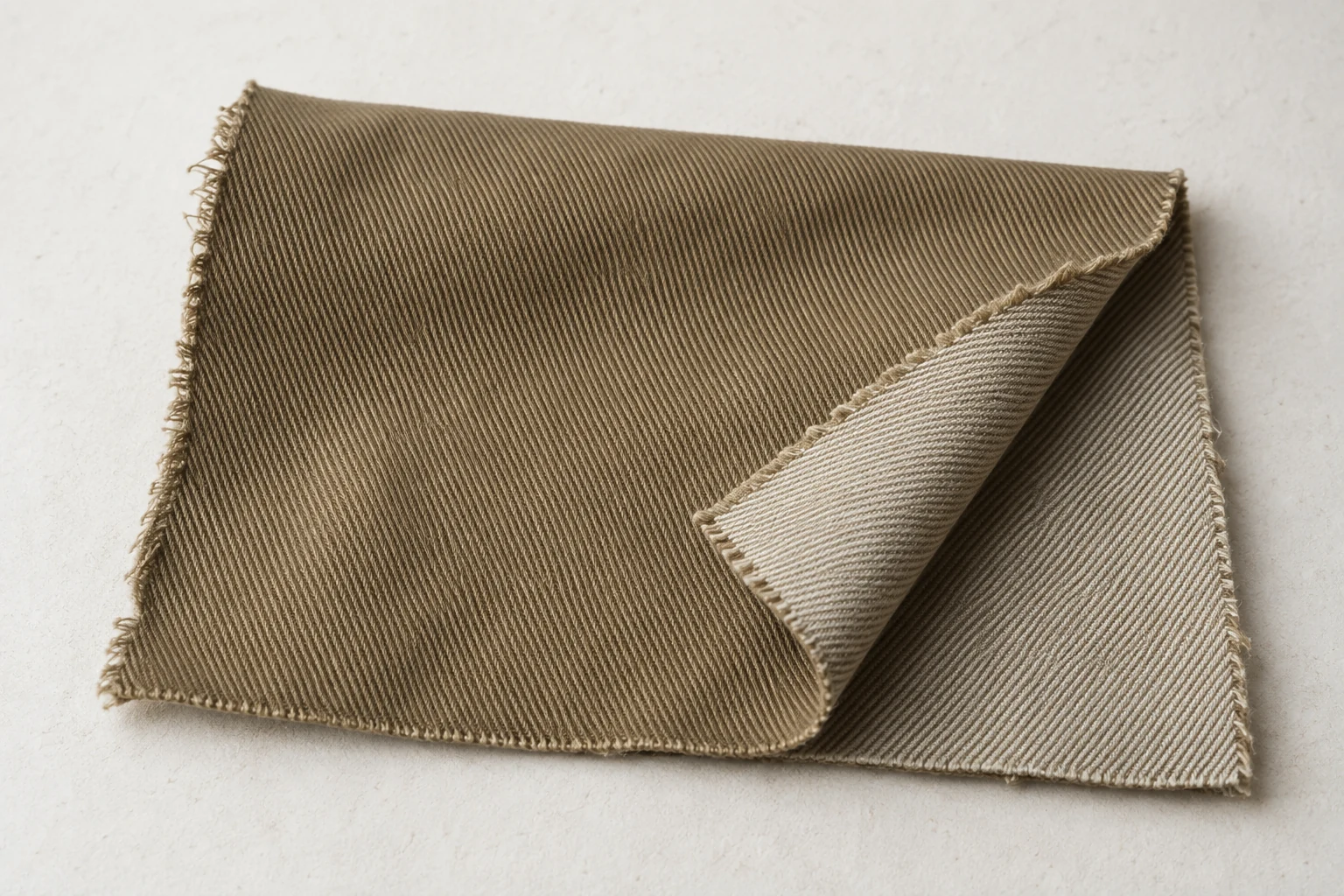
What is twill fabric, and what is it good for
What is twill? The weave behind jeans, chinos and gabardine: how to spot the diagonal, what twill is made of, where it works, and how it compares to cotton.
Fabrics
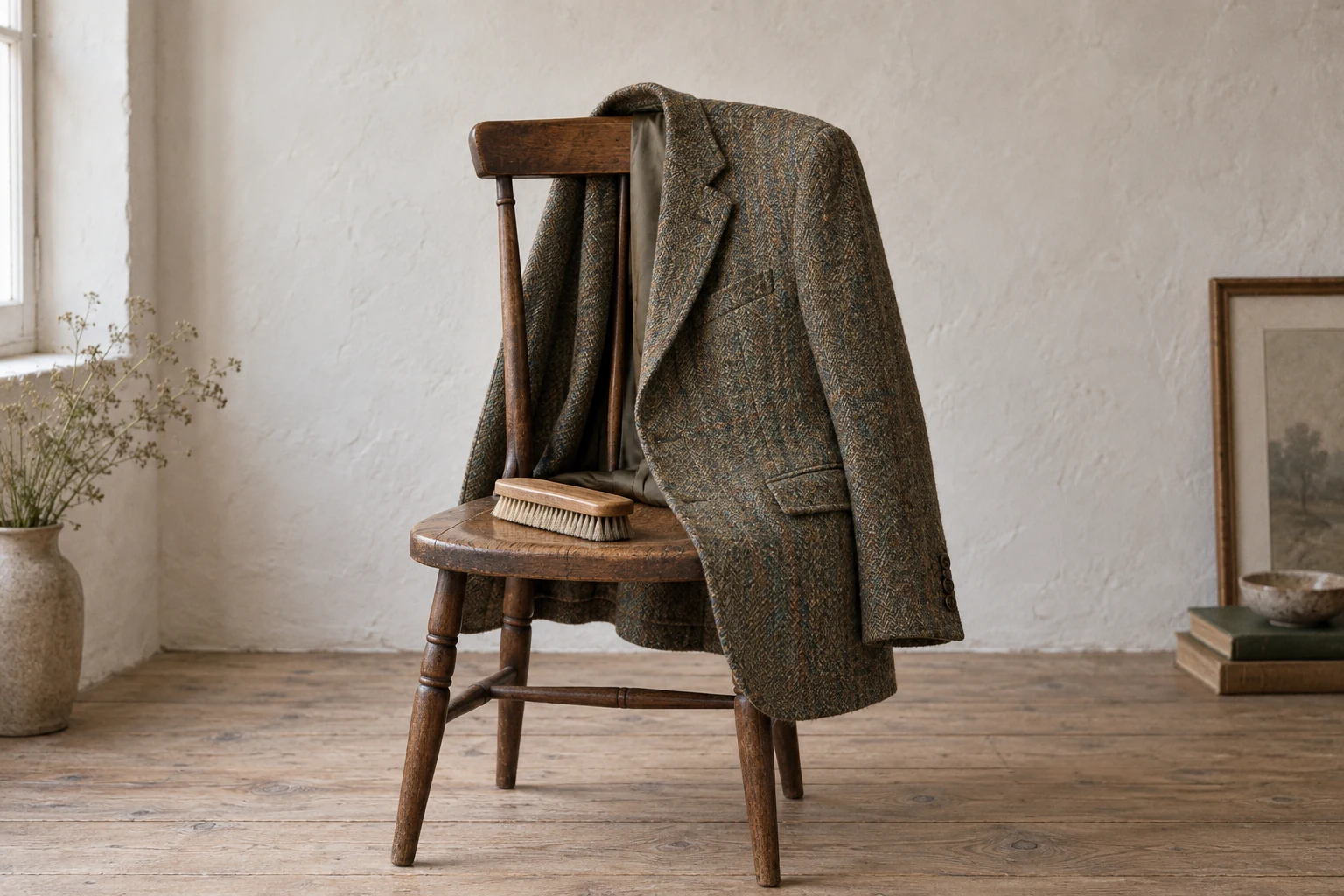
What is tweed? The fabric explained, and how to wear it
What tweed fabric is, how it got its name, the main types from Harris to Donegal, whether it itches or sheds rain, and how to wear and care for it.
Fabrics
Madras fabric: history, care and how to wear it
What madras fabric is, where it comes from, why bleeding madras runs in the wash, how it differs from other plaids, and how to wear and wash a madras shirt.
Styles
Preppy style: what it is and how to wear it now
What preppy style means, where it came from, the core pieces for men and women, and how to wear modern preppy outfits without looking like a costume.