Tie clip placement: where to put a tie bar
In this guide
Maybe it came in a groomsman's gift box, or you bought one because the tie keeps swinging into your soup. Either way you are now standing at the mirror holding a small bar of metal and wondering where it goes. Put it too high and it looks like jewelry pinned at your throat; too low and it vanishes under your jacket and does nothing. Tie clip placement has a simple, widely agreed answer, and once you know why it sits where it does, the rest follows.
A tie clip has a job before it is decoration. It fastens the tie to the front of your shirt so the tie stays straight when you lean forward, bend over a desk or walk into the wind. That job decides the height, the width and how it should grip.
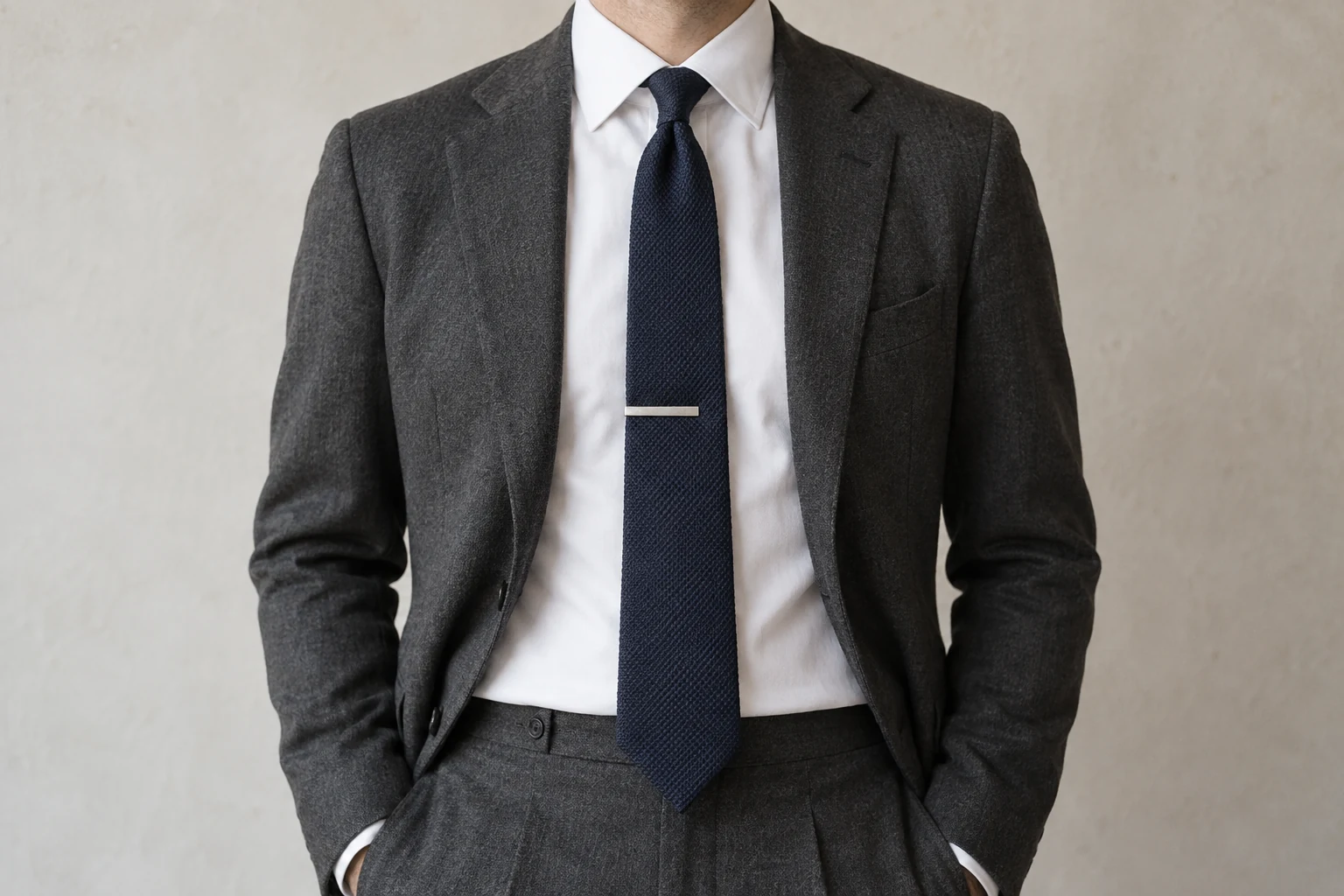
Tie clip placement: the right height
The usual guidance from makers such as The Tie Bar is to place the clip between the third and fourth buttons of your dress shirt, counting the collar button as the first. On most men that lands on the lower chest, near the bottom of the breastbone, which is where a loose tie starts to swing away from the body. It is also where the clip shows in the opening of a buttoned two button jacket, so it stays visible without drawing attention to your neck.
Some people wear it slightly higher for a more contemporary look, and some tie guides present that as a matter of taste. What does not work is either extreme. A clip just below the knot does not stop the tie from swinging and looks fussy, while a clip down near the belt is hidden by a buttoned jacket and leaves the upper half of the tie free to flap. If your shirt buttons are spaced unusually, use your chest as the guide rather than counting.
Choose the right width and keep it level
A tie clip should never be wider than the tie. The common rule is about three quarters of the tie's width at the point where you clip it. One widely used tie guide translates that into roughly 1 3/4 to 2 1/4 inches (4.5 to 5.5 cm) for a standard tie, about 1 1/2 inches for a narrow one and 1 to 1 1/4 inches for a skinny tie. A clip that sticks out past the edges of the tie looks like a mistake, while one that is far too short looks lost on a wide tie.
Wear it horizontal, at a right angle to the tie. A clip set at a slant reads as crooked rather than casual, and the eye goes straight to it. Before you close it, lift the tie very slightly so it arches a little above the clip. That small amount of slack stops the tie from looking pinned flat to your chest and keeps it from pulling at the knot when you move.
How to wear a tie clip properly
The clip goes on last, once the knot is tied and the length is right. Check first that the tip reaches your belt buckle, because moving the tie after it is clipped will drag the placket with it. Our guide to tie length covers that check.
Find the spot
Locate the gap between the third and fourth buttons of your shirt.
CheckYour fingertip rests on the placket, the strip of doubled fabric that holds the buttons, around the bottom of your breastbone.
Line up the blades
Make sure the narrow end is hidden directly behind the wide end, ideally through the keeper loop, so both blades hang in one straight line.
CheckFrom the front you see only the wide blade.
Catch the tie and the shirt together
Open the clip, or slide the bar, so that its back arm goes behind the shirt placket and its front arm lies over the tie. Both blades of the tie and the placket should be inside the clip.
CheckIf you tug the tie gently away from your chest, the shirt comes with it.
Add a little slack and level it
Lift the tie a few millimeters so it curves slightly above the clip, then straighten the clip so it sits horizontally.
CheckThe clip is level, no wider than the tie, and the tie curves gently rather than lying flat.
Tie bar vs tie clip, and where tie pins fit in
The names get used loosely, but there are real differences. A tie bar is a single folded piece of metal that slides over the tie and placket and holds them by friction. A tie clip opens on a hinge and closes with a spring, so it grips more firmly and suits an active day. Both go in the same place and follow the same width rule, and in everyday speech most people call either one a tie clip.
A tie pin is different. It has a decorative head and a pin that passes through the tie and fastens to the shirt behind it, and The Tie Bar associates it with more formal and traditional dressing. A tie tack works the same way, piercing the tie and held by a small clutch at the back. Because both make a small hole in the tie, wear them with sturdier ties and place them at about the same height as a clip, where the head shows in the jacket opening. A collar bar or collar pin is a separate accessory altogether: it runs across the collar under the knot and lifts it, and it has nothing to do with clip placement lower down.
A tie chain is the older cousin of the clip and sits at the same height or a little lower. A short bar or hook fastens to the placket or loops over a shirt button behind the tie, where the tie hides it, and a loose chain drapes across the front of the tie. The tie is threaded through that chain rather than gripped, so leave enough slack that the chain hangs in a shallow curve instead of cinching the tie. Because the chain is the visible part, it reads a little more vintage than a plain bar, which suits tweed, flannel and other textured, traditional suiting.
When to wear one, and when to skip it
A tie clip belongs wherever the tie has to stay put: office days, presentations, weddings, and any day you will be moving around or leaning over things. Without a jacket the same height works; the whole clip is on show, so a plain one looks calmer than a novelty design. Groomsmen often wear matching clips, and for that our guide to wedding attire helps with the rest. Plain silver or gold is the safe choice for work and for serious occasions. Coordinate the metal with the other metal you are wearing, such as your watch, belt buckle or cufflinks, so the pieces look chosen together.
Leave it off when something else is already doing its job. Under a waistcoat or a sweater the tie is held in place and the clip would be hidden anyway. With black tie there is no long tie to clip. And if your outfit already has a collar bar, a pocket square in a bold fold and noticeable cufflinks, one more piece of metal can tip the whole look toward costume. If you are still learning the knot itself, start with our guide on how to tie a tie and add the clip once the rest looks right.
| Accessory | How it holds | Good to know |
|---|---|---|
| Tie bar | Slides over tie and placket, holds by friction | Same height and width rule as a clip |
| Tie clip | Hinged, closes with a spring | Grips more firmly for an active day |
| Tie pin or tack | Pierces the tie and fastens behind | Leaves a small hole, suits sturdier ties |
| Tie chain | Fastens behind, chain drapes across the tie | Leave a shallow curve; suits tweed and flannel |
| Collar bar | Runs across the collar under the knot | Separate accessory, not a clip |
Common mistakes
Clipping only the tie
A clip that holds the two blades of the tie together but not the shirt does nothing to stop the tie swinging, and it can slide off. Always catch the placket behind the tie, as the tie makers recommend.
Choosing a clip wider than the tie
Metal sticking out past the edges of the tie is the most visible tie clip error, especially with slim ties. Measure your usual tie and pick a clip around three quarters of that width.
Wearing it at an angle
A slanted clip looks accidental. Straighten it once you have closed it and check again after sitting down, since the placket can shift.
Using a strong clip on delicate silk
A tight spring or a clip with rough inner edges can mark thin silk. Check the inside for sharp spots, and on fragile ties prefer a smooth slide bar.
Questions people ask
What is the difference between a tie bar and a tie clip?
A tie bar slides on and holds by friction; a tie clip opens on a hinge and closes with a spring, so it grips more firmly. They are worn in the same place, between the third and fourth shirt buttons, and follow the same width rule. Most people use the two names interchangeably.
Should a tie clip be visible with a jacket on?
Yes, that is part of the point of placing it between the third and fourth buttons. With a buttoned two button jacket it usually shows in the jacket opening. If yours disappears under the jacket, move it up a little.
Do you wear a tie clip with a vest?
Usually not. A waistcoat holds the tie flat against the shirt and covers the spot where the clip would go, so it would be hidden and unnecessary. The same applies under a V neck sweater.
Are tie clips still in style?
Plain tie bars in silver or gold have stayed a steady part of office and wedding dressing, because they solve a practical problem rather than follow a trend. What dates quickly is the extreme: very long, very shiny or novelty clips. A simple bar sized to your tie, worn level between the third and fourth buttons, looks current in most American offices.
How do I use a tie pin?
Push the pin through the front blade of the tie at about the height where a clip would sit, and fasten it to the shirt behind with the clutch or chain it comes with. It makes a small hole, so choose a tie with a sturdy weave. Keep the decorative head centered on the tie.
Do men still wear tie tacks?
Less often than clips, mostly because a tack pierces the tie and leaves a small hole. They still appear with more traditional dress and as heirloom pieces. If you have one, wear it at about clip height on a sturdy woven tie and fasten the back clutch through a buttonhole or the placket.
Sources and further reading
References used for this guide. Each opens the original page in a new tab.
Keep reading
Ties and knots
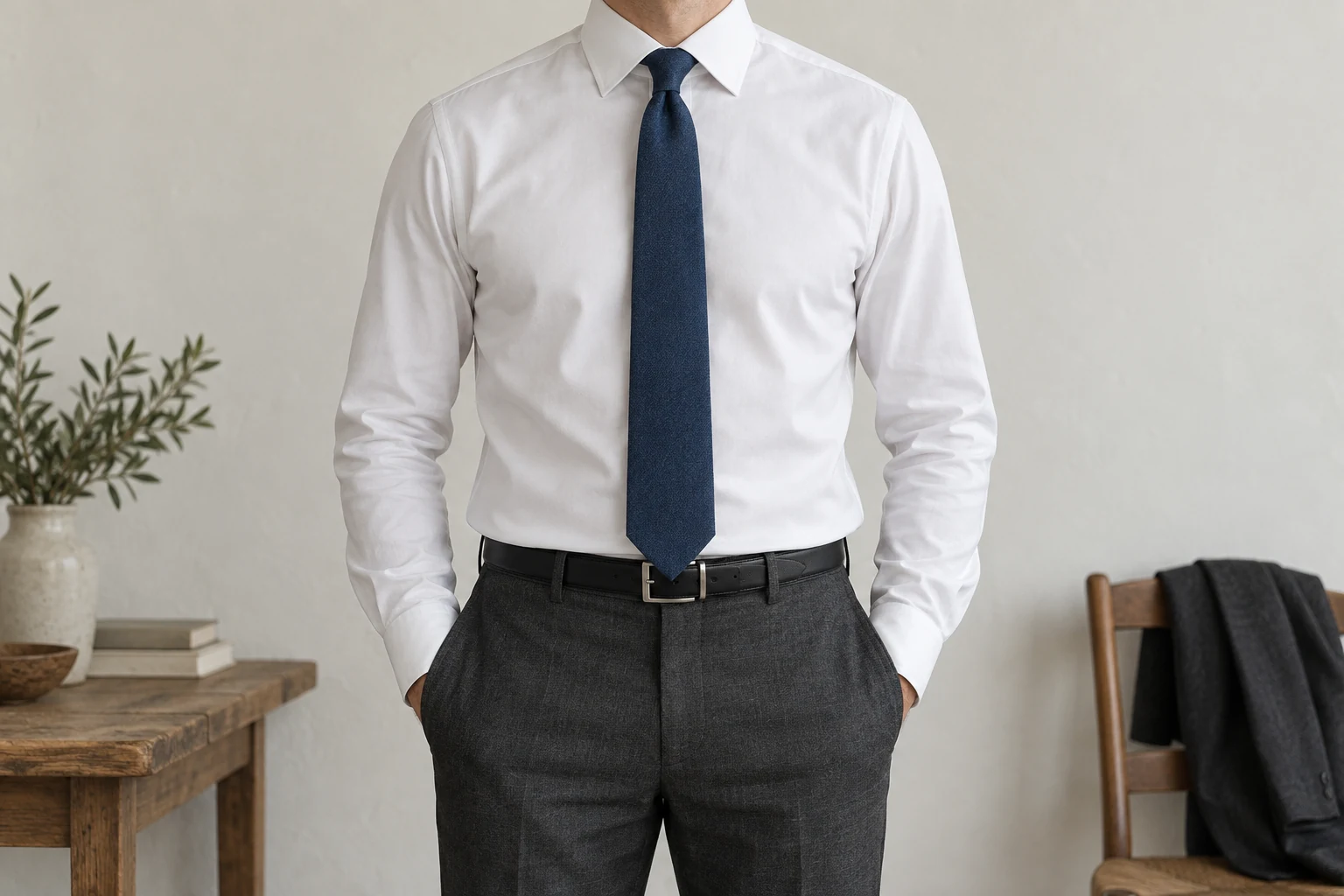
How long should a tie be, and where should the tip land
How long should a tie be? Where the tip should land, standard and extra long tie lengths, how your knot changes the result, and matching tie width to lapels.
Ties and knots
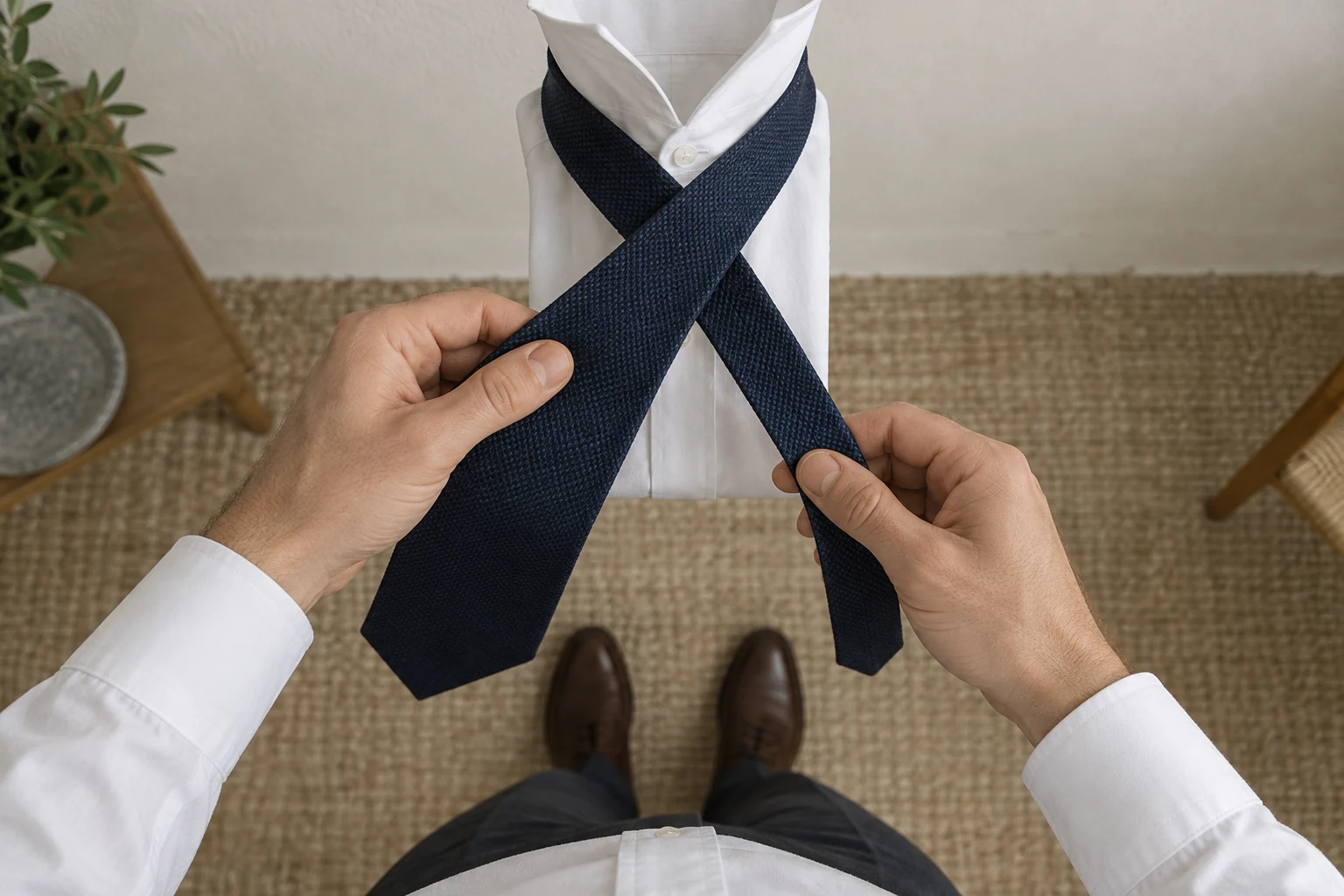
How to tie a tie: the easiest knot for beginners
Learn how to tie a tie with the four in hand, the easiest dependable knot: six steps from your own point of view, then length, dimple and which knot to try next.
Ties and knots
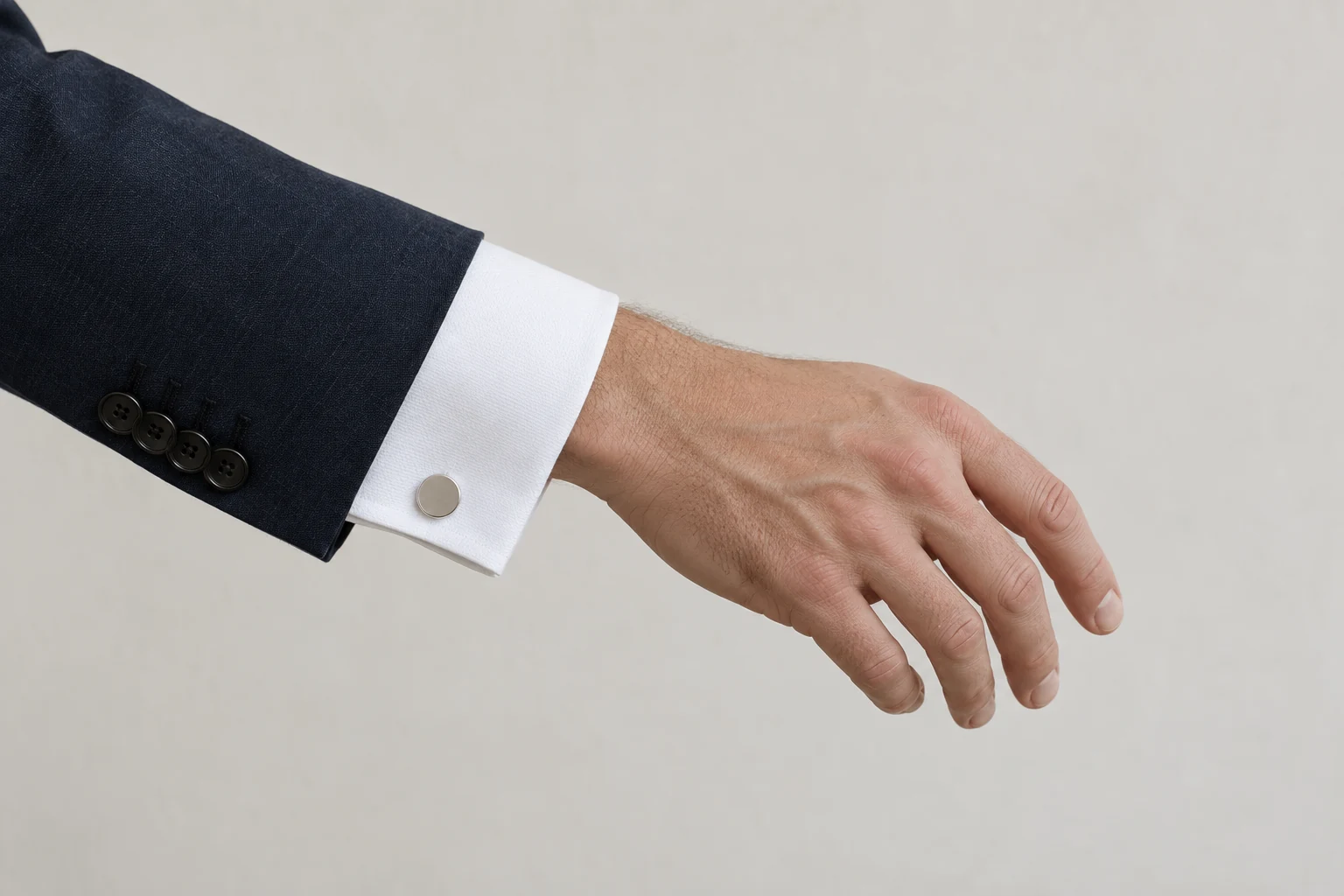
How to wear cufflinks with a French cuff shirt
How to wear cufflinks: which shirts take them, how to fold and fasten a French cuff, kissing vs barrel style, cufflink types, and when to wear them with studs.
Ties and knots
How to fold a pocket square: four folds worth knowing
How to fold a pocket square four ways: the flat presidential fold, one point, two points and the puff, plus which fabric suits each and what to match it with.
Dress codes
Wedding guest attire: every dress code decoded
Wedding guest attire explained from black tie to casual, with what men and women can wear for each dress code, plus color, venue and religious considerations.