How to wash towels so they stay soft
In this guide
New towels feel thick and drink up water. A year later the same towels feel like cardboard, smell faintly sour an hour after a shower, and push water around instead of absorbing it. That decline is rarely age. It is usually buildup: too much detergent, fabric softener, hard water minerals, and towels that stayed damp too long between washes. Learning how to wash towels properly is mostly about avoiding those four things.
The routine below works for ordinary cotton bath, hand and kitchen towels in a home machine. Check the care label first, since some towels with decorative borders, bamboo viscose or linen blends ask for cooler water. If a symbol is unclear, our guide to reading laundry symbols explains it.
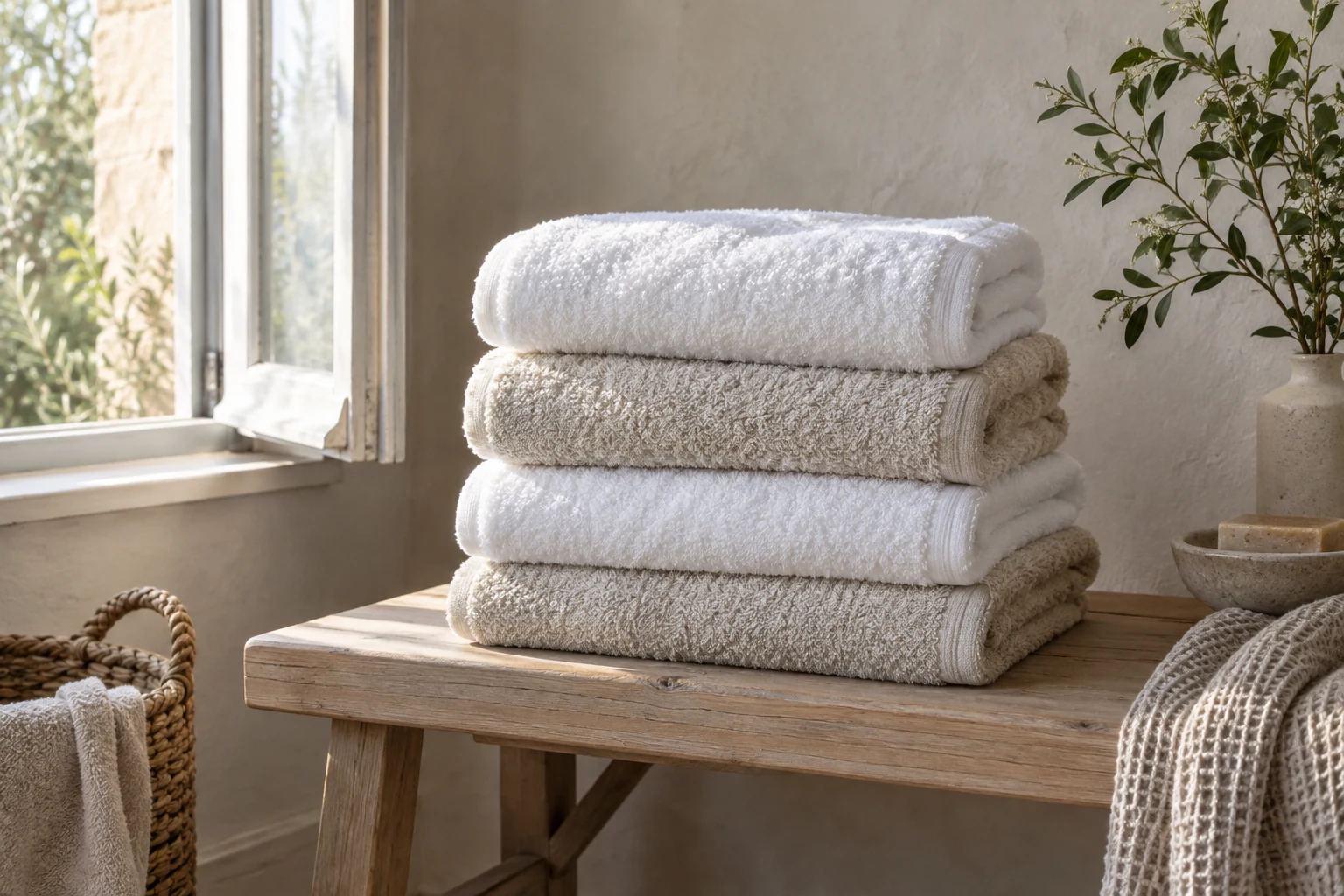
How often towels need washing
A bath towel used after a shower touches clean skin, but it also stays warm and damp, which is exactly what bacteria, yeasts and mold like. Houston Methodist suggests washing bath and hand towels after every three uses and washcloths after each use. Cleveland Clinic puts the minimum at once a week for bath towels and twice a week for washcloths, and more often in humid weather or if you have broken skin, eczema or an infection. Gym towels that sit damp in a bag belong in the laundry after every use.
Between washes, how a towel dries matters as much as how it is washed. Hang it spread open on a bar rather than bunched on a hook, so air can reach both sides, and never put a damp towel in the hamper. A towel that smells musty after one or two uses is telling you it is not drying fully, either because the bathroom is too humid or because residue in the fibers is holding water.
How to wash towels in a washing machine
Wash new towels once before using them, which removes loose fibers and finishing treatments that make them less absorbent at first. After that, the same routine works every time.
Sort towels on their own
Towels shed lint and are heavy when wet, so wash them apart from clothes, especially dark clothes, fleece and anything with a zipper that could snag loops. Wash new, deeply colored towels with similar colors for the first few washes in case the dye runs.
Choose warm or hot water
Warm or hot water, within the limit on the care label, removes body oils and kills more microbes than cold. White cotton towels can usually take the hot setting. Colored towels are usually fine in warm, which protects the dye while still cleaning well.
Use a little less detergent
Measure detergent to the normal line for the load, or slightly below it, rather than adding extra for bulky towels. Excess soap stays trapped in the thick loops and makes them stiff. Our guide to how much detergent to use explains how to read the cap.
Skip the fabric softener
Softeners work by coating fibers with a thin waxy layer. That layer makes towels feel smooth at first but repels water, so each wash leaves them less absorbent. Dryer sheets do the same thing in the dryer.
Leave room in the drum
Towels need space to move through the water. Fill a front loader about three quarters full and leave a hand's width at the top of a top loader. An overpacked load comes out poorly rinsed, which is one of the main reasons towels start to smell.
Dry them for softness
Shake each towel out hard as it comes out of the washer. This lifts the crushed loops and shortens drying time. In the dryer, use a medium or normal setting and take the towels out as soon as they are dry, because long, very hot cycles break down cotton fibers and leave them brittle. Cleveland Clinic recommends high heat when you want to sanitize towels, which is sensible after illness, but for everyday loads a moderate setting is kinder to the fabric.
Towels dried on a line or rack feel stiffer because the loops dry flat in still air. You can reduce this by shaking them well before hanging, drying them on a breezy day, and giving them five minutes in the dryer on a cool setting afterward. Our guide to air drying clothes covers racks and indoor drying. Fold towels only when fully dry, since a slightly damp stack in a closed cupboard will smell within days.
Washing towels with vinegar or baking soda
If towels are already stiff or smell sour even when clean, a stripping wash helps. Run them in the hottest water the label allows with no detergent, and add about a cup of distilled white vinegar to the fabric softener compartment so it arrives in the rinse. The mild acid loosens detergent and mineral residue. If they still smell, wash them again with half a cup of baking soda added to the drum along with a normal dose of detergent. Our guides to using white vinegar in laundry and baking soda in laundry explain the amounts in more detail.
Do these as two separate washes, not one. Vinegar is an acid and baking soda is a base; mixed together they fizz and neutralize each other, leaving mostly salty water, so neither does its job. The combination is not dangerous, but one that is: never use vinegar in the same wash or dispenser as chlorine bleach, because the acid causes the bleach to release chlorine gas. If you bleach white towels, do it in a separate cycle and let the machine rinse before any vinegar goes in.
White towels, colored towels and the hotel question
People often ask how hotels keep towels so white. Commercial laundries use industrial machines, very hot water, softened water and professional chemistry dosed by equipment, which a home laundry cannot copy exactly. At home, the closest you can get is washing whites only with whites, using hot water, and using bleach occasionally rather than every time. For white cotton, chlorine bleach used according to its label works well; for colored towels and for a gentler option on whites, oxygen bleach brightens without stripping dye.
Colored towels fade mostly from heat, bleach and strong sunlight. Wash them in warm rather than hot water, keep chlorine bleach well away, and dry them out of direct sun if you line dry. Our guide to washing white clothes covers the gray and yellow cast that sometimes creeps into white towels and how to reverse it.
How to wash microfiber cloths and towels
Microfiber cleaning cloths, lens cloths and quick dry gym towels need different care from cotton. Their split polyester and nylon fibers trap dirt and lint, so wash them separately from cotton, which sheds lint into them. Use a mild detergent without additives, cold or warm water and a gentle cycle, and never use fabric softener or dryer sheets, which clog the tiny fibers and stop them grabbing dust and absorbing water. Dry on low heat or air dry; high heat can melt and stiffen the fibers.
For a cloth for glasses, a hand wash is simpler: swish it in warm water with a drop of mild detergent, rinse very thoroughly so no film is left to streak the lenses, and let it air dry. Arm and Hammer's care guide for microfiber gives the same advice about separating loads and avoiding softener, which applies whether the cloth is for your car, your kitchen or your phone screen.
| Towel | How to wash | Avoid |
|---|---|---|
| Bath and hand towels | After about three uses, warm or hot, on their own | Fabric softener and dryer sheets |
| Washcloths and gym towels | After every use | Leaving them damp in a hamper or bag |
| White cotton towels | Hot within the label, with occasional bleach | Washing them with colors |
| Colored towels | Warm water | Chlorine bleach and strong sun |
| Microfiber cloths and towels | Apart from cotton, mild detergent, cold or warm, gentle | Softener, dryer sheets and high heat |
Common mistakes
Adding extra detergent for a big load
Thick towels hold on to soap. More detergent means more residue, stiffer towels and a smell that returns fast. Use the normal line and let hot water do the work.
Using softener to fix stiffness
Softener treats the symptom and deepens the cause. The coating builds up wash after wash. Strip the towels with a vinegar rinse instead, then leave softener out.
Leaving wet towels in the machine
An hour or two in a warm, closed drum is enough for a musty smell to start. Move towels to the dryer or the line as soon as the cycle ends.
Questions people ask
Should towels be washed in hot or cold water?
Warm or hot is better for towels, within the temperature on the care label. Hot water removes body oils and kills more microbes, which matters for something that stays damp. Cold water is fine for many clothes, but towels are one of the loads where heat earns its cost.
What temperature should I wash bed sheets and blankets?
Cotton sheets usually do well in warm water, and white cotton sheets can go hot if the label allows it. Blankets vary more: wool blankets need cool water and a wool cycle, while synthetic fleece prefers warm or cool water and low dryer heat. Always follow the label for anything with a filling.
Why do my towels smell after washing?
Usually because residue from detergent or softener is trapping moisture and bacteria, or because the towels sat wet too long before drying. Strip them with a hot vinegar rinse, then a baking soda wash, and dry them straight away. If everything from your machine smells, clean the washer itself.
Can you use dryer balls instead of softener?
Yes. Wool or rubber dryer balls tumble between the towels and help separate them, so they dry a little faster and feel fluffier. They do not coat the fibers, so they do not reduce absorbency.
Can I wash towels by hand?
You can, but it is hard work, because wet towels are heavy and need thorough rinsing. Use warm water and a small amount of detergent, knead and swish them, rinse until the water runs clear, and press water out by rolling rather than wringing. Dry them fully and quickly, ideally outside in a breeze.
Sources and further reading
References used for this guide. Each opens the original page in a new tab.
- Houston Methodist: How often should you wash your bath towel Opens in a new tab
- Cleveland Clinic: How often should you wash your bath towels Opens in a new tab
- Arm and Hammer: How to wash microfiber towels and cloths Opens in a new tab
- Fabric softener: how cationic softeners work and their effect on absorbency Opens in a new tab
Keep reading
Washing and ironing
How much laundry detergent to use per load
How much detergent to use in a washing machine: reading cap lines, pods and powder, adjusting for load size, soil and hard water, and the signs you use too much.
Washing and ironing
White vinegar in laundry: when it helps and when it doesn't
How to use white vinegar in laundry: how much to add, where it goes in the washer, what it can and cannot do, and the one mixing mistake that is truly dangerous.
Washing and ironing
Baking soda in laundry: what it can and can't do
How to use baking soda in laundry: how much to add, where to put it, what it does for odors and stiff towels, and why it cannot replace detergent on its own.
Washing and ironing
How to wash white clothes and keep them white
How to wash white clothes: sort them, pick the right water temperature and detergent dose, use oxygen or chlorine bleach safely, and rescue whites that yellowed.
Washing and ironing
How to clean a washing machine
How to clean a washing machine step by step: the drum, rubber seal, dispenser and filter, with bleach, vinegar or a washer cleaner, for front and top loaders.