Suit vs tuxedo: how to tell them apart and which to wear
In this guide
From across a room, a suit and a tuxedo look almost the same: dark jacket, matching trousers, white shirt. So when an evening wedding or a gala comes up, it is fair to wonder whether the dark suit in your closet will do, or whether this is the night you need a tuxedo. The suit vs tuxedo question comes down to a handful of details, and once you know where to look you can tell the two apart in a second and read what an invitation is asking of you.
This guide covers what makes a tuxedo a tuxedo, what you wear with each, which dress codes call for which, and the two situations where most people hesitate: weddings and prom.
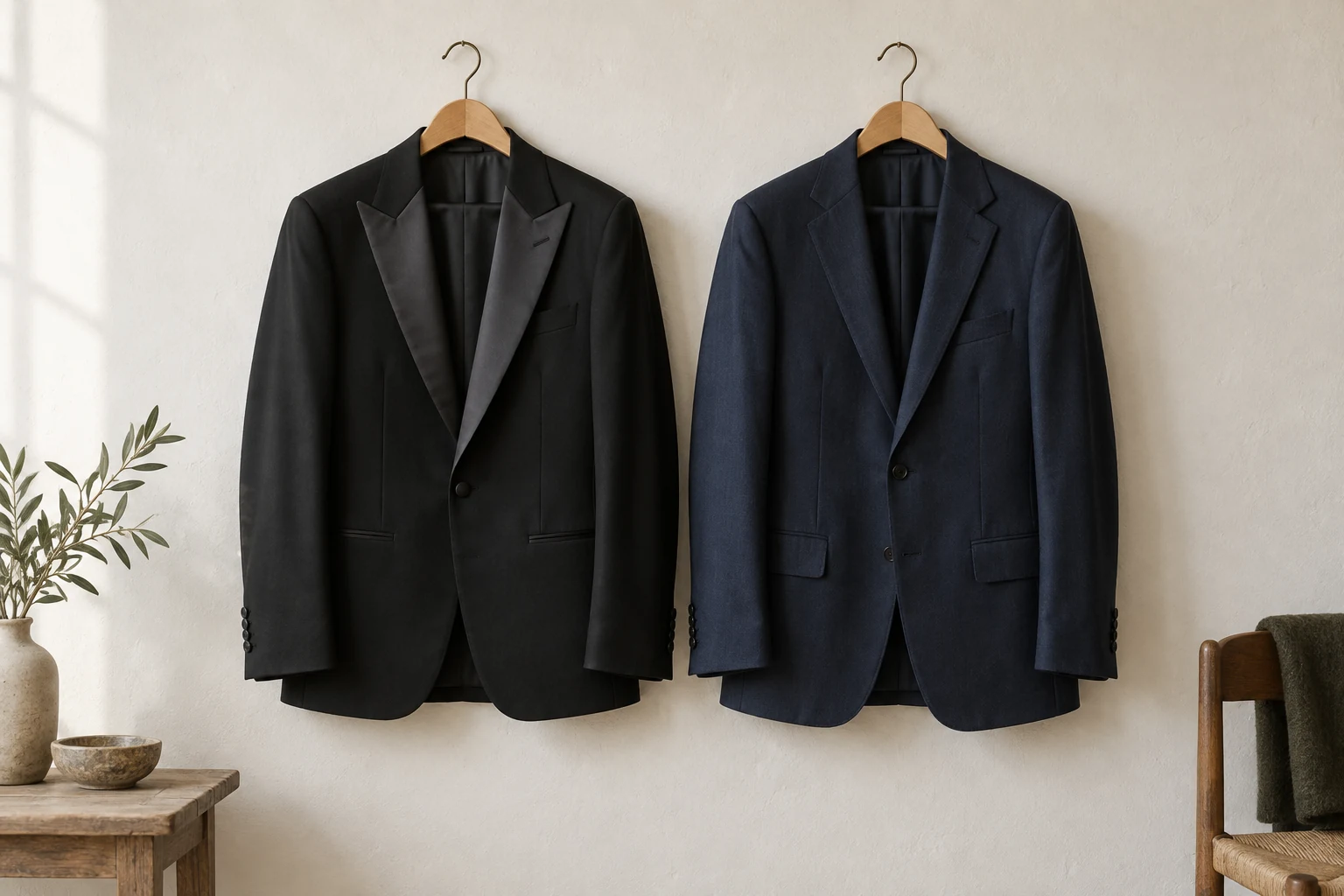
Suit vs tuxedo: the difference is in the silk
A tuxedo is a suit made for evening, and it announces that through silk trim. The lapels are faced in satin or grosgrain, a finely ribbed silk with a quieter sheen. The buttons are usually covered in the same silk, the pockets are jetted (a slim slit with no flap) and often piped in silk, and the trousers carry a single silk stripe down the outer seam of each leg. Tuxedo trousers have no belt loops, because a buckle would interrupt the clean line at the waist; they are held up by side adjusters or suspenders.
A suit is a jacket and trousers cut from one cloth, with nothing added. Its lapels are the same fabric as the body, its buttons are horn or plastic, its pockets usually have flaps, and its trousers have belt loops. Suits come in every color and pattern, from navy and charcoal to tan and windowpane checks. Tuxedos stay within a narrow range: black, midnight blue, and in hot weather an ivory or white jacket with black trousers.
The lapel shape is another clue. Tuxedos traditionally have peak lapels or a rounded shawl collar, and most single breasted versions close with one button. Suits most often have notch lapels, the everyday cut with a small triangle where collar meets lapel. Notch lapel tuxedos exist, especially in rental shops, but formal guides treat them as the less correct choice. If you are shopping, a black jacket with plain notch lapels and flap pockets is a black suit, whatever the tag says.
What you wear with each
The tuxedo comes with its own set of accessories, and they matter as much as the jacket. The shirt is white, with a pleated or piqué front, holes for studs instead of ordinary buttons, and French cuffs closed with cufflinks. The tie is a black bow tie, ideally in a silk that matches the lapel facings. A black cummerbund or a low cut waistcoat covers the waistband, and the shoes are black patent leather or very highly polished black calf, with thin black dress socks. The Emily Post Institute lists essentially this combination for black tie, with patent shoes as its default.
A suit is far more flexible. You can wear it with a white, light blue or patterned dress shirt, a long necktie in almost any color, a leather belt that matches your shoes, and black or brown shoes depending on the suit and the occasion. That flexibility is the point: a navy suit can go to an office, a funeral, a cocktail party and a wedding. If you want reliable combinations, our guide to shirts and ties for a navy suit is a good starting place.
The two sets do not mix well. A tuxedo jacket worn with jeans or a regular shirt looks like a costume because the satin lapels keep asking for evening clothes. A black suit worn with a bow tie is closer, but up close the missing silk gives it away. If you need to fake it, a plain dark suit with a white shirt and a black silk bow tie is the most respectable compromise.
| Detail | Tuxedo | Suit |
|---|---|---|
| Lapels | Satin or grosgrain faced, peak or shawl | Same cloth as the body, usually notch |
| Buttons and pockets | Silk covered buttons, jetted pockets | Horn or plastic buttons, flap pockets |
| Trousers | Silk side stripe, no belt loops | Plain, with belt loops |
| Colors | Black, midnight blue, ivory jacket in heat | Any color or pattern |
| Shirt | White, pleated or piqué front, studs, French cuffs | White, light blue or patterned |
| Tie | Black bow tie | Long necktie in almost any color |
| Shoes | Black patent or highly polished black calf | Black or brown to suit the occasion |
Which one the invitation is asking for
Dress codes settle most of the question. Black tie means a tuxedo; that is what the phrase describes, and our full guide to the black tie dress code covers every piece. Black tie optional means the host would like tuxedos but will welcome a dark suit with a white shirt and a conservative tie, which is the Emily Post reading as well; see black tie optional for how to judge which way to lean. White tie is more formal than either and calls for a tailcoat, not a tuxedo.
Everything below that is suit territory. Formal without the words black tie, semi formal, cocktail attire and business formal all point to a dark suit, and a tuxedo at those events usually reads as overdressed. By tradition the tuxedo is also evening wear, meant for events that begin around six or later. A tuxedo at a noon garden wedding is not forbidden, but it looks out of step with the daylight.
When the invitation says nothing at all, look at the venue, the time and the hosts. An evening reception at a grand hotel may lean formal; a Saturday lunch in a barn does not. If you are still unsure, a dark suit is the safer error, because it can be dressed up with a white shirt and a dark silk tie, while a tuxedo cannot be dressed down.
Tuxedo vs suit for a wedding
At a wedding, guests follow the invitation and the wedding party follows the couple. If the couple has chosen black tie, the groom, the groomsmen and the male guests all wear tuxedos. If they have not, a wedding tuxedo for the groom is still possible, but it sets the formality for everyone, so it makes sense only when the reception is an evening event and the guests have been told what to expect.
Many grooms now choose a suit instead, especially for daytime, outdoor or relaxed weddings. A suit in navy, charcoal, a lighter gray or a summer cloth can be bought to fit and worn again for years, while a tuxedo is often rented for the day. Either choice is correct when it matches the tone of the event. As a guest, a well fitted suit is right for almost any wedding that is not black tie, and our guide to what to wear to a wedding goes through each dress code.
Suit or tux for prom
Prom is one of the few places where both are normal. A tuxedo feels like the occasion and is easy to rent, and rental packages often include the shirt, bow tie, cummerbund or vest, studs and cufflinks. A suit is just as acceptable at most schools and has the advantage that you keep it: a dark suit bought for prom will serve for interviews, graduations and weddings for several years if it fits well.
If you rent, book a fitting early and try on every piece, including the shoes. Check that the trousers sit at your waist without a belt, that the jacket closes without pulling at the button, and that the shirt collar fits around your neck with room for a finger. If you buy a suit, choose navy or charcoal rather than black for more future use, and take it to a tailor for sleeves and hems; our guide on how a suit should fit explains what to check.
Can you wear a tuxedo with a regular tie?
You will see it on red carpets and in rental catalogs: a tuxedo with a long black necktie instead of a bow tie. It is a modern variation rather than a mistake that anyone will stop you for, but traditional black tie guidance, including Emily Post, lists only the bow tie, and a long tie makes a tuxedo read like a shiny black suit. At a formal event the bow tie is the more correct and more flattering choice. If you have never tied one, our steps for tying a bow tie take one patient evening to learn.
The reverse question comes up too: can a black suit with a necktie stand in for a tuxedo? At a black tie optional event, yes, and a dark navy or charcoal suit is just as correct as black. At strict black tie it is a respectful fallback rather than an equivalent, so it is worth asking the host or renting if you have time.
Common mistakes
Wearing a belt with tuxedo trousers
Tuxedo trousers have no belt loops for a reason. If rental trousers feel loose, ask for side adjusters or suspenders rather than threading a belt through the waistband, and cover the waist with the cummerbund or waistcoat.
Buying a black notch lapel suit as a tuxedo
A black suit with notch lapels and flap pockets is not a tuxedo, even if it is sold near the formalwear. If you want one garment that can do both jobs, you will end up with a compromise at each; a navy or charcoal suit plus an occasional tuxedo rental serves most people better.
Skipping the fitting on a rental
Rental sizes are based on a few measurements. Try the whole outfit on before the day so there is time to swap a jacket that pulls at the button or trousers that pool on the shoes.
Questions people ask
Is a dinner suit the same as a tuxedo?
Yes. Dinner suit or dinner jacket is the usual British name for what Americans call a tuxedo, and in much of continental Europe the same outfit is called a smoking. The garment is the same everywhere: silk faced lapels, matching trousers with a silk stripe, worn with a formal shirt and black bow tie.
Is a tuxedo more formal than a suit?
Yes. A tuxedo is evening formal wear and sits one step below white tie, while even the darkest suit belongs to business and semi formal dress. That is why a tuxedo at a daytime or cocktail event looks overdressed, and a suit at strict black tie looks underdressed.
Can I wear a black suit to a black tie event?
At black tie optional, a dark suit with a white shirt and conservative tie is fully correct. At strict black tie, a plain black or very dark suit with a white shirt and black bow tie is the closest substitute, but it is a fallback. If you have time, rent a tuxedo.
Is a midnight blue tuxedo acceptable?
Yes. Traditional formal guides treat midnight blue as equally correct as black, and under artificial light it can look richer. Keep the bow tie, shoes and facings black.
Should the groom wear a tuxedo or a suit?
Match the formality of the wedding. For an evening black tie reception, a tuxedo; for a daytime, outdoor or relaxed wedding, a well fitted suit. Whatever the groom chooses sets the tone, so let guests know through the dress code on the invitation.
How is a tuxedo different from a three piece suit or a blazer?
A three piece suit is still a suit: the waistcoat is cut from the same cloth, with no silk facings or trouser stripe, and it suits business and weddings rather than black tie. A tuxedo waistcoat is low cut and worn instead of a cummerbund. A blazer is an odd jacket worn with trousers that do not match, which makes it less formal than either.
Sources and further reading
References used for this guide. Each opens the original page in a new tab.
- Brooks Brothers: tuxedo vs suit Opens in a new tab
- Black Lapel: the simple differences between a tux and a suit Opens in a new tab
- Emily Post Institute: black tie dress code Opens in a new tab
- Emily Post Institute: attire guide from casual to white tie Opens in a new tab
- Gentleman's Gazette: black tie dress code explained Opens in a new tab
Keep reading
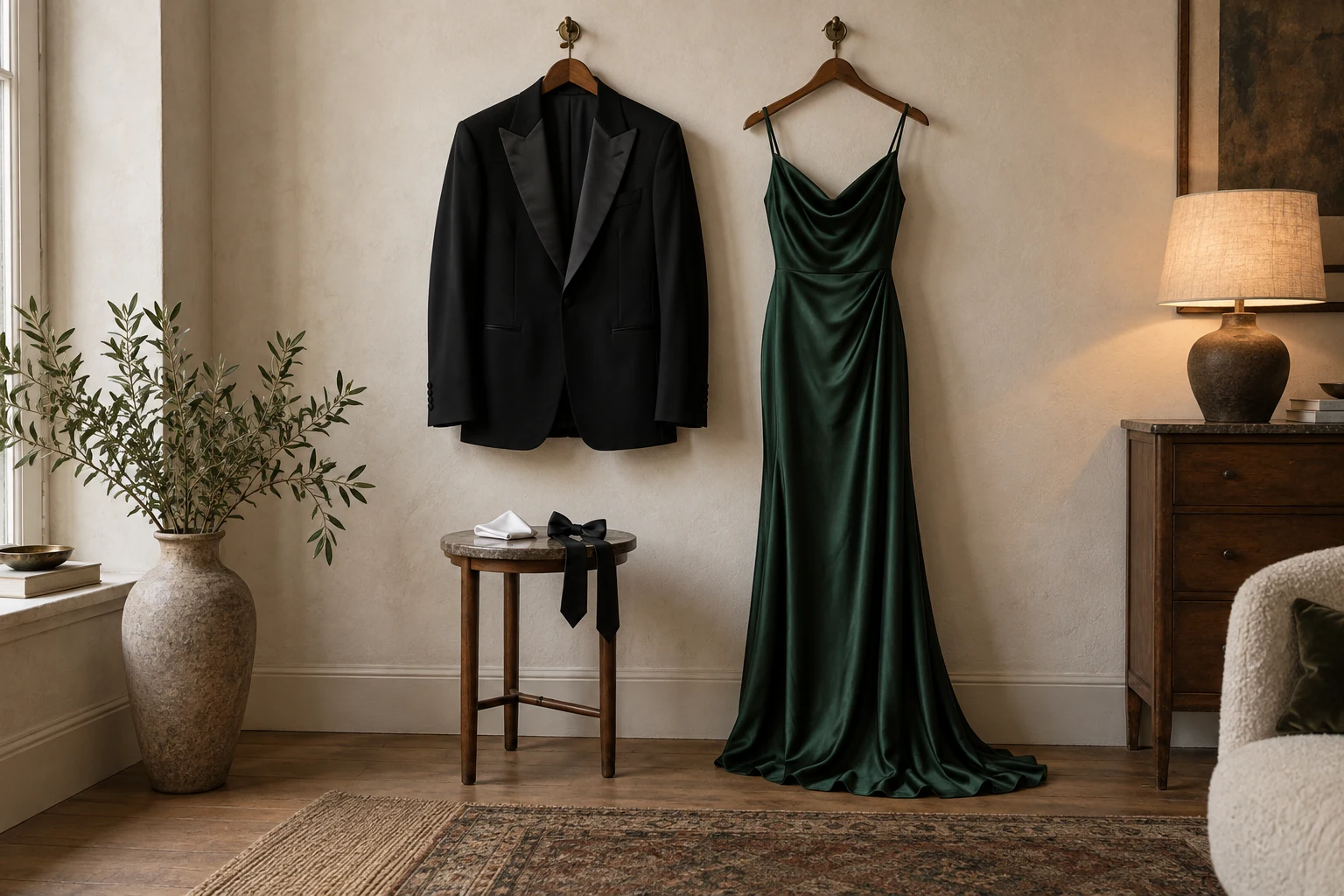
Dress codes
Black tie attire: what to wear, for men and women
Black tie attire explained: the tuxedo in detail, the shirt, bow tie and shoes, plus gowns and elegant alternatives for women and black tie weddings.
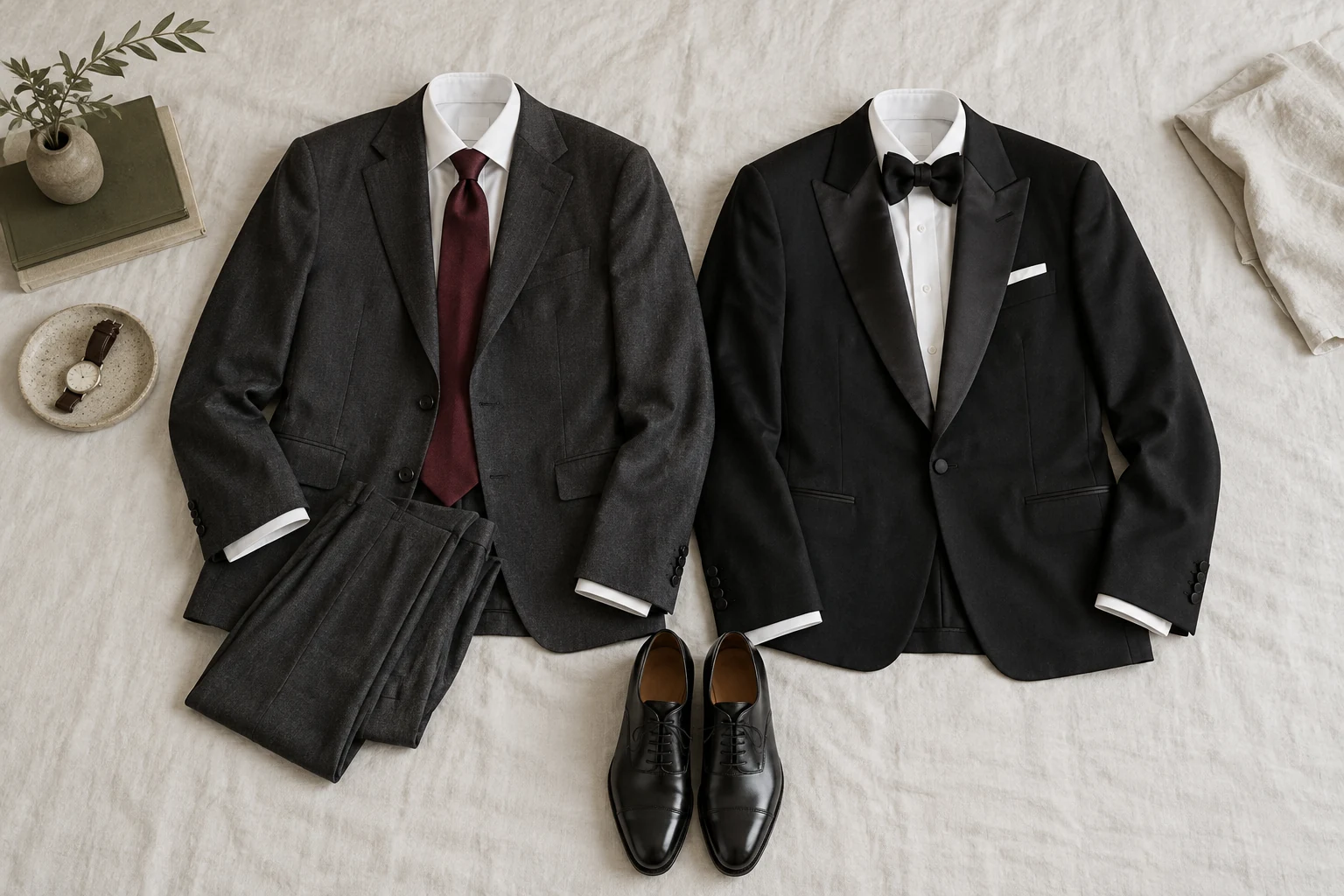
Dress codes
Black tie optional: what it means and what to wear
What black tie optional means for men and women: tuxedo or dark suit, gown or elegant cocktail dress, plus how to choose, dress for the season and avoid mistakes.
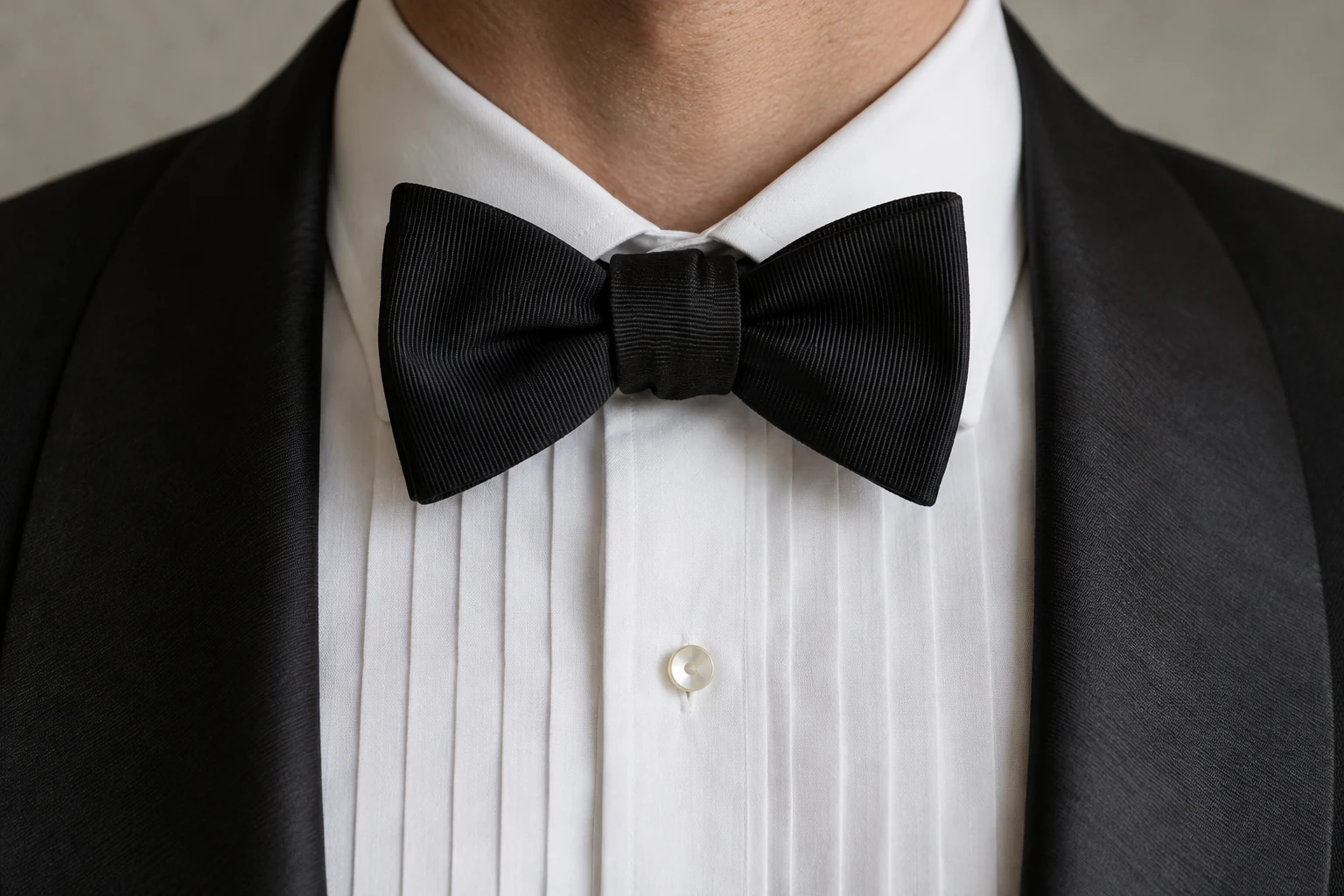
Ties and knots
How to tie a bow tie, step by step
Learn how to tie a bow tie step by step, with a checkpoint after each fold, how to find the hidden opening, and how to fix a bow that is lopsided or loose.
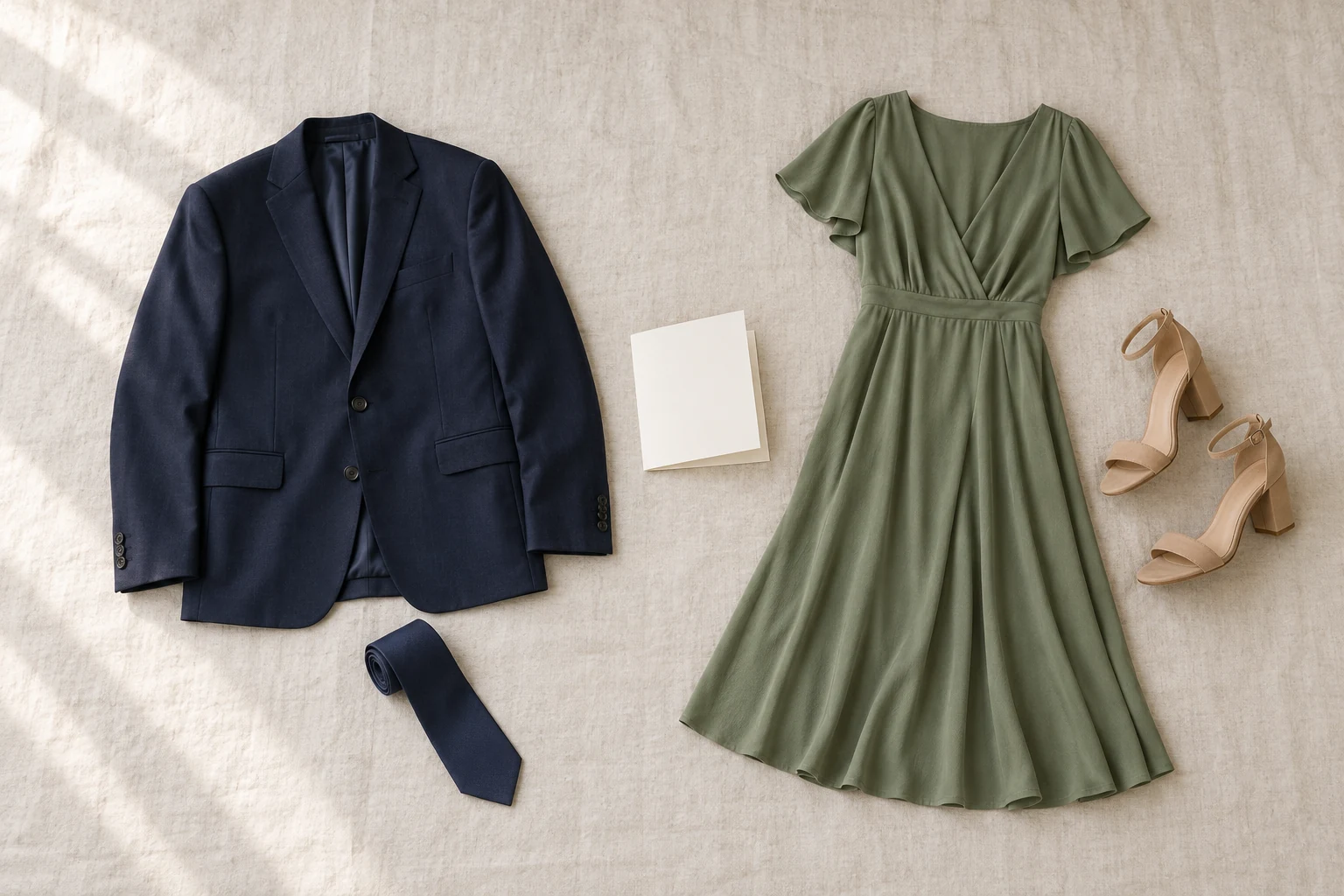
Dress codes
Wedding guest attire: every dress code decoded
Wedding guest attire explained from black tie to casual, with what men and women can wear for each dress code, plus color, venue and religious considerations.
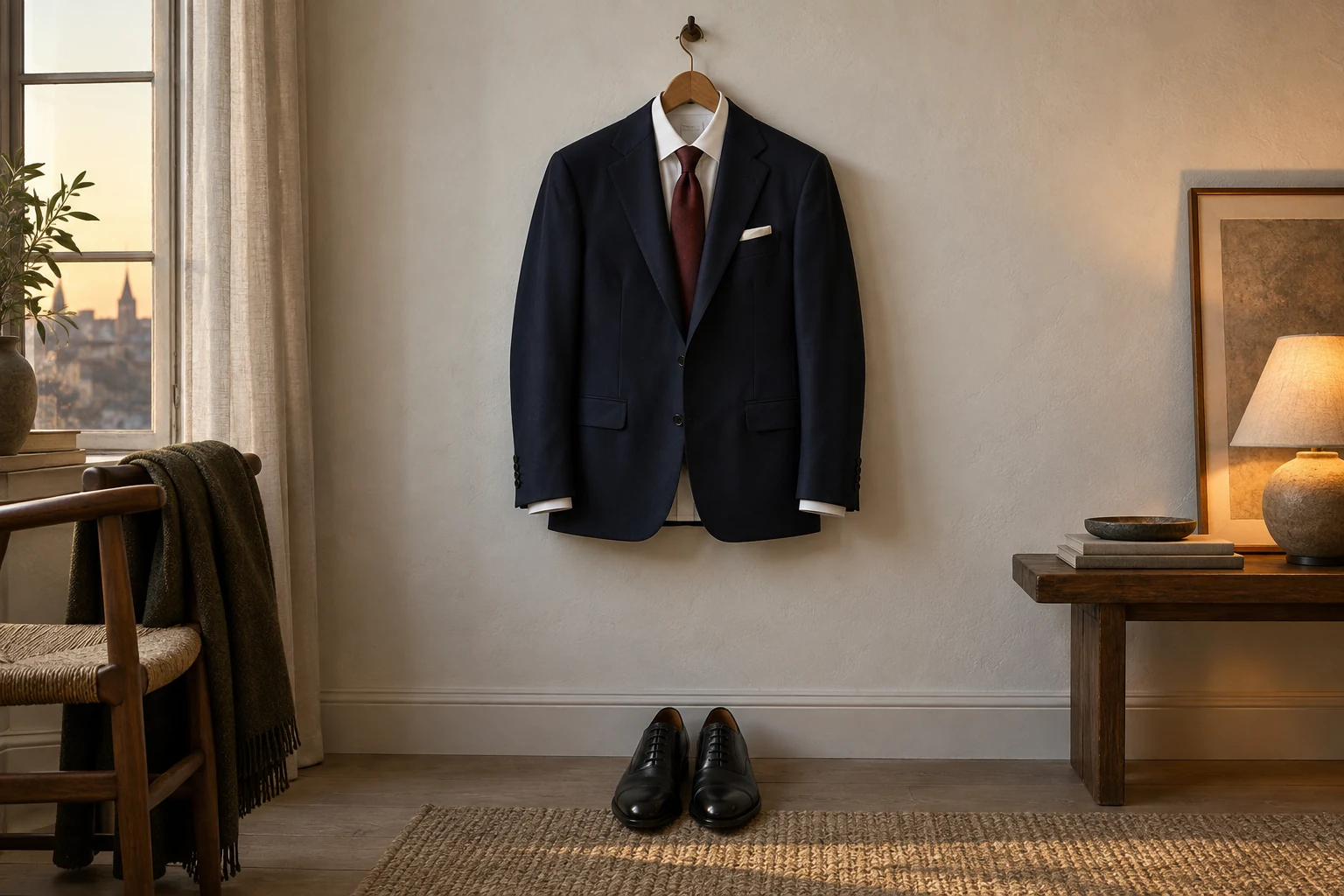
Dress codes
Cocktail attire for men: what to wear
What cocktail attire means for men: the dark suit, when a tie is optional, how time, season and venue change it, and what to wear to a cocktail attire wedding.