How to get mud out of clothes
In this guide
Mud comes out of most clothes more easily than it looks, provided you resist the first instinct: rushing the muddy jeans to the sink and scrubbing. Rubbed while wet, mud spreads and sinks deeper into the weave. Knowing how to get mud out of clothes is mostly a matter of order, and the first step is to wait.
Mud is mostly soil particles, sand and clay suspended in water, with some plant matter. The particles are the problem, not the water, and they come out best when they can be lifted away dry and then washed out with plenty of detergent. The guide covers ordinary mud from soccer fields, dog walks and wet trails, the stubborn red clay of the American South and Southwest, and what to do if the stain has already been through the dryer.
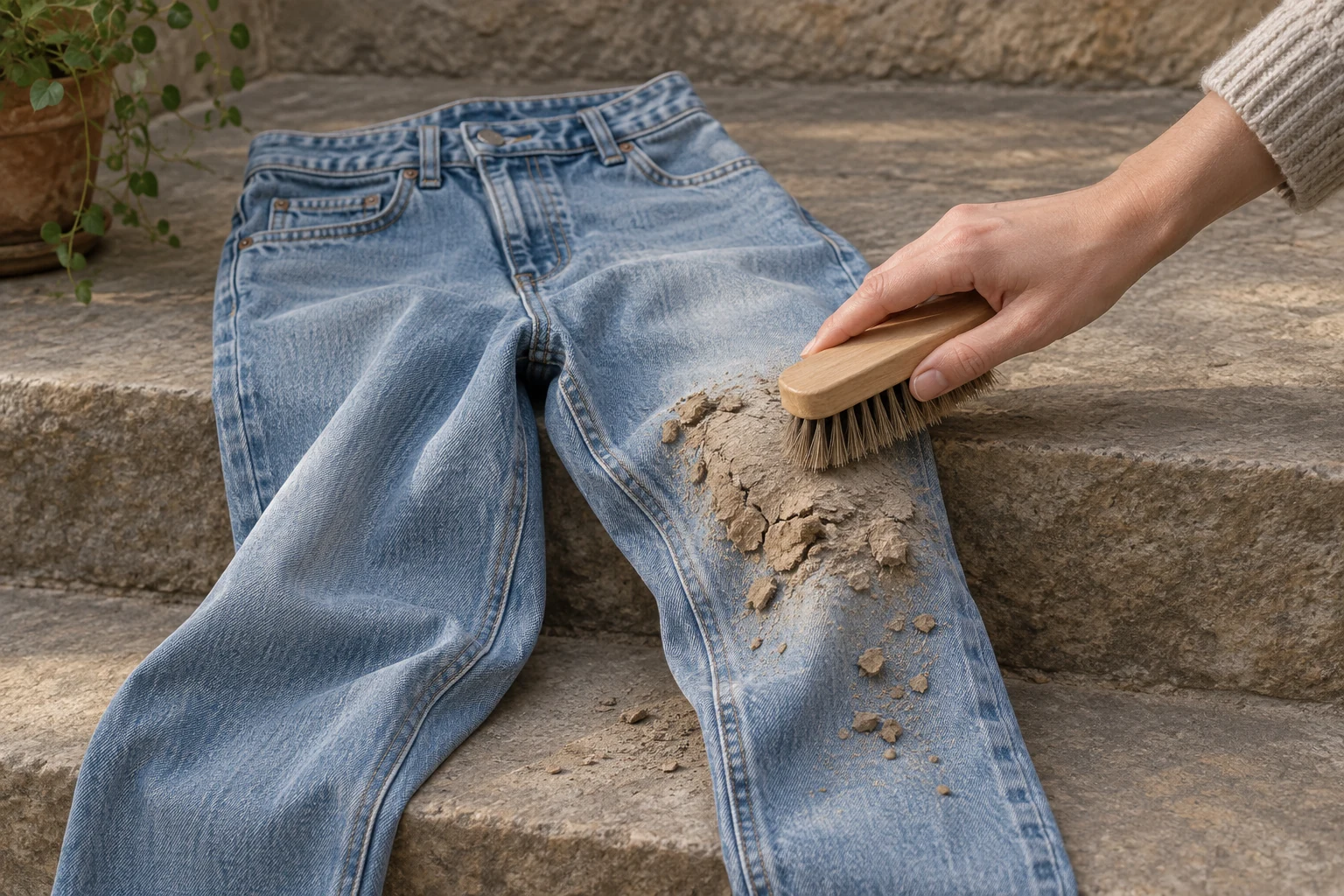
Let the mud dry before you touch it
Wet mud behaves like paint. Rubbing or rinsing it while it is wet pushes the fine particles deeper between the yarns and spreads them over a wider area. The American Cleaning Institute's stain guide starts the mud entry with the dry step for this reason: once mud is dry, it cracks and flakes, and most of it lifts off without leaving much behind.
Hang the muddy piece somewhere it can dry fully, which may take a few hours for a thick splash on denim. Do not put it in the dryer to speed things up. Heat turns a removable soil stain into a stubborn one, and the Texas A&M AgriLife Extension guide is blunt about it: never dry a stained garment in the dryer, or the stain may become impossible to remove. If you are away from home and the garment is soaked, just keep it separate in a bag and deal with it when you can let it dry.
How to get mud out of clothes, step by step
This routine works for most washable fabrics, including cotton, denim, polyester and blends. Check the care label first, and for anything marked dry clean only, brush off the dry mud and take it to a cleaner rather than wetting it.
Brush off the dried mud outdoors
Use a stiff clothes brush, an old toothbrush or the back of a butter knife to crack and flick away the crust. Work outside or over a trash can, and brush from the back of the fabric too if you can.
CheckYou should end up with a faded, dusty shadow rather than a thick patch.
Test your pretreatment
Dab a little liquid detergent or stain remover on a hidden spot such as an inside hem, rinse it, and let it dry. Extension guides point out that fabrics look darker wet, so a color change may only show once the spot dries.
Pretreat the stain
Work liquid laundry detergent, a paste of powder detergent and water, or an enzyme based stain remover into the stain with your fingers or a soft brush, from the back of the fabric if possible. Leave it for 10 to 15 minutes. The detergent surrounds the soil particles so the wash water can carry them away.
Soak heavy stains
For caked knees or a whole muddy uniform, soak the pieces for an hour or more in the warmest water the label allows with detergent or an enzyme presoak dissolved in it. Extension guides note that stains on the lower edges of pants and cuffs are usually soil, so these areas are worth an extra look.
Wash warm and check before drying
Wash in the warmest water the care label permits, with a full dose of detergent. When the cycle ends, inspect the stain in good light while the fabric is still damp. If you can still see it, repeat the pretreatment and wash again. Air dry until you are sure it is gone.
Red clay and iron rich mud
Red clay gets its color from iron oxides, which is chemically close to rust. So a red or orange tint can survive a wash that removes every other trace of the mud. Clorox's red clay guide adds a long presoak in hot detergent water, up to several hours for sturdy fabrics, before pretreating and washing.
If an orange shadow remains, treat it as a rust stain. The American Cleaning Institute warns against chlorine bleach on rust and brown or yellow discoloration, because bleach can intensify it. A rust remover labeled safe for fabric is the right tool, used exactly as its directions say and tested on a hidden spot first. Our guide on getting rust out of clothes explains the options, including gentler household acids, and which fabrics they are safe on.
Are mud stains permanent?
Rarely, if the garment has not been through a hot dryer. Even older mud stains usually yield to a longer soak and a second wash, because soil sits between the fibers rather than bonding with them. The exceptions are red clay that has been heat set, mud mixed with oil or grease from a road or parking lot, and mud on delicate fabrics that cannot take warm water or scrubbing.
For a stain that has already been dried, start again from the beginning: brush, pretreat with an enzyme product, and soak overnight. On whites and colorfast fabrics an oxygen bleach soak is the next step, following the instructions in our guide to using oxygen bleach. If road mud has left a dark, greasy edge, treat that part as an oily stain first, as described in our guide on getting grease out of clothes. A Texas extension guide also notes that a strong pretreatment can leave a clean patch on dingy fabric; washing the whole garment with a presoak and extra detergent evens it out.
Uniforms, whites and delicate fabrics
Sports uniforms are often polyester with printed numbers, which tolerate detergent and enzyme soaks well but may not like hot water or a hot dryer. Wash them inside out, warm rather than hot unless the label says otherwise, and air dry. Muddy grass stains on the same knees need their own enzyme treatment; our guide on getting grass stains out covers that combination.
White cotton can take the hottest wash and, if needed, oxygen bleach, so you have the most tools. Wool, silk and anything structured, such as a coat or a lined jacket, is different. Let the mud dry, brush it off gently with a soft brush, and blot any remaining mark with a cloth dampened with cool water and a little wool wash. If a trace remains on a good coat, a professional cleaner will do better than more scrubbing. For muddy sneakers, see our guide to cleaning canvas shoes.
| Situation | What works | Avoid |
|---|---|---|
| Ordinary mud on cotton or denim | Dry, brush, pretreat 10 to 15 minutes, wash warm | Rinsing it while wet |
| Red clay | Long hot detergent presoak, then fabric safe rust remover | Chlorine bleach |
| Road mud with grease | Treat the oily edge as a grease stain first | Washing before the grease is lifted |
| Stain already dried in a dryer | Brush, enzyme pretreatment, overnight soak | More heat |
| Polyester uniforms | Inside out, warm wash, air dry | Hot water and a hot dryer |
| Wool, silk, coats | Brush gently, blot with cool water and wool wash | Scrubbing; use a cleaner if a trace stays |
Common mistakes
Rinsing wet mud under the tap
Running water through fresh mud drives the particles into the weave and spreads the stain. Let it dry and brush it off first; rinse only after most of the soil is gone.
Using chlorine bleach on red clay
Chlorine bleach can deepen iron based discoloration instead of lifting it. Reach for a fabric safe rust remover, or oxygen bleach on colorfast fabrics, and never mix bleach with other cleaners.
Drying before checking
The dryer's heat sets any soil that is left. Check the stain while the fabric is damp and air dry until it is gone.
Questions people ask
Does dish soap get mud out of clothes?
A little dish soap worked into a small mud mark can help, especially if the mud is mixed with grease. Laundry detergent is designed for soil in fabric and rinses out more easily, so it is the better first choice. If you use dish soap, use only a drop and rinse well before washing.
Does mud come out in the wash?
Light splashes often wash out on their own once they are dry and brushed. Heavier stains need a pretreatment or soak first, because a normal cycle does not give the detergent enough time to loosen packed soil. Always check before drying.
Should you soak mud stains in hot or cold water?
Warm to hot, within what the care label allows. Mud is not a protein stain like blood or egg, so warm water does not set it and helps detergent work. The exception is mud mixed with blood from a fall, which should start in cold water.
What is the best stain remover for mud?
A liquid detergent or an enzyme based stain remover handles most mud. For heavy stains, an enzyme presoak is more effective than a quick spray. For red clay, add a fabric safe rust remover for any orange tint that remains.
Sources and further reading
References used for this guide. Each opens the original page in a new tab.
Keep reading
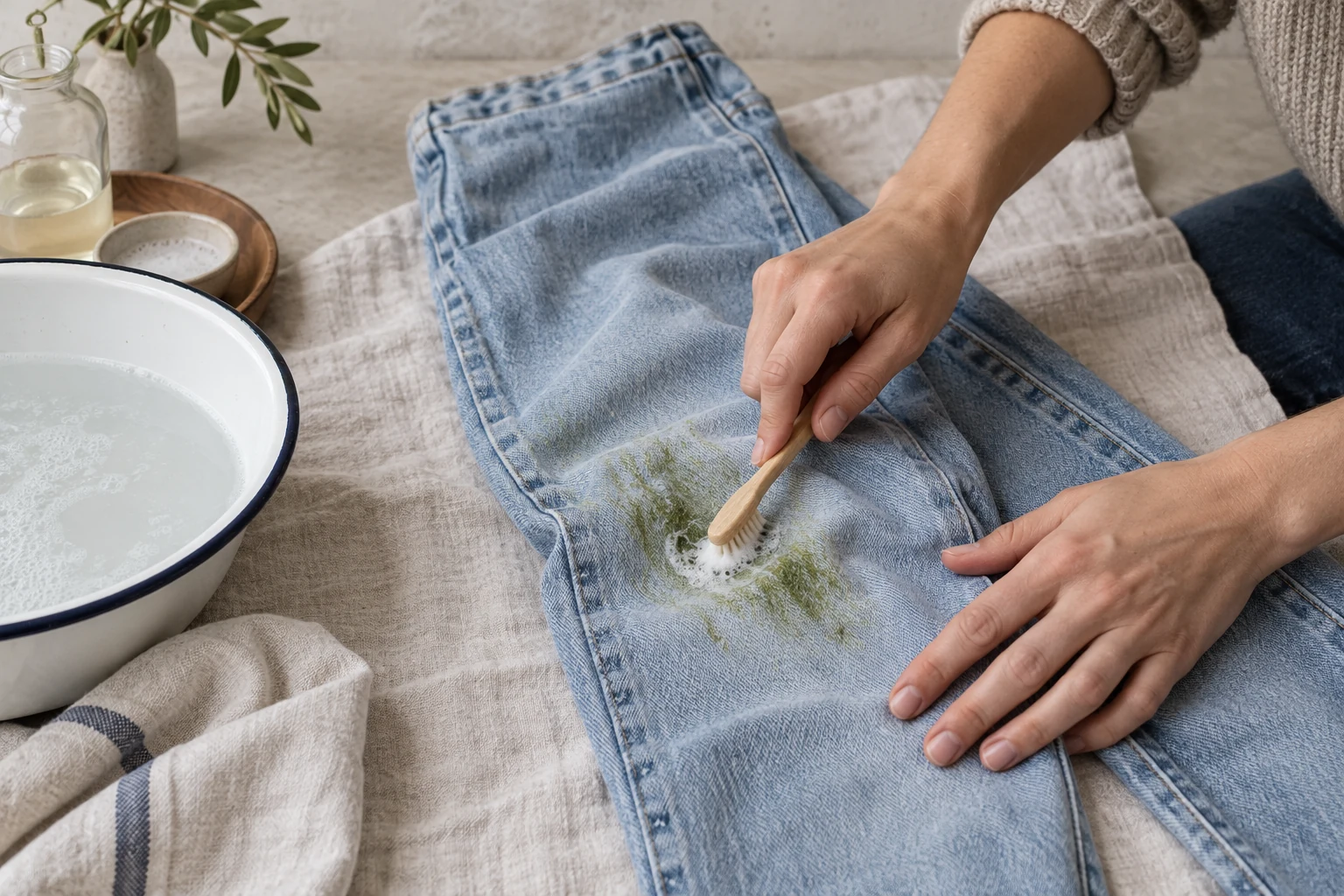
Stain removal
How to get grass stains out of clothes
How to get grass stains out of jeans, whites and sports kit: an enzyme soak, alcohol for stubborn green, safe bleach and what to do with dried stains.
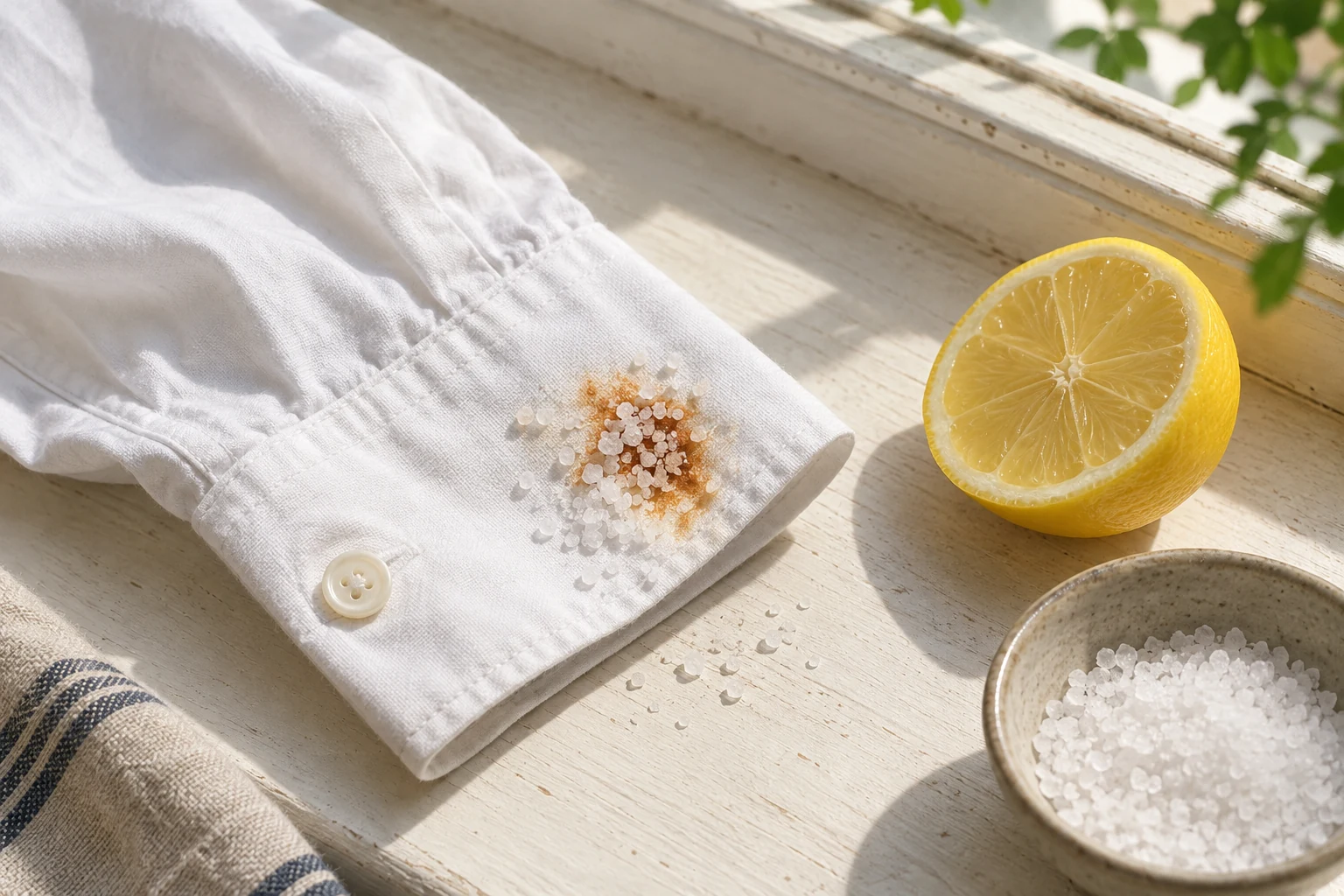
Stain removal
How to get rust out of clothes
Get rust out of clothes with lemon and salt, cream of tartar or a fabric rust remover, why chlorine bleach sets rust, and how to stop orange spots from water.
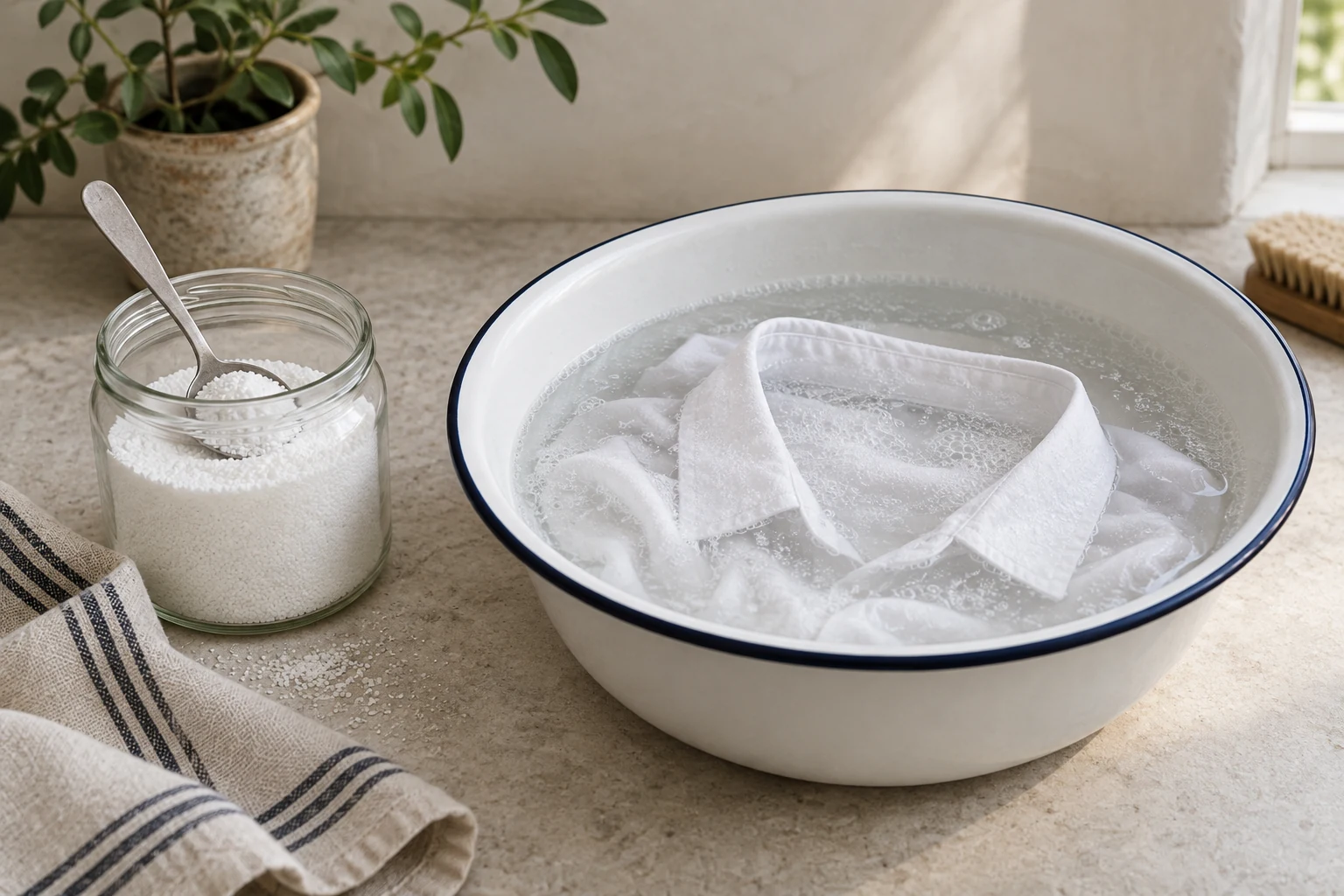
Washing and ironing
How to use oxygen bleach (sodium percarbonate) on clothes
What sodium percarbonate is, how oxygen bleach powder works, how to use it in the wash or as a soak on whites and colors, and the safety rules that matter.
Washing and ironing
How to wash jeans and how often to do it
How to wash jeans so they keep their color and fit: how often to wash, inside out in cold water, air drying, raw denim and what to do if your jeans shrink.
Stain removal
How to get grease out of clothes
Get grease out of clothes with an absorbent powder and dish soap, tackle black car grease, and rescue oil stains that survived the washer and dryer.