How to remove scorch marks from clothes
In this guide
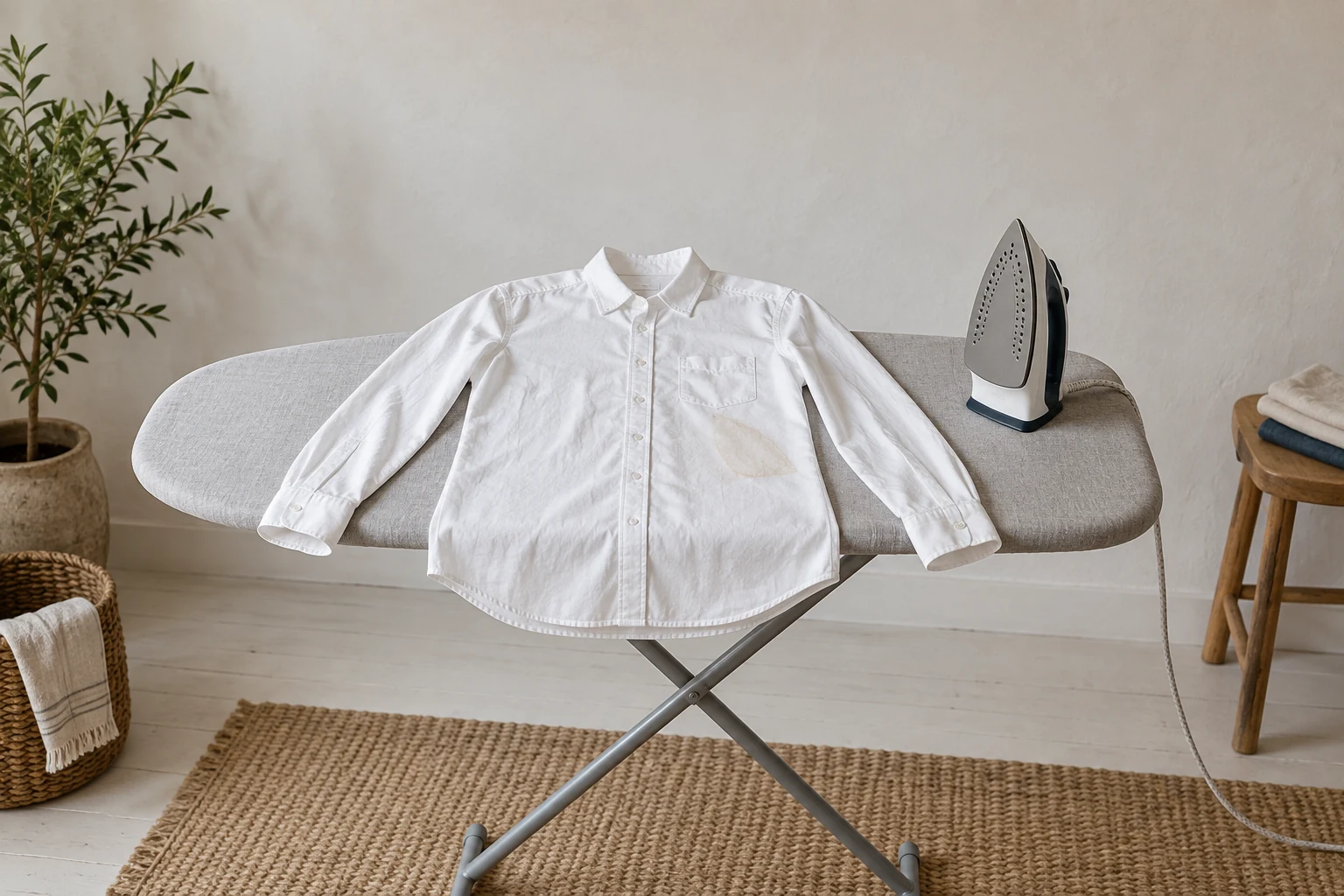
A pale brown outline of the soleplate on the front of a white shirt, or a shiny patch on the seat of polyester trousers, shows up the moment the iron comes up. Scorch marks on clothes happen in a second, usually when the iron sits still for a moment too long or the setting is too hot for the fabric. The first question is not which product to reach for but how deep the damage goes.
A light scorch is a discoloration on the surface of the fibers, and it often comes out with patience and the right order of treatments. A deep scorch has burned the fibers themselves, and no cleaning method can put back fiber that is gone. Cotton and linen give you the best odds; polyester and wool need a more realistic plan.
Judge how deep the scorch goes
Look closely in good daylight and touch the spot. A light scorch is pale yellow or tan, the fabric feels the same as the area around it, and the weave is intact. That kind of mark has a good chance of coming out, especially on cotton and linen. A heavy scorch is dark brown or black, the fabric feels stiff, brittle or thinner, and it may crack or tear if you pull gently at the edges. The University of Georgia Extension states it plainly: severe scorch cannot be removed.
Synthetic fabrics behave differently. Polyester, nylon and acrylic do not brown like cotton; they soften and melt. The result is a shiny, flattened or hard patch, sometimes with a slightly glazed outline of the iron. That shine is a physical change in the fiber, not a stain sitting on top, so stain removers will not reverse it. Check the care label to be sure what the fabric is; our guide to care labels explains the fiber content and ironing symbols.
How to remove iron burn stains from cotton and linen
This sequence works from gentlest to strongest. Stop as soon as the mark is gone, and do not put the garment in the dryer until you are happy with it, since heat can make any remaining discoloration more permanent.
Rinse and wash right away
Turn off the iron, rinse the scorched area under cool running water from the back of the fabric, then wash the garment with a good detergent at the temperature the label allows. Very light scorch marks on cotton sometimes lift with washing alone.
CheckCheck the spot while it is still wet.
Dab with 3% hydrogen peroxide
Use ordinary 3% drugstore hydrogen peroxide. Test it on an inside seam first if the fabric is colored, since peroxide can lighten some dyes. Wet the scorch with it, keep it moist for several minutes, then rinse. On white cotton and linen you should see the tan tone fade.
Press through a peroxide cloth for heavier marks
If the mark stays, lay a clean white cloth dampened with peroxide over the scorch, put a dry cloth on top and press with an iron set no hotter than the fabric allows. The University of Georgia Extension recommends this for stubborn light scorch. Lift and check every few seconds, then rinse thoroughly and launder.
Use diluted bleach on bleachable whites
For white cotton or linen whose label allows chlorine bleach, soak the item in bleach diluted as the bottle directs for about 15 minutes, then wash. Never use bleach undiluted, never mix it with vinegar, ammonia or other cleaners, and do not use it on colors, wool, silk or spandex.
Try sunlight as a gentle finish
An old and gentle method for white cotton is to sprinkle salt on the damp spot, moisten it with lemon juice and lay the garment in the sun to dry, then wash it. If you used bleach in the previous step, wash and rinse the garment first, since lemon juice is an acid and should never meet chlorine bleach. Sunlight has a mild bleaching effect. Keep this for whites, as sun and lemon can fade colors.
How to fix an iron burn on polyester
Be realistic here. If polyester has melted, hardened or developed a glassy shine, the fibers have deformed and nothing will restore their original shape. What you can sometimes improve is a very light shine where the surface was pressed flat but not melted. Hold a steamer or a steaming iron a little above the fabric, without touching it, and let the steam relax the surface, then brush the nap gently with a soft clothes brush. Our guide to steaming clothes shows how. Results are modest, and the shine may only soften.
If there is any brownish discoloration on a synthetic, usually from residue on the iron, washing with a normal detergent may remove it. Avoid chlorine bleach on spandex blends, and test anything stronger on a hidden seam. When the damage is a hole or a hard melted spot, the practical options are a repair rather than a cleaning: a tailor can sometimes replace a panel or a pocket flap, and on casual clothes a patch or an iron on applique over the spot is a perfectly good fix. The same thinking applies to our guide on repairing holes in knitwear.
Wool, silk and tailored clothes
Wool scorches at lower temperatures than cotton and the singed fiber tips turn yellow or brown on the surface. Silk can water spot and lose its luster if you treat it at home, and a suit jacket has interfacing and structure you do not want to soak. For any of these, take the garment to a professional cleaner and tell them it is a scorch, not a food stain, so they can decide whether a light surface treatment is worth trying.
Wool also gets a different kind of iron mark: a shiny patch where the fibers were pressed flat, common on the seat and knees of trousers. That shine is not a scorch. Steaming and gentle brushing often raise the fibers again, and it is best avoided in the first place by pressing wool through a damp pressing cloth. Our guide to caring for wool covers the rest.
Does vinegar remove scorch marks?
White vinegar is one of the most shared home remedies for burn marks on clothes, usually dabbed on the spot and blotted, sometimes with a pressing cloth. It is mildly acidic and will not harm most cotton, so trying it on a faint mark is low risk, but it is not a bleach and the extension guides do not rely on it. Hydrogen peroxide is the better tested option for lifting the brown tone. If you do try vinegar, rinse it out completely before using any bleach product, because vinegar and chlorine bleach must never meet.
Other remedies you will come across include rubbing with a cut onion or dabbing with baking soda paste. These rarely do more than a normal wash and can leave their own residue. The safest way to judge any method is the same: test it on a hidden area, work on a fabric that can take it, and stop when the mark stops fading.
| Remedy | Use it on | Keep in mind |
|---|---|---|
| Rinse and wash | Any washable fabric, right away | Very light scorch on cotton may lift with washing alone |
| 3% hydrogen peroxide | White cotton and linen; test colors first | Can lighten some dyes |
| Peroxide cloth and iron | Stubborn light scorch | Lift and check every few seconds, then rinse and launder |
| Diluted chlorine bleach | Bleachable white cotton and linen | Never on colors, wool, silk or spandex, never mixed with other cleaners |
| Salt, lemon and sun | White cotton only | Wash out any bleach first; lemon and sun fade colors |
| White vinegar | Faint marks on cotton | Low risk but not a bleach; rinse out before any bleach |
Severe scorch, melted synthetics, wool, silk and tailoring need a repair or a professional instead.
Prevent scorch marks and clean your iron
Most scorches come from three things: a setting that is too hot for the fabric, an iron left resting face down, and residue on the soleplate. Match the dial to the fiber on the care label, start cooler when unsure and work up, and keep the iron moving. Press synthetics, dark colors and wool inside out or through a thin cotton pressing cloth, which spreads the heat and prevents both shine and scorch. Our guide to ironing a shirt walks through the whole routine, and if you have no iron at all there are ways of removing wrinkles without one.
If polyester melted onto the iron, deal with it before you touch another garment, or you will print brown smears onto the next shirt. Unplug the iron and follow the maker's instructions for the soleplate, which usually means gently lifting softened residue with a wooden spatula or a soft cloth while the plate is only warm, then using a soleplate cleaner designed for your iron's coating. Never scrape a coated or nonstick soleplate with metal or steel wool.
Common mistakes
Putting a scorched garment in the dryer
Dryer heat can set what remains of the discoloration. Air dry and check the spot before any tumble drying.
Using bleach on colored or synthetic fabric
Chlorine bleach removes dye and can weaken spandex and synthetic blends. Keep it for white cotton and linen whose label allows it.
Scrubbing a deep scorch
Burned fibers are already weak. Rubbing or wringing can turn a brown mark into a hole. Treat gently by dabbing and soaking.
Questions people ask
Are scorch marks permanent?
Light scorch marks are often removable, particularly on cotton and linen, because only the surface of the fibers is discolored. Dark, stiff or brittle marks mean the fibers are burned, and melted or glazed synthetics are physically changed. Those are permanent and call for a repair, a patch or a new use for the garment.
How do I remove a scorch mark from a white cotton shirt?
Rinse and wash it first, then dab the mark with 3% hydrogen peroxide and keep it moist for several minutes. If that is not enough and the label allows bleach, soak the shirt briefly in diluted chlorine bleach and wash again. Drying it in sunshine gives a final gentle lift.
Can a dry cleaner remove scorch marks?
A cleaner can sometimes lighten a surface scorch on wool, silk or structured garments using treatments that are risky at home. They cannot restore burned or melted fiber. Tell them the fabric and how the mark happened so they can give you an honest assessment.
Why does my iron leave brown marks even on low heat?
Usually because the soleplate has residue from starch, fabric finishes or melted synthetic fibers, which transfers and browns on the fabric. Clean the soleplate according to the maker's instructions, and empty and descale the water tank if brown drips come out of the steam vents.
Sources and further reading
References used for this guide. Each opens the original page in a new tab.
Keep reading

Washing and ironing
How to iron a shirt in the right order
How to iron a shirt the way shirtmakers do: set the heat for the fabric, start slightly damp, then work collar, cuffs, sleeves, yoke, back and front in order.

Washing and ironing
How to steam clothes with a garment steamer
How to steam clothes properly: set up a garment steamer, work each fabric, know what should never be steamed, and get wrinkles out with no steamer at all.
Washing and ironing
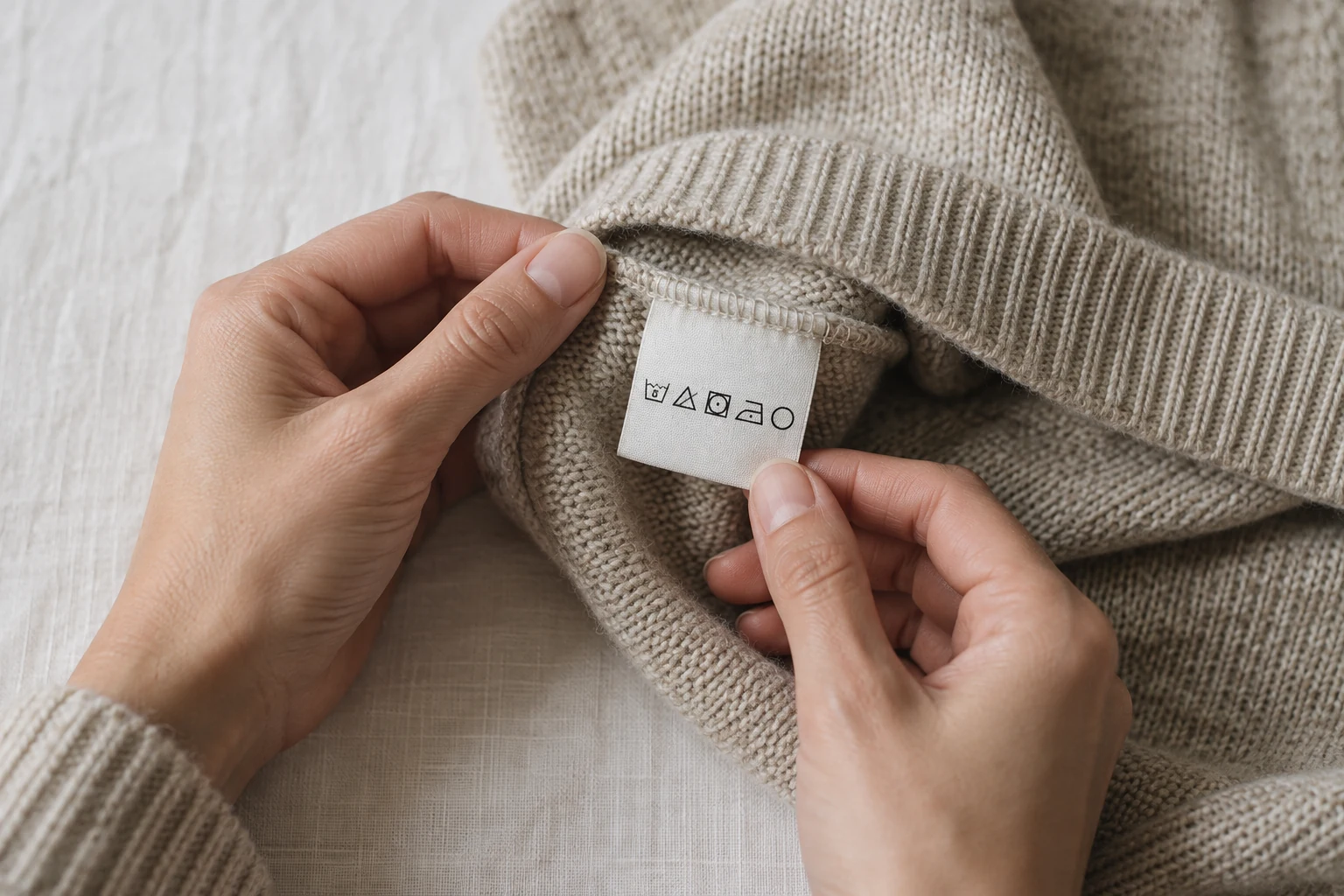
Laundry symbols explained: how to read a care label
What laundry symbols mean, in plain words: the wash tub, triangle, square, iron and circle, plus the dots, bars and crosses that change each instruction.
Washing and ironing
How to wash white clothes and keep them white
How to wash white clothes: sort them, pick the right water temperature and detergent dose, use oxygen or chlorine bleach safely, and rescue whites that yellowed.
Fabrics
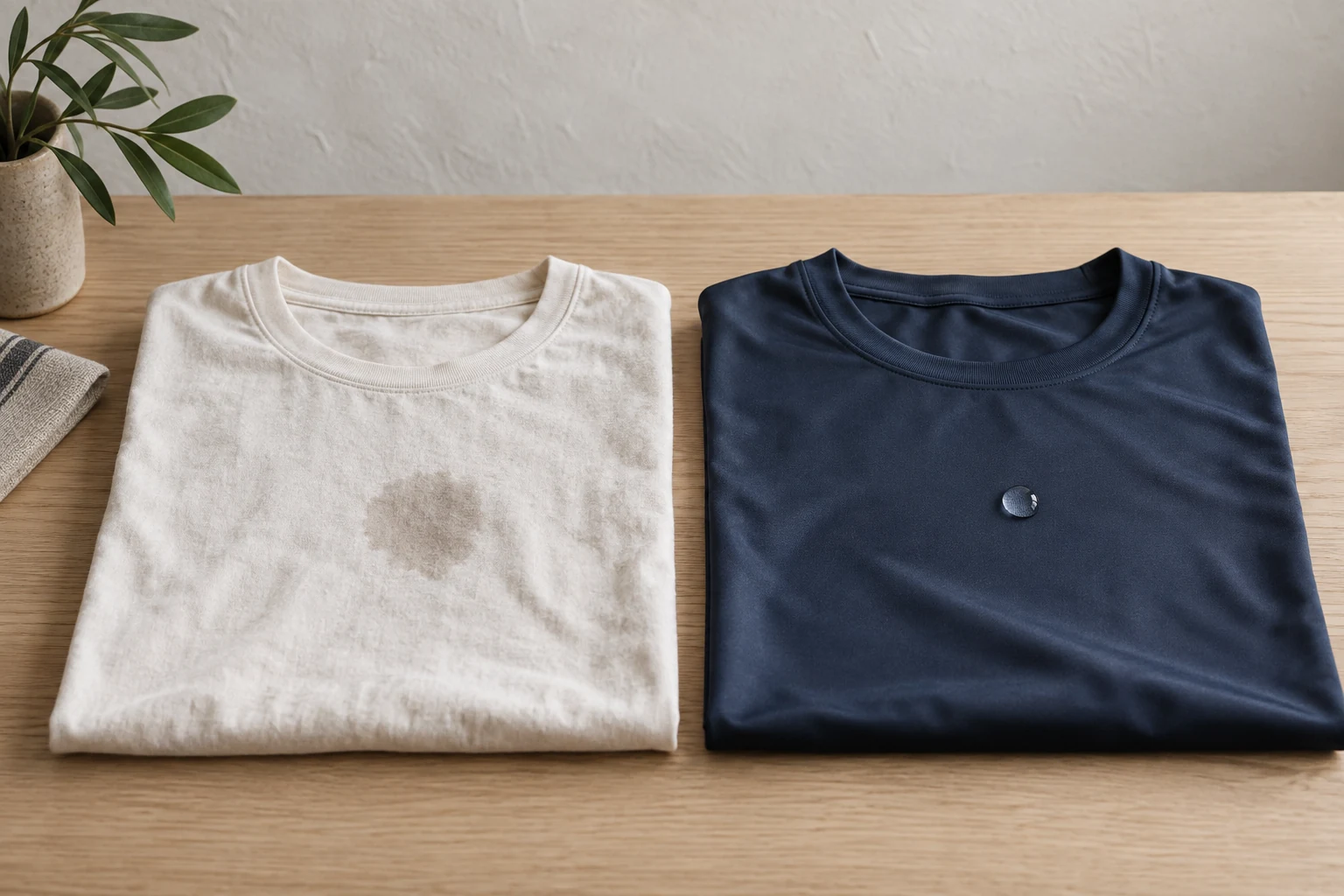
Polyester vs cotton: which fabric to choose
Polyester vs cotton compared honestly: comfort, heat, sweat, odor, durability, skin and the environment, plus how to tell them apart and when a blend is best.