How to wash jeans and how often to do it
In this guide
Jeans survive more neglect than almost anything else in your closet, which is exactly why they are so often washed badly: thrown in with towels on a hot cycle, dried on high, and then blamed for shrinking or fading too fast. Learning how to wash jeans well is mostly about doing less. Less often, cooler, gentler, and without the dryer's full heat.
Denim is usually a cotton twill dyed with indigo (our guide to what denim is explains the weave), and indigo sits largely on the surface of the yarn rather than soaking all the way through. Every wash and every rub knocks a little off, which is how jeans fade. Heat and hard tumbling also shrink cotton and wear down any stretch fiber. Keep those two facts in mind and every step below makes sense.
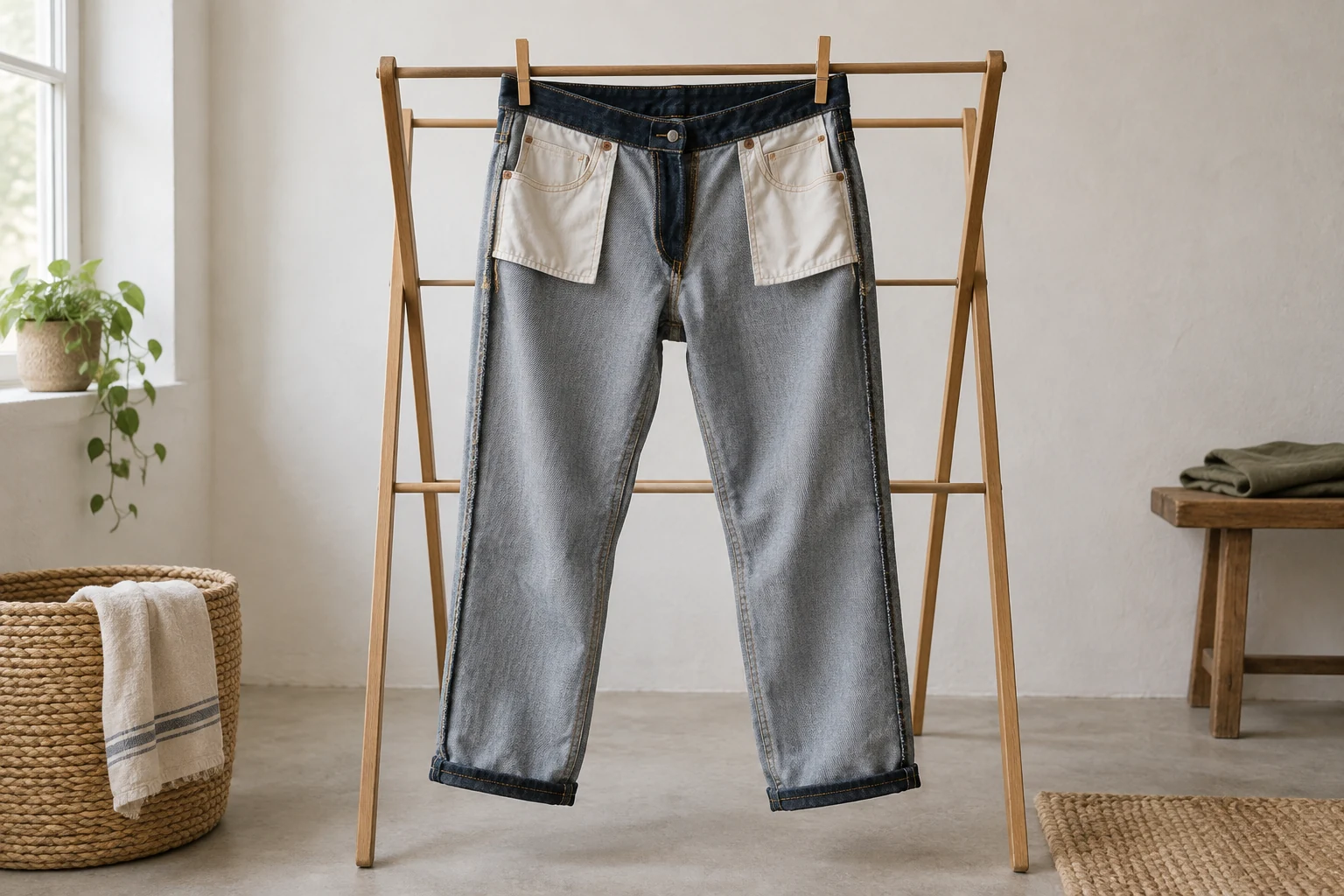
How often should you wash jeans
There is no single number, but Levi's suggests washing jeans after about ten wears unless they are visibly dirty or start to smell, and many denim enthusiasts go longer. Washing less keeps the color deeper and the fit closer to how the jeans have shaped to you, since each wash tightens cotton slightly and each wear relaxes it again. Jeans worn for gardening, a sweaty commute or a toddler's lunch need washing sooner, and there is no virtue in wearing dirty clothes to protect the indigo.
Between washes, spot clean small marks with a damp cloth, a drop of mild soap and a soft toothbrush, and hang the jeans somewhere airy overnight. You may have heard that freezing jeans cleans them. Levi's notes it may reduce odor but does not remove dirt the way washing does, so treat it as a stopgap at most. For lingering smells, our guide to getting smells out of clothes has better options.
Check the label and the kind of denim
The care label tells you the maximum water temperature and whether tumble drying is allowed; if a symbol is unfamiliar, our guide to reading laundry symbols explains it. Then look at the fabric content. Rigid jeans in 100 percent cotton tolerate the most. Stretch jeans contain elastane, also called spandex, and that fiber is sensitive to heat, so high dryer heat can leave stretch denim baggy at the knees or with a puckered, rippled surface over time.
Raw or dry denim, which has not been washed after dyeing, is a separate case covered below, as is anything with embellishment, leather patches you care about, or a sherpa lining. Black and very dark jeans lose color the same way indigo does, so they benefit from the same cold, inside out routine and a detergent made for dark colors.
How to wash jeans in a washing machine
For most jeans, a washing machine is perfectly fine as long as you control the temperature and the company they keep.
Empty pockets, then zip and button
A closed zipper cannot chew other clothes or the inside of the drum, and a fastened button keeps the waistband from stretching out of shape. Remove belts and anything in the coin pocket.
Turn them inside out
Should you wash jeans inside out? Yes. Levi's recommends it, and Iowa State University Extension explains that turning garments inside out reduces the rubbing that strips color from the outer face. You will see fewer white streaks along seams and pocket edges over time.
Wash with similar dark colors
New dark jeans can bleed dye into the water for their first few washes, so Levi's suggests washing them apart from lighter items at first. After that, wash denim with other darks and avoid towels, which shed lint that clings to denim.
Choose cold water and a gentle cycle
Cold water keeps fibers from swelling and releasing dye and limits shrinkage. Use a gentle or delicate cycle and a mild detergent, ideally one formulated for dark colors, at the dose on the bottle. Skip chlorine bleach on colored denim, where it leaves pale patches that cannot be reversed, and on any stretch denim, because chlorine also weakens elastane.
How to dry jeans
Air drying is the kindest option. Levi's recommends hanging jeans or laying them flat, inside out and in the shade, and avoiding the dryer where you can. To air dry jeans evenly, give them a firm shake, tug the side seams and hems straight, and hang them by the waistband from clips or over a drying rack so air reaches both legs. Expect them to take most of a day indoors. They will feel stiff at first; ten minutes in a dryer on low or air only setting, or simply wearing them for an hour, softens them again.
If you do use a machine, know how to dry jeans in a dryer without damage: choose low heat, take them out while the waistband and pockets are still slightly damp, and let them finish on a hanger. Overdrying, when fabric that is already dry keeps tumbling in hot air, is where much of the avoidable shrinkage and stretch damage happens.
Washing raw denim for the first time
Raw denim buyers usually want to wear their jeans for a while before the first wash, so the creases at the hips and behind the knees set into distinctive fades. Brave Star, a denim maker, suggests at least one and preferably two to three weeks of wear first. Check whether your jeans are sanforized, a treatment that preshrinks the fabric. Brave Star expects sanforized raw denim to shrink up to about 3 percent on the first wash and unsanforized denim up to about 10 percent, which is several inches in length.
For the first wash, most makers suggest hand washing. Levi's advises cold water, a gentle cleanser and no wringing for raw denim. Turn the jeans inside out, lay them flat in a bathtub of cold or lukewarm water with a small amount of mild detergent, press them under, and leave them to soak for up to about half an hour. Rinse, press out the water without twisting, and hang them to dry. Hotter water shrinks raw denim more, which some owners of unsanforized, shrink to fit jeans use deliberately to reach their size; follow your maker's instructions if they give them.
Hand washing jeans and denim jackets
Knowing how to wash jeans by hand is useful for raw denim, jeans with delicate details, or when you have no machine. The method is the raw denim soak above: cold water, a little mild detergent, inside out, press and swish rather than scrub, then rinse twice. Heavy wet denim holds a lot of water, so press it against the tub and let it drip in the bath for a while before hanging it.
A denim jacket follows the same logic. Button it fully, turn it inside out, wash cold on a gentle cycle with other darks, and dry it on a sturdy hanger so the shoulders keep their shape. Tug the collar and front edges straight while damp. If the jacket has a sherpa, wool or quilted lining, check its label: some linings need hand washing or a cleaner even when the denim shell could take a machine.
| Denim | Wash | Dry |
|---|---|---|
| Rigid 100 percent cotton | Cold, gentle, inside out with darks | Hang or low heat, remove while slightly damp |
| Stretch denim | Cold, gentle, no chlorine bleach | Air dry; high heat damages elastane |
| New dark or black jeans | Apart from light items for the first few washes | Hang inside out in the shade |
| Raw denim, first wash | Hand soak in cold water, up to about half an hour | Press out water without twisting, then hang |
| Denim jacket | Buttoned, inside out, cold and gentle | Sturdy hanger; check any lining label |
Common mistakes
Hot water and a hot dryer
This is the quickest way to shrink jeans and fade them unevenly, the same combination people use on purpose when they want to shrink clothes. If a pair has already come out tight, wet the jeans thoroughly, gently pull the waist and legs lengthwise and widthwise while damp, and wear them for an hour or two as they dry; cotton denim usually gives back some of the lost room with wear, but stretch denim that was overheated may not.
Washing new jeans with light colors
Fresh indigo bleeds, and it can also rub off onto light car seats, sofas and bags when the jeans are new, which Iowa State University Extension calls crocking. Wash new dark jeans alone or with darks for the first few washes. If a light item has already picked up a blue cast, rewash it promptly before drying; heat makes transferred dye harder to remove. Our guide to removing dye transfer covers what to try next.
Using vinegar or salt to set the dye
It is a persistent tip, but Iowa State University Extension calls it a myth: vinegar and salt are used in dyeing, but adding them at home does not fix the color. Cold water, fewer washes and washing inside out do more.
Questions people ask
Should you wash jeans at all?
Yes. Washing rarely is fine, but sweat, skin oils and grit build up in the weave, cause odors and add to wear over time. Wash when the jeans are dirty or smell, and they will last longer than if you never wash them.
Is it okay to wear the same jeans several days in a row?
Yes. Denim is sturdy and does not need washing after each wear, and Levi's suggests around ten wears between washes for jeans that are not visibly dirty. Hanging them overnight lets the fabric air out and relax. Wash sooner if they smell, got sweaty or picked up a stain.
Can you put jeans in the dryer?
You can if the label allows tumble drying, but use low heat and take them out slightly damp. High heat shrinks cotton and damages elastane in stretch jeans, and it fades color faster.
Why did my jeans get shorter after washing?
Cotton denim tends to shrink most in length, especially in warm water or a hot dryer. A little shrinkage is normal on the first wash, even for preshrunk denim. If they are now too short, our guides to measuring your inseam and how jeans should fit will help you allow for it next time.
How do I keep black jeans from fading?
Wash them rarely, inside out, in cold water with a detergent made for dark colors, and dry them in the shade or on low heat. Keep them with other blacks so they do not collect lint from lighter items.
Sources and further reading
References used for this guide. Each opens the original page in a new tab.
- Levi's: the definitive guide to denim care Opens in a new tab
- Levi's customer service: how to wash and care for your denim Opens in a new tab
- Iowa State University Extension AnswerLine: preventing color transfer by bleeding or crocking Opens in a new tab
- Brave Star Selvage: washing raw selvedge denim for the first time Opens in a new tab
Keep reading
Washing and ironing
How to shrink clothes on purpose, and how to avoid it
Which fabrics shrink, how to shrink cotton in the wash and dryer in careful stages, why wool felts, and how to keep clothes from shrinking by accident.
Everyday style
How to cuff jeans: single, double and pinroll
How to cuff jeans neatly: single, double, pinroll and Japanese cuffs, which jeans and shoes each one suits, and when to hem instead of rolling.
Washing and ironing
Laundry symbols explained: how to read a care label
What laundry symbols mean, in plain words: the wash tub, triangle, square, iron and circle, plus the dots, bars and crosses that change each instruction.
Washing and ironing
How to get smell out of clothes
How to get smell out of clothes, whether it is sweat, a musty washer smell or smoke: airing, better washing, careful use of baking soda and vinegar, and prevention.
Sizing
How to measure inseam for pants, jeans and shorts
Measure your inseam from pants that fit or on your body, see how inseam differs from outseam, and choose the right length for jeans, dress pants, shorts and bikes.