How to get gum off clothes
In this guide
You sat down on a bus seat, a movie theater chair or a park bench, and now there is a gray pink smear stuck to the back of your jeans. Or you found a lump of it welded to a school sweater after the wash. Gum feels like a disaster because it stretches, clings and seems to spread every time you touch it. Knowing how to get gum off clothes is mostly about changing its state before you touch it: cold makes it brittle, and oil or solvent makes it let go.
Chewing gum is not really a stain at first. It is a soft, rubbery base that sits on top of the fabric and grips the surface fibers. It only becomes a stain later, when warmth pushes it deeper or when its flavor oils and colorings leave a mark after the lump is gone. So the job has two parts, removing the lump and then removing the residue, and they need different tools.
Why freezing gum is the first step
Gum base is soft and sticky at body temperature and turns hard and brittle when it is cold. In that brittle state it stops gripping the fibers and can be cracked and lifted off in pieces instead of stretched into strings. That is why the University of Georgia Extension, Clorox and Tide all start in the same place: harden the gum with ice, then scrape. Every other method on this page is for what is left over.
Resist the urge to pick at it first. Pulling warm gum stretches it across clean fabric and works it deeper into the weave, and pulling hard can distort or tear the threads. If the gum is still very soft, leave it alone and go straight to the ice. The same caution applies to rubbing it with a napkin, which mostly spreads a thin sticky layer over a larger area.
How to get gum out of clothes with ice
This method works on almost any fabric, including jeans, cotton, polyester and wool, because it uses no chemicals at all. Check the care label before you move on to the washing step.
Harden the gum
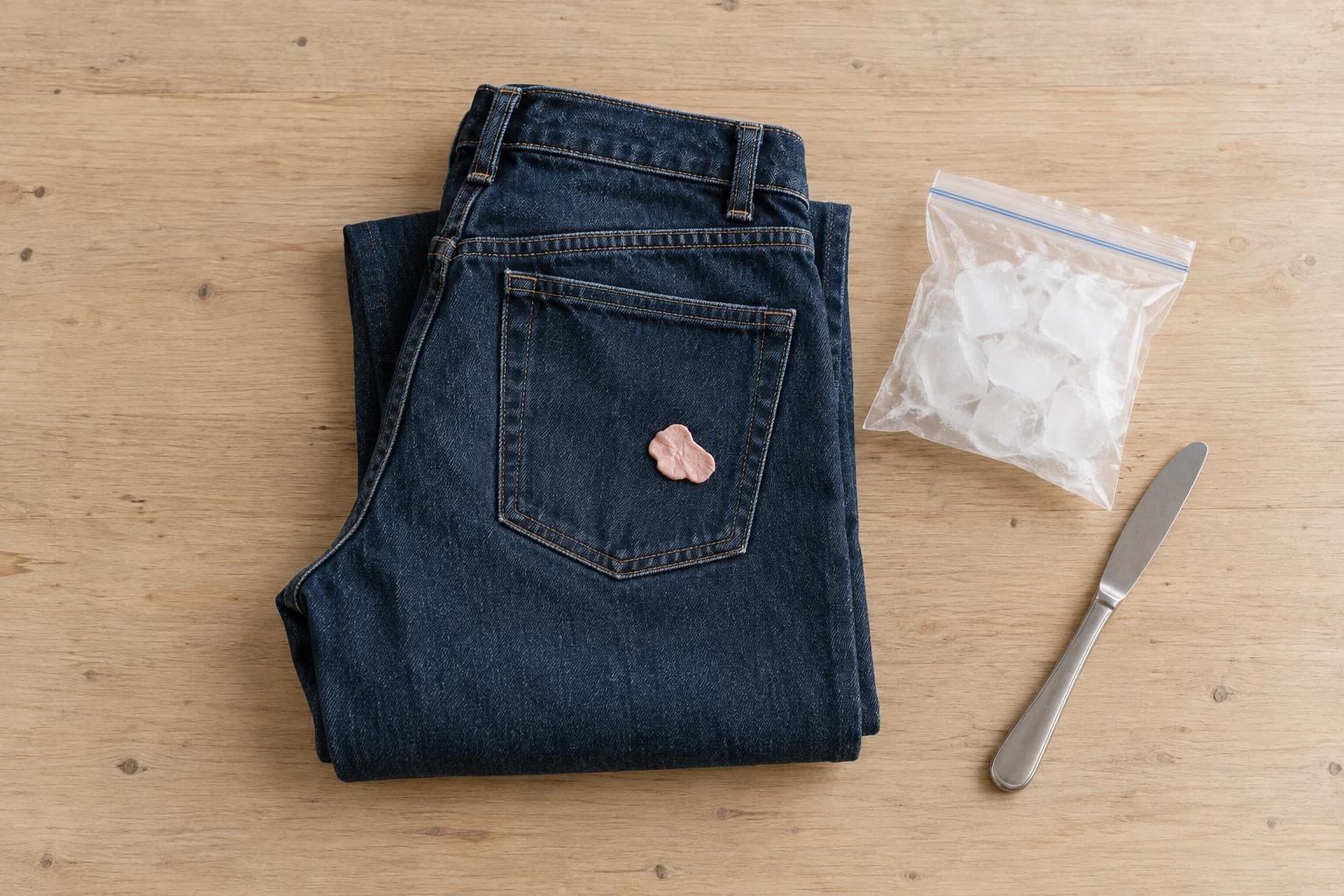
Put a few ice cubes in a sealed plastic bag and hold it on the gum, or fold the garment so the gum faces outward, place it in a plastic bag and leave it in the freezer for about an hour. The bag keeps melting water off the fabric. The gum is ready when it looks dull and feels hard when you tap it with a fingernail.
Scrape it off with a dull edge
Lift the edge of the gum with a butter knife, the back of a spoon, an old gift card or your fingernail, then pop it off in pieces. Work from the outside in and keep the tool flat to the fabric. If the gum starts to soften and stretch again, stop and refreeze it rather than pulling.
Look at what is left
On smooth, tightly woven fabrics the gum sometimes comes off completely. On denim, knits and textured weaves you will usually see a thin, slightly shiny film or a faint colored mark where the gum sat. That residue is the part that needs a remover, described in the next section.
Wash, then check before drying
Once the residue is gone, wash the garment as the label directs. Air dry it and look at the spot in daylight. Heat from a dryer can melt any remaining traces into the fibers, so only use the dryer once the area feels completely smooth.
What dissolves gum residue
Gum residue is oily and waxy, so it responds to products that break down oils rather than to plain water. Iowa State University Extension treats gum as a combination stain: remove the oily, waxy part first with a solvent based stain remover or stain stick, rinse, then apply liquid laundry detergent before washing. A prewash stain remover in an aerosol or gel works well here. Citrus based gum and adhesive removers are made for exactly this job, and they are worth testing on a hidden seam first because some can affect dyes and finishes.
If you have nothing like that at home, oil is the kitchen version of a solvent. Cornell Cooperative Extension lists lubricating gum with lard or mineral oil as an alternative method, which is the principle behind the peanut butter trick you may have heard of. Rub a small amount of cooking oil or mineral oil into the residue with your fingertip, and the gum loosens and balls up so you can scrape it away. The catch is that you have now made an oil stain. Follow straight away with dish soap or heavy duty liquid detergent worked in from both sides, then rinse in warm water, as our guide to getting grease out of clothes explains.
Rubbing alcohol is often suggested and can soften thin residue on sturdy fabrics such as cotton and polyester. Dab it on with a cotton pad, give it a minute, then scrape and rinse. Test it first on an inside seam, keep it off silk and anything labeled dry clean only, and remember that it is flammable, so use it in a ventilated room away from flames. Warm white vinegar is another common home option; it may help soften residue, though it is gentler and slower than a solvent. If a colored mark remains after the gum is gone, the dye from the gum is the problem, and a soak in oxygen bleach before washing usually handles it on washable fabrics.
How to get gum out of clothes after washing and drying
Gum that went through the wash is usually still removable, because washing water does not dissolve it. The dryer is the harder case: heat melts the gum and presses it flat into the fibers, and sometimes onto other garments in the same load. Treat it like fresh gum. Freeze the garment, scrape off whatever lifts, then work on the flattened film with a prewash stain remover, a citrus remover or the oil and dish soap method. It may take two or three rounds, and a soft toothbrush helps work the remover into the weave between rounds.
Check the rest of the load before you put anything else in the machine. Look inside pockets, where the gum probably started, and run your hand over the dryer drum once it has cooled. Any gum stuck to the drum can transfer to the next load. Follow your dryer maker's instructions for cleaning the drum rather than scraping it with anything sharp, which can scratch the finish.
| Remover | How to use it | Caution |
|---|---|---|
| Solvent stain remover or stick | Treat, rinse, then liquid detergent and a wash | Check the care label first |
| Citrus gum remover | Made for gum and adhesive residue | Can affect dyes; test a hidden seam |
| Cooking or mineral oil | Rub in until the gum balls up, then scrape | Leaves an oil stain; follow with dish soap |
| Rubbing alcohol | Dab on, wait a minute, scrape and rinse | Flammable; keep off silk and dry clean only |
| Warm white vinegar | May soften thin residue | Gentler and slower than a solvent |
| Oxygen bleach soak | Lifts a colored mark left by the gum's dye | Washable fabrics only |
Gum on wool, velvet, silk and dry clean only clothes
Freezing is safe on almost any fabric, so it is always the first move. The risk comes in the scraping and the removers. On knitwear, scrape gently along the direction of the knit so the tool does not catch and pull a loop; our guide to washing wool covers how to rinse it afterward without felting it. On pile fabrics such as velvet and corduroy, make sure the gum is completely frozen through before you lift it, because partly frozen gum can pull tufts out of the pile.
On silk, acetate and anything labeled dry clean only, stop after freezing and gently lifting what comes away. Solvents, oils and alcohol can spot these fabrics or strip their finish. Take the garment to a dry cleaner, point to the spot and tell them it was gum; professional cleaners have solvents that dissolve gum without harming the cloth. If you are not sure what your garment can tolerate, our guide to reading laundry symbols explains what the label is telling you.
Common mistakes
Pulling warm gum
Stretching soft gum drags it across clean fabric and pushes it deeper into the weave. Freeze it first so it cracks away cleanly instead.
Leaving oil in the fabric
Oil and peanut butter loosen gum well, but whatever oil you leave behind will show as a dark spot and attract dirt. Always follow with dish soap or heavy duty detergent and a warm rinse.
Drying before the residue is gone
A dryer melts the last traces of gum into the fibers and can spread them to other clothes. Air dry after washing and only use heat when the spot feels completely smooth.
Using a sharp knife
A sharp blade can cut threads or snag knits. A butter knife, spoon edge or old card has enough edge to lift frozen gum without damaging the fabric.
Questions people ask
Does dried gum come out of clothes?
Usually, yes. Old gum is simply hard gum, and freezing it makes it brittle enough to crack away. The residue from old gum may take more work, so plan on a solvent based stain remover or the oil and dish soap method, and repeat if needed before washing.
Does dish soap remove gum?
Dish soap alone does little to the gum itself, which is not water soluble. It is very useful as the second step, though, because it removes the oily film left by gum residue or by oil you used to loosen it. Work it in from both sides and rinse with warm water if the fabric allows.
Can you get gum out of clothes without ice or a freezer?
You can loosen gum with a little cooking oil, mineral oil or a citrus gum remover, then scrape it away and wash out the oil with dish soap. Some guides also press gum off with a warm iron through a piece of cardboard, but heat can push the gum deeper and damage delicate fabrics, so treat that as a last resort for sturdy cotton only.
Will hairspray or toothpaste remove gum?
Both are passed around as home remedies, but neither appears in the guidance from the extension services and cleaning manufacturers this page relies on. Hairspray can leave a sticky film of its own, and toothpaste is mildly abrasive, which is not what you want on a fabric surface. Freezing and a proper stain remover are more reliable and easier on the cloth.
Is gum on clothes ever permanent?
Rarely. The lump almost always comes off with freezing, and the residue usually gives way to a solvent based remover after one or two rounds. The cases that end badly tend to involve gum pressed into velvet or other pile, or colored gum that has been through several hot dryer cycles, where the dye may leave a faint mark even after the stickiness is gone. For that last trace of color, see our guide to using oxygen bleach.
Sources and further reading
References used for this guide. Each opens the original page in a new tab.
- University of Georgia Extension: removing chewing gum from textiles Opens in a new tab
- Clorox: how to get gum out of clothes and fabrics Opens in a new tab
- Tide: how to remove chewing gum from clothes Opens in a new tab
- Iowa State University Extension AnswerLine: holiday stains by stain type Opens in a new tab
- Cornell Cooperative Extension: removing stains at home Opens in a new tab
Keep reading
Stain removal
How to get grease out of clothes
Get grease out of clothes with an absorbent powder and dish soap, tackle black car grease, and rescue oil stains that survived the washer and dryer.

Washing and ironing
Laundry symbols explained: how to read a care label
What laundry symbols mean, in plain words: the wash tub, triangle, square, iron and circle, plus the dots, bars and crosses that change each instruction.
Stain removal
How to get ink out of clothes
Remove pen ink from clothes with rubbing alcohol and blotting, rescue dried or washed stains, and know which inks and fabrics need a professional cleaner.
Washing and ironing
How to wash jeans and how often to do it
How to wash jeans so they keep their color and fit: how often to wash, inside out in cold water, air drying, raw denim and what to do if your jeans shrink.
Washing and ironing
How to use oxygen bleach (sodium percarbonate) on clothes
What sodium percarbonate is, how oxygen bleach powder works, how to use it in the wash or as a soak on whites and colors, and the safety rules that matter.