How to get rust out of clothes
In this guide
Rust stains arrive in odd ways: an orange streak where a shirt hung on an old metal hanger, a brown ring from a forgotten paper clip in a pocket, a line along a zipper, or a whole load of whites that comes out of the washer faintly orange. They look alarming because rust is so strongly colored, and the usual stain reflexes, like reaching for the bleach, make them worse.
Rust is also one of the few stains with a clear chemical answer. Rust is iron oxide, and acids dissolve it. This guide explains how to get rust out of clothes with kitchen staples, when to use a commercial rust remover, what to do if the stain has already been through the dryer, and how to stop orange spots that come from your water.
Why rust needs an acid, not bleach
Most household stain removers work on organic stains: enzymes break down proteins, detergents lift oils, and bleaches oxidize colored compounds until they fade. Rust is a mineral. It is iron that has already been oxidized, so an oxidizer cannot remove it. What works is an acid or a reducing agent that turns the iron back into a soluble form that rinses away. That is why the classic remedies are lemon juice, cream of tartar and commercial rust removers that contain oxalic acid or sodium hydrosulfite.
Chlorine bleach is the one thing to keep well away. The University of Georgia Extension warns that chlorine bleach sets rust stains, and in iron rich water it can create new rusty deposits on fabric. Hydrogen peroxide and oxygen bleach are oxidizers too, so they are not a reliable answer to rust itself. UGA does list an oxygen bleach soak for white items, and it helps with other stains mixed in, but the acid methods below come first. Before any treatment, read the care label, test on a hidden seam, and keep the garment out of the dryer until the stain is gone, since heat can set anything mixed into the mark, such as oil or sweat.
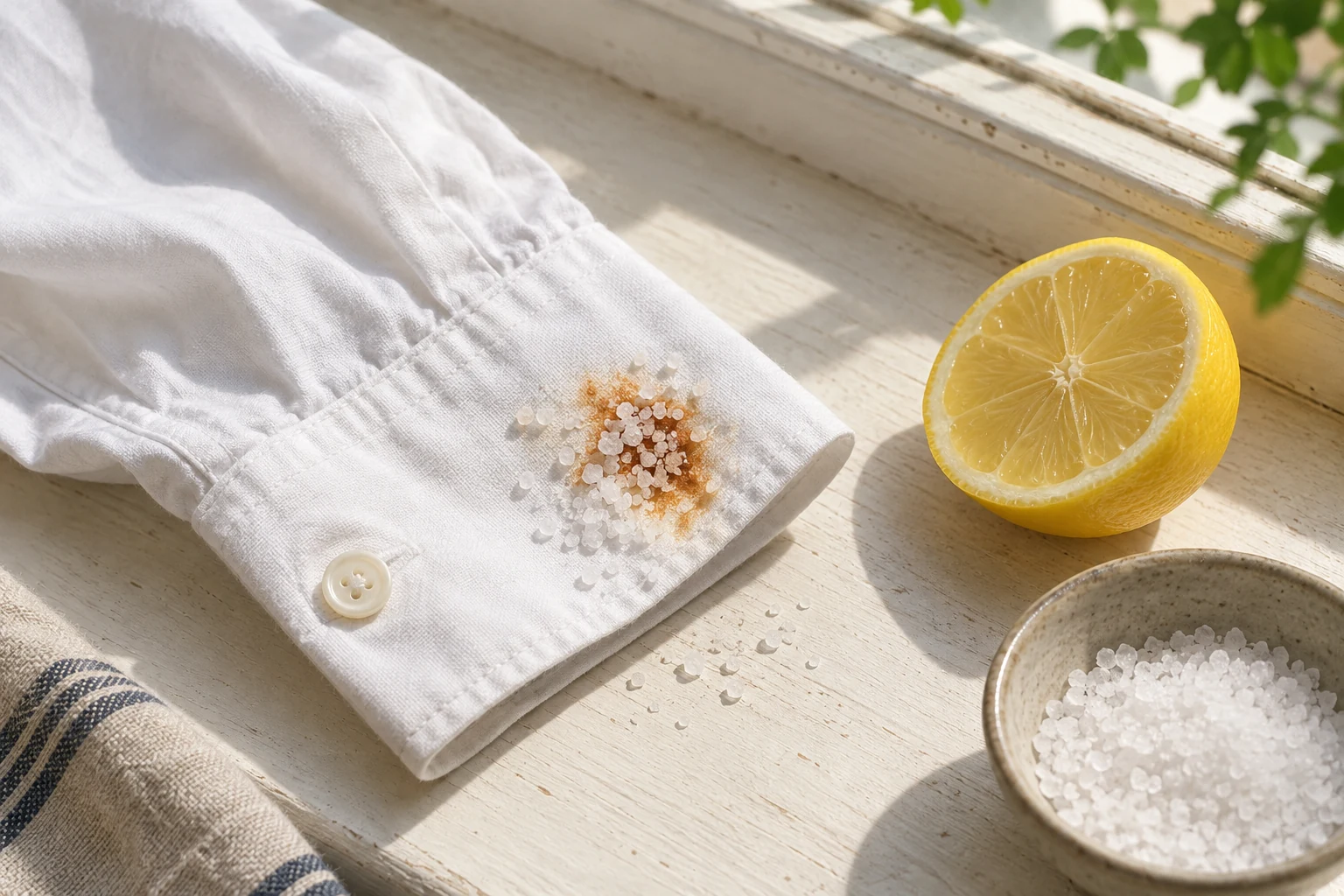
Remove rust with lemon juice and salt
This is the method UGA Extension lists first for washable fabrics, and it works well on white and colorfast cotton, linen and polyester. Lemon juice supplies citric acid, the salt holds the juice on the stain and adds a little scrubbing action, and sunlight speeds the reaction as the fabric dries.
Lay the stain flat
Place the garment on a towel with the stained area flat and a folded paper towel beneath the stain so rust does not transfer through to the other layer.
Salt and lemon
Sprinkle a generous layer of table salt over the stain, then squeeze fresh lemon juice over it until the salt is saturated. Bottled lemon juice works too.
Dry in the sun
Leave it in direct sun until dry, which can take one to several hours. Keep colored garments in the shade or check them often, because acid plus sun can lighten some dyes. The orange should fade as it dries.
Rinse and check
Brush off the salt, rinse the area in cool water and look closely. If a shadow remains, repeat once or twice before washing.
Wash as usual
Wash the garment following its care label and air dry. Only put it in the dryer once no trace of rust remains.
Vinegar, cream of tartar and other kitchen acids
Does vinegar remove rust stains? It can help on light, fresh marks, because acetic acid dissolves rust, but it is weaker than lemon juice on fabric. Soak the stain in undiluted white vinegar for 30 minutes, work it gently with your fingers, rinse and repeat, and see our guide to white vinegar in laundry for what vinegar can and cannot do. Never combine vinegar with chlorine bleach; the mixture releases toxic chlorine gas.
For sturdy white cotton or linen that can be boiled, UGA Extension suggests boiling the stained item in a solution of 4 teaspoons of cream of tartar per pint of water (about 500 ml) until the stain lifts. Cream of tartar is an acidic salt of tartaric acid. Check that the fabric and any trims can take boiling, which rules out most modern garments with elastic, synthetic thread or printed designs. It suits old linen napkins and cotton dish towels more than shirts.
Use a rust remover for clothes on stubborn stains
When lemon and salt do not shift an old or dark stain, a commercial rust stain remover made for fabric is the next step. These products usually contain oxalic acid or sodium hydrosulfite, which reduce rust to a form that rinses out. UGA Extension advises applying them carefully and exactly as the manufacturer directs. Wear gloves, work in a ventilated room, pretest on a seam, rinse thoroughly, and keep them away from children.
Some rust removers sold for sinks, toilets and metal contain stronger acids that are not meant for clothes at all and can burn skin and weaken fibers. Use only a product whose label says it is for laundry or fabric. Rust removers can affect some dyes, so on colored clothes test first and never leave the product on longer than the label says.
| Method | Best for | Watch out for |
|---|---|---|
| Lemon juice and salt in the sun | White and colorfast cotton, linen, polyester | Acid and sun can lighten some dyes |
| White vinegar soak | Light, fresh marks | Weaker than lemon; never mix with bleach |
| Boiling in cream of tartar | Sturdy white cotton or linen that can be boiled | Rules out elastic, synthetic thread and prints |
| Fabric rust remover | Old or dark stains | Use only laundry products; test dyes first |
| Chlorine bleach | Nothing with rust | Sets the stain and can darken it |
How to get rust out of clothes after drying
Is rust a permanent stain? Usually not, even after a trip through the dryer, which is one of the reassuring things about it. Heat bakes organic stains into fibers, but rust stays a mineral deposit that acid can still reach. Old stains simply need longer and more repetitions: two or three rounds of lemon and salt, or a fabric rust remover, left for the full time allowed. What can be permanent is damage from the rusty object itself, such as a weakened spot where a metal button or a nail sat against wet fabric for months.
If the stain has been treated with chlorine bleach already, the odds drop. Try a fabric rust remover, which is your best chance, and accept that some pale yellow may remain. On white clothes, a final wash following our guide to washing white clothes can even out any faint shadow left behind.
Rust on silk, wool and dry clean only clothes
Acids and sunlight are hard on protein fibers. Lemon juice can weaken silk and alter its dyes, and wool reacts to heat and strong chemicals, so skip the home remedies on both. For washable silk, you can try a very small dab of diluted lemon juice on a hidden area first, rinse within minutes, and follow our guide to washing silk. For anything valuable, tailored or marked dry clean only, take it to a dry cleaner and say it is rust, since they use specific rust spotting agents.
Rust also appears on leather and suede from buckles and studs. Those are not fabric stains in the same sense, and water and acids leave their own marks there. A leather specialist is the safe route.
Stop rust stains from coming back
When a whole load comes out with orange spots or a yellow cast, the source is usually the water or the machine, not a single object. Iron in water, common on private wells, is colorless until it meets air, heat or bleach, then turns orange and settles on fabric. The EPA's secondary standard for iron is 0.3 milligrams per liter, above which reddish or orange staining is expected. A water test tells you whether that is the cause, and an iron filter or softener is the long term fix. Meanwhile, avoid chlorine bleach entirely and use a laundry rust remover in the wash as directed.
Check the machine too. A chipped drum, a rusty hardware piece inside the tub or a corroded water heater can deposit rust, and our guide to cleaning a washing machine covers inspecting the drum. For clothes, empty pockets before washing, swap old metal hangers for coated or wooden ones, and never leave wet clothes against metal furniture or in a damp car trunk.
Common mistakes
Reaching for chlorine bleach
Chlorine sets rust and can make it darker. Use an acid based method instead, and never mix bleach with vinegar or lemon.
Using a bathroom rust remover on clothes
Products for sinks and metal may contain acids that are dangerous to skin and fabric. Choose one labeled for laundry.
Drying before the stain is gone
Dryer heat does not usually make rust permanent, but it makes mixed stains harder to remove. Air dry until you are sure.
Questions people ask
Will hydrogen peroxide remove rust from fabric?
Not really. Hydrogen peroxide is an oxidizer, and rust is already oxidized iron, so it has nothing to break down. It can lighten other stains mixed in with the rust, but for the orange itself use an acid such as lemon juice or a fabric rust remover.
Does WD 40 remove rust from clothes?
No. WD 40 loosens rust on metal, but on fabric it adds an oily stain on top of the rust stain. If it has already been used, treat the oil first with dish soap, as in our guide to removing grease stains, then deal with the rust.
Will dish soap remove rust?
Dish soap removes oil, not minerals, so it will not dissolve rust. It is useful afterward to wash out any residue, but the rust itself needs an acid.
How do I remove rust from white clothes?
Lemon juice and salt in the sun is ideal for whites, since you do not have to worry about dyes fading. For stubborn marks, use a laundry rust remover, then wash in the warmest water the label allows. Skip chlorine bleach even on whites.
Sources and further reading
References used for this guide. Each opens the original page in a new tab.
Keep reading
Washing and ironing
How to wash white clothes and keep them white
How to wash white clothes: sort them, pick the right water temperature and detergent dose, use oxygen or chlorine bleach safely, and rescue whites that yellowed.
Washing and ironing
How to clean a washing machine
How to clean a washing machine step by step: the drum, rubber seal, dispenser and filter, with bleach, vinegar or a washer cleaner, for front and top loaders.
Washing and ironing
White vinegar in laundry: when it helps and when it doesn't
How to use white vinegar in laundry: how much to add, where it goes in the washer, what it can and cannot do, and the one mixing mistake that is truly dangerous.
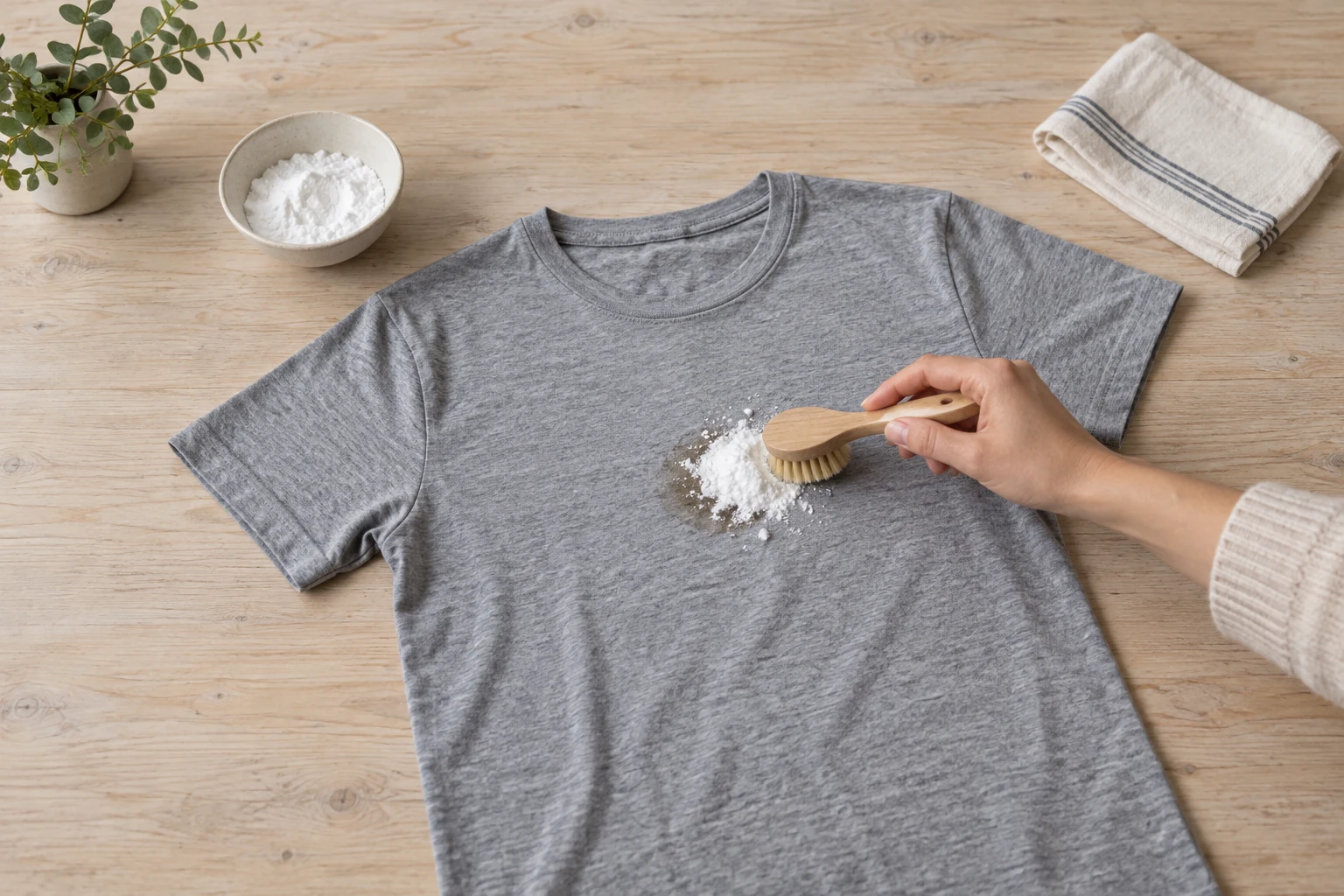
Stain removal
How to get grease out of clothes
Get grease out of clothes with an absorbent powder and dish soap, tackle black car grease, and rescue oil stains that survived the washer and dryer.
Washing and ironing
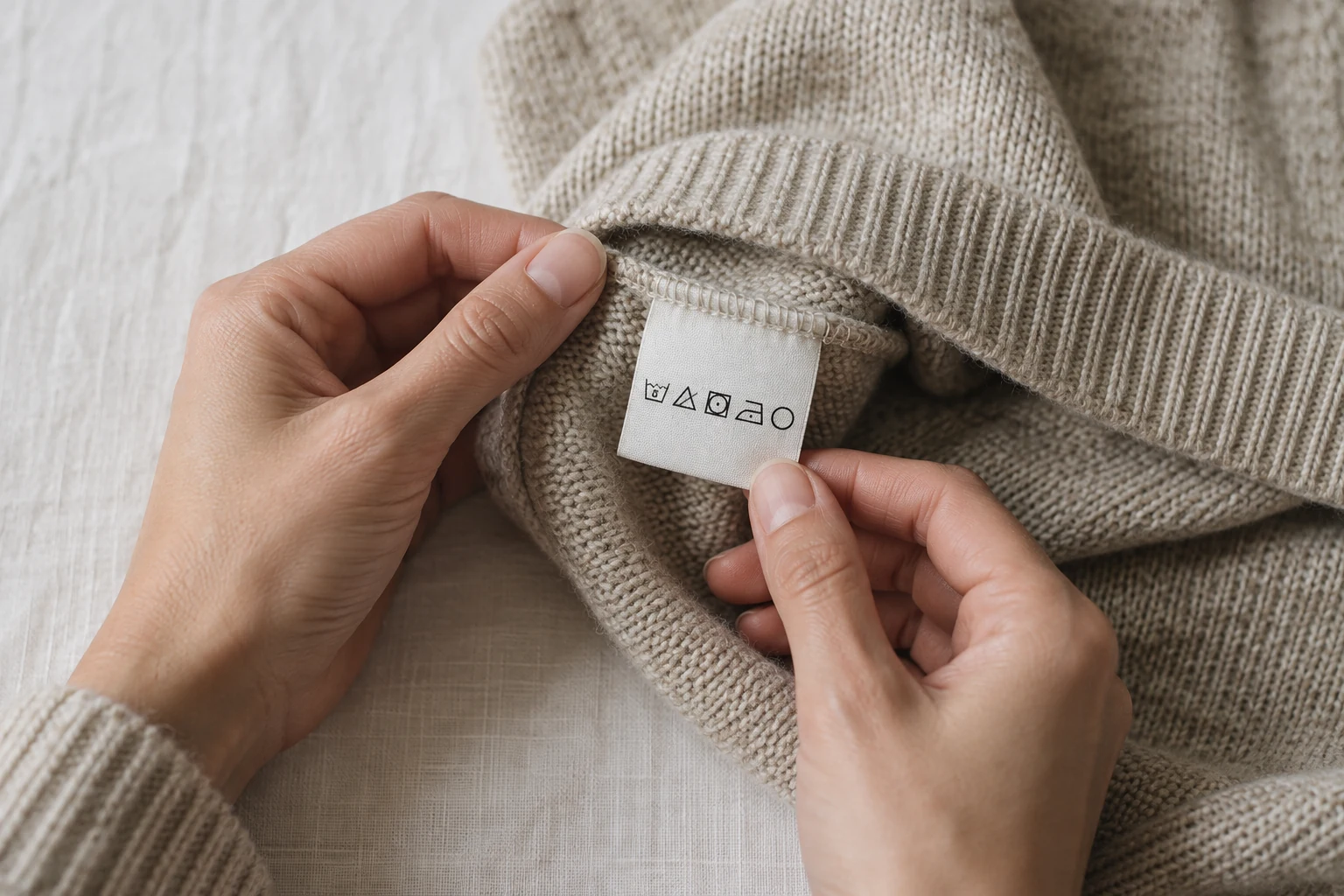
Laundry symbols explained: how to read a care label
What laundry symbols mean, in plain words: the wash tub, triangle, square, iron and circle, plus the dots, bars and crosses that change each instruction.