What is cashmere, and is it worth it
In this guide
Two sweaters on a store table look almost the same. One label says merino wool, the other says cashmere, and the second price tag is a good deal higher. It is fair to ask what is cashmere, really, and whether the difference is something you will feel after the first month. The answer is that cashmere is a genuinely different fiber, with real advantages and a few real weaknesses, and that the label alone tells you much less about quality than most people assume.
This guide covers where cashmere comes from, why it is expensive, how it compares to wool and merino, how to judge a cashmere sweater before you buy, and how to care for it so it stays soft.
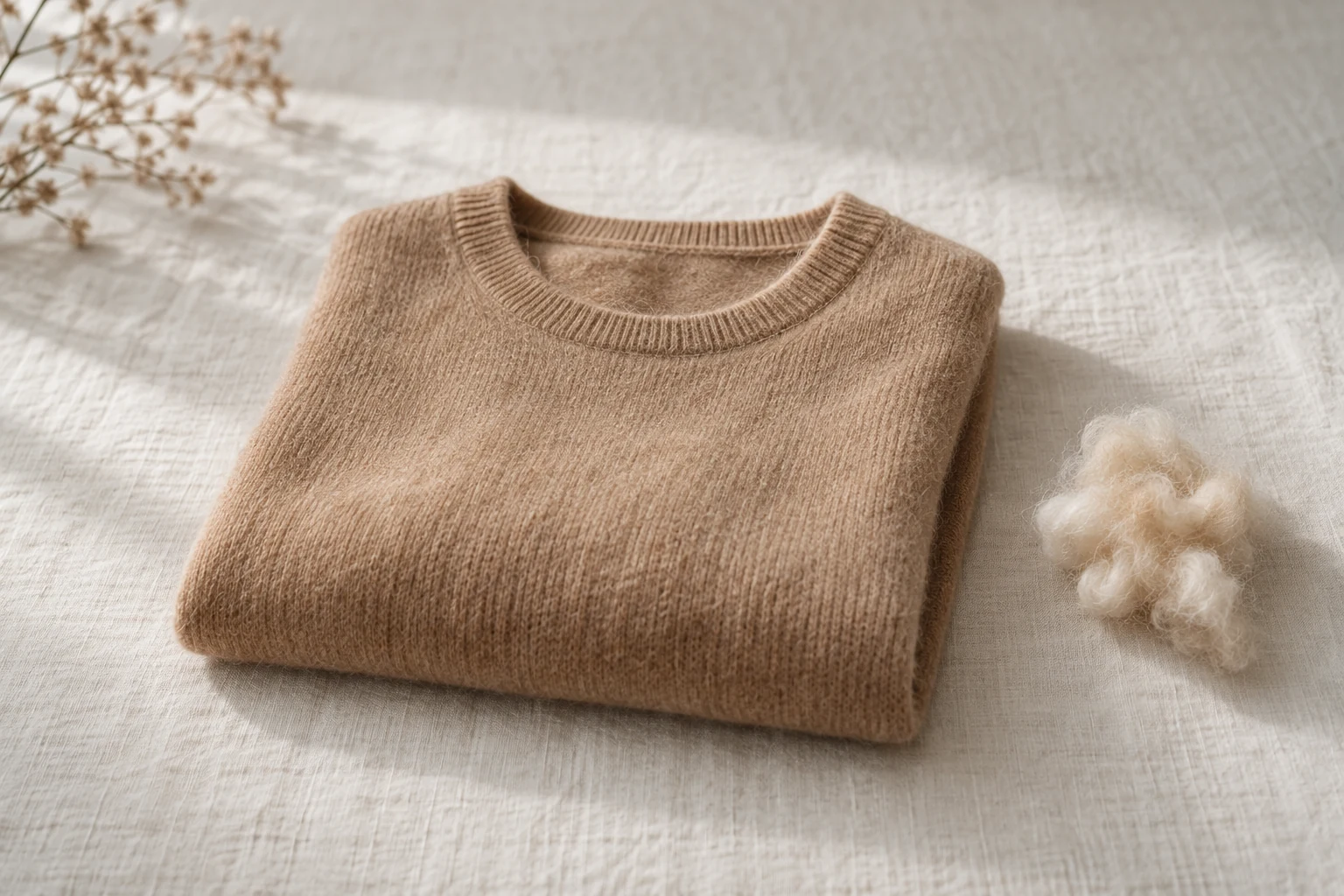
What cashmere is made of
Cashmere comes from goats, not sheep. Cashmere goats grow a double coat: long, coarse guard hairs on the outside and a fine, downy undercoat beneath that keeps them warm through cold winters on high plateaus. In spring, as the weather warms, the goats molt that undercoat. Herders collect it by combing, which yields cleaner, finer fiber, or by shearing, which is faster but mixes in more coarse hair. The raw fiber is then washed and mechanically dehaired to separate the soft down from the guard hair, and only then spun into yarn.
The name comes from Kashmir, where the fiber has been woven into shawls for centuries. Today most raw cashmere comes from China and Mongolia, with Afghanistan and other Central Asian countries behind them. In the United States, the Federal Trade Commission sets what can be called cashmere: the fine dehaired undercoat of the cashmere goat, with an average diameter of no more than 19 microns and very little coarse fiber mixed in. Goat fiber that does not meet those limits must be labeled as wool.
Why cashmere is so expensive
The main reason is yield. A single cashmere goat produces only about 150 to 300 grams of usable fiber a year, roughly a third to two thirds of a pound, while a sheep can grow several kilograms of fleece. It can take the down of more than one goat to knit a single sweater. On top of that, combing is slow handwork, and dehairing and sorting remove a large share of what is collected.
Cost also reflects quality differences you cannot see on a label. Long, fine fibers from the best grades spin into stronger, smoother yarn that pills less, and they cost the mill more. Cheap cashmere is often made from shorter, coarser fibers or knitted loosely to use less yarn, which is why a bargain sweater may feel lovely in the store and look tired after a season. Overgrazing by growing goat herds has also damaged grasslands in Mongolia and China, which is one reason some buyers look for traceable or recycled cashmere.
Is cashmere wool? Cashmere vs wool and merino
In everyday speech, and under the US wool labeling law, cashmere counts as a specialty wool: an animal hair fiber in the same family as sheep's wool, alpaca and mohair. It shares wool's basic behavior. It is a protein fiber with a scaly surface, it holds warmth when damp, resists odor and can felt and shrink if washed hot with agitation. The differences are in fineness and feel. Cashmere fibers are finer than ordinary wool and have less crimp, so cashmere feels softer, lighter and more fluid, with a gentle halo.
Is cashmere better than merino? It depends on what you need. Fine merino wool can be as fine as cashmere and is more durable, less prone to pilling and easier to wash, which makes it better for base layers, travel and everyday sweaters that work hard. Cashmere wins on softness, loft and warmth for its weight, which makes it better for sweaters, scarves and wraps worn for comfort rather than exertion.
| Quality | Cashmere | Fine merino |
|---|---|---|
| Source | Downy undercoat of cashmere goats | Sheep |
| Feel | Softer, lighter, more fluid, with a halo | Can be as fine as cashmere |
| Washing | Hand wash lukewarm, felts with heat and rubbing | Easier to wash |
| Durability and pilling | Pills more, needs gentler use | More durable, pills less |
| Best for | Sweaters, scarves and wraps worn for comfort | Base layers, travel and hardworking sweaters |
Is cashmere warm, and is it itchy?
Cashmere is very warm for its weight. The fine, lofty fibers trap a lot of still air, so a thin cashmere sweater can feel as warm as a much bulkier wool one. That makes it excellent for layering under a coat, and for people who dislike heavy knits. Because it breathes like wool, a cashmere sweater is also comfortable over a wider range of temperatures than a synthetic fleece.
Good cashmere is not itchy for most people. Itch from wool comes mainly from coarse fibers pressing into the skin, and cashmere's fibers are too fine for that. If a cashmere piece does prickle, it usually contains coarser fibers or guard hair, or it is a blend with wool. Some people are sensitive to lanolin or dyes rather than the fiber itself; if you react to all animal fibers, a silk or cotton layer underneath helps.
How to judge a cashmere sweater
Start with the label. By law it must give the fiber percentages, so 100% cashmere or all cashmere is pure, while a cashmere blend will list something like 70% wool, 30% cashmere. Blends can be good value, but they are a different product. Then use your hands. Good cashmere feels soft but also dense and springy. Gently stretch a small section of the cuff or hem and release it: it should spring back promptly. A loose, floppy knit that stays stretched will lose its shape.
Look at the surface against the light. A very fuzzy, fluffy surface in the store can mean short fibers that have been heavily brushed, and short fibers are the ones that pill first. A smoother, cleaner surface with a light halo is usually the better sign. Two ply yarn, where two strands are twisted together, is more durable than single ply for everyday sweaters. Finally, check the seams and ribbing at the cuffs and hem: well made knits have neat, linked seams and ribs that recover when stretched.
How to wear a cashmere sweater
A cashmere sweater looks best when it is allowed to be quiet. A crew neck or V neck in navy, gray, camel, cream or black works over a collared shirt, a T shirt or alone with good trousers. For men, a V neck cashmere sweater over an oxford shirt with gray trousers is a classic office look, and a crew neck over a T shirt with dark jeans works on weekends. For women, a fine crew or turtleneck under a tailored coat, or a relaxed cardigan over a slip dress, uses cashmere's drape well.
Cashmere scarves, wraps and shawls are the easiest way into the fiber and last well because they are not rubbed at the elbows and sides. A pashmina shawl is traditionally a fine cashmere shawl from the Himalayan region, but the word is not legally defined in the US, and shops use it for everything from fine cashmere to cashmere and silk blends to viscose. Read the fiber content rather than the name.
Caring for cashmere
Cashmere does not need washing after every wear. Air it overnight on a flat surface or chair back and it will freshen. When it does need a wash, most knitted cashmere can be hand washed in lukewarm water with a wool detergent and dried flat; our guide to washing cashmere gives the full method. Getting cashmere wet is not the problem. Heat combined with rubbing or wringing is what felts and shrinks it.
Some pilling is normal, especially where arms rub the body, and usually settles down after the first few washes as loose short fibers work out. Remove pills gently with a cashmere comb or fabric shaver, as explained in our guide to removing pilling. Store cashmere folded, never on a hanger, and clean before storing, because clothes moths favor animal fibers with food or perspiration on them. Our guide to storing knitwear covers moth prevention.
Questions people ask
Is it bad if cashmere gets wet?
No. Cashmere can be washed in water and rain will not harm it. The damage comes from hot water, rubbing, wringing or tumble drying, which can make the fibers lock together and shrink. If a sweater gets soaked, press out the water in a towel and dry it flat away from direct heat.
What are the disadvantages of cashmere?
Cashmere pills more than many wools, is less resistant to abrasion at elbows and cuffs, needs gentle washing and attracts clothes moths. It is also expensive, and quality varies widely at every price. For hard wearing everyday layers, merino is often the more practical choice.
Is cashmere a fabric or an animal?
Cashmere is a fiber from an animal, the cashmere goat, rather than an animal of its own or a type of weave. The fiber is spun into yarn and then knitted into sweaters or woven into fabrics for scarves, coats and suits.
What does baby cashmere mean?
Baby cashmere refers to fiber from young goats, usually the first combing, which tends to be especially fine and soft. There is no legal US definition beyond the general cashmere rule, so the term is a maker's claim rather than a certified grade. Very fine fiber can also be a little less durable.
Sources and further reading
References used for this guide. Each opens the original page in a new tab.
- Cachet of cashmere: complying with the Wool Products Labeling Act, Federal Trade Commission Opens in a new tab
- Cashmere wool, harvesting, production and environmental issues (Wikipedia) Opens in a new tab
- What is merino wool, including fleece yields compared with cashmere, The Woolmark Company Opens in a new tab
- A guide to cashmere quality, fiber length and ply, Luca Faloni Opens in a new tab
Keep reading
Washing and ironing
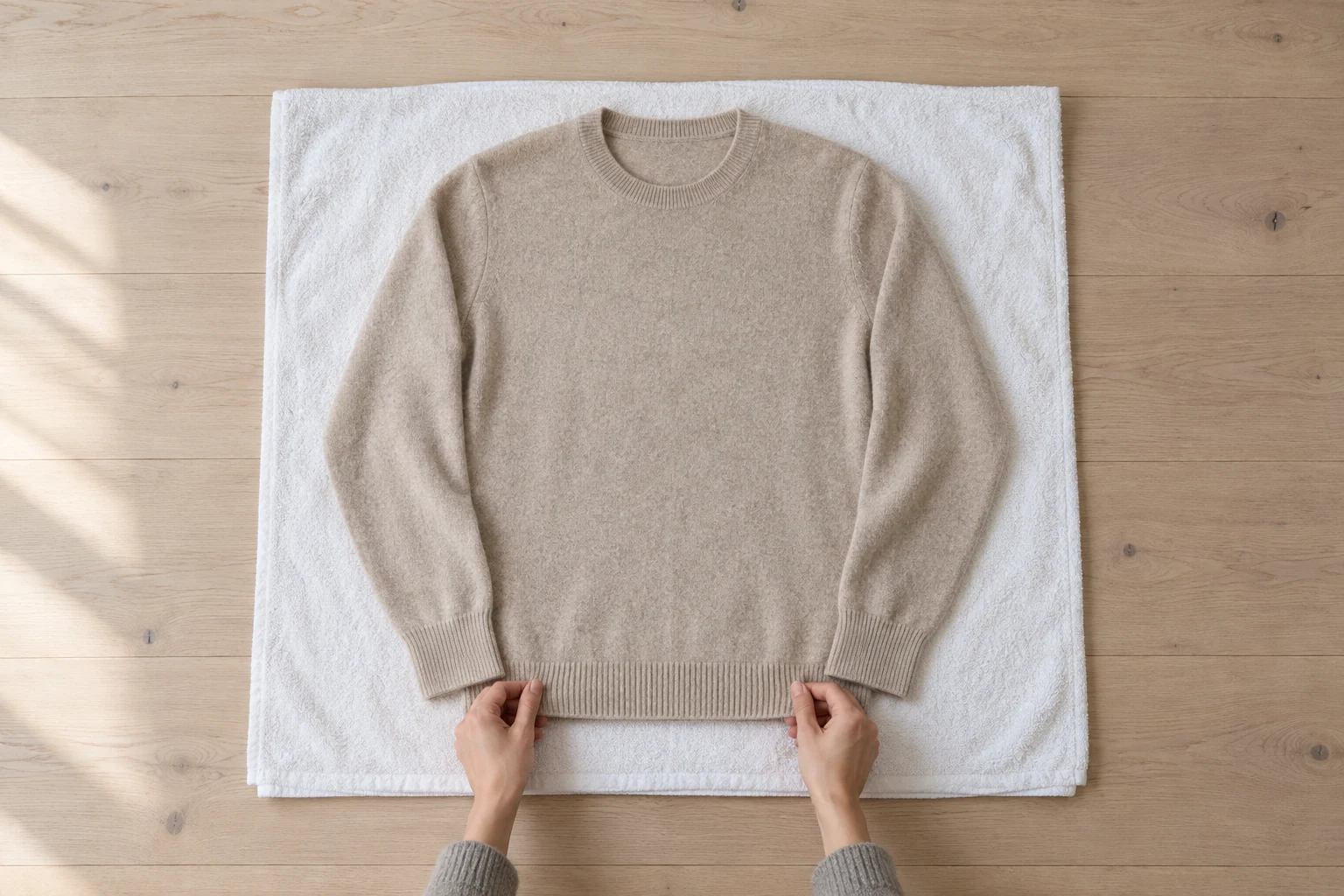
How to wash cashmere by hand or machine
How to wash a cashmere sweater or scarf at home: read the label, hand wash in lukewarm water with a wool detergent, press out the water and dry it flat.
Fabrics
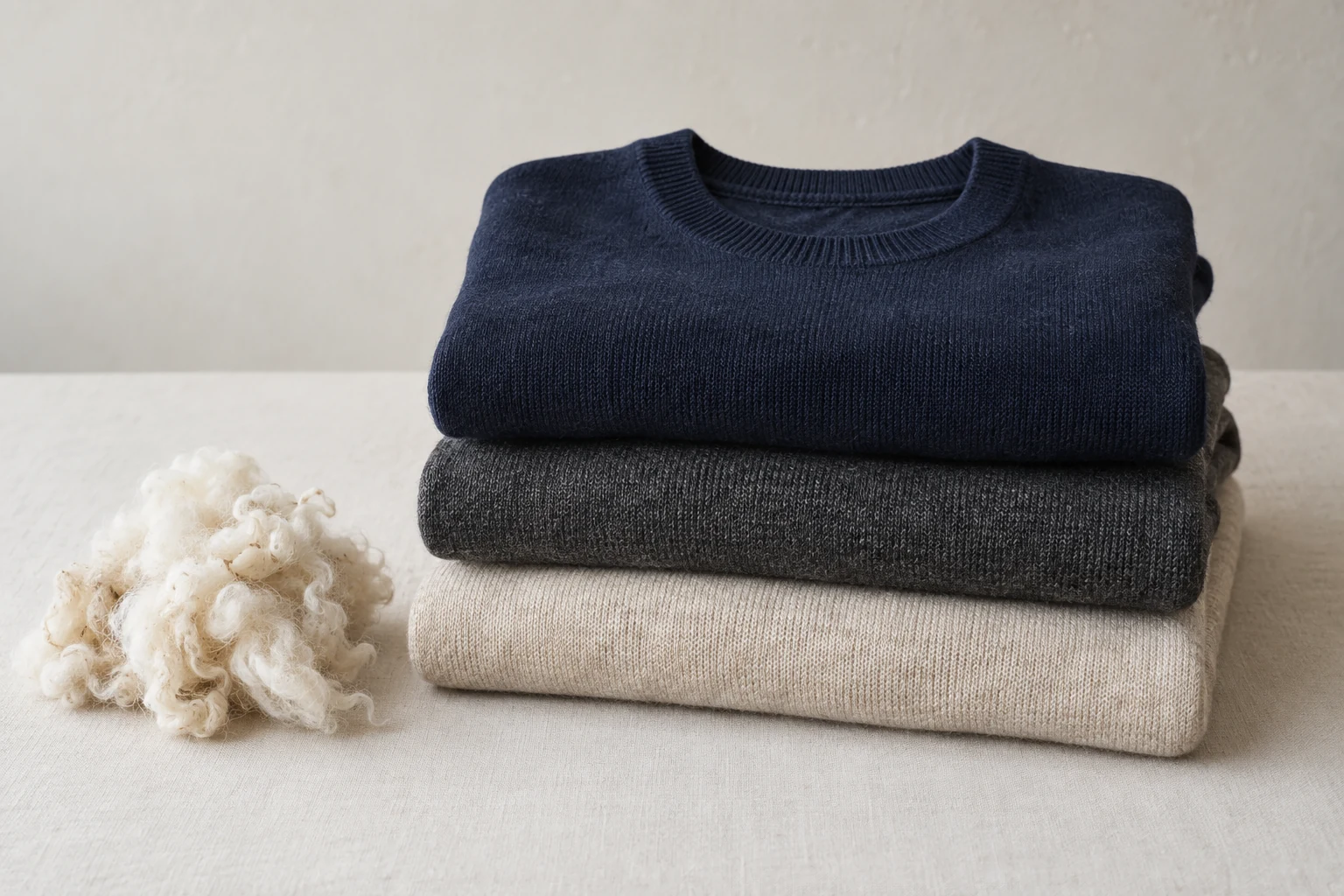
Merino wool: what it is and why it works
What merino wool is, why it feels softer than ordinary wool, where it beats cotton and synthetics, its real drawbacks, and how to wear and wash merino clothing.
Closet and packing
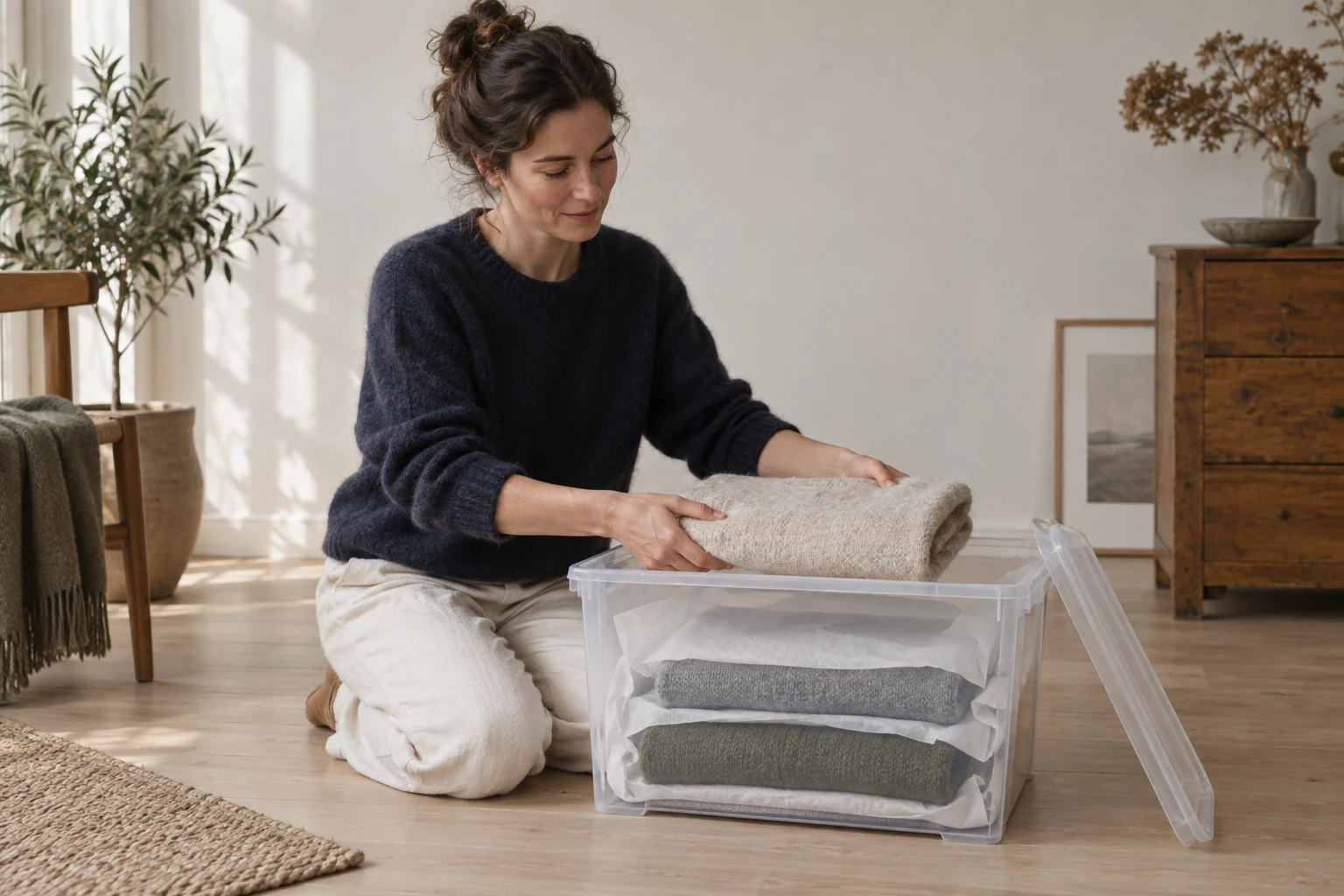
How to store sweaters: folding, seasons and moths
How to store sweaters day to day and between seasons: fold instead of hang, clean before packing, choose bins or bags with care, and keep clothes moths out.
Washing and ironing
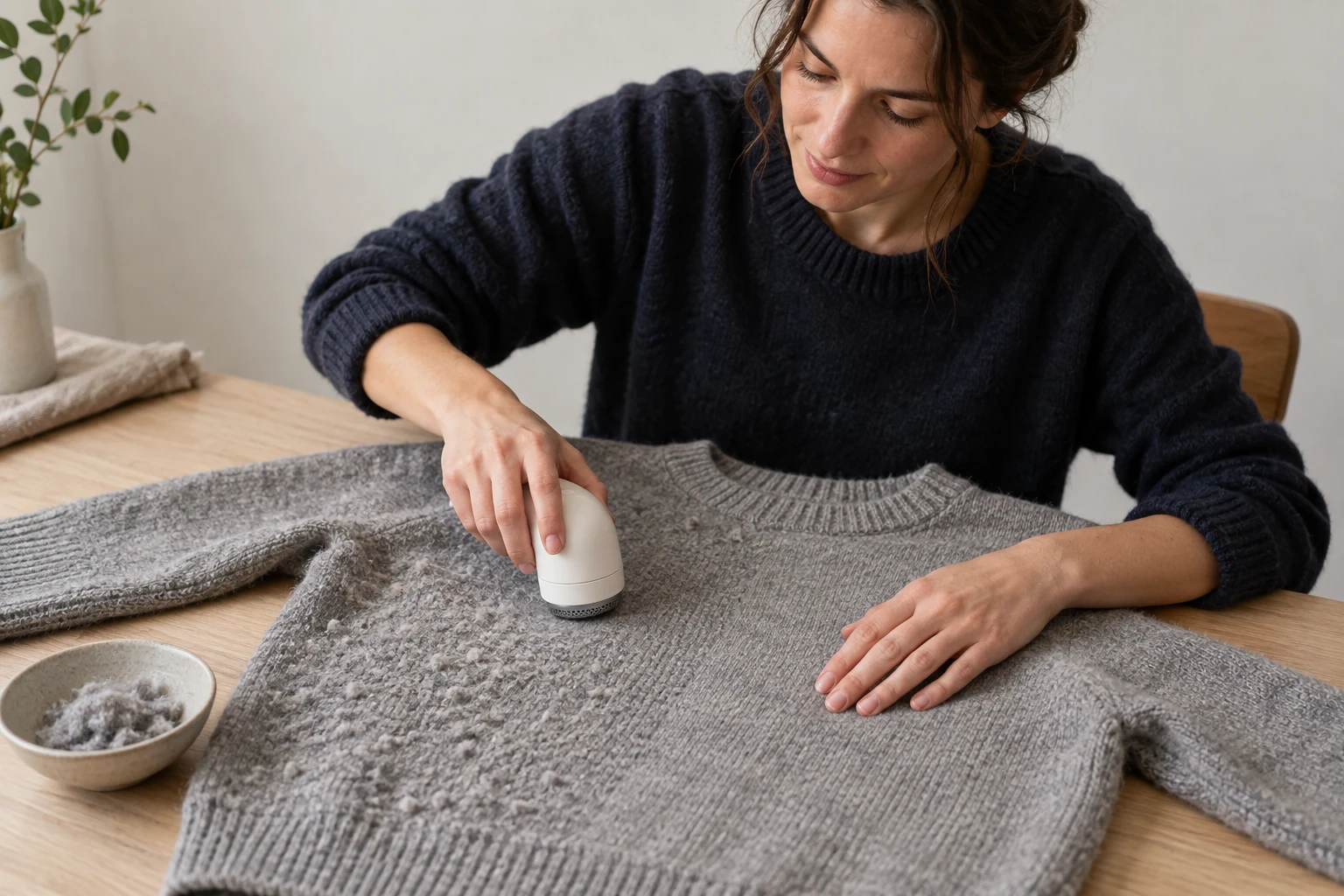
How to remove pilling from a sweater, and lint too
How to remove pilling from a sweater with a fabric shaver or sweater comb, clear lint with a roller, and wash and wear knits so the pills come back more slowly.
Closet and packing
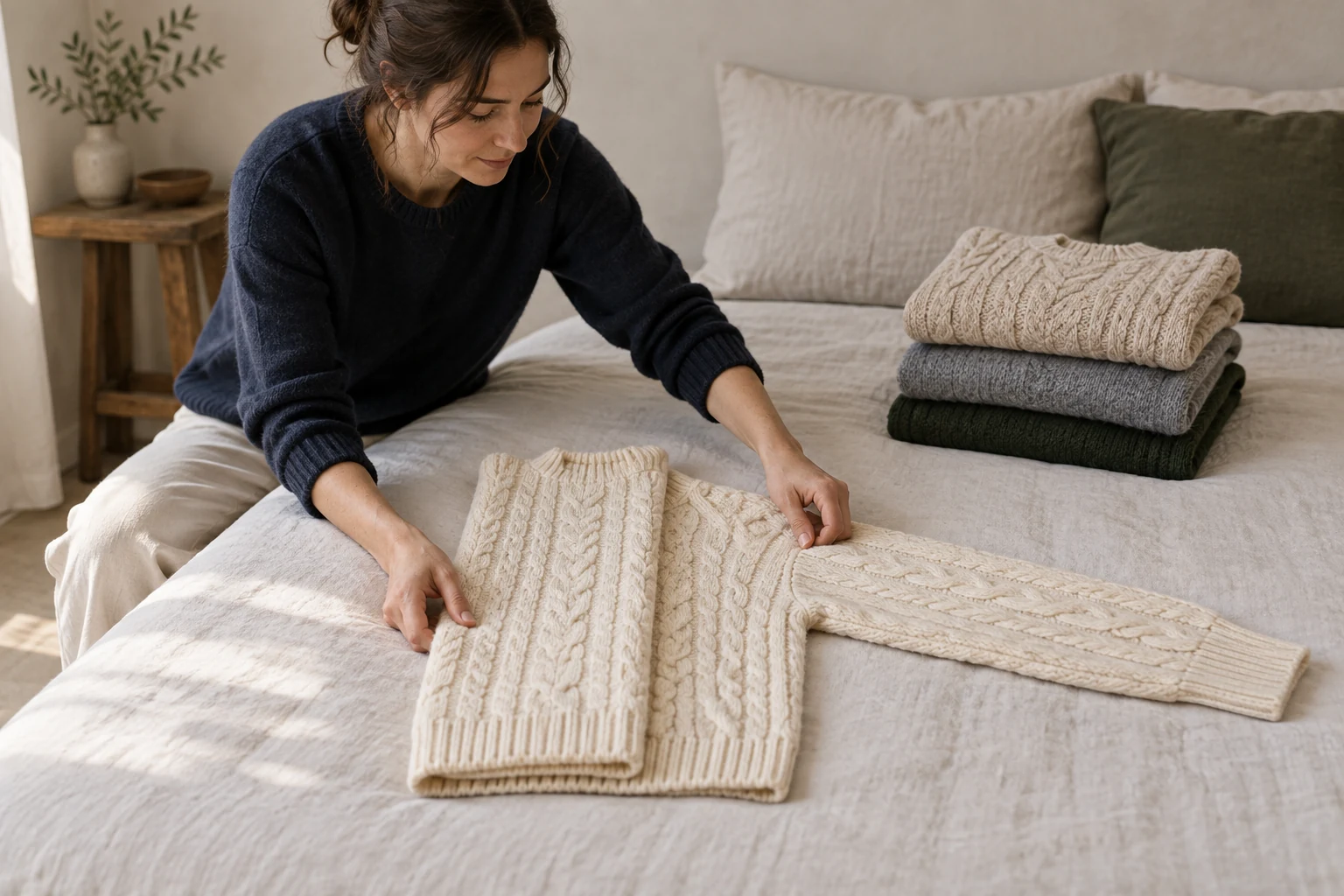
How to fold a sweater so it keeps its shape
How to fold a sweater for a shelf or drawer, fold it over a hanger without stretched shoulders, pack it for travel, and store knitwear between seasons.