Merino wool: what it is and why it works
In this guide
Merino has a reputation built on two claims: it is the wool that does not itch, and a merino T shirt can be worn several days in a row on a trip. Both are broadly true, and they come from the same place: the fiber itself. Merino wool is simply wool from a particular breed of sheep, but the fineness of that wool changes how it feels, how it performs and what it is good for.
This guide explains what merino wool is and where it comes from, why it is soft, what it does better than cotton and synthetics, where it falls short, how to choose and wear merino clothing, and how to wash it so it lasts.
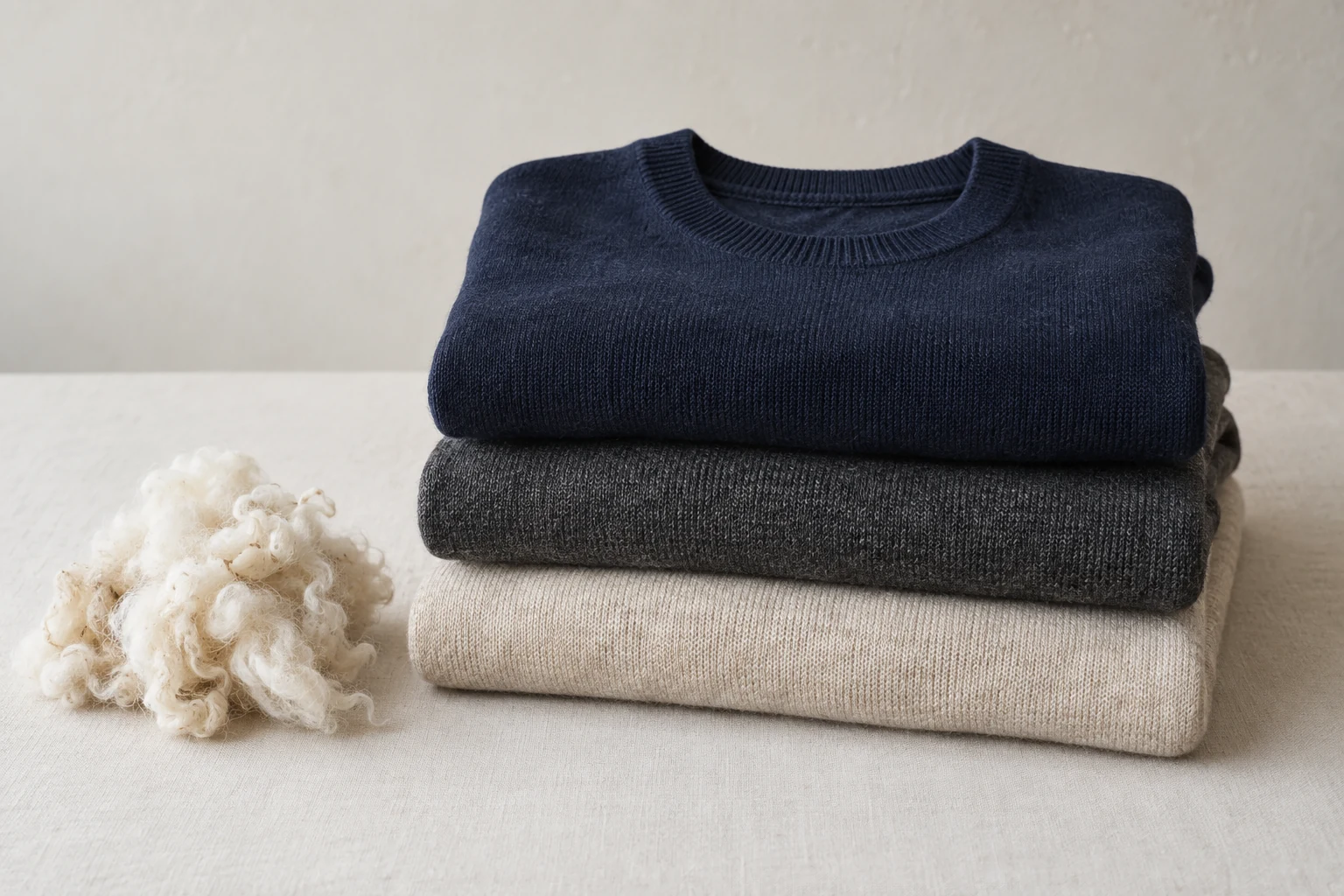
What merino wool is and where it comes from
Merino sheep were developed on the Iberian Peninsula in the Middle Ages, and Spain guarded the breed so closely that exporting the animals was forbidden for centuries. In the eighteenth century flocks spread to other European courts, and from there to South Africa, Australia, New Zealand and the Americas. Today Australia dominates, producing the large majority of the world's superfine wool, and merino is also the main wool breed in New Zealand and South Africa.
What sets merino sheep apart is the fineness of their fleece. Wool fiber is measured in microns, millionths of a meter. Human hair is roughly 50 to 100 microns thick; merino wool is usually under 22, and the finest grades go well below 18. Industry groups divide it into bands: broader merino goes into outerwear and heavier knits, fine and superfine merino into knitwear and suiting, and the finest into garments worn directly against the skin.
Why merino feels soft, not itchy
The itch people associate with wool is mostly a matter of fiber thickness. Coarse fibers, roughly above 30 microns, are stiff enough that their ends press into the skin instead of bending, which the nerves read as prickle. Fine merino fibers flex when they touch your skin, so they do not trigger that sensation. That is why a merino T shirt can feel as comfortable as cotton, while a rugged fisherman's sweater in coarser wool may feel scratchy against the neck.
This is also the heart of merino wool vs wool in general. All merino is wool, but not all wool is merino. Generic wool labeled only as wool or lambswool may come from breeds with thicker fiber, which can be warmer and harder wearing but less comfortable next to skin. If itch is the problem, look for merino, and ideally a garment that states a micron figure; many makers use about 17 to 19.5 microns for next to skin pieces.
| Fiber | Thickness in microns | What it means |
|---|---|---|
| Human hair | About 50 to 100 | For comparison |
| Coarse wool | Above about 30 | Stiff ends press into skin and prickle |
| Merino | Usually under 22 | Flexes against skin instead of itching |
| Next to skin merino | About 17 to 19.5 | T shirts, base layers, fine knits |
| Finest merino | Well below 18 | Garments worn directly against the skin |
What merino wool clothing does well
Wool fiber absorbs moisture vapor into its core rather than holding liquid on the surface, so it can take up sweat without feeling wet against your skin. That helps it keep you comfortable across a range of temperatures: warm when it is cold, less clammy than synthetics when you are active or it is mild. It also stays warm when damp, which matters on a wet hike or a rainy commute.
Merino resists odor well, because the proteins in the fiber bind odor molecules until the garment is washed. In practice, that is why merino wool travel clothing is so popular: a merino T shirt or merino wool shirt can usually be worn for several days, aired overnight, before it smells. Wool fibers are also naturally springy, so merino knits recover from creasing when hung up and pack well. Finally, pure merino is biodegradable at the end of its life, unlike polyester.
The disadvantages of merino wool
Merino is more delicate than synthetic fabrics. Thin merino T shirts and base layers, especially very fine ones, can develop small holes at friction points like backpack straps, belt lines and elbows within a season or two of hard use. Many makers blend merino with a little nylon, or wrap it around a nylon core, to add strength; that is a reasonable trade if durability matters more than purity. Merino also dries more slowly than polyester, though it feels less wet while doing so.
The price is the other drawback. Fine wool takes more care to grow, sort and spin, and demand for it is high. Merino is also food for clothes moths, like all wool, so it needs clean storage. Finally, there are animal welfare questions: mulesing, a practice used on some Australian flocks to prevent flystrike, is widely criticized, and New Zealand has banned it. Some brands state that their wool is from non mulesed sheep; if that matters to you, look for that claim or a certification.
How to choose and wear merino
For base layers and T shirts, look at fabric weight, often given in grams per square meter. Light fabrics around 150 are good for warm weather and layering; around 200 is a versatile all season base layer; 250 and above is meant for cold. A fine gauge merino wool sweater, the thin, smooth kind, is the most useful knit many people own: a navy, gray or charcoal crew neck or V neck goes over a collared shirt for the office and over a T shirt with jeans on weekends. Merino wool clothing for women follows the same logic, and a fine merino turtleneck or cardigan under a coat is one of the warmest, least bulky layers there is.
Merino works best close to the body. It does not replace a wind or rain shell, and a fine sweater is no match for a heavy coat, but it makes every layer on top of it more effective. For cold weather dressing, pair a merino base with an insulating mid layer and a shell, as described in our guide to dressing for 30 degree weather. For trips, a few merino tops can replace a stack of cotton ones; see our travel capsule wardrobe guide.
How to wash merino wool
Can 100% merino wool be washed? Often, yes. Many merino garments, especially base layers and sweaters treated to be machine washable, can go in a machine on a wool or gentle cycle in cool water, while untreated knits should be hand washed in lukewarm water, about 86°F (30°C). The care label decides; our guide to reading care labels explains the symbols. Use a mild wool detergent, avoid enzyme detergents and bleach, and skip fabric softener.
Dry merino flat or over a rack, not in a hot dryer, which is what shrinks and felts wool. Wash less often than you would cotton: airing is often enough. Fold sweaters rather than hanging them, and store them clean to keep moths away. Our guides to washing wool and storing knitwear cover both in detail, and small holes can be mended with the techniques in fixing a hole in a sweater.
Questions people ask
Is 100% merino wool good quality?
100% merino tells you the fiber, not the quality. A good merino garment also has fine fiber, evenly spun yarn and a dense knit or weave. Very lightweight 100% merino can wear through faster than a merino and nylon blend, so for hard use a small amount of nylon is often a strength, not a shortcut.
Why is merino so expensive?
Fine merino takes careful breeding and sorting, and the finest grades are a small share of all wool produced. Spinning and knitting fine yarn also costs more. Price varies with micron, origin, blend and brand, so compare labels rather than assuming more expensive means finer.
Is merino better than cashmere?
For everyday and active use, merino is more durable, less prone to pilling and easier to wash. Cashmere is softer, loftier and warmer for its weight, which suits sweaters and scarves worn for comfort. Many people own merino for daily wear and one or two cashmere pieces.
What is better than merino wool?
It depends on the job. For pure warmth to weight, cashmere, alpaca and down insulation beat it. For fast drying and durability in sweaty sports, polyester and nylon win. For heat, linen and light cotton breathe better. Merino is the best all rounder rather than the best at any single thing.
Sources and further reading
References used for this guide. Each opens the original page in a new tab.
Keep reading
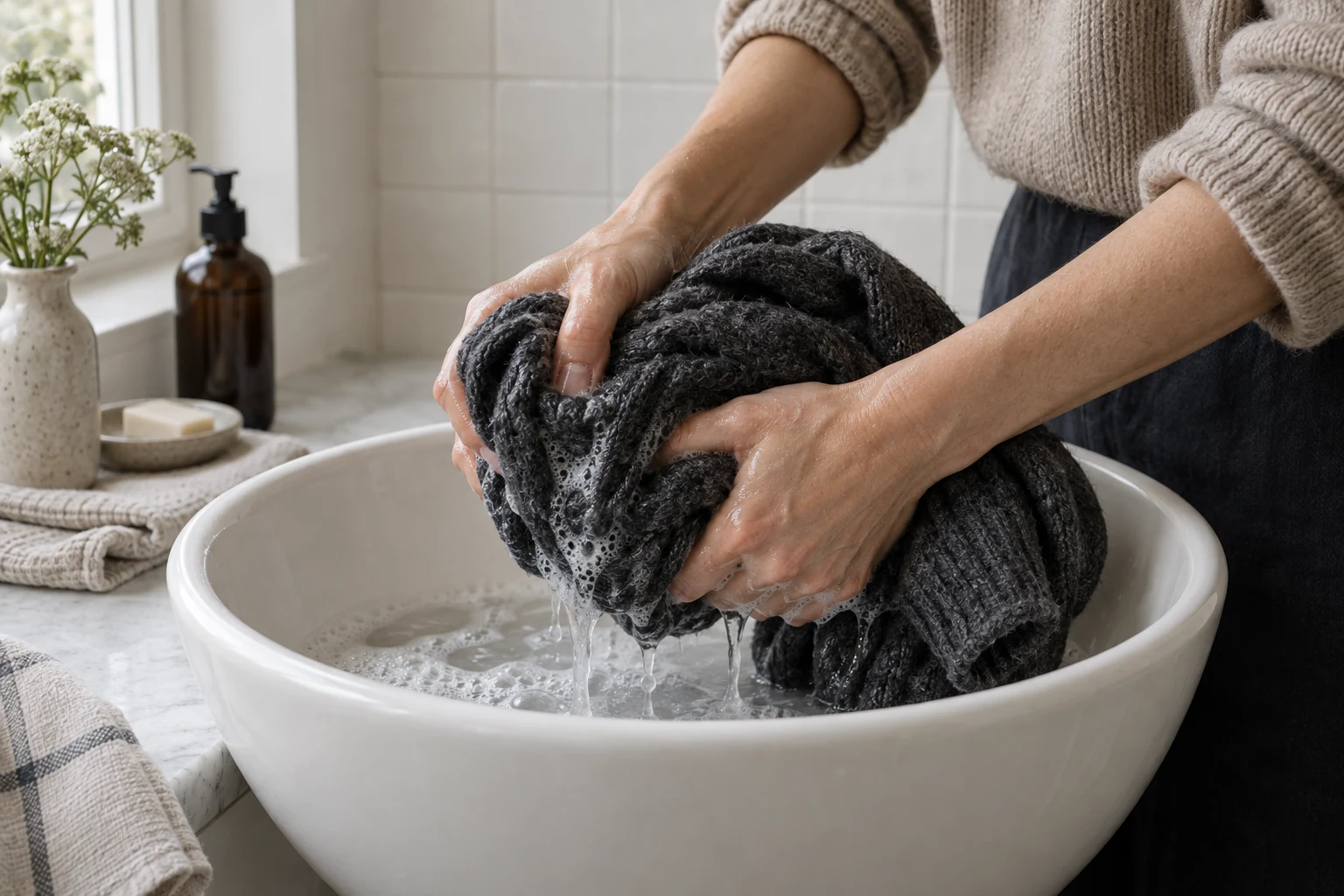
Washing and ironing
How to wash a wool sweater without shrinking it
How to wash a wool sweater by hand or in the machine: read the label, pick a wool detergent, keep water cool and calm, then dry it flat so it keeps its shape.
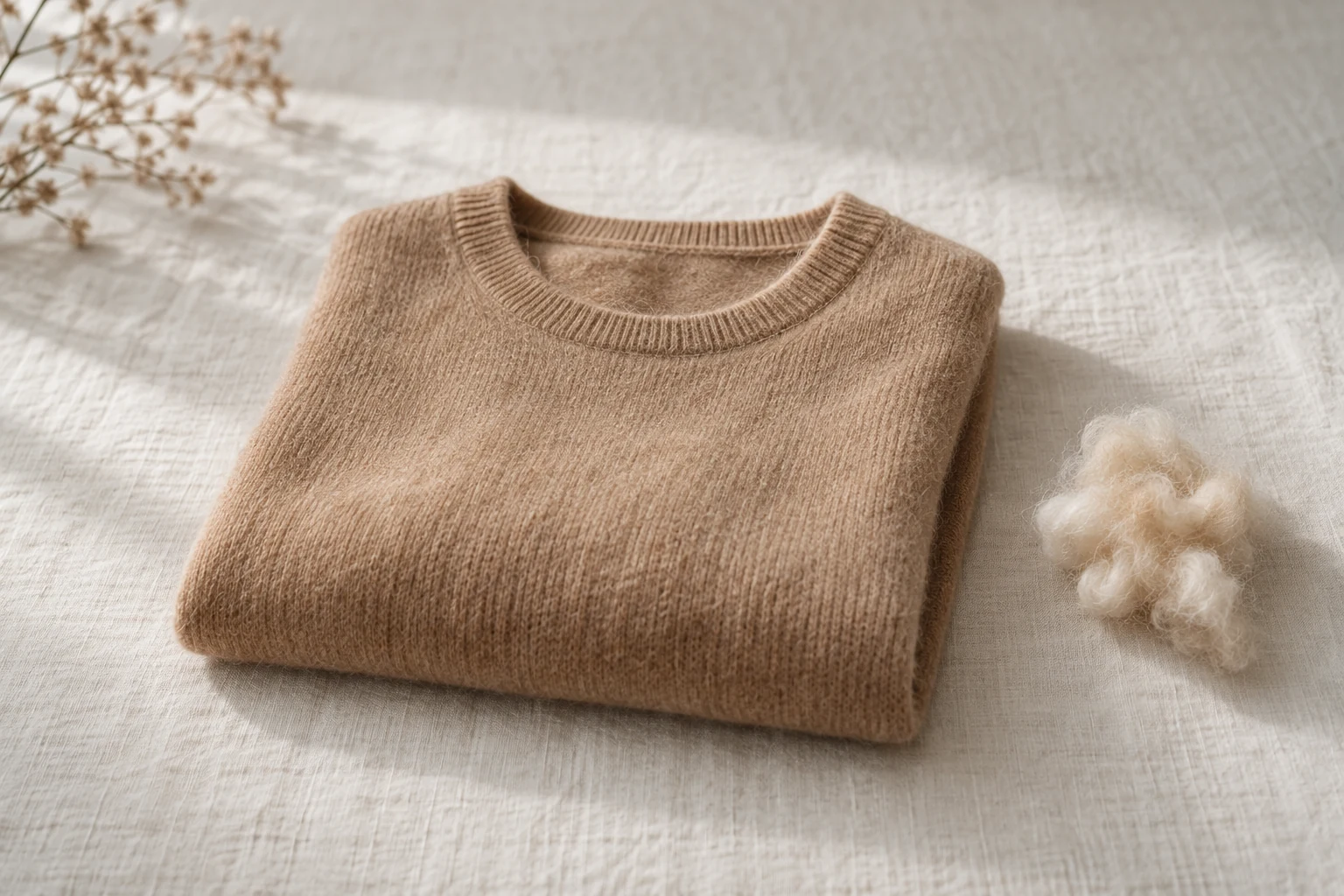
Fabrics
What is cashmere, and is it worth it
What is cashmere: the goat undercoat it comes from, why it costs more than wool, how to judge a cashmere sweater in the store, and how to keep it soft for years.
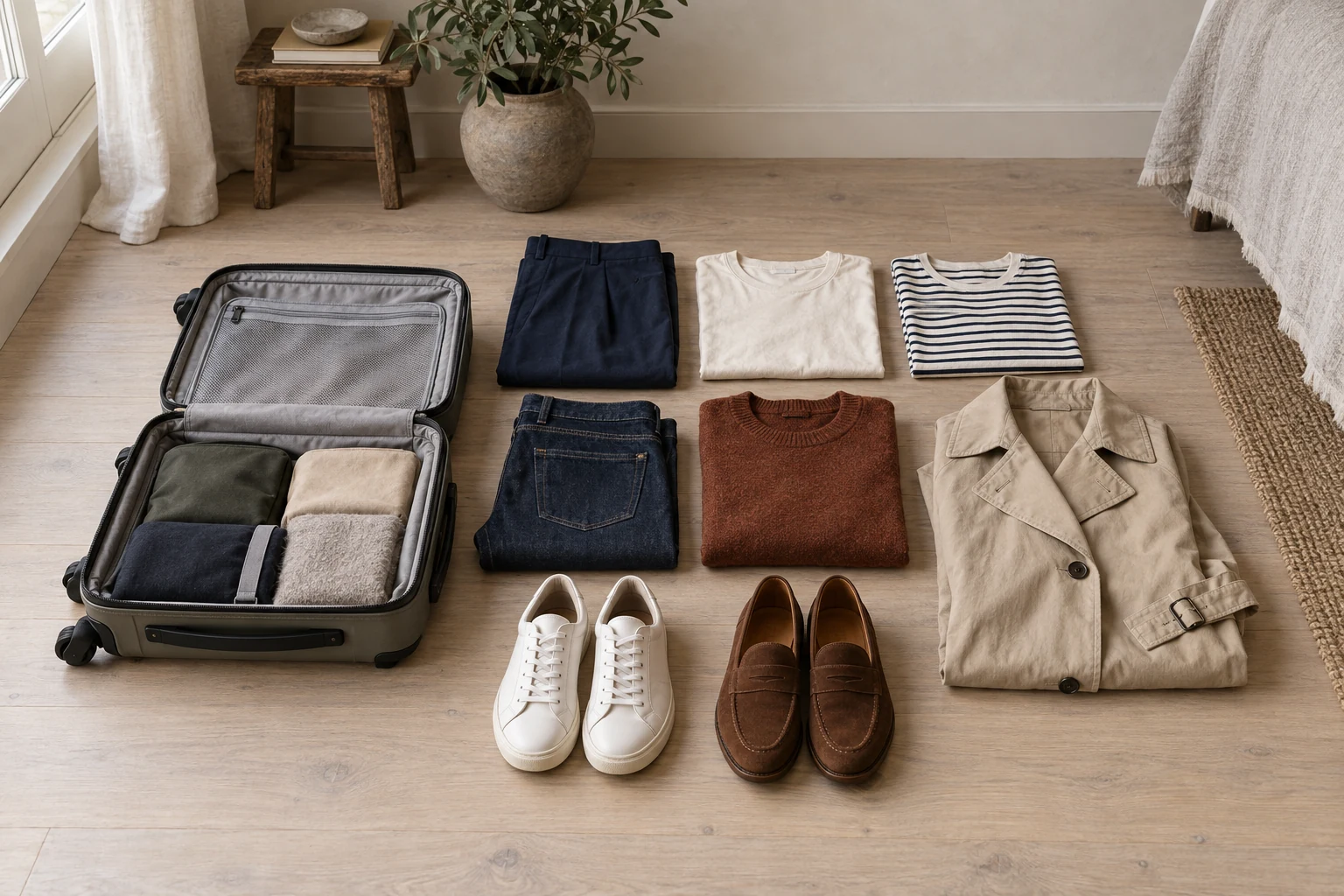
Closet and packing
A travel capsule wardrobe that fits one bag
How to build a capsule wardrobe for travel: how many pieces to pack, a color plan that mixes, fabrics that survive a suitcase, and example lists for women and men.
Closet and packing
How to store sweaters: folding, seasons and moths
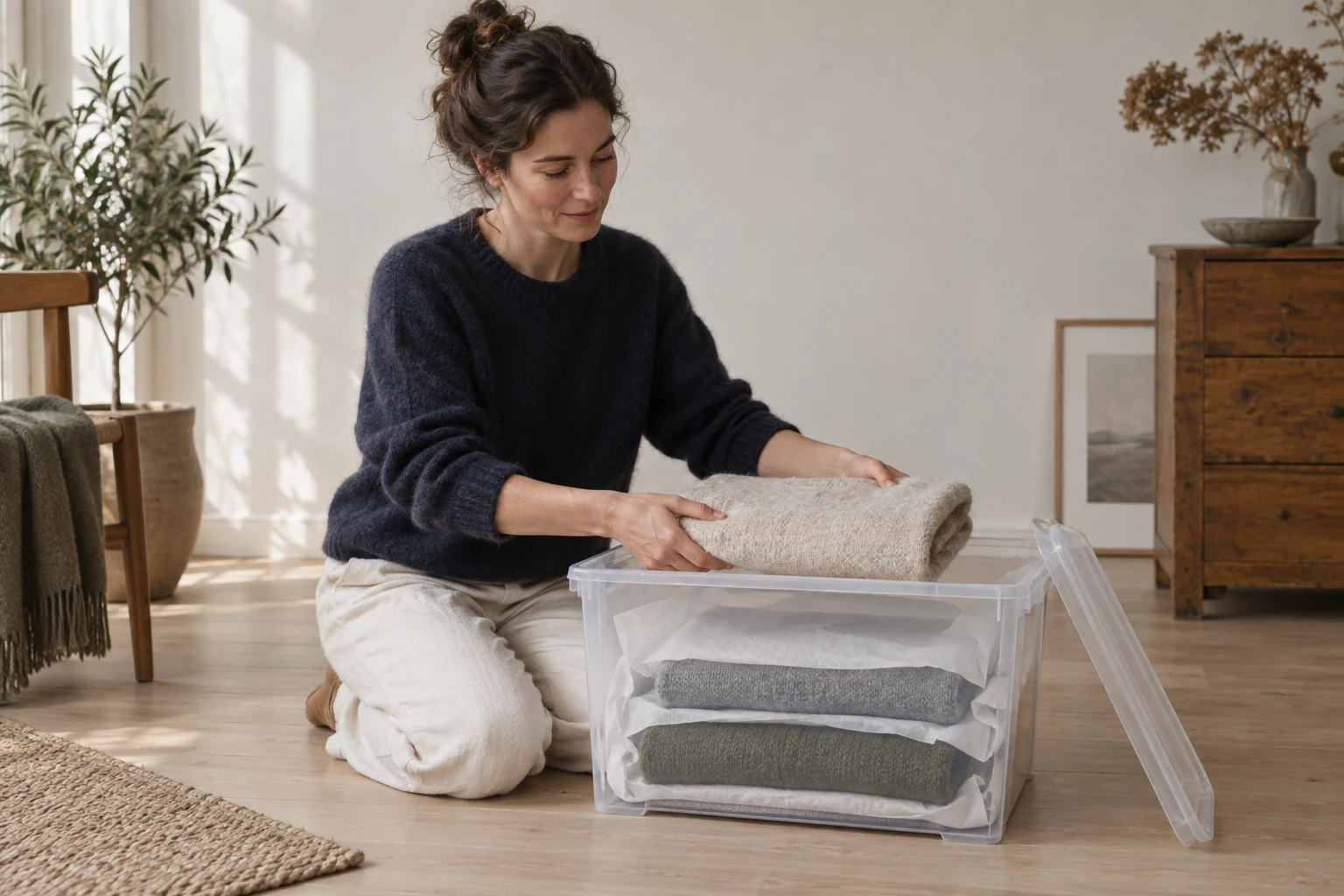
How to store sweaters day to day and between seasons: fold instead of hang, clean before packing, choose bins or bags with care, and keep clothes moths out.

Weather
What to wear in 30 degree weather
Below freezing, the details decide your comfort: insulation, a hat and gloves, and boots that grip ice. Layers and outfits for 30°F, from commute to run.