How to clean a washing machine
In this guide
A faint musty smell on clean towels, gray gunk in the folds of the door seal, little dark flecks on a white shirt: all three mean the machine that is supposed to clean your clothes needs cleaning itself. Detergent residue, fabric softener, lint and moisture build up where you cannot see them, and in that warm, damp space mildew and bacteria grow and start to smell.
The fix takes about fifteen minutes of actual work plus one empty cycle, and the same routine works for front and top loaders with a few extra parts for each. Always check your owner's manual first, because it names the cleaning cycle on your model and says which products it accepts.
Why washers get dirty and how often to clean them
Modern washers, especially high efficiency front loaders, use little water and often run cool cycles. That saves energy, but it also means detergent and softener residue are not always rinsed away, and the rubber seal and the drawer stay damp after the door is shut. Manufacturers including GE, Maytag and Samsung recommend running a cleaning cycle about once a month. Samsung's machines, for example, remind you after about 20 washes on a top loader or 40 on a front loader.
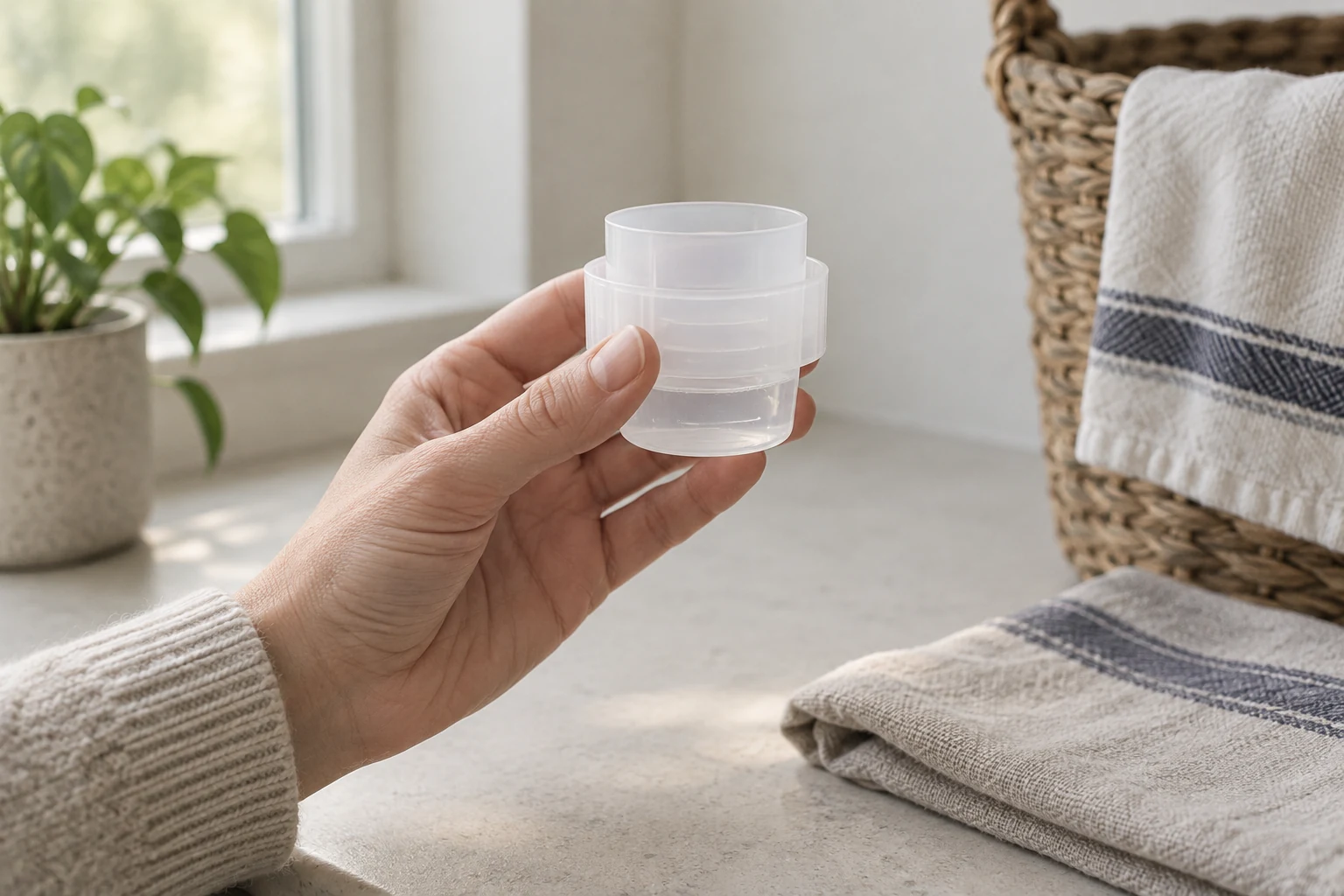
Clean more often if you mostly wash cold, use fabric softener, wash lots of towels and sports clothes, or live somewhere humid. Using too much detergent is one of the most common causes of buildup, since extra suds leave film that bacteria feed on, so measure by the load rather than filling the cap. If clothes already smell, clean the machine before you rewash them; our guide to getting smells out of clothes handles the laundry side.
What to clean a washing machine with
You have three reliable options. Liquid chlorine bleach disinfects and removes mildew; GE suggests 1 cup (250 ml) for its top load cleaning cycle, and on most front loaders you pour it into the bleach compartment of the dispenser. Use plain regular bleach, since Maytag warns that thickened, splashless or easy pour bleach can cause excess suds in the cleaning cycle. A commercial washing machine cleaner, whether a powder, liquid or washing machine cleaner tablets, is made for the job, smells less than bleach and is the easiest choice if your manual recommends one; follow the package dose.
White vinegar is the third option. GE lists 1 cup of vinegar as an alternative to bleach for its cleaning cycle, and vinegar helps dissolve mineral scale in hard water areas, though it does not disinfect the way bleach does. Some other washer makers advise against vinegar because frequent use can wear rubber seals and hoses, so use it only if your manual allows it, and occasionally rather than every month. The rule that matters most is never to use bleach and vinegar together, or bleach with ammonia, in the same cycle or on the same surface, because the combination releases toxic gas. If you want to use both, run one cleaning cycle, then a plain rinse cycle, before the other. Our guide to white vinegar in the laundry covers its limits in more detail.
| Cleaner | How much | Good to know |
|---|---|---|
| Regular liquid chlorine bleach | About 1 cup (250 ml), per GE | Disinfects and removes mildew; avoid thickened or splashless bleach |
| Washing machine cleaner | Follow the package dose | Made for the job, smells less; use if your manual recommends it |
| White vinegar | About 1 cup | Dissolves scale but does not disinfect; only if your manual allows it |
Never combine bleach with vinegar or ammonia; run a rinse cycle between them.
How to clean a front load washer
Front loaders have more hidden damp spots than top loaders: the folds of the door seal, the drawer housing and the drain pump filter all stay wet between loads. So the routine has a few extra parts. Do it with the machine empty and give yourself a towel, gloves and a shallow tray.
Clean the rubber door seal
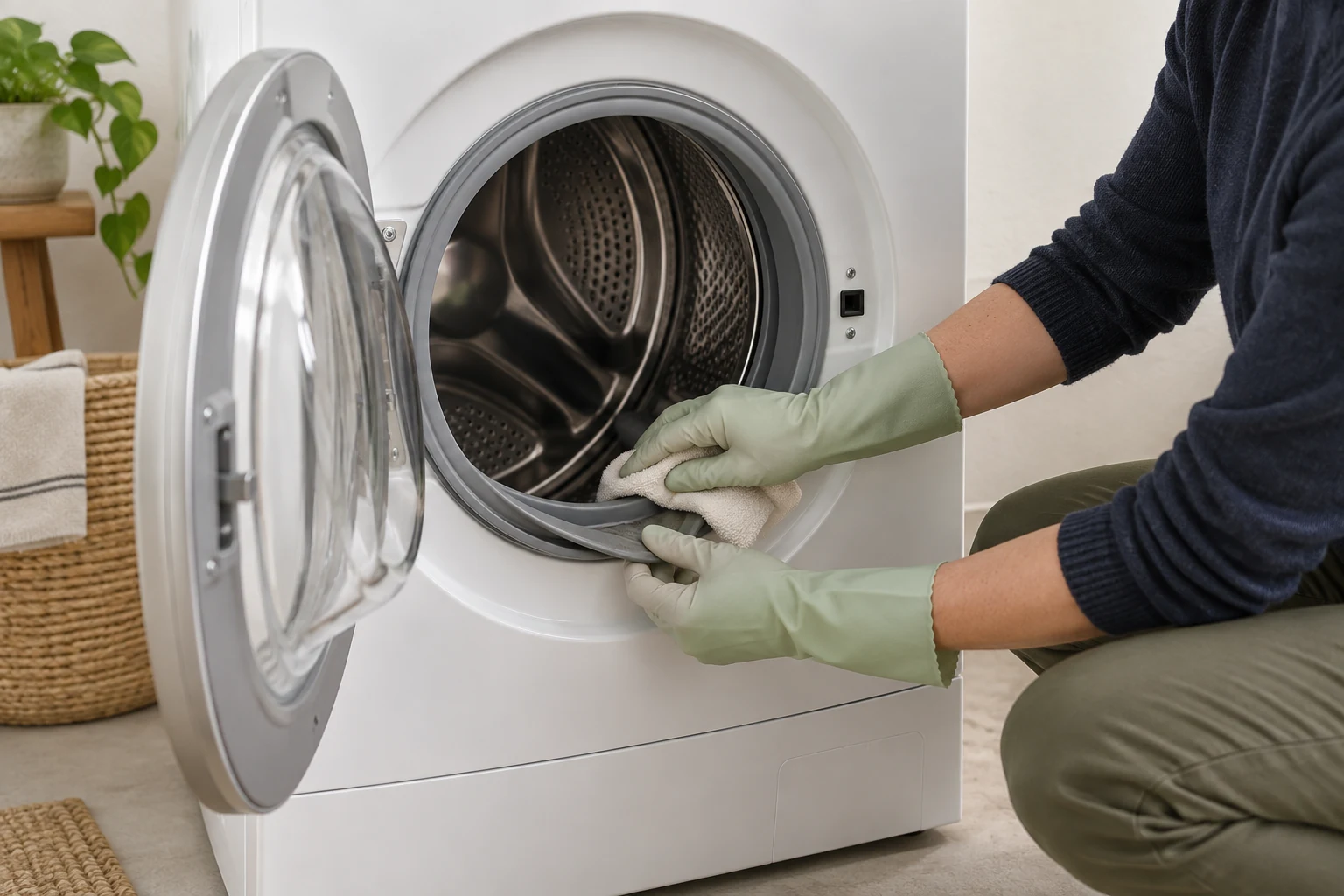
Pull back the folds of the rubber gasket and wipe out lint, hair, coins and gray residue with a damp cloth. For mildew spots, wipe with a diluted bleach solution or a washer cleaner, wearing gloves, then wipe again with clean water. The seal should feel smooth and look evenly colored when you finish; black spots that remain are stains in the rubber and are usually harmless once cleaned.
Wash the detergent drawer
Pull the drawer out completely; most have a release tab in the softener compartment. Rinse it in warm water and scrub the corners with an old toothbrush, then wipe out the housing it slides into, where mold often hides. Put it back only when dry.
Run the cleaning cycle
Add bleach, cleaner or vinegar as described above and choose the cycle your model calls Clean Washer, Self Clean, Tub Clean or similar. If there is none, use the hottest, longest cycle with an extra rinse. On some models the cycle takes up to a few hours. Wait about an hour after a hot cycle before touching the drum or draining the filter so the water can cool.
Clean the drain pump filter
Behind a small panel at the bottom front, most front loaders have a filter that catches lint, coins and hair. Put a shallow tray and towel under it, drain the water through the small hose if there is one, then unscrew the filter counterclockwise, rinse it and brush it clean, and screw it back firmly. Samsung suggests doing this about once a month. A clogged filter causes slow draining, water left in the drum and bad smells.
Dry and air it out
Wipe the drum, glass and seal dry, and leave the door and drawer slightly open until the next load. This one habit prevents most of the musty smell front loaders are known for.
How to clean a top loader
To clean a washing machine top loader, start with the rim and lid. Wipe under the rim of the tub, around the lid hinge and inside the bleach and softener dispensers, where residue collects. If your machine has an agitator with a removable fabric softener cup or lint trap on top, lift it off and wash it. Older top loaders often have a lint filter along the top of the agitator or on the tub rim; check your manual for its location.
Then run the cleaning cycle. Many top loaders have a Tub Clean or Basket Clean setting; GE recommends running its version monthly with 1 cup of bleach, and Samsung's top loader Self Clean takes about an hour. On machines without one, choose the hottest water, largest load size and longest cycle, add the bleach or cleaner, and let the tub fill. Some people pause the cycle for an hour to let the solution soak, which helps with heavy buildup if your model allows it. Finish with an extra rinse, then leave the lid open to dry, as GE advises, because a closed lid traps moisture and invites odors.
How to clean a washing machine with vinegar and baking soda
Vinegar and baking soda are popular for a natural clean, but they should not go in together, because the acid and the base neutralize each other and you end up with mostly salty water and a brief fizz. Use them separately. Run a hot cleaning cycle with 1 to 2 cups of white vinegar in the drum to loosen scale and residue. Then run a second hot cycle with about half a cup of baking soda in the drum, which helps scrub and deodorize. A final rinse clears anything left over.
This routine is a good choice for light odors and mineral buildup, and it avoids bleach if you prefer not to use it. It does not disinfect as well as bleach, so for heavy mildew, a black seal or a sewer smell, use bleach or a washer cleaner, then switch to the gentler routine for maintenance. Our guide to baking soda in the laundry explains what it does and does not do in a normal wash.
When the smell comes back or the drain is slow
A persistent sewer or rotten egg smell usually points to the drain rather than the drum. GE notes that if the drain hose is pushed too far into the standpipe, dirty water can siphon back into the machine; the end of the hose should sit loosely in the pipe, not deep inside it. A clogged pump filter on a front loader also traps water that goes stagnant. Clean the filter, check the hose, and run a bleach cleaning cycle.
If the washer drains slowly, stops with water in the drum or smells even after all of this, the problem may be in the house plumbing or in a part of the machine you should not open yourself. Call a technician rather than taking the back off. For everyday prevention, use high efficiency detergent in the right amount, remove wet laundry promptly, and follow the rest of our advice on doing laundry so that less residue builds up in the first place.
Common mistakes
Mixing bleach and vinegar
Adding vinegar to a bleach cycle, or wiping the seal with one right after the other, can release chlorine gas. Pick one product per cycle and run a plain rinse cycle in between.
Cleaning with a full drum
Cleaning cycles and bleach doses are designed for an empty machine. Clothes in the drum absorb the cleaner, and chlorine bleach can spot or weaken colored fabrics.
Closing the door right after a wash
A sealed, wet drum is exactly where mildew grows. Leave the door and dispenser drawer ajar until the next load, especially on front loaders.
Adding more detergent to fix a smell
Extra detergent leaves more residue for bacteria to feed on, which makes the smell worse. Measure carefully, and use high efficiency detergent if your machine requires it.
Questions people ask
Where do I put white vinegar to clean my washing machine?
For a cleaning cycle, pour the vinegar straight into the empty drum or tub, which gives the most contact with the inside surfaces. Keep it out of the bleach compartment, which may still hold bleach residue, and never add it to a cycle that already contains bleach. Check first that your manual does not advise against vinegar.
Are washing machine cleaner tablets worth using?
They work well and are convenient, especially if your manual recommends a cleaning product for the Clean Washer cycle. Drop the tablet in the drum and run the cycle as the package directs. Bleach does a similar job for less money if your machine accepts it.
How do I clean a washing machine filter?
On most front loaders the drain pump filter sits behind a small panel at the bottom front. Drain the water into a tray, unscrew the filter counterclockwise, rinse and brush it, then screw it back in tightly. Many top loaders have no pump filter at all, but some have a lint trap in the agitator or under the rim that you can lift out and rinse.
Can I use bleach to clean a front load washing machine rubber seal?
Yes, a diluted bleach solution on a cloth removes mildew from the seal, as long as you wear gloves, ventilate the room and rinse the rubber with clean water afterward. Check your manual first, because a few models recommend only their own cleaner. Do not follow it with vinegar.
Sources and further reading
References used for this guide. Each opens the original page in a new tab.
- GE Appliances: Washing machine cleaning tips, on the monthly basket clean, bleach and vinegar, and drain hose odors Opens in a new tab
- Samsung US: How to clean your Samsung washer, on Self Clean, the drain pump filter and the detergent drawer Opens in a new tab
- Maytag: Cleaning the interior of a front load washer, on the monthly Clean Washer cycle and bleach types Opens in a new tab
Keep reading
Washing and ironing
How to do laundry: a complete beginner's guide
How to do laundry from start to finish: reading labels, sorting, choosing the cycle and water temperature, measuring detergent, loading the washer and drying.

Washing and ironing
How to get smell out of clothes
How to get smell out of clothes, whether it is sweat, a musty washer smell or smoke: airing, better washing, careful use of baking soda and vinegar, and prevention.
Washing and ironing
White vinegar in laundry: when it helps and when it doesn't
How to use white vinegar in laundry: how much to add, where it goes in the washer, what it can and cannot do, and the one mixing mistake that is truly dangerous.
Washing and ironing
Baking soda in laundry: what it can and can't do
How to use baking soda in laundry: how much to add, where to put it, what it does for odors and stiff towels, and why it cannot replace detergent on its own.
Washing and ironing
How much laundry detergent to use per load
How much detergent to use in a washing machine: reading cap lines, pods and powder, adjusting for load size, soil and hard water, and the signs you use too much.