How to tuck in a shirt so it stays put
In this guide
You tucked the shirt in at home and it looked fine in the mirror. Two hours later, after a drive and a few meetings, the front has crept out on one side and the back billows over your belt like a sail. Knowing how to tuck in a shirt properly fixes most of that, but only part of the job happens at the waistband. The rest depends on the length of the shirt, how much spare fabric it has around your middle, and how high your trousers sit.
This guide covers the ordinary tuck, the tighter military tuck for shirts with extra fabric, the underwear tuck and shirt stays for long days, and the cases where the better answer is not to tuck at all. The methods are written with men's shirts and trousers in mind, but none of them is gendered. A woman tucking a button down into tailored trousers will use exactly the same folds.
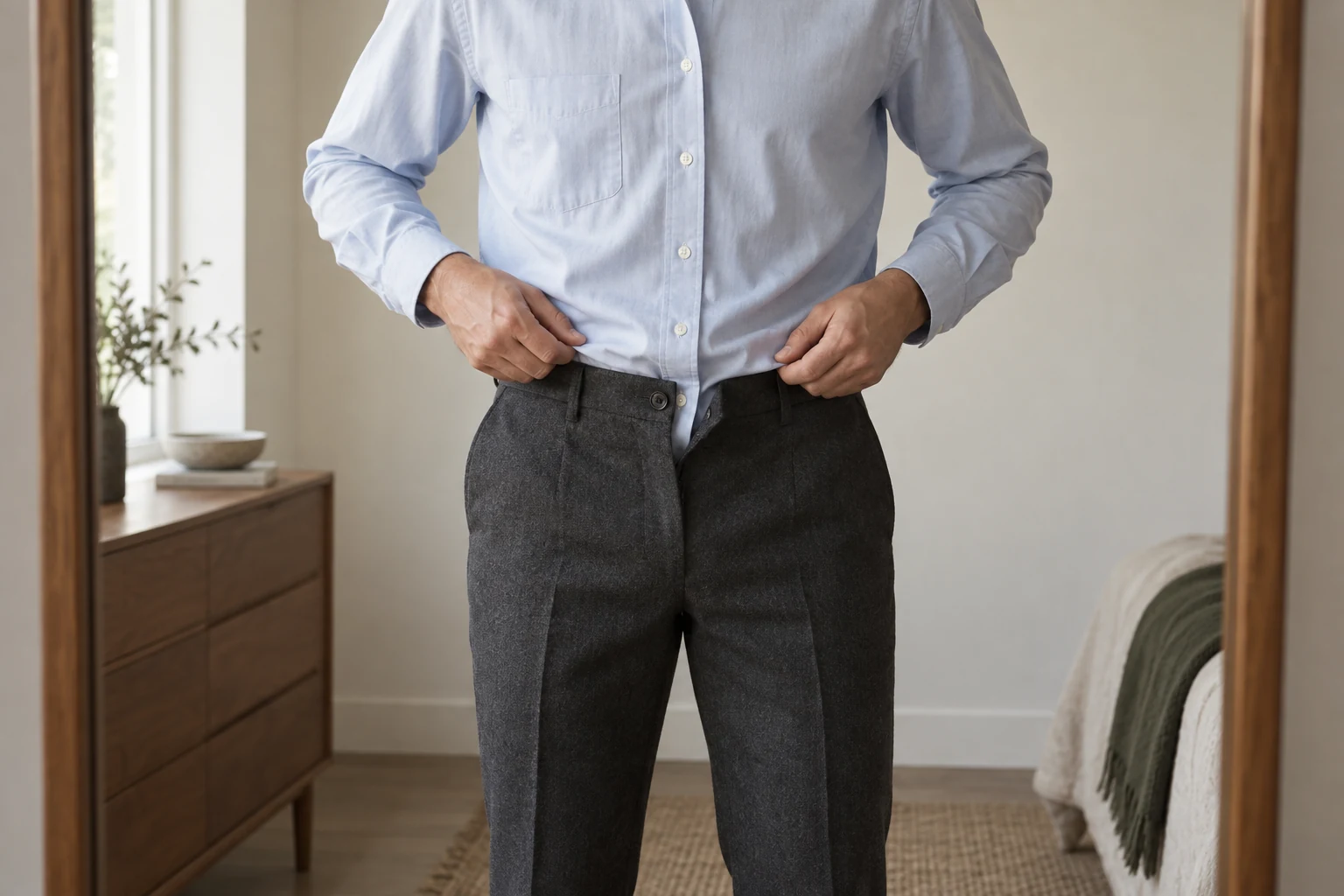
Check that the shirt is made to be tucked
Start with the hem, because it tells you what the maker intended. A dress shirt usually has a curved shirttail that dips lower at the front and back than at the sides. That extra length is there to anchor the shirt inside your trousers. A shirt with a straight, even hem, such as a camp collar shirt, most polos or a flannel meant as a light jacket, is generally cut to be worn out. You can still tuck some of them, but they will not stay in as reliably.
Length matters more than anything you do with your hands. Proper Cloth, a made to measure shirtmaker, suggests that a shirt meant to be tucked should reach the bottom of your seat or slightly below, and that a shirt designed to be worn untucked is typically 1.5 to 2.5 inches shorter. If you have a fuller stomach, the fabric has to travel farther before it reaches the waistband, so a longer back length helps. When a shirt keeps escaping no matter how carefully you tuck it, it is usually simply too short, and our guide to finding your dress shirt size is the better fix.
How to tuck in a shirt: the standard tuck
The basic method works for any shirt that fits reasonably close through the body. Tuck before you fasten your trousers, so the waistband closes over fabric that is already smooth instead of trapping creases you have to pull out later.
Button the shirt completely
Fasten every button, including the lowest one near the hem, so the front panels cannot slide apart once they are inside your trousers. If there is a spare button sewn on the tail, leave it alone; it is only for repairs.
Pull the trousers up but leave them open
Draw the trousers to where they normally sit at your waist, with the zip and button still undone. You should be able to slide a flat hand inside the waistband all the way around.
Push the tails down evenly
Slide the front tail in first, then the back, smoothing downward with flat palms rather than stuffing from the top. Check the sides: the fabric should hang straight toward your hips, not bunch at one point.
Fasten and line up
Close the trousers and buckle the belt. Glance down to see whether the shirt's button placket, the belt buckle and the trouser fly form one straight line. If the placket has drifted, loosen the belt a notch, shift the shirt and fasten again.
Use a military tuck when the sides balloon
If the front looks neat but the shirt puffs out above your hips, the shirt has more width than your body needs. A military tuck folds that extra width into two flat pleats at the sides, where they sit hidden under the waistband. It works best in crisp cotton such as poplin or oxford cloth, which holds a fold. In a thin, slippery fabric or a very slim shirt the pleats can show as ridges, so skip it there.
Tuck the front and back first
Do the first three steps of the standard tuck, leaving your trousers unfastened. Stand in front of a mirror where you can see your sides.
Pinch a side seam
Take hold of the shirt's side seam at hip height between thumb and forefinger and pull it gently away from your body. Pull until the front of the shirt is smooth against your stomach; you will see how much spare fabric there is.
Fold it back toward your hip
Fold the pinched fabric backward so it lies flat against your side, making a single pleat that points toward your back. Hold it in place with one hand. The front and side should now look close fitting with no ripple.
Repeat on the other side and fasten
Do the same on the second side, then close the trousers and belt while pressing both pleats flat. Check the back in the mirror: if a new puff has formed there, loosen the waistband and spread the fabric evenly again.
Keep the shirt tucked in all day
Waist height does a lot of quiet work. Trousers that sit at or near your natural waist hold a shirt far better than low rise jeans, because the waistband grips the shirt where your body is narrowest and there is less distance for the fabric to ride up when you sit. A belt that is snug, not tight, helps for the same reason. If you wear an undershirt, The Art of Manliness describes an underwear tuck: the order from skin outward is undershirt, underwear waistband, dress shirt, trouser waistband, belt. The shirt is then held by two layers of elastic and cotton rather than one.
For long days in a uniform or suit, shirt stays add mechanical help. Straight stays are elastic straps that clip to the front and back of the shirttail and to the top of each sock; stirrup stays loop under the foot instead of clipping to socks; garter styles wrap around the thigh; and a shirt stay belt is a grippy band worn around the hips under the trousers. The elastic should allow you to bend your knee comfortably. Many people find sock clips and foot loops noticeable at first, so try them at home before a wedding or a long flight, and make sure the shirt itself is long enough, because stays cannot fix a shirt that barely reaches your waistband.
Tuck T shirts, polos and oversized tops
A fitted T shirt tucks with the standard method, but the knit stretches, so smooth it downward and then lift a little back out so it drapes over the belt rather than stretching tight across your chest when you move. Polo shirts cut with a longer back tail tuck neatly into trousers; polos with a short, square hem usually look better out. Tucking a knit into jeans is a casual choice, and whether it looks intentional depends on the jeans having a defined waistband and belt loops and sitting at or near your waist; our guide to how jeans should fit covers rise.
An oversized T shirt carries too much fabric for a full tuck without creating a lump at the waist. Here a partial tuck makes more sense: tuck only the center front and let the sides and back hang. Our guide to the French tuck walks through that in detail. A half tuck, with one side in and one out, is the looser relative of the same idea and suits relaxed shirts in soft fabrics. It works best with high waisted jeans, trousers or a skirt, where the tucked side shows the waistband and the loose side softens the line; tuck the side toward the front of your hip rather than directly over the center.
| Tuck | How it works | Best for |
|---|---|---|
| Standard tuck | Tails pushed down evenly before fastening | Shirts that fit close through the body |
| Military tuck | Side fabric folded back into flat pleats | Crisp shirts that balloon at the sides |
| Underwear tuck | Shirt held between underwear and trouser waistbands | Long days with an undershirt |
| Shirt stays | Elastic straps from shirttail to socks, foot or thigh | Uniforms and long suited days |
| French or partial tuck | Only the center front tucked | Oversized T shirts |
| Half tuck | One side in, one side out | Relaxed shirts with high waisted bottoms |
Decide when to tuck and when to leave it out
Tuck any shirt worn with a suit, a sport coat or a tie; an untucked shirttail below a jacket hem looks unfinished in nearly every tradition. In most American offices a button down worn with chinos or dress trousers is also tucked, and our guide to business casual for men covers where that relaxes. Shirts with straight hems, bold prints or open camp collars are usually left out, as are overshirts worn like a light jacket. When a relaxed shirt is too long to wear out, tucking it is often better than letting the tails hang below your seat.
The same logic applies to anyone. If you wonder when to tuck in a shirt as a woman, the question is not your gender but the garment and the setting: a crisp shirt into tailored trousers reads as polished, and business casual for women follows most of the same conventions. Once the shirt is in, make sure the trousers underneath are the right length too, since a clean waist above crumpled hems still looks unfinished. Our guide on how long dress pants should be covers the break.
Common mistakes
Fastening the trousers first
Stuffing a shirt into trousers that are already buttoned drags the fabric into folds you cannot smooth out. Undo the waistband, tuck, and fasten again; it takes ten seconds and removes most bulk.
Pulling the shirt too tight
A shirt tucked drum tight across the chest pops out the first time you reach forward. Once it is tucked, lift the fabric slightly so there is a little slack above the belt. That slack is what lets you move without untucking.
Fighting a shirt that is too short
No tuck technique holds a shirt that ends at your waistband. If a shirt keeps escaping, wear it untucked if its hem allows, or move it to casual wear and look for longer shirts.
Questions people ask
How do you tuck in a shirt if you have a stomach?
Choose a shirt with enough back and front length to reach below your seat, since the fabric has to travel farther over a fuller middle, and trousers with a mid or high rise that sit above rather than under the stomach. Tuck with the standard method, then lift the shirt slightly so it drapes over the waistband instead of pulling tight. A military tuck at the sides removes extra width without drawing the fabric flat across the front.
How do you keep a shirt tucked in without a belt?
Use the underwear tuck so the shirt sits under your underwear waistband, and choose trousers that sit at your natural waist and fit snugly there. A grippy shirt stay belt worn under the trousers is another option. Side adjusters on tailored trousers do the same job as a belt.
Are shirt stays uncomfortable?
They take some getting used to. Straight stays pull on your socks and stirrup stays put elastic under your foot, so set the tension loose enough to bend your knee freely. Many people only use them for long, formal days.
Is the military tuck the same as the regular tuck?
No. The regular tuck simply pushes the shirt into the waistband. The military tuck adds a folded pleat at each side seam to remove spare width, which is why it suits roomy shirts and stiff cotton better than slim fitting ones.
Should you tuck a T shirt into jeans?
It is a style choice rather than a rule. A fitted T shirt tucked into jeans with a belt looks deliberate and slightly neater; a relaxed one usually looks better out or with a small front tuck.
Sources and further reading
References used for this guide. Each opens the original page in a new tab.
Keep reading
Everyday style
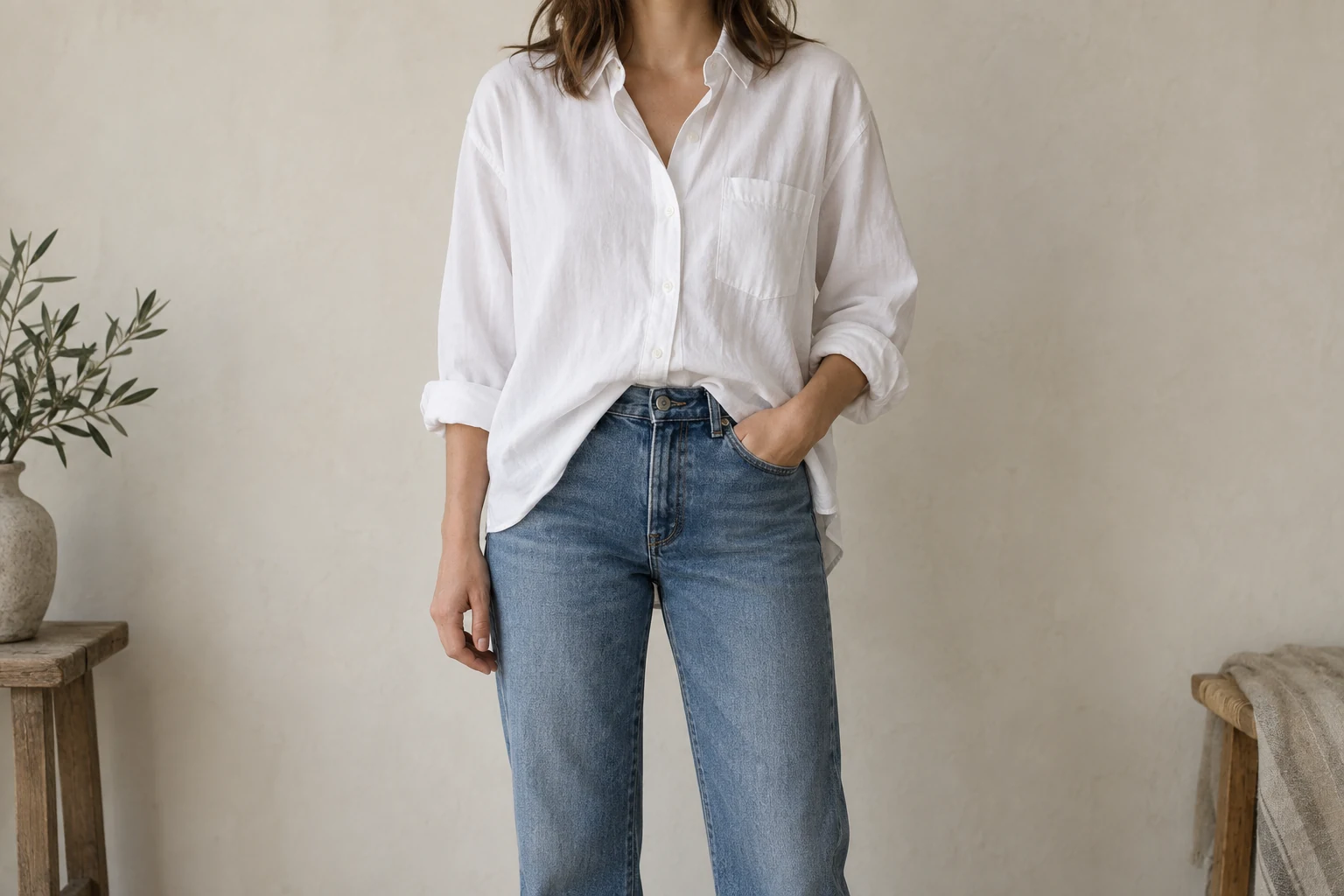
How to do a French tuck
What a French tuck is, how to do one in under a minute, which shirts, sweaters and waistlines it suits, and when a full tuck or no tuck works better.
Suits and tailoring
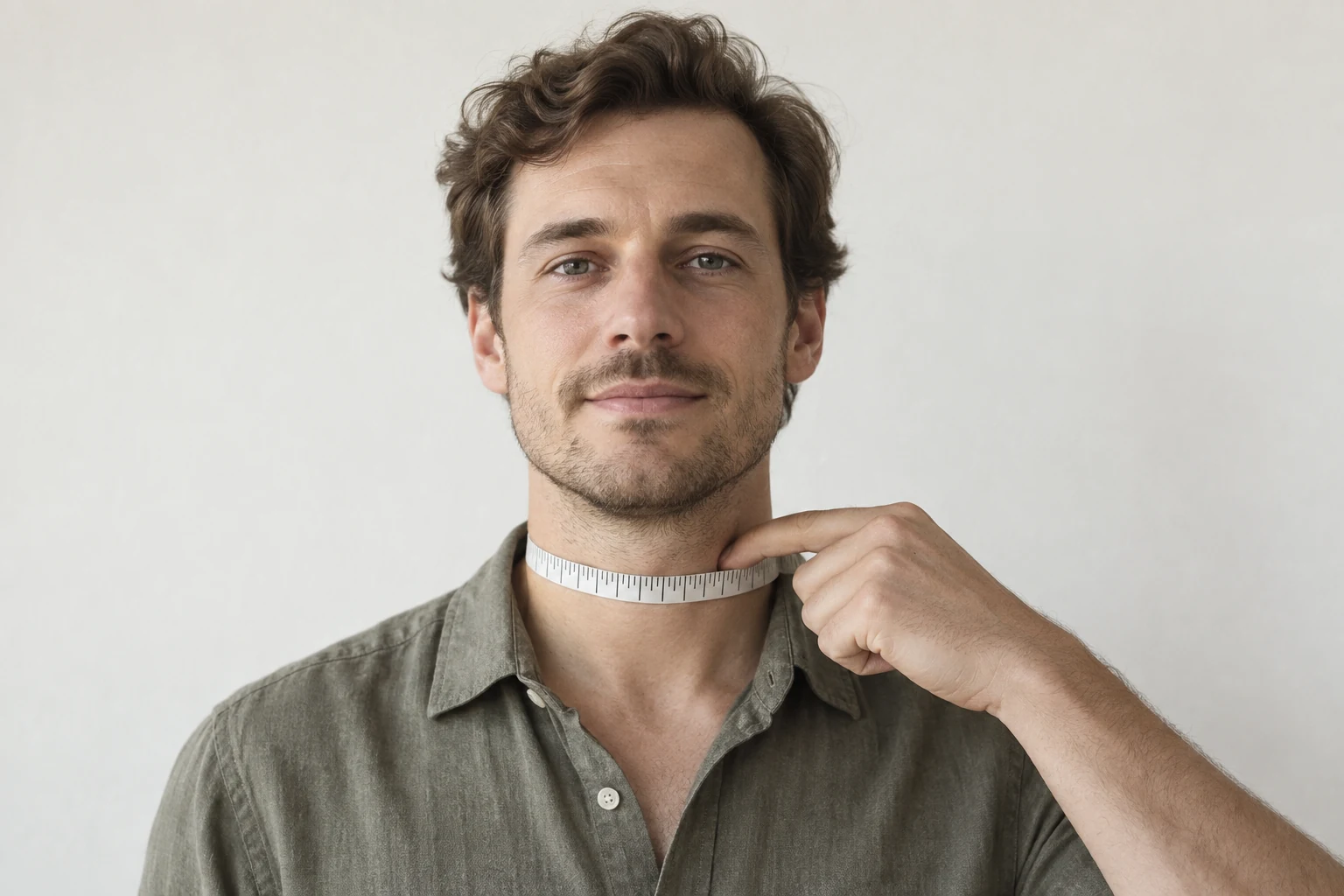
How to find your dress shirt size: neck and sleeve
Read any dress shirt size chart with confidence: how to measure your neck and sleeve, what 15.5 34/35 means, how to check a collar, and slim vs classic fit.
Dress codes
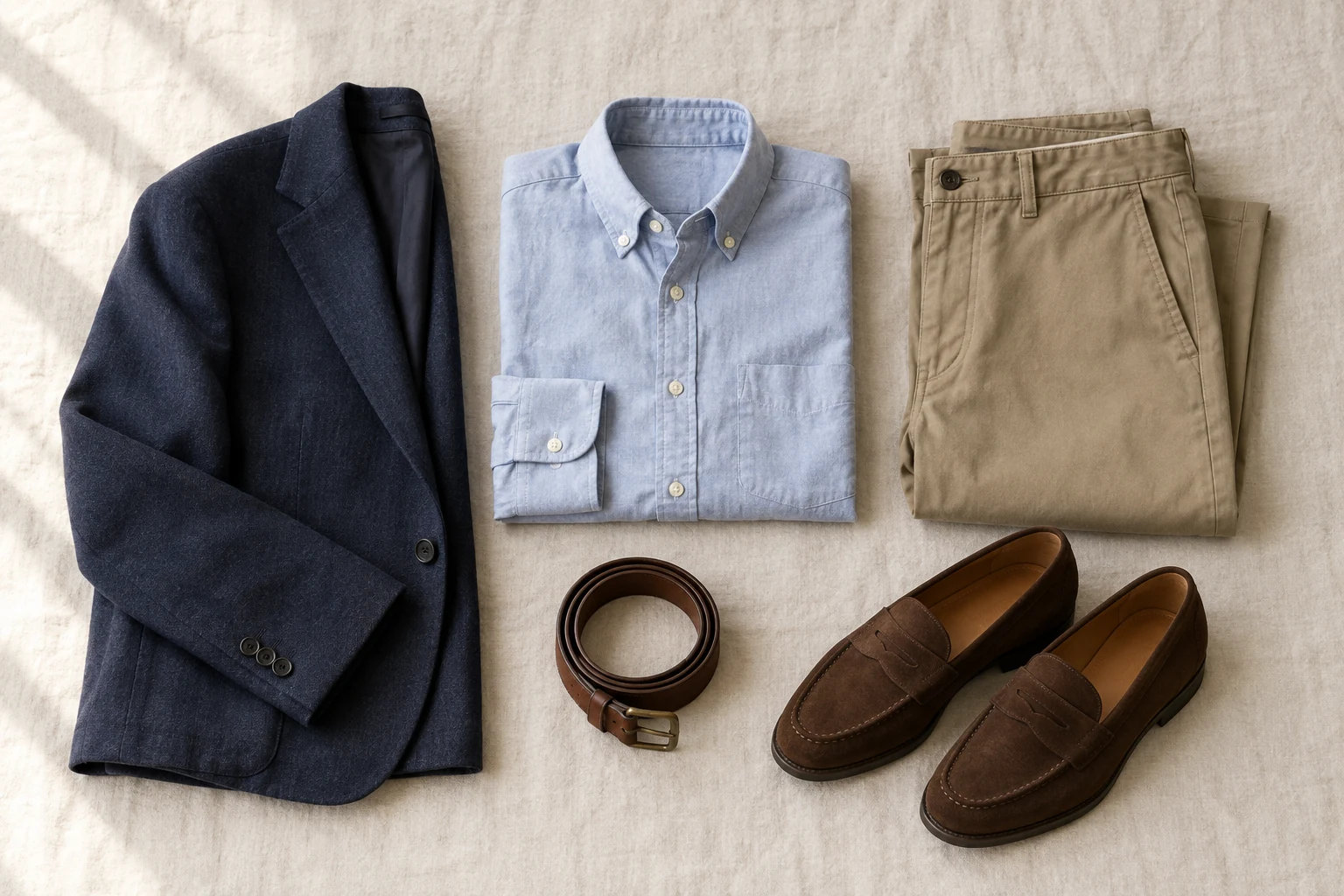
Business casual for men: what to wear to work
What business casual means for men at work, with outfit formulas, the right shoes, when jeans are allowed and how to read your own office's version of the code.
Suits and tailoring
How a suit should fit: shoulders, sleeves and length
How should a suit fit? Check the shoulders, collar, button, jacket length, sleeves and trousers in the mirror, and learn which problems a tailor can and cannot fix.
Washing and ironing
How to iron a shirt in the right order
How to iron a shirt the way shirtmakers do: set the heat for the fabric, start slightly damp, then work collar, cuffs, sleeves, yoke, back and front in order.