How should shoes fit? Toe room, width and heel
In this guide
Almost everyone presses a thumb on the toe of a new pair, in the store or in the hallway next to a box that just arrived, while quietly hoping the little bit of pressure at the side will go away. How should shoes fit, then? The answer comes down to where to check and in what order: length first, then width, then the heel, then how the shoe bends as you walk. Each tells you something different, and a shoe can pass one check and fail another.
The size on the box is only a starting point. Sizes vary between brands and even between styles from the same maker, and your own feet change with age, time of day and what socks you wear. If you are converting between US, UK and European sizes, start with our guide to shoe size conversion, then use the checks below to confirm the fit on your feet.
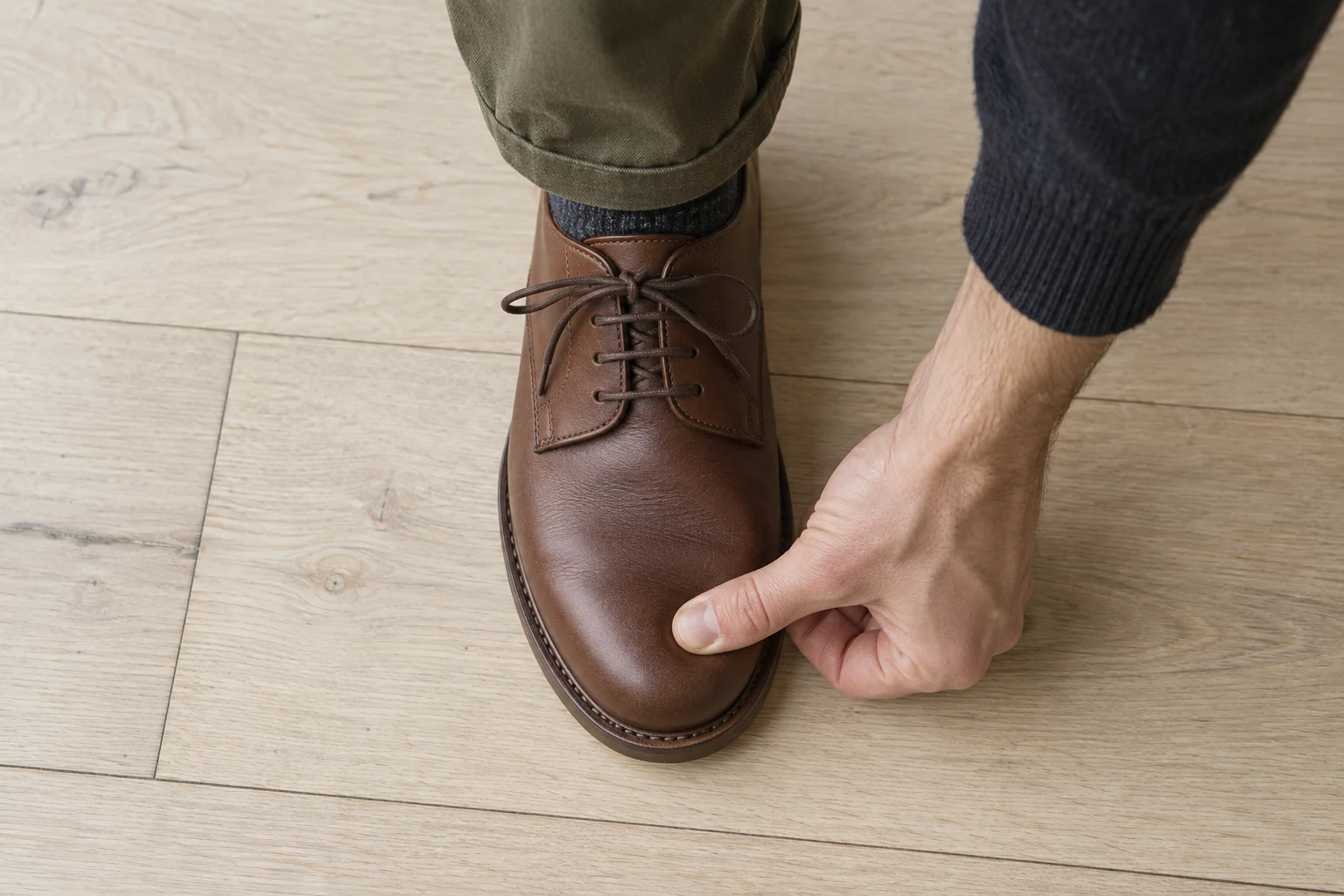
How should shoes fit? Start the fitting right
Feet swell over the course of a day and after exercise, so the American Academy of Orthopaedic Surgeons recommends trying shoes on toward the end of the day. A pair that fits perfectly at 9 a.m. can pinch by evening. Wear the socks you plan to wear with the shoes, thin dress socks for oxfords, cushioned sports socks for sneakers, thick wool for winter boots, because a thick sock takes up noticeable room, sometimes the difference between two half sizes.
Try on both shoes, not just one. Many people have one foot slightly longer or wider than the other, and the orthopedic advice is to fit the larger foot. Stand up while you check, since your foot lengthens and spreads under your body weight, and then walk around for a few minutes, on a hard floor as well as carpet if you can.
Check the length: toe room
Standing, press on the front of the shoe to find the tip of your longest toe. The AAOS guideline is about half an inch (1.3 cm) of space between that toe and the end of the shoe, which on most adults is about the width of a thumb. Your longest toe is not always your big toe; for many people the second toe reaches farther, and that is the one to measure from.
Less than that and your toes will hit the front as you walk downhill or down stairs, which leads to black toenails, blisters and, over years, bent toes. Much more than a thumb's width, especially with a heel that slides, means the shoe is too long. Your toes should be able to wiggle and lift slightly inside the toe box. Toes should never touch the front of the shoe, even when you stand and lean forward.
Check the width, and what the letters mean
The widest part of your foot, across the joints at the base of the toes, should sit at the widest part of the shoe, snug but without pressure. If you feel the edge of the sole under the outside of your foot, see the upper bulging over the sole, or feel a pinch at the big toe or little toe joint, the shoe is too narrow. If the upper creases deeply across the top and your foot slides from side to side, it is too wide.
In American sizing, width is shown by a letter. For men, D is standard, also shown as M for medium, wide is usually 2E (some brands also sell E), and extra wide is 3E or 4E. For women, B is standard and also shown as M, D is wide and 2E or more is extra wide. Some brands label these steps differently, so check the maker's own chart. A shoe marked only with a number is almost always the standard width. The AAOS advises against simply sizing up in length to get more width: you end up with a shoe that is too long, and the flex point falls in the wrong place. Choose a wider width or a brand known for a roomier toe box instead.
Check the heel and the instep
Walk a few steps. Your heel should stay seated in the back of the shoe. In new leather shoes with stiff soles, a slight lift of the heel is normal and usually settles as the sole softens, but a heel that slips noticeably, or slides up and down with each step, will rub a blister and means the shoe is too big or the wrong shape for your heel. The firm back of the shoe, called the heel counter, should grip without digging in.
Over the top of your foot, laced shoes should close with the eyelets roughly parallel and a small gap between them. If the two sides meet with the laces still loose, the shoe is too roomy over the instep; if they splay wide open, it is too tight. Loafers and other slip ons have no laces to adjust, so they need to fit more precisely across the instep and heel from the start. Our guide on how to lace shoes shows lacing patterns that relieve pressure on a high instep or lock a slipping heel.
| Check | A good fit | Warning sign |
|---|---|---|
| Length | About half an inch past the longest toe | Toes touch the front when you lean forward |
| Width | Widest part of foot at widest part of shoe | Upper bulges over the sole or joints pinch |
| Heel | Stays seated, slight lift in stiff new leather | Slides up and down with each step |
| Instep | Eyelets roughly parallel with a small gap | Sides meet with loose laces, or splay wide |
How to tell if shoes are too big or too small
Signs that shoes are too small: your toes touch the front or curl, the sides press on your joints, you get red marks, numbness or blisters on the toes or sides after a short walk, and your toenails darken after long walks or runs. Leather can give a little in width, and our guide on stretching shoes explains what is possible, but no shoe stretches meaningfully in length. The orthopedic advice is blunt: do not buy shoes expecting them to stretch into fitting.
Signs that shoes are too big: the heel slips, your foot slides forward so your toes jam when you stop, the upper creases deeply, you tighten the laces as far as they go and still feel loose, or you clench your toes to keep slip ons on. You may also trip more, because the empty toe catches. A half size too big can often be fixed with a thin insole or a heel grip. A full size too big is rarely worth wearing, because the shoe flexes in the wrong place under your foot and your stride changes to compensate.
If you fall between sizes, try both, and try a width change too. Many people who think they need a larger size really need a wider one. When there is no perfect option, the larger size with a thin insole is usually more comfortable than the smaller one, since a little extra space can be filled but too little cannot be created.
How running shoes, boots and heels should fit
Running shoes should be snug around the heel and midfoot and roomy in the toe box, with at least the same half inch of space in front, because feet swell and push forward over a long run. They should not feel tight anywhere. The AAOS suggests shopping after a workout, wearing your running socks, and replacing running shoes as the cushioning wears out; its rule of thumb divides 75,000 by your body weight in pounds to estimate miles, which for a 150 pound runner gives about 500 miles.
Boots are fitted with the socks you will wear in them, often thicker than everyday socks, and with enough room to wiggle your toes, which keeps feet warmer. For dress shoes in leather, expect a close fit that softens with wear, but no pressure points on day one. High heels push your foot forward onto the ball and the toes, so the fit at the front matters most; the AAOS recommends keeping heels lower than 2 inches for regular wear, because higher heels shift more pressure onto the forefoot.
Common mistakes
Buying the size you always buy
Sizes vary between brands and your feet can grow longer and wider with age. Have your feet measured every so often and judge each pair by the fit, not the number.
Fitting only one foot
If one foot is larger, a shoe that fits the smaller one will hurt the other all day. Always try on both, and fit to the larger foot.
Counting on a long break in
Leather softens, but it will not add length or fix a pinch at the joints. A shoe that hurts in the store usually hurts at home.
Questions people ask
Is it better for shoes to be slightly tight or slightly loose?
Slightly loose is usually easier to live with, because you can take up a little extra room with an insole, thicker socks or tighter lacing. Tight shoes cause blisters and pressure on the joints and do not stretch in length. The ideal is neither: snug at the heel and instep, roomy at the toes.
Should your big toe touch the front of the shoe?
No. Your longest toe, big toe or second toe, should sit about half an inch from the end of the shoe when you stand. If it touches, the shoe is too short and will hurt on stairs, slopes and long walks.
Is 1 inch too much space in the front of a shoe?
Usually yes. An inch is about twice the recommended room, and it tends to come with a heel that slips and a foot that slides forward. Some winter boots are sized a little longer to allow for thick socks, but for everyday shoes, aim for about half an inch.
What does M width mean in shoes?
M stands for medium, the standard width. For men it corresponds to D and for women to B in the American letter system. If a shoe shows only a size number, it is almost always medium width.
Sources and further reading
References used for this guide. Each opens the original page in a new tab.
Keep reading
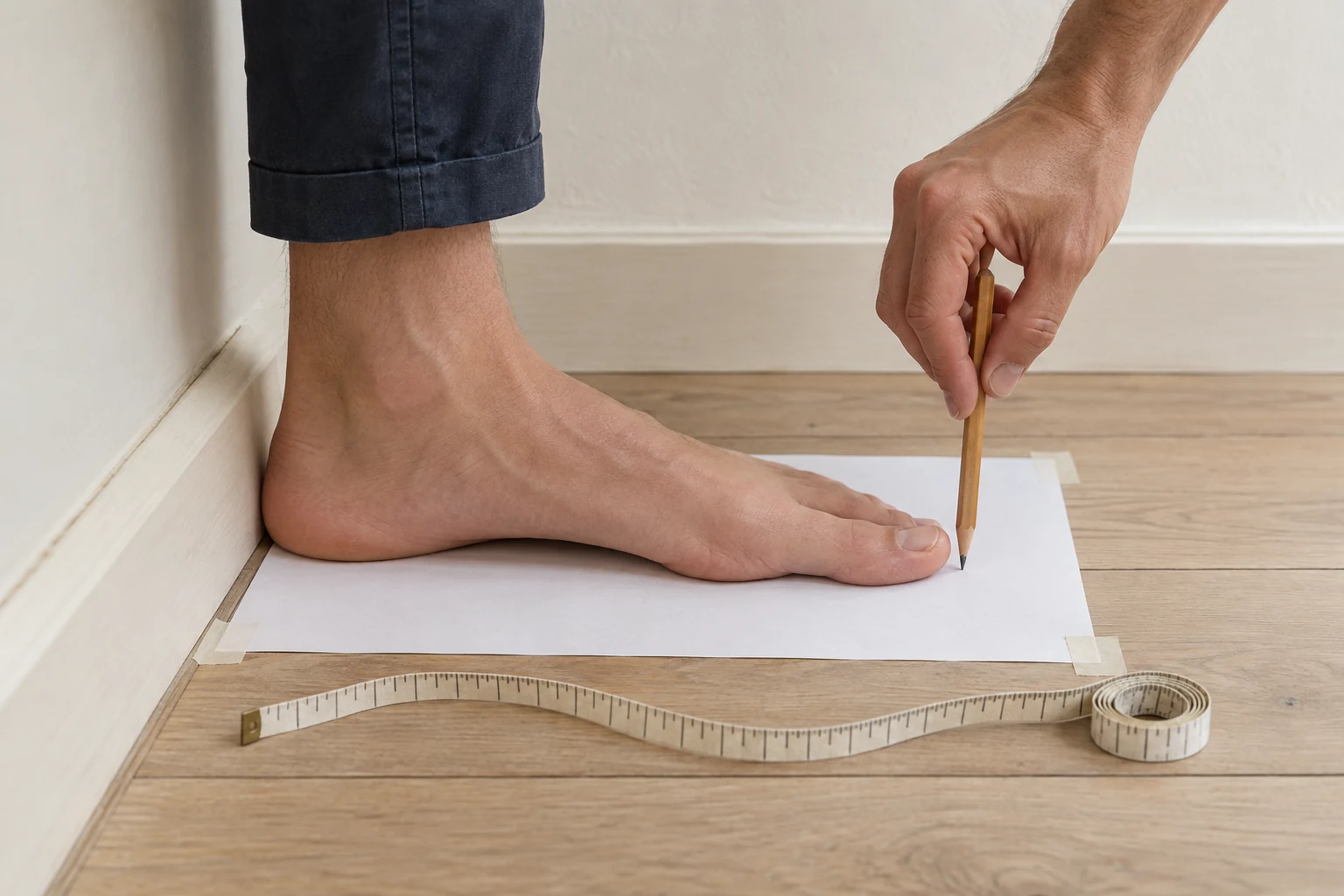
Sizing
Shoe size conversion: US, UK and EU for men and women
Convert shoe sizes between US men's and women's, UK and EU, see why conversion charts disagree, and measure your foot so you can pick the right size in any brand.
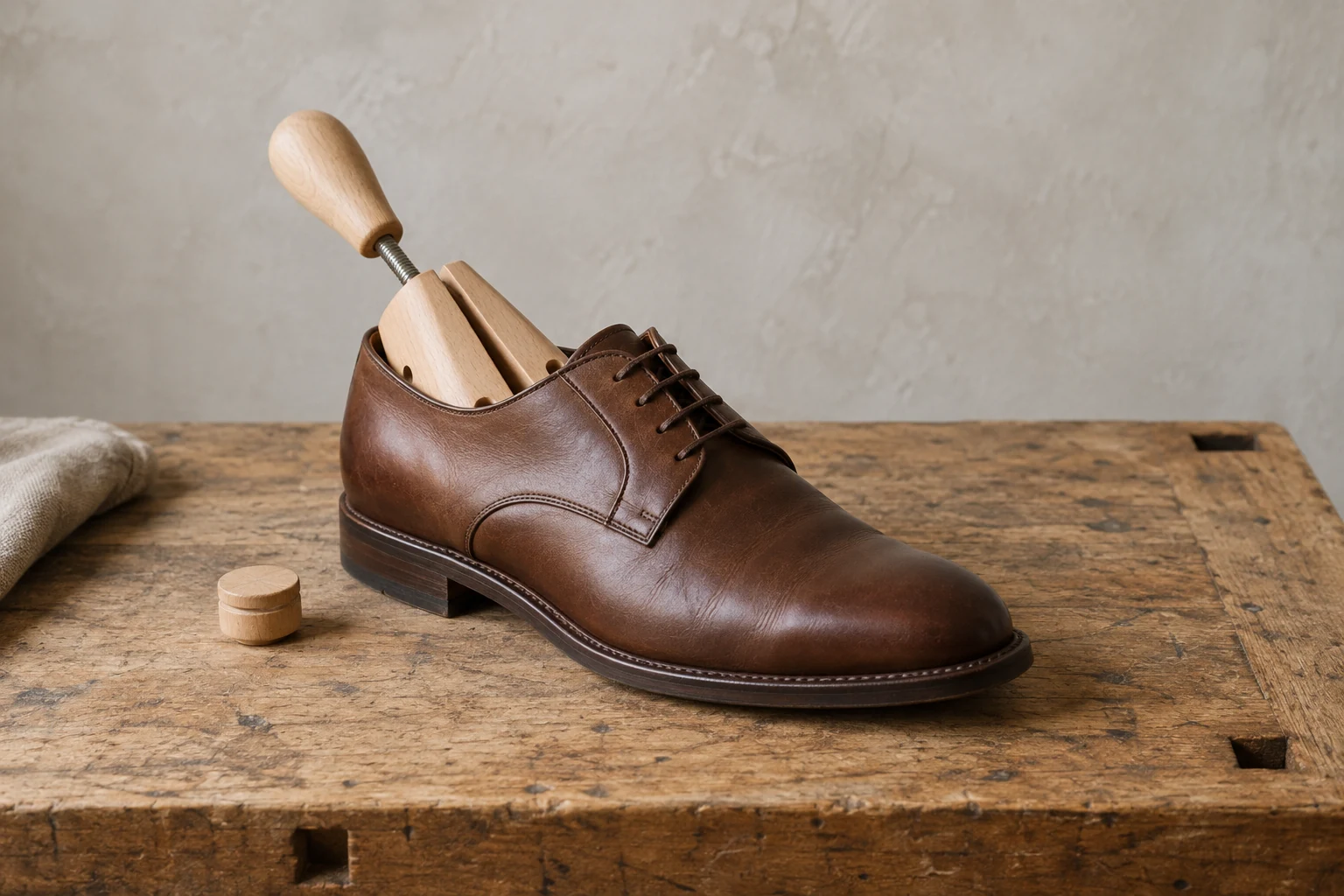
Shoes and jewelry
How to stretch shoes that feel too tight
How to stretch shoes that pinch: what leather can and cannot do, using a shoe stretcher and thick socks, the risks of heat and ice, and when to see a cobbler.
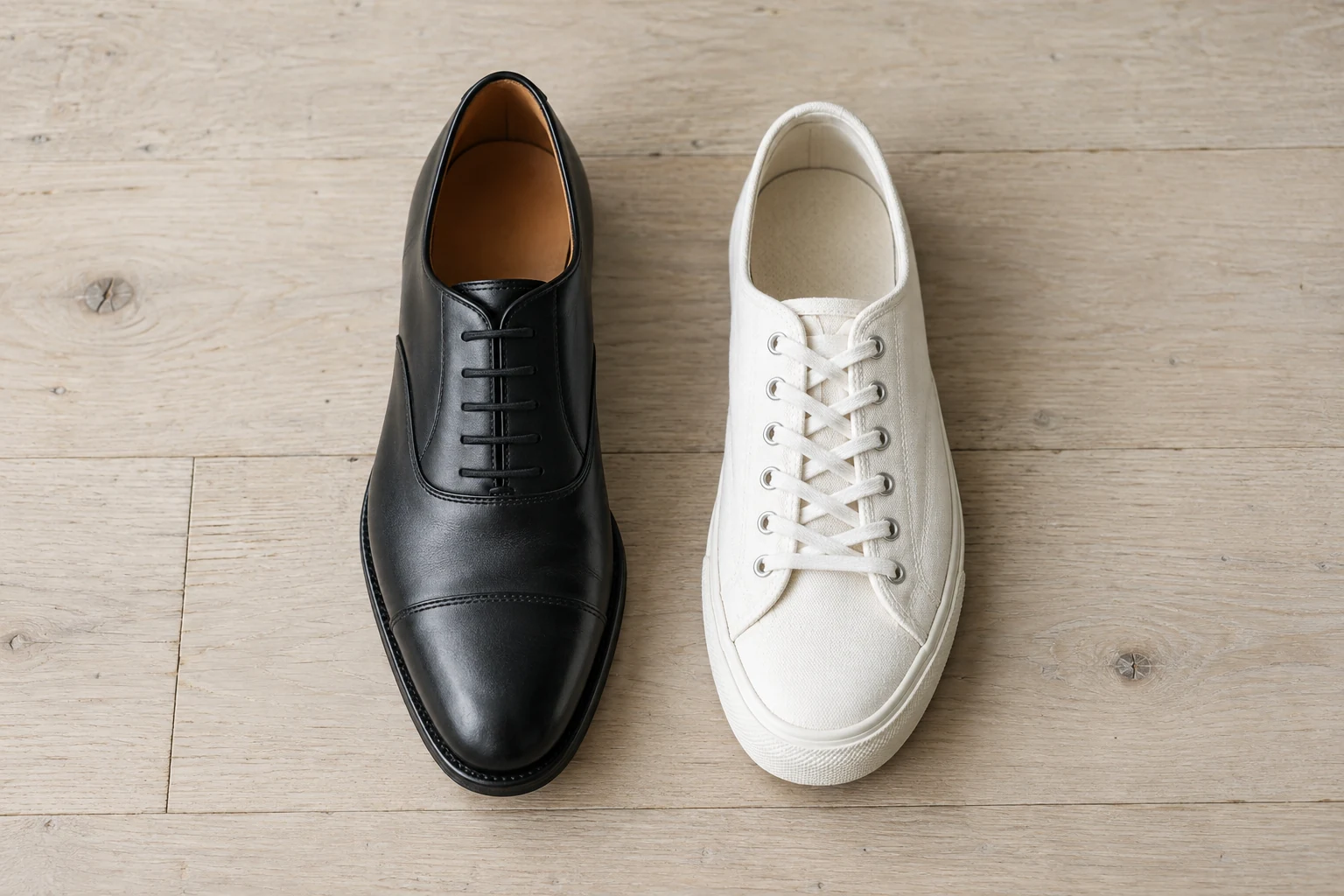
Shoes and jewelry
How to lace shoes: straight bar, criss cross and more
How to lace shoes for the job: criss cross for sneakers, straight bar lacing for dress shoes, a heel lock against slipping, and a bow knot that stays tied.
Suits and tailoring
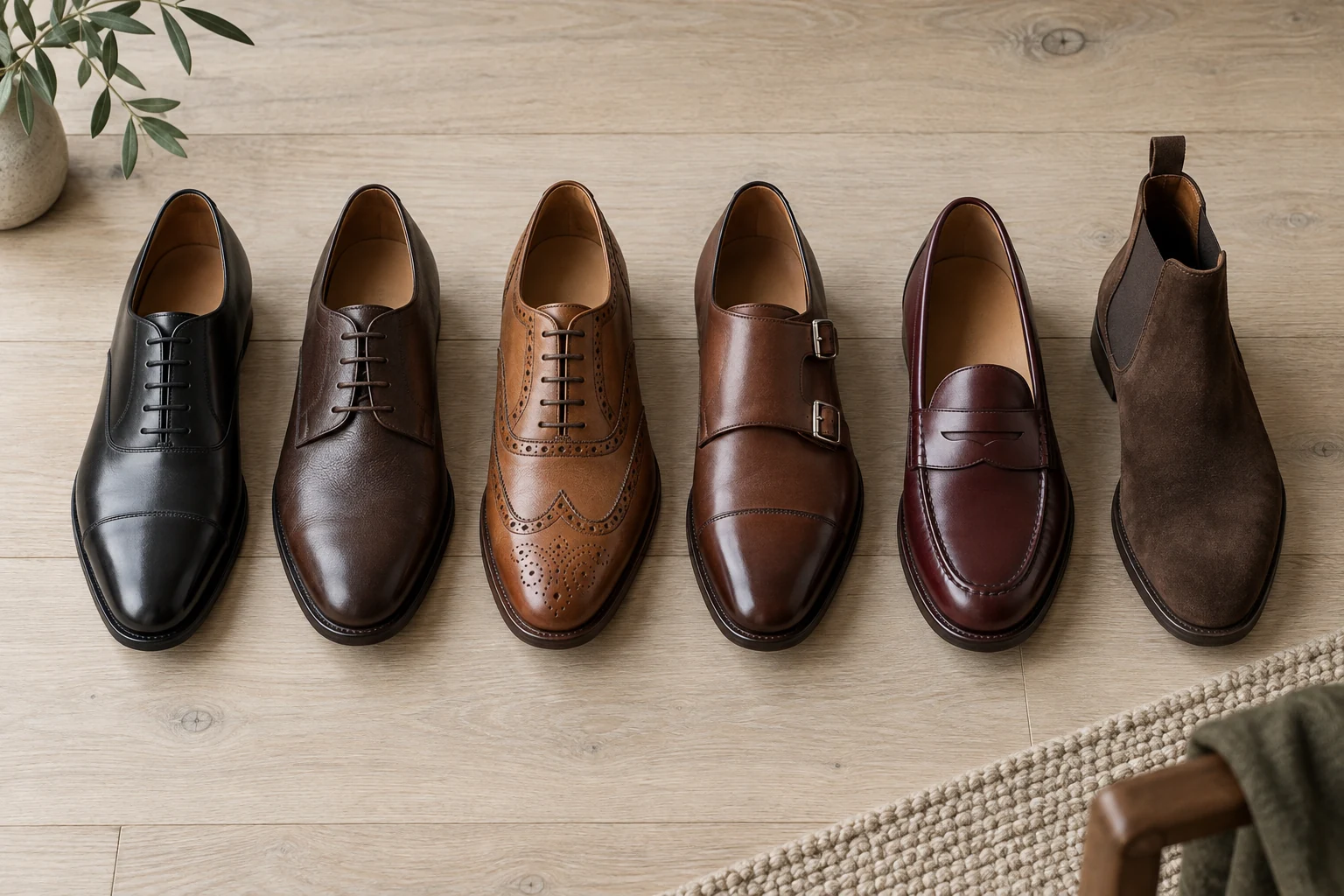
Types of dress shoes for men, from formal to relaxed
A clear guide to the types of dress shoes: oxfords, derbies, brogues, monk straps, loafers, dress boots and evening shoes, and which to buy first.
Closet and packing
How to store shoes so they last
How to store shoes at home: shoe trees for leather, where daily pairs go, closet and under bed storage, boxes versus bins, and how to put shoes away for a season.