Herringbone pattern: what it is and how to wear it
In this guide
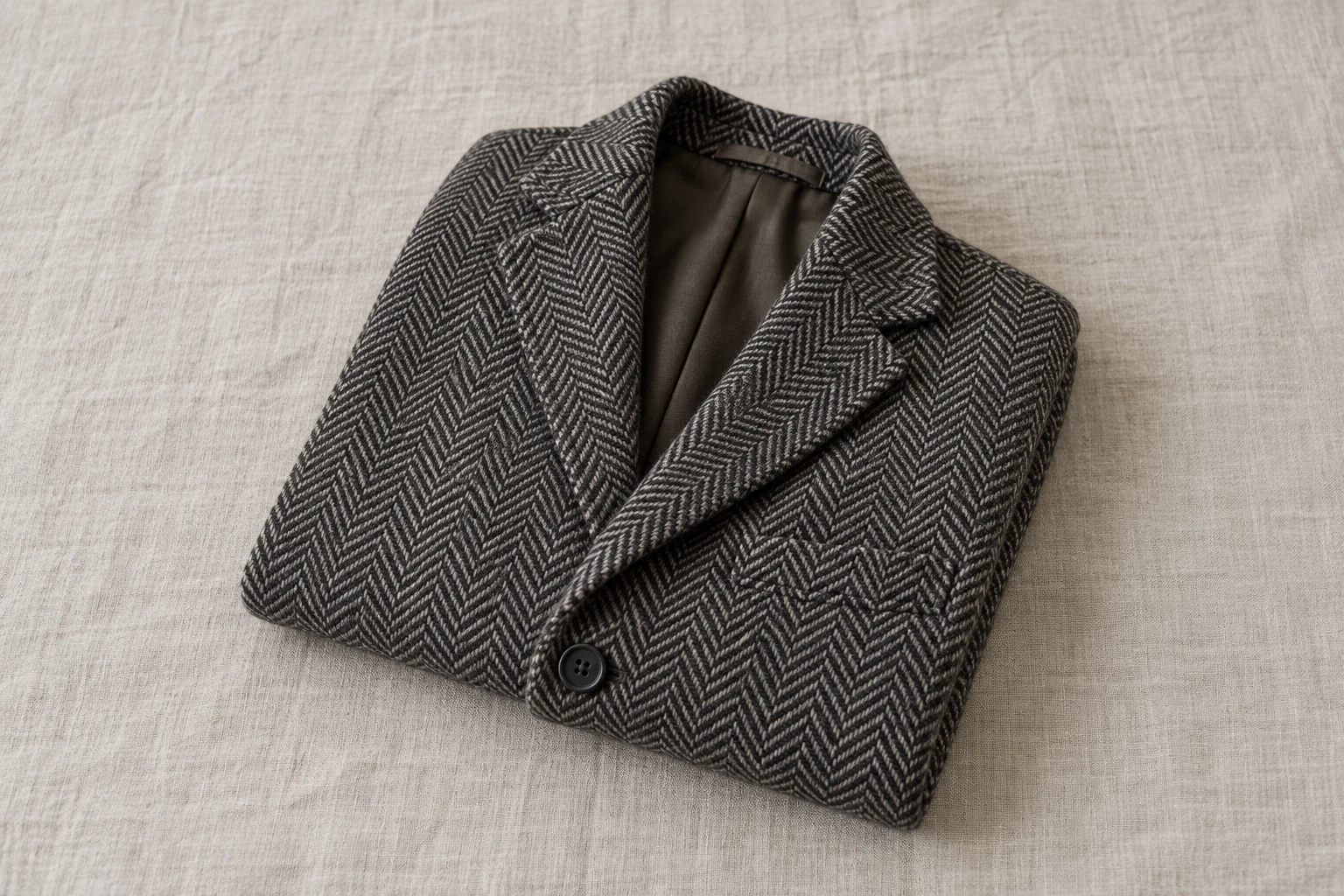
From across the room the gray coat looks plain; up close, the cloth is covered in tiny columns of V shapes. Those columns are herringbone, and it is probably the most useful pattern a person can own: it adds depth to a jacket or coat without shouting, and it goes with almost everything a solid would.
This guide explains what the herringbone pattern is and how the weave creates it, why it is called herringbone, how it differs from chevron, twill and houndstooth, and how to wear it. Because the same word names floors, tiles and a style of gold chain, there is a short note on those too.
What the herringbone pattern is
In cloth, herringbone is a weave rather than a print. It starts from a twill, the weave that gives denim and gabardine their diagonal ribs, and then reverses the direction of the diagonal every few threads. A column of ribs slanting one way sits next to a column slanting the other way, and together they form a zigzag of V shapes running up the fabric. Our explainer on twill fabric covers the basic weave it is built from.
The detail that defines true herringbone is the break. Where the diagonal changes direction, the ribs do not meet in a clean point; they are offset by a thread or so, so each V looks slightly staggered. That is why weavers call herringbone a broken twill. The reversals also help the cloth hold its shape, and they make the fabric catch the light differently from column to column, which gives even a single color a sense of movement.
The name is descriptive: the pattern resembles the skeleton of a herring, with a spine and ribs angled on either side. Herringbone is usually woven in wool, and it is one of the most common structures in tweed and in suiting and coating cloth, but it also appears in cotton shirting, linen and workwear.
Herringbone vs chevron, twill and houndstooth
Chevron and herringbone both zigzag, and people use the words loosely. The practical difference is at the turn. In a chevron, the lines meet in a continuous, sharp point, like a row of stacked V shapes. In herringbone, the columns are offset where they meet, so the zigzag looks broken. In fabric, a chevron twill with a clean point also exists, and is sometimes sold as herringbone, but the classic cloth has the break.
Plain twill has diagonal ribs running in one direction only, with no zigzag. Houndstooth is also a twill, and the two often sit side by side in tweed, but houndstooth is a check made of pointed, broken squares in two contrasting colors; our guide to the houndstooth pattern shows the difference in detail. If you see columns of V shapes, it is herringbone. If you see jagged squares, it is houndstooth.
| Pattern | What you see | How it is made |
|---|---|---|
| Herringbone | Columns of V shapes, offset at each turn | A broken twill whose diagonal reverses every few threads |
| Chevron | Stacked V shapes meeting in a sharp point | A zigzag with a continuous, clean point |
| Plain twill | Diagonal ribs running one way only | The base weave of denim and gabardine |
| Houndstooth | Jagged, pointed squares in two contrasting colors | A twill woven as a broken check |
Where herringbone comes from
Herringbone is one of the oldest patterns in weaving. Surviving examples include woolen textiles from the Alps dated to roughly 800 to 500 BCE, a cloth fragment from Pompeii, and pieces found near Hadrian's Wall. The Romans also used the pattern in brick and stone paving, which they called opus spicatum, because setting bricks at angles spreads the load across them.
In clothing, herringbone became a mainstay of British country tweeds and city suitings in the nineteenth and twentieth centuries. It also had a workwear life: during and after the Second World War, several armies, including the United States Army, issued fatigues in cotton herringbone twill, known in American service as HBTs. That durable, softly textured cotton is still used in chore jackets and work trousers.
How to wear herringbone
Herringbone behaves more like a texture than a pattern, so treat it almost as a solid. A gray herringbone coat or a brown herringbone jacket goes with anything its color would go with, and you can wear it with a striped shirt or a patterned scarf without the clash that two strong patterns would create. The smaller and lower in contrast the zigzag, the more formal and quiet it reads; a large, high contrast herringbone is more casual and country.
For men, the classic herringbone jacket is a wool tweed sport coat worn with flannel trousers, chinos or dark jeans, an oxford shirt and brown shoes or boots. A charcoal herringbone suit in a fine worsted is sober enough for most offices, and a herringbone overcoat works over both suits and casual clothes. For more on fitting a jacket, see how a suit should fit.
For women, a herringbone blazer over a knit and jeans, a long herringbone wool coat over a dress or trousers, and wide leg herringbone trousers with a fitted sweater are all easy to wear. A herringbone pencil or A line skirt with tights and ankle boots is a good autumn outfit. The pattern works in gray, brown, navy, cream and olive, and it suits styles as different as dark academia and minimal city dressing.
Herringbone is mostly a cool weather choice in wool, but cotton and linen herringbone shirts, trousers and jackets are comfortable in spring and summer, and they look a little richer than a plain weave in the same color.
Herringbone necklaces, floors and knits
Outside cloth, the word turns up in three other places a clothing reader might meet it. A herringbone necklace is a flat chain made of short, slanted links that lie side by side, so the chain looks like a smooth, liquid band of metal with a herringbone texture. Because the links are flat, these chains can kink if they are bent sharply or tangled, so lay them flat or hang them rather than tossing them into a pouch; our guide to layering necklaces shows how a flat chain sits with finer ones.
Herringbone flooring and tile use the same rectangles set at angles, with the ends of each piece butted against the side of the next, while chevron floors use pieces cut at an angle so they meet in a clean point. In knitting, a herringbone stitch produces a dense, woven looking fabric often used for scarves and cowls. It is a different technique from the cable knit sweater, which twists groups of stitches into raised ropes.
How to care for herringbone clothes
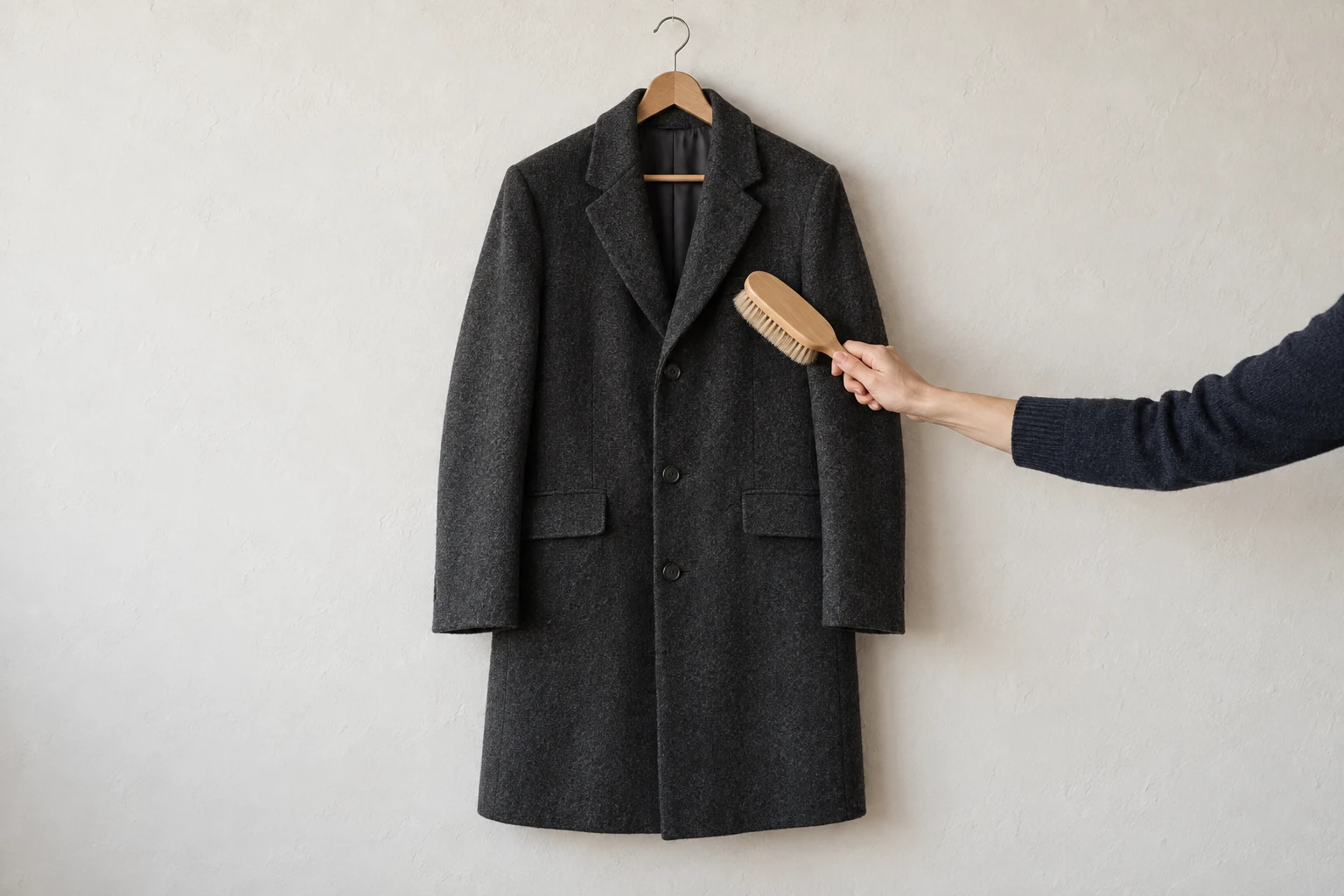
Care follows the fiber, not the pattern, so start with the label. Wool herringbone jackets, suits and coats should be brushed after wearing, hung on a shaped hanger and aired, then professionally cleaned only when needed, since their internal structure can distort in water. Steam refreshes them between cleanings; our guide to steaming clothes covers how to do it without shine.
Cotton herringbone shirts and workwear can usually be machine washed like other cotton, and linen herringbone follows the rules for linen. Wool herringbone scarves and knits generally need a hand wash in lukewarm water, about 86°F (30°C), with a wool detergent, then flat drying. The zigzag hides small marks well, but it also hides lint and pilling until they build up, so a quick brush now and then keeps it crisp.
Questions people ask
Why is it called herringbone?
Because the pattern looks like the skeleton of a herring, with a central spine and bones angled away on each side. The name is used for the same arrangement in fabric, flooring, brickwork and jewelry.
Is herringbone formal enough for work?
Yes, in the right scale and color. A small, low contrast herringbone in charcoal, navy or gray looks almost solid and suits most offices, including with a tie. Large, bold herringbone tweeds are better for business casual and weekends.
Is herringbone out of style?
Herringbone has been part of classic menswear and womenswear for well over a century and does not depend on trends. Bold, oversized versions come and go, but a fine herringbone coat or jacket in a neutral color stays useful for many years.
What goes with a herringbone jacket?
Solid trousers or jeans, a plain or striped shirt, and a knit in a color drawn from the cloth. Brown shoes suit brown and olive herringbone; black or dark brown suit gray and navy. Avoid pairing it with another bold texture of the same scale.
Sources and further reading
References used for this guide. Each opens the original page in a new tab.
Keep reading
Fabrics
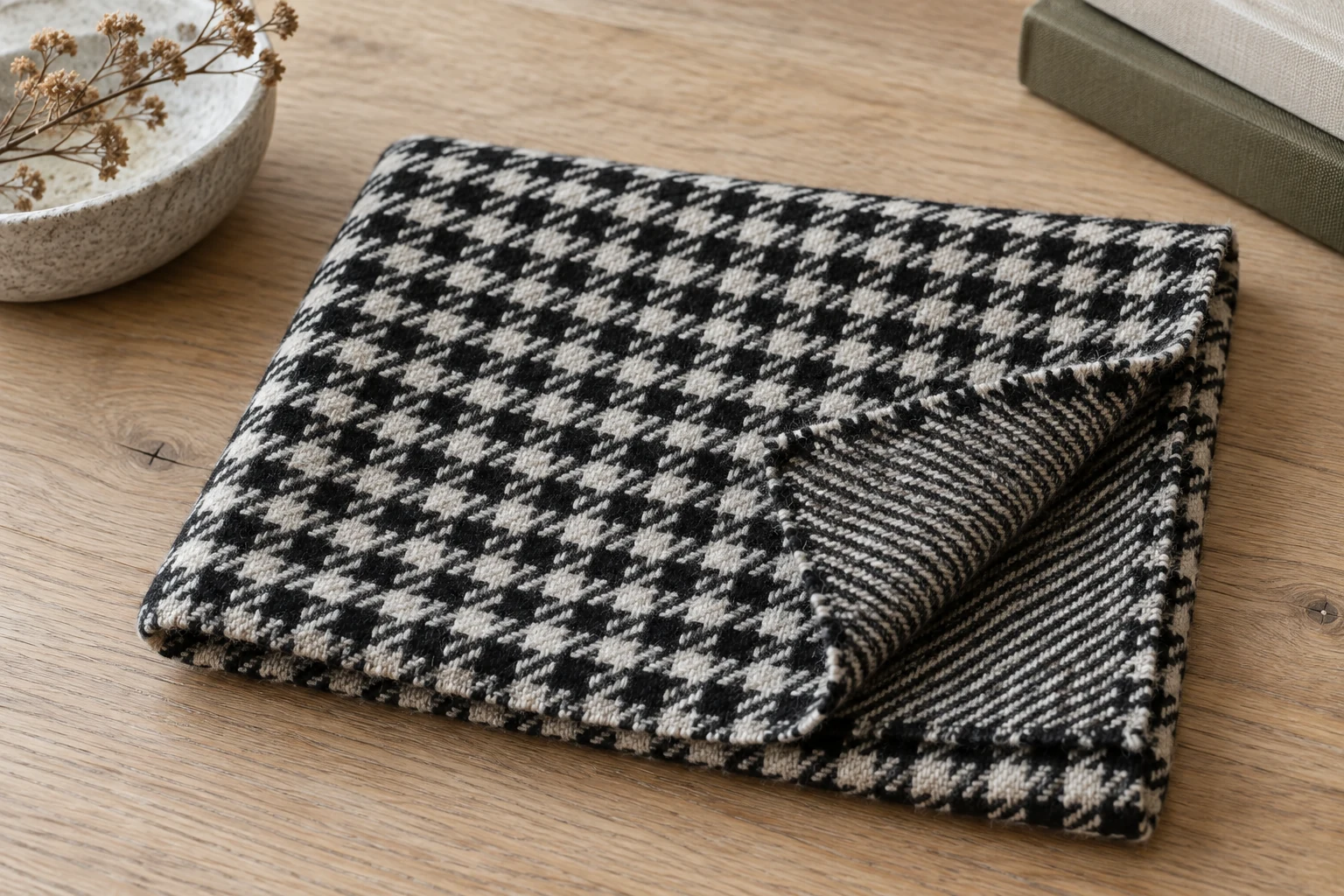
Houndstooth pattern: what it is and how to wear it
What the houndstooth pattern is, how it is woven, where the name comes from, how it differs from herringbone and glen plaid, and how to wear and care for it.
Fabrics
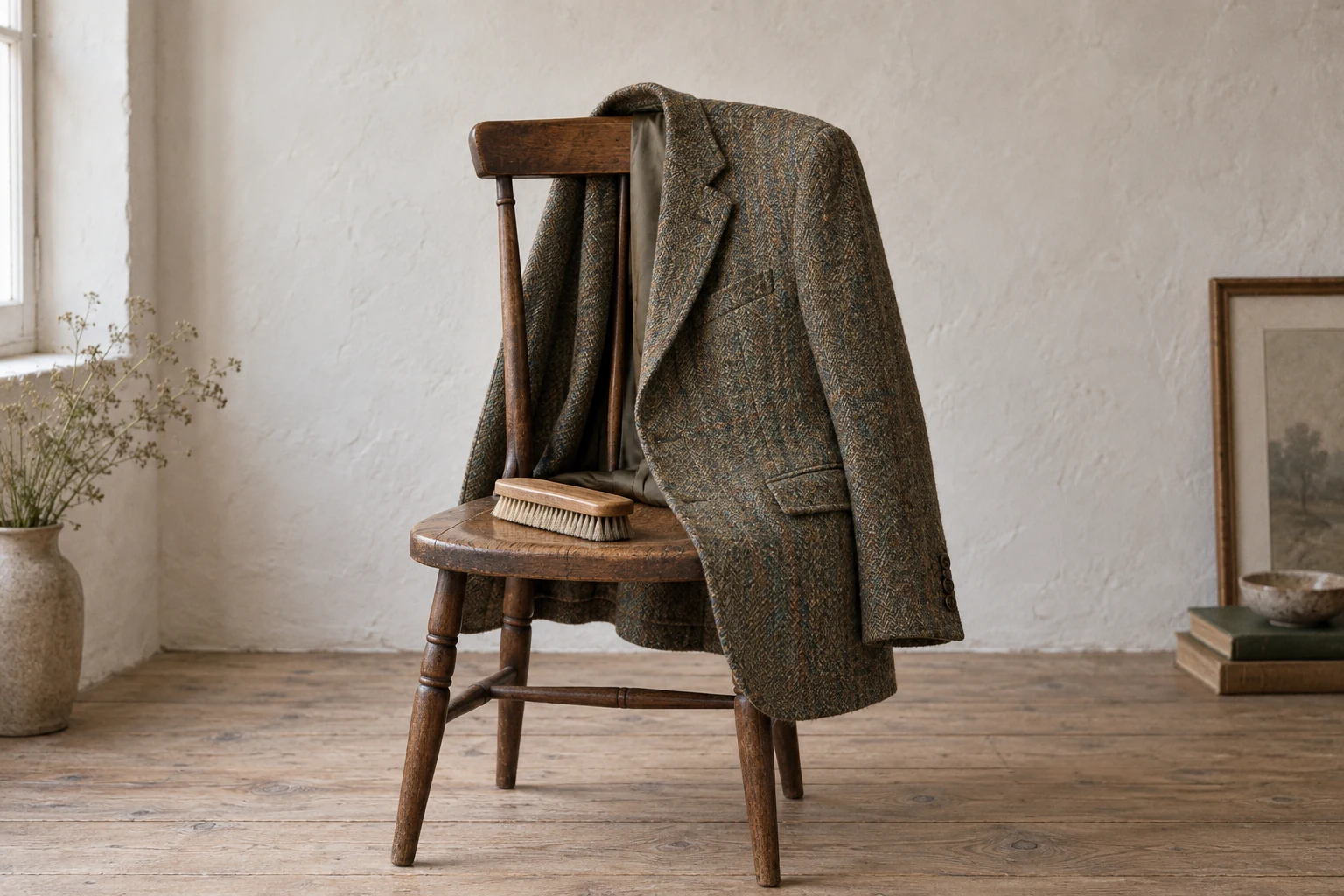
What is tweed? The fabric explained, and how to wear it
What tweed fabric is, how it got its name, the main types from Harris to Donegal, whether it itches or sheds rain, and how to wear and care for it.
Fabrics
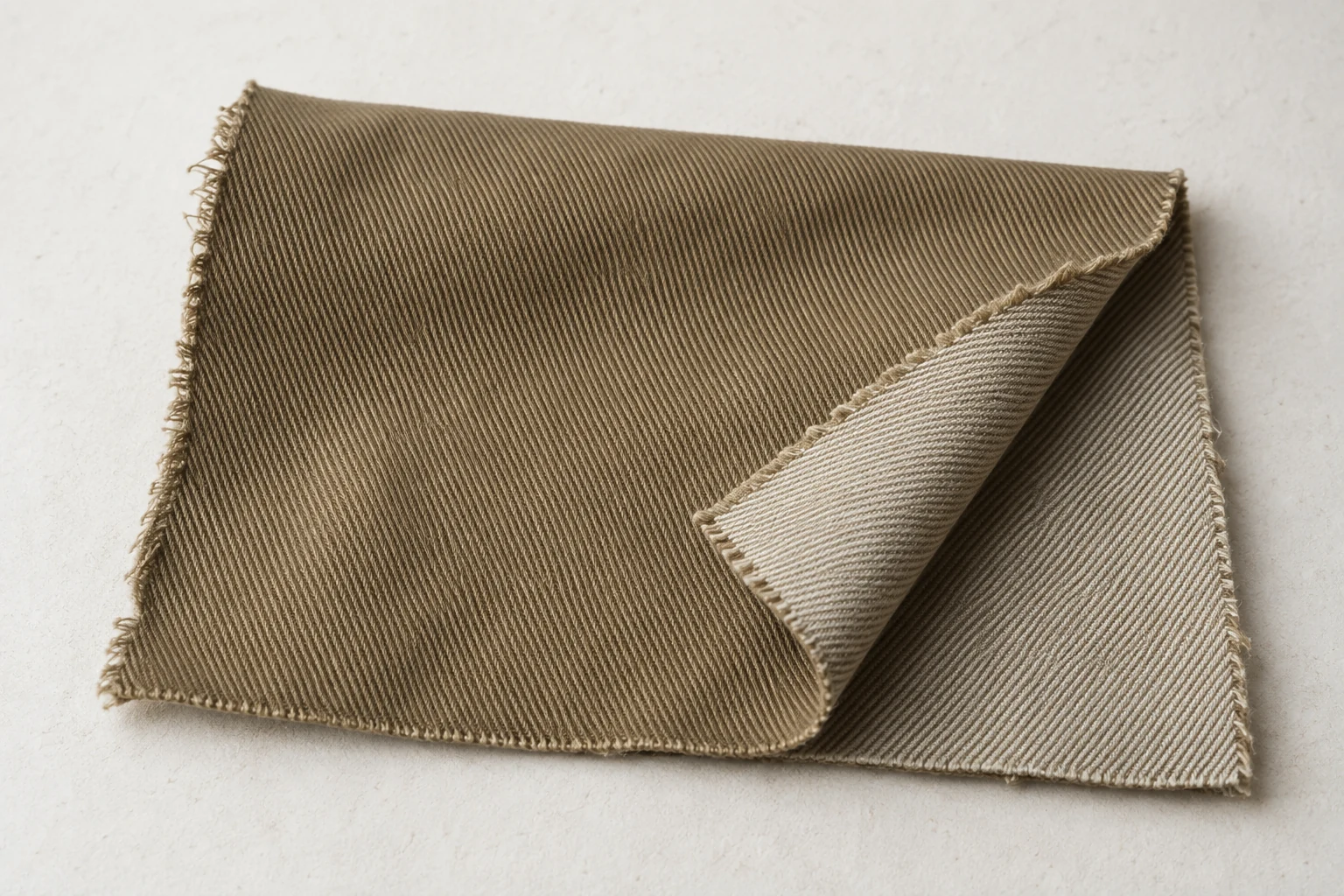
What is twill fabric, and what is it good for
What is twill? The weave behind jeans, chinos and gabardine: how to spot the diagonal, what twill is made of, where it works, and how it compares to cotton.
Washing and ironing
How to clean a wool coat at home
How to wash a wool coat or clean it at home: read the label, brush and air it, spot clean stains, hand wash only when allowed, and know when to use a dry cleaner.
Everyday style
Types of jackets and when to wear them
A clear guide to the main types of jackets for men and women, from blazers and bombers to parkas and trench coats, with the fabric and weather each one suits.