How to cuff jeans: single, double and pinroll
In this guide
The jeans fit everywhere except at the bottom, where they pool over your sneakers or hide the boots you meant to show. Folding up the hem solves both problems in a minute, and it has been part of how people wear denim since jeans were work clothes. Knowing how to cuff jeans well is mostly a matter of choosing the right fold for the leg shape and the shoe, then getting both legs to match.
This guide covers the single cuff, the double cuff, the pinroll and the deep Japanese style cuff, with steps where the order matters. Every technique works the same on jeans from the men's or the women's side of the store, and on chinos and casual cotton trousers too, if you are wondering how to cuff pants rather than denim.
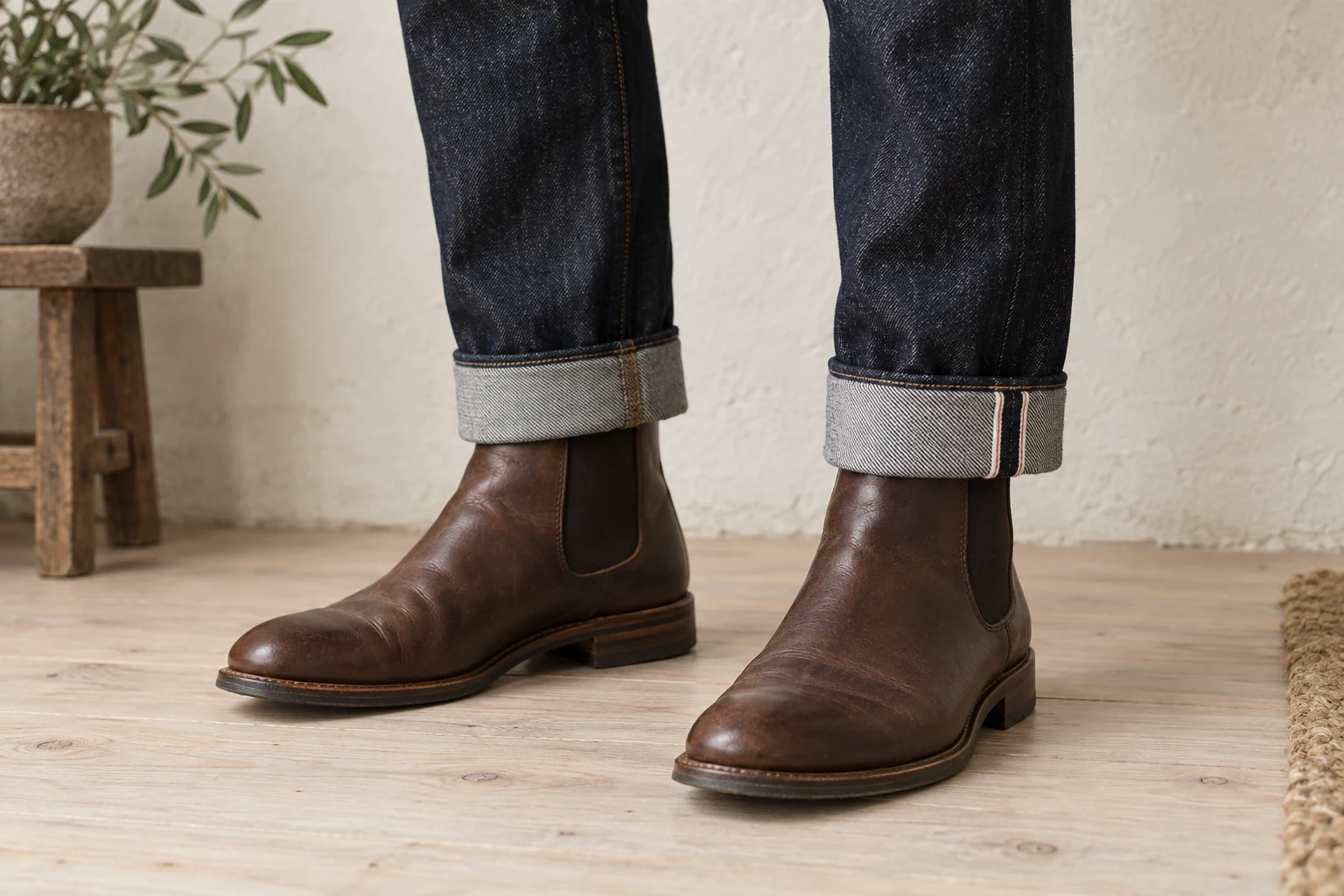
Start with the length and the leg shape
Put on the jeans with the shoes you plan to wear before folding anything. A cuff shortens the leg, and Denimhunters, a denim reference site, gives a simple limit: the cuff should not sit higher than the top of your shoes. If the jeans are already at the right length, a thin single cuff is enough; if they are several inches too long, you need a double cuff or a hem. Knowing your inseam helps here, because it tells you how much extra length a pair actually has before you start rolling.
The leg shape decides how wide the cuff can be; our overview of types of jeans helps if you are unsure which cut you own. Straight and slim jeans take a clean single or double cuff. Tapered jeans suit a narrow cuff that shows off the shoe. Loose and relaxed jeans can carry a wider fold without looking heavy, while a narrow cuff on a wide leg looks lost. Stiff, heavy denim holds a fold for hours; stretch denim tends to slip down, so press the cuff with your fingers after rolling and check it once you have walked around.
Single and double cuffs
A single cuff is one fold of about 2 inches (5 cm), turned up to the outside. It shows the lighter inside of the denim and the hem stitching, which is part of its appeal on raw or dark jeans. Fold it evenly all the way around; the easiest check is that the inseam and outseam run straight down into the fold, so the cuff does not twist toward the front.
A double cuff folds the hem up twice, so the raw edge and stitching are hidden inside and the cuff looks tidier. It takes up more length, which makes it the usual choice for jeans that run long. For a slimmer version with less bulk, Denimhunters describes a skinny double cuff: make one fold, then turn just the top edge down so the hem is hidden. Levi's suggests a narrow single roll with tapered jeans and a double roll as the most versatile option, working with most shoes. A very deep single fold of around 4 inches (10 cm) suits heavy denim and loose fits, but it can overwhelm a shorter frame or a slim leg.
How to pinroll jeans that are wider than you want
A pinroll narrows the leg opening as well as shortening it. That makes it useful for straight jeans that are a little wide at the ankle, and less useful for skinny jeans, which have no spare fabric to fold, or truly wide legs, where it pulls the leg into an odd shape. Wear the jeans with the shoes and belt you plan to use, and do one leg at a time.
Pinch the inseam
Bend down and pinch the fabric at the inside seam, right at the hem, between thumb and forefinger. Pull it away from your ankle. The more you pinch, the tighter and narrower the finished roll will be.
Fold the pinch flat
Fold the pinched fabric back against the leg so it lies flat, pointing toward your heel. The leg opening should now wrap closely around your ankle without cutting in.
Roll up once while holding the fold
Keeping the fold pinned under your fingers, roll the hem up about an inch. The first roll traps the fold so you can let go. If the fold slips out, start again with a firmer pinch.
Roll a second time
Roll once more so the hem is hidden inside the cuff. Gentleman's Gazette suggests a finished cuff of 1 to 2 inches. Stand up and check that the cuff sits at your ankle and just shows the shoe.
Repeat and match
Do the other leg, then look straight down and in a mirror. Both cuffs should sit at the same height with the fold at the same point on each ankle.
The Japanese cuff and selvedge jeans
Selvedge denim is woven on shuttle looms, which produce a finished edge that runs down the outseam, often with a colored line of thread. Cuffing shows that edge, which is why selvedge jeans are so often worn rolled. The Japanese cuff, as Denimhunters describes it, starts with a large single fold of about 3 to 4 inches (8 to 10 cm), then a second fold just below the hem stitching, so both the selvedge and any chain stitched hem stay on view.
If your jeans are raw, meaning unwashed and rigid, keep in mind that a cuff worn in the same place every day creates a sharp crease where the fabric can wear through sooner. Denimhunters suggests changing the cuff height from time to time. Some raw denim, especially fabric sold as unsanforized, can also shrink noticeably at its first wash, so cuff rather than hem until after that wash; our guide on washing jeans covers how to handle it.
How to cuff wide leg and high rise jeans
Wide leg jeans need a wide cuff to keep their proportions. One flat fold of 2 to 3 inches, pressed so it does not flop, looks deliberate; a small roll or pinroll just bunches. Many wide leg and barrel styles are cut to be worn at full length or with a raw hem, so try the pair uncuffed first and cuff only if the length drags. If you are deciding between cuffing and a trip to the tailor, our guide on what shoes to wear with wide leg jeans explains how hem length and heel height work together.
High rise cuffed jeans are a common look with straight and relaxed cuts. The high waist lengthens the leg from the top, which leaves room for a cuff to show some ankle without the legs looking short. The cuff should still end at or just above the ankle bone. If a cuff sits halfway up your shin, the pair was probably too short to cuff in the first place.
Match the cuff to your shoes and boots
Cuffs draw attention to footwear, so choose them with the shoes. Low sneakers and loafers suit a narrow single cuff or pinroll at the ankle, usually with no show socks or with socks you are happy to show. Ballet flats and low sandals look best with a slim cuff that ends just above the ankle bone, so a little skin shows between hem and shoe and the leg does not look cut off. High top sneakers and chukka or Chelsea boots suit a slightly deeper cuff that rests on the top of the shoe. Work boots and heavy lace up boots look balanced with a deeper cuff on straight jeans, because the extra fabric matches the weight of the boot. Our guide to wearing ankle boots with jeans goes further into tucking, cuffing and covering boots.
Cowboy boots are the main exception. The long tradition with western boots is a straight or bootcut leg worn full length over the shaft, uncuffed. Cuffed jeans with cowboy boots is a newer, fashion led look that works best when the jeans are cropped or cuffed to sit just at the top of a shorter boot shaft. If the cuff lands partway down the boot, it tends to catch and bunch.
| Shoes | Cuff that works |
|---|---|
| Low sneakers and loafers | Narrow single cuff or pinroll at the ankle |
| Ballet flats and low sandals | Slim cuff just above the ankle bone, showing a little skin |
| High tops, chukkas, Chelsea boots | Slightly deeper cuff resting on top of the shoe |
| Work boots and heavy lace ups | Deeper cuff on straight jeans to match the boot's weight |
| Cowboy boots | Traditionally uncuffed, full length over the shaft |
Common mistakes
Cuffing jeans that are already short
A cuff on jeans that already end at the ankle lifts the hem halfway up the shin. Wear them straight, or keep the cuff for longer pairs.
Using a cuff instead of a hem forever
If a pair needs more than a double cuff to clear the floor, the extra fabric will keep sliding down and looking bulky. A tailor can shorten jeans while keeping the original hem.
Washing with the cuffs rolled
Rolled cuffs trap dirt and dry unevenly in the machine. Unroll them before washing and refold once the jeans are dry.
Questions people ask
Are cuffed jeans still in style?
Cuffing has been part of how people wear denim for generations, and it moves in and out of fashion attention rather than disappearing. Wide, deliberate cuffs on straight and relaxed jeans and neat rolls with boots and loafers remain common. What looks dated is usually the execution: a tight roll on a wide leg, a cuff that lands halfway up the shin, or two legs that do not match.
How wide should a jean cuff be?
A single cuff of about 2 inches (5 cm) suits most straight and slim jeans. A pinroll is usually 1 to 2 inches, and loose or heavy jeans can take a deep cuff of up to about 4 inches (10 cm).
Should you cuff jeans with boots?
With ankle boots, lace up boots and Chelsea boots, a cuff that sits at the top of the shaft looks deliberate. With tall western boots the convention is to leave the jeans full length over the boot.
How do I keep jean cuffs from falling down?
Press the fold firmly with your fingers, or with a warm iron if the care label allows. Double cuffs and pinrolls hold better than a single fold, and rigid denim holds better than stretch denim.
Can you cuff dress pants the same way?
Rolled cuffs are a casual look. Tailored trousers get sewn turn ups from a tailor instead, and our guide on how long dress pants should be explains the break and cuff options.
How do you cuff jeans permanently?
A tailor can put a few hidden hand stitches through the cuff at the inseam and outseam so it stays folded but can still be undone, or sew a permanent turn up. Without sewing, press the fold with a warm iron if the care label allows, or use iron on hem tape inside the fold, which holds for several washes. For a pair that is simply too long, our guide on hemming pants is often the cleaner fix.
Sources and further reading
References used for this guide. Each opens the original page in a new tab.
Keep reading
Washing and ironing
How to wash jeans and how often to do it
How to wash jeans so they keep their color and fit: how often to wash, inside out in cold water, air drying, raw denim and what to do if your jeans shrink.
Sizing
How to measure inseam for pants, jeans and shorts
Measure your inseam from pants that fit or on your body, see how inseam differs from outseam, and choose the right length for jeans, dress pants, shorts and bikes.
Everyday style
How to wear ankle boots with jeans
How to wear ankle boots with jeans of any cut: when to tuck skinny jeans in, cuff straight legs, or let wide and bootcut hems cover the boot.
Everyday style
What shoes to wear with wide leg jeans
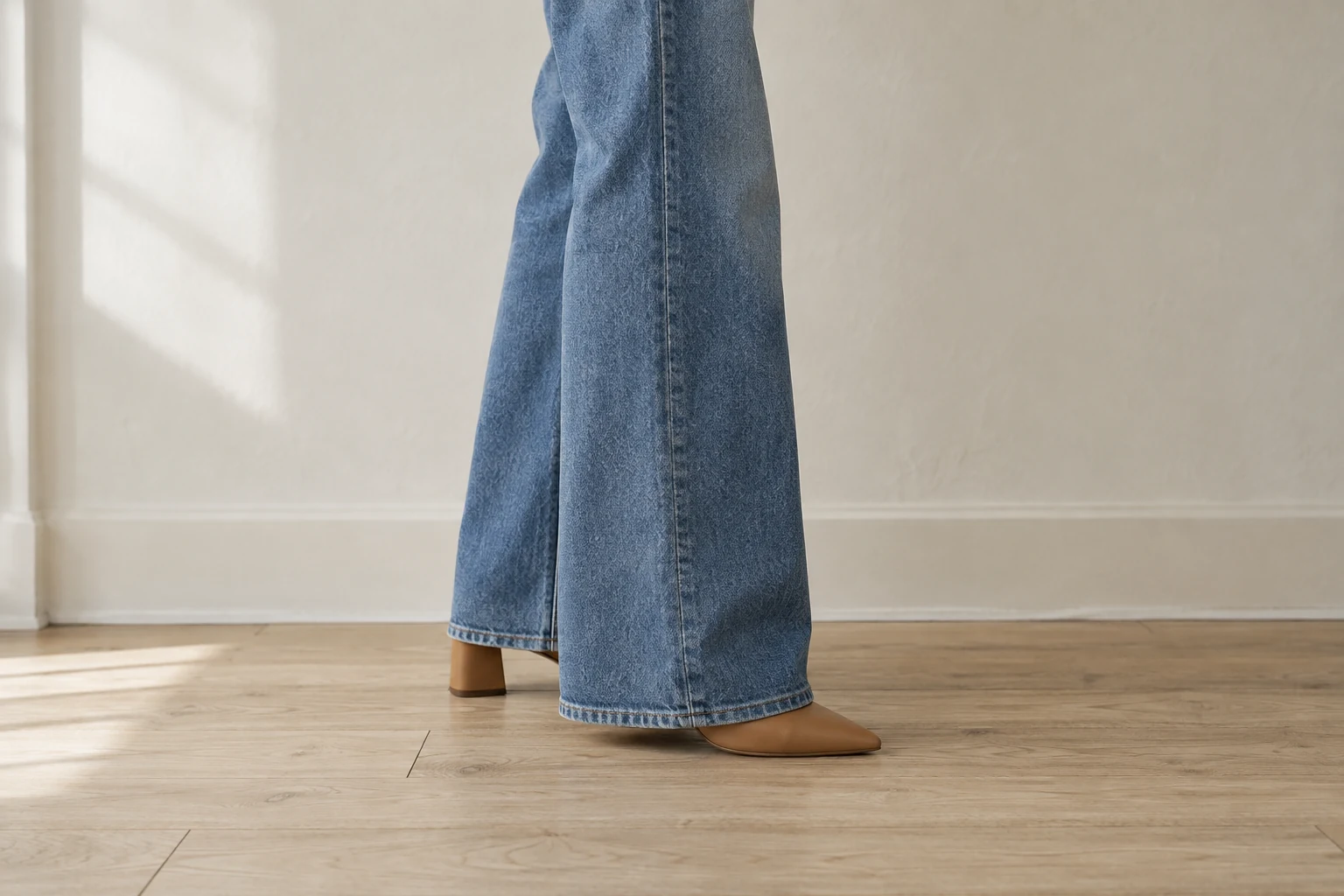
What shoes to wear with wide leg jeans, matched to the hem: heels, flats, sneakers, loafers and boots, plus what works in winter and summer and what to avoid.
Suits and tailoring
How long should dress pants be? Choosing your break
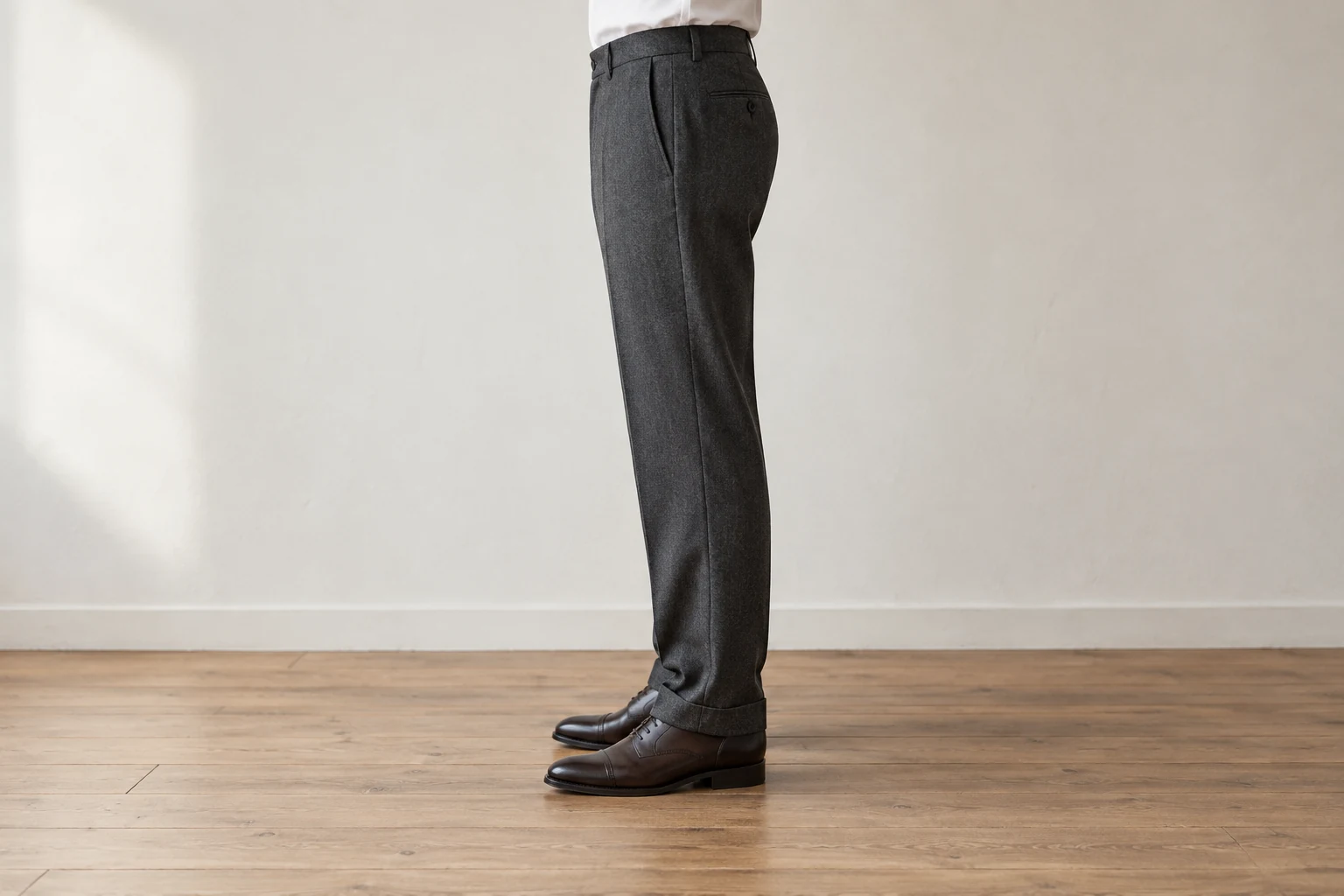
How long should dress pants be? Learn the no break, slight break and full break, how shoes and leg width change the answer, and exactly what to tell your tailor.